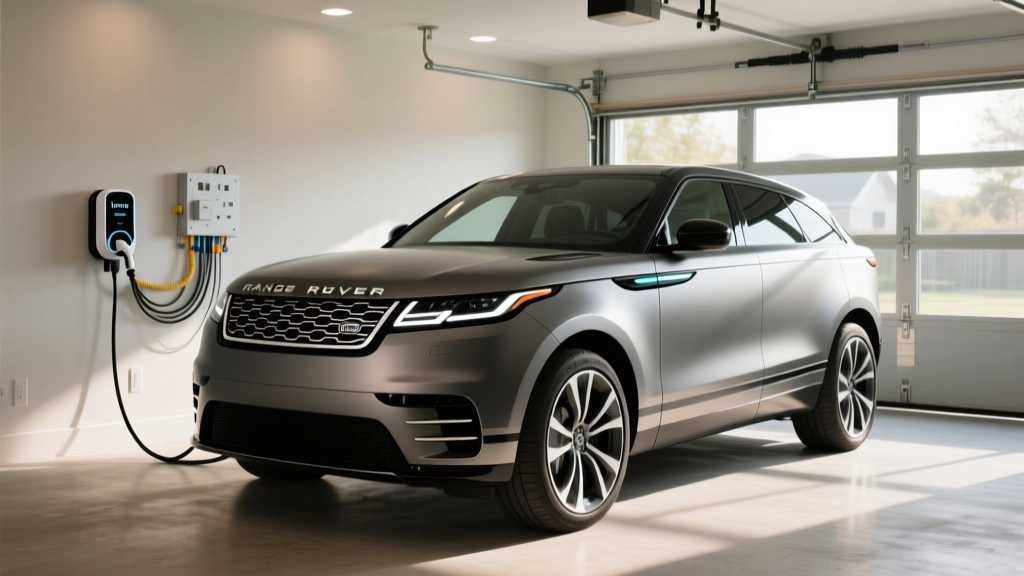
Jaguar Land Rover has confirmed that an all-electric Range Rover Velar is in development, with prototype testing underway on the company's flexible MLA (Modular Longitudinal Architecture) platform. While the production-spec Range Rover Velar EV hasn't hit showrooms yet, buyers who intend to reserve one need to think about charging infrastructure now — not after delivery day. Luxury EVs in this class typically pack 90–110 kWh battery packs and demand robust home charging to preserve convenience and battery health.
This guide breaks down exactly what you need to prepare your garage for a high-capacity electric luxury SUV, from electrical panel capacity to equipment picks and real cost-per-mile math.
Charging Levels Explained: How Fast Each Adds Range
The three charging tiers differ fundamentally in power delivery. kW (kilowatts) measures the rate of energy flow — think of it as the size of the water pipe. kWh (kilowatt-hours) measures total energy stored in the battery — the size of the tank. You'll see both constantly; never confuse them.
| Level | Voltage | Power (kW) | Miles of Range per Hour | Best For |
|---|---|---|---|---|
| Level 1 | 120V AC | 1.0–1.4 kW | 3–5 mi/hr | Overnight trickle, PHEVs, emergency |
| Level 2 | 240V AC | 3.3–19.2 kW | 12–75 mi/hr | Daily home charging, destination |
| DC Fast | 400–800V DC | 50–350 kW | 150–1,200+ mi/hr (peak) | Road trips, rapid top-ups |
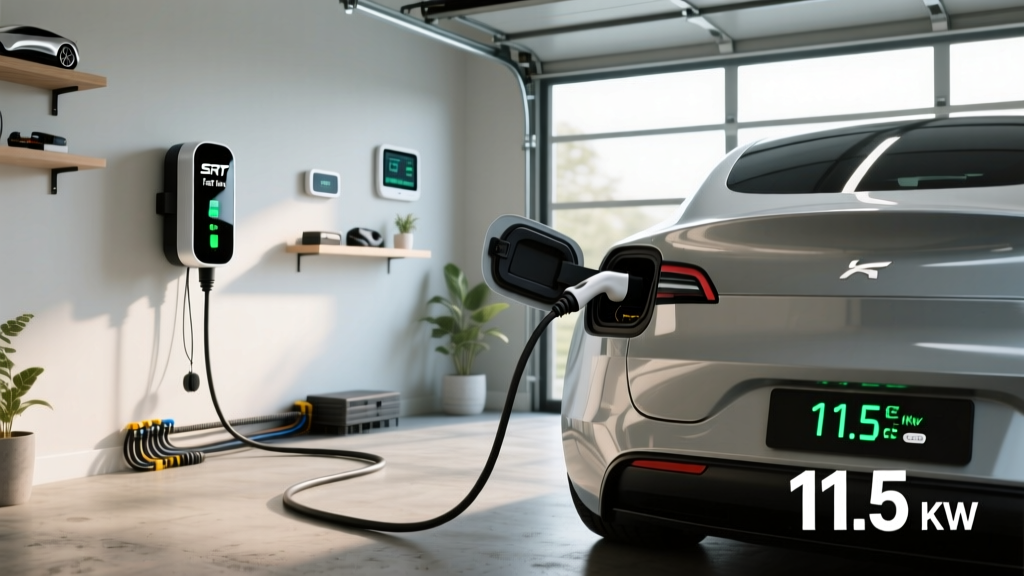
For a large-battery luxury SUV like the anticipated Velar EV (likely ~100 kWh usable), Level 1 is impractical — a full charge would take roughly 70–100 hours. Level 2 at 11.5 kW (48A) is the realistic daily standard, replenishing the pack from 10–80% overnight in roughly 6–7 hours. DC fast charging on an 800V architecture could deliver a 10–80% session in 20–25 minutes at peak rates above 200 kW, though the charge curve tapers significantly above 80% to protect cell health.
Home Electrical Requirements for the Velar EV
Luxury EVs with large batteries reward higher-power Level 2 circuits. Here's what a proper installation looks like:
- Circuit: Dedicated 60A breaker feeding a 48A continuous-load charger (the 80% NEC rule means a 48A charger requires a 60A circuit).
- Wire: 6 AWG copper (THHN in conduit or NM-B where permitted) for runs under ~100 feet; 4 AWG for longer runs to limit voltage drop.
- Outlet vs. hardwired: NEMA 14-60 outlet offers portability; hardwired is preferred outdoors and for 48A+ units.
- Panel capacity: Your main service panel must have spare amperage headroom. A 200A service is typical for modern homes; older 100A panels often need an upgrade.
Will You Need a Panel Upgrade?
Homes built before 1990 frequently have 100A or 150A service. Adding a 60A EV circuit to a panel already running electric ranges, dryers, and HVAC may exceed safe capacity. A licensed electrician will perform a NEC Article 220 load calculation to confirm headroom. If an upgrade to 200A or 400A service is needed, expect significant added cost and a utility coordination timeline of 2–6 weeks.
How Much Does It Cost to Install a Home EV Charger?
Installation costs vary dramatically based on panel proximity, wiring distance, and whether upgrades are needed. Below is a realistic 2026 breakdown for a typical suburban home installing a 48A Level 2 unit:
| Component | Low End | High End | Notes |
|---|---|---|---|
| Level 2 charger unit (40–48A) | $450 | $750 | Wi-Fi enabled, 25ft cable |
| Electrician labor | $500 | $2,000 | Depends on run length, conduit |
| Materials (wire, conduit, breaker) | $150 | $600 | Longer runs cost more |
| Permit & inspection | $75 | $300 | Varies by municipality |
| Panel upgrade (if needed) | $2,000 | $5,000+ | 200A→400A service upgrade |
| Total (no panel upgrade) | $1,175 | $3,650 | Most homes fall here |
| Total (with panel upgrade) | $3,175 | $8,650+ | Older homes or high-load panels |
Some utility companies and states offer rebates of $250–$1,000 for Level 2 installations; check energy.gov and your local utility for current programs. The federal §30C alternative fuel refueling property credit covers up to 30% of equipment and installation costs (capped at $1,000) for qualifying residences, subject to census-tract eligibility and prevailing-wage requirements — consult a tax professional.
Connector Compatibility: NACS, CCS, and What the Velar EV Will Use
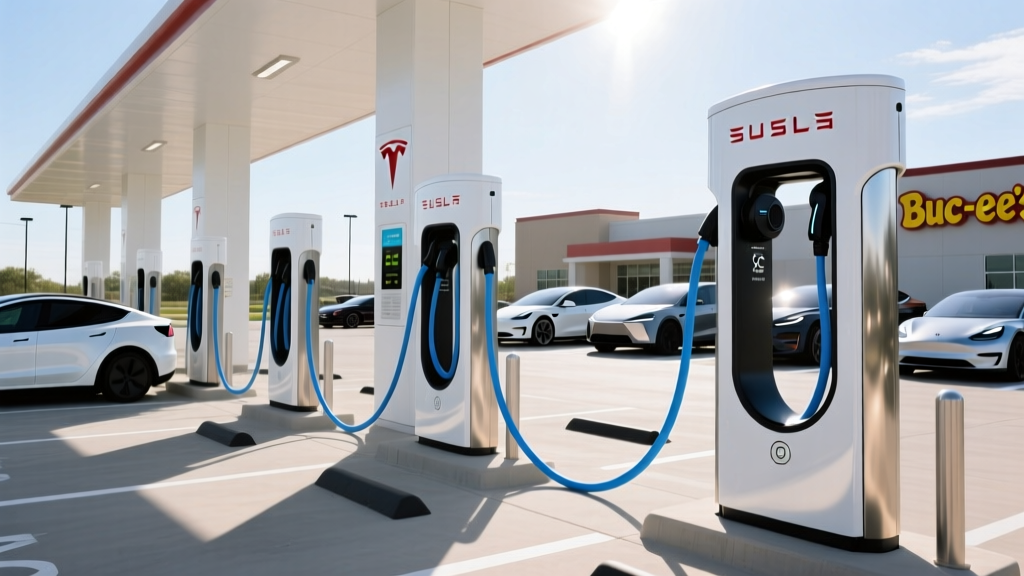
As of 2025, nearly every major automaker has committed to the North American Charging Standard (NACS) — the Tesla-originated connector now standardized as SAE J3400. Land Rover/Jaguar has signaled alignment with NACS for future EVs in North America, though final confirmation for the Velar EV production model is pending.
| Connector | Status (2026) | Brands Using Natively |
|---|---|---|
| NACS (J3400) | Dominant standard | Tesla, Ford, GM, Rivian, Volvo, Polestar, Hyundai, Kia, BMW, Mercedes (new models) |
| CCS1 | Legacy, phasing out | VW ID.4 (pre-2026), older BMW iX, Hyundai Ioniq 5 (pre-2025) |
| CHAdeMO | Obsolete in NA | Nissan Leaf (discontinued) |
If the production Velar EV ships with a NACS port, you'll have native access to the Tesla Supercharger network (20,000+ stalls in North America) plus NACS-equipped Electrify America and EVgo stations. If it ships CCS1, a CCS-to-NACS adapter ($150–$250 from Lectron, A2Z, or Tesla's official adapter) unlocks Supercharger access. Home chargers with a NACS plug are now widely available; CCS-terminated home units are still sold but increasingly rare.
Cost to Charge: Per-Mile Comparison vs. Gasoline
Charging cost depends on your electricity rate and where you charge. A luxury SUV like the Velar EV is expected to deliver roughly 2.5–3.0 miles per kWh (approximately 100–120 MPGe combined). Here's how scenarios compare:
| Scenario | Rate | Cost per kWh | Cost per Mile* | Annual (12,000 mi) |
|---|---|---|---|---|
| Home off-peak (utility TOU) | $0.11/kWh | $0.11 | $0.04 | $480 |
| Home standard rate | $0.16/kWh | $0.16 | $0.06 | $720 |
| Public Level 2 (ChargePoint/EVgo) | $0.30/kWh | $0.30 | $0.11 | $1,320 |
| DC Fast (Electrify America) | $0.48/kWh | $0.48 | $0.17 | $2,040 |
| Gas SUV (20 MPG, $3.50/gal) | — | — | $0.18 | $2,160 |
*Based on 2.8 mi/kWh (est. for a ~5,000 lb luxury electric SUV). Real-world efficiency varies with temperature, speed, and terrain.
Home charging on a time-of-use plan delivers the strongest economics — roughly 75% cheaper per mile than gasoline. Exclusive DC fast charging erases most of the cost advantage, which is why home Level 2 infrastructure is the linchpin of EV ownership economics.
Recommended Level 2 Chargers for a Luxury EV Garage
For a large-battery SUV, prioritize 48A output, a 25-foot cable, UL listing, and smart scheduling (to charge during off-peak utility windows). Here are three proven picks:
ChargePoint Home Flex (NACS)
- Power: Up to 12 kW (50A configurable, derate to 48A on 60A circuit)
- Connector: NACS native
- Cable: 23 ft
- Smart features: Wi-Fi, app scheduling, Alexa, utility demand-response
- Price: ~$650
- Why it fits: J1772/NACS flexibility, UL-listed, widely rebated by utilities
Tesla Wall Connector (Gen 4)
- Power: Up to 11.5 kW (48A)
- Connector: NACS native
- Cable: 24 ft
- Smart features: Wi-Fi, OTA updates, power sharing (up to 6 units on one circuit)
- Price: ~$475
- Why it fits: Best value at 48A; ideal if Velar EV ships NACS
Emporia Vue EV Charger
- Power: Up to 11.5 kW (48A)
- Connector: NACS or J1772 variants
- Cable: 24 ft
- Smart features: Solar integration, real-time energy monitoring, app scheduling
- Price: ~$400
- Why it fits: Budget pick with excellent energy visibility
For CCS-equipped vehicles, the Grizzl-E Smart ($450, 40A, J1772 connector) remains a durable, cold-weather-rated option — pair it with a CCS-to-NACS adapter if your vehicle lacks a native NACS port.
Charging Time Estimates for Large-Battery Luxury SUVs
Assuming a ~100 kWh usable battery (consistent with MLA-platform EVs like the Range Rover Electric and upcoming Velar EV), here's what 10–80% sessions look like across charging tiers:
- Level 2 at 11.5 kW (48A): ~6.5 hours (overnight, ideal)
- Level 2 at 7.7 kW (32A): ~9.5 hours (adequate for most daily use)
- DC Fast at 200 kW peak (800V architecture): ~22–28 minutes (10–80%)
- DC Fast at 150 kW peak (400V architecture): ~35–42 minutes (10–80%)
DC fast charging is never linear. A charger rated at 200 kW peak may sustain that rate only between 10–50% SoC before tapering to 80–100 kW as the battery approaches 80%. This is why manufacturers quote 10–80% times rather than 0–100% — the final 20% can take as long as the first 70%.
Safety, Permits, and Code Compliance
Skipping permits or using undersized wiring risks fire, insurance claim denials, and failed home inspections. Key code requirements:
- Dedicated circuit: EV chargers must have their own breaker — no sharing with other appliances.
- GFCI protection: NEC 2023 (Article 625.54) requires GFCI for all receptacles used for EV charging; hardwired units are exempt.
- Outdoor rating: Outdoor installations require NEMA 4-rated (weatherproof) enclosures and UV-resistant cable.
- Permit: Most jurisdictions require an electrical permit and post-install inspection. Unpermitted work can void homeowner insurance coverage for related claims.
- Qualified electrician: Hire a licensed, insured electrician familiar with NEC Article 625 (EV charging). General handymen typically lack this specialization.
Frequently Asked Questions
How much does it cost to install a home EV charger?
Most homes spend $1,200–$3,600 for a 48A Level 2 installation without a panel upgrade. Homes needing a 200A-to-400A service upgrade can spend $3,200–$8,600+ total. Get three quotes from licensed electricians and confirm they perform a NEC Article 220 load calculation.
How fast will each charging level add range?
Level 1 (120V): 3–5 miles per hour. Level 2 (240V, 48A): roughly 30–35 miles per hour for a large luxury SUV. DC Fast (150–200 kW): 8–15 miles per minute at peak, tapering as battery fills.
Which connector will the Range Rover Velar EV use?
JLR has not officially confirmed the Velar EV's connector, but the brand's alignment with industry-wide NACS adoption makes it highly likely. If it ships CCS1, a $150–$250 adapter unlocks Tesla Supercharger access.
How much does charging cost per mile vs. gas?
Home off-peak charging runs approximately $0.04/mile vs. $0.18/mile for a 20 MPG gas SUV at $3.50/gallon — a 75%+ savings. Exclusive DC fast charging at $0.48/kWh narrows the gap to roughly $0.17/mile.
What electrical upgrades might I need?
Homes with 100A or 150A service, or panels already near capacity, may require a 200A or 400A service upgrade ($2,000–$5,000+). Older panels with Federal Pacific or Zinsco breakers should be replaced regardless — these are known fire hazards.
Should I charge to 100% every night?
No. For NMC/NCA battery chemistry (expected in the Velar EV for energy density), daily charging to 80% maximizes longevity. Reserve 100% charges for road trips. If JLR opts for LFP chemistry in a base variant, 100% daily is acceptable — the vehicle's manual will specify.
The Range Rover Velar EV prototype signals JLR's commitment to electrifying its most design-forward nameplate. Getting your home charging infrastructure right before delivery ensures you'll enjoy the full convenience and cost advantages of electric luxury ownership from day one. Start with an electrician consultation now — the best charger is the one that's installed and ready when your vehicle arrives.