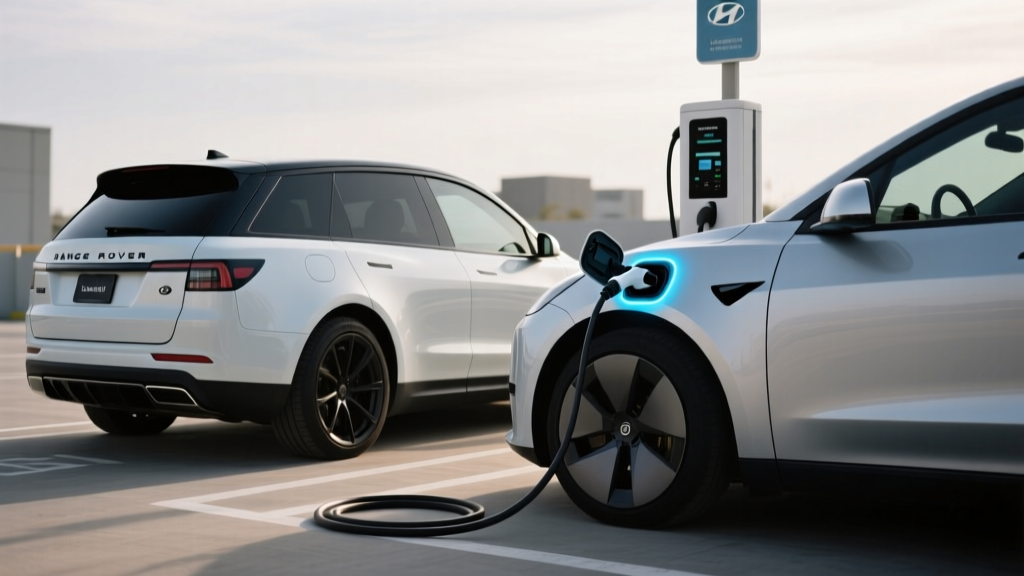
If you're cross-shopping a used luxury SUV like the 2007 Range Rover Supercharged against a new electric vehicle, the sticker price is only the opening act. The real financial story unfolds at the pump versus the plug. The 2007 Supercharged, with its 5.0-liter supercharged V8 (on later models) or the 4.2-liter supercharged V8 in the 2007 model year, was never designed for efficiency — it was built for effortless torque and commanding presence. But in 2026, with gas prices fluctuating and EV charging infrastructure expanding, the operating-cost gap between a thirsty V8 SUV and a modern EV is wider than ever.
This guide breaks down exactly what it costs to fuel a 2007 Range Rover Supercharged versus charging a comparable modern EV, while giving you a complete primer on home EV charger installation, public charging costs, connector types, and the equipment you'd need to make the switch. Whether you're keeping the Rover and adding an EV to the garage, or deciding it's time to trade the supercharger under the hood for a supercharger at the plaza, the numbers below will clarify the decision.
The 2007 Range Rover Supercharged: Fuel Economy Baseline
Before we can compare charging costs, we need the Rover's real numbers. According to fueleconomy.gov, the 2007 Range Rover Supercharged (4.2L V8, supercharged, 6-speed automatic) carries EPA ratings of 12 mpg city / 18 mpg highway / 14 mpg combined. With a 26.4-gallon fuel tank, total range is roughly 370 miles before you're hunting for a station.
At a national average regular unleaded price of $3.40/gallon (early 2026), and noting that the Supercharged requires premium fuel (91 octane or higher) — typically $0.50–$0.70 more per gallon — you're looking at roughly $4.00/gallon at the pump.
$4.00 ÷ 14 mpg combined = $0.286 per mile
Full tank cost: 26.4 gal × $4.00 = $105.60
Annual fuel cost (12,000 miles): ~$3,430
That's the baseline we're comparing against. Now let's build the EV charging picture from the ground up.
EV Charging Levels Explained: Speeds, kW, and Miles Per Hour
Understanding EV charging starts with one critical distinction: kW (kilowatts) measures power — how fast energy flows into the battery. kWh (kilowatt-hours) measures energy — the total capacity of the battery, like gallons in a fuel tank. You fill kWh using kW, and the higher the kW, the faster you add kWh.
| Level | Voltage | Max Power (kW) | Miles of Range Added Per Hour | Best Use Case |
|---|---|---|---|---|
| Level 1 | 120V AC | 1.0–1.4 kW | 3–5 mi/hr | Overnight top-up, PHEVs, low-mileage drivers |
| Level 2 | 240V AC | 7.2–19.2 kW | 20–60 mi/hr | Daily home charging, workplace, destinations |
| DC Fast Charge | 200–900V DC | 50–350 kW | 150–1,000+ mi/hr (peak) | Road trips, highway corridors, quick top-ups |
A few real-world caveats: DC fast charging speeds peak at low state-of-charge (SoC) and taper significantly above 80%. A "350 kW" charger doesn't deliver 350 kW for the full session — most EVs peak for 5–10 minutes then ramp down to protect battery health. Always look at 10–80% charge time rather than peak kW alone.
Home Level 2 Charger Installation: Electrical Requirements and Costs
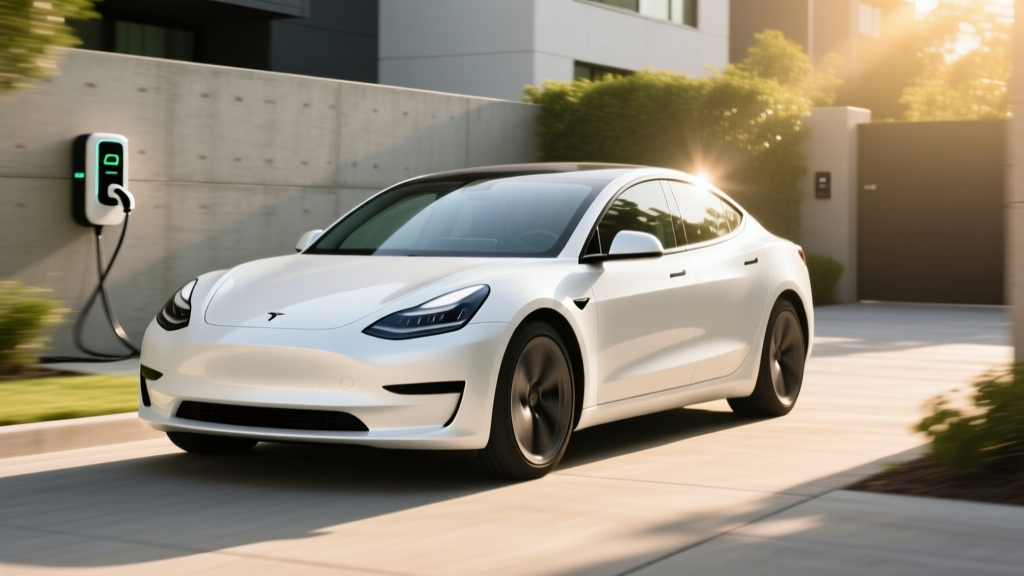
Installing a Level 2 home charger is the single most impactful upgrade an EV owner can make. Here's what's involved electrically and financially.
Electrical Requirements
A typical Level 2 charger requires a 240V dedicated circuit, similar to what powers an electric dryer or oven. Common configurations:
- 40-amp circuit / 32-amp continuous → 7.7 kW output (most common residential setup)
- 50-amp circuit / 40-amp continuous → 9.6 kW output
- 60-amp circuit / 48-amp continuous → 11.5 kW output (requires robust panel capacity)
The National Electrical Code (NEC) requires that continuous loads (including EV charging, which can run for hours) use only 80% of a circuit's rated capacity. A 40A breaker therefore delivers 32A continuous, or 7.7 kW at 240V.
Do You Need a Panel Upgrade?
This is the question that separates a $600 installation from a $3,500 one. Most homes built after 1990 have a 200-amp main service panel, which usually has enough spare capacity for a 40A EV circuit. Older homes — especially those with 100A or 150A panels — may need a panel upgrade to 200A before adding an EV charger. Signs you might need an upgrade:
- Main breaker rated below 200A
- Panel already near capacity (electric range, electric heat, AC, dryer all on a 100A panel)
- Physical space: no open breaker slots
- Frequent breaker trips under existing loads
A licensed electrician will perform a load calculation (NEC Article 220) to determine whether your panel can handle the added draw. Some utilities and smart panels now offer load-management devices that dynamically throttle charger amperage when other circuits are under heavy use, potentially avoiding a full panel upgrade.
| Component | Cost Range | Notes |
|---|---|---|
| Level 2 EVSE (charger unit) | $300–$750 | Smart Wi-Fi models at higher end |
| Electrician labor (standard install) | $400–$1,200 | Depends on run length, conduit, wall type |
| Electrical permit | $50–$200 | Required in most jurisdictions |
| Panel upgrade (if needed) | $1,500–$3,500 | 100A → 200A service upgrade |
| Conduit/wiring materials | $100–$400 | Long runs from panel to garage add cost |
| Total (no panel upgrade) | $750–$2,550 | Most common scenario |
| Total (with panel upgrade) | $2,250–$6,050 | Older homes with 100A service |
Always hire a licensed electrician and pull a permit. Unpermitted EV charger installations can void home insurance claims and create fire risk — 240V circuits running at 32+ amps for hours demand proper wire gauge, torque-spec terminations, and GFCI protection where required by code.
Charging Cost Per Mile: EV vs. the Range Rover's V8
Here's where the 2007 Range Rover Supercharged's $0.286/mile gets put in perspective. EV charging costs vary dramatically depending on where and when you plug in.
| Scenario | Rate | Cost per Mile (at 3 mi/kWh) | Annual Cost (12k mi) |
|---|---|---|---|
| Home Level 2 (off-peak utility rate) | $0.10/kWh | $0.033 | $400 |
| Home Level 2 (avg. US residential) | $0.17/kWh | $0.057 | $680 |
| Public Level 2 (network pricing) | $0.25–$0.35/kWh | $0.083–$0.117 | $1,000–$1,400 |
| DC Fast Charging (public) | $0.35–$0.55/kWh | $0.117–$0.183 | $1,400–$2,200 |
| 2007 Range Rover SC (premium gas) | $4.00/gal | $0.286 | $3,430 |
Even in the worst-case scenario — relying entirely on DC fast charging at peak rates — a modern EV costs less per mile than the Supercharged Range Rover. For a homeowner with off-peak utility rates, the EV saves roughly $3,000/year in fuel alone over 12,000 miles of driving. Over five years, that's $15,000 — enough to cover a significant portion of a new EV's purchase price.
Most EVs achieve 2.5–4.0 miles per kWh depending on weight, aerodynamics, and driving style. A midsize electric SUV like the Hyundai Ioniq 5 or Tesla Model Y averages around 3.0–3.5 mi/kWh in mixed driving, which is the basis for the table above.
Connector Compatibility: NACS, CCS1, and CHAdeMO
As of 2026, the North American charging connector landscape has consolidated significantly, but you still need to know what plugs into what.
| Connector | Description | Brands Using It (New Vehicles) |
|---|---|---|
| NACS (J3400) | Tesla-originated, now SAE standard. Compact, supports AC Level 2 and DC fast. | Tesla, Ford, GM, Rivian, Volvo, Polestar, Fisker, Hyundai/Kia (2025+), most new OEMs |
| CCS1 | Combined Charging System. Larger connector, AC + DC combo. | Legacy VW ID.4, older BMW iX, some Stellantis models (transitioning to NACS) |
| CHAdeMO | DC-only round connector. Legacy standard. | Nissan Leaf (discontinued), Mitsubishi Outlander PHEV (older). Essentially deprecated. |
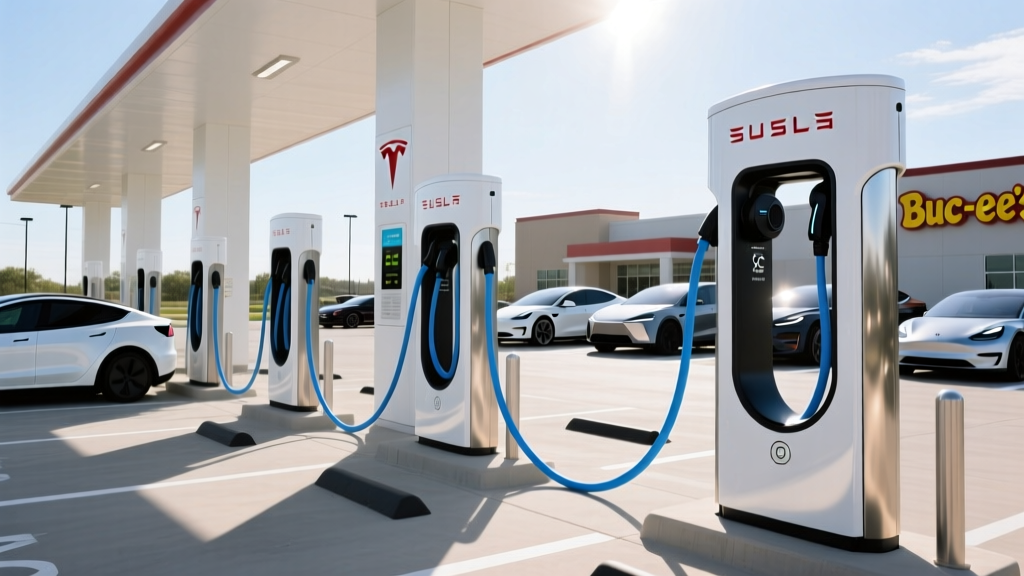
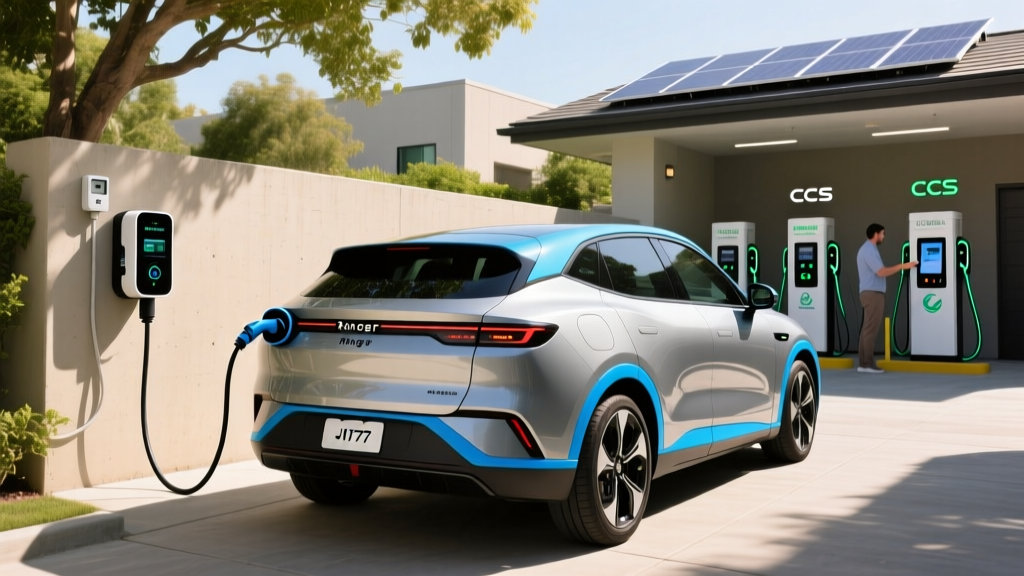
Adapter reality: If you buy a new 2025–2026 EV with NACS, you can access Tesla Superchargers natively. If your EV has CCS1, you'll need a CCS-to-NACS adapter (approximately $200–$250 from Tesla or third-party suppliers) to use the Supercharger network. Most new CCS vehicles ship with or offer this adapter. CHAdeMO is effectively a dead end — new CHAdeMO vehicles are no longer sold in the US market.
For home Level 2 charging, nearly all EVSE units now ship with a NACS plug (or include a J1772 adapter for legacy vehicles). If you're buying a home charger in 2026, get a NACS-connector unit — it's the future-proof choice.
Charging Time Examples: 10–80% for Common Battery Sizes
Charge time depends on both the vehicle's onboard acceptance rate and the charger's output. Here are representative 10–80% times for popular EV battery sizes across charging levels:
| Battery Size (usable kWh) | Example Vehicles | Level 2 (7.7 kW / 32A) | Level 2 (11.5 kW / 48A) | DC Fast (peak rate) |
|---|---|---|---|---|
| 58–62 kWh | VW ID.4, base Ioniq 5 | ~5.5 hours | ~3.7 hours | ~18 min (at 150+ kW) |
| 75–82 kWh | Tesla Model Y LR, BMW iX | ~7.5 hours | ~5.0 hours | ~22 min (at 200+ kW) |
| 90–100 kWh | Tesla Model S, Rivian R1S, Lucid Air | ~9.0 hours | ~6.0 hours | ~25 min (at 250+ kW) |
| 110–131 kWh | GMC Hummer EV, Silverado EV | ~12+ hours | ~8.0 hours | ~35 min (at 350 kW) |
Why 10–80%? Lithium-ion batteries charge fastest at low SoC and taper above ~80% to protect cell longevity. Charging from 80–100% can take as long as the 10–80% session. For daily driving, most owners set a charge limit of 80% (or 100% for LFP chemistry batteries, which tolerate full charges better) and only charge to full before long road trips.
For the 2007 Range Rover Supercharged comparison: refueling its 26.4-gallon tank takes about 4 minutes. No EV matches that speed — but a 20-minute DC fast-charge stop on a road trip is a reasonable restroom-and-coffee break, and home charging means you start every morning with a "full tank" without ever visiting a gas station.
Recommended Level 2 Home Chargers for 2026
Not all EVSE units are equal. Below are well-regarded options across price tiers, all with NACS connectors available and UL listing for safety.
Tesla Wall Connector (Gen 4)
Power: 11.5 kW (48A) on 60A circuit
Cable: 24 ft
Smart features: Wi-Fi, OTA updates, load sharing, access control
Connector: NACS native
Price: ~$475
Best for: Tesla and NACS-equipped EVs. Excellent value for power output.
ChargePoint Home Flex (2nd Gen)
Power: Up to 12 kW (50A) on 60A circuit, adjustable down to 16A
Cable: 24 ft
Smart features: Wi-Fi, app scheduling, Alexa, utility integration
Connector: NACS or J1772 (configurable)
Price: ~$699
Best for: Multi-EV households, flexible amperage for panel-limited homes.
Emporia Vue Level 2 Charger
Power: 11.5 kW (48A) on 60A circuit
Cable: 24 ft
Smart features: Wi-Fi, energy monitoring, solar integration, scheduling
Connector: NACS or J1772
Price: ~$399
Best for: Budget-conscious buyers who want smart features and energy tracking.
Grizzl-E Smart (United Chargers)
Power: 10 kW (40A) on 50A circuit
Cable: 24 ft
Smart features: OCPP-compatible, app control, adjustable amperage
Connector: NACS or J1772
Price: ~$549
Best for: Cold-climate durability (rated to -40°F), rugged outdoor installs.
All of these units are hardwired (no plug — directly connected to a junction box on the dedicated circuit), which is preferred for reliability and code compliance at 40A+. If your installation uses a NEMA 14-50 receptacle, ensure the outlet is rated for continuous EV loads and installed with proper torque — loose 14-50 outlets are a known fire risk.
Safety, Code, and Permit Considerations
EV charging is a high-draw, long-duration electrical load. Cutting corners here is not an option. Key safety requirements:
- Dedicated circuit: Your EV charger must be on its own breaker — no sharing with other outlets or appliances.
- Correct wire gauge: 6 AWG copper for 50A circuits; 4 AWG for 60A. Aluminum wire requires larger gauge.
- GFCI protection: NEC 2020+ requires GFCI protection for outdoor receptacles. Hardwired indoor installations may not require GFCI breakers, but local code varies.
- Outdoor rating: If your charger is mounted outside or in an unenclosed carport, ensure the EVSE is rated NEMA 4 (weatherproof). All units listed above meet this standard.
- Permit and inspection: Most municipalities require an electrical permit for new 240V circuits. The inspection ensures proper grounding, wire sizing, and termination. Skip the permit, and you risk insurance denial in the event of a fire.
- Utility notification: Some utilities require notification when adding an EV charger, especially if your transformer serves multiple homes. They may offer time-of-use (TOU) rate plans that significantly reduce off-peak charging costs.
Frequently Asked Questions
How much does it cost to install a home EV charger?
A standard Level 2 home charger installation (40–60A circuit, hardwired EVSE, no panel upgrade) typically costs $750–$2,550 total, including the charger unit ($300–$750), electrician labor ($400–$1,200), materials ($100–$400), and permit ($50–$200). If your home needs a panel upgrade from 100A to 200A service, add $1,500–$3,500. Always get a detailed quote from a licensed electrician that includes a load calculation.
How fast will each charging level add range?
Level 1 (120V) adds roughly 3–5 miles of range per hour — suitable for PHEVs with small batteries but impractical for full EVs. Level 2 (240V, 32–48A) adds 20–40+ miles per hour, easily replenishing a full day's driving overnight. DC fast charging adds 150–300+ miles in 15–25 minutes depending on the vehicle's peak charge rate and battery size. See the charging-levels table above for specifics.
Which connector/charger is compatible with my EV?
If you're buying a 2025–2026 model-year EV, it almost certainly uses NACS (the SAE J3400 standard adopted by Tesla, Ford, GM, Hyundai, Kia, Rivian, Volvo, and most others). Older 2020–2024 EVs may have CCS1. The Nissan Leaf (now discontinued) used CHAdeMO. For home charging, a NACS-connector EVSE is the best forward-looking choice. For public DC fast charging, CCS1 vehicles need a NACS adapter to access Tesla Superchargers.
How much does charging cost per mile vs. gas?
At the US average residential electricity rate of ~$0.17/kWh, charging an EV that achieves 3 mi/kWh costs about $0.057 per mile. The 2007 Range Rover Supercharged, at 14 mpg combined on premium fuel ($4.00/gal), costs $0.286 per mile — roughly 5x more expensive per mile. Even public DC fast charging at $0.45/kWh ($0.15/mile) undercuts the Rover by nearly half. Over 12,000 miles annually, the savings range from $1,200 (all DCFC) to $3,000+ (home off-peak charging).
What electrical upgrades might I need?
The most common and costly upgrade is a main service panel upgrade from 100A or 150A to 200A, required in older homes that lack spare capacity for a 40–60A EV circuit. This costs $1,500–$3,500 depending on your utility's requirements and local labor rates. You may also need: a new conduit run from panel to garage (long runs add material cost), a sub-panel if your main panel is full, or a load-management device if your utility requires it. A licensed electrician's load calculation (NEC Article 220) will determine exactly what's needed before any work begins.
The Bottom Line: Is Trading the Supercharged V8 Worth It?
The 2007 Range Rover Supercharged remains an incredible machine — 390 horsepower, air suspension, a cabin that still feels premium nearly two decades later. But its operating economics are brutal: $0.29/mile in fuel, plus premium maintenance on a complex air-suspension, supercharged V8 platform that's now approaching 20 years old.
A modern electric SUV — say a 2026 Hyundai Ioniq 5 (EPA range 310 miles, $42,000 MSRP, eligible for up to $7,500 under IRS §30D depending on income, MSRP caps, and battery sourcing) — costs $0.04–$0.06/mile to charge at home. That's a $2,500–$3,000 annual fuel savings before accounting for the EV's lower maintenance burden (no oil changes, no supercharger belt, no transmission fluid, regenerative braking extends pad life).
The home charger installation — $750–$2,550 in most cases — pays for itself in fuel savings within the first year. The question isn't whether you can afford to switch. It's whether the Supercharged Range Rover's character is worth the $3,400+ annual fuel bill and climbing maintenance costs. For enthusiasts, absolutely. For pragmatists, the math points decisively toward the plug.