Trading a Supercharged V8 for Electrons: What Changes When You Go Electric
If you've spent years behind the wheel of a 2010 Range Rover Supercharged Sport — with its 5.0-liter supercharged V8 gulping premium fuel at roughly 12 mpg city and 18 mpg highway — the jump to a battery-electric vehicle will feel like entering an entirely different transportation universe. The instant torque is familiar (you're used to 375 lb-ft from the AJ-V8), but the refueling paradigm is not. Instead of five minutes at a gas pump, you'll be managing kilowatt-hours, charge curves, and connector standards.
This guide is built for owners making exactly that transition. We'll break down every charging level with real numbers, walk through home installation costs including the electrical panel upgrades that older homes often need, map out connector compatibility across 2026 EV models, and run the per-mile cost math against what you were paying to feed that supercharged Range Rover.
The Three Charging Levels: Speed, Power, and Real-World Range Added
Every EV sold in the United States charges via one of three tiers. Understanding these tiers — and what they actually deliver in miles per hour of charging — is the foundation of practical EV ownership.
| Level | Voltage / Amperage | Power (kW) | Miles of Range per Hour | Typical Use Case |
|---|---|---|---|---|
| Level 1 | 120V / 12A | ~1.4 kW | 3–5 mi/hr | Overnight trickle; emergency top-ups |
| Level 2 | 240V / 32–48A | 7.7–11.5 kW | 25–45 mi/hr | Daily home and workplace charging |
| DC Fast Charging | 400–800V DC | 50–350 kW | 150–1,200+ mi/hr (peak) | Road trips; rapid public charging |
Level 1 plugs into any standard 120V household outlet. It's the EV equivalent of filling a pool with a garden hose — workable for plug-in hybrids with small batteries (a Toyota RAV4 Prime's 18.1 kWh pack fills overnight), but painfully slow for a full-size BEV. An F-150 Lightning with a 131 kWh extended-range pack would take over 90 hours from empty on Level 1.
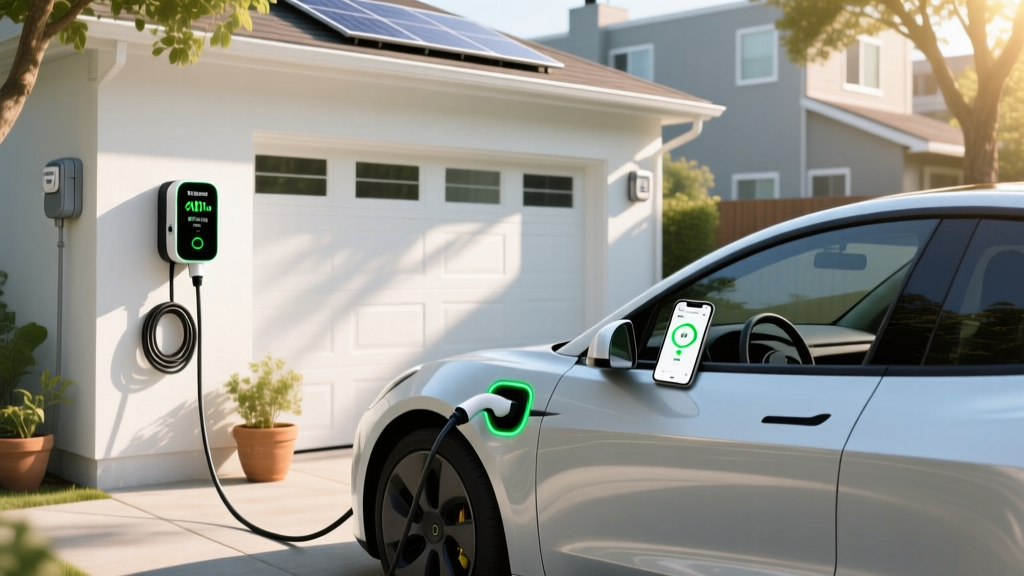
Level 2 is where 90% of your charging will happen. A 240V circuit — the same voltage your electric dryer uses — delivers enough power to replenish 200–300 miles of range overnight. Most EV owners install a Level 2 wall connector in their garage and wake up "full" every morning, a convenience the Range Rover's 27.7-gallon tank never offered.
DC Fast Charging bypasses the vehicle's onboard charger entirely, feeding high-voltage direct current straight into the battery pack. Peak rates vary enormously: a Hyundai Ioniq 5 can accept up to 240 kW on an 800V architecture (10–80% in roughly 18 minutes), while a Chevrolet Equinox EV peaks around 150 kW. Real-world charging times depend heavily on the charge curve — batteries accept power quickly at low states of charge but taper significantly above 80% to protect cell health. A "350 kW charger" rarely delivers 350 kW for the entire session.
• 75 kWh battery (Tesla Model Y LR) at 250 kW peak: ~25 minutes
• 100 kWh battery (Rivian R1S) at 200 kW peak: ~34 minutes
• 131 kWh battery (F-150 Lightning Ext. Range) at 150 kW peak: ~55 minutes
Times assume preconditioned battery and optimal conditions. Cold batteries or high ambient heat can add 10–30%.
Home Level 2 Installation: Electrical Requirements, Panel Upgrades, and Real Costs
The sticker price of a Level 2 wall connector is only part of the equation. Installation costs vary wildly depending on your home's electrical infrastructure — and if you're coming from a home built in the same era as your 2010 Range Rover Supercharged Sport, there may be surprises behind the panel.
Electrical Requirements for Level 2 Charging
A typical Level 2 charger requires a dedicated 240V circuit rated at 40–60 amps, depending on the charger's maximum output. National Electrical Code (NEC) requires circuits to be rated at 125% of the continuous load, so a 48A charger (like the Tesla Wall Connector) needs a 60A breaker. The circuit must be dedicated — no sharing with other appliances.
- Wire gauge: 6 AWG copper for 60A circuits; 8 AWG for 40A
- Outlet type: NEMA 14-50 (most common), NEMA 6-50, or hardwired connection
- GFCI protection: NEC 2020 and later require GFCI breakers for receptacle-based EV circuits in garages — hardwired units are exempt, which is one reason many electricians prefer hardwiring
- Permit: Required in virtually all jurisdictions; expect $50–$200 depending on locality
The Panel Upgrade Question
This is where costs can escalate. Many homes built before 2015 have 100A or 150A main electrical panels. Adding a 60A EV circuit to an already-loaded 100A panel may exceed the panel's capacity, especially if you also run electric heat, an electric oven, and a dryer. A licensed electrician will perform a load calculation (NEC Article 220) to determine if your panel can handle the additional draw.
If an upgrade is needed — typically from 100A or 150A to 200A — expect to pay $1,500–$3,500 for the panel swap itself, plus utility coordination. Some utilities offer rebates for panel upgrades tied to EV adoption. In rare cases, a service upgrade from the utility (new transformer, new meter) may be required, adding $2,000–$5,000+.
| Component | Low-End Cost | High-End Cost | Notes |
|---|---|---|---|
| Level 2 Charger (hardware) | $350 | $750 | Varies by brand, power, smart features |
| Electrician labor (basic install) | $400 | $1,200 | Depends on run length from panel to garage |
| Permit & inspection | $50 | $250 | Municipal fee; varies by jurisdiction |
| Electrical panel upgrade (if needed) | $1,500 | $3,500 | 100A→200A; not always required |
| Total (no panel upgrade) | $800 | $2,200 | Typical scenario for modern homes |
| Total (with panel upgrade) | $2,300 | $5,700 | Older homes or high-load panels |
The federal government does not currently offer a dedicated tax credit for home charger installation in 2026 (the §30C Alternative Fuel Infrastructure Tax Credit expired for residential use after 2023), though some states and utilities provide rebates of $250–$1,000. Check your local utility's EV programs and state incentive databases for current offers.
Connector Compatibility: NACS, CCS1, CHAdeMO, and What Your EV Needs
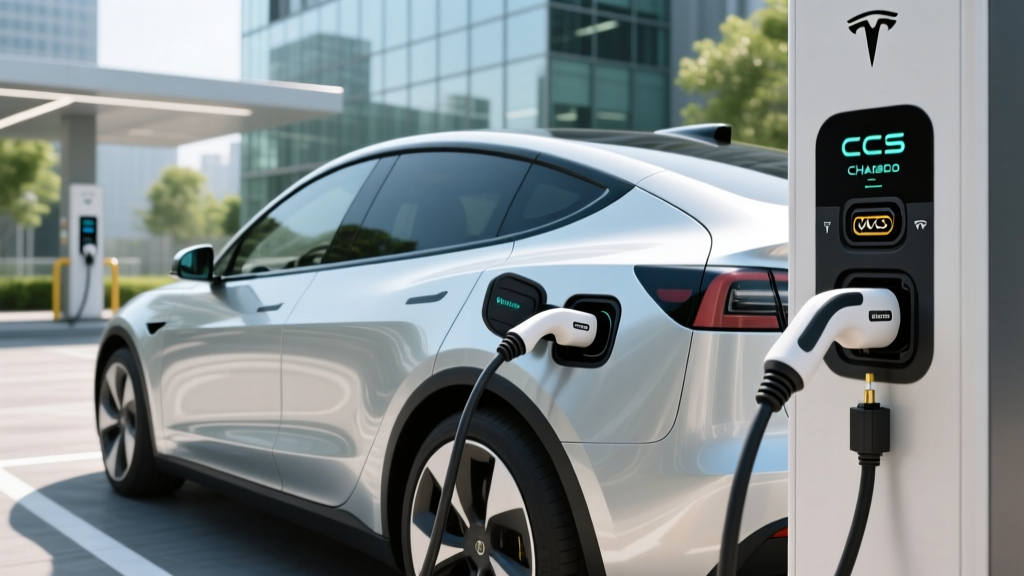
The connector landscape in 2026 has largely consolidated around the North American Charging Standard (NACS), originally developed by Tesla and now adopted by nearly every major automaker. But depending on what EV you buy, you may encounter different plugs.
| Connector | Brands Using It (2026 Models) | Adapter Needed for Tesla Superchargers? |
|---|---|---|
| NACS (J3400) | Tesla (all), Ford, GM, Rivian, Volvo, Polestar, Mercedes-Benz, Nissan (2026+) | No — native NACS |
| CCS1 | Hyundai/Kia (some 2025 carryover), Stellantis, BMW, VW (ID.4 carryover), legacy 2023–2025 EVs | Yes — CCS-to-NACS adapter (~$200–$250) for Supercharger access |
| CHAdeMO | Nissan Leaf (discontinued after 2025); Mitsubishi Outlander PHEV (legacy) | CHAdeMO-to-NACS adapters extremely limited; network shrinking |
For 2026 buyers: If you're purchasing a new EV this year, NACS is the default for most brands. Ford, GM, Rivian, and Tesla all ship with native NACS ports. Hyundai and Kia's newest models (Ioniq 5 refresh, EV6 refresh) have transitioned to NACS for 2026. If you buy a slightly used 2024–2025 EV with CCS1, a CCS-to-NACS adapter from Tesla or a third-party supplier like Lectron gives you Supercharger access — critical since Tesla's network remains the most reliable DC fast-charging infrastructure in the US.
For home Level 2 charging, all vehicles use a J1772 inlet (or NACS, which handles AC via the same pins). Universal J1772 Level 2 chargers work with every EV; Tesla owners simply use a J1772-to-NACS adapter (included with the car) or opt for the Tesla Wall Connector directly.
Cost to Charge Per Mile: EV Electricity vs. Your Range Rover's Gas Bill
The 2010 Range Rover Supercharged Sport averaged roughly 14 mpg combined on premium fuel. At $4.50/gallon (national premium average in early 2026), that's approximately $0.32 per mile just in fuel. Let's compare that against realistic EV charging scenarios.
| Scenario | Rate ($/kWh) | Efficiency (kWh/mi) | Cost per Mile | Annual Cost (12,000 mi) |
|---|---|---|---|---|
| Home charging (off-peak TOU) | $0.09–$0.14 | 0.30 | $0.03–$0.04 | $360–$480 |
| Home charging (standard rate) | $0.16 | 0.30 | $0.05 | $600 |
| Public Level 2 (workplace/mall) | $0.20–$0.30 | 0.30 | $0.06–$0.09 | $720–$1,080 |
| DC Fast Charging (road trips) | $0.35–$0.55 | 0.35* | $0.12–$0.19 | Varies by trip frequency |
| 2010 Range Rover SC Sport (premium gas) | $4.50/gal | 14 mpg | $0.32 | $3,840 |
* Highway DC fast-charging efficiency drops to ~0.35 kWh/mi at 70+ mph due to aerodynamic drag.
The math is stark. Even charging exclusively on expensive public DC fast chargers, an EV costs roughly half per mile what the supercharged Range Rover demands. Home charging on off-peak rates drops fuel cost to roughly one-tenth. Over 12,000 miles annually, the difference between $480 (home off-peak EV) and $3,840 (Range Rover premium) represents $3,360 in annual fuel savings — $16,800 over five years.
To access the cheapest rates, enroll in your utility's time-of-use (TOU) plan. Most utilities offer super off-peak windows (typically 11 PM – 6 AM) at rates 40–60% below standard. Every recommended smart charger below can schedule charging to these windows automatically.
Equipment Recommendations: 2026's Best Level 2 Home Chargers
Not all Level 2 chargers are equal. Differences in power output, cable length, smart features, and build quality matter — especially when you're charging a large-battery SUV daily. Here are four proven options across price points.
Tesla Wall Connector
Power: Up to 11.5 kW (48A)
Connector: NACS native
Cable: 24 ft
Smart features: Wi-Fi, OTA updates, load sharing with second unit, Tesla app integration
Price: ~$475
Best for: Tesla, Ford, GM, Rivian, and other NACS-equipped EVs. The gold standard for NACS homes.
ChargePoint Home Flex
Power: Up to 12 kW (50A, configurable)
Connector: J1772 (works with all EVs; Tesla via adapter)
Cable: 23 ft
Smart features: Wi-Fi, Alexa, scheduled charging, energy tracking, flexible amperage settings
Price: ~$699
Best for: Multi-EV households or CCS1 vehicles. Amperage is adjustable to match your circuit.
Emporia Level 2 EV Charger
Power: Up to 11.5 kW (48A)
Connector: J1772
Cable: 24 ft
Smart features: Wi-Fi, solar integration, energy monitoring, TOU scheduling, works with Emporia Vue home energy monitor
Price: ~$399
Best for: Budget-conscious buyers with solar panels. Excellent value with robust app.
Grizzl-E Smart
Power: Up to 10 kW (40A)
Connector: J1772
Cable: 24 ft
Smart features: Wi-Fi, OCPP protocol, extreme cold rating (-40°F), rugged aluminum case
Price: ~$549
Best for: Cold-climate and outdoor installations. Built like a tank in Canadian winters.
All four units support hardwired or NEMA 14-50 plug installation. For maximum reliability and to avoid GFCI nuisance tripping, most electricians recommend hardwiring. If you choose a plug, ensure your electrician installs a GFCI breaker rated for EV use — some older GFCI breakers false-trip under continuous EV loads.
Safety, Code, and Installation Best Practices
EV charging draws high current for extended periods — often 8–12 hours continuously. This places demands on your electrical system that differ from typical household loads. Follow these guidelines:
- Dedicated circuit: Your EV charger must have its own breaker. No shared circuits with laundry, HVAC, or other loads.
- Continuous load derating: Per NEC 210.20, continuous loads (3+ hours) require a breaker rated at 125% of the load. A 40A charger needs a 50A breaker; a 48A charger needs a 60A breaker.
- Outdoor-rated equipment: If installing outside, the charger must carry a NEMA 4 or NEMA 4X rating for water and dust ingress. All four chargers above meet this standard.
- Cable management: A 24-foot cable is standard, but plan your parking position so the cable doesn't stretch across walkways. Wall-mounted cable organizers prevent tripping hazards and connector damage.
- Surge protection: A whole-home surge protective device (SPD) at the panel is recommended, especially in lightning-prone regions. Cost: $200–$500 installed.
- Always use a licensed electrician: DIY EV charger installation voids most equipment warranties, may violate local code, and creates genuine fire risk. Permits and inspections protect you and your home insurance coverage.
Public Charging Networks: What to Expect on Road Trips
Home charging covers daily needs, but road trips require public DC fast charging. The 2026 public network landscape is dominated by a few major players:
- Tesla Supercharger: 7,000+ stalls in the US, now open to NACS-equipped non-Tesla vehicles. Consistently the most reliable network, with stall-level uptime above 97%. Peak speeds 150–250 kW (V3/V4 stalls).
- Electrify America: ~1,000 stations, CCS1 and NACS connectors. Speeds up to 350 kW. Reliability has improved but still trails Tesla. Pricing: $0.35–$0.55/kWh depending on region and membership tier.
- EVgo: 1,100+ stations, mixed connectors. Partners with GM's Ultium Charge network. Pricing: $0.30–$0.50/kWh.
- ChargePoint: Largest network by station count, but mostly Level 2. DC fast stations growing. App shows real-time availability.
For road trips in a large-battery EV (100+ kWh), plan charging stops around the 10–80% sweet spot. Charging from 80–100% can take as long as 10–80% due to taper, so it's faster to charge more often to 80% than to wait for a full charge at one stop. Precondition your battery using the vehicle's navigation-routed preconditioning feature (available on Tesla, Ford, Rivian, Hyundai) — this heats or cools the pack to optimal temperature before you arrive, maximizing charge speed.
Frequently Asked Questions
How much does it cost to install a home EV charger?
A basic Level 2 installation with adequate panel capacity typically costs $800–$2,200 total (charger hardware + electrician labor + permit). If your home needs an electrical panel upgrade from 100A to 200A, add $1,500–$3,500. Always get a load calculation from a licensed electrician before assuming your panel can handle a new 60A circuit.
How fast will each charging level add range?
Level 1 (120V): 3–5 miles per hour. Level 2 (240V): 25–45 miles per hour depending on amperage and vehicle efficiency. DC fast charging: 150–1,200+ miles per hour at peak power, though the charge curve tapers significantly above 80% SoC. A practical DC fast-charge stop adds 150–250 miles in 20–30 minutes.
Which connector is compatible with my EV?
For 2026 models: Tesla, Ford, GM, Rivian, Volvo, Polestar, and Mercedes-Benz use NACS. Most Hyundai/Kia and some Stellantis models still use CCS1 (check the specific model year). CHAdeMO is effectively discontinued on new vehicles. For home Level 2, all EVs accept J1772 or NACS — universal J1772 chargers work with everything using adapters.
How much does charging cost per mile compared to gas?
Home charging at off-peak rates costs roughly $0.03–$0.05 per mile. Public DC fast charging runs $0.12–$0.19 per mile. For comparison, the 2010 Range Rover Supercharged Sport at 14 mpg on $4.50 premium costs about $0.32 per mile. Even the most expensive public EV charging is roughly half the per-mile cost of that supercharged V8.
What electrical upgrades might I need?
The most common upgrade is a panel swap from 100A or 150A to 200A ($1,500–$3,500) if your existing panel lacks capacity for a new 60A circuit. Homes with all-electric appliances (heat pump, electric range, dryer) are more likely to need this. Your electrician will perform an NEC Article 220 load calculation. In rare cases, a utility service upgrade (new drop, transformer) may be required, adding $2,000–$5,000.
Can I charge my EV using solar panels?
Yes. If you have a home solar array, you can effectively charge for "free" after the system is paid off. Smart chargers like the Emporia Level 2 and ChargePoint Home Flex can schedule charging to coincide with peak solar production hours. A typical 8 kW solar system produces roughly 30–40 kWh per day in good sun — enough to replenish 100–130 miles of EV range daily.
Sources: fueleconomy.gov (EPA efficiency data), Alternative Fuels Data Center (state incentive database), National Electrical Code (NEC) standards for EV circuit installation. Consult a licensed electrician for your specific home's requirements and a tax professional for incentive eligibility.