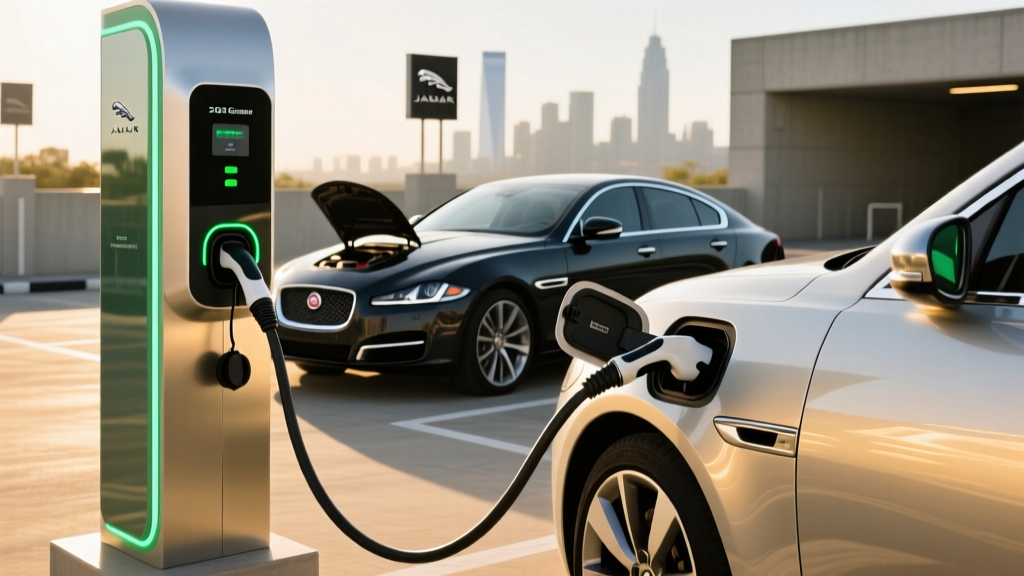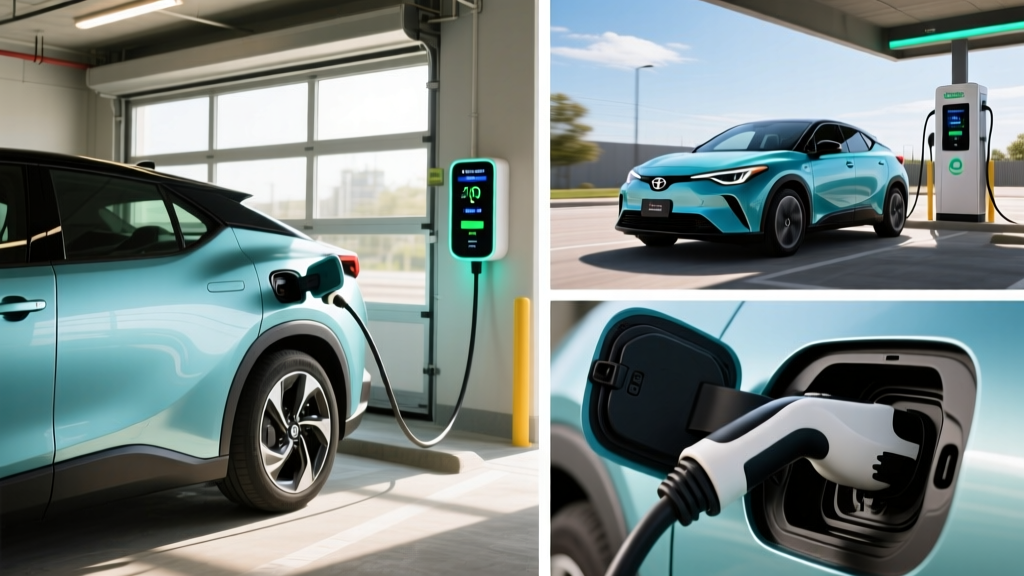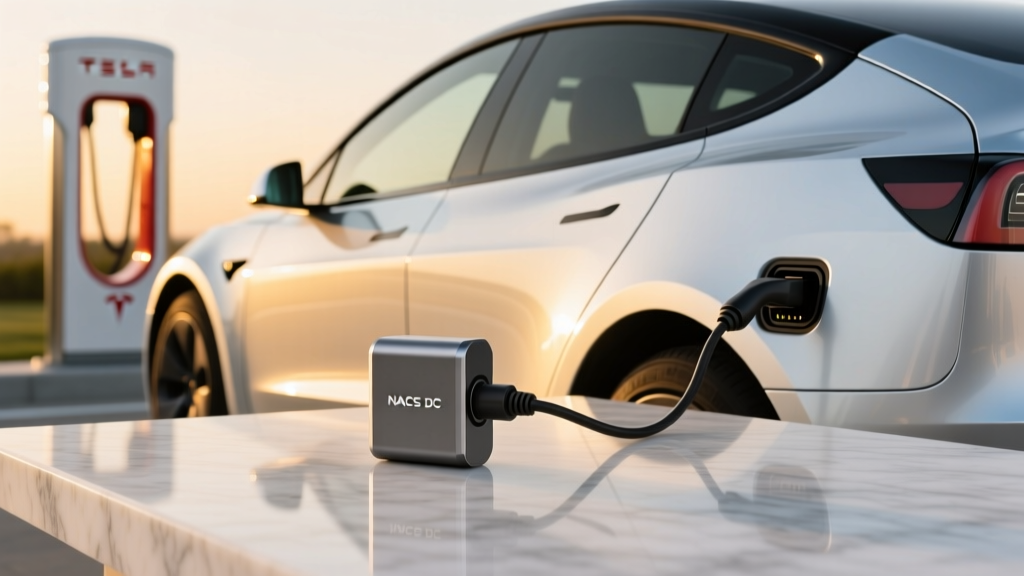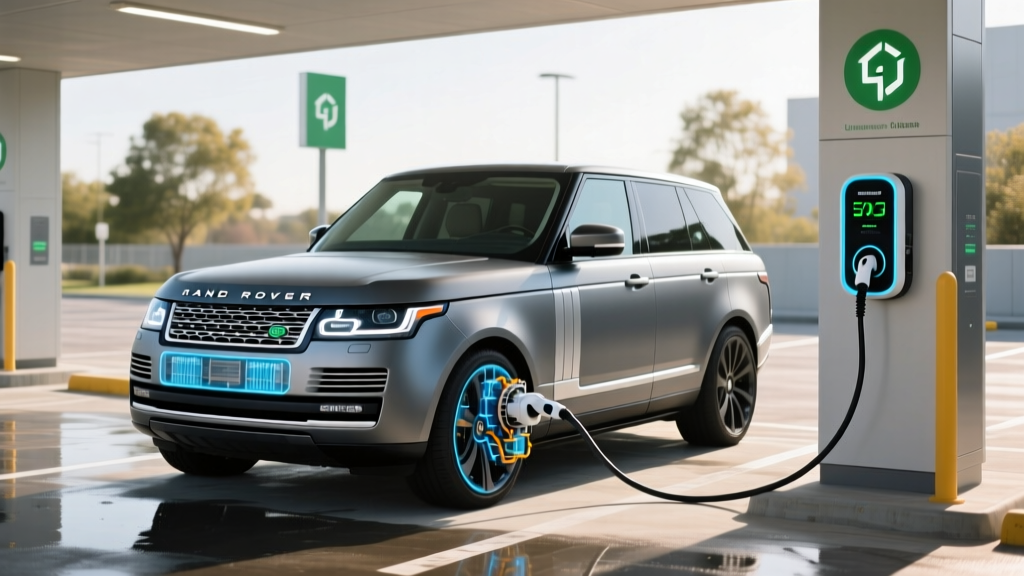
Restomodding a classic luxury SUV into an electric vehicle has moved from fringe hobby to legitimate ownership path. The 2012 Land Rover Range Rover Supercharged — with its aluminum monocoque, generous engine bay, and 5,000-lb curb weight — is an increasingly popular candidate for EV conversion. But once you've swapped that 5.0L supercharged V8 for a Tesla drive unit or Cascadia Motion stack, you face a question every new EV owner confronts: how do you actually charge it?
This guide covers every charging scenario a Range Rover EV conversion owner will encounter — from plugging into a standard 120V outlet in your garage to spec'ing a home Level 2 charger, understanding DC fast charging compatibility, and calculating your real cost per mile versus the original 12 MPG combined the Supercharged V8 delivered.
Charging Levels Explained: Speeds, Power, and What to Expect
Before wiring anything, understand the three charging tiers. The distinction between kW (kilowatts — the rate of power delivery) and kWh (kilowatt-hours — the energy capacity of your battery) is the single most important concept in EV ownership. A 100 kWh battery charged at 10 kW takes roughly 10 hours. Think of kW as the flow rate of a hose and kWh as the size of the tank.
| Level | Voltage | Typical Power (kW) | Miles of Range Added per Hour | Best For |
|---|---|---|---|---|
| Level 1 | 120V AC | 1.0 – 1.4 kW | 3 – 5 mi/hr | Overnight top-ups, emergencies |
| Level 2 | 240V AC | 3.3 – 19.2 kW | 12 – 60+ mi/hr | Daily home & workplace charging |
| DC Fast Charge | 400 – 800V DC | 50 – 350 kW | 150 – 1,000+ mi/hr | Road trips, rapid replenishment |
For a Range Rover conversion with an estimated 85–100 kWh battery pack (typical for retaining 220–260 miles of range in a heavy vehicle), Level 1 charging is impractical as a primary strategy — it would take 4+ days for a full charge. Level 2 at 48A / 11.5 kW is the sweet spot for overnight replenishment. DC fast charging depends entirely on your conversion's onboard charge controller and whether you've integrated a CCS or NACS inlet.
Home Level 2 Installation: Electrical Requirements and Real Costs
A proper Level 2 home charging setup requires a dedicated 240V circuit, typically rated at 40A to 60A. Here's what that means for a home that may have been built around the same era as your 2012 Range Rover — or much earlier.
Electrical Specifications
- Circuit: Dedicated 240V, 40A–60A breaker (NEMA 14-50 outlet or hardwired)
- Wire gauge: 6 AWG copper (for 50A circuits) or 4 AWG (for 60A)
- Continuous load rule: NEC requires the circuit be rated at 125% of the charger's continuous draw — a 40A charger needs a 50A breaker
- GFCI protection: Required by NEC 2020+ for EV receptacles in garages and outdoors
Panel Capacity: The Hidden Cost
Many homes — especially those built before 2000 — have 100A or 150A main panels. Adding a 50A dedicated circuit for EV charging may push total load beyond 80% of panel capacity, triggering a panel upgrade to 200A. This is the single biggest variable in installation cost and one that conversion builders frequently underestimate.
| Component | Low Estimate | High Estimate | Notes |
|---|---|---|---|
| Level 2 Charger (Equipment) | $350 | $750 | 40A–48A smart charger, 25ft cable |
| Electrical Permit | $50 | $250 | Varies by municipality |
| Electrician Labor (standard install) | $500 | $1,500 | Short run from panel, no conduit challenges |
| Panel Upgrade (if needed) | $1,500 | $4,000 | 100A/150A → 200A service upgrade |
| Conduit & Wire (long runs) | $200 | $800 | 50+ ft from panel to garage |
| Total (no panel upgrade) | $1,100 | $3,300 | Typical straightforward install |
| Total (with panel upgrade) | $2,600 | $7,300 | Older homes with limited capacity |
Always hire a licensed electrician and pull permits. Unpermitted EV charger installations can void home insurance claims and fail home inspections at sale time. The National Electrical Contractors Association maintains a directory of certified installers.
Connector Compatibility: NACS, CCS1, CHAdeMO, and Conversion Realities
Factory-built EVs ship with a specific charge port. Your Range Rover conversion requires a deliberate connector choice during the build phase. As of 2026, the North American connector landscape has consolidated significantly around NACS (the Tesla standard, now formally SAE J3400), though CCS1 remains widely deployed on public infrastructure.
| Connector | AC Level 2 | DC Fast Charge | Network Compatibility | Conversion Suitability |
|---|---|---|---|---|
| NACS (J3400) | Yes | Yes | Tesla Supercharger, Electrify America (newer stalls), most OEMs | Best long-term choice for new builds |
| CCS1 | Yes (via J1772 upper) | Yes | Electrify America, EVgo, ChargePoint DC | Still viable; wide adapter support |
| CHAdeMO | No (separate port) | Yes (legacy) | Limited; mostly older Nissan/Leaf stations | Not recommended for new conversions |
For a 2012 Range Rover conversion: Specifying a NACS inlet gives you native Tesla Supercharger access (the largest reliable DC network) plus CCS stations via a simple adapter. Most conversion shops integrating Tesla Large Drive Units (LDU) or Cascadia inverters find NACS the path of least resistance, as the charge controller and BMS communication protocols are well-documented.
Charging Times for Typical Conversion Battery Sizes
Conversion battery packs for a vehicle of this mass typically range from 70 kWh (minimum viable for ~170 mi range) to 110 kWh (targeting 260+ mi). Here's what charge times look like across a realistic 10–80% state of charge window — the range you'll actually use, since charging above 80% slows dramatically as the battery management system tapers current to protect cell health.
| Battery Pack | Level 2 @ 7.7 kW (32A) | Level 2 @ 11.5 kW (48A) | DC Fast @ 50 kW | DC Fast @ 150 kW |
|---|---|---|---|---|
| 70 kWh | ~6.4 hours | ~4.3 hours | ~59 minutes | ~20 minutes* |
| 85 kWh | ~7.7 hours | ~5.2 hours | ~71 minutes | ~24 minutes* |
| 100 kWh | ~9.1 hours | ~6.1 hours | ~84 minutes | ~28 minutes* |
*DC fast charge times assume the conversion's BMS and charge controller support the stated peak rate. Many DIY conversions cap at 50–75 kW DC due to contactor and thermal limitations. Always verify your system's maximum C-rate.
Charge curve taper matters: a pack accepting 150 kW peak will typically hold that rate only from ~10–40% SoC, then step down to 100 kW, then 50 kW above 70%. Real-world 10–80% times are 20–35% longer than the simple math of kWh ÷ kW suggests.
Cost to Charge: Per-Mile Economics vs. the Original V8
The 2012 Range Rover Supercharged with its 5.0L V8 returned an EPA-rated 12 MPG combined (12 city / 18 highway per fueleconomy.gov). At $3.50/gallon, that's roughly $0.29 per mile in fuel alone. An EV conversion changes this equation dramatically, though exact savings depend on your electricity rate and charging habits.
| Scenario | Rate | Vehicle Efficiency | Cost Per Mile | Annual Cost (12,000 mi) |
|---|---|---|---|---|
| Original 5.0L V8 (12 MPG combined) | $3.50/gal | 12 MPG | $0.292 | $3,500 |
| Home charging (off-peak utility rate) | $0.11/kWh | 2.5 kWh/mi | $0.069 | $825 |
| Home charging (standard residential avg) | $0.17/kWh | 2.5 kWh/mi | $0.106 | $1,275 |
| Public Level 2 (network pricing) | $0.35/kWh | 2.5 kWh/mi | $0.146 | $1,750 |
| DC Fast Charging (road trip pricing) | $0.48/kWh | 2.5 kWh/mi | $0.200 | $2,400 |
A Range Rover conversion will consume roughly 2.3–2.8 kWh per mile given its weight and aerodynamics — heavier than a Tesla Model Y (~2.0 kWh/mi) but lighter per mile than the original V8's energy cost. Even at standard residential rates, you're looking at 60–75% lower per-mile energy cost versus the supercharged engine. Over 12,000 miles annually, that's $1,500–$2,700 in fuel savings — meaningful for offsetting the conversion's upfront investment.
Recommended Level 2 Home Chargers for Conversion Builds
Your conversion doesn't care what brand of charger you use — Level 2 AC charging follows the J1772 protocol (or NACS equivalent) universally. Here are proven units suited to a high-capacity battery pack that needs efficient overnight replenishment.
Tesla Wall Connector (J3400/NACS)
- Power: Up to 11.5 kW (48A @ 240V)
- Cable: 24 ft
- Smart features: Wi-Fi, OTA updates, load sharing, power metering
- Connector: NACS native
- Price: ~$475
- Best for: NACS-equipped conversions wanting Supercharger ecosystem compatibility
ChargePoint Home Flex
- Power: Up to 12 kW (50A @ 240V, adjustable)
- Cable: 23 ft
- Smart features: App scheduling, Alexa, energy reports, amperage dip-switch configurable
- Connector: J1772 (NACS adapter included)
- Price: ~$599
- Best for: Flexible amperage matching to your panel capacity
Emporia Vue Level 2 Charger
- Power: Up to 11.5 kW (48A)
- Cable: 24 ft
- Smart features: Integrated energy monitoring, solar integration, time-of-use scheduling
- Connector: J1772
- Price: ~$399
- Best for: Budget-conscious builds; pairs well with whole-home energy monitoring
Grizzl-E Smart
- Power: Up to 10 kW (40A)
- Cable: 24 ft
- Smart features: OCPP compatible, adjustable amperage, extreme cold rated (-40°F)
- Connector: J1772
- Price: ~$449
- Best for: Cold-climate garages; ruggedized build quality
For a Range Rover conversion with a 100 kWh pack, prioritize 48A chargers (11.5 kW) to keep overnight charging under 8 hours. A 40A unit adds roughly 1.5 hours to a full charge — manageable but noticeable.
Safety, Code, and the Permit Process
EV charging circuits carry sustained high current for hours — this is not the same duty cycle as a dryer or oven that cycles on and off. The National Electrical Code (NEC Article 625) treats EV charging as a continuous load, meaning:
- Breaker must be rated at 125% of the charger's maximum draw (a 48A charger requires a 60A breaker)
- Wire gauge must match the breaker rating without derating issues from conduit fill or ambient temperature
- Outdoor installations require NEMA 4-rated (weatherproof) enclosures and in-use covers for receptacles
- GFCI protection is mandatory for all receptacle-based EV charging circuits per NEC 2020 and later — hardwired units are exempt from GFCI in many jurisdictions
Check with your local building department for specific permit requirements and whether your utility offers EV-specific rate plans (time-of-use pricing) or rebates for charger installation. The Alternative Fuels Data Center maintains a state-by-state incentive database.
Frequently Asked Questions
How much does it cost to install a home EV charger?
Expect $1,100–$3,300 for a standard Level 2 installation (equipment, permit, electrician labor) in a home with adequate panel capacity. If your main panel needs upgrading from 100A/150A to 200A, add $1,500–$4,000, bringing the total to $2,600–$7,300.
How fast will each charging level add range to my conversion?
Level 1 (120V) adds 3–5 miles per hour. Level 2 at 11.5 kW adds roughly 20–25 miles per hour for a heavy SUV conversion consuming ~2.5 kWh/mi. DC fast charging at 150 kW can add 60+ miles in 10 minutes, assuming your conversion's charge controller supports that rate.
Which connector should I spec for my Range Rover EV conversion?
NACS (J3400) is the strongest choice in 2026 — it provides native Tesla Supercharger access and CCS compatibility via adapter. CCS1 remains viable with wide public network support. Avoid CHAdeMO for any new build; its infrastructure is shrinking.
How much does charging cost per mile compared to the original V8?
The stock 2012 Supercharged V8 costs roughly $0.29/mile in fuel at $3.50/gallon and 12 MPG combined. An EV conversion charged at home on average residential rates ($0.17/kWh) costs approximately $0.11/mile — a 62% reduction. Off-peak utility rates can push this below $0.07/mile.
What electrical upgrades might my home need?
The most common upgrade is a main panel replacement (100A/150A to 200A) if existing capacity can't support a new 50A–60A dedicated circuit. Long wire runs (50+ feet from panel to garage) add conduit and material costs. Load management devices can sometimes avoid a panel upgrade entirely.