From Supercharged V8 to Kilowatts: The Charging Reality Check
If you're driving a 2013 Land Rover Range Rover Supercharged, you already know the deal: a 5.0-liter supercharged V8 pushing 510 horsepower, 0-60 mph in about 5.1 seconds, and a combined EPA fuel economy rating hovering around 14 MPG. At current gas prices, that luxury costs you roughly $0.28-$0.35 per mile just in fuel. For owners eyeing a switch to a modern electric SUV — whether it's a 2026 Rivian R1S, BMW iX, or Mercedes EQS SUV — the single biggest ownership shift isn't the drivetrain. It's how you "refuel."
This guide breaks down everything you need to know about EV charging at home and on the road: the three charging levels, real installation costs, connector compatibility, per-mile cost comparisons against your Range Rover's fuel bill, and specific equipment we recommend in 2026.
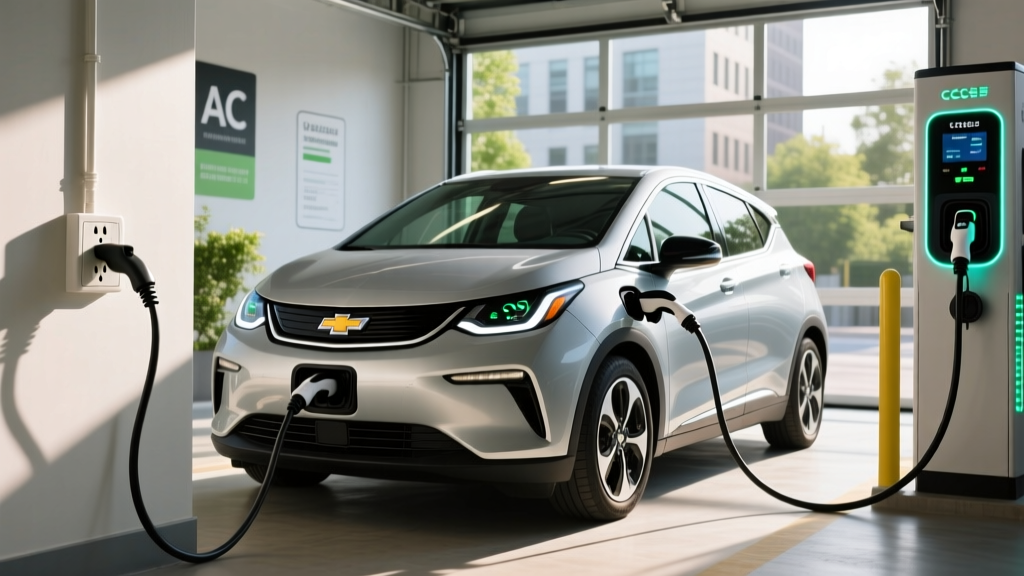
The Three Charging Levels: Speeds That Actually Matter
EV charging operates at three distinct levels, each defined by its power output in kilowatts (kW). Remember: kW measures the rate of energy delivery (like water pressure from a hose), while kWh (kilowatt-hours) measures total energy stored in your battery (like the size of the tank). Confusing these two is the most common mistake new EV owners make.
| Level | Voltage | Max Power (kW) | Miles of Range Added/Hour | Best For |
|---|---|---|---|---|
| Level 1 | 120V AC | 1.4-1.9 kW | 3-5 miles | Overnight top-ups, PHEVs, low daily mileage |
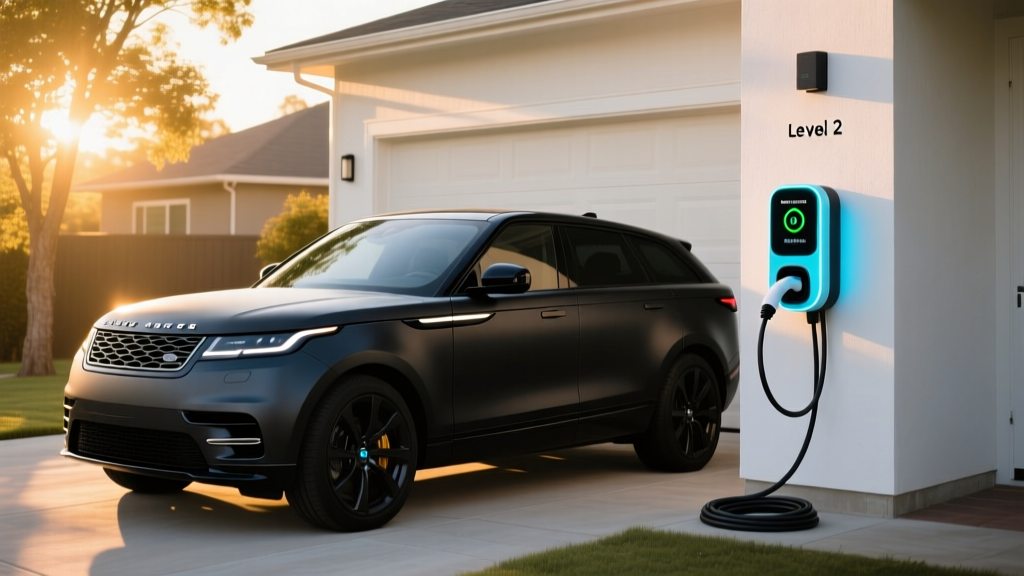
| Level 2 | 240V AC | 7.2-19.2 kW | 20-65 miles | Daily home charging, overnight full charges |
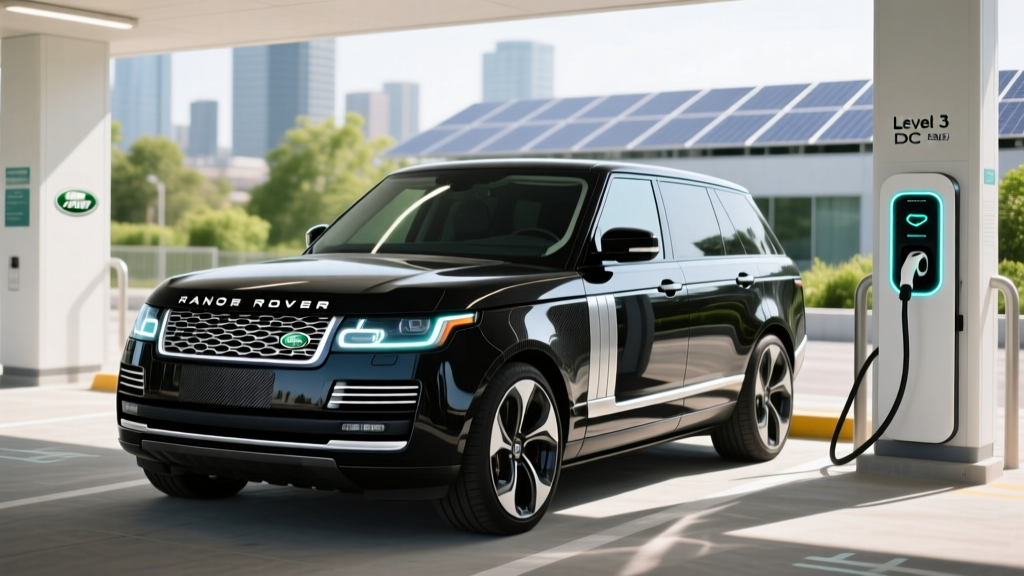
| DC Fast Charge | 400-800V DC | 50-350 kW | 150-1,200+ miles (equivalent rate) | Road trips, quick 10-80% top-ups |
A typical 2026 EV with an 80-100 kWh battery pack (like the BMW iX xDrive50 with its 105.2 kWh usable pack) will fully charge overnight on a 48-amp Level 2 home charger in roughly 8-10 hours. That same vehicle at a 250 kW DC fast charger can go from 10% to 80% State of Charge (SoC) in approximately 25-35 minutes — though charging speed tapers significantly above 80% to protect battery health.
Home Charger Installation: Real Costs, No Surprises
How much does it cost to install a home EV charger? The honest answer spans a wide range depending on your home's electrical panel, the distance from panel to charger location, and local permit fees. Here's the breakdown based on national averages in 2026:
| Cost Component | Simple Install (Panel Nearby) | Complex Install (Panel Upgrade) |
|---|---|---|
| Level 2 Charger (Equipment) | $400-$750 | $400-$750 |
| Electrician Labor (240V/50A circuit) | $500-$1,200 | $1,500-$3,000 |
| Electrical Panel Upgrade (100A→200A) | $0 (not needed) | $1,500-$3,500 |
| Permit & Inspection | $100-$300 | $150-$400 |
| Conduit & Wiring Materials | $100-$300 | $200-$600 |
| Total Estimated Range | $1,100-$2,550 | $3,750-$8,250 |
What Electrical Upgrades Might I Need?
Most homes built after the 1980s have a 200-amp electrical panel, which can typically support a 40-amp or 50-amp dedicated EV circuit (the charger draws 80% of the breaker rating continuously, so a 50A breaker delivers 40A/9.6 kW to the car). However, if your panel is already near capacity — common in homes with electric heating, hot tubs, or major appliances — you may need a panel upgrade or a smart load-management device like the Emporia V2 with automatic load shedding.
Homes from the 2013 Range Rover era or older (100-amp or 150-amp panels) are more likely to need an upgrade. A licensed electrician should perform a load calculation before any work begins. Always pull a permit — unpermitted electrical work can void homeowner's insurance and create fire risk.
Connector Compatibility: NACS, CCS, and CHAdeMO Explained
Which connector/charger is compatible with your EV? As of 2026, the North American market has largely consolidated around two standards, with a third legacy option still in use:
| Connector | Brands Using It (2026) | Max DC Speed | Notes |
|---|---|---|---|
| NACS (Tesla/J3400) | Tesla, Ford, GM, Rivian, Volvo, Polestar, Hyundai, Kia (2025+) | Up to 350 kW | Compact design; access to Tesla Supercharger network |
| CCS1 | Legacy models (pre-2025), VW ID.4 (pre-2025), BMW iX | Up to 350 kW | Larger plug; Electrify America, EVgo, ChargePoint |
| CHAdeMO | Nissan Leaf (discontinued), Mitsubishi Outlander PHEV (legacy) | Up to 100 kW | Phasing out; limited new infrastructure |
If you're cross-shopping a 2026 EV, NACS-equipped vehicles get access to over 20,000 Tesla Superchargers nationwide via adapter or native port — a significant road-trip advantage. CCS1 vehicles can use Electrify America, EVgo, and ChargePoint networks. Some newer CCS1 vehicles include a NACS adapter in the box; check your specific model. For CHAdeMO owners, adapters to CCS are available but limited in availability.
Cost Per Mile: Your Range Rover Supercharged vs. an Electric SUV
How much does charging cost per mile vs gas? Let's run the numbers against the 2013 Land Rover Range Rover Supercharged (14 MPG combined) using realistic 2026 energy prices:
| Scenario | Energy Cost | Cost Per Mile | Annual Cost (12,000 mi) |
|---|---|---|---|
| 2013 Range Rover SC (14 MPG) | $3.60/gal premium | $0.257 | $3,086 |
| Home Level 2 (off-peak rate) | $0.12/kWh | $0.036 | $432 |
| Home Level 2 (standard rate) | $0.18/kWh | $0.054 | $648 |
| Public DC Fast (avg network) | $0.42/kWh | $0.126 | $1,512 |
| Public Level 2 (workplace/mall) | $0.25/kWh | $0.075 | $900 |
The math is stark: charging at home on off-peak rates costs roughly 86% less per mile than fueling the supercharged V8 Range Rover. Even exclusive public DC fast charging saves about 50% per mile. A modern electric SUV averaging 3.0-3.5 kWh/mile (the BMW iX xDrive50 achieves about 3.1 kWh/mile per fueleconomy.gov) makes the economics work decisively.
According to the U.S. Energy Information Administration, the national average residential electricity rate hovers around $0.16-$0.17/kWh, but many utilities offer time-of-use (TOU) plans with off-peak overnight rates as low as $0.08-$0.12/kWh. Enrolling in a TOU plan is the single highest-ROI move a new EV owner can make.
Charging Times for Common Battery Sizes
Real-world charging times depend on your battery capacity, the charger's power output, and the vehicle's charge curve (the rate at which the battery accepts power at different SoC levels). Here are representative examples:
| Battery Size | Example Vehicle (2026) | Level 2 (11.5 kW) 10-80% | DC Fast (250 kW) 10-80% |
|---|---|---|---|
| 60 kWh | Volvo EX30 | ~4 hours | ~25 minutes |
| 80 kWh | Hyundai Ioniq 5 | ~5.5 hours | ~18 minutes (800V arch) |
| 100 kWh | BMW iX xDrive50 | ~7 hours | ~31 minutes |
| 120 kWh | GMC Hummer EV / Rivian R1T Max | ~8.5 hours | ~45 minutes |
A critical nuance: peak charge rates are not sustained rates. A vehicle that advertises "250 kW peak charging" may only sustain that rate between 10-30% SoC before tapering. Hyundai/Kia's 800-voltage architecture (E-GMP platform) sustains higher rates longer, which is why the Ioniq 5 achieves a 10-80% time of roughly 18 minutes — among the fastest in production. Always look at the 10-80% time, not the peak kW number, when evaluating charging speed.
Equipment We Recommend in 2026
Best Overall: ChargePoint Home Flex
- Power Output: Up to 12 kW (50A / 240V), adjustable down to 16A
- Connector: NACS or J1772 (with NACS adapter included)
- Cable Length: 24 feet
- Smart Features: Wi-Fi, scheduling, Alexa integration, energy tracking
- Price: ~$550-$650
- Why: Adjustable amperage means it works with any panel capacity. UL-listed, outdoor-rated (NEMA 4), and backed by a 3-year warranty.
Best Value: Emporia Level 2 EV Charger
- Power Output: Up to 11.5 kW (48A / 240V)
- Connector: J1772 (NACS adapter available separately)
- Cable Length: 24 feet
- Smart Features: Energy monitoring, solar integration, load management, TOU scheduling
- Price: ~$399-$450
- Why: Best-in-class energy monitoring pairs with the Emporia Vue home energy panel. Ideal if you have solar panels and want to charge on excess production only.
Best for Tesla/NACS Owners: Tesla Wall Connector
- Power Output: Up to 11.5 kW (48A / 240V)
- Connector: Native NACS
- Cable Length: 24 feet
- Smart Features: Wi-Fi updates, power sharing (link up to 6 units on one circuit), load management
- Price: ~$450-$500
- Why: Sleek, reliable, and the power-sharing feature is excellent for two-EV households sharing a single 60A circuit.
Safety, Code, and Installation Non-Negotiables
EV charging draws sustained high current for hours — this is not the same as plugging in a dryer that cycles on and off. The National Electrical Code (NEC) Article 625 governs EV charging installations, and your electrician must follow these requirements:
- Dedicated circuit: Your Level 2 charger must have its own dedicated breaker — no shared circuits with other appliances.
- 80% continuous load rule: A 50A breaker supports only 40A continuous draw. Never set your charger to draw more than 80% of the breaker rating.
- GFCI protection: NEC 2020 and later require GFCI protection for outdoor receptacles used for EV charging. Hardwired installations (recommended) avoid the nuisance-tripping issues some GFCI breakers cause with EVSEs.
- Outdoor rating: If your charger is installed outside, it must be rated NEMA 4 or NEMA 4X for weather resistance. All three chargers recommended above meet this standard.
- Cable management: Use a holster or retractable reel to keep the cable off the ground and prevent trip hazards and connector damage.
We strongly recommend hardwiring over a 240V outlet (like a NEMA 14-50). Hardwired installations eliminate the outlet as a failure point, avoid GFCI nuisance trips, and are required by code in some jurisdictions for circuits above 50A.
Frequently Asked Questions
How much does it cost to install a home EV charger?
A straightforward Level 2 installation with an adequate 200A panel typically runs $1,100-$2,550 all-in (equipment, electrician, permit, materials). If your home needs a panel upgrade from 100A to 200A, expect $3,750-$8,250. Some utilities and states offer rebates of $250-$1,000 for charger installation — check with your local utility and the Alternative Fuels Data Center for current incentives in your area.
How fast will each charging level add range?
Level 1 (120V standard outlet) adds roughly 3-5 miles of range per hour — adequate only for plug-in hybrids or very low daily mileage. Level 2 (240V, 40-48A) adds 20-40 miles per hour and is the practical standard for daily BEV ownership. DC fast charging (50-350 kW) can add 100-300+ miles in 15-30 minutes depending on the vehicle's charge architecture and battery size.
Which connector/charger is compatible with my EV?
Check your vehicle's charge port. If you're buying a 2025-2026 model from Ford, GM, Rivian, Tesla, Hyundai, Kia, or Volvo, it likely has a NACS port. Older or European-market models (BMW iX, pre-2025 VW ID.4) use CCS1. Nissan Leaf uses CHAdeMO. For home Level 2 charging, all vehicles accept J1772 or NACS — adapters are widely available. When in doubt, a J1772 charger with a NACS adapter covers virtually every EV sold in North America.
How much does charging cost per mile vs gas?
Using the 2013 Range Rover Supercharged (14 MPG combined) as a baseline at $3.60/gallon premium, you're paying about $0.257 per mile in fuel. A comparable 2026 electric SUV averaging 3.1 kWh/mile charged at home on a $0.12/kWh off-peak rate costs about $0.037 per mile — an 86% reduction. Even exclusive public DC fast charging at $0.42/kWh drops your per-mile cost to $0.13, roughly half what the supercharged V8 demands.
What electrical upgrades might I need?
The most common upgrade is a panel increase from 100A or 150A to 200A ($1,500-$3,500). Older homes may also need new wiring from the meter to the panel, or a sub-panel installation if the charger is far from the main panel (detached garage, for example). Smart load-management devices ($200-$400) can sometimes avoid a panel upgrade by dynamically limiting charger draw when other major appliances are running. Have your electrician perform a NEC Article 220 load calculation before deciding.