Trading a Supercharged V8 for Electrons: What Changes
If you're driving a 2015 Supercharged Range Rover Sport, you're used to a 5.0L V8 making 510 hp, a combined EPA rating around 16 MPG, and fuel stops that take five minutes but cost $70–$90 each time at today's prices. Switching to a battery electric vehicle flips that routine entirely: you'll fuel at home while you sleep, pay a fraction per mile, and never visit a gas station again — but only if your charging setup is done right.
This guide walks through every charging decision you'll face as an EV newcomer coming from a high-performance SUV, from the electrical panel in your garage to the DC fast charger on a road trip. We'll cover exact costs, speeds, connectors, and the equipment that actually earns a spot on your wall in 2026.
The Three Charging Levels, Explained With Real Numbers
EV charging breaks into three tiers. Understanding the difference between kW (power — how fast energy flows) and kWh (energy — how much the battery holds) is the single most important piece of EV literacy. Think of kW as the diameter of the hose and kWh as the size of the bucket.
| Level | Voltage / Amps | Power (kW) | Miles of Range Added Per Hour | Best For |
|---|---|---|---|---|
| Level 1 | 120V / 12A | ~1.4 kW | 3–5 mi/hr | Overnight top-ups, PHEVs, emergencies |
| Level 2 (Home) | 240V / 32–48A | 7.7–11.5 kW | 25–44 mi/hr | Daily home charging, primary EV fueling |
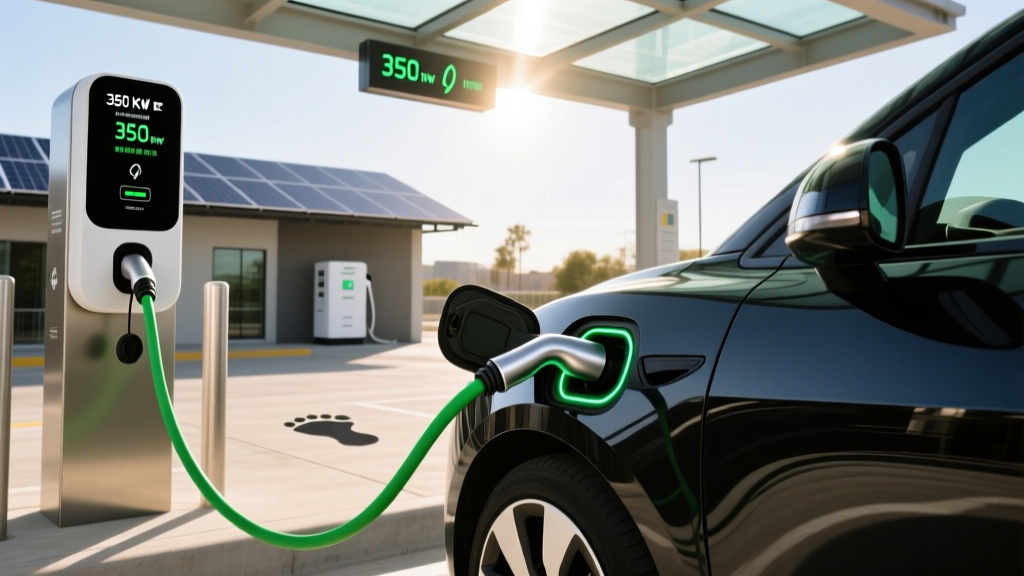
| DC Fast Charging | 400–800V DC | 50–350 kW | 150–1,000+ mi/hr (peak) | Road trips, rapid top-ups away from home |
Real-world context: A 100 kWh battery (like the one in a large luxury EV SUV comparable to your Range Rover Sport) takes roughly 10 hours on a 48A Level 2 charger from 10–80%, but only 18–25 minutes on a 250 kW DC fast charger for the same 10–80% window. That 80% ceiling matters because charging speed tapers sharply above 80% State of Charge to protect battery health — a phenomenon called the charge curve taper.
Home Level 2 Installation: Real Costs, Real Requirements
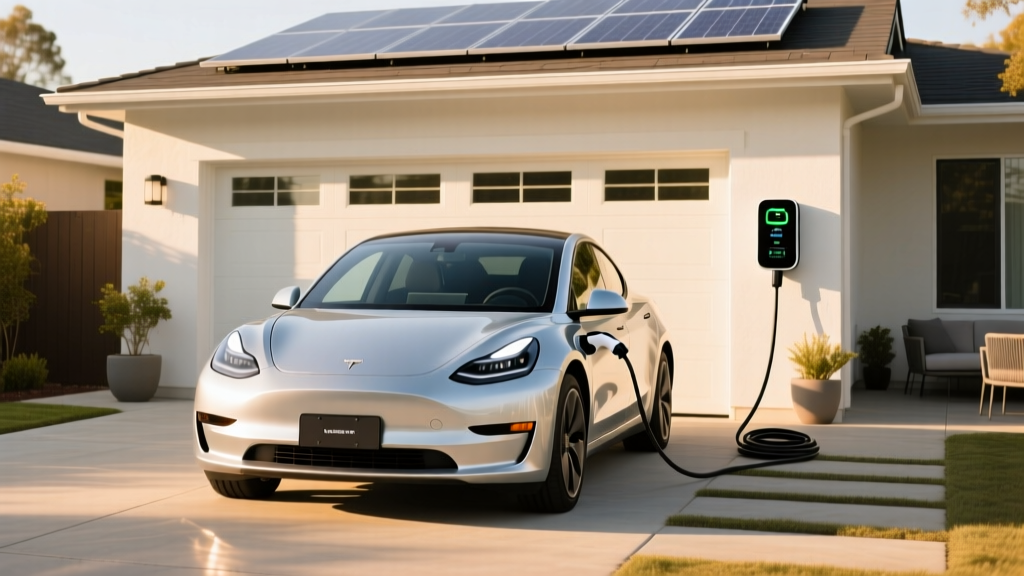
A Level 2 home charger is the cornerstone of practical EV ownership. Here's what the installation actually involves and what it costs in 2026.
Electrical Requirements
A typical Level 2 charger needs a dedicated 240V circuit — the same voltage your electric dryer or oven uses. The most common configurations:
- NEMA 14-50 outlet (240V / 50A breaker, 40A continuous): The most versatile option. Lets you plug in a portable charger or swap units later.
- Hardwired connection (240V / 60A breaker, 48A continuous): Delivers the fastest Level 2 speeds (11.5 kW). Required for chargers above 40A. No outlet, so the unit is fixed to the wall.
Your electrical panel must have enough spare capacity. Most modern 200A panels can accommodate a 50A or 60A EV circuit. Older homes with 100A or 150A service may need a panel upgrade — a significant added cost detailed below.
Installation Cost Breakdown
| Item | Simple Install (panel nearby, no upgrade) | Complex Install (long run, sub-panel, or 200A upgrade) |
|---|---|---|
| EVSE Equipment (Level 2 charger) | $350–$700 | $350–$700 |
| Electrician Labor | $400–$800 | $1,200–$2,500 |
| Electrical Permit | $50–$150 | $50–$200 |
| Panel Upgrade (if needed, 100A→200A) | N/A | $1,500–$3,500 |
| Conduit / Wiring (long runs >50 ft) | $100–$300 | $400–$1,200 |
| Total Estimated Cost | $900–$1,950 | $3,500–$8,100 |
The simple install assumes your panel is in the garage or on an adjacent wall with spare breaker slots and adequate capacity. The complex scenario covers homes where the panel is on the opposite side of the house, requires a sub-panel, or needs a full service upgrade. Always get a licensed electrician's assessment before purchasing equipment — they'll perform a load calculation to confirm your panel can handle the circuit.
Safety and Code Considerations
- Dedicated circuit: Your EV charger must be on its own breaker — never shared with other appliances.
- GFCI protection: The NEC (National Electrical Code) requires GFCI protection for outdoor outlets and many indoor garage installations. Hardwired units often have built-in ground-fault protection.
- Outdoor rating: If your charger is mounted outside or in an open carport, it must carry a NEMA 4 or IP65 weather-resistance rating.
- Permit and inspection: Nearly all jurisdictions require a permit and post-installation inspection. Skipping this can void your homeowner's insurance coverage for electrical fires.
Connector Compatibility: NACS, CCS1, and CHAdeMO
The connector landscape has consolidated dramatically. As of 2026, nearly every new EV sold in North America uses the NACS (North American Charging Standard), originally developed by Tesla and now adopted industry-wide. Here's where things stand:
| Connector | Brands Using It (Native) | Notes |
|---|---|---|
| NACS (Tesla-style) | Tesla, Ford, GM, Rivian, Hyundai/Kia (2025+), Volvo/Polestar, BMW, Mercedes, Lucid, Toyota | Industry standard for 2025+ models. Smaller, lighter plug. |
| CCS1 | VW ID.4 (2024 and earlier), older BMW i4/iX, older Hyundai/Kia, some Stellantis | Legacy standard. Adapters available for NACS Supercharger access. |
| CHAdeMO | Nissan Leaf (discontinued), Mitsubishi Outlander PHEV | Effectively discontinued. Limited new infrastructure. |
Adapter reality: If you buy a CCS1-equipped EV (common in the 2022–2024 used market), you'll likely need a CCS-to-NACS adapter (~$150–$200) to access the Tesla Supercharger network, which is now open to non-Tesla vehicles at many locations. Ford and GM include these adapters with their vehicles. Confirm adapter compatibility with your specific charger model before purchasing.
What Does Charging Actually Cost Per Mile?
This is where your old Range Rover Sport's fuel bill becomes a distant memory. The 2015 Supercharged Range Rover Sport gets roughly 16 MPG combined. At $3.80/gallon (2026 national average for premium — which the 5.0L V8 requires), that's $0.238 per mile just in fuel.
| Scenario | Rate | Cost per kWh | Cost per Mile (at 3 mi/kWh) | Annual Cost (12,000 mi) |
|---|---|---|---|---|
| Home Level 2 — Off-Peak TOU | Utility time-of-use plan | $0.08–$0.12 | $0.027–$0.040 | $320–$480 |
| Home Level 2 — Standard Rate | Flat residential rate | $0.14–$0.18 | $0.047–$0.060 | $560–$720 |
| Public Level 2 (ChargePoint, etc.) | Per-kWh pricing | $0.25–$0.49 | $0.083–$0.163 | $1,000–$1,960 |
| DC Fast Charging (Electrify America, EA) | Per-kWh pricing | $0.35–$0.55 | $0.117–$0.183 | $1,400–$2,200 |
| Tesla Supercharger (V3/V4) | Per-kWh pricing | $0.25–$0.40 | $0.083–$0.133 | $1,000–$1,600 |
| 2015 Range Rover Sport (Premium Gas) | $3.80/gal, 16 MPG | N/A | $0.238 | $2,850 |
The takeaway: Charging at home on an off-peak rate plan saves $2,300–$2,500 annually compared to fueling the supercharged Range Rover Sport. Even relying heavily on DC fast charging, you'll still save $650–$1,450 per year. These savings compound over ownership and offset the EV's typically higher purchase price. Source: fueleconomy.gov EV cost calculator.
Charging Time Examples: What to Expect With Common Battery Sizes
Charging time depends on both the battery's usable capacity (kWh) and the charger's sustained power output (kW). Here are real-world estimates for popular EV battery sizes:
| Battery Size (usable kWh) | Example Vehicles | 48A Level 2 (11.5 kW) | 150 kW DC Fast | 250 kW DC Fast | 350 kW DC Fast |
|---|---|---|---|---|---|
| 60 kWh | Tesla Model 3 RWD, Volvo EX30 | ~3.5 hours | ~22 min | ~16 min | ~14 min |
| 77 kWh | Ford Mustang Mach-E ER, VW ID.4 Pro S | ~4.5 hours | ~27 min | ~20 min | ~18 min |
| 85–100 kWh | Tesla Model S/X, BMW iX xDrive50, Rivian R1S | ~5.5–6.5 hours | ~35 min | ~25 min | ~20 min |
| 115+ kWh | GMC Hummer EV, Rivian R1T Max Pack | ~7.5+ hours | ~45 min | ~30 min | ~25 min |
Charge curve reality check: The peak kW number on a charger or vehicle spec sheet is just that — a peak, sustained only at low State of Charge (typically 10–30%). Above 50% SoC, most vehicles throttle charging speed significantly. A "250 kW capable" vehicle may average only 130–160 kW across the full 10–80% session. This is why manufacturers quote 10–80% times rather than 0–100%: the final 20% can take as long as the first 70%.
Equipment Picks: Level 2 Chargers That Earn a Spot on Your Wall
Not all EVSEs (Electric Vehicle Supply Equipment) are equal. Here are four proven units for 2026, selected for reliability, smart features, and value:
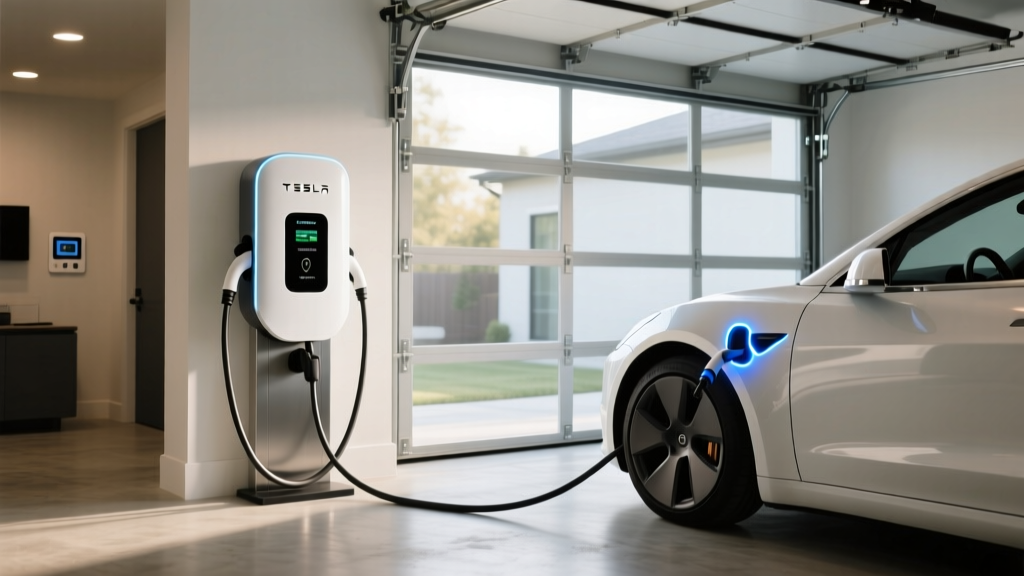
Tesla Wall Connector (Gen 4)
- Power: Up to 11.5 kW (48A, hardwired)
- Connector: NACS native
- Cable length: 24 ft
- Smart features: Wi-Fi updates, load sharing with up to 6 units, scheduling via Tesla app
- Price: ~$475
- Best for: Tesla owners or NACS-equipped EVs. Excellent build quality.
ChargePoint Home Flex (NACS)
- Power: Up to 12 kW (50A, NEMA 14-50 or hardwired)
- Connector: NACS (2025+ model); CCS1 version also available
- Cable length: 23 ft
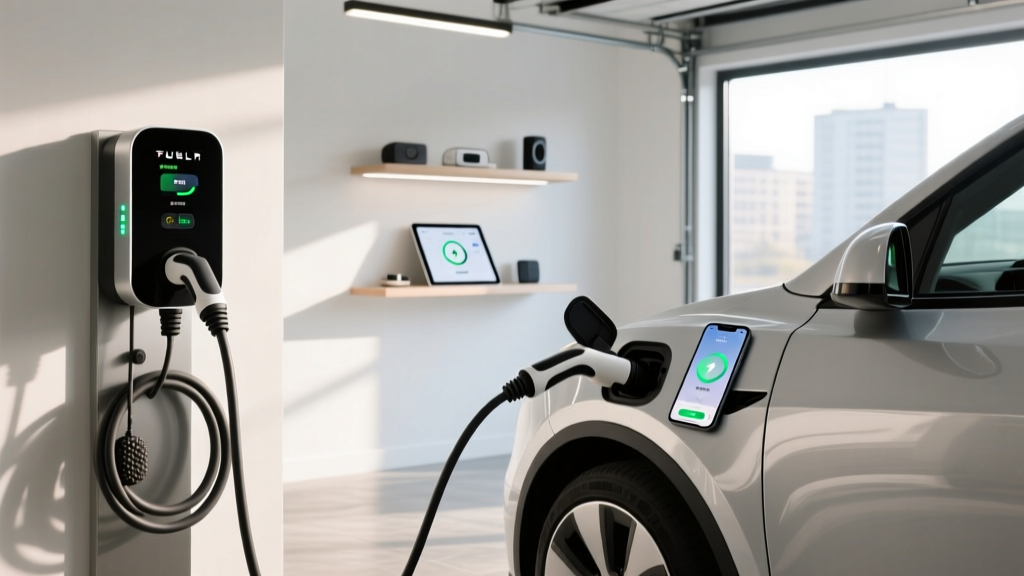
- Smart features: Alexa integration, detailed energy tracking, scheduled charging, utility demand-response programs
- Price: ~$599
- Best for: Non-Tesla EV owners wanting robust app features and utility program compatibility.
Emporia Vue EV Charger
- Power: Up to 11.5 kW (48A, hardwired)
- Connector: NACS (2025+); CCS1 adapter available
- Cable length: 24 ft
- Smart features: Whole-home energy monitoring integration, solar-aware charging, time-of-use scheduling
- Price: ~$399
- Best for: Budget-conscious buyers who want energy monitoring and solar integration.
Grizzl-E Smart
- Power: Up to 10 kW (40A, NEMA 14-50 or hardwired)
- Connector: NACS or CCS1 options
- Cable length: 24 ft
- Smart features: OCPP-compatible, works with multiple apps, adjustable amperage via DIP switches
- Price: ~$449
- Best for: Canadian-made durability, extreme cold-rated (-40°F), adjustable output for panel-limited homes.
Public Charging Networks: What to Know Before You Road-Trip
Your Range Rover Sport could refuel anywhere in five minutes. EV road trips require more planning, but the infrastructure has matured significantly. The major networks in 2026:
- Tesla Supercharger: 50,000+ stalls globally, now open to NACS-equipped non-Tesla EVs. V3 stalls deliver 250 kW; V4 stalls deliver up to 350 kW. Reliability consistently leads the industry (~97% uptime).
- Electrify America: 4,000+ DC fast chargers. Offers 150 kW and 350 kW stalls. CCS1 and NACS connectors at newer stations. Subscription plan reduces per-kWh cost.
- EVgo: 3,500+ public fast chargers. NACS connectors rolling out at new stations. Partners with GM and Ford for co-branded locations.
- ChargePoint: Largest network by station count, but heavily Level 2. DC fast locations are growing. Good for destination charging.
Pro tip for former ICE drivers: Download PlugShare and A Better Routeplanner (ABRP) before any road trip. PlugShare shows real-time charger status and user reviews; ABRP calculates routes with charging stops based on your specific vehicle's consumption and charge curve. Preconditioning your battery (warming it to optimal temperature before arriving at a DC fast charger) can shave 5–10 minutes off your stop — most EVs do this automatically when you navigate to a charger.
Frequently Asked Questions
How much does it cost to install a home EV charger?
A straightforward Level 2 installation with an existing 200A panel and short wire run costs $900–$1,950 (equipment + electrician + permit). If your home needs a panel upgrade, long conduit runs, or a sub-panel, expect $3,500–$8,100. Always get an electrician's load calculation first. The federal residential clean energy credit covers 30% of installation costs up to $1,000 through 2032 (IRS Form 5695), though eligibility depends on your census tract — confirm with a tax professional.
How fast will each charging level add range?
Level 1 (120V) adds 3–5 miles per hour — adequate for a PHEV with a small battery but impractical for a full EV. Level 2 (240V, 48A) adds 30–44 miles per hour, easily replenishing a full day's driving overnight. DC fast charging adds 150–1,000+ miles per hour at peak, though the charge curve taper means real sessions average lower. For a 90 kWh luxury EV SUV, expect a 10–80% session in roughly 25 minutes at a 250 kW charger.
Which connector/charger is compatible with my EV?
If you're buying a 2025 or 2026 model-year EV, it almost certainly uses NACS. Used EVs from 2022–2024 may have CCS1 — you'll need a CCS-to-NACS adapter (~$150–$200) for Supercharger access. CHAdeMO is limited to older Nissan Leafs and is being phased out. Match your home charger's connector to your vehicle's native port to avoid adapter dependency at home. See the Alternative Fuels Data Center for connector maps.
How much does charging cost per mile vs gas?
At home on an off-peak utility rate ($0.08–$0.12/kWh), expect $0.03–$0.04 per mile in an efficient EV — roughly one-sixth the cost of fueling the 2015 Supercharged Range Rover Sport at $0.24/mile. Even exclusive DC fast charging ($0.35–$0.55/kWh) costs $0.12–$0.18 per mile, still 25–50% cheaper than premium gasoline. Over 12,000 miles annually, home charging saves $2,100–$2,500 vs. the Range Rover's fuel bill.
What electrical upgrades might I need?
Homes with a 200A electrical panel and spare breaker slots typically need no upgrade — just a new dedicated 50A or 60A breaker and wiring. Homes with 100A or 150A service, or panels that are already near capacity (common with electric HVAC, water heaters, and dryers), may need a service upgrade to 200A ($1,500–$3,500) or a smart load-management system that shares capacity between the EV charger and other circuits. An electrician's load calculation is the definitive answer — don't guess.