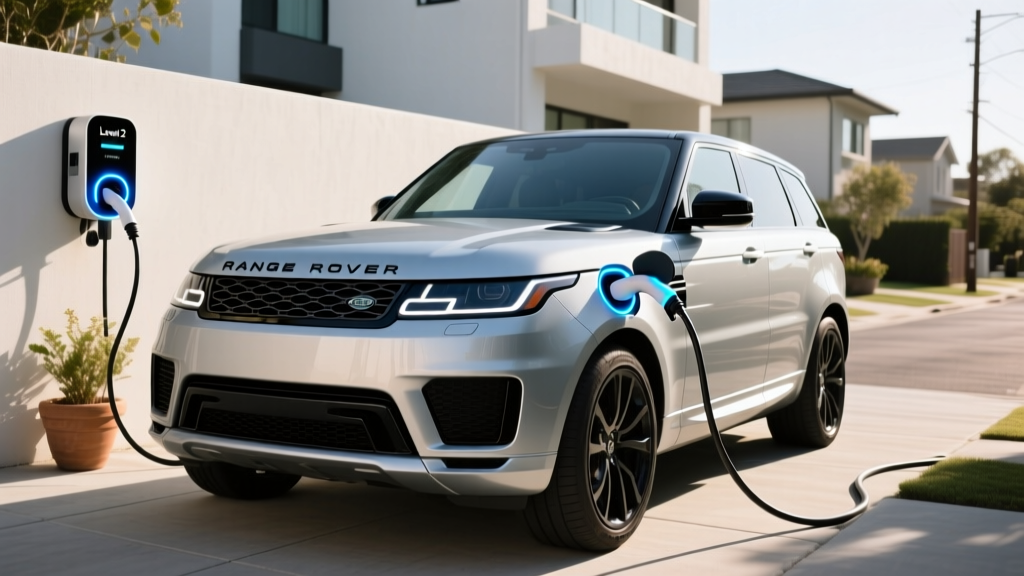
Plug-in hybrid luxury SUVs like the Range Rover Sport P440e and P460e (the plug-in successors to the supercharged V8 variants) offer a compelling middle ground: roughly 40–50 miles of electric-only range for daily commuting, paired with a gasoline engine for road trips. But extracting maximum value from that electric range means understanding exactly how to charge, what equipment to install, and what it costs. This guide covers every charging scenario for Range Rover Sport PHEV owners — from Level 1 trickle charging to DC fast charging — with real numbers and 2026 installation costs.
Understanding Charging Levels: What Each Adds Per Hour
Before purchasing any equipment, you need to understand the three charging tiers and how they translate to actual miles added to your Range Rover Sport PHEV. The distinction between kW (kilowatts — the rate of power delivery) and kWh (kilowatt-hours — the total energy stored in your battery) is critical. Think of kW as the width of the hose and kWh as the size of the bucket.
| Level | Voltage | Max Power (kW) | Miles of Range Added/Hour | 0–100% Time |
|---|---|---|---|---|
| Level 1 (Standard Outlet) | 120V | 1.4–1.9 kW | 3–5 miles | 20–27 hours |
| Level 2 (Home/Public AC) | 240V | 7.2 kW (vehicle-limited) | 15–20 miles | 5–6 hours |
| DC Fast Charging | 400V+ | 50 kW peak | ~100+ miles (equivalent) | 10–80% in ~30 min |
Home Level 2 Installation: Electrical Requirements and Costs
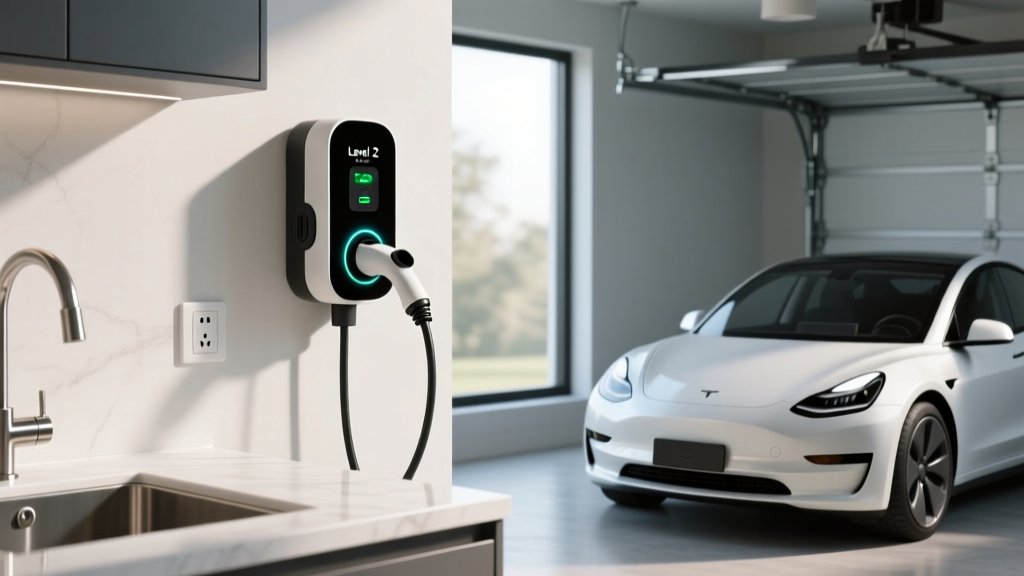
Most Range Rover Sport PHEV owners will want a dedicated Level 2 home charger for daily convenience. Here's exactly what that involves from an electrical standpoint.
Electrical Requirements
- Circuit: Dedicated 40-amp, 240V circuit (minimum) using 6 AWG copper wire
- Breaker: 40A double-pole breaker in your main panel
- Outlet vs. Hardwired: NEMA 14-50 receptacle offers portability; hardwired units eliminate GFCI nuisance tripping and allow higher amperage
- Panel Capacity: Your electrical panel must have at least 2 available slots and sufficient amperage headroom (a 200A panel is standard for most modern homes; older 100A panels may need upgrading)
Installation Cost Breakdown
| Component | Low Estimate | High Estimate | Notes |
|---|---|---|---|
| Level 2 Charger Equipment | $350 | $750 | Smart WiFi-enabled units |
| Electrician Labor (2–4 hrs) | $400 | $1,200 | Varies by region and run length |
| Electrical Permit | $50 | $250 | Required in most jurisdictions |
| Wire & Conduit Materials | $100 | $400 | Longer runs from panel = more cost |
| Panel Upgrade (if needed) | $1,500 | $4,000 | Only if upgrading from 100A to 200A |
| Total (no panel upgrade) | $900 | $2,600 | Most common scenario |
| Total (with panel upgrade) | $2,400 | $6,600 | Older homes with 100A service |
According to Energy.gov's home charging guidelines, most homeowners with a modern 200A panel and a garage-adjacent parking spot will spend between $1,200 and $2,200 for a complete Level 2 installation. The single biggest cost variable is the wire run distance from your electrical panel to the charger location.
Connector Compatibility: NACS, CCS, and Your Range Rover
The Range Rover Sport PHEV uses the CCS1 (Combined Charging System) connector standard for both AC Level 2 and DC fast charging in North America. With the industry's ongoing transition to NACS (Tesla's connector standard, now designated SAE J3400), here's what that means for your charging options.
| Connector Type | Used By | Range Rover Sport PHEV Compatible? | Adapter Needed? |
|---|---|---|---|
| J1772 (AC Level 1/2) | All non-Tesla EVs/PHEVs | Yes — native | No |
| CCS1 (DC Fast) | Most non-Tesla EVs/PHEVs | Yes — native | No |
| NACS / J3400 (AC & DC) | Tesla; Ford, GM, Rivian (2025+) | No — not native | CCS-to-NACS adapter (~$200–$250) |
| CHAdeMO (DC Fast) | Nissan Leaf (legacy) | No | Not available for this application |
Practical implication: Your Range Rover Sport PHEV can charge natively at Electrify America, EVgo, ChargePoint, and most non-Tesla public stations. If you want access to Tesla Supercharger stalls (now opening to non-Tesla vehicles via the Magic Dock or adapter programs), you'll need a CCS-to-NACS adapter. Land Rover has not announced a native NACS transition for the Sport PHEV as of the 2026 model year.
Charging Cost Per Mile: PHEV vs. Gasoline
The Range Rover Sport P440e/P460e carries a 3.0L inline-6 that returns roughly 19–21 MPG combined when running on gasoline alone, per fueleconomy.gov EPA data. On electricity, it achieves approximately 44 MPGe. Let's translate that into real cost-per-mile figures.
| Scenario | Rate | Cost Per Mile | Annual Cost (12,000 mi) |
|---|---|---|---|
| Home Charging (Off-Peak) | $0.12/kWh | $0.044 | $528 (electric portion) |
| Home Charging (Peak) | $0.25/kWh | $0.091 | $1,092 |
| Public Level 2 | $0.35/kWh | $0.127 | $1,524 |
| DC Fast Charging (Public) | $0.48/kWh | $0.174 | $2,088 |
| Gasoline Only (20 MPG avg) | $3.50/gallon | $0.175 | $2,100 |
| Gasoline Only (20 MPG avg) | $4.20/gallon | $0.210 | $2,520 |
Recommended Home Chargers for the Range Rover Sport PHEV
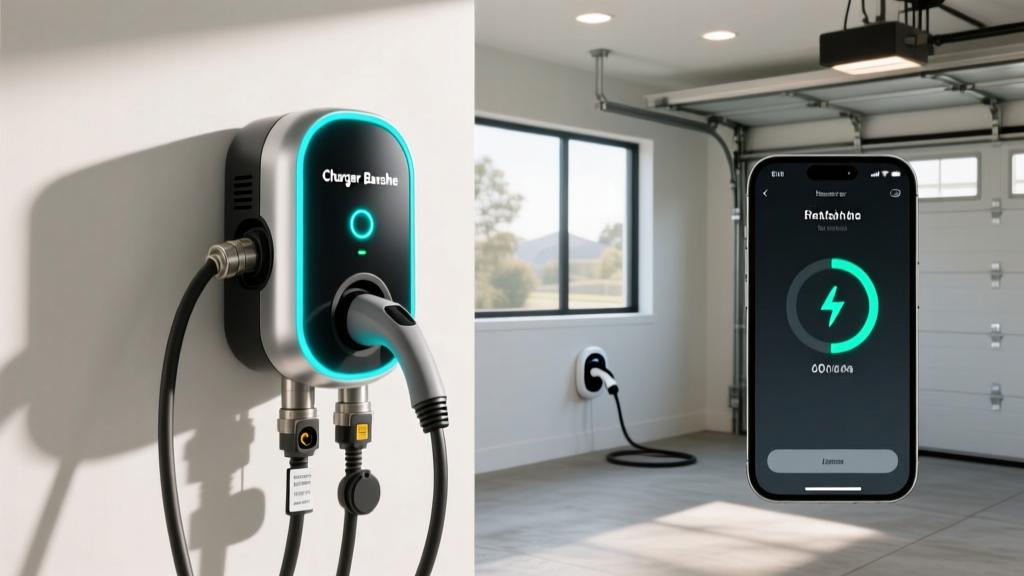
Since the Range Rover Sport PHEV caps AC charging at 7.2 kW (30 amps at 240V), you don't need the most powerful charger on the market. A 32-amp or 40-amp unit will max out the vehicle's onboard charger. Here are three proven options:
ChargePoint Home Flex — Best Overall
- Power Output: Up to 12 kW (50A) — configurable down to 32A for older panels
- Connector: J1772 (CCS-compatible for AC charging)
- Cable Length: 23 feet
- Smart Features: WiFi scheduling, energy tracking, Alexa integration, utility rate optimization
- Price: ~$599 (equipment only)
- Why it works: Amperage adjustability means you can install it on a 40A circuit today and reconfigure later if you upgrade your panel. UL-listed, indoor/outdoor rated (NEMA 4).
Emporia Level 2 EV Charger — Best Budget Smart Charger
- Power Output: Up to 11.5 kW (48A)
- Connector: J1772
- Cable Length: 24 feet
- Smart Features: Real-time energy monitoring, solar integration, scheduled charging, load management
- Price: ~$399
- Why it works: Excellent energy monitoring pairs well with PHEV owners tracking electric vs. gas usage. Hardwired installation recommended.
Grizzl-E Smart — Most Durable Outdoor Option
- Power Output: Up to 10 kW (40A)
- Connector: J1772
- Cable Length: 24 feet
- Smart Features: OCPP-compatible, works with multiple apps, adjustable amperage
- Price: ~$449
- Why it works: Built in Canada for extreme cold (rated to -40°F). IP67-rated enclosure handles any weather. Ideal for driveway installations without garage access.
Safety and Electrical Code Considerations
EV charging involves sustained high-current draw — far more demanding than typical household appliances. Per the National Electrical Code (NEC Article 625), the following are mandatory for safe, code-compliant installations:
- Dedicated Circuit: Your EV charger must be on its own dedicated breaker — no sharing with other outlets or appliances
- 80% Rule: Continuous loads (like EV charging, which runs 3+ hours) can only use 80% of a circuit's rated capacity. A 40A circuit supports 32A continuous charging; a 50A circuit supports 40A continuous
- GFCI Protection: NEC 2020+ requires GFCI protection for outdoor receptacles used for EV charging. Hardwired installations may be exempt depending on local code interpretation — hardwired is generally preferred to avoid nuisance GFCI trips
- Outdoor Rating: Any outdoor charger must carry a NEMA 4 or IP65+ rating for weather resistance
- Permit and Inspection: Most jurisdictions require an electrical permit and post-installation inspection. Skipping this step can void homeowner's insurance coverage for electrical fires
Public Charging: What to Expect on the Road
The Range Rover Sport PHEV's 50 kW DC fast charging capability means a 10–80% session takes approximately 30 minutes at a compatible station — adding roughly 25–30 miles of electric range. That's slower than a full BEV, but proportionate to the smaller battery.
Key public charging networks and compatibility:
- Electrify America: CCS1 native — most reliable option for Range Rover PHEV owners. Expect 50–150 kW stalls; your vehicle will cap at ~50 kW.
- EVgo: CCS1 native — strong urban coverage, often located at shopping centers.
- ChargePoint: Both Level 2 (J1772) and DC fast (CCS1) available — useful for destination charging.
- Tesla Supercharger (Magic Dock): Select stations now offer a built-in CCS adapter. Check the Tesla app for "open to non-Tesla vehicles" locations before relying on this.
Frequently Asked Questions
How much does it cost to install a home EV charger for my Range Rover Sport PHEV?
Most homeowners with a 200A electrical panel will spend between $1,200 and $2,200 for a complete Level 2 installation including equipment, electrician labor, materials, and permit. Homes requiring a panel upgrade from 100A to 200A should budget an additional $1,500–$4,000. Get at least three quotes from licensed electricians — pricing varies significantly by region and wire-run distance.
How fast will each charging level add range to my PHEV?
Level 1 (120V standard outlet) adds approximately 3–5 miles of electric range per hour. Level 2 (240V home station at 7.2 kW) adds 15–20 miles per hour, fully replenishing the 38.2 kWh battery in about 5–6 hours. DC fast charging at 50 kW adds roughly 25–30 miles of range in a 30-minute session (10–80%).
Which connector and charger are compatible with my Range Rover Sport PHEV?
The Range Rover Sport PHEV uses the CCS1/J1772 connector standard. Any Level 2 home charger with a J1772 plug will work. For public DC fast charging, look for CCS1-equipped stations (Electrify America, EVgo, most ChargePoint DC stations). A CCS-to-NACS adapter (~$200–$250) is needed only if you want to access Tesla Superchargers with Magic Dock capability.
How much does charging cost per mile compared to gasoline?
At home off-peak electricity rates (~$0.12/kWh), charging costs approximately $0.044 per mile — roughly 75% cheaper than gasoline at $3.50/gallon and 20 MPG ($0.175/mile). However, public DC fast charging at $0.48/kWh costs roughly $0.174/mile, nearly identical to gasoline. The economic case for a PHEV depends heavily on consistent home charging access.
What electrical upgrades might I need before installing a charger?
The most common upgrade is ensuring your electrical panel has sufficient capacity. A licensed electrician will perform an NEC Article 220 load calculation. If your home has a 100A panel or if your existing loads (HVAC, electric oven, dryer) already consume most of your 200A panel's capacity, you may need a panel upgrade ($1,500–$4,000) or a smart load-management device that throttles charger amperage when other appliances are running.
Does the federal tax credit cover home charger installation?
The IRS Residential Clean Energy Credit (25C) previously offered a 30% credit (up to $1,000) for qualified EV charger installation. However, this provision has specific eligibility requirements and may be subject to annual changes. Consult a tax professional and verify current-year rules at IRS.gov before counting on this credit for your budget.