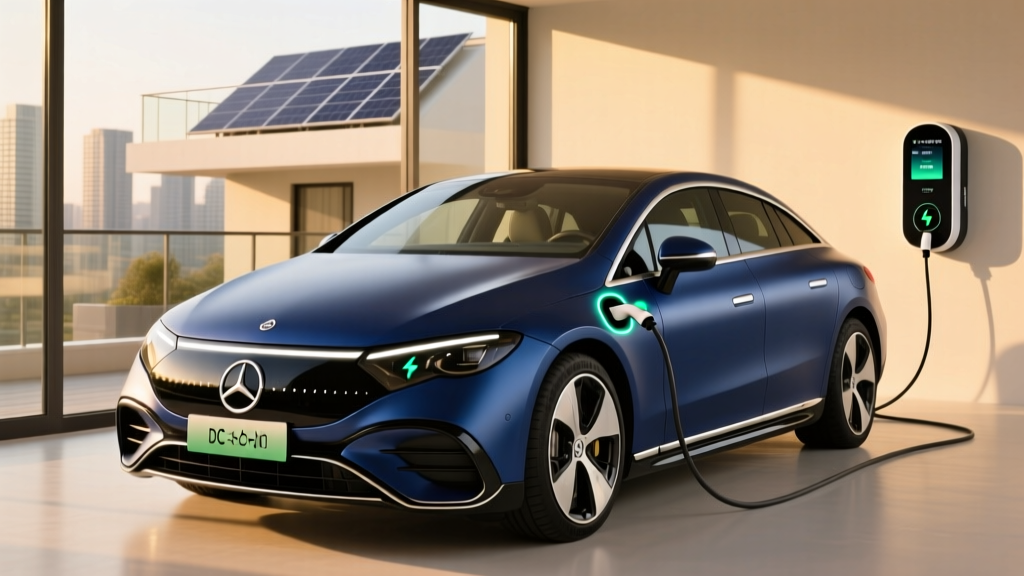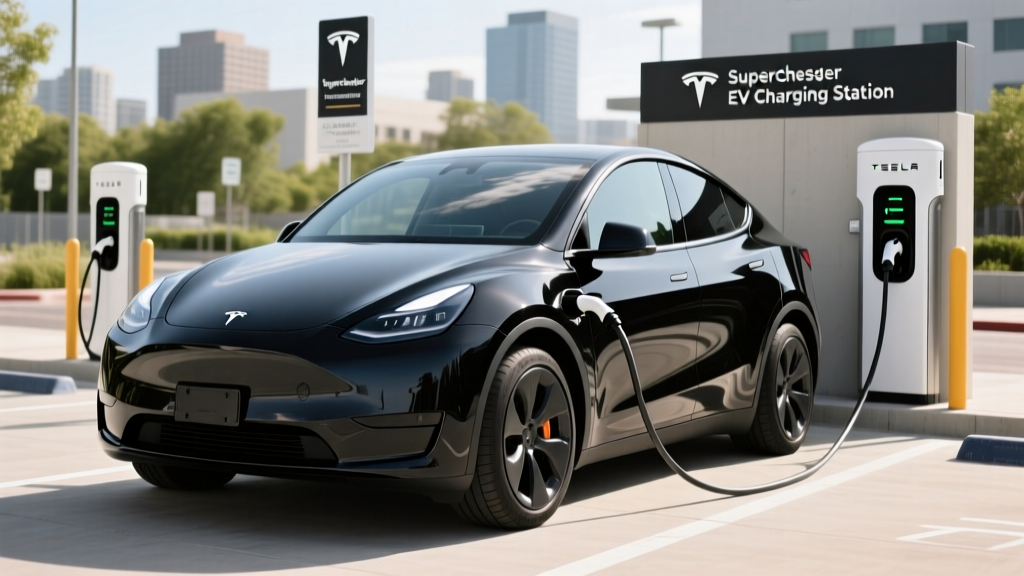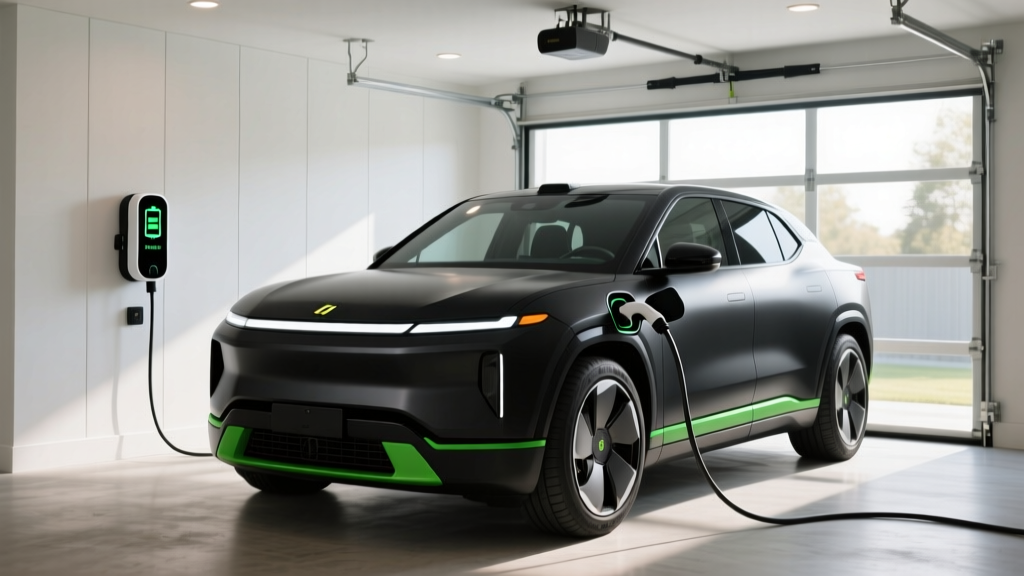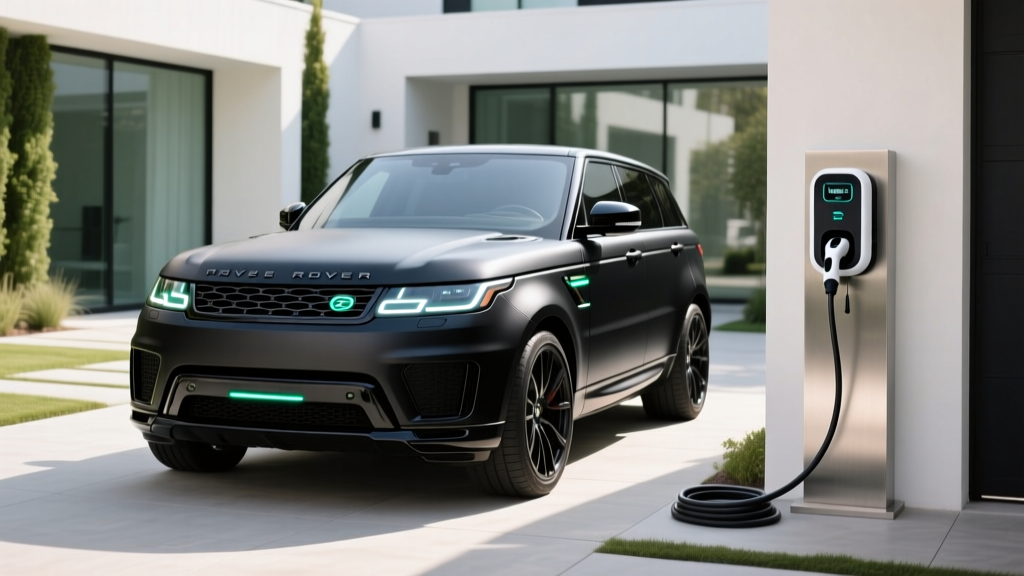
If you're coming from a Range Rover RR Sport Supercharged — with its 5.0L V8, 17 MPG combined thirst, and $100,000+ sticker — the jump to a luxury electric SUV is both a performance upgrade and a fuel-cost reset. But large-battery luxury EVs like the Range Rover Electric (expected 2026), BMW iX M70, Mercedes EQS SUV, or Tesla Model X Plaid demand serious home charging infrastructure. This guide covers exactly what you need to charge a 100+ kWh luxury EV at home and on the road, with real costs, electrical requirements, and equipment picks.
Charging Levels Explained: What Speeds to Expect
Every EV owner uses three charging tiers. For luxury SUVs with 100–120 kWh battery packs, the difference between Level 1 and Level 2 is the difference between usable daily charging and a frustrating ownership experience.
| Level | Voltage / Amps | Power (kW) | Miles of Range Added Per Hour | 10–80% Time (100 kWh Battery) |
|---|---|---|---|---|
| Level 1 (120V) | 120V / 12A | ~1.4 kW | 3–5 mi/hr | ~50 hours |
| Level 2 (240V) | 240V / 48A | ~11.5 kW | 30–44 mi/hr | ~6 hours |
| DC Fast Charging | 400–800V DC | 50–350 kW | 150–1,000+ mi/hr (peak) | 18–45 minutes |
DC fast charging speeds depend heavily on the vehicle's architecture. An 800V platform (like the Hyundai Ioniq 5 or upcoming Range Rover Electric) can sustain higher charge rates longer, while 400V vehicles taper more aggressively above 80% state of charge. A 350 kW charger won't deliver 350 kW for the full session — expect peak rates for 5–15 minutes before the battery management system throttles the curve to protect cell health.
Home Charger Installation: Electrical Requirements and Real Costs
Installing a Level 2 home charger isn't plug-and-play. Most luxury EV owners will need a dedicated 240V circuit, and many older homes require a panel upgrade. Here's what to expect:
Electrical Requirements
- Circuit: A dedicated 60A breaker (for a 48A continuous charger load — electrical code requires 125% overhead for continuous loads)
- Wire: 6 AWG copper (or 4 AWG aluminum) run from panel to charger location
- Voltage: 240V single-phase (standard US residential split-phase)
- Panel capacity: Your main panel must have 60A of spare capacity. A 200A panel powering a large home with HVAC, electric range, and dryer may be near its limit — requiring a panel upgrade to 400A or a secondary sub-panel
- Permit: Required in virtually all US jurisdictions; inspection verifies wire gauge, breaker sizing, grounding, and GFCI compliance
Installation Cost Breakdown
| Item | Simple Install (Near Panel) | Complex Install (Long Run / Conduit) | With Panel Upgrade |
|---|---|---|---|
| Level 2 Charger (Equipment) | $400–$700 | $400–$700 | $400–$700 |
| Electrician Labor | $300–$600 | $800–$2,000 | $800–$2,000 |
| Permit & Inspection | $50–$200 | $100–$350 | $150–$500 |
| Panel Upgrade (if needed) | — | — | $1,500–$4,000 |
| Total | $750–$1,500 | $1,300–$3,050 | $2,850–$7,200 |
The wide range reflects real variables: a garage-mounted charger 10 feet from a 200A panel with spare capacity is a straightforward job. A charger on the far side of a 4,000 sq ft home, requiring 80 feet of conduit through finished walls and a panel upgrade from 150A to 400A, is a major electrical project. Get a quote from a licensed electrician before purchasing equipment — they'll assess your panel load calculation and advise whether an upgrade is needed.
The IRS §30C Alternative Fuel Vehicle Refueling Property Credit covers 30% of home charger equipment and installation costs, up to $1,000, subject to census-tract eligibility. Check your zip code against the IRS eligibility map before assuming you qualify.
Connector Compatibility: NACS, CCS, and What Luxury EVs Use
The North American charging standard has consolidated rapidly. By 2026, the Tesla NACS (North American Charging Standard) connector has been adopted by nearly every major automaker, but many vehicles on the road and in showrooms still use CCS1 (Combined Charging System). Here's what you need to know:
| Connector | Brands Using It (Native) | Adapter Available? |
|---|---|---|
| NACS | Tesla, Ford, GM, Rivian, Volvo, Polestar, Mercedes (2025+), Honda, Fisker | CCS-to-NACS adapters from Tesla, Lectron, A2Z (~$200–$400) |
| CCS1 | Hyundai/Kia, BMW, VW, Audi, Porsche, Stellantis, legacy models | NACS-to-CCS adapters available for Tesla Supercharger access |
| CHAdeMO | Nissan Leaf (legacy), Mitsubishi Outlander PHEV | Limited adapters; network being phased out |
For buyers cross-shopping a luxury EV to replace a Range Rover Sport Supercharged: the BMW iX and Audi e-tron GT still use CCS1 natively, while the Mercedes EQS SUV and Cadillac Escalade IQ have transitioned to NACS. If you install a home charger, choose one with the connector matching your vehicle — or buy a hardwired unit and swap the pigtail later.
For public DC fast charging, the Tesla Supercharger network now welcomes non-Tesla NACS-equipped vehicles, and CCS vehicles can access it via adapter. Electrify America and EVgo remain CCS-dominant but are adding NACS cables to new stations.
Cost to Charge: EV Electricity vs. Supercharged V8 Gas
This is where the Range Rover Sport Supercharged comparison gets stark. At 17 MPG combined on premium fuel ($4.50/gallon national average in early 2026), you're paying roughly $0.265 per mile just in fuel. Here's how EV charging compares across scenarios:
| Scenario | Rate | Cost Per Mile (at 3 mi/kWh) | Annual Cost (12,000 mi) |
|---|---|---|---|
| RR Sport Supercharged (Premium Gas) | $4.50/gal @ 17 MPG | $0.265 | $3,180 |
| Home Charging (Off-Peak TOU Rate) | $0.12/kWh | $0.040 | $480 |
| Home Charging (Standard Rate) | $0.18/kWh | $0.060 | $720 |
| Public Level 2 (ChargePoint/EVgo) | $0.35/kWh | $0.117 | $1,404 |
| DC Fast Charging (Electrify America) | $0.48/kWh | $0.160 | $1,920 |
Even at the most expensive DC fast charging rates, a luxury EV costs 40% less per mile than a supercharged V8 Range Rover Sport on premium fuel. Charge primarily at home on off-peak rates, and you're looking at $2,700 in annual fuel savings — or $13,500 over five years.
Check fueleconomy.gov for specific MPGe ratings and kWh/100mi efficiency figures for any EV you're considering. Luxury SUVs typically range from 2.5–3.5 mi/kWh depending on weight, aerodynamics, and wheel size.
Equipment Picks: Home Chargers for Large-Battery Luxury EVs
For a 100+ kWh battery, you want a high-amperage Level 2 charger that can fully replenish overnight. Here are three proven options across price tiers:
Tesla Wall Connector (Gen 4)
- Power: Up to 11.5 kW (48A @ 240V)
- Connector: NACS (native); CCS adapter sold separately
- Cable Length: 24 ft
- Smart Features: Wi-Fi, OTA updates, load sharing (pair two units on one circuit), access control
- Price: ~$450
- Best For: NACS-equipped vehicles; Tesla ecosystem users
ChargePoint Home Flex
- Power: Up to 12 kW (50A @ 240V) — configurable down to 16A for lower-capacity panels
- Connector: NACS or J1772 (select at purchase); CCS adapters available
- Cable Length: 23 ft
- Smart Features: Wi-Fi, app scheduling, Alexa integration, energy reports, flexible amperage
- Price: ~$650
- Best For: Homes with variable panel capacity; CCS or NACS vehicles
Emporia Vue 2 + EV Charger
- Power: Up to 11.5 kW (48A @ 240V)
- Connector: J1772 (CCS-compatible); NACS adapter included
- Cable Length: 24 ft
- Smart Features: Whole-home energy monitoring integration, solar-aware charging, TOU scheduling, V2H-ready
- Price: ~$500 (charger) + $400 (Vue panel monitor)
- Best For: Solar owners; energy-monitoring enthusiasts; budget-conscious install
For all three units, hardwiring is recommended over a plug-in NEMA 14-50 outlet for 48A+ installations. Hardwired connections eliminate the GFCI breaker requirement that NEC 2023/2026 mandates for receptacle-based EV circuits — saving $100–$200 on a GFCI breaker and reducing nuisance trips.
Safety and Code Considerations
EV charging involves sustained high-current draw for hours — far more demanding on wiring than intermittent loads like a dryer or oven. Key code and safety requirements:
- Dedicated Circuit: Your EV charger must have its own dedicated breaker — no shared circuits with other appliances
- GFCI Protection: Required for receptacle-based (plug-in) installations per NEC Article 625. Hardwired installations may be exempt depending on local interpretation
- Outdoor Rating: If mounting outside, the charger must carry a NEMA 4 (weatherproof) rating. All three picks above are rated for outdoor use
- Wire Sizing: Must match breaker rating — 6 AWG copper for 60A circuits. Undersized wire is a fire hazard and will fail inspection
- Strain Relief: Cable management (holster, hook, or retractable reel) prevents tripping hazards and connector damage
- Utility Notification: Some utilities require you to notify them when adding an EV charger, especially if you want time-of-use (TOU) rate plans that cut charging costs by 40–60%
Always hire a licensed electrician familiar with NEC Article 625 (EV charging equipment). General handyman work without a permit and inspection creates liability issues and may void your homeowner's insurance coverage for electrical fires.
Charging Time Examples: What to Expect with a 100+ kWh Battery
Luxury EV SUVs replacing a Range Rover Sport typically carry 100–120 kWh battery packs. Here's realistic charging time expectations:
| Scenario | Charger | 10–80% Time | Notes |
|---|---|---|---|
| Overnight Home (48A Level 2) | 11.5 kW | ~6 hours | Full overnight replenishment; wake up to 80%+ |
| Overnight Home (32A Level 2) | 7.7 kW | ~9 hours | Adequate for most daily driving; slower for road-trip recovery |
| DC Fast (250 kW capable, 800V vehicle) | ~180 kW avg | ~22 minutes | Sustained rate; 800V architecture advantage |
| DC Fast (150 kW capable, 400V vehicle) | ~95 kW avg | ~40 minutes | More taper above 60% SoC; plan longer stops |
| DC Fast (50 kW legacy station) | ~48 kW avg | ~80 minutes | Avoid for 100+ kWh packs; painfully slow |
Charge curve reality: No vehicle sustains its peak charge rate for the full session. A car rated for 250 kW peak may only hold that rate from 10–30% SoC before tapering to 150 kW, then 100 kW, then 50 kW above 70%. This is why the average kW matters more than the peak kW number in marketing materials. Vehicles with preconditioning (like Tesla and Hyundai/Kia) warm the battery before arriving at the charger, sustaining higher rates for longer.
Frequently Asked Questions
How much does it cost to install a home EV charger?
A straightforward Level 2 installation near your electrical panel typically costs $750–$1,500 including equipment, labor, and permit. Complex installations requiring long wire runs, conduit, or trenching run $1,300–$3,050. If your home needs a panel upgrade from 150A to 200A or 400A, add $1,500–$4,000. Always get an electrician's load calculation before budgeting.
How fast will each charging level add range?
Level 1 (120V) adds 3–5 miles of range per hour — adequate only for plug-in hybrids with small batteries. Level 2 (240V, 48A) adds 30–44 miles per hour, fully replenishing a 100 kWh luxury EV overnight. DC fast charging adds 150–1,000+ miles per hour at peak, delivering a 10–80% charge in 18–45 minutes depending on vehicle architecture and station power.
Which connector/charger is compatible with my EV?
Check your vehicle's charge port. For 2026 models, most new Ford, GM, Rivian, Tesla, Volvo, and Mercedes vehicles use NACS. BMW, Hyundai/Kia, VW, and Audi largely still use CCS1. If buying a home charger, match the connector to your vehicle — or choose a unit with an adapter option. For public charging, adapters bridge the gap between networks.
How much does charging cost per mile vs gas?
Home charging at off-peak rates ($0.12/kWh) costs roughly $0.04/mile in a luxury EV averaging 3 mi/kWh. That compares to $0.265/mile for a Range Rover Sport Supercharged at 17 MPG on $4.50 premium fuel. Even public DC fast charging at $0.48/kWh ($0.16/mile) is 40% cheaper than the supercharged V8. Annual savings for a 12,000-mile driver: $1,260–$2,700.
What electrical upgrades might I need?
The most common upgrade is a panel capacity increase. If your existing panel is 150A or 100A and already heavily loaded (electric HVAC, dryer, range, water heater), adding a 60A EV circuit may exceed capacity. A load calculation by a licensed electrician determines this. Other potential upgrades: adding a sub-panel closer to the garage, upgrading service entrance wire from the utility, or installing a smart load-management system that shares capacity between your EV charger and other high-draw appliances.