If you've been searching whether Range Rover makes a hybrid, the answer is yes — and the current lineup is more capable than ever. Land Rover offers plug-in hybrid electric vehicles (PHEVs) across the Range Rover family, pairing turbocharged inline-six engines with sizable battery packs that deliver genuine electric-only commuting range. But owning a PHEV means understanding charging infrastructure, from your garage outlet to public DC fast chargers. This guide breaks down exactly how to charge a Range Rover PHEV, what it costs, and what electrical work your home might need.
Yes, Range Rover Makes Hybrids: The 2026 PHEV Lineup
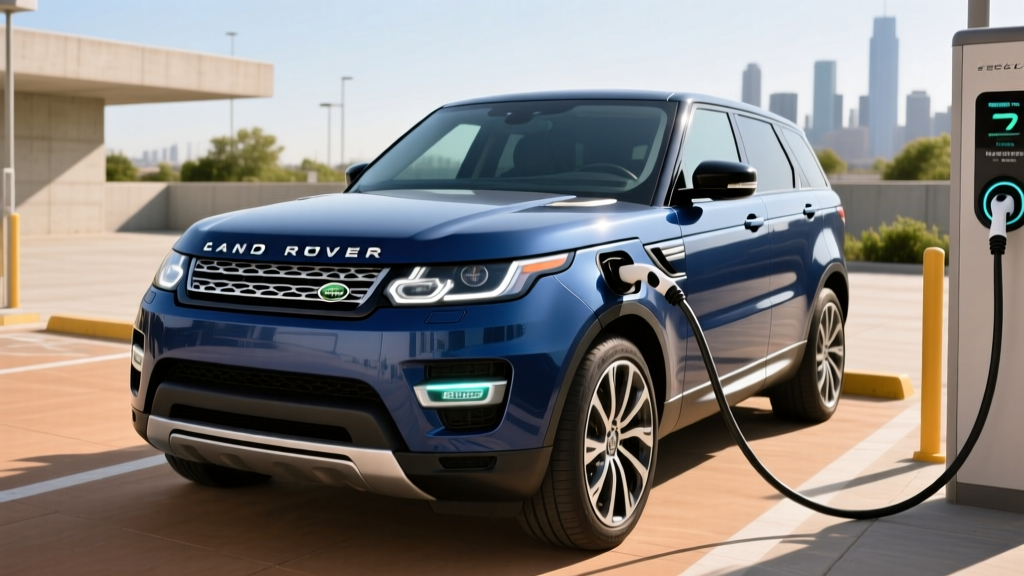
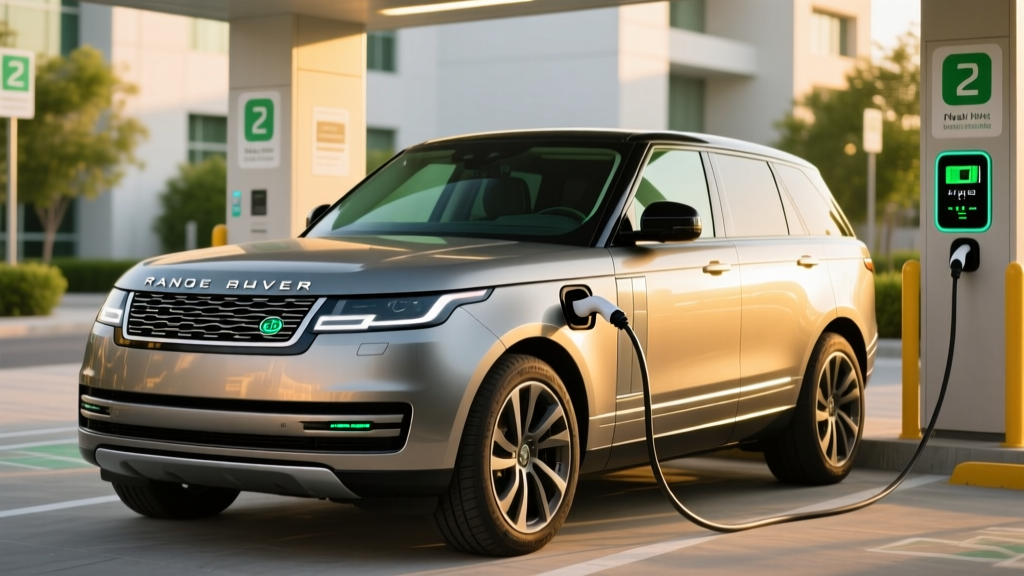
Land Rover currently sells two main PHEV powertrains in the U.S. Range Rover lineup:
- Range Rover P460e (full-size): 38.2 kWh battery (usable ~31 kWh), EPA-estimated 48 miles of electric-only range, 460 combined horsepower, starting around $115,000 MSRP.
- Range Rover Sport P440e: 38.2 kWh battery, EPA-estimated 51 miles electric range, 440 combined horsepower, starting around $90,000 MSRP.
Both use a BMW-sourced 3.0-liter turbocharged inline-six paired with an electric motor integrated into the ZF 8-speed transmission. The combined output is substantial, and the electric range is enough to cover most daily commutes without burning a drop of fuel. According to fueleconomy.gov, the Range Rover Sport P440e achieves an estimated 46 MPGe when operating in electric mode.
Charging Levels Explained: How Fast Each Adds Range
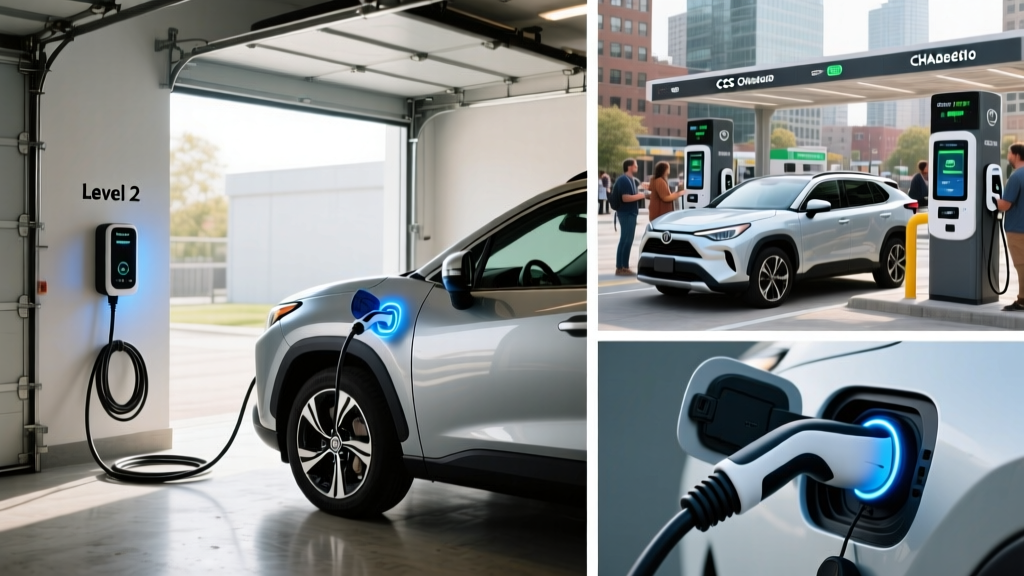
Range Rover PHEVs support AC charging (Level 1 and Level 2) and, unlike most PHEVs on the market, also support DC fast charging — a significant advantage for road trips. Here's what each level delivers:
| Level | Power (kW) | Miles of Range/Hour | 0–100% Time (38.2 kWh) | Where You'll Find It |
|---|---|---|---|---|
| Level 1 (120V) | 1.4–1.9 kW | 4–6 mi/hr | ~20–27 hours | Standard household outlet |
| Level 2 (240V) | 7.2 kW (onboard max) | 20–25 mi/hr | ~5–6 hours | Home wallbox, public AC stations |
| DC Fast Charge | 50 kW peak | ~130+ mi/hr (equiv.) | 10–80% in ~30 min | Public DC stations (Electrify America, EVgo) |
Key distinction — kW vs kWh: Kilowatts (kW) measure power — the rate at which energy flows into your battery, like water pressure from a hose. Kilowatt-hours (kWh) measure energy capacity — the total amount of electricity the battery stores, like the size of the tank. Your Range Rover PHEV has a 38.2 kWh battery and accepts up to 7.2 kW of AC power or 50 kW of DC power.
For daily use, Level 2 at home is the sweet spot. You plug in when you get home, and by morning, the battery is fully replenished — no trips to a gas station needed for your commute.
Home Charger Installation: Costs, Electrical Requirements & Upgrades
Installing a dedicated Level 2 home charger is the single most impactful upgrade for PHEV ownership. Here's what's involved:
Electrical Requirements
A Level 2 charger for your Range Rover PHEV requires a 240-volt, 40-amp dedicated circuit (to deliver the full 7.2 kW the vehicle can accept, you'd ideally install a 48A circuit with a 40A continuous draw charger, per NEC 80% rule). This is similar to what an electric dryer or oven requires.
Panel Upgrade Considerations
Many older homes (pre-2000) have 100-amp electrical panels that may not have capacity for an additional 40A circuit — especially if you already run electric heating, a dryer, and an oven. A panel upgrade to 200A typically costs $1,500–$3,000. Homes built after 2005 with 200A service usually have sufficient headroom.
Installation Cost Breakdown
| Item | Basic Install (panel nearby) | Complex Install (long run / panel upgrade) |
|---|---|---|
| Level 2 Charger (Equipment) | $350–$700 | $350–$700 |
| Electrician Labor | $300–$600 | $800–$2,000 |
| Permit & Inspection | $50–$150 | $50–$200 |
| Panel Upgrade (if needed) | $0 | $1,500–$3,000 |
| Total Estimated Cost | $700–$1,450 | $2,700–$5,900 |
Always hire a licensed electrician and pull a permit. Unpermitted electrical work can void your homeowner's insurance and create fire hazards. The National Electrical Contractors Association maintains a directory of qualified installers.
Which Connector Does a Range Rover PHEV Use?
The 2025–2026 Range Rover PHEVs use the J1772 connector for AC charging (Level 1 and Level 2) and CCS1 (Combined Charging System) for DC fast charging. As the North American industry transitions to the NACS (Tesla) standard, adapter compatibility is an important consideration.
| Connector Type | Use Case | Native Support? | Adapter Needed? |
|---|---|---|---|
| J1772 | AC Level 1 & Level 2 | Yes — native | No |
| CCS1 | DC Fast Charging | Yes — native | No |
| NACS (Tesla) | Tesla Superchargers & NACS stations | No | Yes — CCS-to-NACS adapter (~$200–$250) |
| CHAdeMO | Legacy DC stations | No | Not available — network is sunsetting |
Practical advice: For home charging, any J1772 Level 2 wallbox works natively. For public DC fast charging, most Electrify America and EVgo stations still offer CCS1 connectors. If you plan to use Tesla Superchargers (which are increasingly opening to non-Tesla EVs), budget for a CCS-to-NACS adapter from a reputable manufacturer like Lectron or A2Z.
Charging Cost Per Mile: Range Rover PHEV vs Gas
One of the strongest arguments for the Range Rover PHEV is the dramatic cost savings when operating in electric mode. Here's how the math works out:
| Scenario | Energy Cost | Cost Per Mile | Annual Cost (12,000 mi) |
|---|---|---|---|
| Home charging (off-peak, $0.13/kWh) | $0.13/kWh | $0.04 | $480 |
| Home charging (peak, $0.22/kWh) | $0.22/kWh | $0.07 | $840 |
| Public DC fast ($0.48/kWh) | $0.48/kWh | $0.15 | $1,800 |
| Gasoline only ($3.60/gal, 19 MPG combined) | $3.60/gal | $0.19 | $2,280 |
At roughly 3.2 kWh per mile in electric mode (the PHEV's real-world consumption including charging losses), home charging on an off-peak rate saves about $1,800 per year compared to running exclusively on gasoline. Even on peak residential rates, the savings are substantial. The PHEV pays for its premium partly at the plug.
Tax credit note: Under current IRS §30D rules, the Range Rover PHEVs face challenges qualifying for the federal $7,500 credit due to MSRP caps (the limit is $80,000 for SUVs, and both models exceed this), battery component sourcing requirements, and buyer income limits. Always verify current eligibility at irs.gov and consult a tax professional. Some states offer separate rebates that may apply.
Recommended Home Chargers for Range Rover PHEVs
Since the Range Rover PHEV caps AC charging at 7.2 kW, you don't need a 48A charger to max it out — a 32A unit (7.7 kW) is sufficient. However, installing a 40A or 48A charger future-proofs your setup for a full BEV down the road.
ChargePoint Home Flex
- Power: Up to 12 kW (50A) / configurable down to 16A
- Connector: J1772 (native for Range Rover)
- Cable: 23 feet
- Smart features: Wi-Fi, app scheduling, Alexa, energy tracking
- Price: ~$550–$650
- Best for: Flexible amperage if your panel is tight on capacity
Emporia Level 2 EV Charger
- Power: Up to 11.5 kW (48A)
- Connector: J1772
- Cable: 24 feet
- Smart features: Wi-Fi, real-time energy monitoring, solar integration, load management
- Price: ~$350–$400
- Best for: Budget-conscious buyers who want smart energy monitoring
Wallbox Pulsar Plus
- Power: Up to 11.5 kW (48A)
- Connector: J1772
- Cable: 25 feet
- Smart features: Wi-Fi + Bluetooth, app control, Power Sharing for multi-charger setups
- Price: ~$550–$650
- Best for: Compact design and multi-EV households
All three chargers are UL-listed (or ETL-listed to UL standards), NEMA 4 rated for outdoor installation, and compatible with the Range Rover's J1772 inlet. Hardwired installation is recommended over a NEMA 14-50 plug for reliability and to avoid the NEC requirement for GFCI breakers on receptacle-installed chargers (which can cause nuisance tripping).
Safety, Code & Best Practices
EV charging involves sustained high-current draw for hours — this is fundamentally different from intermittent appliance use. Follow these guidelines:
- Dedicated circuit: Your Level 2 charger must have its own dedicated breaker — never share a circuit with other appliances.
- GFCI considerations: The 2020 NEC requires GFCI protection on 240V receptacles used for EV charging. This can cause nuisance tripping with some chargers. The cleanest solution is a hardwired connection, which typically does not require GFCI protection under most local codes.
- Outdoor rating: If installing outside, ensure the charger carries a NEMA 4 (or NEMA 4X) rating for weather resistance.
- Cable management: Use a holster or cable retractor to keep the cord off the ground and protected from vehicle tires.
- Permit and inspect: Every jurisdiction requires a permit for new 240V circuits. The inspection ensures safe wire gauge, proper grounding, and correct breaker sizing.
Frequently Asked Questions
How much does it cost to install a home EV charger for a Range Rover PHEV?
A straightforward installation (panel has capacity, short wire run to garage) typically costs $700–$1,450 including the charger, electrician labor, and permit. If your home needs a panel upgrade or has a long conduit run, costs can reach $2,700–$5,900. Get at least two quotes from licensed electricians.
How fast will each charging level add range to my Range Rover PHEV?
Level 1 (standard 120V outlet) adds about 4–6 miles of electric range per hour — enough for a slow overnight top-up. Level 2 (240V home charger) adds 20–25 miles per hour, fully replenishing the 38.2 kWh battery in about 5–6 hours. DC fast charging at 50 kW can take the battery from 10–80% in roughly 30 minutes.
Which connector and charger is compatible with my Range Rover PHEV?
Your Range Rover PHEV uses the J1772 connector for all AC charging and CCS1 for DC fast charging. Any J1772 Level 2 home charger will work natively. For Tesla Supercharger access, you'll need a CCS-to-NACS adapter (~$200–$250).
How much does charging cost per mile compared to gasoline?
Charging at home on off-peak electricity ($0.13/kWh) costs roughly $0.04 per mile in electric mode — about 80% less than gasoline at $3.60/gallon and 19 MPG combined ($0.19/mile). Even at public DC fast-charging rates ($0.48/kWh), the cost per mile ($0.15) undercuts gasoline.
What electrical upgrades might I need for a home charger?
The most common upgrade is a panel capacity increase from 100A to 200A ($1,500–$3,000), required if your existing panel is near its load limit. You may also need a new 240V circuit run with appropriate wire gauge (typically 6 AWG copper for a 50A circuit). Homes with 200A or larger panels usually need only the new circuit and breaker.
Does the Range Rover PHEV qualify for the federal EV tax credit?
Under current IRS §30D rules, both the Range Rover and Range Rover Sport PHEVs exceed the $80,000 MSRP cap for SUVs, making them ineligible for the federal clean vehicle credit regardless of battery sourcing or buyer income. State-level incentives may still apply — check your state's energy office or irs.gov for current rules.
Can I charge my Range Rover PHEV at Tesla Superchargers?
Not natively. Tesla Superchargers use the NACS connector, while your Range Rover has CCS1/J1772. However, with a CCS-to-NACS adapter (available from Lectron, A2Z, or similar), you can access Tesla Superchargers that have been opened to non-Tesla vehicles via the Tesla app. Confirm station compatibility before relying on this for travel.