Why Range Rover Hybrid MPG Matters for Your Charging Setup
If you're researching the Range Rover hybrid MPG before buying a plug-in hybrid (PHEV) or full electric SUV, you're asking the right question. The 2025-2026 Range Rover PHEV (P550e) delivers an EPA-estimated 48 MPGe combined and roughly 51 miles of electric-only range from its 31.8 kWh (usable ~28 kWh) lithium-ion battery pack. On gas alone, the 3.0L inline-six hybrid powertrain returns approximately 22 MPG combined. That duality — electric for daily commutes, gas for long hauls — defines the ownership experience.
But the real financial picture depends on how you charge. A PHEV charged exclusively on a 120V wall outlet behaves very differently from one with a dedicated 240V Level 2 home charger. And if you're cross-shopping the Range Rover PHEV against a full BEV like the BMW iX or Mercedes EQS SUV, your charging infrastructure becomes the single biggest variable in daily convenience and per-mile cost. This guide breaks down every charging level, real installation costs, connector compatibility, and the per-mile math that determines whether electrification actually saves you money.
Charging Levels Explained: Speed, Power, and Range Added
Every electrified vehicle — from the Range Rover P550e to a Tesla Model X — charges at one of three levels. Understanding the difference between kW (power, or the rate of energy flow) and kWh (energy, or the total capacity of the battery) is essential. Think of kW as the width of the hose and kWh as the size of the bucket.
| Level | Voltage | Max Power (kW) | Miles of Range Added per Hour | Best Use Case |
|---|---|---|---|---|
| Level 1 (120V) | 120V AC | 1.0–1.9 kW | 3–5 miles | Overnight top-ups, PHEVs, emergencies |
| Level 2 (240V) | 240V AC | 3.3–19.2 kW | 12–75 miles | Daily home charging, workplace, destinations |
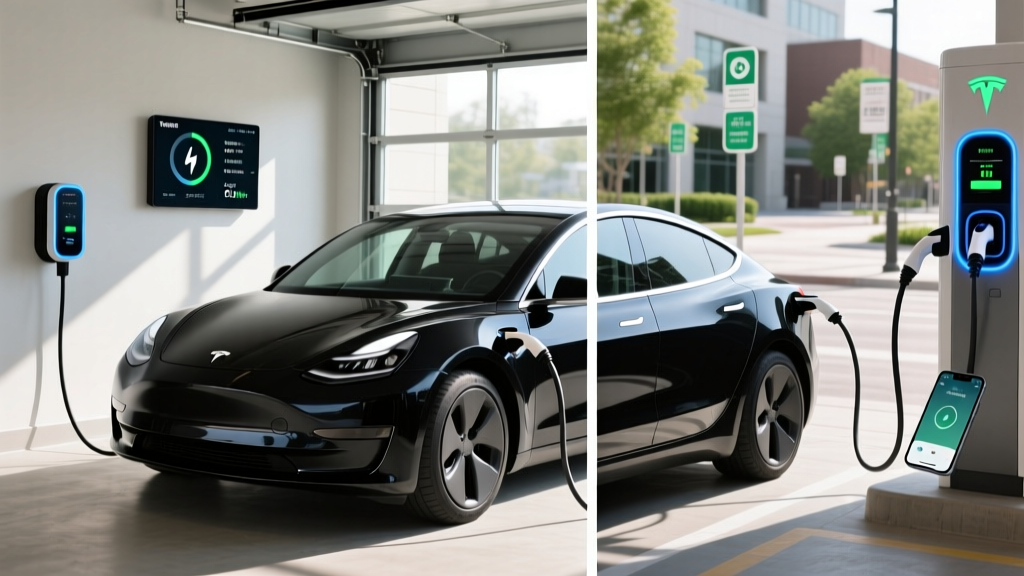
| DC Fast Charging | 200–800V DC | 50–350 kW | 150–1,000+ miles (equivalent) | Road trips, rapid top-ups on highways |
Home Charger Installation: Real Costs and Electrical Requirements
How much does it cost to install a home EV charger? The answer ranges from $500 to $4,500+, depending on your electrical panel, the distance from panel to charger location, and local permit fees. Here's what drives the cost.
Electrical Requirements
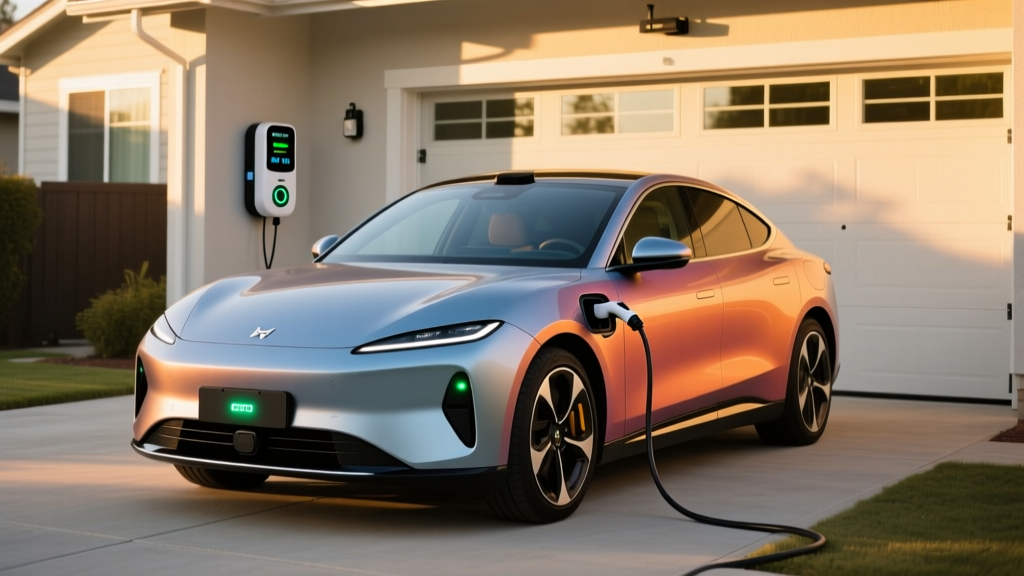
A typical Level 2 home charger requires a dedicated 240V circuit. The most common setup is a 40-amp circuit (delivering up to 32A continuous / 7.7 kW to the vehicle), which requires 6-gauge copper wire. Higher-output chargers at 48A continuous need a 60-amp circuit with 4-gauge wire. The National Electrical Code (NEC) requires that continuous loads not exceed 80% of the circuit breaker rating.
Panel Upgrade Considerations
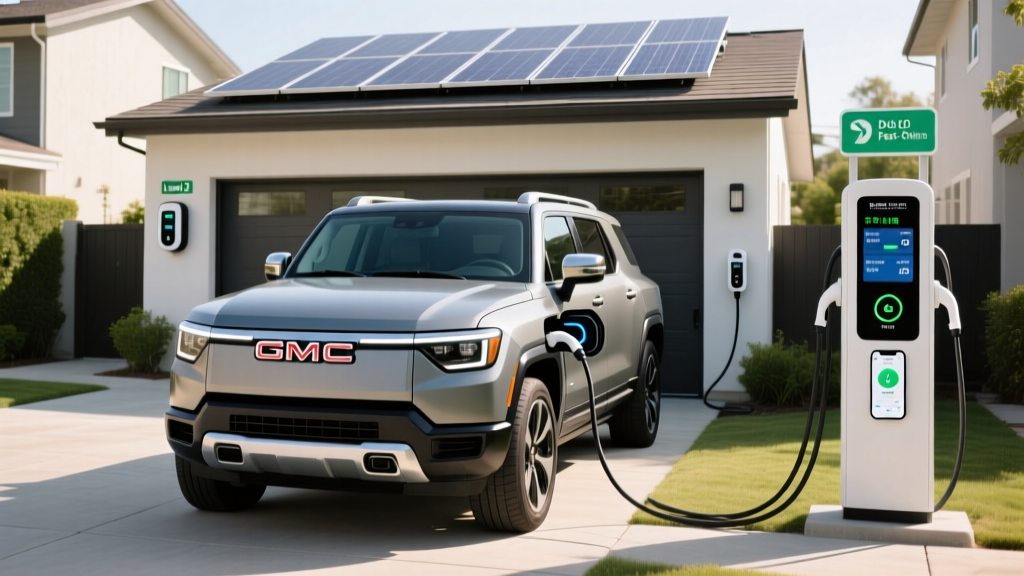
Many older homes have 100-amp electrical service panels. Adding a 40A or 60A EV circuit to a panel already serving central air, an electric dryer, and an electric oven may require a panel upgrade to 200A — a $1,500–$3,500 job on its own. Some homeowners can avoid this with a smart load-management device (like the Emporia VUE with smart panel integration) that dynamically reduces charger draw when other large loads activate. Newer homes with 200A service rarely need an upgrade.
| Component | Low Estimate | High Estimate | Notes |
|---|---|---|---|
| Level 2 Charger (hardware) | $350 | $750 | 32A–48A smart chargers; brands like ChargePoint, Emporia, Wallbox |
| Electrician labor (standard install) | $400 | $1,200 | Short run from panel to garage; surface conduit |
| Electrician labor (complex install) | $800 | $2,500 | Long wire runs, wall/ceiling penetrations, trenching |
| Electrical permit | $50 | $250 | Varies by municipality; required by code |
| Panel upgrade (if needed) | $1,500 | $3,500 | 100A → 200A service upgrade |
| Total (standard, no panel upgrade) | $800 | $2,200 | Most homes with 200A service |
| Total (with panel upgrade) | $2,300 | $4,500+ | Older homes with 100A service |
Always hire a licensed electrician and pull a permit. Unpermitted EV charger installations can void home insurance claims and create fire risk — especially with continuous high-amperage loads running 4–8 hours per session.
Connector Compatibility: NACS, CCS, and Your PHEV
Which connector/charger is compatible with my EV? For the Range Rover P550e and most non-Tesla PHEVs, the answer is straightforward: you'll use a J1772 connector for AC charging (Level 1 and Level 2). For DC fast charging, most non-Tesla EVs sold in North America through 2024 used CCS1, but the industry is rapidly transitioning to NACS (the Tesla-designed connector, now standardized as SAE J3400).
| Connector | AC Charging | DC Fast Charging | Brands Using It (2025–2026) |
|---|---|---|---|
| J1772 | Level 1 & 2 AC | N/A | All non-Tesla EVs/PHEVs for AC (legacy standard) |
| NACS (J3400) | Level 1 & 2 AC | DC Fast | Tesla (native); Ford, GM, Rivian, Volvo, Polestar, Mercedes (2025+ models); BMW, Stellantis, JLR (2026+) |
| CCS1 | J1772 for AC | DC Fast | Legacy 2024 and earlier non-Tesla EVs; some 2025 models |
| CHAdeMO | J1772 for AC | DC Fast | Nissan Leaf (discontinued 2025); Mitsubishi Outlander PHEV (legacy) |
Charging Cost Per Mile: PHEV vs Gas vs Full EV
How much does charging cost per mile vs gas? This is where the Range Rover hybrid MPG number meets reality. Let's model three scenarios using national average energy prices as of early 2026.
| Scenario | Energy Cost | Cost Per Mile | Annual Cost (12,000 mi) |
|---|---|---|---|
| Gas only (22 MPG combined) | $3.40/gal (national avg) | $0.155/mi | $1,860 |
| Home Level 2, off-peak ($0.13/kWh) | $0.13/kWh | $0.043/mi (EV mode, ~3.0 kWh/mi) | $516 (EV portion) |
| Public DC fast ($0.40/kWh) | $0.40/kWh | $0.133/mi (EV mode) | $1,596 (EV portion) |
| Gas-only Range Rover (non-hybrid, 19 MPG) | $3.40/gal | $0.179/mi | $2,148 |
The math is clear: if you charge at home on off-peak rates and drive within the 51-mile EV range daily, the PHEV operates at roughly one-quarter the per-mile cost of gas. But if you rely exclusively on public DC fast chargers at $0.40+/kWh, your savings nearly vanish — and you'd actually spend less per mile in some scenarios simply buying gas. This is why home Level 2 charging is practically mandatory for PHEV economics to work.
Charging Time Examples: What to Expect
Here's how long it takes to charge common battery sizes at each level. Note that DC fast charging speeds are measured from 10% to 80% state of charge (SoC), because charging slows dramatically above 80% to protect battery health — a phenomenon called the charge curve taper.
| Vehicle Type | Battery (usable kWh) | Level 1 (1.4 kW) | Level 2 (7.4 kW) | Level 2 (11.5 kW) | DC Fast 10–80% |
|---|---|---|---|---|---|
| Range Rover P550e PHEV | ~28 kWh | ~20 hrs (full) | ~3.5 hrs (full) | ~2.5 hrs (full) | Not available (most PHEVs lack DCFC) |
| BMW iX xDrive50 (BEV) | ~105 kWh | ~75 hrs (full) | ~14 hrs (full) | ~9 hrs (full) | ~31 min at 200 kW peak |
| Tesla Model Y Long Range | ~75 kWh | ~54 hrs (full) | ~10 hrs (full) | ~6.5 hrs (full) | ~25 min at 250 kW peak |
| Hyundai Ioniq 5 (RWD) | ~74 kWh | ~53 hrs (full) | ~10 hrs (full) | ~6.5 hrs (full) | ~18 min at 350 kW (800V) |
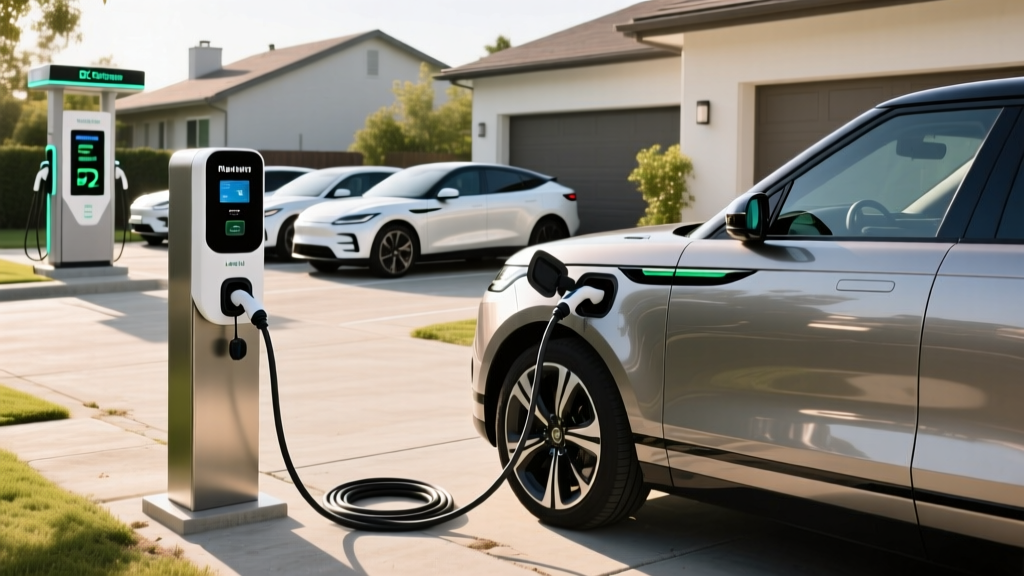
A critical note for PHEV buyers: most plug-in hybrids, including the Range Rover P550e, do not support DC fast charging. The onboard charger is AC-only. That means your maximum charging speed is limited to the vehicle's onboard AC charger rating (7.4 kW for the Range Rover). This isn't a problem for daily home charging, but it means you can't rapidly top up on road trips — you'll simply switch to the gas engine.
Recommended Home Chargers for PHEV and EV Owners
Not all Level 2 chargers are equal. Here are three models that consistently perform well for PHEV and BEV owners, evaluated on power output, cable length, smart features, and build quality.
Emporia Level 2 EV Charger
- Power output: Up to 48A (11.5 kW at 240V)
- Connector: J1772 (NACS version available 2025+)
- Cable length: 24 feet
- Smart features: Wi-Fi connected, energy monitoring via Emporia VUE integration, scheduled charging, solar-aware charging
- Price: ~$400 (charger only)
- Best for: Budget-conscious buyers who want energy monitoring and solar integration
ChargePoint Home Flex
- Power output: Configurable 16A–50A (3.8–12 kW at 240V)
- Connector: J1772 (NACS adapter available)
- Cable length: 23 feet
- Smart features: Wi-Fi, ChargePoint app with scheduling and energy reports, Alexa integration, flexible amperage to match your circuit
- Price: ~$550–$700
- Best for: Buyers who want a proven, UL-listed unit with flexible amperage settings for older panels
Wallbox Pulsar Plus
- Power output: Up to 40A (9.6 kW at 240V)
- Connector: J1772 or NACS (configurable at order)
- Cable length: 25 feet
- Smart features: Wi-Fi + Bluetooth, myWallbox app, Power Sharing (daisy-chain two units on one circuit), optional Eco-Smart for solar
- Price: ~$450–$650
- Best for: Compact form factor, two-EV households using Power Sharing
For Range Rover PHEV owners specifically, any of these chargers will max out the vehicle's 7.4 kW onboard AC charger. Choosing a 48A unit still makes sense if you plan to upgrade to a full BEV in the future — the charger will then deliver its full output to a vehicle with a higher onboard AC acceptance rate.
Safety, Code, and Permit Requirements
EV chargers are continuous loads under the NEC (Article 625), meaning they can draw maximum current for three hours or more. Key safety requirements include:
- Dedicated circuit: Your Level 2 charger must be on its own dedicated breaker — not shared with any other outlet or appliance.
- GFCI protection: NEC 2020 and later requires GFCI (Ground Fault Circuit Interrupter) protection for all EV charging outlets. Many modern hardwired chargers include built-in GFCI, but receptacle-based installations need a GFCI breaker.
- Outdoor rating: If your charger is installed outdoors (driveway, exterior wall), it must carry a NEMA 4 or IP65 rating for weather resistance. All three chargers recommended above meet this standard.
- Permit and inspection: Nearly all jurisdictions require an electrical permit for new 240V circuits. The inspection ensures proper wire gauge, breaker sizing, and grounding. Skipping the permit risks insurance denial in the event of an electrical fire.
- Cable management: Avoid running charging cables across walkways or driveways where they create a trip hazard or can be damaged by vehicles.
Frequently Asked Questions
How much does it cost to install a home EV charger?
A standard Level 2 installation with a 200A panel and short wire run costs $800–$2,200 total (charger + electrician + permit). If your home has a 100A panel that needs upgrading, expect $2,300–$4,500+. Always get two or three quotes from licensed electricians.
How fast will each charging level add range?
Level 1 (120V) adds 3–5 miles of range per hour. Level 2 (240V) adds 12–75 miles per hour depending on amperage and the vehicle's onboard charger. DC fast charging adds 150–1,000+ miles per hour of equivalent charge, but is measured in 10–80% session times (typically 18–40 minutes for modern BEVs). PHEVs like the Range Rover typically add about 22 miles of EV range per hour on Level 2.
Which connector/charger is compatible with my EV?
For AC charging, nearly all EVs and PHEVs use J1772 (or NACS on 2025+ Tesla, Ford, GM, Rivian, and select others). For DC fast charging, the standard is either CCS1 (legacy non-Tesla), NACS (Tesla and 2025+ adopters), or CHAdeMO (Nissan Leaf only, now discontinued). Check your vehicle's charge port or owner's manual. JLR is transitioning to NACS for 2026 model-year vehicles.
How much does charging cost per mile vs gas?
At home on off-peak rates (~$0.13/kWh), charging a PHEV costs roughly $0.04–$0.05 per mile in EV mode. The Range Rover PHEV on gas alone at 22 MPG costs about $0.155/mile at $3.40/gallon. Public DC fast charging at $0.40/kWh raises EV-mode cost to ~$0.13/mile — still a savings, but much smaller. Home charging is where the economics work best.
What electrical upgrades might I need?
If your home has 200A service and available breaker slots, you likely need nothing beyond the dedicated 240V circuit. Homes with 100A service, full breaker panels, or knob-and-tube wiring may need a panel upgrade ($1,500–$3,500), a sub-panel addition, or a whole-home energy management system. Have an electrician perform a load calculation before committing to a charger purchase.
Does the Range Rover PHEV qualify for a federal tax credit?
The federal §30D clean vehicle credit offers up to $7,500 for qualifying new PHEVs and BEVs, but eligibility depends on MSRP caps ($80,000 for SUVs), buyer income limits ($300,000 MFJ / $150,000 single), and battery critical-mineral and component sourcing requirements. The 2026 Range Rover P550e starts above $110,000, which exceeds the MSRP cap — making it ineligible for the federal credit. Always verify current rules on IRS.gov before purchasing, and consult a tax professional for your specific situation. Point-of-sale transfer is available for eligible vehicles, reducing your upfront cost at the dealer.
Can I charge my Range Rover PHEV at a public DC fast charger?
No. The Range Rover P550e (and most PHEVs) only supports AC charging via its J1772 inlet at up to 7.4 kW. It cannot connect to DC fast chargers. On road trips beyond the 51-mile EV range, the gasoline engine takes over seamlessly — which is the core advantage of the PHEV powertrain over a full BEV for drivers who regularly exceed EV range.