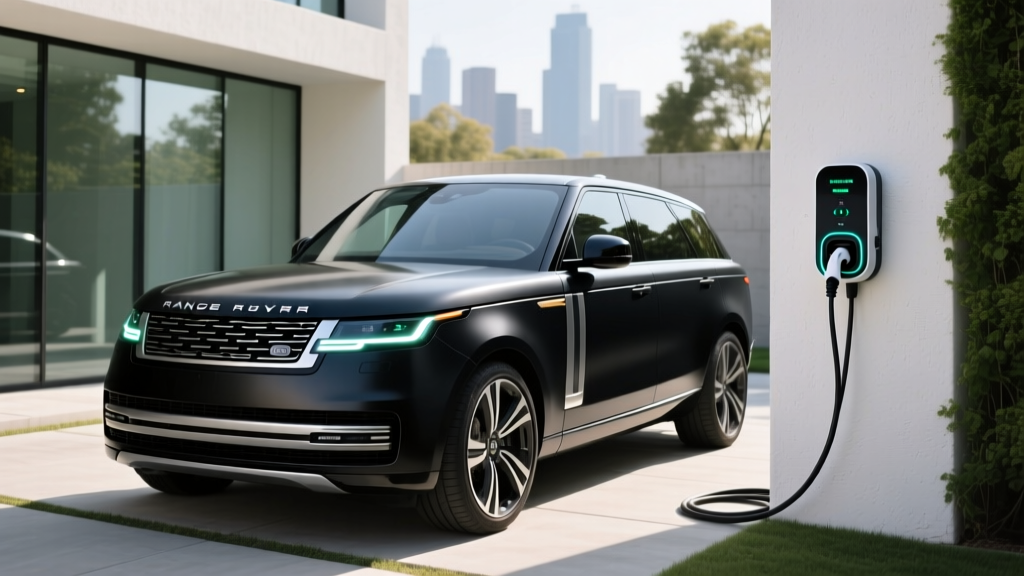
If you've been asking "does Range Rover have an EV?" the answer is finally yes. Land Rover confirmed the all-electric Range Rover for the 2025 model year, with customer deliveries ramping through 2026. Built on JLR's Modular Longitudinal Architecture (MLA) and sharing its bones with the current-generation Range Rover, the EV variant targets the luxury SUV buyer who wants silent, instant torque without sacrificing off-road credibility or cabin refinement.
But owning a luxury EV means more than admiring the badge — it means understanding how to charge a large battery pack efficiently, especially when that pack is expected to exceed 100 kWh usable capacity. This guide walks you through every charging scenario for the Range Rover Electric (and any large-battery luxury EV), from your garage to the highway rest stop.
Range Rover Electric: Quick Specs and Charging Profile
Before wiring your garage, let's establish what we're charging. The 2026 Range Rover Electric is expected to carry a large NMC (nickel-manganese-cobalt) battery pack — JLR has targeted a pack in the 100–120 kWh usable range, with an EPA-estimated range goal of approximately 300+ miles. Final EPA certification figures will be published closer to retail launch; treat current numbers as preliminary.
| Spec | Range Rover Electric (2026 Preliminary) |
|---|---|
| Battery (usable, est.) | ~100–120 kWh, NMC chemistry |
| EPA Range (target) | ~300+ miles (final TBD) |
| Max DC Fast Charge Rate | Expected 200+ kW peak (800V architecture) |
| 10–80% DC Fast Charge (est.) | ~25–30 minutes |
| Level 2 AC Onboard Charger | Expected 11–22 kW (single/three-phase) |
| Connector | CCS1 (NACS adapter likely available) |
| Base MSRP (est.) | ~$120,000+ (federal §30D credit unlikely — exceeds SUV MSRP cap) |
Charging Levels Explained: Speeds in kW and Miles Per Hour
The single most important distinction in EV charging is kW (kilowatts) versus kWh (kilowatt-hours). Think of kW as the flow rate of water from a hose (power), and kWh as the total volume in the bucket (energy stored in the battery). A higher kW charge rate fills your kWh battery faster.
| Level | Voltage / Typical Amperage | Power (kW) | Miles of Range Added Per Hour | Best For |
|---|---|---|---|---|
| Level 1 | 120V / 12A | ~1.4 kW | ~3–5 miles | Overnight top-off, emergencies |
| Level 2 | 240V / 32–48A | 7.7–11.5 kW | ~25–40 miles | Daily home charging |
| DC Fast Charging | 400–800V DC | 50–350 kW | ~150–600+ miles (peak) | Road trips, quick stops |
For a 110 kWh battery like the Range Rover Electric's, Level 1 charging is essentially useless for daily driving — it would take over 75 hours for a full charge. Level 2 at 11.5 kW can replenish the pack in roughly 10–12 hours, ideal for overnight charging. DC fast charging at 200+ kW can take you from 10% to 80% in approximately 25–30 minutes, though charging speed tapers significantly above 80% to protect battery health.
Charge curve reality check: Peak kW is not sustained kW. A charger rated at 250 kW might deliver that rate only between 10–40% state of charge (SoC), then taper to 150 kW, then 80 kW, and finally trickle below 25 kW past 85%. That's why manufacturers quote 10–80% times — it's the useful fast-charging window.
Home Charger Installation: Requirements, Costs, and Gotchas
Charging a large-battery luxury EV at home is the most convenient and cost-effective approach, but it requires proper electrical infrastructure. Here's what's involved.
Electrical Requirements
A Level 2 home charger for a vehicle like the Range Rover Electric needs a dedicated 240-volt circuit. The most common setup is a NEMA 14-50 outlet on a 50-amp breaker, which supports continuous charging at 40 amps (9.6 kW). For faster Level 2 charging at 48 amps (11.5 kW), you'll need a 60-amp breaker and a hardwired charger — no plug-in outlet.
If your home has a 200-amp electrical panel with spare capacity, adding a 50- or 60-amp circuit is straightforward. If your panel is older (100-amp service) or already near capacity, a panel upgrade to 200 amps may be required — this is the single biggest variable in installation cost.
Installation Cost Breakdown
| Component | Typical Cost Range | Notes |
|---|---|---|
| Level 2 Charger (Equipment) | $400–$750 | Smart Wi-Fi chargers, 40–48A, 24ft cable |
| Electrician Labor | $500–$2,000 | Depends on run length, conduit, wall type |
| Electrical Permit | $50–$200 | Required in most jurisdictions |
| Panel Upgrade (if needed) | $1,500–$3,500 | 100A → 200A service upgrade |
| Total (no panel upgrade) | $950–$2,950 | Most homes with modern panels |
| Total (with panel upgrade) | $2,450–$6,450 | Older homes or maxed-out panels |
Always hire a licensed electrician and pull a permit. Unpermitted work can void your homeowner's insurance and create fire risk. The National Electrical Code (NEC) requires EV chargers on dedicated circuits with proper overcurrent protection.
Safety and Code Considerations
- Dedicated circuit: Your EV charger must be on its own breaker — never share with appliances.
- GFCI protection: NEC 2020+ requires ground-fault circuit interrupter protection for outdoor EV outlets. Many hardwired chargers have built-in GFCI.
- Outdoor rating: If your charger is mounted outside or in an unconditioned garage, ensure it carries a NEMA 4 or IP65 weather rating.
- Cable management: A 24-foot cable is standard; longer cables (up to 30 feet) are available but heavier. Use a holster or retractable reel to prevent tripping hazards.
- Utility rebates: Many utilities offer $250–$1,000 rebates for Level 2 charger installation — check with your local provider before purchasing equipment.
Which Connector Does the Range Rover Electric Use?
The North American charging connector landscape has shifted dramatically. Tesla's North American Charging Standard (NACS) has been adopted by most major automakers for 2025+ models. Here's where the Range Rover Electric fits in and what you need to know about compatibility.
| Connector | Description | Range Rover Electric Compatibility |
|---|---|---|
| CCS1 (Combined Charging System) | Standard for most non-Tesla EVs through 2024. Two-pin DC + J1772 AC. | Expected native connector at launch |
| NACS (North American Charging Standard) | Tesla's smaller, lighter connector. Now adopted by Ford, GM, Rivian, Hyundai, and others. | Adapter likely available; future model years may ship native NACS |
| CHAdeMO | Legacy DC standard (Nissan Leaf, Mitsubishi). Being phased out. | Not compatible — irrelevant for new EVs |
| J1772 | Standard AC Level 1/2 connector (non-Tesla). Being replaced by NACS for AC. | CCS1 includes J1772 for AC charging |
Adapter needs: If you plan to use Tesla Supercharger stations (now opening to non-Tesla vehicles via the "Magic Dock" CCS adapter at select locations, or via NACS adapter), you'll want a CCS-to-NACS adapter. JLR is expected to offer or endorse a certified adapter. Budget $200–$300 for a quality adapter from an approved manufacturer. Always verify that any adapter is UL-listed — unlisted adapters can void your vehicle warranty and pose a safety risk.
For home charging, your Level 2 charger will come with either a CCS1 (J1772) or NACS plug. If you buy a NACS-equipped home charger today, you'll need a J1772-to-NACS adapter for a CCS1-vehicle. Plan your equipment purchase around your vehicle's native connector to avoid adapter clutter.
Cost to Charge: Home vs. Public vs. Gas Comparison
One of the strongest ownership arguments for the Range Rover Electric over its supercharged V8 sibling is running cost. Let's break it down with real numbers.
| Scenario | Cost per kWh | Cost to Add 200 Miles* | Cost Per Mile |
|---|---|---|---|
| Home (off-peak utility rate) | $0.12–$0.16 | $7.20–$9.60 | $0.036–$0.048 |
| Home (standard rate, no TOU) | $0.16–$0.22 | $9.60–$13.20 | $0.048–$0.066 |
| Public Level 2 (ChargePoint, etc.) | $0.25–$0.40 | $15.00–$24.00 | $0.075–$0.12 |
| DC Fast Charging (Electrify America, EVgo) | $0.35–$0.55 | $21.00–$33.00 | $0.105–$0.165 |
| Tesla Supercharger (where available) | $0.25–$0.40 | $15.00–$24.00 | $0.075–$0.12 |
| Gas Range Rover (P530, 16 MPG combined, $3.80/gal) | — | $47.50 | $0.238 |
*Based on ~3.0 miles per kWh efficiency (estimated for the Range Rover Electric). Actual efficiency varies with driving style, temperature, and terrain.
The numbers are stark. Charging at home on an off-peak rate costs roughly one-fifth of fueling a gas Range Rover per mile. Even exclusive DC fast charging on road trips comes in at less than half the per-mile cost of gasoline. Over 15,000 miles per year, home charging saves approximately $3,000–$3,500 annually compared to premium fuel in a V8 Range Rover.
Time-of-use (TOU) rates matter: If your utility offers TOU pricing, schedule charging between 10 PM and 6 AM to capture the lowest rates. Most smart chargers (and the vehicle itself) allow you to set scheduled charging windows.
Best Level 2 Home Chargers for the Range Rover Electric
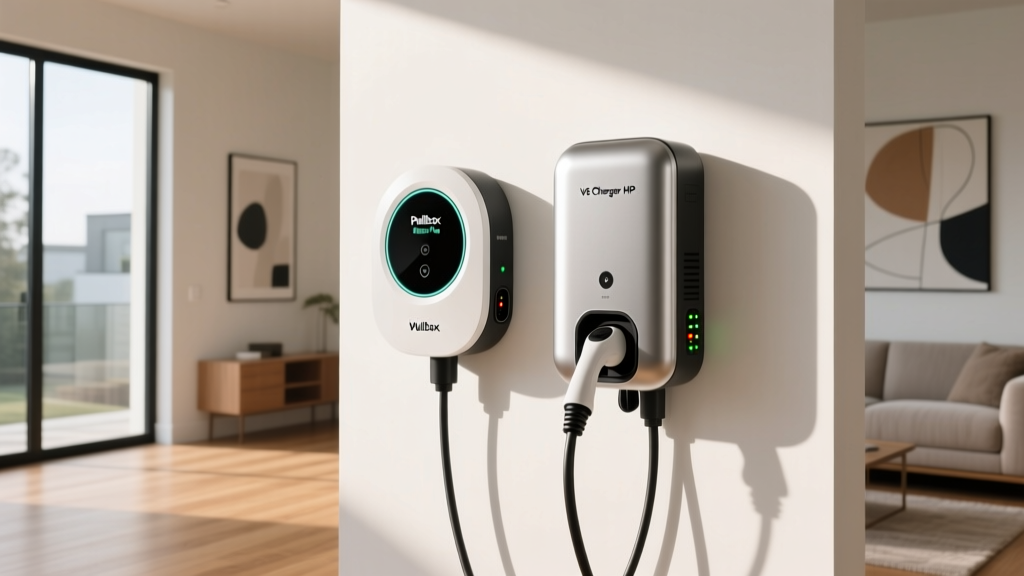
For a vehicle with a 100+ kWh battery, you want a charger that delivers maximum practical Level 2 speed, smart scheduling features, and rock-solid reliability. Here are top picks for 2026.
ChargePoint Home Flex (48A)
- Power Output: Up to 11.5 kW (48A, hardwired) or 9.6 kW (40A, NEMA 14-50)
- Connector: J1772 (CCS1 compatible); NACS version available
- Cable Length: 24 feet
- Smart Features: Wi-Fi, app scheduling, Alexa integration, energy tracking, load sharing with second unit
- Price: ~$550–$650
- Best For: Buyers who want utility integration and detailed energy reporting
Tesla Wall Connector (48A)
- Power Output: Up to 11.5 kW (48A, hardwired)
- Connector: NACS native; J1772 adapter included in some bundles
- Cable Length: 24 feet
- Smart Features: Wi-Fi, over-the-air updates, power sharing between multiple Wall Connectors, access control
- Price: ~$475–$550
- Best For: Multi-EV households or future-proofing for NACS adoption
Emporia Vue Home EV Charger (48A)
- Power Output: Up to 11.5 kW (48A, hardwired) or 9.6 kW (40A, plug-in)
- Connector: J1772 (CCS1 compatible)
- Cable Length: 24 feet
- Smart Features: Wi-Fi, whole-home energy monitoring integration, solar-aware charging, scheduling, load management
- Price: ~$400–$500
- Best For: Solar-panel owners and budget-conscious smart-charging enthusiasts
Grizzl-E Smart (40A)
- Power Output: 9.6 kW (40A, NEMA 14-50 plug-in)
- Connector: J1772 (CCS1 compatible)
- Cable Length: 24 feet
- Smart Features: Wi-Fi, OCPP protocol support, adjustable amperage, extreme cold rating (-40°F)
- Price: ~$450–$550
- Best For: Cold-climate owners who need rugged, outdoor-rated equipment
For the Range Rover Electric specifically, the ChargePoint Home Flex or Tesla Wall Connector (with a J1772 adapter if your vehicle ships CCS1) offer the best combination of speed, smart features, and reliability. If you plan to charge at the full 48 amps / 11.5 kW, both require a hardwired connection on a 60-amp breaker — factor this into your electrician quote.
Public Charging and Road Trip Planning
With a 200+ kW DC fast charging capability on an 800-volt architecture, the Range Rover Electric should handle road-trip charging gracefully. Here's how to plan.
Network compatibility: As a CCS1-equipped vehicle, the Range Rover Electric will work natively with Electrify America, EVgo, and ChargePoint DC fast stations. For Tesla Supercharger access, you'll need either a CCS-to-NACS adapter (for Superchargers equipped with Magic Dock) or access to Tesla's "open" Supercharger locations. JLR's connected navigation system should route you to compatible chargers automatically.
Battery preconditioning: Like most modern EVs, the Range Rover Electric is expected to precondition its battery when you navigate to a DC fast charger. This warms or cools the pack to optimal temperature, enabling faster peak charge rates. Always navigate to your charger using the vehicle's built-in system rather than a phone app — this triggers preconditioning and can shave 5–10 minutes off your charge time, especially in cold weather.
10–80% charging time estimate: At a 350 kW Electrify America station, expect 10–80% in approximately 25–30 minutes (assuming the pack supports 200+ kW peak). At older 50 kW CHAdeMO or CCS stations, that same session stretches to 90+ minutes — avoid these on road trips whenever possible.
Frequently Asked Questions
Does Range Rover have a fully electric vehicle available now?
Yes. The Range Rover Electric was announced for the 2025 model year with deliveries beginning in limited markets and expanding through 2026. It is a battery-electric vehicle (BEV), not a plug-in hybrid. Land Rover also sells plug-in hybrid (PHEV) versions of the Range Rover and Range Rover Sport, which combine a gasoline engine with a smaller battery offering 30–50 miles of electric-only range.
How much does it cost to install a home EV charger?
Expect $950–$2,950 for a standard Level 2 installation (equipment + electrician + permit) in a home with a modern 200-amp panel and a short conduit run. If your home needs a panel upgrade from 100A to 200A service, total costs can reach $2,450–$6,450. Always get two or three quotes from licensed electricians and verify that a permit is included.
How fast will each charging level add range to the Range Rover Electric?
Level 1 (120V) adds roughly 3–5 miles per hour — impractical for daily use with a 100+ kWh battery. Level 2 (240V, 48A) adds approximately 30–40 miles per hour, fully replenishing the battery overnight in 10–12 hours. DC fast charging at 200+ kW can add 150–200+ miles in 15–20 minutes during the peak charge window (10–50% SoC).
Which connector and charger is compatible with my EV?
The Range Rover Electric is expected to ship with a CCS1 connector for both AC and DC charging. This works with all non-Tesla public chargers and most home Level 2 equipment. For Tesla Supercharger access, a CCS-to-NACS adapter will be required. Check JLR's official specifications at delivery, as the industry is mid-transition to NACS.
How much does charging cost per mile compared to gas?
Home charging at off-peak rates costs approximately $0.04–$0.05 per mile. Public DC fast charging runs $0.10–$0.17 per mile. A gasoline Range Rover P530 at 16 MPG combined on premium fuel ($3.80/gal) costs roughly $0.24 per mile. Home EV charging saves approximately 80% per mile versus gasoline.
What electrical upgrades might I need for a home charger?
The most common upgrade is a panel capacity increase from 100 amps to 200 amps, required when your existing panel lacks spare capacity for a new 50- or 60-amp dedicated circuit. Your electrician will perform a load calculation to determine if an upgrade is necessary. Older homes (pre-1990s) are most likely to need this. Some utilities offer rebates or financing for panel upgrades tied to EV adoption.
Is the Range Rover Electric eligible for the federal EV tax credit?
Under current IRS §30D rules, the federal EV tax credit of up to $7,500 is subject to MSRP caps ($80,000 for SUVs), buyer income limits, and battery critical-mineral sourcing requirements. At an estimated starting price above $120,000, the Range Rover Electric will almost certainly exceed the MSRP cap and will not qualify for the federal credit. Always verify current rules at IRS.gov and consult a tax professional.
For the latest EPA range and efficiency data once the Range Rover Electric receives final certification, check fueleconomy.gov. For safety ratings as they become available, monitor NHTSA.gov and IIHS.org.