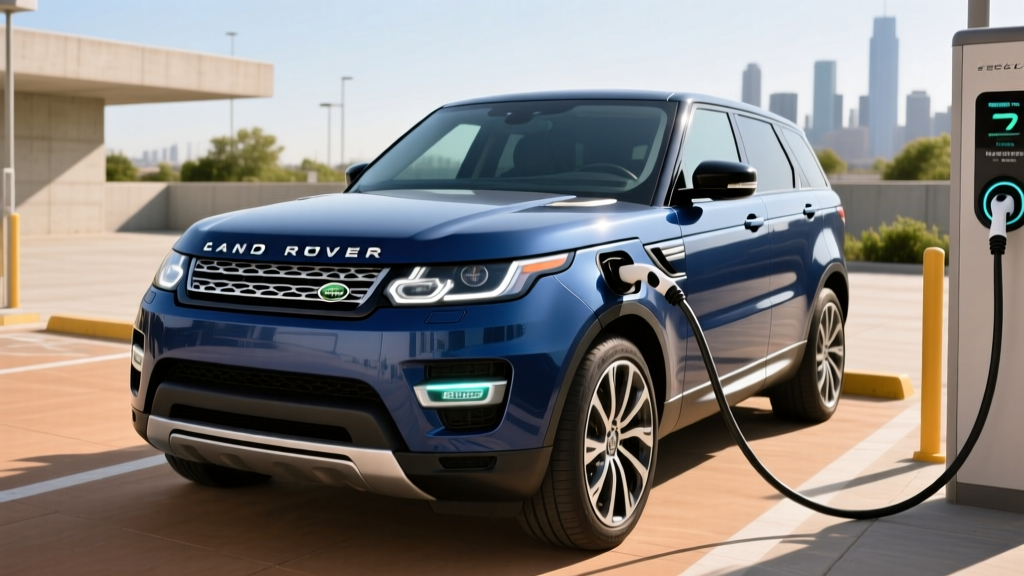
If you're researching the electric Range Rover — Land Rover's flagship luxury EV built on the modular EMA platform — you already know it promises serious capability wrapped in a $100,000+ package. What's less clear is how you'll actually keep its large battery charged day-to-day. With an estimated usable battery capacity north of 100 kWh, this is not a vehicle you'll want to trickle-charge from a standard wall outlet. Here's exactly what home charging, public fast charging, and equipment selection look like for the EV Range Rover and similar large-battery luxury EVs.
Understanding Charging Levels: Speeds That Actually Matter
Before buying any equipment, you need to understand the three charging tiers and what they deliver in practical terms. The critical distinction: kW (kilowatts) measures power — how fast energy flows into the battery. kWh (kilowatt-hours) measures energy — the total capacity of the battery itself. A 100 kWh battery charged at 10 kW takes roughly 10 hours; at 100 kW, roughly one hour (ignoring taper for simplicity).
| Level | Voltage | Max Power (kW) | Miles of Range Added per Hour | Best Use Case |
|---|---|---|---|---|
| Level 1 | 120V AC | 1.4–1.9 kW | 3–5 miles | Overnight top-ups, PHEVs |
| Level 2 | 240V AC | 7.2–19.2 kW | 20–60 miles | Daily home charging |
| DC Fast Charge | 400–800V DC | 50–350 kW | 150–800+ miles (equivalent rate) | Road trips, quick top-ups |
For a vehicle like the EV Range Rover with an estimated 100+ kWh battery, Level 1 charging is essentially useless as a primary method — it would take over 60 hours for a full charge. Level 2 at home is your workhorse, and DC fast charging handles road trips. The EV Range Rover is expected to support peak DC charging rates around 200+ kW on an 800V architecture, meaning a 10–80% charge could take roughly 25–30 minutes at a compatible station.
Home Charging Installation: What the EV Range Rover Actually Requires
Here's where many luxury EV buyers get a rude surprise. A large-battery EV like the Range Rover EV benefits enormously from a high-amperage Level 2 circuit — ideally 48A to 80A — to fully recharge overnight. That means dedicated wiring, a sufficiently large electrical panel, and professional installation.
Electrical Requirements
A 48-amp continuous-draw charger requires a 60-amp dedicated circuit (NEC code mandates circuits be rated 125% above continuous load). For maximum charging speed, some homes opt for a 100-amp circuit supporting an 80-amp charger. Your electrical panel must have the spare capacity to support this — typically requiring a 200-amp service panel at minimum, with available breaker slots.
Panel Upgrade Reality
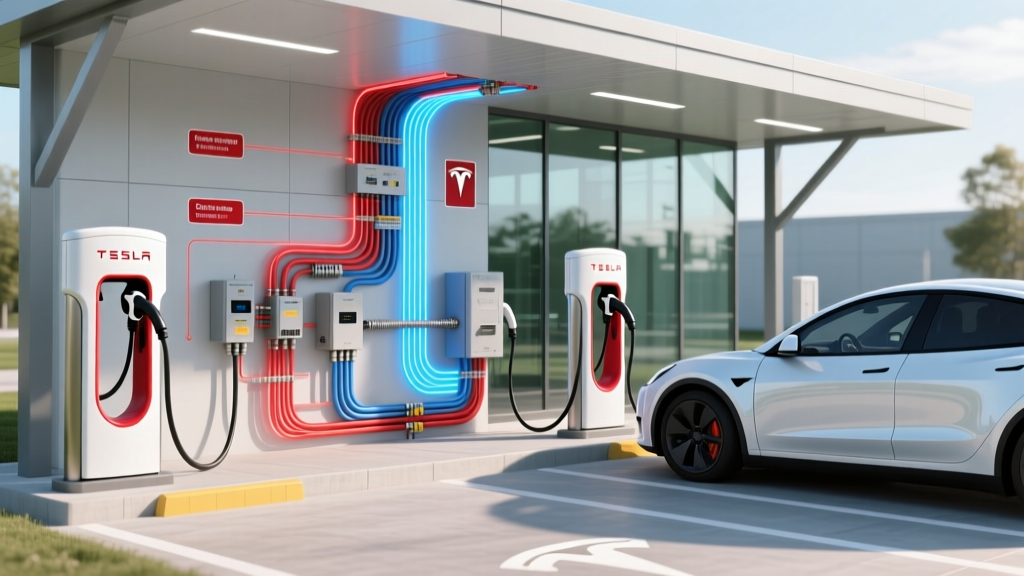
If your home has an older 100-amp or 150-amp service panel, adding a 60-amp EV circuit may push you over capacity. A panel upgrade to 200A or even 400A service runs $2,000–$5,000+ depending on your utility and local labor rates. This is the single biggest variable in home charging cost and one that no equipment review can predict for you. Have a licensed electrician perform a load calculation before committing to a charger.
| Component | Typical Cost Range | Notes |
|---|---|---|
| Level 2 Charger (Equipment) | $400–$1,200 | Varies by power output, cable length, smart features |
| Electrician Labor (standard install) | $500–$1,500 | Run ~30 ft of conduit, mount charger, install 60A breaker |
| Permit & Inspection | $50–$300 | Varies by municipality; some jurisdictions waive for EV installs |
| Panel Upgrade (if needed) | $2,000–$5,000 | Upgrade from 100A/150A to 200A+ service |
| Total (no panel upgrade) | $950–$3,000 | Most homes with 200A service |
| Total (with panel upgrade) | $2,950–$8,000 | Older homes or those near panel capacity |
The IRS offers a Residential Clean Energy Credit that does not currently cover standalone EV charger equipment (that expired for most taxpayers), but some utilities and states offer rebates of $250–$1,000 for Level 2 installations. Check with your local utility before purchasing equipment.
Connector Compatibility: NACS, CCS1, and the EV Range Rover
Land Rover has indicated the EV Range Rover will launch with the NACS (North American Charging Standard) connector — the Tesla-designed plug now adopted by nearly every major automaker for the North American market. This is a significant advantage for public charging access, as it grants native compatibility with Tesla Superchargers (now opened to non-Tesla vehicles at many locations) in addition to Electrify America, EVgo, and other networks offering NACS cables.
| Connector | Standard | Compatible Networks | EV Range Rover Compatibility |
|---|---|---|---|
| NACS | SAE J3400 | Tesla Supercharger, Electrify America (new stalls), EVgo, many others | Native — no adapter needed |
| CCS1 | SAE J1772 Combo | Electrify America (legacy), EVgo, ChargePoint | Requires NACS-to-CCS adapter (check manufacturer approval) |
| CHAdeMO | CHAdeMO | Limited legacy stations (phasing out) | Not recommended; adapter availability uncertain |
If you encounter older CCS1-only public chargers on road trips, a NACS-to-CCS adapter (such as those from Lectron or A2Z) will work, though you should confirm compatibility with Land Rover once final vehicle specs are published. CHAdeMO is essentially dead infrastructure in North America — don't plan around it.
Charging Time: What to Expect with a 100+ kWh Battery
Large batteries take time to fill. Here's what charging looks like across different scenarios for an estimated 100 kWh usable battery (the EV Range Rover's final capacity will be confirmed at launch):
| Charging Scenario | Power Delivered | Time for 10–80% (est.) | Overnight 8-hour session adds |
|---|---|---|---|
| Level 1 (120V/15A) | ~1.4 kW | ~48 hours | ~11 kWh (~30 miles) |
| Level 2 (240V/32A) | ~7.7 kW | ~9 hours | ~62 kWh (~170 miles) |
| Level 2 (240V/48A) | ~11.5 kW | ~6 hours | ~92 kWh (~250 miles) |
| Level 2 (240V/80A) | ~19.2 kW | ~3.6 hours | Full charge possible |
| DC Fast (200 kW peak) | ~130 kW avg (curve taper) | ~25–30 min | N/A — road trip use |
Charge curve reality check: No EV sustains its peak DC charging rate from 10% to 80%. The EV Range Rover may peak at 200+ kW at low states of charge, but expect the rate to taper significantly above 60–70% SoC as the battery management system protects cell health. That's why the 10–80% time is the meaningful metric, not peak kW alone.
Cost to Charge: Home vs. Public vs. Gas Comparison
One of the strongest arguments for home charging is cost. Even with a large battery, electricity is cheaper per mile than premium gasoline — but the math depends heavily on where and when you charge.
| Scenario | Rate ($/kWh) | Cost for 100 kWh Fill | Cost per Mile (est. 300 mi range) |
|---|---|---|---|
| Home off-peak (utility TOU rate) | $0.08–$0.12 | $8–$12 | $0.03–$0.04 |
| Home standard rate | $0.13–$0.18 | $13–$18 | $0.04–$0.06 |
| Public Level 2 (ChargePoint, etc.) | $0.25–$0.49 | $25–$49 | $0.08–$0.16 |
| DC Fast Charge (Electrify America) | $0.35–$0.56 | $35–$56 | $0.12–$0.19 |
| Premium Gasoline (17 MPG, $4.20/gal) | — | $24.71 (per 100 mi equivalent) | $0.25 |
At home off-peak rates, the EV Range Rover costs roughly $0.03–$0.04 per mile to fuel. A comparable gas-powered Range Rover (5.0L V8, ~17 MPG combined) on premium fuel at $4.20/gallon costs about $0.25 per mile. That's a 6x difference — roughly $2,100/year in fuel savings at 10,000 miles annually, assuming home charging dominates.
The caveat: if you rely exclusively on DC fast charging at $0.48–$0.56/kWh, your per-mile cost approaches $0.16–$0.19, narrowing the advantage significantly. Home charging access is the economic linchpin of EV ownership.
Equipment Recommendations: Best Level 2 Chargers for the EV Range Rover
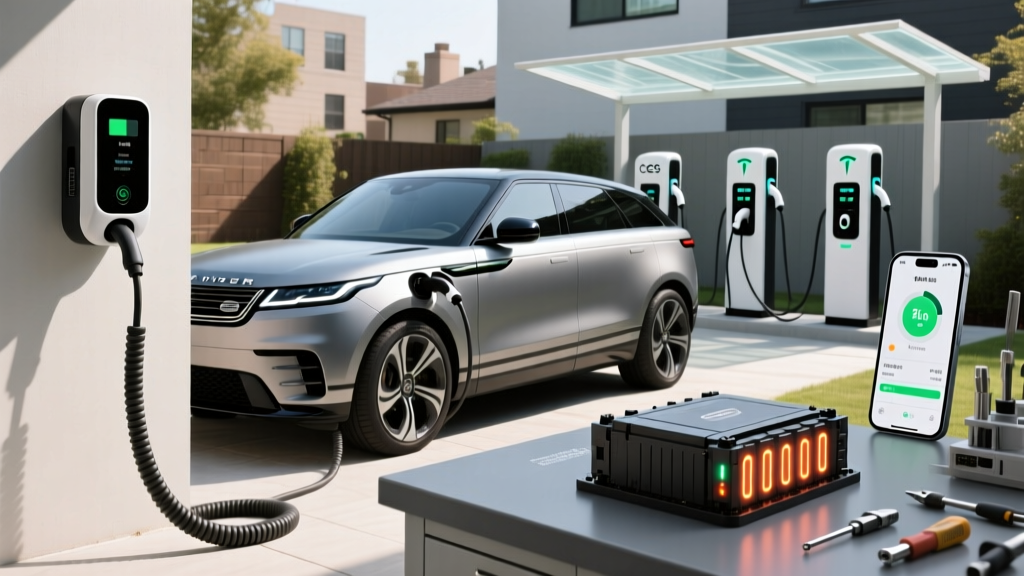
For a large-battery luxury EV, you want a charger that delivers meaningful overnight range recovery, has a long cable for flexible garage/parking positioning, and offers smart scheduling to exploit off-peak electricity rates.
Emporia Level 2 Smart Charger
- Power: Up to 48A (11.5 kW on 60A circuit)
- Connector: NACS (native) or J1772 with adapter
- Cable: 24 ft
- Smart features: Wi-Fi, energy monitoring, solar integration, TOU scheduling
- Price: ~$400–$550
- Best for: Budget-conscious buyers who want full smart features and energy tracking
ChargePoint Home Flex
- Power: Adjustable 16A–50A (up to 12 kW on 60A circuit)
- Connector: NACS or J1772 (configurable)
- Cable: 23 ft
- Smart features: Wi-Fi, app scheduling, Alexa integration, flexible amperage
- Price: ~$600–$700
- Best for: Homes with varying circuit capacity — adjust amperage to match your panel
Tesla Wall Connector (Universal)
- Power: Up to 48A (11.5 kW) on NACS; up to 40A via integrated J1772 adapter
- Connector: NACS native with built-in J1772 magic dock adapter
- Cable: 24 ft
- Smart features: Wi-Fi, power sharing (daisy-chain two units on one circuit), OTA updates
- Price: ~$600–$650
- Best for: Multi-EV households wanting power sharing; seamless NACS experience
FLO Home X5
- Power: Up to 48A (11.5 kW)
- Connector: J1772 (NACS adapter available)
- Cable: 25 ft
- Smart features: Wi-Fi, FLO app, rugged outdoor-rated enclosure
- Price: ~$700–$900
- Best for: Outdoor installations in harsh climates; built like a tank
For the EV Range Rover specifically, I'd recommend the Tesla Universal Wall Connector or ChargePoint Home Flex configured at 48A on a dedicated 60-amp circuit. Both deliver ~11.5 kW, which adds roughly 250 miles of range in an 8-hour overnight session — enough to fully replenish daily driving and most weekend trips. The Tesla unit's power-sharing feature is valuable if you also own or plan to buy a second EV.
Safety, Code, and Installation Non-Negotiables
EV charging pulls significant sustained current — hours at a time, night after night. This is not a DIY extension-cord situation. Key safety requirements include:
- Dedicated circuit: Your Level 2 charger must have its own breaker — no sharing with other appliances.
- GFCI protection: NEC 2020 and later require GFCI protection for EV charging outlets in garages and outdoor locations. Hardwired chargers may have built-in GFCI; plug-in units need a GFCI breaker.
- Outdoor rating: If installing outside, the charger must carry a NEMA 4 or NEMA 4X rating for weather resistance. All recommended units above qualify.
- Wire gauge: A 60-amp circuit typically requires 6 AWG copper wire (or 4 AWG aluminum). Your electrician will size this correctly based on run length and local code.
- Permit and inspection: Most jurisdictions require an electrical permit for a new dedicated circuit. Skipping this risks insurance claim denial if an electrical fire occurs.
Always hire a licensed electrician — preferably one with documented EV charger installation experience. Ask for a load calculation on your panel before work begins. Reference the NHTSA's EV safety resources for broader guidance on EV electrical safety.
Public Charging on the Road: What EV Range Rover Owners Should Know
With a NACS connector, the EV Range Rover will access the broadest public charging network in North America. Tesla's Supercharger network — now open to non-Tesla NACS vehicles at participating stations — offers the most reliable DC fast charging experience, with typical speeds of 150–250 kW at V3 and V4 stalls. Electrify America's newer stations also feature NACS cables alongside CCS1.
For road trip planning, expect the following real-world behavior: precondition your battery using the vehicle's navigation-routed charging feature. The EV Range Rover's thermal management system will warm the battery to optimal temperature before you arrive at a DC fast charger, enabling faster charging speeds. Skipping preconditioning in cold weather can cut your peak charge rate by 30–50%, turning a 25-minute stop into a 40-minute stop.
Charging networks to prioritize:
- Tesla Supercharger (NACS native): Highest reliability, best uptime, competitive pricing at $0.25–$0.35/kWh in many regions.
- Electrify America (NACS + CCS1): Growing network, Plug&Charge capability, ~$0.35–$0.56/kWh without a subscription plan.
- EVgo (NACS + CCS1): Urban-focused locations, competitive pricing with subscription, ~$0.30–$0.45/kWh.
- ChargePoint (varies): Large network but quality varies by site; check app for station status before driving there.
Frequently Asked Questions
How much does it cost to install a home EV charger for the Range Rover EV?
Expect $950–$3,000 for a standard installation (equipment, electrician, permit) if your home has a 200-amp panel with spare capacity. If a panel upgrade is needed, total costs can reach $3,000–$8,000. The single largest variable is whether your existing electrical service can support a new 60-amp dedicated circuit.
How fast will each charging level add range to the EV Range Rover?
Level 1 (120V) adds roughly 3–5 miles per hour — essentially impractical for a 100+ kWh battery. Level 2 (240V at 48A) adds approximately 30–35 miles per hour, recovering ~250 miles overnight. DC fast charging at 200 kW peak can add 150+ miles in 15 minutes at compatible stations.
Which connector does the EV Range Rover use?
The EV Range Rover is expected to use the NACS (SAE J3400) connector natively, granting direct access to Tesla Superchargers and other NACS-equipped public stations. For legacy CCS1 stations, a NACS-to-CCS adapter may be needed.
How much does charging cost per mile versus premium gasoline?
Home charging at off-peak rates costs approximately $0.03–$0.04 per mile for the EV Range Rover. A comparable gas Range Rover on premium fuel costs roughly $0.25 per mile. Even public DC fast charging at $0.48/kWh (~$0.16/mile) undercuts gasoline significantly.
What electrical upgrades might my home need for EV charging?
The most common upgrade is a panel service increase from 100A or 150A to 200A+ to support a dedicated 60-amp EV circuit. Older homes may also need updated wiring from the utility meter to the panel. A licensed electrician's load calculation will determine exactly what's required — get this done before purchasing a charger.
Does the EV Range Rover qualify for the federal EV tax credit?
The IRS §30D clean vehicle credit offers up to $7,500, but eligibility depends on MSRP caps ($80,000 for SUVs), buyer income limits, and battery component/critical mineral sourcing requirements. Given the Range Rover EV's expected MSRP above $100,000, it is very likely to exceed the MSRP cap and be ineligible. Always verify current rules on irs.gov and consult a tax professional before purchasing.
Should I get a hardwired or plug-in Level 2 charger?
Hardwired chargers support higher amperage (up to 80A on a 100A circuit) and avoid the GFCI breaker requirement that plug-in NEMA 14-50 outlets need. Plug-in units offer portability — you can take the charger when you move. For a permanent home installation with a large-battery EV like the Range Rover, hardwired at 48A is the most reliable and code-compliant approach.