What Is the Range Rover Electric? The 2026 EV Luxury SUV Explained
If you've been searching for what is Range Rover Electric, you're not alone. After years of teasers, Jaguar Land Rover's flagship electric SUV finally arrives for the 2026 model year as the Range Rover Electric (formerly teased as the Range Rover EV). Built on JLR's Modular Longitudinal Architecture (MLA-Flex), it sits alongside the mild-hybrid and plug-in hybrid Range Rovers but swaps the engine bay for a large battery pack and dual-motor all-wheel-drive powertrain.
Here's what we know from official and preliminary specifications:
| Spec | Range Rover Electric (2026 Preliminary) |
|---|---|
| Battery Capacity (usable) | ~117 kWh (NMC chemistry) |
| EPA Range (estimated) | ~300–320 miles (real-world highway: ~260–280 mi) |
| Powertrain | Dual-motor AWD, ~550 hp (est.) |
| 0–60 mph | ~4.5 seconds (est.) |
| Max DC Fast Charge Rate | ~200 kW peak (800V architecture) |
| 10–80% DC Fast Charge | ~25 minutes (est.) |
| Level 2 Onboard Charger | 11 kW (est.) |
| Charging Connector (US) | NACS (native Tesla Supercharger access) |
| Starting MSRP (est.) | ~$120,000+ |
| Federal §30D Tax Credit | Unlikely — exceeds $80,000 SUV MSRP cap |
Real-World Range Reality: The EPA sticker may read ~310 miles, but expect 260–280 miles on sustained highway driving at 70+ mph, and potentially 220–240 miles in sub-freezing winter conditions. The Range Rover Electric's boxy, full-size SUV profile creates more aerodynamic drag than sleeker crossovers, which hits efficiency harder at highway speeds. Plan road trips around 200–220 miles between charge stops to keep a safety buffer.
Because this is a $120,000+ luxury EV with a massive battery, your charging setup matters enormously. Charging a 117 kWh battery on a standard 120V outlet would take days. Let's walk through exactly how to charge the Range Rover Electric at home, in public, and what equipment you need.
Charging Levels Explained: Level 1, Level 2, and DC Fast Charging
Before plugging in, you need to understand the three charging tiers. The critical distinction: kW (kilowatts) measures power — how fast energy flows into the battery. kWh (kilowatt-hours) measures energy — the battery's total capacity. Think of kW as the width of a hose and kWh as the size of the bucket.
| Level | Voltage | Power (kW) | Miles Added/Hour | Best For |
|---|---|---|---|---|
| Level 1 (120V AC) | 120V | 1.0–1.4 kW | ~3–5 mi/hr | Emergency/trickle only |
| Level 2 (240V AC) | 240V | 7.2–19.2 kW | ~25–65 mi/hr | Daily home charging |
| DC Fast Charge | 400–800V DC | 50–350 kW | ~150–500+ mi/hr (peak) | Road trips, rapid top-ups |
For the Range Rover Electric with its ~117 kWh battery:
- Level 1 (1.4 kW): A full charge takes 80+ hours. Completely impractical for daily use. Only viable as an emergency trickle.
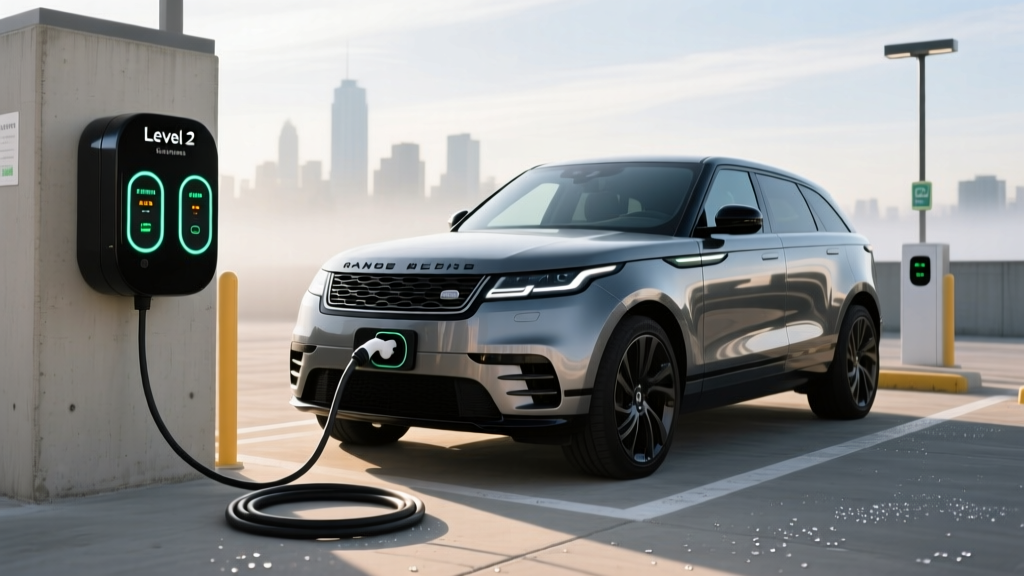
- Level 2 (11 kW onboard charger): A full charge takes ~10–11 hours. Ideal for overnight home charging — plug in at 8 PM, full by 7 AM.
- DC Fast Charge (~200 kW peak): 10–80% in approximately 25 minutes. Note that the charge curve tapers significantly above 80% SoC to protect the battery. Charging from 80–100% may add another 20–30 minutes.
Charge curve reality: The "200 kW peak" rate only holds between roughly 10–40% SoC. As the battery fills, internal resistance rises and the vehicle's battery management system reduces the charge rate. Expect an average rate closer to 140–160 kW across the full 10–80% session. This is why manufacturers quote 10–80% times rather than 0–100%.
How Much Does It Cost to Install a Home EV Charger?
Home charging is where Range Rover Electric ownership makes the most sense — you'll do 80–90% of your charging at home. But installation costs vary dramatically based on your home's electrical panel.
Electrical requirements for Level 2 home charging:
- Voltage: 240V (same as a clothes dryer or electric oven)
- Amperage: 48A–60A dedicated circuit recommended for a 40A–48A charger
- Panel capacity: Most homes need a 200-amp service panel minimum. Older homes with 100A panels will likely need an upgrade.
- Permit: Required in virtually all US jurisdictions — typically $50–$200
| Item | Cost Range | Notes |
|---|---|---|
| Level 2 Charger (Equipment) | $400–$800 | Smart Wi-Fi chargers, 40A–48A |
| Electrician Labor | $500–$2,000 | Varies by run length, conduit, wall type |
| Electrical Permit | $50–$200 | Local jurisdiction fee |
| Panel Upgrade (if needed) | $1,500–$4,000 | 100A → 200A service upgrade |
| Total (no panel upgrade) | $950–$3,000 | Typical scenario for newer homes |
| Total (with panel upgrade) | $2,450–$7,000 | Older homes with 100A service |
Panel upgrade gotcha: If your home was built before the 1990s, there's a meaningful chance you have a 100-amp panel. Adding a 48A continuous load (which draws ~50A at peak) on top of existing household loads can exceed panel capacity. A licensed electrician will perform a load calculation to determine if an upgrade is required. Budget for this possibility — it's the single biggest surprise cost in EV charger installation.
Always hire a licensed electrician and pull a permit. Unpermitted electrical work can void homeowner's insurance and create fire hazards. The National Electrical Contractors Association can help you find qualified installers.
Which Connector Is Compatible With the Range Rover Electric?
The 2026 Range Rover Electric is expected to ship with a NACS (North American Charging Standard) port in the US market, aligning with JLR's commitment to the Tesla-originated connector. This is a significant advantage for public charging access.
| Connector | Description | Range Rover Electric Compatibility |
|---|---|---|
| NACS (Tesla) | Smaller, lighter plug; Tesla Supercharger network + growing adoption | Native — direct compatibility |
| CCS1 | Larger combo plug; Electrify America, EVgo, ChargePoint DC stations | Adapter required (NACS-to-CCS1) |
| CHAdeMO | Legacy DC standard; being phased out in the US | Not compatible — avoid |
| J1772 (Level 2 AC) | Standard AC plug for Level 2 public/home stations | Adapter included or built-in |
What this means practically:
- Tesla Superchargers: You can plug directly into the 20,000+ Supercharger stalls across North America — the largest and most reliable DC fast-charging network.
- Electrify America / EVgo: You'll need a NACS-to-CCS1 adapter (~$150–$250). Keep one in the frunk or cargo area for road trips.
- Home Level 2: Most residential chargers come with either NACS or J1772 connectors. Choose NACS-native for a clean setup, or use the J1772 adapter if your charger has that plug.
For the latest on adapter compatibility and charging network maps, reference fueleconomy.gov and the Alternative Fuels Data Center.
How Much Does Charging Cost Per Mile vs. Gas?
The Range Rover Electric's efficiency is estimated at roughly 2.0–2.2 kWh per mile (or ~45–50 MPGe equivalent for a full-size luxury SUV). Here's how charging costs compare across scenarios:
| Scenario | $/kWh | Cost to Charge 117 kWh | Cost Per Mile (~300 mi range) |
|---|---|---|---|
| Home Off-Peak (utility TOU rate) | $0.10–$0.14 | $11.70–$16.38 | $0.04–$0.05/mi |
| Home Standard Rate | $0.15–$0.20 | $17.55–$23.40 | $0.06–$0.08/mi |
| Public Level 2 (ChargePoint, etc.) | $0.25–$0.40 | $29.25–$46.80 | $0.10–$0.16/mi |
| DC Fast Charge (Electrify America) | $0.35–$0.55 | $40.95–$64.35 | $0.14–$0.21/mi |
| Tesla Supercharger (avg) | $0.28–$0.40 | $32.76–$46.80 | $0.11–$0.16/mi |
Gas comparison: A comparable gas-powered Range Rover (5.0L V8, ~16 MPG combined) at $3.50/gallon costs approximately $0.22 per mile. Even DC fast charging the Range Rover Electric is competitive with or cheaper than gasoline. Home off-peak charging saves 75–80% per mile compared to gas.
Pro tip: Enroll in your utility's time-of-use (TOU) plan to access off-peak rates (typically 11 PM–6 AM). Set your charger or vehicle to schedule charging during these windows. Some utilities offer dedicated EV rates as low as $0.08/kWh overnight.
Recommended Home Level 2 Chargers for the Range Rover Electric
With a ~117 kWh battery, you want a high-output Level 2 charger to minimize overnight charge times. Here are top picks for 2026:
ChargePoint Home Flex (NACS)
- Power Output: Up to 11.5 kW (48A on a 60A circuit)
- Connector: NACS native
- Cable Length: 23 feet
- Smart Features: Wi-Fi, app scheduling, Alexa integration, energy tracking
- Price: ~$599–$699
- Best For: Reliable daily charging with strong app ecosystem
Tesla Wall Connector (Gen 3)
- Power Output: Up to 11.5 kW (48A on a 60A circuit)
- Connector: NACS native
- Cable Length: 24 feet
- Smart Features: Wi-Fi, OTA updates, load sharing (multiple units), Powerwall integration
- Price: ~$475
- Best For: Best value for NACS-native homes; cleanest Supercharger integration
Emporia Level 2 EV Charger
- Power Output: Up to 11.5 kW (48A on a 60A circuit)
- Connector: J1772 (use adapter for NACS vehicle) or NACS version
- Cable Length: 24 feet
- Smart Features: Wi-Fi, detailed energy monitoring, solar integration, TOU scheduling
- Price: ~$399–$449
- Best For: Budget-conscious buyers who want detailed energy data and solar pairing
For the Range Rover Electric's 11 kW onboard charger, any of these units will max out the vehicle's AC charging capability. Installing a 48A charger on a dedicated 60A circuit is the optimal setup.
Safety, Code, and Installation Best Practices
EV charger installation involves high-amperage 240V circuits — the same class of electrical work as a subpanel or hot tub. Safety is non-negotiable.
- Dedicated circuit: Your Level 2 charger must have its own dedicated breaker — never share a circuit with other appliances. A 48A charger requires a 60A breaker per NEC continuous-load rules (125% of rated current).
- GFCI protection: The 2020 NEC update requires GFCI protection for EV charging outlets in garages. Hardwired installations may have different requirements — consult your electrician and local code.
- Outdoor rating: If installing outside, ensure the charger carries a NEMA 4 rating (weatherproof). Most quality chargers (ChargePoint, Tesla, Emporia) are rated for indoor and outdoor use.
- Wire gauge: A 60A circuit typically requires 6 AWG copper wire (or 4 AWG aluminum) for runs up to ~50 feet. Longer runs may need thicker wire to prevent voltage drop.
- Conduit: Exposed wiring must be in conduit per local code. Many jurisdictions require EMT (metal) conduit in garages.
Before installation, check whether your state or utility offers EV charger rebates. Many utilities offer $250–$1,000 rebates for Level 2 installations, and some states provide additional incentives. The federal Alternative Fuel Vehicle Refueling Property Credit (30C) may cover up to 30% of installation costs (up to $1,000) for qualifying installations — check IRS guidelines for current eligibility.
Public Charging Strategy for Range Rover Electric Owners
With native NACS access, Range Rover Electric owners have the strongest public charging position of any non-Tesla EV. Here's how to optimize:
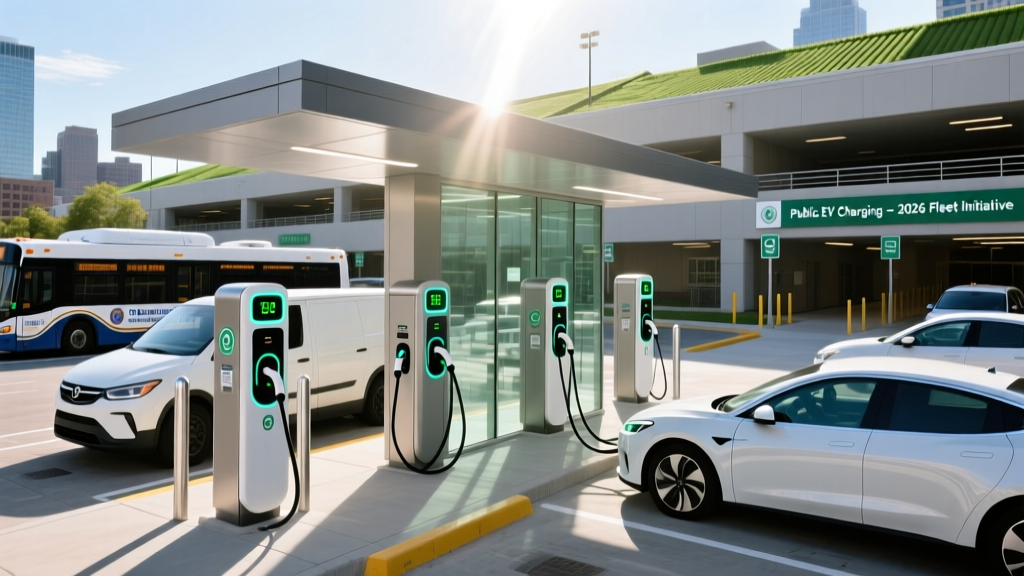
- Tesla Superchargers: Your primary DC fast-charging network. Use the vehicle's built-in navigation for battery preconditioning — it warms the battery before arrival to maximize charge speed. Expect 10–80% in ~25 minutes at V3/V4 Superchargers (250 kW capable stalls).
- Electrify America: Use with a NACS-to-CCS adapter. EA stations offer up to 350 kW, though the Range Rover Electric will cap at its ~200 kW max. Reliability varies — check PlugShare reviews before relying on a specific station.
- Destination charging: Hotels, shopping centers, and workplaces increasingly offer Level 2 destination chargers. These add ~25–40 miles per hour — perfect for topping up while you shop or sleep.
Cold-weather charging tip: In temperatures below 40°F, the battery management system will limit charge speed until the pack warms up. Always use navigation to a charger to trigger preconditioning. Without preconditioning, a cold battery may initially accept only 50–80 kW before ramping up.
Frequently Asked Questions
How much does it cost to install a home EV charger for the Range Rover Electric?
Expect $950–$3,000 for a standard Level 2 installation (equipment, electrician, and permit) in a home with a 200A panel. If your home needs a panel upgrade from 100A to 200A, add $1,500–$4,000, bringing the total to $2,450–$7,000. Get 2–3 quotes from licensed electricians.
How fast will each charging level add range?
Level 1 (120V): ~3–5 miles per hour. Level 2 (240V, 48A): ~35–40 miles per hour for the Range Rover Electric. DC Fast Charge (~200 kW): ~200+ miles in 25 minutes (10–80%). Level 2 at home is the practical daily solution.
Which connector/charger is compatible with the Range Rover Electric?
The 2026 Range Rover Electric uses NACS natively for DC fast charging and AC Level 2. For CCS1-based public chargers (Electrify America, some EVgo stations), you'll need a NACS-to-CCS1 adapter. CHAdeMO is not compatible.
How much does charging cost per mile vs. gas?
Home off-peak charging costs approximately $0.04–$0.05 per mile. Public DC fast charging runs $0.11–$0.21 per mile. A comparable gas Range Rover costs ~$0.22 per mile at $3.50/gallon and 16 MPG combined. Home charging saves 75–80% per mile.
What electrical upgrades might I need?
Homes with 100A electrical panels will likely need a panel upgrade to 200A ($1,500–$4,000). You'll also need a dedicated 60A breaker and 240V circuit with appropriate wire gauge (6 AWG copper). Your electrician will perform a load calculation to confirm requirements.
Does the Range Rover Electric qualify for the $7,500 federal tax credit?
Almost certainly not. The IRS §30D credit caps SUV eligibility at an $80,000 MSRP, and the Range Rover Electric starts well above $120,000. It also must meet battery sourcing and critical mineral requirements. Consult a tax professional and check current IRS §30D guidelines for definitive eligibility.
How long will the battery last?
JLR is expected to offer an 8-year/100,000-mile battery warranty (standard for the industry), covering capacity retention above 70%. NMC batteries in premium EVs with active thermal management typically retain 85–90% capacity after 100,000 miles based on data from similar platforms.