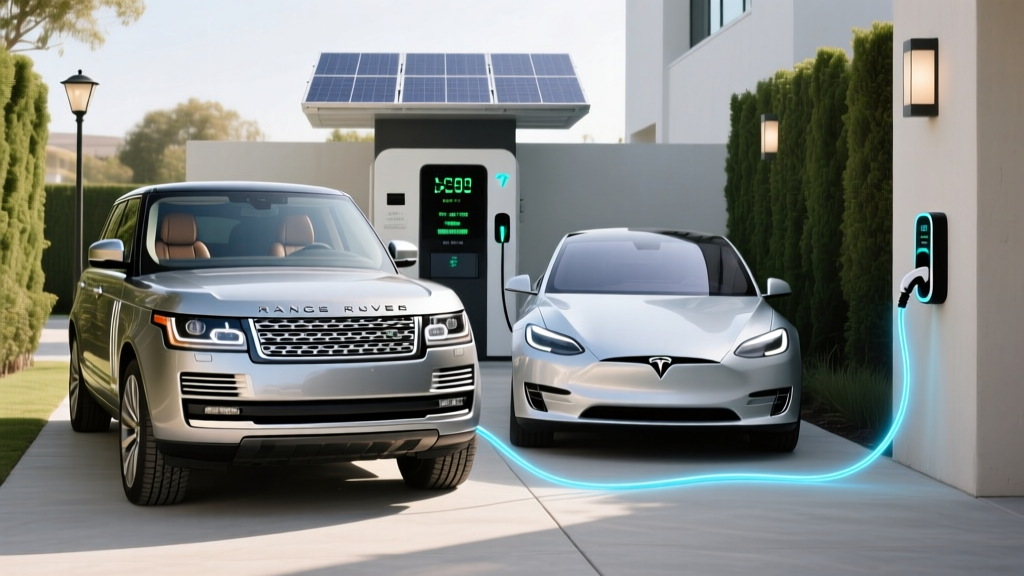
If you're cross-shopping a used luxury SUV like the 2014 Range Rover Autobiography Supercharged against a modern electric vehicle, the sticker price is only the opening move. The real financial story unfolds at the pump versus the plug — and understanding EV charging infrastructure, installation costs, and per-mile energy expenses is essential before you sign any paperwork.
This guide breaks down everything you need to know about EV charging — from home installation requirements and costs to public charging networks and connector compatibility — framed against what you'd actually spend fueling a 510-horsepower, 5.0L supercharged V8 Range Rover that returns roughly 14 MPG combined per EPA estimates.
Why Compare the 2014 Range Rover Autobiography Supercharged to an EV?
The 2014 Range Rover Autobiography Supercharged was the pinnacle of Land Rover's lineup: a 510 HP supercharged V8, air suspension, executive rear seating, and a starting MSRP that exceeded $135,000 when new. On the used market in 2026, clean examples trade between $28,000 and $45,000 depending on mileage and condition — putting it in the same price bracket as a new Tesla Model Y Long Range, Hyundai Ioniq 5, or Ford Mustang Mach-E.
But the ongoing costs diverge sharply. The Range Rover's 5.0L supercharged V8 demands premium fuel and averages 14 MPG combined (12 city / 18 highway). At $4.20/gallon for premium, that's roughly $0.30 per mile in fuel alone. An efficient EV charged at home on off-peak electricity? Closer to $0.04–$0.06 per mile. Over 15,000 annual miles, that's a $3,600–$3,900 yearly fuel savings favoring electric.
Of course, the Range Rover offers capabilities — towing, off-road prowess, and a certain presence — that no current EV SUV fully replicates. But if your priority is daily commuting cost and predictable energy expenses, the charging-versus-fueling math demands a closer look.
EV Charging Levels Explained: Speeds, Power, and Range Added
Before evaluating costs, you need to understand the three charging levels. The critical distinction: kW (kilowatts) measures power — the rate of energy delivery, like water pressure from a hose. kWh (kilowatt-hours) measures energy — the total amount stored in the battery, like gallons in a tank. Never confuse the two.
| Level | Voltage | Power (kW) | Miles of Range Added Per Hour | Typical Use Case |
|---|---|---|---|---|
| Level 1 | 120V AC | 1.2–1.9 kW | 3–5 miles | Overnight trickle; emergency top-off |
| Level 2 | 240V AC | 3.3–19.2 kW | 12–75 miles | Daily home/workplace charging |
| DC Fast Charging | 400–800V DC | 50–350 kW | 150–1,200+ miles (equivalent rate) | Road trips; rapid top-ups |
Level 1 uses a standard household 120V outlet. It's included with most EVs but is painfully slow — adding roughly 4 miles of range per hour. A 75 kWh battery would take over 40 hours from empty. It works for plug-in hybrids with small batteries (10–18 kWh) but is impractical as a primary charging method for any full-size EV.
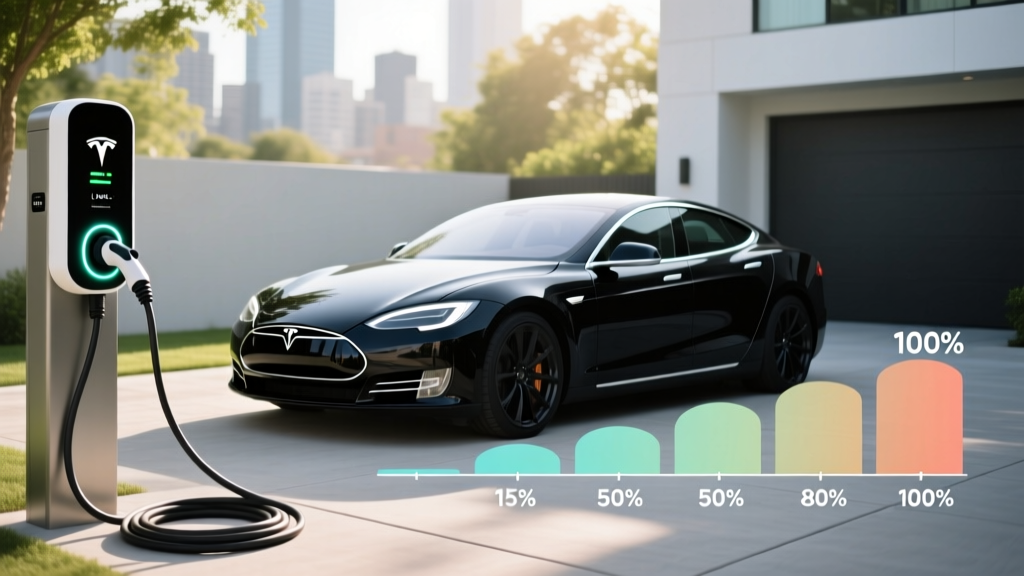
Level 2 requires a dedicated 240V circuit — the same voltage your electric dryer uses. This is the backbone of home EV ownership. At 48 amps (11.5 kW), a typical modern Level 2 charger adds roughly 35–44 miles of range per hour, fully replenishing most EVs overnight in 6–10 hours.
DC Fast Charging bypasses the vehicle's onboard charger and feeds DC current directly to the battery at high power. Modern EVs on 350 kW chargers can add 100+ miles in under 10 minutes. However, peak kW is not sustained — charge curves taper significantly above 80% State of Charge (SoC) to protect battery health. A vehicle rated for 250 kW peak might average only 120–150 kW across a full 10–80% session.
How Much Does It Cost to Install a Home EV Charger?
This is the question that stops many prospective EV buyers cold. The answer varies enormously based on your home's electrical panel capacity, the distance from panel to charger location, and local permit requirements. Here's a realistic breakdown for a Level 2 home installation in 2026:
| Component | Simple Install (Panel Adjacent) | Moderate Install (50–80 ft Run) | Complex Install (Panel Upgrade Needed) |
|---|---|---|---|
| Level 2 Charger Equipment | $400–$700 | $400–$700 | $400–$700 |
| Electrician Labor (2–8 hours) | $500–$1,000 | $1,000–$2,500 | $2,000–$4,000 |
| Electrical Permit | $50–$150 | $50–$200 | $100–$300 |
| Panel Upgrade (100A → 200A) | Not needed | Not needed | $1,500–$3,500 |
| Conduit/Wiring Materials | $100–$200 | $200–$600 | $300–$800 |
| Total Estimated Cost | $1,050–$2,050 | $1,650–$4,000 | $4,300–$9,300 |
The panel upgrade wildcard: Homes built before the 1990s often have 100-amp electrical service. Adding a 40–48 amp EV circuit to a maxed-out 100A panel requires upgrading to 200A service — a significant expense. A licensed electrician can evaluate your panel's available capacity during a site visit. Some utilities offer rebates of $300–$1,000 for panel upgrades tied to EV adoption.
Electrical requirements for a standard Level 2 install: A 48-amp charger requires a dedicated 60-amp breaker (NEC code mandates circuits be rated at 125% of continuous load). This means 6-gauge copper wire for runs under 50 feet, potentially 4-gauge for longer runs. The circuit must include GFCI protection per the 2020 NEC update, and outdoor installations require NEMA 4-rated (weatherproof) enclosures and connectors.
Connector Compatibility: NACS, CCS1, and CHAdeMO Explained
The connector landscape has consolidated significantly since 2023, when Ford and GM announced adoption of Tesla's North American Charging Standard (NACS). As of 2026, here's where things stand:
| Connector Type | Brands Using It (Native) | Adapter Required? |
|---|---|---|
| NACS (Tesla / SAE J3400) | Tesla, Ford, GM, Rivian, Volvo, Polestar, Mercedes-Benz, BMW, Hyundai/Kia (2025+) | None for Tesla Superchargers; CCS adapter for non-Tesla DC networks |
| CCS1 (Combined Charging System) | VW, Audi, older Hyundai/Kia, Honda, Subaru, some Stellantis | NACS-to-CCS adapter needed for Tesla Supercharger access |
| CHAdeMO | Nissan Leaf (legacy); effectively discontinued for new vehicles | Limited adapter options; network shrinking |
For a new EV purchase in 2026: NACS is the clear standard going forward. If you buy a vehicle with a native CCS1 port, ensure the manufacturer includes or sells a NACS adapter so you can access Tesla's Supercharger network — still the most reliable DC fast-charging network in North America with over 25,000 stalls.
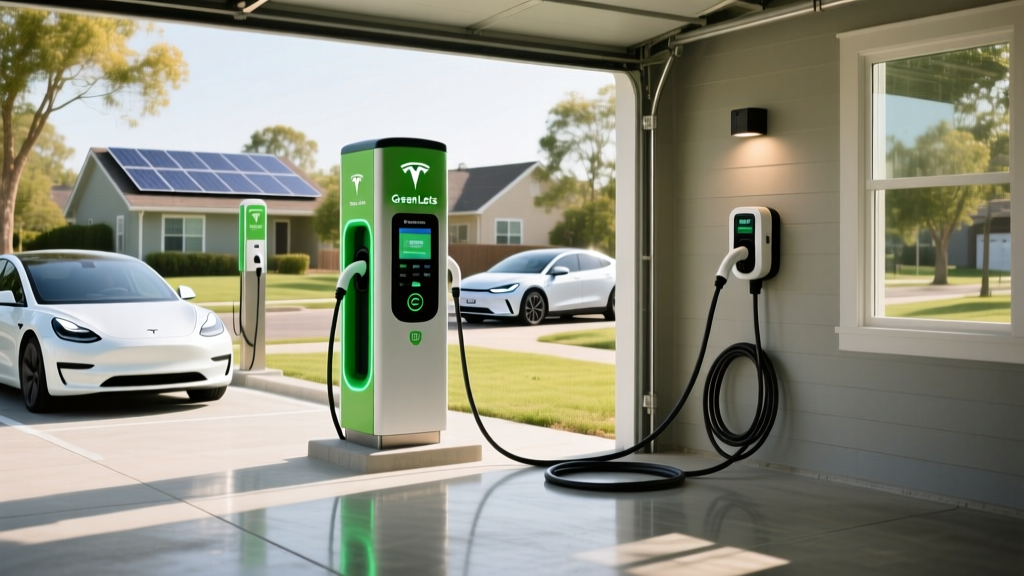
For home Level 2 charging: All EVs use a J1772 connector for AC Level 2 charging, or a NACS connector (which integrates AC and DC pins). Most home chargers ship with J1772; Tesla vehicles include a J1772-to-NACS adapter in the glovebox. If you buy a non-Tesla home charger for a Tesla, plan to use that adapter each session or invest in a NACS-terminated wall connector.
Cost to Charge: Per-Mile Electricity vs. the Range Rover's Fuel Bill
Let's put hard numbers on what it costs to drive electric versus fueling the 2014 Range Rover Autobiography Supercharged. We'll use three common EVs as benchmarks: the Tesla Model Y Long Range (75 kWh battery, ~320 mi EPA range), the Hyundai Ioniq 5 (77.4 kWh, ~310 mi EPA range), and the Ford F-150 Lightning Extended Range (131 kWh, ~320 mi EPA range).
| Vehicle / Scenario | Energy Cost | Efficiency | Cost Per Mile | Annual Cost (15,000 mi) |
|---|---|---|---|---|
| 2014 Range Rover SC (Premium Gas) | $4.20/gal | 14 MPG combined | $0.30 | $4,500 |
| Tesla Model Y — Home Off-Peak | $0.12/kWh | 3.5 mi/kWh (28 kWh/100mi) | $0.034 | $514 |
| Tesla Model Y — Home Peak | $0.25/kWh | 3.5 mi/kWh | $0.071 | $1,071 |
| Tesla Model Y — Public DC Fast | $0.40/kWh | 3.5 mi/kWh | $0.114 | $1,714 |
| F-150 Lightning — Home Off-Peak | $0.12/kWh | 2.1 mi/kWh (48 kWh/100mi) | $0.057 | $857 |
| F-150 Lightning — Public DC Fast | $0.40/kWh | 2.1 mi/kWh | $0.190 | $2,857 |
Key takeaways:
- Home off-peak charging is the economic sweet spot — an efficient EV like the Model Y costs roughly one-ninth as much per mile as the supercharged Range Rover.
- Even exclusive DC fast charging at $0.40/kWh, the most expensive routine scenario, still undercuts the Range Rover's fuel cost by roughly 60% for a sedan-class EV.
- Larger, less efficient EVs like the F-150 Lightning narrow the gap — at public DC fast prices, the Lightning's per-mile cost approaches $0.19, still meaningfully cheaper than $0.30 but no longer a dramatic savings.
- Time-of-use (TOU) utility plans are critical. Charging overnight at $0.08–$0.12/kWh versus peak afternoon rates of $0.25–$0.35/kWh can halve your electricity cost.
Charging Time Examples: What to Expect with Common Battery Sizes
Charging time depends on battery capacity (kWh), charger power output (kW), and the vehicle's charge curve. Here are realistic 10–80% charging times for popular 2026 EVs across different charging scenarios:
| Vehicle (Battery kWh) | Level 2 at 11.5 kW (48A) | DC Fast (Peak kW) | DC Fast 10–80% Time |
|---|---|---|---|
| Tesla Model Y LR (75 kWh) | ~5.5 hours | 250 kW peak | ~22 minutes |
| Hyundai Ioniq 5 (77.4 kWh) | ~5.5 hours | 240 kW peak (800V) | ~18 minutes |
| Ford F-150 Lightning ER (131 kWh) | ~10 hours | 150 kW peak | ~45 minutes |
| Chevrolet Equinox EV (85 kWh) | ~6.5 hours | 150 kW peak | ~30 minutes |
Real-world charging curve reality: The "peak kW" number is exactly that — a peak, not a sustained rate. Most EVs hit maximum charge rate between 10–30% SoC, then progressively taper. A vehicle advertising "250 kW peak" might sustain that for only 5–8 minutes before dropping to 150 kW, then 100 kW, then 50 kW as it approaches 80%. This is why 10–80% time is the industry-standard metric rather than a theoretical 0–100% calculation.
Cold weather impact: Battery temperatures below 50°F slow charge acceptance significantly. A 20-minute 10–80% session at 75°F can stretch to 35–40 minutes at 20°F unless the vehicle has active battery preconditioning — a thermal management feature that warms the pack en route to a charger. Tesla, Hyundai/Kia (E-GMP platform), and GM (Ultium) vehicles handle this well; some older or budget platforms do not.
Recommended Home Level 2 Chargers for 2026
Here are four well-regarded Level 2 home chargers that cover different budgets and feature sets. All are UL-listed, support 240V hardwired or NEMA 14-50 plug installation, and include integrated cable management.
ChargePoint Home Flex — Best Overall
- Power Output: Up to 11.5 kW (48A) on a 60A circuit; adjustable down to 16A
- Connector: J1772 (NACS adapter included for 2025+ models)
- Cable Length: 23 feet
- Smart Features: Wi-Fi, app scheduling, Alexa integration, energy tracking, TOU optimization
- Price: ~$550–$650
Tesla Wall Connector — Best for Tesla Owners
- Power Output: Up to 11.5 kW (48A)
- Connector: Native NACS — no adapter needed for Tesla vehicles
- Cable Length: 24 feet
- Smart Features: Wi-Fi, over-the-air updates, Power Sharing (link multiple units on one circuit), integrated Tesla app control
- Price: ~$420–$475
Emporia Vue Level 2 Charger — Best Budget Smart Charger
- Power Output: Up to 11.5 kW (48A)
- Connector: J1772 (NACS version available)
- Cable Length: 24 feet
- Smart Features: Wi-Fi, app control, solar integration, energy monitoring, TOU scheduling
- Price: ~$350–$400
Grizzl-E Smart — Best for Cold Climates & Durability
- Power Output: Up to 10 kW (40A)
- Connector: J1772 or NACS (configurable)
- Cable Length: 24 feet
- Smart Features: OCPP-compatible, app control, extreme cold rated to -40°F, NEMA 4 outdoor rating
- Price: ~$450–$550
Key selection criteria: Match the charger's max amperage to your available circuit capacity. A 48A charger needs a 60A breaker; a 40A charger needs a 50A breaker. If your panel has limited headroom, a lower-amperage unit (32A / 40A breaker) may be the practical choice without a panel upgrade.
Safety, Electrical Code, and Installation Best Practices
EV charging is a high-draw, continuous electrical load — it runs at full amperage for hours at a time. This places it in a different safety category than intermittent appliances. Key code and safety requirements include:
- Dedicated circuit: Your Level 2 charger must have its own dedicated breaker — it cannot share a circuit with other outlets or appliances. This prevents overloading and tripped breakers during long charge sessions.
- NEC 125% rule: Continuous loads (defined as 3+ hours) must be sized at 125% of the rated draw. A 48A charger requires a 60A breaker and wire rated for 60A. This is non-negotiable per National Electrical Code.
- GFCI protection: The 2020 NEC requires ground-fault circuit interrupter protection for EV charging circuits. Most modern hardwired chargers include internal GFCI; plug-in units via NEMA 14-50 require a GFCI breaker, which adds $40–$80 to material costs.
- Outdoor rating: If your charger is installed outdoors (garage-adjacent carport, driveway), the unit must carry a NEMA 4 or NEMA 4X rating for weather resistance. All recommended chargers above meet this standard.
- Permit and inspection: Virtually all jurisdictions require an electrical permit for EV charger installation. The permit ensures a city/county inspector verifies the work meets code. Skipping the permit risks insurance claim denials if an electrical fire occurs and may violate local law. Permit costs typically range from $50–$300 depending on locality.
- Hardwired vs. plug-in: Hardwired installations (direct wire connection, no plug) are generally preferred for 48A+ chargers because they eliminate the NEMA 14-50 receptacle as a potential failure point. Plug-in installations offer portability — you can take the charger when you move — but require a properly installed and torqued 14-50 outlet, which some electricians report as a common failure point if not done correctly.
The Ownership Math: Range Rover Supercharged vs. EV Over 5 Years
Let's synthesize the data into a 5-year ownership comparison. We'll assume 15,000 miles/year, $4.20/gallon premium fuel for the Range Rover, and $0.12/kWh home off-peak charging for the EV (Tesla Model Y Long Range as representative).
| Category | 2014 Range Rover Autobiography SC | Tesla Model Y LR (Home Charging) |
|---|---|---|
| Purchase Price (2026 est.) | $35,000 (used, avg.) | $48,000 (new, before incentives) |
| Annual Fuel/Energy Cost | $4,500 | $514 |
| 5-Year Fuel/Energy Total | $22,500 | $2,570 |
| Home Charger Install | N/A | $1,500–$4,000 (one-time) |
| Estimated Maintenance (5 yr) | $6,000–$10,000 | $1,500–$2,500 |
| 5-Year Running Cost Total | $28,500–$32,500 | $5,570–$9,070 |
The Range Rover's lower purchase price is quickly consumed by fuel and maintenance. The supercharged V8, air suspension, and complex electronics are known cost centers as these vehicles age — annual maintenance of $1,500–$3,000 is common for out-of-warranty examples, with major repairs (air strut replacement, supercharger coupler, timing chain guides) potentially adding $2,000–$5,000 in a single year.
The EV's higher upfront cost is partially offset by the federal §30D clean vehicle credit (up to $7,500 for eligible new EVs, subject to MSRP caps, buyer income limits, and battery sourcing requirements — consult a tax professional for your specific eligibility). Even without incentives, the 5-year running cost advantage for the EV exceeds $20,000 in this comparison.
That said, the Range Rover delivers genuine off-road capability, 7,700-lb towing capacity, and a luxury experience that no current EV SUV matches at this price point. If those capabilities are non-negotiable, the fuel cost is the price of admission.
Frequently Asked Questions
How much does it cost to install a home EV charger?
A straightforward Level 2 installation with an adequate electrical panel typically costs $1,050–$4,000 including equipment, electrician labor, and permits. If your home requires a panel upgrade from 100A to 200A service, total costs can reach $4,300–$9,300. Always get 2–3 quotes from licensed electricians and confirm the quote includes permit and inspection.
How fast will each charging level add range?
Level 1 (120V) adds 3–5 miles per hour. Level 2 (240V, 48A) adds roughly 35–44 miles per hour for an efficient EV. DC fast charging at 150–250 kW can add 100–250 miles in 15–20 minutes, though actual speed depends on battery size, state of charge, temperature, and the vehicle's charge curve taper.
Which connector and charger is compatible with my EV?
For 2026 model-year EVs, NACS (SAE J3400) is the dominant standard for Tesla, Ford, GM, Rivian, Hyundai/Kia, and others. CCS1 persists on some VW Group and legacy vehicles. For home Level 2, all vehicles accept J1772 (or NACS with adapter). Check your vehicle's charge port and confirm adapter availability before purchasing a home charger.
How much does EV charging cost per mile versus gas?
Home off-peak charging at $0.12/kWh costs roughly $0.03–$0.06 per mile for most EVs — compared to $0.30/mile for the 2014 Range Rover Autobiography Supercharged on premium fuel. Even public DC fast charging at $0.40/kWh costs $0.11–$0.19 per mile for most EVs, still meaningfully cheaper than a supercharged V8.
What electrical upgrades might I need for a home charger?
The most common upgrade is a panel capacity increase from 100A to 200A, required when your existing panel lacks sufficient headroom for a dedicated 60A EV circuit. Other potential needs include: replacing a Federal Pacific or Zinsco panel (known fire hazards common in 1960s–1980s homes), upgrading service entrance wiring, or adding a sub-panel if the charger is far from the main panel (detached garage, for example). A licensed electrician can assess your specific situation during a site evaluation.