Why a 2014 Range Rover Supercharged Autobiography Makes an Unlikely EV Conversion Candidate
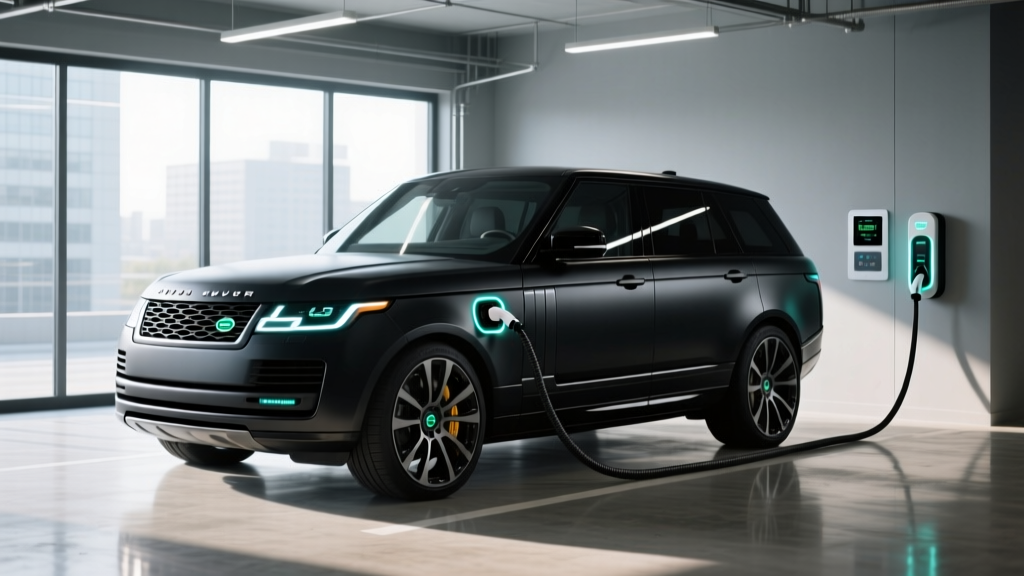
The 2014 Land Rover Range Rover Supercharged Autobiography is a landmark luxury SUV: a 510-hp, 5.0L supercharged V8, air suspension, executive rear seating, and a curb weight north of 5,100 lbs. Enthusiasts love the L405 chassis for its aluminum monocoque, commanding driving position, and timeless design. But with EPA fuel economy hovering around 14 mpg city and 19 mpg highway, operating costs are punishing. That tension — beloved platform, brutal fuel bills — is exactly why a growing niche of converters are exploring electric powertrain swaps into the 2014 Range Rover Supercharged Autobiography.
This guide focuses on what matters once an EV drivetrain is in place: how to charge a converted Range Rover at home and on the road, what electrical work your house will need, which connectors and adapters apply, and what it actually costs per mile versus the original supercharged V8. Whether you're evaluating a turnkey conversion from a shop like EV West or planning a custom build, the charging fundamentals below are universal.
Charging Levels Explained: Speeds, Power, and Real-World Range Added
Before selecting equipment, understand the three charging tiers. Power is measured in kilowatts (kW), which is the rate of energy delivery. Energy stored in the battery is measured in kilowatt-hours (kWh), which is capacity. Confusing kW with kWh is the single most common EV literacy error — think of kW as the size of the water hose and kWh as the size of the tank.
| Level | Voltage / Amps | Power (kW) | Miles of Range Added per Hour | Typical 10–80% Time |
|---|---|---|---|---|
| Level 1 (120V household) | 120V / 12A | 1.4 kW | ~3–4 mi/hr | ~60+ hours |
| Level 2 (240V home/public) | 240V / 40A–48A | 9.6–11.5 kW | ~25–32 mi/hr | ~6–8 hours |
| DC Fast Charging | 400V–800V DC | 50–150+ kW | ~120–250+ mi/hr | ~35–55 min (varies) |
For a heavy, boxy conversion like the 2014 Autobiography, expect real-world efficiency around 2.0–2.5 mi/kWh (roughly 2.5x less efficient than a sleek sedan like the Lucid Air). That means a 100 kWh pack delivers approximately 200–250 miles of real-world range, less in cold weather or at sustained highway speeds above 70 mph. Level 1 charging is essentially unusable as a daily strategy for a vehicle this size. Level 2 is the practical home baseline. DC fast charging is essential for road trips.
Home Charger Installation: Electrical Requirements, Panel Upgrades, and Costs
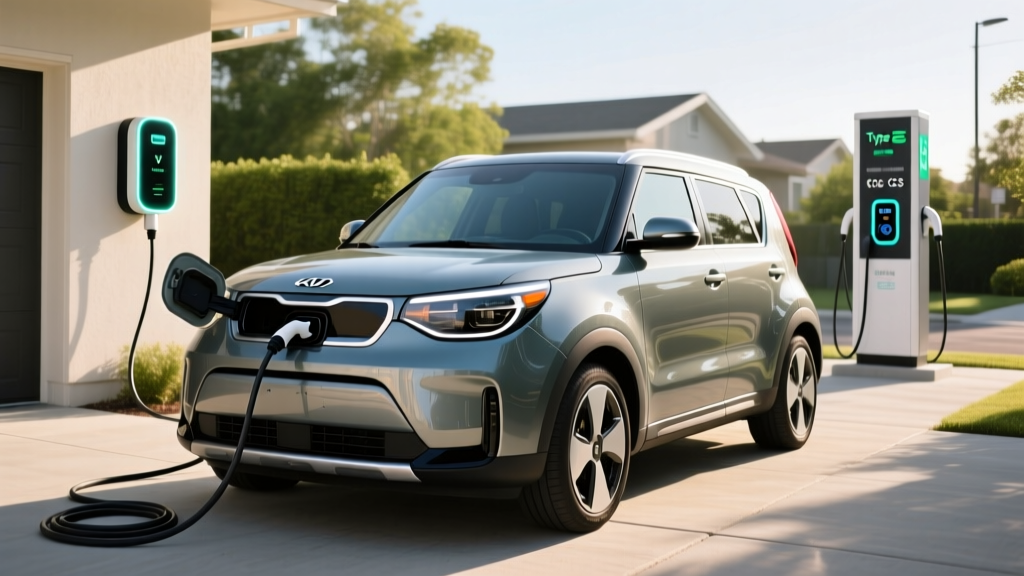
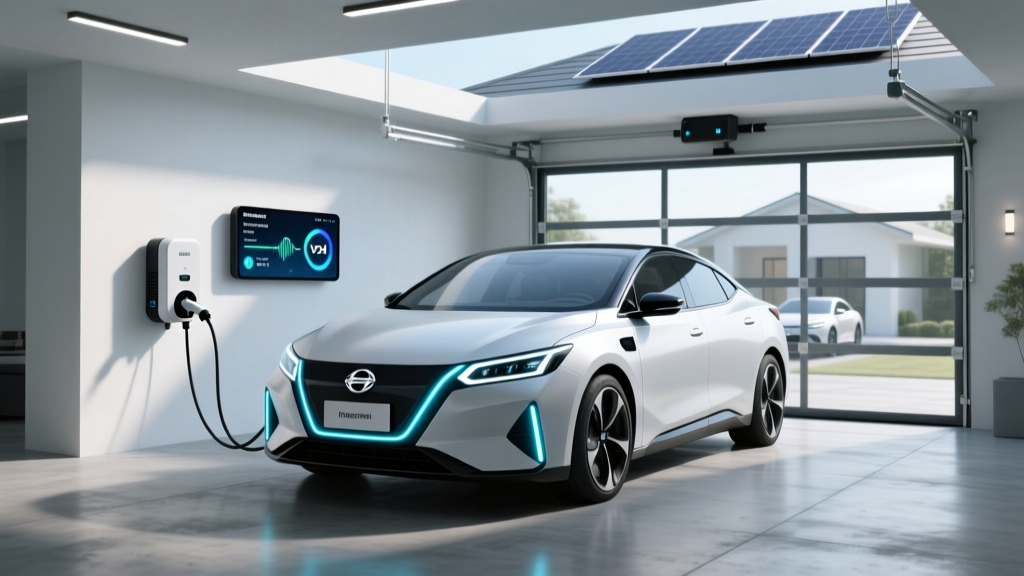
Installing a Level 2 home charger for a Range Rover EV conversion requires a dedicated 240V circuit, typically 40A or 50A, wired by a licensed electrician. The National Electrical Code (NEC) requires that continuous loads (like EV charging) use only 80% of a circuit's rated capacity — so a 48A charger needs a 60A breaker.
Estimated Home Level 2 Installation Costs (2026)
| Item | Low End | High End | Notes |
|---|---|---|---|
| Level 2 Charger (hardware) | $350 | $750 | 40A–48A smart charger, NACS or J1772 |
| Electrician labor (240V run) | $500 | $2,000 | Depends on panel-to-garage distance, wall type |
| Permit and inspection | $50 | $250 | Varies by municipality |
| Electrical panel upgrade (if needed) | $1,500 | $4,000 | Upgrading from 100A to 200A service |
| Total (no panel upgrade) | $900 | $3,000 | Most homes with 200A service |
| Total (with panel upgrade) | $2,400 | $7,000 | Older homes with 100A or 150A panels |
Homes built before 1990 frequently have 100A or 150A electrical panels that lack headroom for a 40–50A continuous EV load alongside existing appliances. A panel upgrade to 200A is a significant but one-time investment. Some utilities and state programs offer rebates for panel upgrades tied to EV adoption — check the Alternative Fuels Data Center for current incentives in your area.
Safety and Code Considerations
- Dedicated circuit: EV chargers must be on their own breaker — never share a circuit with other appliances.
- GFCI protection: NEC 2020 and later requires GFCI protection for outdoor receptacles used for EV charging. Hardwired units may be exempt depending on jurisdiction.
- Outdoor rating: If your charger is mounted outside or in an unenclosed carport, select a NEMA 4-rated unit designed for weather exposure.
- Cable management: For a full-size SUV like the Range Rover, choose a charger with at least a 24-foot cable to reach the charge port regardless of parking orientation.
Connector Compatibility: NACS, CCS, CHAdeMO, and Adapter Needs
The connector your conversion uses depends on the donor drivetrain and charge controller chosen during the build. Here's the 2026 landscape:
| Connector | Standard | Used By | Max DC Speed | Notes for Conversions |
|---|---|---|---|---|
| NACS (Tesla) | SAE J3400 | Tesla, Ford, GM, Rivian, Hyundai (2025+), most OEMs by 2026 | Up to 250+ kW (Supercharger) | Becoming the North American standard; best public network access |
| CCS1 | SAE J1772 Combo | Legacy VW, BMW, older non-Tesla EVs | Up to 350 kW | Declining in North America; adapters to NACS widely available |
| CHAdeMO | CHAdeMO | Nissan Leaf, Mitsubishi Outlander PHEV | Up to 100 kW | Effectively discontinued in the US; avoid for new builds |
| J1772 (AC only) | SAE J1772 | All non-Tesla EVs for Level 1/2 | N/A (AC only) | Standard for Level 2 public charging; NACS vehicles use an adapter |
Recommendation for a Range Rover conversion: Build with a NACS charge port. As of 2026, the Tesla Supercharger network has over 25,000 stalls in North America and offers the most reliable public DC fast-charging experience. Non-Tesla vehicles with NACS ports can access Superchargers via Tesla's open network program. If your conversion uses a salvaged Tesla drive unit and battery, NACS is native. If using a CCS-based donor (e.g., VW MEB components), a CCS-to-NACS adapter (~$200–$300) provides Supercharger access.
Cost to Charge: Per-Mile Economics vs. the Original V8
The 2014 Range Rover Supercharged V8 averages roughly 16 mpg combined. At $3.80/gallon (a reasonable 2026 national average for premium unleaded, which the 5.0L SC requires), fuel cost is approximately $0.237 per mile. An EV conversion's cost per mile depends entirely on electricity rates and charging scenarios:
| Scenario | Electricity Rate | Cost per kWh | Cost per Mile | Savings vs. Gas |
|---|---|---|---|---|
| Home off-peak (utility time-of-use) | $0.10/kWh | $0.10 | $0.045 | 81% cheaper |
| Home standard rate | $0.16/kWh | $0.16 | $0.073 | 69% cheaper |
| Public Level 2 (ChargePoint, etc.) | $0.25/kWh | $0.25 | $0.114 | 52% cheaper |
| DC fast charging (Electrify America, Tesla) | $0.40/kWh | $0.40 | $0.182 | 23% cheaper |
| Gasoline (16 mpg, $3.80/gal premium) | — | — | $0.237 | Baseline |
Even at the most expensive DC fast-charging rates, the EV conversion costs less per mile than the original supercharged V8. At home off-peak rates, the savings are dramatic — roughly $0.19 per mile, which translates to nearly $2,850 saved annually at 15,000 miles/year. According to fueleconomy.gov, electricity costs for EVs are consistently lower and more stable than gasoline prices.
Recommended Level 2 Chargers for a Range Rover EV Conversion
Given the Range Rover's size and the likelihood of a 90–110 kWh battery pack, you want a Level 2 charger that delivers maximum practical power (48A / 11.5 kW) with a long cable and smart scheduling features for off-peak utility rates.
ChargePoint Home Flex (NACS or J1772)
- Power: Up to 11.5 kW (48A) on a 60A circuit
- Cable length: 24 feet
- Connector: Available in NACS (2025+) or J1772
- Smart features: Wi-Fi, scheduling, Alexa, energy tracking
- Price: ~$599 (NACS version)
- Best for: Reliable daily charging with app-based scheduling for off-peak rates
Tesla Wall Connector (NACS)
- Power: Up to 11.5 kW (48A) on a 60A circuit
- Cable length: 24 feet
- Connector: NACS native
- Smart features: Wi-Fi, power sharing (pair two units on one circuit), OTA updates
- Price: ~$475
- Best for: NACS-equipped conversions; cleanest integration with Tesla-based drivetrains
Emporia Vue Level 2 Charger
- Power: Up to 11.5 kW (48A) on a 60A circuit
- Cable length: 24 feet
- Connector: J1772 (NACS adapter included)
- Smart features: Whole-home energy monitoring integration, solar-aware charging, scheduling
- Price: ~$399
- Best for: Budget-conscious installs; homes with solar panels wanting to charge on excess generation
All three chargers are hardwired or NEMA 14-50 plug-in compatible. For a Range Rover conversion, the 24-foot cable is essential — the charge port location on a converted L405 will vary depending on the builder's design, and a longer cable eliminates parking-position headaches. If your conversion is NACS-equipped, the Tesla Wall Connector offers the best value. If you want maximum network flexibility with a J1772 port, the Emporia pairs well with a J1772-to-NACS adapter for public Supercharger access.
DC Fast Charging on the Road: What to Expect from a Converted Range Rover
DC fast charging performance depends on the battery pack's maximum charge rate, which is determined by the battery management system (BMS) and cell chemistry chosen during conversion. Most high-quality conversions using salvaged Tesla or LG/Samsung NMC cells support 50–100 kW peak DC charging. Some premium builds with liquid-cooled packs and high C-rate cells can accept 150 kW or more.
Realistic expectations for a 100 kWh conversion pack:
- 50 kW peak: 10–80% in approximately 90–100 minutes. Adequate for road trips with planned meal stops.
- 100 kW peak: 10–80% in approximately 45–55 minutes. Practical for highway travel.
- 150 kW peak: 10–80% in approximately 30–40 minutes. Competitive with production EVs.
Remember that DC fast charging follows a taper curve: peak power is only sustained between roughly 10–50% state of charge. Above 80%, charging slows dramatically to protect battery health. For long trips, plan to charge from 10–80% and drive on — charging from 80–100% at a DC station is wastefully slow.
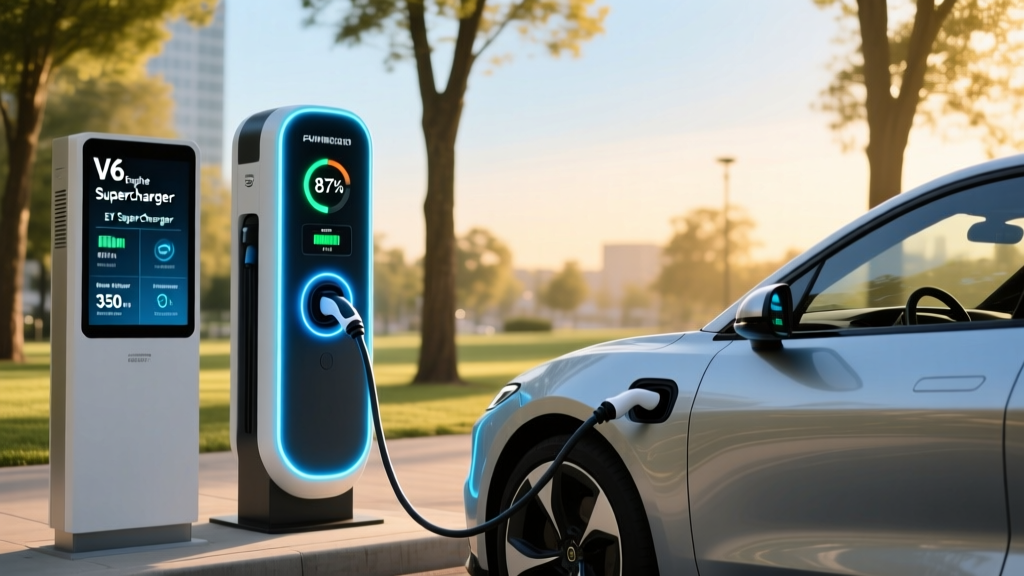
As of 2026, non-Tesla EVs with NACS connectors can access Tesla Supercharger stalls through the open Supercharger network. Electrify America, EVgo, and ChargePoint also offer DC fast chargers with both NACS and CCS connectors at most new stations.
Frequently Asked Questions
How much does it cost to install a home EV charger?
Expect $900–$3,000 for a standard Level 2 installation (charger + electrician + permit) in a home with an adequate 200A electrical panel. If your home requires a panel upgrade from 100A to 200A, add $1,500–$4,000, bringing the total to $2,400–$7,000. Always get a detailed quote from a licensed electrician before committing.
How fast will each charging level add range?
Level 1 (120V) adds roughly 3–4 miles per hour — essentially useless for a heavy SUV conversion. Level 2 (240V, 48A) adds 25–32 miles per hour, fully replenishing a 100 kWh pack overnight. DC fast charging at 100 kW adds 120+ miles in 30 minutes, making road trips viable.
Which connector and charger is compatible with my EV conversion?
It depends on your conversion's charge port. As of 2026, NACS is the dominant North American standard and provides the widest public charging access, including Tesla Superchargers. Specify NACS during your build planning. For Level 2 home charging, any 48A NACS charger (Tesla Wall Connector, ChargePoint Home Flex NACS) will work.
How much does charging cost per mile versus gas?
At home off-peak rates ($0.10/kWh), a Range Rover EV conversion costs approximately $0.045 per mile — 81% cheaper than the original V8 at $0.237/mile on premium gas. Even at public DC fast-charging rates ($0.40/kWh), you'll save roughly 23% per mile. Over 15,000 miles annually, home charging saves approximately $2,850 per year.
What electrical upgrades might I need?
The most common upgrade is a panel replacement from 100A to 200A service, needed in older homes that lack capacity for a 40–60A dedicated EV circuit alongside existing loads (HVAC, electric range, dryer). Your electrician will perform a load calculation per NEC Article 220 to determine if an upgrade is required. Some homes may also need a new conduit run from the panel to the garage or carport if the distance is long or walls are difficult to penetrate.
Is a Range Rover EV conversion eligible for any tax credits?
The federal §30D clean vehicle credit applies only to new qualifying EVs purchased from a manufacturer — it does not apply to aftermarket conversions. However, some states offer incentives for EV conversions or for installing home charging equipment. Consult a tax professional and check your state's energy office for current programs.
Planning Your Conversion's Charging Strategy
A 2014 Range Rover Supercharged Autobiography EV conversion is a passion project, not a budget play. The conversion itself typically costs $35,000–$80,000 depending on components and labor. But once the drivetrain is sorted, the charging infrastructure side is straightforward: install a 48A Level 2 charger at home on a 60A dedicated circuit, specify a NACS charge port during the build, and plan road trips around DC fast chargers rated for your pack's peak charge rate.
The math works in your favor on operating costs. A supercharged 5.0L V8 Range Rover costs $3,500–$4,000 per year in fuel at 15,000 miles. A properly charged EV conversion cuts that to $680–$1,100 per year depending on your electricity rates. The charging infrastructure investment — typically $1,000–$3,000 for a home Level 2 setup — pays for itself in fuel savings within the first year.
Before starting your build, consult with your conversion shop about the specific BMS and charge controller they use, confirm the peak DC charge rate your pack will support, and have an electrician evaluate your home's panel capacity early. These three data points determine everything else about your daily charging experience.