If you own a Tesla or are shopping for one, the phrase "range of Tesla" likely dominates your research. The EPA stickers are impressive—the 2026 Model S Long Range posts 402 miles, the Model 3 Long Range AWD achieves 363 miles, and the refreshed Model Y Long Range delivers 320 miles. But sticker range is only half the equation. How quickly and affordably you can replenish that range—whether at home or on the road—determines your real-world ownership experience.
This guide breaks down every charging method available to Tesla owners in 2026, from Level 1 trickle charging to 250 kW Superchargers and the expanding NACS-compatible public network. We cover exact speeds, home installation costs, electrical requirements, connector compatibility, and per-mile charging costs versus gasoline.
EPA range is measured under mixed city/highway conditions at moderate temperatures. In real-world highway driving at 75 mph, expect to use roughly 85–90% of the EPA figure. In freezing weather (below 32°F / 0°C), range can drop 20–30% due to battery resistance and cabin heating demands. A Model 3 Long Range rated at 363 miles EPA may deliver ~290–310 miles on a warm highway day, and ~250–270 miles in sub-freezing winter conditions. Plan your charging stops accordingly.
Understanding EV Charging Levels: Speeds in kW and Miles Per Hour
Before we talk hardware, let's clarify the most critical distinction in EV literacy: kW (kilowatts) measures power—the rate at which energy flows into your battery. kWh (kilowatt-hours) measures energy—the total capacity of your battery. Think of kW as the width of a pipe and kWh as the size of the tank it's filling.
A Tesla Model 3 Long Range has an ~82 kWh usable battery. Charging it at 11.5 kW (Level 2) means a full charge takes roughly 7–8 hours. Charging at 250 kW (DC fast) can add substantial range in minutes, though the charge curve tapers significantly above 80% State of Charge (SoC) to protect battery health.
| Level | Voltage / Amperage | Max Power (kW) | Miles of Range Added Per Hour | Typical Use Case |
|---|---|---|---|---|
| Level 1 (120V) | 120V / 12A | ~1.4 kW | 3–5 mi/hr | Overnight trickle; emergency top-up |
| Level 2 (240V) | 240V / 32–48A | 7.7–11.5 kW | 25–44 mi/hr | Daily home & workplace charging |
| DC Fast Charging | 400V+ DC | 150–250 kW (peak) | ~750–1,000 mi/hr (peak rate) | Road trips; rapid replenishment |
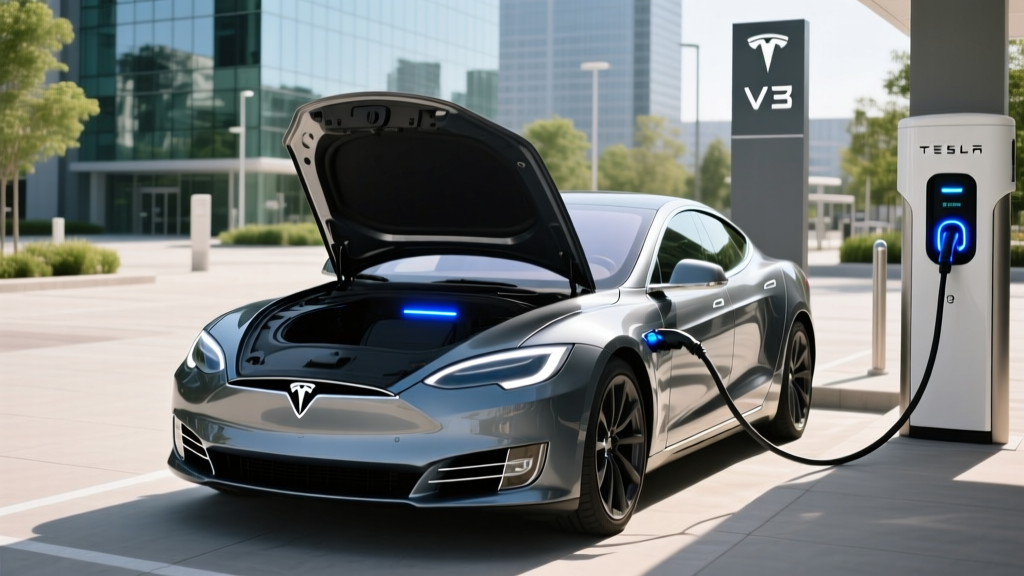
Important charge-curve caveat: Peak DC fast-charging rates (e.g., 250 kW on a V3 Supercharger) are only sustained at low SoC—typically between 10% and 30%. Above 50%, the rate tapers. Above 80%, it drops sharply to protect the battery cells. A 10–80% session on a V3 Supercharger takes approximately 25–30 minutes for a Model 3 Long Range, but 80–100% can take another 30+ minutes. Always plan road-trip stops to charge to 80% and move on.
Home Charger Installation: Electrical Requirements, Costs, and Panel Upgrades
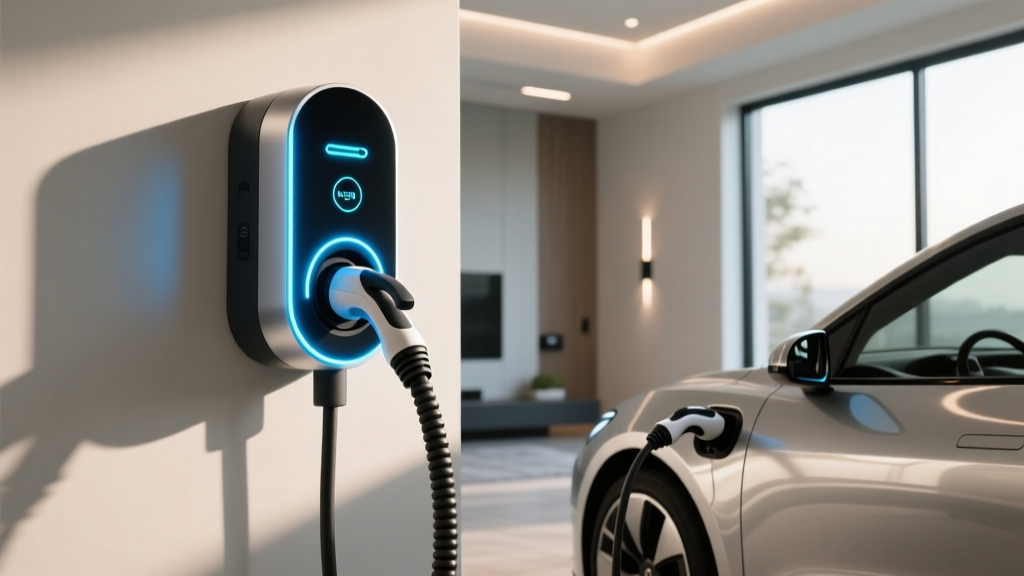
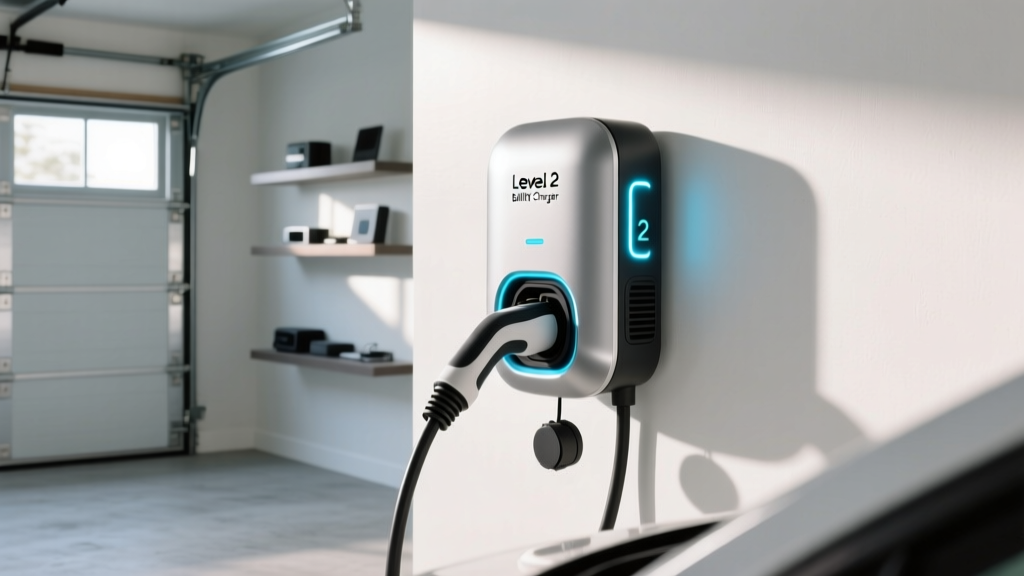
Installing a Level 2 home charger is the single highest-impact upgrade a Tesla owner can make. You'll wake up every morning with a full battery, and your cost per mile drops to a fraction of gasoline. But installation costs vary widely based on your home's electrical infrastructure.
Electrical Requirements for Level 2 Tesla Charging
Tesla's onboard charger in the Model 3 and Model Y accepts up to 11.5 kW (48A at 240V). To deliver this, you need a dedicated 60-amp circuit (electrical code requires circuits to be rated at 125% of continuous load, so 48A continuous requires a 60A breaker). The Tesla Wall Connector is hardwired for this configuration.
If your electrical panel is maxed out—common in homes built before 2000 with 100A service—you may need a panel upgrade to 200A service. This is the single biggest variable in installation cost and can add $1,500–$3,000 to the project.
An alternative for homes with limited panel capacity: install a 40A circuit (delivering 32A continuous / 7.7 kW). This still adds ~25–30 miles of range per hour—enough to fully recharge a Model 3 overnight—and avoids a panel upgrade in many cases.
| Component | Standard Install (Panel Has Capacity) | Complex Install (Panel Upgrade Needed) |
|---|---|---|
| EVSE Equipment (Tesla Wall Connector) | $420–$475 | $420–$475 |
| Electrician Labor (run conduit, wire, mount) | $600–$1,500 | $1,200–$2,500 |
| Electrical Panel Upgrade (100A → 200A) | N/A | $1,500–$3,000 |
| Permit & Inspection | $100–$300 | $150–$400 |
| TOTAL ESTIMATE | $1,120–$2,275 | $3,270–$6,375 |
Federal tax credit note: The IRS §30D alternative fuel vehicle refueling property credit can cover up to 30% of home charger equipment and installation costs (capped at $1,000). Eligibility depends on your census tract meeting specific criteria. Always verify current-year rules at irs.gov and consult a tax professional.
Connector Compatibility: NACS, CCS, and the Expanding Network
Tesla's North American Charging Standard (NACS) has become the dominant EV connector in North America. As of 2026, Ford, GM, Rivian, Volvo, Hyundai, and most major automakers have adopted NACS on new vehicles. This means Tesla owners have always had native access to the Supercharger network, and now the broader public charging ecosystem is converging on their connector.
| Connector | Used By | Tesla Compatibility | Adapter Needed? |
|---|---|---|---|
| NACS (Tesla) | Tesla (all models); Ford, GM, Rivian, Hyundai, Volvo (2025+ models) | Native — all Tesla vehicles | None |
| CCS1 | Legacy non-Tesla EVs (pre-2025 VW ID.4, older Bolt, Ioniq 5) | Via Tesla CCS Adapter | Yes — Tesla CCS1 Adapter (~$175) |
| CHAdeMO | Nissan Leaf (legacy); being phased out | Not compatible | No reliable adapter available |
| J1772 (Level 2 AC) | All non-Tesla EVs for Level 2 charging | Via included J1772 adapter (ships with Tesla) | Included with vehicle |
Practical tip: Keep the Tesla CCS1 adapter in your frunk or glove box. While the Supercharger network is dominant, Electrify America and other CCS-based networks may offer competitive pricing or be the only option in certain rural areas. The adapter unlocks access to thousands of additional DC fast chargers.
Charging Cost Per Mile: Home vs. Public vs. Gasoline
One of the strongest ownership arguments for a Tesla is the fuel-cost advantage. Let's quantify it with real numbers using the 2026 Model 3 Long Range AWD, rated at 132 MPGe combined and consuming approximately 26 kWh per 100 miles (per fueleconomy.gov).
| Scenario | Rate | Cost Per 100 Miles | Cost Per Mile |
|---|---|---|---|
| Home Charging (off-peak utility rate) | $0.12/kWh | $3.12 | $0.031 |
| Home Charging (average US rate) | $0.17/kWh | $4.42 | $0.044 |
| Tesla Supercharger (national avg.) | $0.30/kWh | $7.80 | $0.078 |
| Electrify America / third-party DCFC | $0.38/kWh | $9.88 | $0.099 |
| Gas Sedan (30 MPG combined) | $3.40/gallon | $11.33 | $0.113 |
Even at public DC fast-charging rates, the Tesla Model 3 costs less per mile than a 30 MPG gas sedan. At home off-peak rates, you're paying roughly one-quarter the per-mile cost of gasoline. Over 15,000 annual miles, home charging saves approximately $1,230 per year compared to gasoline.
Time-of-use tip: Most utilities offer off-peak rates between 10 PM and 6 AM. Schedule your Tesla to charge during these windows using the vehicle's built-in scheduled charging feature or your charger's smart scheduling. Some utilities offer EV-specific plans with rates as low as $0.08–$0.10/kWh overnight.
Recommended Home Charging Equipment for Tesla Owners
The home charger market has matured significantly. Here are the top picks for Tesla owners in 2026, evaluated on power output, build quality, smart features, cable length, and value.
Tesla Wall Connector (Gen 4)
- Power Output: Up to 11.5 kW (48A at 240V)
- Connector: Native NACS — no adapter needed
- Cable Length: 24 ft
- Smart Features: Wi-Fi OTA updates, load sharing (pair two units on one circuit), access control
- Price: ~$420–$475
- Best For: Tesla-only households wanting seamless integration
ChargePoint Home Flex (NACS version)
- Power Output: Up to 12 kW (50A at 240V) — configurable down to 16A for panel-limited homes
- Connector: NACS (2025+ models) or J1772 with adapter
- Cable Length: 23 ft
- Smart Features: App-based scheduling, energy tracking, Alexa integration, flexible amperage
- Price: ~$550–$650
- Best For: Multi-EV households or those wanting detailed energy data
Emporia Vue Level 2 Charger
- Power Output: Up to 11.5 kW (48A)
- Connector: NACS or J1772 options
- Cable Length: 24 ft
- Smart Features: Whole-home energy monitoring integration, solar-aware charging, budget-friendly smart scheduling
- Price: ~$350–$400
- Best For: Solar-panel owners wanting to charge on excess production
Safety, Code Compliance, and Installation Best Practices
EV charging draws sustained high current for hours—unlike most household appliances. This makes proper installation non-negotiable. Here's what your installation must address:
- Dedicated circuit: Your Level 2 charger must be on its own dedicated breaker. Sharing a circuit with other appliances risks tripping and fire hazard.
- GFCI protection: NEC 2023 and later require GFCI (Ground Fault Circuit Interrupter) protection for EVSE in garages and all outdoor locations. Many modern EVSE units have built-in GFCI; confirm with your electrician.
- Outdoor rating: If your charger is mounted outside (driveway, carport), the unit must carry a NEMA 4 or NEMA 4X weather rating. The Tesla Wall Connector and ChargePoint Home Flex are both rated for outdoor use.
- Wire gauge: A 60A circuit requires 6 AWG copper wire (or 4 AWG aluminum) per NEC guidelines. Your electrician will size this correctly, but verify it on the invoice.
- Permit and inspection: Most jurisdictions require an electrical permit for EVSE installation. This protects you—it ensures the work is inspected and meets code. Skipping permits can void homeowner's insurance coverage in the event of an electrical fire.
- Load calculation: A licensed electrician should perform a load calculation on your panel before installation to confirm you have sufficient capacity. If your panel is near its limit, a panel upgrade or a lower-amperage circuit is required.
DC Fast Charging Times: What to Expect on the Road
When you're away from home, Tesla's Supercharger network remains the gold standard for reliability and speed. Here's what to expect for 10–80% charging sessions at various DC fast-charging speeds, based on the Model 3 Long Range (~82 kWh usable battery):
| Charger Type | Peak Power | 10–80% Time (Model 3 LR) | Miles Added in 15 Min |
|---|---|---|---|
| Tesla V4 Supercharger | ~350 kW (CCS-compatible stalls) | ~20–22 min | ~200+ mi |
| Tesla V3 Supercharger | 250 kW | ~25–30 min | ~170 mi |
| Tesla V2 Supercharger | 150 kW | ~35–40 min | ~120 mi |
| Electrify America (with CCS adapter) | 150–350 kW | ~25–40 min (varies) | ~130–175 mi |
Preconditioning matters: When you navigate to a Supercharger using your Tesla's built-in navigation, the vehicle automatically preconditions (warms) the battery to optimal temperature for fast charging. This can shave 5–10 minutes off your session, especially in cold weather. Always use in-car navigation to route through Superchargers to trigger preconditioning.
Tesla Model Range and Efficiency Quick Reference (2026 Lineup)
| Model | EPA Range | Battery (usable kWh) | Max DC Charge Rate | Level 2 Rate | Starting MSRP |
|---|---|---|---|---|---|
| Model 3 Long Range AWD | 363 mi | ~82 kWh (NMC) | 250 kW | 11.5 kW | $47,740 |
| Model 3 RWD | 272 mi | ~60 kWh (LFP) | 170 kW | 11.5 kW | $39,990 |
| Model Y Long Range AWD | 320 mi | ~82 kWh (NMC) | 250 kW | 11.5 kW | $49,990 |
| Model S Long Range | 402 mi | ~100 kWh (NMC) | 250 kW | 11.5 kW | $79,990 |
| Model X Long Range | 348 mi | ~100 kWh (NMC) | 250 kW | 11.5 kW | $84,990 |
The Model 3 RWD uses an LFP (lithium iron phosphate) battery, which tolerates regular 100% charging without degradation concerns—Tesla recommends charging to 100% at least weekly. NMC batteries (Long Range, Model S/X) benefit from daily limits of 80–90% and reserving 100% for road trips. This affects your usable daily range: an NMC owner with 363 EPA miles effectively uses ~290–325 miles daily, while an LFP owner can access the full 272 miles regularly.
Frequently Asked Questions
How much does it cost to install a home EV charger for my Tesla?
A standard installation with adequate panel capacity typically costs $1,120–$2,275 including the Tesla Wall Connector (~$420–$475), electrician labor ($600–$1,500), and permit ($100–$300). If your home needs a panel upgrade from 100A to 200A service, expect total costs of $3,270–$6,375. Always get 2–3 quotes from licensed electricians.
How fast will each charging level add range to my Tesla?
Level 1 (120V) adds 3–5 miles per hour—suitable only for overnight trickle charging or PHEVs. Level 2 (240V, 48A) adds 35–44 miles per hour, fully replenishing a Model 3 Long Range overnight. DC fast charging at a V3 Supercharger (250 kW peak) can add up to 170 miles in 15 minutes, though the rate tapers above 50% SoC.
Which connector and charger is compatible with my Tesla?
All Tesla vehicles use the NACS connector natively. The Tesla Wall Connector is the most seamless home option. For public charging, Tesla Superchargers use NACS natively. To access CCS-based chargers (Electrify America, older ChargePoint DC stations), you'll need the Tesla CCS1 Adapter (~$175). Every Tesla ships with a J1772 adapter for non-Tesla Level 2 public chargers.
How much does charging a Tesla cost per mile compared to gas?
At home off-peak rates ($0.12/kWh), a Model 3 Long Range costs approximately $0.031 per mile. At Supercharger rates (~$0.30/kWh), it's $0.078 per mile. A comparable 30 MPG gasoline sedan at $3.40/gallon costs $0.113 per mile. Home charging saves roughly $0.08 per mile, or about $1,200 annually at 15,000 miles/year.
What electrical upgrades might I need for a home charger?
The key factor is your electrical panel's total capacity. Homes with 200A service and available breaker slots typically need no upgrade. Homes with 100A service or panels near capacity may require a panel upgrade ($1,500–$3,000) or can opt for a lower-amperage circuit (40A breaker / 32A continuous), which still delivers 25+ miles of range per hour. Have a licensed electrician perform a load calculation before committing to a charger amperage.
Does Tesla's range hold up in cold weather?
All EVs lose range in cold weather due to increased battery internal resistance and energy used for cabin heating. Expect a 20–30% range reduction in sustained sub-freezing temperatures. A Model 3 Long Range rated at 363 miles EPA may deliver 250–270 miles in winter highway driving. Preconditioning while plugged in, using seat heaters instead of cabin air, and keeping the battery above 20% SoC all help mitigate winter losses.
Is the federal tax credit available for home charger installation?
The IRS Alternative Fuel Vehicle Refueling Property Credit (§30C, sometimes referenced alongside §30D vehicle credits) covers 30% of home charger equipment and installation costs, capped at $1,000. Eligibility depends on your residence being in a qualifying census tract. Rules are subject to change—verify at irs.gov and consult a tax professional before claiming.
Sources: EPA fuel economy data from fueleconomy.gov; IRS tax credit rules from irs.gov; Tesla specifications from Tesla.com press materials. All pricing reflects 2026 model year MSRP and is subject to change. Real-world range and charging times vary with temperature, driving style, terrain, and battery preconditioning.