Why Range Extended Electric Vehicles Change the Charging Equation
A range extended electric vehicle (REEV) — sometimes called an extended-range EV or EREV — drives its wheels exclusively with an electric motor, but carries a small onboard gasoline generator to recharge the battery when it runs low. Unlike a plug-in hybrid (PHEV), the gas engine never mechanically turns the wheels. The result: you get pure-EV driving dynamics with a built-in safety net for longer trips.
Popular examples in the 2026 model year include the Ram 1500 REV (with optional range-extender generator, ~145 miles of electric range on a ~92 kWh usable battery), and the upcoming BMW iX5 eDrive platform. Even Mazda's MX-30 R-EV uses this architecture with a rotary generator.
Because the traction battery in a REEV is typically larger than a PHEV's but smaller than a long-range BEV's, charging strategy matters more than you might think. A 90 kWh battery charged on a standard 120V outlet (Level 1) adds only about 3–4 miles of range per hour — meaning a full recharge could take over 24 hours. That's why getting your home and public charging setup right is essential.
Charging Levels Explained: Speeds, Range Added, and Real-World Times
Every REEV owner needs to understand three charging tiers. The table below shows typical power delivery and what that means in practical range recovery for a vehicle with roughly 3.0–3.5 miles per kWh efficiency (typical for midsize REEV sedans and crossovers).
| Level | Voltage / Amps | Power (kW) | Miles of Range / Hour | Best Use Case |
|---|---|---|---|---|
| Level 1 | 120V / 12A | 1.4 kW | 3–5 mi/hr | Overnight top-ups, emergency backup |
| Level 2 | 240V / 32–48A | 7.7–11.5 kW | 23–38 mi/hr | Daily home charging, workplace |
| DC Fast Charge | 400–800V DC | 50–250+ kW | 150–700+ mi/hr | Road trips, rapid replenishment |
Real-world charging time examples for a REEV with a ~90 kWh usable battery (e.g., Ram 1500 REV with range extender):
- Level 1 (1.4 kW): 10–80% state of charge (SoC) takes roughly 45 hours. Impractical for daily use.
- Level 2 (9.6 kW, 40A): 10–80% in approximately 6.5–7 hours. Ideal overnight charge.
- Level 2 (11.5 kW, 48A): 10–80% in approximately 5.5 hours.
- DC Fast Charge (150 kW peak): 10–80% in roughly 30–40 minutes, depending on charge curve taper.
Home Charger Installation: Electrical Requirements and Costs
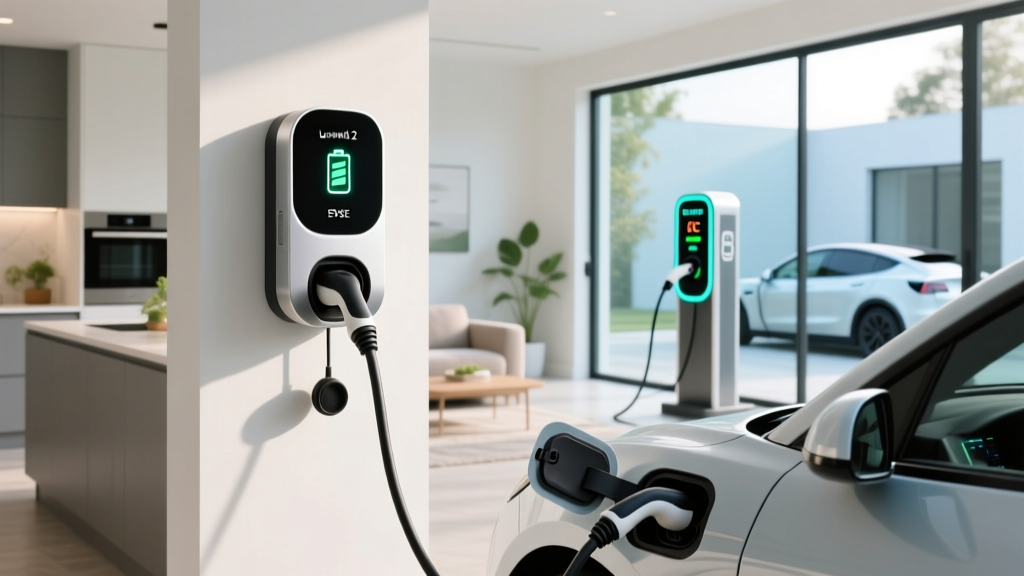
Installing a Level 2 home charger is the single most impactful upgrade for a range extended electric vehicle owner. It turns your garage or driveway into a personal fueling station that replenishes 150–250 miles of electric range overnight.
Electrical Requirements
Most Level 2 chargers require a 240V dedicated circuit, similar to what an electric dryer or oven uses. Key specifications:
- 40A circuit (for 32A continuous charging) — requires 8 AWG copper wire, a 2-pole 40A breaker
- 50A circuit (for 40A continuous charging) — requires 6 AWG copper wire, a 2-pole 50A breaker
- 60A circuit (for 48A continuous charging) — requires 4 AWG copper wire, a 2-pole 60A breaker
The National Electrical Code (NEC) requires that continuous loads (defined as running 3+ hours, which EV charging always qualifies as) use no more than 80% of the circuit's rated capacity. That's why a 40A breaker supports only 32A of continuous draw.
Panel Upgrade Considerations
Many homes built before 2000 have 100A or 150A main electrical panels. Adding a 40–60A EV circuit may push total load beyond safe capacity, requiring a panel upgrade to 200A — a significant added cost. Signs you may need an upgrade:
- Your panel is already near capacity (electric heat, electric water heater, electric dryer, and AC all running)
- You have a 100A main breaker
- Your electrician's load calculation shows insufficient headroom
Some newer solutions like the Span smart panel or Enel X JuiceBox with load management can dynamically throttle charger amperage to stay within panel limits, potentially avoiding a full upgrade.
Installation Cost Breakdown
| Component | Simple Install (panel nearby) | Complex Install (long run / panel upgrade) |
|---|---|---|
| Level 2 Charger (hardware) | $350–$700 | $350–$700 |
| Electrician labor (2–4 hrs vs. 6–10 hrs) | $400–$800 | $1,200–$2,500 |
| Permit and inspection | $50–$150 | $100–$300 |
| Panel upgrade (if needed) | $0 | $1,500–$3,500 |
| Conduit, wire, miscellaneous | $50–$150 | $200–$600 |
| TOTAL | $850–$1,800 | $3,350–$7,600 |
The IRS §30D credit does not cover home charging equipment for most buyers, but some utilities and states offer rebates of $250–$1,000 for Level 2 charger installation. Check your local utility's EV program page.
Connector Compatibility: NACS, CCS1, and CHAdeMO
The connector landscape in North America has consolidated significantly by 2026, but REEV buyers still need to verify what their vehicle uses — especially for DC fast charging on road trips.
| Connector | Brands Using It (Native) | DC Fast Charge Network Access | Adapter Needed? |
|---|---|---|---|
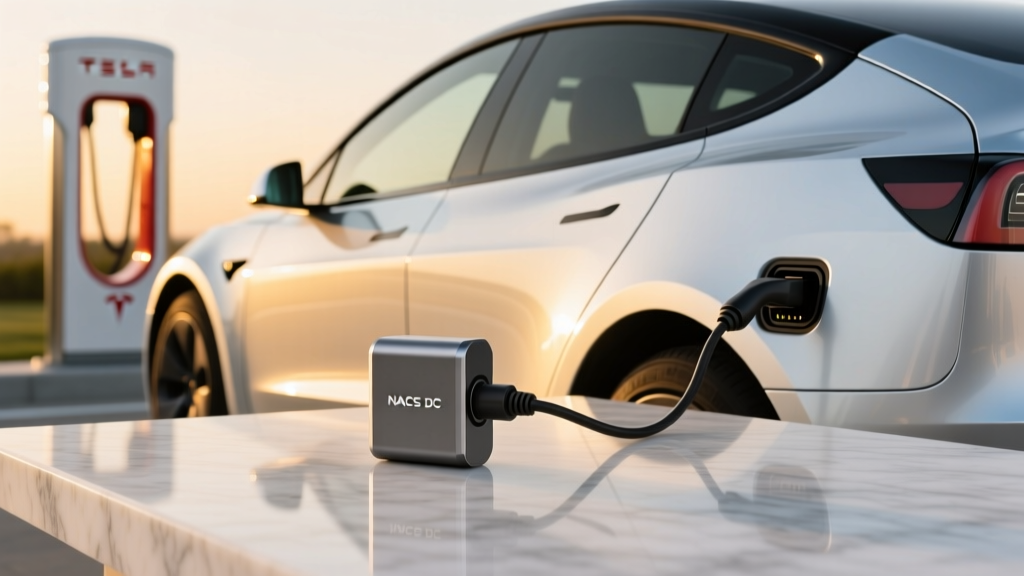
| NACS (Tesla standard) | Tesla, Ford, GM, Rivian, Volvo, Polestar, Ram (2025+) | Tesla Supercharger + growing NACS stations on EVgo, ChargePoint | CCS-to-NACS adapter (~$200) for legacy CCS stations |
| CCS1 (Combo) | Hyundai, Kia, BMW, VW, Stellantis (pre-2025), Honda | Electrify America, EVgo, ChargePoint, Ionity (EU) | NACS-to-CCS adapter (~$250) for Tesla Superchargers |
| CHAdeMO | Nissan Leaf (legacy), Mitsubishi Outlander PHEV | Declining — limited new installations | No widely available adapter; use native stations only |
For Level 2 home charging, all vehicles use the J1772 connector (or NACS, which handles Level 2 natively on Tesla and NACS-equipped vehicles). If your REEV has a NACS port and you buy a J1772 home charger, you'll need a J1772-to-NACS adapter — or simply buy a NACS-terminated wall connector like the Tesla Wall Connector (which works with all NACS-equipped vehicles).
Cost to Charge: Home vs. Public vs. Gasoline Comparison
One of the biggest ownership advantages of a range extended electric vehicle is the cost differential between electric miles and generator-assisted miles. Here's a realistic breakdown.
| Scenario | Rate | Cost per kWh | Cost per Mile* |
|---|---|---|---|
| Home (off-peak utility rate) | $0.08–$0.14/kWh | $0.11 avg | $0.03–$0.05 |
| Home (standard rate) | $0.13–$0.20/kWh | $0.16 avg | $0.05–$0.07 |
| Public Level 2 (ChargePoint, etc.) | $0.20–$0.35/kWh | $0.28 avg | $0.08–$0.12 |
| DC Fast Charge (Electrify America, EVgo) | $0.35–$0.55/kWh | $0.45 avg | $0.13–$0.18 |
| Gasoline (REEV generator, 25 MPG combined) | $3.40/gal avg | N/A | $0.14 |
*Assumes REEV efficiency of ~3.2 miles/kWh in electric mode and ~25 MPG combined on the gasoline generator. Actual figures vary by model and driving conditions.
The takeaway: charging at home on off-peak rates is roughly 3–4× cheaper per mile than running the gasoline generator. Even DC fast charging is cost-competitive with gasoline in most markets. This is why maximizing home charging is the key to minimizing REEV operating costs.
Recommended Home Charging Equipment for REEVs
Based on power output, build quality, smart features, and connector availability, here are the top Level 2 chargers for range extended electric vehicles in 2026:
Tesla Wall Connector (Gen 4)
- Power: 11.5 kW (48A) max
- Connector: NACS native
- Cable length: 24 ft
- Smart features: Wi-Fi, OTA updates, load sharing between units, access control
- Price: ~$425
- Best for: NACS-equipped REEVs (Ram, Ford, GM, Tesla)
ChargePoint Home Flex
- Power: Up to 12 kW (50A) — configurable 16–50A
- Connector: J1772 (NACS adapter included in 2025+ models)
- Cable length: 24 ft
- Smart features: App scheduling, utility demand-response, Alexa integration
- Price: ~$550–$650
- Best for: CCS/J1772-equipped REEVs, flexible amperage for older panels
Emporia Vue Level 2 Charger
- Power: 11.5 kW (48A) max
- Connector: J1772 (NACS version available)
- Cable length: 24 ft
- Smart features: Energy monitoring, solar integration, load management with Emporia panel monitor
- Price: ~$400
- Best for: Budget-conscious buyers, solar homes, panel load management
Grizzl-E Smart
- Power: 10 kW (40A)
- Connector: J1772 or NACS
- Cable length: 24 ft
- Smart features: OCPP-compatible, works with multiple apps, built-in load management
- Price: ~$450
- Best for: Outdoor installs (IP65 rated), extreme cold climates (-40°C rated)
Safety, Code, and Best Practices
EV charging equipment must comply with NEC Article 625 and local building codes. Key requirements and recommendations:
- Dedicated circuit: Your Level 2 charger must be on its own dedicated breaker — never shared with other appliances.
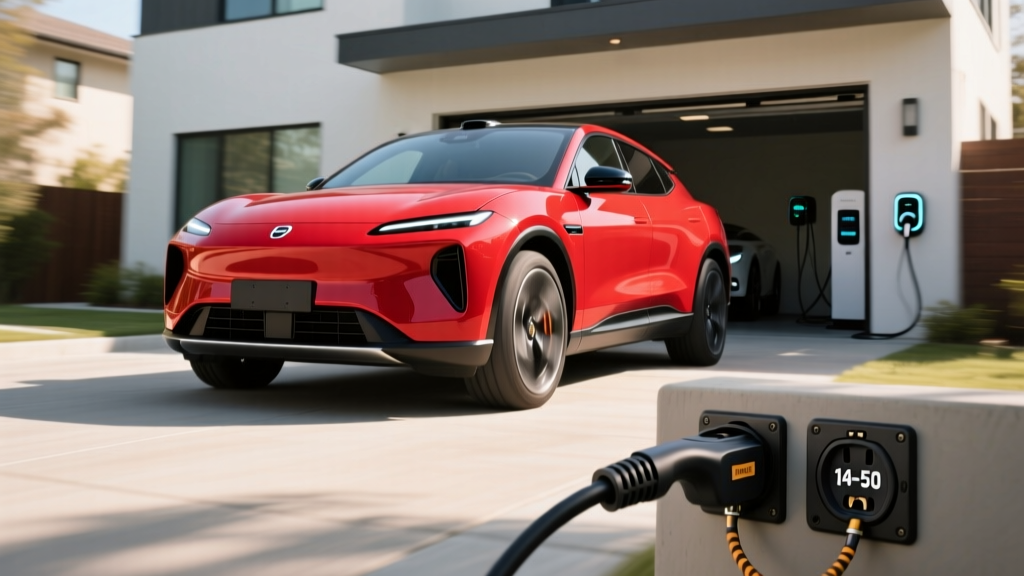
- GFCI protection: NEC 2020+ requires GFCI protection for all EV receptacles. Hardwired chargers may have built-in GFCI; plug-in units on a NEMA 14-50 receptacle require a GFCI breaker (adding $40–$80 to the breaker cost).
- Outdoor rating: If installing outside, ensure the charger is rated at least IP55 (splash-resistant) or IP65 (dust-tight, water-jet resistant). The Grizzl-E and Tesla Wall Connector both meet outdoor requirements.
- Permit and inspection: Most jurisdictions require an electrical permit for a new 240V circuit. The inspection ensures wire gauge, breaker sizing, and grounding are correct. Skipping this step risks voiding home insurance coverage for electrical fires.
- Cable management: Use a wall-mounted cable holster or retraction system to prevent tripping hazards and connector damage.
Frequently Asked Questions
How much does it cost to install a home EV charger for my range extended electric vehicle?
A straightforward Level 2 installation with the electrical panel near the garage typically costs $850–$1,800 total (charger hardware + electrician labor + permit). Complex installations requiring long wire runs, conduit, or a panel upgrade to 200A can reach $3,350–$7,600. Always get a load calculation from a licensed electrician before committing to a circuit amperage.
How fast will each charging level add range to my REEV?
Level 1 (120V) adds roughly 3–5 miles per hour — adequate only for small daily top-ups. Level 2 (240V, 40A) adds 23–30 miles per hour, fully replenishing most REEV batteries overnight in 5–7 hours. DC fast charging at 150 kW can add 150+ miles in 15–20 minutes, but charge speed tapers significantly above 80% SoC.
Which connector and charger is compatible with my REEV?
Check your vehicle's charge port. Most 2025–2026 REEVs from Ford, GM, Ram, and Rivian use the NACS connector. Hyundai, Kia, BMW, and Stellantis (pre-2025) models use CCS1. For home Level 2 charging, a J1772 charger works with CCS vehicles natively; NACS vehicles need an adapter or a NACS-terminated charger like the Tesla Wall Connector.
How much does charging cost per mile compared to running the gasoline generator?
Home charging on off-peak rates costs roughly $0.03–$0.05 per mile. Running the gasoline generator at 25 MPG and $3.40/gallon costs about $0.14 per mile. That's a 3–4× cost advantage for electric driving. Even DC fast charging at $0.45/kWh (~$0.14–$0.18/mile) is comparable to gasoline — so the generator is best reserved for occasions when charging isn't available.
What electrical upgrades might I need for a Level 2 charger?
If your home has a 100A or 150A main panel that is already heavily loaded (electric heating, dryer, water heater, AC), you may need a panel upgrade to 200A — costing $1,500–$3,500. Alternatives include installing a lower-amperage charger (e.g., 32A instead of 48A) or using a smart load-management device that dynamically throttles the charger when other appliances are running. A licensed electrician's load calculation will determine your options.
Should I charge my REEV to 100% every night?
It depends on the battery chemistry. If your REEV uses an LFP (lithium iron phosphate) battery, manufacturers generally recommend periodic 100% charges for cell balancing. If it uses NMC (nickel manganese cobalt), daily charging to 80–90% SoC extends long-term battery health. Check your owner's manual for the specific recommendation — and use your charger's scheduling feature to set a target SoC.