The Ram TRX Supercharged Meets the EV Question
The Ram 1500 TRX, with its supercharged 6.2-liter HEMI V8 producing 702 horsepower, is an engineering marvel — and a fuel-economy nightmare. EPA-rated at just 10 mpg city and 14 mpg highway (combined 12 mpg per fueleconomy.gov), the TRX burns roughly $5,000–$6,500 in gasoline annually for a driver covering 15,000 miles at $3.80/gallon. That reality pushes even devoted truck enthusiasts to ask: what would switching to an electric truck actually look like — and how does home charging work?
This guide isn't about convincing TRX owners to abandon their supercharged beasts. It's a practical, number-driven look at EV charging infrastructure, installation costs, and per-mile economics — the exact data you need if you're weighing an electric pickup like the Ford F-150 Lightning, Rivian R1T, or Chevrolet Silverado EV as a daily driver while keeping the TRX for weekends.
Charging Levels Explained: Speeds, Power, and Range Added
Before installing anything, understand the three charging tiers. The critical distinction: kW (kilowatts) measures power — how fast energy flows into the battery. kWh (kilowatt-hours) measures energy capacity — the size of the battery itself. A 100 kWh battery charged at 10 kW takes roughly 10 hours from empty to full (minus charging-curve taper above 80%).
| Level | Voltage | Power (kW) | Miles of Range per Hour | Typical Use Case |
|---|---|---|---|---|
| Level 1 | 120V AC | 1.0–1.4 kW | 3–5 mi/hr | Overnight trickle; PHEVs; emergency backup |
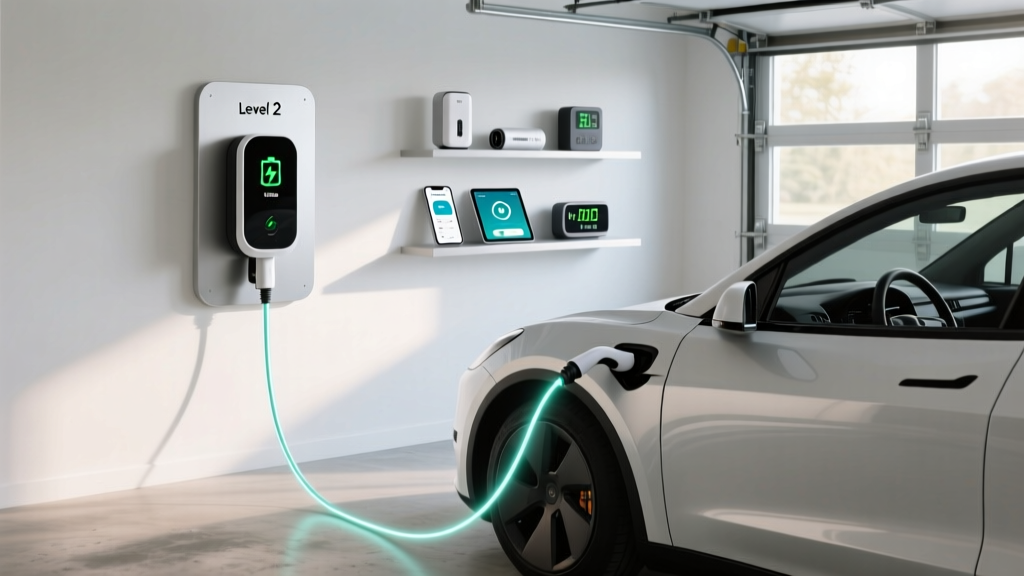
| Level 2 | 240V AC | 3.3–19.2 kW | 12–75 mi/hr | Home daily charging; workplace; shopping centers |
| DC Fast | 400–800V DC | 50–350 kW | 150–1,200+ mi/hr (peak) | Road trips; highway corridors; 10-80% in 15–40 min |
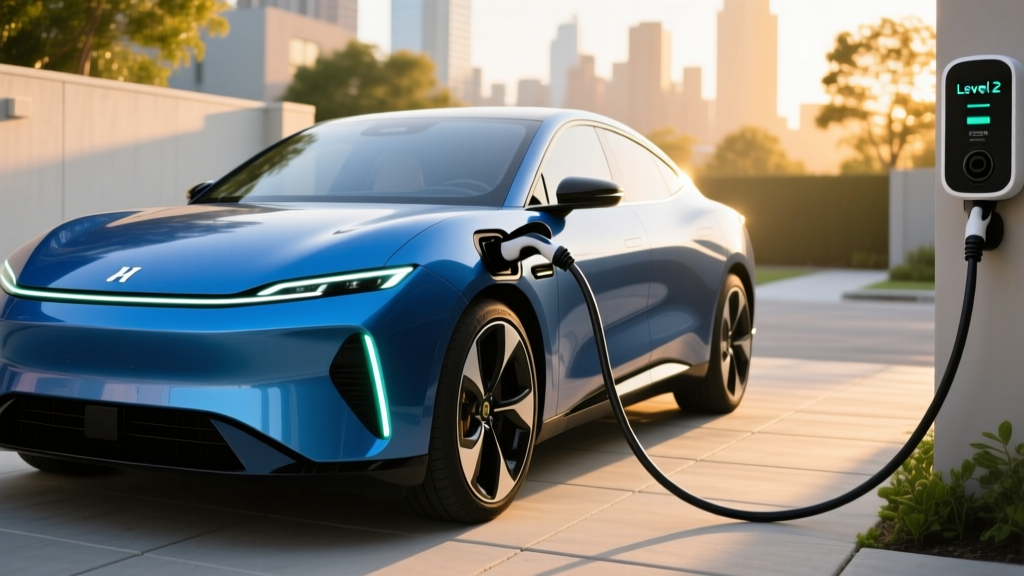
For a full-size electric truck with a 130–200 kWh battery (like the F-150 Lightning Extended Range at 131 kWh usable or the Silverado EV 4WT at 200 kWh), Level 2 at 11.5 kW adds roughly 25–35 miles of range per hour. A full overnight charge (10 hours) replenishes 250–350 miles — enough for virtually any daily truck use.
Home Charger Installation: Costs, Electrical Requirements, and Panel Upgrades
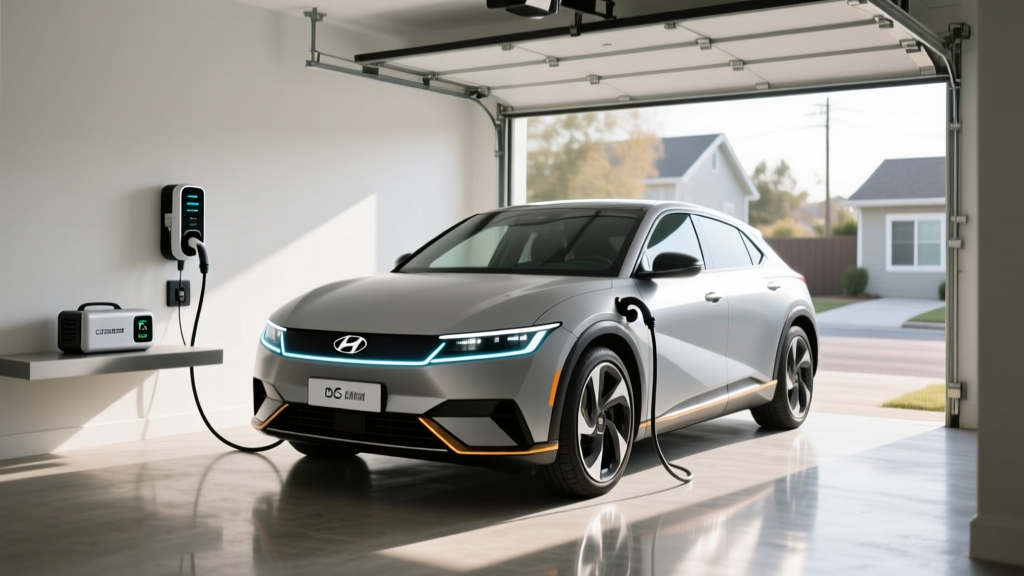
How much does it cost to install a home EV charger? The answer depends heavily on your electrical panel's age, capacity, and proximity to your parking spot. Here's the realistic breakdown for a 240V / 48A Level 2 home charger (the most common high-power residential setup requiring a 60A dedicated circuit):
| Component | Typical Cost Range | Notes |
|---|---|---|
| Level 2 Charger (hardwired, 48A/11.5 kW) | $400–$750 | Smart Wi-Fi models at upper end |
| Electrician labor (standard run, <30 ft from panel) | $600–$1,500 | Varies by region; conduit, 6 AWG copper wire |
| Electrical permit | $50–$250 | Required in most jurisdictions; inspection included |
| Panel upgrade (if needed: 100A → 200A service) | $1,500–$3,500 | Older homes with 100A panels often need this |
| Trenching / long wire runs (>50 ft) | $500–$2,000+ | Detached garages, carports far from panel |
| Total (no panel upgrade) | $1,050–$2,500 | Most homes built after 2000 with 200A service |
| Total (with panel upgrade) | $2,550–$6,000 | Older homes or those near panel capacity |
What Electrical Upgrades Might I Need?
A 48A continuous-draw EV charger requires a 60A dedicated breaker on a 240V circuit (the National Electrical Code mandates that continuous loads use only 80% of a breaker's rated capacity: 60A × 0.8 = 48A usable). If your home has a 200A panel with existing heavy loads — central AC, electric oven, dryer, tankless water heater — a load calculation by a licensed electrician determines whether the panel can handle the added draw.
Homes with 100A service (common in builds before the 1990s) almost always need a panel upgrade to 200A. Some utilities offer rebates covering $200–$500 of panel-upgrade costs when paired with EV adoption. A smart charger with load-management capability (like the Emporia Level 2 or Enel X Way JuiceBox) can dynamically reduce charging amperage when other household loads spike, potentially avoiding a panel upgrade entirely.
Connector Compatibility: NACS, CCS1, and Adapter Realities
Which connector/charger is compatible with my EV? As of 2026, the North American charging landscape has consolidated significantly around NACS (the Tesla-designed connector now standardized as SAE J3400), but CCS1 vehicles remain common.
| Connector | Brands Using It (2025–2026 Models) | Public Network Access |
|---|---|---|
| NACS (J3400) | Tesla (all), Ford (F-150 Lightning, Mustang Mach-E 2025+), GM (Silverado EV, Blazer EV, Equinox EV 2025+), Rivian (2025+), Volvo, Polestar | Tesla Supercharger network (16,000+ stalls); growing third-party NACS stations |
| CCS1 | Hyundai (Ioniq 5/6), Kia (EV6/EV9), Volkswagen (ID.4), BMW (iX, i4), Stellantis brands, pre-2025 Ford/GM | Electrify America, EVgo, ChargePoint; CCS still widely available |
| CHAdeMO | Nissan LEAF (legacy only — discontinued for new US sales) | Declining availability; avoid for new purchases |
If you own a CCS1-equipped EV but want Supercharger access, a CCS-to-NACS adapter ($200–$300 from Tesla or third-party makers like Lectron or A2Z) enables Supercharger use. Ford and GM provide these adapters free or at discount to existing owners. Always verify adapter compatibility with your specific model year before purchasing.
Cost to Charge: Per-Mile Economics vs. the TRX's Supercharged Thirst
How much does charging cost per mile vs gas? This is where the TRX comparison becomes stark. Here's the math for a Ram TRX Supercharged vs. a Ford F-150 Lightning Extended Range (EPA combined: 230 Wh/mile or roughly 70 MPGe equivalent):
| Scenario | Cost per kWh / Gallon | Cost per Mile (Truck EV) | Cost per Mile (Ram TRX) | Annual Savings (15k mi) |
|---|---|---|---|---|
| Home charging (off-peak utility rate) | $0.11/kWh | $0.025 | $0.317 (at $3.80/gal, 12 mpg) | $4,380 |
| Home charging (average US rate) | $0.16/kWh | $0.037 | $0.317 | $4,200 |
| Public Level 2 (ChargePoint, EVgo) | $0.30/kWh | $0.069 | $0.317 | $3,720 |
| DC Fast Charging (Electrify America) | $0.43/kWh | $0.099 | $0.317 | $3,270 |
Even charging exclusively at the most expensive DC fast chargers, an electric truck costs roughly one-third per mile compared to the TRX's 12 mpg combined on premium fuel. At typical home rates, the annual fuel savings of $4,000–$4,400 pays for a full home charger installation in under six months.
Per the U.S. Energy Information Administration, the national average residential electricity rate hovers around $0.16/kWh, but off-peak time-of-use plans in states like Texas, Florida, and the Carolinas can drop to $0.08–$0.11/kWh overnight — making home EV charging extraordinarily cheap.
Charging Time Examples: What to Expect with Truck-Sized Batteries
Full-size electric trucks carry massive battery packs. Here's realistic 10-80% charging time across common scenarios:
- Ford F-150 Lightning Extended Range (131 kWh): 19.2 kW Level 2 — approximately 5.5 hours (10-80%); 150 kW DC fast — approximately 45 minutes
- Rivian R1T Dual-Motor Max Pack (149 kWh): 11.5 kW Level 2 — approximately 9.5 hours (10-80%); 200+ kW DC fast — approximately 40 minutes
- Chevrolet Silverado EV 4WT (200 kWh): 19.2 kW Level 2 — approximately 7.5 hours (10-80%); 350 kW DC fast — approximately 45 minutes (peak, with taper)
For daily use, no one charges 10-80% every day. A typical 40-mile daily commute uses roughly 15–20% of a large truck battery, replenished in 2–3 hours on Level 2 — easily handled overnight.
Recommended Home Charging Equipment for 2026
Based on real-world reliability, smart features, and power output, here are the top home Level 2 chargers for electric truck owners:
Tesla Wall Connector (Gen 3)
- Power: Up to 11.5 kW (48A) on 60A circuit
- Connector: NACS native; CCS adapter available
- Cable length: 24 ft
- Smart features: Wi-Fi, OTA updates, load sharing (pair two units on one circuit), access control
- Price: ~$450
- Best for: Tesla owners and NACS-equipped Ford/GM trucks; cleanest install
ChargePoint Home Flex
- Power: Configurable 16A–50A (3.8–12 kW); up to 50A on hardwired 60A circuit
- Connector: NACS (2025+ models); CCS1 available
- Cable length: 23 ft
- Smart features: Wi-Fi, Alexa integration, scheduling, detailed energy reporting, utility demand-response compatible
- Price: ~$650
- Best for: Multi-EV households; utility rebate programs that require smart scheduling
Emporia Vue Level 2 Charger
- Power: Up to 11.5 kW (48A) hardwired
- Connector: NACS or CCS1 (model dependent)
- Cable length: 24 ft
- Smart features: Integrated whole-home energy monitoring, dynamic load management (avoids panel upgrades), solar-aware charging
- Price: ~$550 (charger); ~$800 with Emporia Vue panel monitor
- Best for: Homes with tight panel capacity; solar-panel owners wanting to charge from excess generation
Grizzl-E Smart
- Power: Up to 10 kW (40A) on 50A circuit
- Connector: NACS or CCS1
- Cable length: 24 ft
- Smart features: Wi-Fi, OCPP-compatible (works with utility programs), built-in GFCI, -40°F outdoor rating
- Price: ~$450
- Best for: Cold-climate outdoor installs; budget-conscious buyers wanting reliable basic smart features
Safety, Code, and Installation Best Practices
EV charging involves sustained high-current draw — unlike a dryer that cycles on and off, a charger may pull maximum amperage for 6–10 continuous hours. This demands correct installation:
- Dedicated circuit: Never share the EV charger circuit with other appliances. A 48A charger needs its own 60A breaker.
- GFCI protection: The 2023 NEC update requires GFCI protection for all receptacle-based (plug-in) EV chargers. Hardwired units with built-in ground-fault protection satisfy this without a GFCI breaker (which can nuisance-trip on EV loads).
- Outdoor rating: If the charger is installed outside or in an unconditioned garage, ensure it carries a NEMA 4 or IP65 weather rating. All recommended chargers above meet this standard.
- Wire gauge: 6 AWG copper for 48A/60A circuits; 4 AWG for runs exceeding 50 feet to prevent voltage drop.
- Permit and inspection: Always pull an electrical permit. An uninspected, unpermitted charger installation can void homeowner's insurance coverage in the event of a fire and may cause issues at home sale.
Consult a licensed electrician familiar with EV charging loads — general electricians unfamiliar with continuous-duty EV loads sometimes undersize wire or skip the load calculation. The National Electrical Code (NFPA 70), specifically Article 625, governs EV charging installations.
Frequently Asked Questions
How much does it cost to install a home EV charger?
A standard Level 2 installation (hardwired 48A/11.5 kW charger, 240V, within 30 feet of a 200A panel) costs $1,050–$2,500 total including equipment, electrician labor, and permit. If your home requires a panel upgrade from 100A to 200A service, add $1,500–$3,500. Long wire runs to detached garages or carports can add $500–$2,000+. Always get two or three quotes from licensed electricians.
How fast will each charging level add range to an electric truck?
Level 1 (120V standard outlet) adds 3–5 miles per hour — insufficient for daily truck use but useful for overnight top-ups on PHEVs. Level 2 at 11.5 kW (240V, 48A) adds 25–35 miles per hour for a full-size electric truck, replenishing a typical daily commute in 1–2 hours. DC fast charging at 150+ kW adds 150–300+ miles in 20–30 minutes, depending on battery size and state of charge.
Which connector is compatible with my EV?
If you're buying a 2025+ Ford, GM, Rivian, Volvo, or Tesla, your vehicle uses NACS (J3400). Hyundai, Kia, Volkswagen, and BMW currently use CCS1. Check your vehicle's charge port or the manufacturer's spec page. CCS-to-NACS adapters ($200–$300) enable cross-compatibility for Supercharger access on CCS vehicles.
How much does EV charging cost per mile vs. gas in a Ram TRX?
At the US average home electricity rate of $0.16/kWh, an electric truck averaging 230 Wh/mile costs approximately $0.037/mile. The Ram TRX Supercharged at 12 mpg combined on premium fuel ($3.80/gallon) costs approximately $0.317/mile. That's a $0.28/mile difference — roughly $4,200 annually at 15,000 miles driven.
What electrical upgrades might my home need for EV charging?
Homes with 200A electrical service built after 2000 typically need no upgrades beyond a dedicated 60A breaker and wire run. Homes with 100A panels, older wiring (aluminum or knob-and-tube), or panels already near capacity (multiple electric appliances, hot tubs, workshops) may require a panel upgrade to 200A or 400A service. A licensed electrician performs a load calculation per NEC Article 220 to determine this. Smart chargers with dynamic load management can sometimes avoid upgrades by reducing charge rate when household demand is high.
Can I use the federal tax credit for home charger installation?
The IRS §30C Alternative Fuel Vehicle Refueling Property Credit covers 30% of home EV charger equipment and installation costs, up to $1,000 — but only for installations in eligible census tracts (generally lower-income or non-urban areas). Check your address against the IRS eligibility tool. This is separate from the §30D vehicle purchase credit. Consult a tax professional for your specific situation.
Does cold weather affect EV charging speed?
Yes, significantly. Lithium-ion batteries below approximately 50°F accept charge more slowly to prevent lithium plating. A cold-soaked truck battery at 20°F may accept only 30–50% of its rated DC fast-charge power until the battery warms via preconditioning. Most modern EVs automatically precondition the battery when a DC fast charger is set as the navigation destination — always use this feature in cold weather. Level 2 home charging speeds are less affected because the slower rate is gentler on cold chemistry.