The Ram ProMaster EV: Range Reality for Commercial Fleets
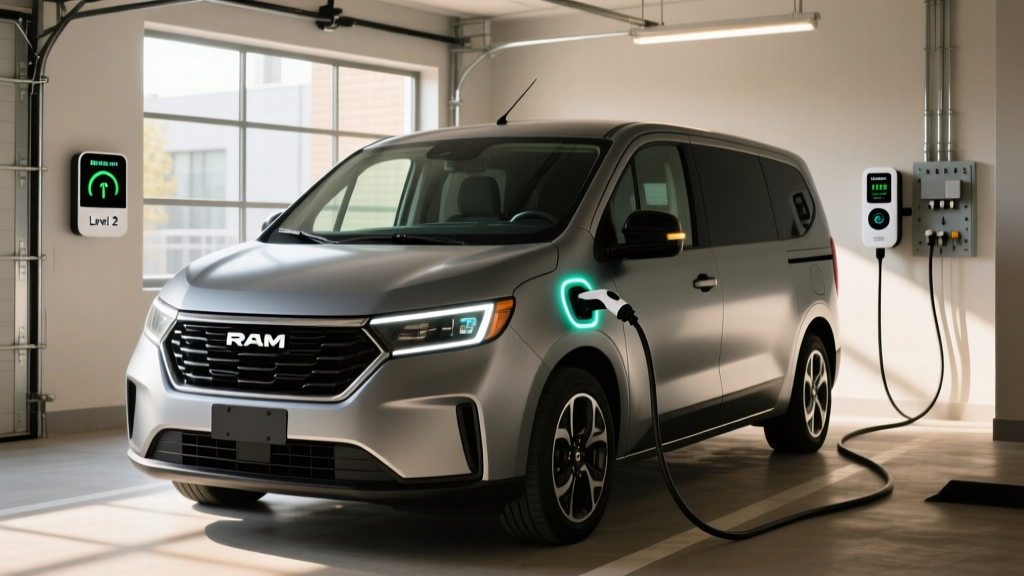
Stellantis finally brought the Ram ProMaster EV to the U.S. market as a battery-electric commercial van aimed squarely at last-mile delivery fleets, tradespeople, and municipal operators. Built on the STLA Large platform and sharing its bones with the European Fiat E-Ducato and Citroën ë-Jumpy, the ProMaster EV is the first purpose-built electric full-size van sold by Ram in North America.
But before a fleet manager writes a purchase order, the real question is practical: What is the Ram ProMaster EV range in daily service, and what does charging infrastructure actually cost? This guide covers the van's efficiency specs alongside a complete home and depot charging setup playbook — because with a 110 kWh battery, how you charge matters as much as how far you drive.
EPA Estimated Range: 162 miles (low-roof cargo van, 110 kWh battery)
Real-World Expectation: ~120–140 miles loaded at highway speeds (65+ mph); ~130–155 miles in stop-and-go urban delivery routes with regenerative braking. Cold weather (below 32°F) can reduce range by 20–35%, dropping effective range to ~90–110 miles without preconditioning.
| Spec | Value |
|---|---|
| Battery (usable) | 110 kWh, NMC lithium-ion |
| EPA Range | 162 miles |
| Efficiency | ~2.0 kWh/mile (combined) |
| DC Fast Charge (peak) | 150 kW |
| 10–80% DC Fast Charge | ~45 minutes |
| Level 2 AC Charge (max) | 11 kW (onboard charger) |
| Motor Output | 268 hp (200 kW) / 302 lb-ft torque |
| Payload Capacity | ~3,020 lbs (cargo van) |
| Cargo Volume | Up to 463 cu ft (high-roof, extended) |
| Base MSRP | ~$58,000 (before incentives) |
| Battery Warranty | 8 years / 100,000 miles |
Charging Levels Explained: kW, Speed, and What They Mean for a 110 kWh Battery
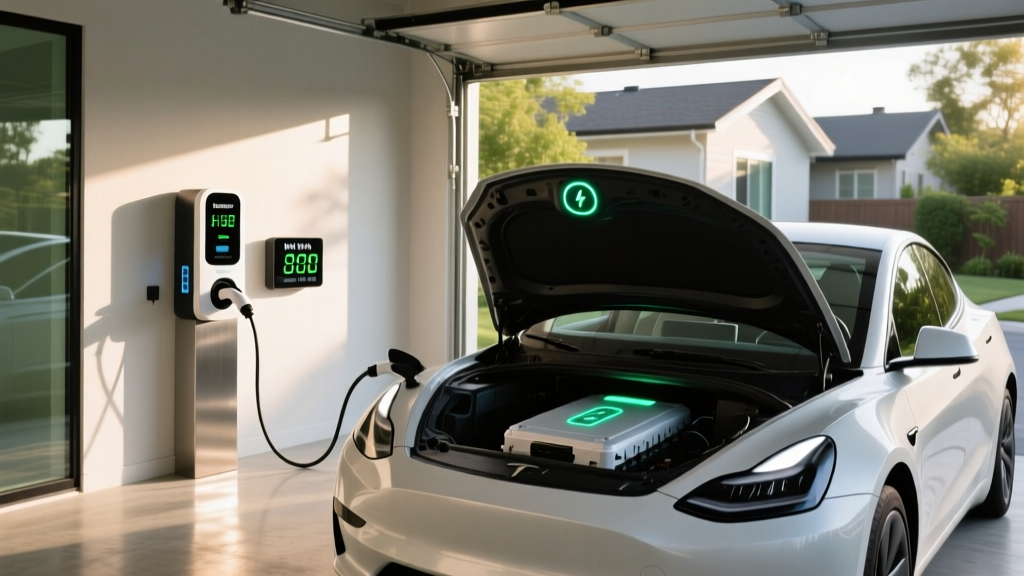
Before plugging in, it's critical to understand the difference between kW (kilowatts) and kWh (kilowatt-hours). The ProMaster EV's battery stores 110 kWh of energy — that's the tank size. A charger delivering 11 kW of power fills that tank at a specific rate. Think of kW as the flow rate of a hose and kWh as the size of the bucket.
With a 110 kWh battery, the ProMaster EV has one of the largest battery packs in any light-commercial vehicle. That means charging times are longer than a typical passenger EV, making the right infrastructure essential.
| Level | Power (kW) | Miles of Range Added/Hour | 0–100% Time | Best Use Case |
|---|---|---|---|---|
| Level 1 (120V) | ~1.4 kW | ~3–4 mi/hr | ~75+ hours | Emergency top-up only |
| Level 2 (240V, 48A) | ~11 kW (onboard limit) | ~22–25 mi/hr | ~10–11 hours | Overnight depot / home |
| DC Fast Charge | Up to 150 kW peak | ~180+ mi/hr (peak) | 10–80% in ~45 min | Mid-route top-up, public stations |
Key insight for fleet operators: Level 1 charging is essentially useless for the ProMaster EV. At ~3 miles of range per hour, recovering even 60 miles of range would require 20 hours on a standard 120V outlet. Level 2 is the workhorse — an 11 kW overnight charge during a 10-hour off-peak window adds roughly 220 miles of range, more than enough to refill the battery fully. DC fast charging at 150 kW is practical for mid-shift top-ups, but expect the charge curve to taper significantly above 80% SoC, which is why manufacturers quote 10–80% times.
Home and Depot Charging Installation: Costs, Electrical Requirements, and Panel Upgrades
Whether you're a sole proprietor installing a charger at home or a fleet manager equipping a depot, the electrical requirements for a 110 kWh van are substantial. Here's what's involved.
Electrical Requirements for Level 2 Charging
To deliver the ProMaster EV's maximum 11 kW AC charge rate, you need a 240V circuit rated for at least 60 amps (a 48A continuous charger requires a circuit rated at 125% of continuous load per NEC Article 625). This means:
- Voltage: 240V single-phase (split-phase residential or commercial)
- Amperage: 48A continuous draw, 60A breaker
- Wire gauge: 6 AWG copper (or 4 AWG aluminum) for runs up to ~100 feet; larger gauge for longer runs to prevent voltage drop
- Dedicated circuit: The EV charger must have its own dedicated breaker — no shared circuits
Do You Need a Panel Upgrade?
This is the question most homeowners and small-business operators underestimate. A typical older home or small commercial building may have a 100A or 150A main service panel. Adding a 60A dedicated EV circuit could consume 40–60% of available panel capacity, especially if the building already has electric HVAC, an electric range, and a dryer.
When a panel upgrade is likely needed:
- Main panel is 100A or less
- Panel is already near capacity (load calculation above 80% of rated amperage)
- Federal Pacific, Zinsco, or other legacy panels that cannot accept new breakers safely
- No available breaker slots (physical space in the panel)
Upgrading to a 200A panel typically costs $1,500–$3,500 depending on utility requirements, local labor rates, and whether the meter base also needs replacement. For commercial depot installations, a 400A three-phase service upgrade can run $5,000–$15,000+.
Permits and Code Requirements
Virtually every jurisdiction requires an electrical permit for EV charger installation. This ensures the work meets NEC Article 625 (Electric Vehicle Charging System Equipment) and local amendments. Key code items include:
- GFCI protection: Required for all EV charging outlets (2020 NEC and later); hardwired units with integrated GFCI may satisfy this
- Outdoor rating: If the charger is installed outdoors, it must carry a NEMA 4 or NEMA 4X enclosure rating
- Strain relief and cable management: NEC requires that the charging cable not create a trip hazard and that connectors be stored off the ground
- Ventilation: Not typically required for Level 2 EVSE, but enclosed garage installations should have adequate airflow
| Item | Low Estimate | High Estimate | Notes |
|---|---|---|---|
| Level 2 EVSE (48A, hardwired) | $400 | $750 | Wi-Fi smart charger; brands like ChargePoint, Emporia, Wallbox |
| Electrician labor (2–6 hours) | $400 | $1,800 | Depends on run length, conduit, wall penetration |
| Materials (wire, conduit, breaker) | $100 | $400 | 6 AWG copper, PVC/EMT conduit, 60A breaker |
| Permit and inspection | $50 | $250 | Varies by municipality |
| Panel upgrade (if needed) | $1,500 | $3,500 | 100A → 200A residential; commercial higher |
| TOTAL (no panel upgrade) | $950 | $3,200 | |
| TOTAL (with panel upgrade) | $2,450 | $6,700 |
Fleet depot note: For multi-vehicle charging, commercial installations often use load-management systems (e.g., Enel X JuiceNet Enterprise or similar) that distribute available amperage across multiple chargers dynamically, avoiding the need for a massive panel upgrade.
Connector Compatibility: CCS1, NACS, and the ProMaster EV
The Ram ProMaster EV ships with a CCS1 (Combined Charging System) port — the same standard used by most non-Tesla EVs sold in North America through 2024. However, the industry is rapidly transitioning to NACS (North American Charging Standard), the connector pioneered by Tesla and now adopted by Ford, GM, Rivian, Hyundai, and others.
| Connector | Used By | ProMaster EV Compatible? | Adapter Needed? |
|---|---|---|---|
| CCS1 | VW, BMW, Hyundai, Stellantis, legacy non-Tesla | ✅ Native (factory port) | None |
| NACS (Tesla) | Tesla, Ford, GM, Rivian (2025+), Volvo | ⚠️ With adapter | CCS1-to-NACS adapter ($150–$250) |
| CHAdeMO | Nissan Leaf, Mitsubishi (legacy) | ❌ Not compatible | No reliable DC adapter exists |
| J1772 (Level 1/2 AC) | All non-Tesla EVs (AC charging) | ✅ Native | None |
For Tesla Supercharger access: As of 2025–2026, Tesla has opened portions of its Supercharger network to non-Tesla CCS1 vehicles via built-in Magic Dock adapters at select stations. However, for reliable access to the full Supercharger network, a CCS1-to-NACS adapter from a reputable supplier (e.g., Lectron or A2Z) is recommended. Always verify the adapter is rated for at least 150 kW DC to match the ProMaster's peak charge rate.
Charging Cost Per Mile: ProMaster EV vs. Gas-Powered ProMaster
The economic case for the ProMaster EV hinges on fuel-cost savings, especially for high-mileage delivery routes. Here's how the numbers compare.
| Scenario | Cost per kWh / Gallon | Cost per Mile | Annual Cost (20,000 mi) |
|---|---|---|---|
| Home charging (off-peak, $0.13/kWh) | $0.13/kWh | $0.26 | $5,200 |
| Home charging (peak, $0.22/kWh) | $0.22/kWh | $0.44 | $8,800 |
| Public Level 2 ($0.30/kWh avg) | $0.30/kWh | $0.60 | $12,000 |
| DC Fast Charge ($0.48/kWh avg) | $0.48/kWh | $0.96 | $19,200 |
| Gas ProMaster (16 MPG combined, $3.50/gal) | $3.50/gal | $0.22 | $4,375 |
Analysis: At off-peak residential rates, the ProMaster EV costs roughly $0.26/mile in electricity, which is competitive with the gas ProMaster at ~$0.22/mile (assuming 16 MPG combined — per fueleconomy.gov the gas ProMaster 2500 rates 16 city/19 highway). The EV pulls ahead significantly when you factor in reduced maintenance (no oil changes, fewer brake replacements due to regen, no transmission fluid) and potential commercial EV tax incentives.
However, if a fleet relies primarily on public DC fast charging at $0.48/kWh, the EV becomes more expensive per mile than gasoline. This is why depot or home charging is economically essential for the ProMaster EV to deliver its promised cost savings.
Federal incentive note: The IRS §30D Clean Vehicle Credit offers up to $7,500 for qualifying new EVs, but the ProMaster EV's MSRP exceeds the $80,000 van cap in some configurations, and battery-sourcing/critical-mineral requirements apply. Additionally, the §45W Commercial Clean Vehicle Credit may apply for business purchases — consult a tax professional for eligibility.
Recommended Level 2 Chargers for the Ram ProMaster EV
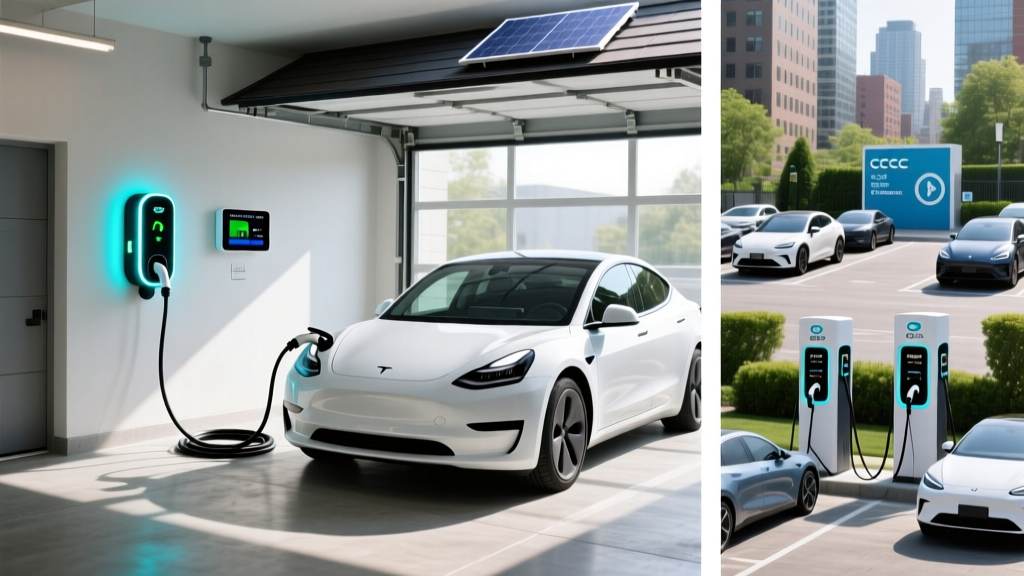
To maximize the ProMaster EV's 11 kW onboard charger, you need a Level 2 EVSE that delivers at least 48 amps on a 240V circuit. Here are three proven options suited for residential and light-commercial use:
ChargePoint Home Flex
- Power: Up to 11.5 kW (50A, configurable down to 16A)
- Connector: J1772 (NACS version available)
- Cable length: 23 feet
- Smart features: Wi-Fi, app scheduling, Alexa, load sharing
- Price: ~$649
- Best for: Homeowners wanting flexibility and scheduling
Emporia Vue EV Charger
- Power: Up to 11.5 kW (48A)
- Connector: J1772 (NACS adapter available)
- Cable length: 24 feet
- Smart features: Wi-Fi, energy monitoring, solar integration
- Price: ~$399
- Best for: Budget-conscious installs with energy tracking
Wallbox Pulsar Plus (48A)
- Power: Up to 11.5 kW (48A)
- Connector: J1772
- Cable length: 25 feet
- Smart features: Wi-Fi + Bluetooth, Power Sharing for multi-charger setups
- Price: ~$599
- Best for: Fleet depots needing multi-unit load management
For commercial fleet depots: Consider the ChargePoint Express 250 or ABB Terra DC wallbox for DC fast charging on-site, delivering 50–62.5 kW per unit. These require three-phase 480V service and professional engineering for installation.
Safety, Code Compliance, and Installation Best Practices
Installing a 60A circuit for EV charging is not a DIY project. Here's what to insist on from your licensed electrician:
- Load calculation: Per NEC Article 220, the electrician should perform a whole-building load calculation before installing the circuit. If your panel is near capacity, a panel upgrade or load-management device is required — not optional.
- Dedicated circuit: The EV charger must be on its own breaker. Sharing a circuit with a dryer, welder, or HVAC unit is a code violation and a fire risk.
- GFCI protection: The 2020 NEC and later require GFCI protection for all EVSE receptacles. Hardwired chargers with built-in ground-fault protection satisfy this requirement.
- NEMA 4 rating for outdoor installs: If the charger is mounted outside, the enclosure must be rated for rain, dust, and hose-directed water. All three chargers recommended above carry outdoor ratings.
- Proper grounding: Verify the circuit has an equipment grounding conductor — some older homes have ungrounded 240V circuits that must be upgraded.
- Permit and inspection: Always pull a permit. The inspection ensures the installation meets code, protects your insurance coverage, and may be required to claim utility rebates.
Charging Time Examples: What to Expect with the ProMaster EV's 110 kWh Battery
Here are real-world charging scenarios for the ProMaster EV across common use cases:
- Overnight at depot (Level 2, 11 kW, 10 hours): Adds ~110 kWh — essentially a full charge from near-empty. Ideal for daily-route fleets that return each evening.
- Mid-shift DC fast charge (150 kW, 30 minutes, 20–80% SoC): Adds ~80 miles of range. Useful for extended routes or unexpected extra stops.
- Weekend top-up at home (Level 2, 11 kW, 6 hours): Adds ~130 miles — sufficient for most weekday delivery routes.
- Emergency Level 1 (120V, 1.4 kW, overnight 12 hours): Adds ~35–40 miles. Barely enough for a short urban route. Not viable as a primary charging strategy.
Charge curve reality check: The ProMaster EV's 150 kW peak DC fast-charge rate is not sustained for the entire session. Expect peak rates between 10–40% SoC, tapering to ~100 kW by 60% and dropping below 50 kW above 80%. This is why the 10–80% time (~45 minutes) is a more useful metric than peak kW alone.
Frequently Asked Questions
How much does it cost to install a home EV charger for the Ram ProMaster EV?
Expect $950–$3,200 for a standard Level 2 (48A) installation without a panel upgrade, including the charger unit ($400–$750), electrician labor ($400–$1,800), materials ($100–$400), and permit ($50–$250). If your home needs a panel upgrade from 100A to 200A, add $1,500–$3,500, bringing the total to $2,450–$6,700.
How fast will each charging level add range to the ProMaster EV?
Level 1 (120V) adds ~3–4 miles per hour — impractical for daily use. Level 2 (240V, 48A) adds ~22–25 miles per hour, fully charging the 110 kWh battery in 10–11 hours. DC fast charging at 150 kW peak adds up to 180+ miles per hour at peak rate, reaching 10–80% in approximately 45 minutes.
Which connector is compatible with the Ram ProMaster EV?
The ProMaster EV uses a CCS1 connector natively for both AC Level 2 and DC fast charging. To access Tesla Superchargers, you'll need a CCS1-to-NACS adapter ($150–$250) or use Tesla stations equipped with the Magic Dock adapter. CHAdeMO is not compatible.
How much does charging cost per mile compared to the gas ProMaster?
At off-peak home rates ($0.13/kWh), the ProMaster EV costs ~$0.26/mile — competitive with the gas ProMaster at ~$0.22/mile (16 MPG, $3.50/gal). The EV's total cost advantage comes from reduced maintenance. However, public DC fast charging ($0.48/kWh) pushes the EV to ~$0.96/mile, making depot charging essential for economic viability.
What electrical upgrades might I need for ProMaster EV charging?
A 48A Level 2 charger requires a dedicated 60A, 240V circuit. If your home or building has a 100A panel, is near capacity, or has a legacy panel (Federal Pacific, Zinsco), a panel upgrade to 200A+ will likely be needed. Commercial depot installations may require a three-phase 480V service upgrade and load-management systems for multi-charger setups.
Does the Ram ProMaster EV qualify for the federal tax credit?
Eligibility depends on the IRS §30D rules for the purchase year, including MSRP caps (vans: $80,000), buyer income limits, and battery component/critical-mineral sourcing requirements. The §45W Commercial Clean Vehicle Credit may also apply for business purchases. Check the latest rules at IRS.gov and consult a tax professional before purchase.