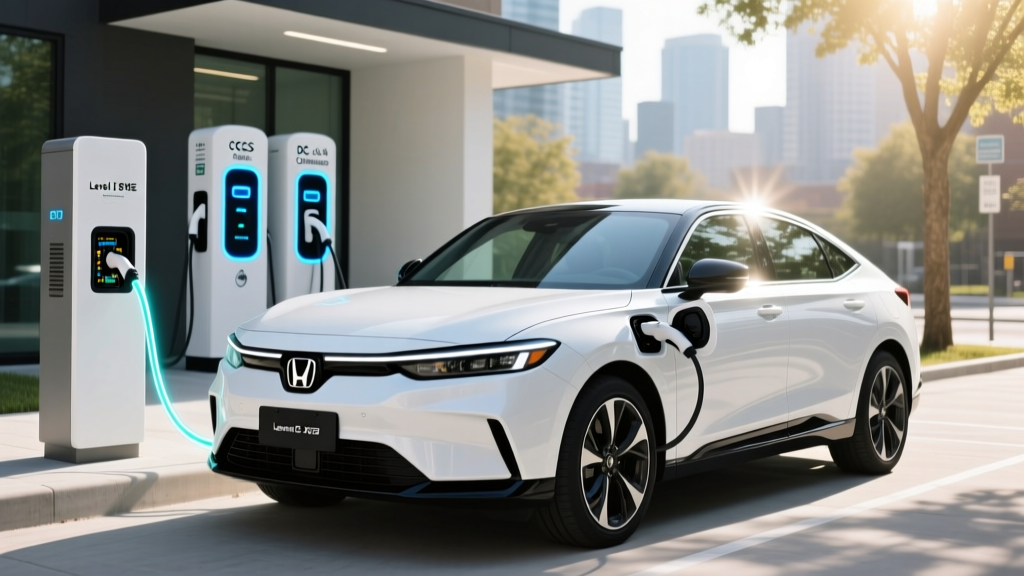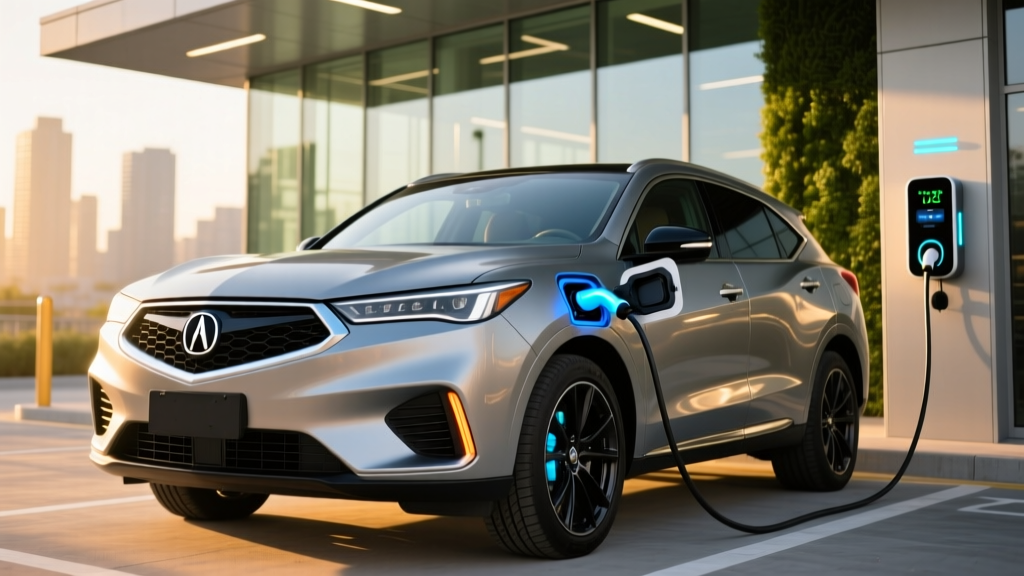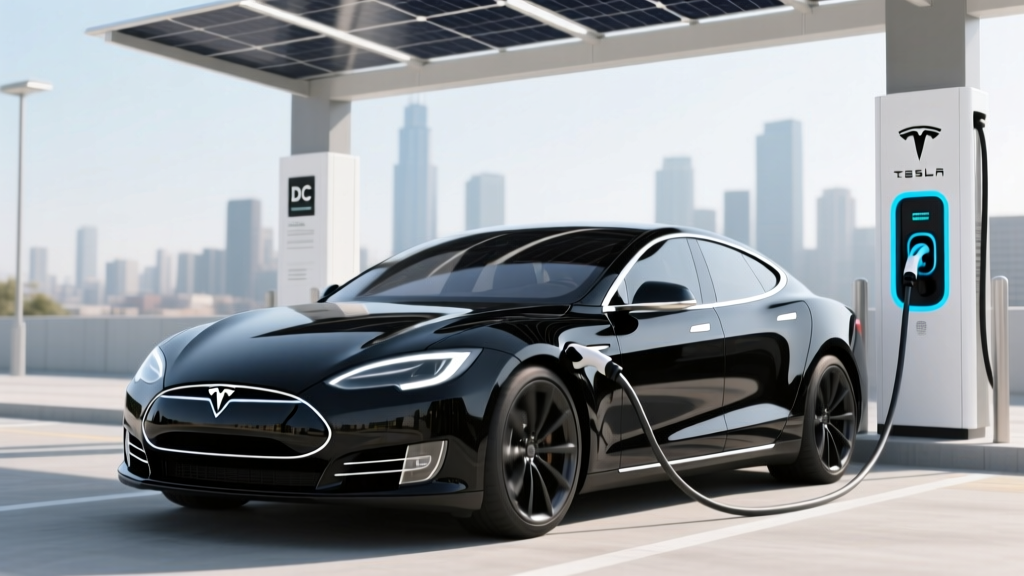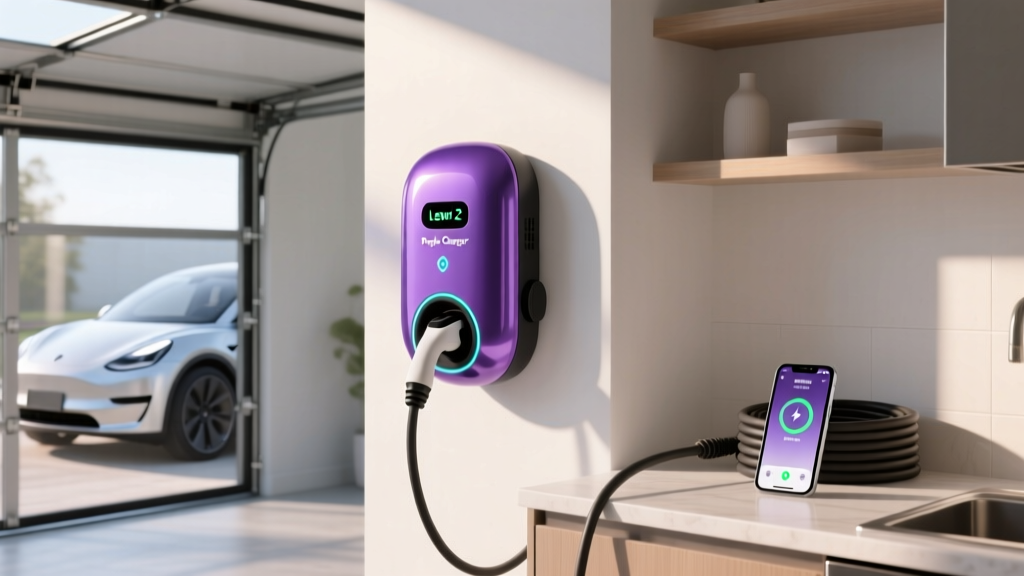
If you've been browsing EV forums or scrolling through charging-equipment listings, you've likely encountered the term "purple charger" — a reference that usually points to the distinctive purple-cased Level 2 home charging units sold by Purple EV (also known as Purple Charger or Purple EVSE). These chargers have carved out a niche among budget-minded EV owners looking for a straightforward, no-frills Level 2 wallbox. But does a Purple Charger actually deliver the speeds and reliability you need for daily EV ownership, and how does it stack up against more established brands?
This guide breaks down the Purple Charger alongside top competing Level 2 units, explains exactly what your home electrical system needs, and gives you the hard numbers on charging speed, cost per mile, and installation expenses so you can make a confident decision.
What Is the Purple Charger? Quick Specs and Positioning
The Purple Charger (sold by Purple EV) is a 240-volt Level 2 home EVSE (Electric Vehicle Supply Equipment) typically rated at 32 amps, delivering up to 7.7 kW of continuous power. It ships with a J1772 connector (the North American standard for non-Tesla Level 2 charging) and a 25-foot cable. The unit's purple housing makes it visually distinctive, and its price point — generally between $199 and $299 depending on the retailer and any ongoing promotions — positions it well below premium smart chargers from ChargePoint, Emporia, or Tesla.
- Max Power Output: 7.7 kW (32A at 240V)
- Connector: J1772 (NACS adapter required for Tesla vehicles)
- Cable Length: 25 feet
- Smart Features: None (dumb charger — no Wi-Fi, no app scheduling)
- Indoor/Outdoor: Rated for indoor and covered outdoor use (NEMA 4 rating on newer models)
- Price: ~$199–$299
- Warranty: 1 year limited
The Purple Charger works well for owners who want plug-and-charge simplicity without app connectivity or load-sharing features. However, its lack of smart scheduling means you can't take advantage of utility off-peak rates automatically — you'll need to manually set charge timing through your vehicle's built-in scheduling system.
Charging Levels Explained: Level 1, Level 2, and DC Fast Charging
Before deciding on any home charger, you need to understand the three charging levels and what each delivers in real-world terms. The single most important distinction: kW (kilowatts) measures power — the rate at which energy flows into your battery — while kWh (kilowatt-hours) measures energy capacity, the total amount your battery holds. Think of kW as the width of a hose and kWh as the size of the bucket.
| Level | Voltage / Amps | Power (kW) | Miles of Range Added per Hour | Best For |
|---|---|---|---|---|
| Level 1 (standard outlet) | 120V / 12A | 1.4 kW | 3–5 mi/hr | Overnight trickle; PHEVs with small batteries |
| Level 2 (home wallbox) | 240V / 32–48A | 7.7–11.5 kW | 25–44 mi/hr | Daily home charging for BEVs and PHEVs |
| DC Fast Charging (public) | 400–800V DC | 50–350 kW | 150–1,000+ mi/hr (peak) | Road trips; rapid top-ups (10–80% in 15–30 min) |
For most EV owners with a battery electric vehicle (BEV) packing a 60–100 kWh battery, Level 2 is the practical daily solution. A Level 1 outlet adding 4 miles per hour would require over 50 hours to fully charge a 75 kWh pack — completely impractical. The Purple Charger at 7.7 kW will add roughly 28–32 miles of range per hour for a typical midsize EV like the Hyundai Ioniq 5 or Tesla Model Y, meaning a full overnight charge is easily achievable.
Home Installation: Electrical Requirements and Real Costs
The biggest variable in home charging isn't the charger itself — it's your electrical panel. Here's what a Level 2 installation actually requires:
Electrical Requirements for a 32A–48A Level 2 Charger
The National Electrical Code (NEC) requires that continuous loads (which EV charging qualifies as) use only 80% of a circuit's rated capacity. That means:
- A 32A charger (like the Purple Charger at 7.7 kW) requires a 40-amp dedicated circuit with a double-pole breaker.
- A 40A charger (9.6 kW) requires a 50-amp dedicated circuit.
- A 48A charger (11.5 kW) requires a 60-amp dedicated circuit.
All Level 2 installations require 240-volt service — the same type of circuit your electric dryer or oven uses. If your panel is already near capacity (common in homes with 100-amp main service), you may need a panel upgrade to 200 amps before adding an EV circuit.
Installation Cost Breakdown
| Component | Simple Install (panel near garage) | Complex Install (long run, conduit) |
|---|---|---|
| Charger unit (e.g., Purple Charger) | $200–$300 | $200–$700 |
| Electrical permit | $50–$150 | $50–$200 |
| Electrician labor (2–6 hours) | $300–$600 | $800–$2,000 |
| Wiring, conduit, breaker | $100–$200 | $300–$800 |
| Panel upgrade (if needed) | N/A | $1,500–$3,500 |
| TOTAL RANGE | $650–$1,250 | $2,850–$7,200 |
According to data compiled by the U.S. Department of Energy, the national average for a straightforward Level 2 installation (panel within 20–30 feet of the garage, no panel upgrade) falls between $800 and $1,500 all-in. Costs spike when you need long conduit runs through finished walls, trenching to a detached garage, or a service upgrade.
Safety and Code Considerations
Any compliant Level 2 installation must include:
- Dedicated circuit: The EV circuit cannot share a breaker with other appliances.
- GFCI protection: NEC 2020 and later requires Ground Fault Circuit Interrupter protection for outdoor receptacles and many jurisdictions now require it for hardwired EVSE as well.
- NEMA 4 rating: If mounting outdoors, the charger must be rated for weather exposure (rain, dust, ice). The Purple Charger's NEMA 4 rating on current models covers this, but verify with your specific unit.
- Proper wire gauge: 40A circuits typically require 8 AWG copper wire; 50A circuits require 6 AWG; 60A circuits require 4 AWG. Undersized wire is a fire hazard.
- Permit and inspection: Most municipalities require an electrical permit and a post-installation inspection. Skipping this can void homeowner's insurance coverage for electrical fires.
Connector Compatibility: Will It Fit Your EV?
North America is in the middle of a connector transition. As of the 2025–2026 model years, most automakers have adopted or committed to NACS (North American Charging Standard, originally Tesla's proprietary connector). Here's the current landscape:
| Connector | Brands Using It Natively | Adapter Needed for J1772 Chargers? |
|---|---|---|
| NACS (Tesla-style) | Tesla (all), Ford (2025+), GM (2025+), Rivian (2025+), Hyundai/Kia (2026+), Volvo/Polestar | Yes — J1772-to-NACS adapter (~$100–$180) |
| CCS1 | Legacy VW ID.4 (pre-2025), some Stellantis models, older BMW iX/i4 | No — J1772 is the AC portion of CCS1 |
| CHAdeMO | Nissan Leaf (discontinued in US), Mitsubishi Outlander PHEV (older) | No — J1772 works for Level 2 AC |
The Purple Charger ships with a J1772 connector. If you drive a 2025+ Ford Mustang Mach-E, a 2025+ Chevy Equinox EV, or any newer Tesla, you'll need a J1772-to-NACS adapter. These adapters are widely available for $100–$180 and work seamlessly for Level 2 AC charging. For DC fast charging, the vehicle's native port handles the connection directly at public stations.
If you want to avoid adapters entirely, consider purchasing a charger that ships with a native NACS connector — such as the Tesla Wall Connector (which now supports non-Tesla vehicles via a toggle) or the Emporia Vue with NACS plug.
Charging Time Examples: How Long Does a Full Charge Take?
Charging speed depends on both the charger's kW output and the vehicle's onboard charger capacity. Most modern EVs accept 11.5 kW on Level 2, but some — like the base Nissan Leaf — are limited to 6.6 kW. The Purple Charger at 7.7 kW will be the bottleneck for vehicles capable of accepting more, but it's perfectly adequate for overnight charging.
| Vehicle (Battery Size) | Purple Charger 7.7 kW (0–100%) | 11.5 kW Charger (0–100%) | DC Fast 10–80% |
|---|---|---|---|
| Chevy Equinox EV (85 kWh) | ~11 hours | ~7.4 hours | ~30 min (at 150 kW) |
| Tesla Model Y (75 kWh) | ~9.7 hours | ~6.5 hours | ~25 min (at 250 kW) |
| Hyundai Ioniq 5 (77.4 kWh) | ~10 hours | ~6.7 hours | ~18 min (at 240 kW) |
| Ford F-150 Lightning (131 kWh ext.) | ~17 hours | ~11.4 hours | ~41 min (at 150 kW) |
| Toyota RAV4 Prime PHEV (18.1 kWh) | ~2.3 hours | ~2.3 hours* (6.6 kW onboard limit) | N/A (no DC fast) |
*Some PHEVs have lower onboard charger limits (3.3–6.6 kW), meaning a higher-power Level 2 charger won't speed them up.
For daily driving of 30–50 miles, even the Purple Charger's 7.7 kW output replenishes your overnight usage in 2–3 hours. The 10+ hour full-charge times only matter if you regularly drain the battery below 20%.
Cost to Charge: Home vs. Public vs. Gas
One of the strongest arguments for home Level 2 charging is cost. Electricity rates vary by utility, but most residential customers pay between $0.10 and $0.20 per kWh, with off-peak rates (overnight) often dropping to $0.06–$0.10 per kWh in deregulated markets.
| Scenario | Rate | Cost per Mile (3.5 mi/kWh EV) | Cost per Mile (28 MPG gas car at $3.40/gal) |
|---|---|---|---|
| Home off-peak (overnight) | $0.08/kWh | $0.023/mile | $0.121/mile |
| Home standard rate | $0.15/kWh | $0.043/mile | $0.121/mile |
| Public Level 2 (ChargePoint, etc.) | $0.25–$0.40/kWh | $0.071–$0.114/mile | $0.121/mile |
| DC Fast Charging (Electrify America, EVgo) | $0.35–$0.55/kWh | $0.10–$0.157/mile | $0.121/mile |
The math is clear: home charging at off-peak rates costs roughly one-fifth of what gasoline costs per mile. Even at standard residential rates, you're saving 60–65%. However, frequent DC fast charging at public stations can actually exceed the cost of gasoline per mile — which is why home Level 2 is the economic backbone of EV ownership.
For a driver covering 12,000 miles per year, home off-peak charging costs approximately $275 annually in electricity. The equivalent gasoline cost at 28 MPG and $3.40/gallon: $1,457. That's over $1,100 in annual fuel savings — enough to pay for a Purple Charger and basic installation within the first year.
Equipment Recommendations: Purple Charger vs. Top Alternatives
The Purple Charger fills a specific niche — budget-friendly, no-frills Level 2 — but it's not the right choice for every situation. Here's how it compares to the most popular alternatives in 2026:
Purple Charger (32A)
- Power: 7.7 kW
- Connector: J1772
- Cable: 25 ft
- Smart: No
- Price: ~$200–$300
- Best for: Budget-conscious owners who schedule charging via their car's app
Emporia Level 2 EV Charger (48A)
- Power: 11.5 kW
- Connector: J1772 or NACS (selectable)
- Cable: 24 ft
- Smart: Yes — app scheduling, energy monitoring, solar integration
- Price: ~$350–$400
- Best for: Owners wanting max speed + smart features + solar pairing
Tesla Wall Connector (48A)
- Power: 11.5 kW
- Connector: NACS (works with non-Tesla EVs via setting toggle)
- Cable: 24 ft
- Smart: Yes — Wi-Fi updates, load sharing, power management
- Price: ~$425–$475
- Best for: Tesla owners or multi-Tesla households; NACS-native convenience
ChargePoint Home Flex (50A)
- Power: 12 kW (configurable 16A–50A)
- Connector: J1772 (NACS adapter included in newer kits)
- Cable: 23 ft
- Smart: Yes — robust app, Alexa, scheduling, utility demand-response
- Price: ~$550–$650
- Best for: Tech-savvy owners wanting full ecosystem integration
If your electrical panel can support a 60A circuit (for a 48A charger), the jump from 7.7 kW to 11.5 kW cuts charging time by 33% — a meaningful difference for larger batteries like the F-150 Lightning Extended Range or the GMC Sierra EV. For smaller batteries or PHEVs, the Purple Charger's 7.7 kW is more than sufficient.
Federal Tax Credits and Utility Rebates for Home Chargers
The federal Alternative Fuel Vehicle Refueling Property Credit (IRS Form 8911) covers 30% of home EV charger equipment and installation costs, up to a maximum of $1,000. However, eligibility depends on your census tract meeting certain low-income or non-urban criteria — many suburban and urban addresses no longer qualify as of 2026.
Additionally, many utilities offer their own rebates. Common examples include:
- $250–$500 rebates for purchasing a qualifying smart Level 2 charger
- Free or discounted off-peak electricity rates for EV owners enrolled in time-of-use (TOU) plans
- Free installation through utility-sponsored programs (available in select markets like PG&E, ConEdison, and Xcel Energy service areas)
Check with your local utility and consult a tax professional to confirm eligibility before counting on incentives.
Frequently Asked Questions
How much does it cost to install a home EV charger?
For a straightforward installation with the electrical panel near the garage and no panel upgrade needed, expect $650–$1,250 total (equipment, permit, electrician, and materials). If you need a long conduit run, trenching, or a panel upgrade from 100A to 200A, costs can reach $2,850–$7,200. Always get a licensed electrician's assessment first.
How fast will each charging level add range?
Level 1 (120V) adds 3–5 miles per hour. Level 2 at 7.7 kW (like the Purple Charger) adds roughly 28–32 miles per hour for a typical midsize EV. Level 2 at 11.5 kW adds 40–44 miles per hour. DC fast charging adds 150–1,000+ miles per hour at peak but tapers significantly above 80% State of Charge due to the charging curve.
Which connector/charger is compatible with my EV?
For 2025–2026 model-year vehicles, most new EVs use NACS natively (Tesla, Ford, GM, Rivian, Hyundai/Kia, Volvo). Older or legacy models may use CCS1 or CHAdeMO. A J1772 charger (like the Purple Charger) works with CCS1 vehicles directly and requires a J1772-to-NACS adapter (~$100–$180) for NACS-equipped vehicles. For Level 2 home charging, all connectors deliver AC power — the adapter handles the physical connection without affecting charging speed.
How much does charging cost per mile vs. gas?
At home off-peak rates ($0.08/kWh), EV charging costs about $0.023 per mile — roughly 80% less than a 28 MPG gasoline car at $3.40/gallon ($0.121/mile). At standard home rates ($0.15/kWh), it's $0.043/mile — still a 64% savings. However, DC fast charging at $0.45/kWh ($0.129/mile) can match or exceed gasoline costs, which is why home Level 2 is essential for maximizing savings.
What electrical upgrades might I need?
You'll need a dedicated 240V circuit with a double-pole breaker (40A for a 32A charger, 50A for a 40A charger, 60A for a 48A charger). If your panel is already at or near 80% capacity, you may need a panel upgrade to 200A service ($1,500–$3,500). Homes with older wiring (aluminum or knob-and-tube near the install path) may require rewiring. A licensed electrician's load calculation is mandatory before purchase.
Is the Purple Charger safe for outdoor installation?
Current-model Purple Chargers carry a NEMA 4 weather-resistance rating, making them suitable for outdoor mounting in rain, snow, and dust. However, verify the specific rating on your unit before outdoor installation, and ensure your electrician uses a weatherproof junction box and GFCI-protected circuit as required by NEC.