If you drive an EV in the greater Seattle-Tacoma corridor, your electricity bill is ultimately dictated by Puget Sound Energy (PSE). Understanding Puget Sound Energy rates per kWh—and how they translate to actual driving costs—is the difference between an EV that saves you thousands over five years and one that merely breaks even against a hybrid.
This guide dissects PSE's current residential rate structure, models real charging costs for popular 2025/2026 EVs, and walks through the full economics and logistics of installing a Level 2 home charger in a PSE service territory. We'll also cover public charging pricing, connector compatibility, and the electrical upgrades that catch Pacific Northwest homeowners off guard.
Understanding Puget Sound Energy Rates Per kWh in 2025-2026
Puget Sound Energy operates on a tiered residential rate schedule that directly impacts your EV charging economics. As of the most recent rate case approved by the Washington Utilities and Transportation Commission, PSE's residential electricity pricing breaks down as follows:
- Baseline tier (first ~16 kWh/day average): Approximately $0.12-$0.13 per kWh
- Above-baseline tier: Approximately $0.14-$0.16 per kWh
- Fixed monthly service charge: ~$12-$14 regardless of usage
For context, Washington state's average residential rate sits around $0.11-$0.12/kWh, but PSE tends to run slightly higher due to its mixed generation portfolio (natural gas, wind, hydro). The U.S. Energy Information Administration tracks state-level averages that help benchmark PSE against national figures.
The EV charging implication: Adding a 75 kWh battery pack (typical of a Tesla Model Y Long Range or Ford Mustang Mach-E Extended Range) to your monthly consumption will likely push a meaningful portion of your charging into the above-baseline tier—unless you manage your charging schedule strategically.
Charging Levels Explained: Speed, Power, and Real-World Range Added
Before calculating costs, let's establish the three charging tiers and what they actually deliver in miles per hour of charging. The distinction between kW (power—the rate of energy flow) and kWh (energy—the total capacity stored) is critical here.
| Level | Voltage / Amperage | Power (kW) | Miles of Range Added Per Hour | Best Use Case |
|---|---|---|---|---|
| Level 1 | 120V / 12A | 1.4 kW | 3-5 mi/hr | Overnight trickle; PHEVs; low daily mileage |
| Level 2 (Home) | 240V / 32-48A | 7.7-11.5 kW | 25-44 mi/hr | Daily home charging; full overnight refill |
| Level 2 (Public) | 208-240V / up to 80A | Up to 19.2 kW | 50-70 mi/hr | Workplace, destination, multi-hour stops |
| DC Fast Charging | 400-800V DC | 50-350 kW | 150-1,000+ mi/hr (peak) | Road trips; rapid top-ups; 10-80% in 18-40 min |
Real-world charging time examples (10-80% State of Charge):
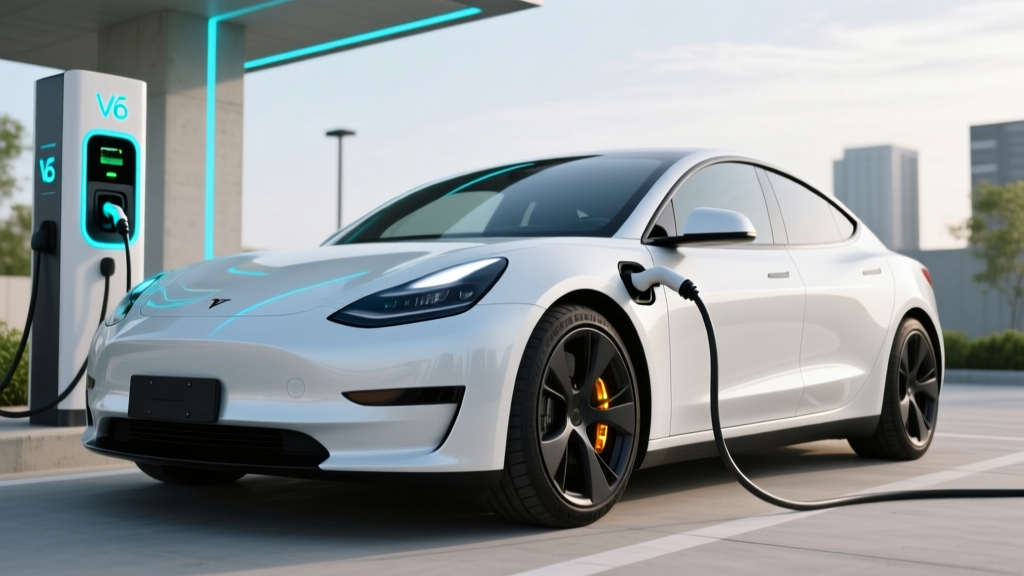
- Tesla Model Y (75 kWh usable, LFP or NMC depending on trim): ~10 hours on a 7.7 kW Level 2; ~18-22 minutes on a 250 kW Supercharger (V3/V4)
- Hyundai Ioniq 5 (77.4 kWh usable, NMC): ~9.5 hours on 7.7 kW Level 2; ~18 minutes on a 350 kW Electrify America station (peak, with battery preconditioned)
- Ford F-150 Lightning Extended Range (131 kWh usable, NMC): ~17 hours on 7.7 kW Level 2; ~34-40 minutes on a 150 kW DC fast charger (large battery means longer charge times even at high power)
Remember: peak kW is not sustained kW. Every EV's charge curve tapers significantly above 80% SoC to protect battery health. That 250 kW peak may average closer to 120-150 kW across a full 10-80% session.
Cost to Charge: PSE Home Rates vs Public Networks vs Gas
Let's model actual per-mile charging costs using PSE's residential rates and compare them against Washington state gasoline prices (~$4.00-$4.50/gallon in the Seattle metro area) and public DC fast charging networks.
| Scenario | Rate / Price | Cost to Add 200 Miles (3.5 mi/kWh avg) | Cost Per Mile |
|---|---|---|---|
| PSE Home (blended avg rate) | $0.14/kWh | $8.00 | $0.040/mi |
| PSE Home (off-peak TOU if available) | $0.11/kWh | $6.29 | $0.031/mi |
| Electrify America (DCFC, WA) | $0.43-$0.48/kWh | $24.57-$27.43 | $0.123-$0.137/mi |
| Tesla Supercharger (WA avg) | $0.30-$0.38/kWh | $17.14-$21.71 | $0.086-$0.109/mi |
| Gas vehicle (28 MPG combined, $4.20/gal) | $4.20/gallon | $30.00 | $0.150/mi |
Key takeaway: Home charging on PSE rates delivers per-mile costs at roughly 25-30% of gasoline. Even public DC fast charging—while 2-3x more expensive than home—still undercuts gasoline on a per-mile basis in Washington state. The economics heavily favor installing a home Level 2 charger if your residence allows it.
Over 12,000 miles of annual driving, the difference between home charging ($0.04/mi) and gas ($0.15/mi) is approximately $1,320 per year in fuel savings alone.
Home Level 2 Charger Installation: Requirements, Costs, and Panel Upgrades
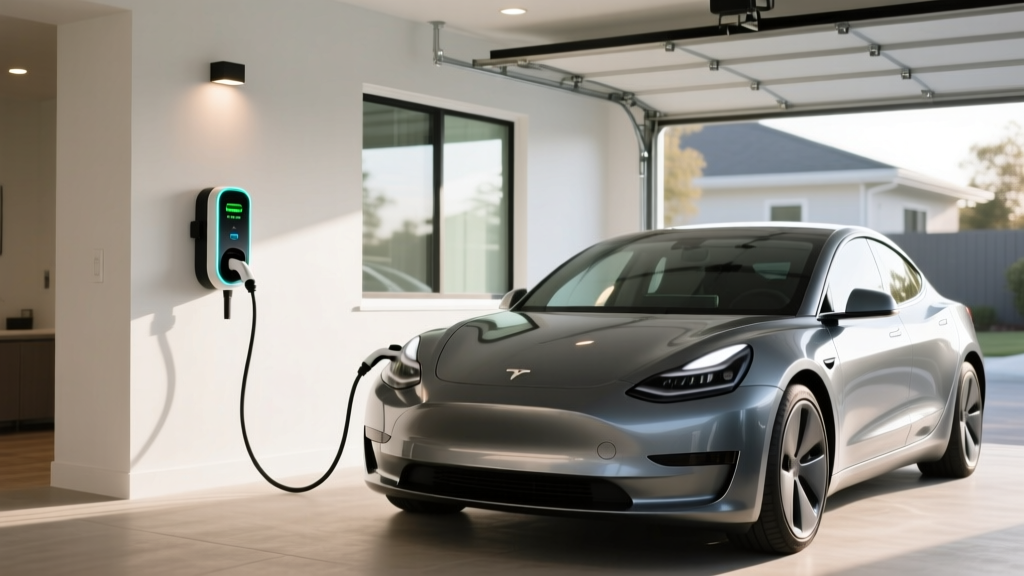
Installing a 240V Level 2 charger in a PSE service area involves electrical work that ranges from straightforward to complex depending on your home's age and panel capacity. Here's the full breakdown.
Electrical Requirements
- Circuit: Dedicated 240V circuit, typically 40A or 50A (the National Electrical Code requires circuits rated at 125% of continuous load, so a 32A charger needs a 40A circuit; a 40A charger needs a 50A circuit)
- Wire gauge: 6 AWG copper for 50A circuits; 8 AWG for 40A
- Outlet vs hardwired: NEMA 14-50 outlet offers portability; hardwired connections allow higher amperage and avoid GFCI breaker requirements that some jurisdictions mandate for receptacles
- Panel capacity: Your main panel must have sufficient spare amperage. A 200A panel with existing heavy loads (electric range, dryer, heat pump) may be near capacity
The Panel Upgrade Reality
Many homes in the PSE territory—especially those built before 1990 in neighborhoods across Bellevue, Tacoma, Renton, and Kent—have 100A or 150A main panels. Adding a 40-50A EV circuit to an already loaded 100A panel is unsafe and will not pass inspection. A panel upgrade to 200A (or adding a secondary sub-panel) may be required.
| Component | Simple Install (Panel Has Capacity, Short Run) | Moderate Install (Longer Wire Run, Conduit) | Complex Install (Panel Upgrade Required) |
|---|---|---|---|
| Level 2 Charger Equipment | $400-$700 | $400-$700 | $400-$700 |
| Electrician Labor (2-4 hrs @ $120-$175/hr) | $300-$600 | $600-$1,200 | $800-$1,500 |
| Materials (Wire, Conduit, Breaker) | $100-$200 | $200-$500 | $300-$600 |
| Permit & Inspection | $100-$250 | $100-$250 | $150-$350 |
| Panel Upgrade (if needed) | N/A | N/A | $1,500-$3,500 |
| TOTAL ESTIMATE | $900-$1,750 | $1,300-$2,650 | $3,150-$6,650 |
Safety and Code Considerations
- GFCI protection: The 2020 and 2023 NEC require GFCI protection for outdoor receptacles. Hardwired installations may bypass this requirement, which some electricians prefer to avoid nuisance tripping
- Outdoor rating: If your charger is installed outdoors (common in the Pacific Northwest), ensure the unit carries a NEMA 4 or IP65 rating for rain and moisture resistance
- Dedicated circuit: Never share an EV charging circuit with other appliances. EVs draw continuous high current for hours—a shared circuit risks overheating and fire
- Permit required: All jurisdictions in PSE territory (King County, Pierce County, Snohomish County, etc.) require an electrical permit for EV charger installation. Unpermitted work can void insurance and complicate home sales
Connector Compatibility: NACS, CCS1, and CHAdeMO in 2025-2026
The connector landscape has shifted dramatically. Tesla's North American Charging Standard (NACS) has been adopted by nearly every major automaker for new vehicles starting in the 2025-2026 model years. Here's where things stand:
| Connector | Vehicles Using It | Adapter Needed? |
|---|---|---|
| NACS (Tesla) | All Tesla models; 2025+ Ford, GM, Rivian, Hyundai/Kia, Volvo, Polestar, BMW, Mercedes, Nissan (new models) | CCS-to-NACS adapter needed for non-Tesla EVs at CCS stations; included or available from OEMs |
| CCS1 | 2024 and earlier models from VW, Hyundai, Kia, BMW, Ford, GM, Rivian, and most legacy EVs | NACS-to-CCS adapter needed to access Tesla Superchargers |
| CHAdeMO | Nissan Leaf (all years), Mitsubishi Outlander PHEV (older). Effectively discontinued for new models. | CHAdeMO-to-CCS adapters exist but are expensive ($400+) and limited |
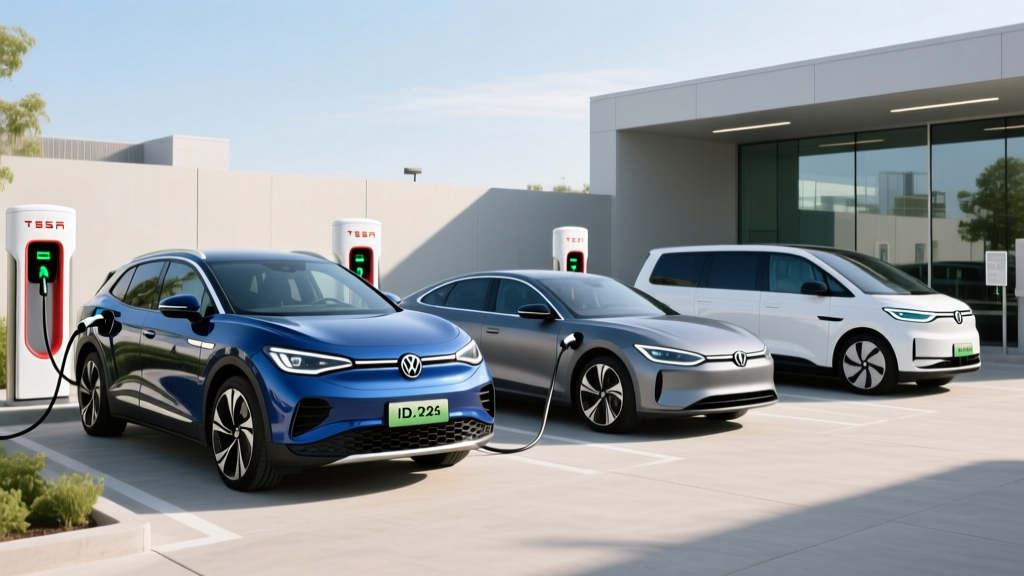
For PSE-area EV buyers in 2025-2026: If you're purchasing a new EV, it will almost certainly have NACS. Your home Level 2 charger should either have a NACS plug natively or use a J1772 connector with a J1772-to-NACS adapter (included with most new NACS-equipped vehicles). For public DC fast charging, NACS vehicles can access both Tesla Superchargers and an expanding number of Electrify America and EVgo stations retrofitted with NACS cables.
Recommended Level 2 Home Chargers for PSE Customers
Based on power output, reliability, smart features, and Pacific Northwest weather durability, here are top-tier Level 2 chargers suited to PSE-area homes:
ChargePoint Home Flex
- Power: Up to 12 kW (50A) — configurable down to 16A for limited panels
- Connector: J1772 (NACS adapter compatible) or NACS native (newer SKU)
- Cable length: 23 feet
- Smart features: Wi-Fi, app scheduling, energy tracking, Alexa integration
- Outdoor rating: NEMA 4 (rain-rated)
- Price: $550-$650
Tesla Wall Connector
- Power: Up to 11.5 kW (48A)
- Connector: NACS native; J1772 adapter available for non-Tesla EVs
- Cable length: 24 feet
- Smart features: Wi-Fi, OTA updates, power sharing between multiple units, load management
- Outdoor rating: NEMA 3R (suitable for covered outdoor)
- Price: $425-$475
Grizzl-E Smart
- Power: Up to 10 kW (40A)
- Connector: J1772 or NACS (selectable at purchase)
- Cable length: 24 feet
- Smart features: OCPP-compatible, app control, adjustable amperage
- Outdoor rating: IP67 (fully waterproof — excellent for PNW rain)
- Price: $400-$500
Emporia Level 2 EV Charger
- Power: Up to 11.5 kW (48A)
- Connector: J1772 (NACS adapter compatible)
- Cable length: 24 feet
- Smart features: Integrates with Emporia Vue energy monitor, solar-aware charging, time-of-use scheduling
- Outdoor rating: NEMA 4
- Price: $350-$400
Editor's note on amperage selection: Match your charger's amperage to your circuit capacity. A 48A charger requires a 60A circuit. If your panel can only accommodate a 50A breaker, configure the charger to 40A. The ChargePoint Home Flex and Grizzl-E both allow software-level amperage adjustment—a significant advantage for homes with electrical constraints.
Frequently Asked Questions: PSE EV Charging
How much does it cost to install a home EV charger in PSE territory?
A straightforward Level 2 installation with adequate panel capacity typically runs $900-$1,750 all-in (equipment, electrician, permit). Homes requiring a panel upgrade should budget $3,150-$6,650. Get at least two quotes from licensed Washington electricians, and confirm they include permit and inspection in the estimate.
How fast will each charging level add range to my EV?
Level 1 (120V) adds 3-5 miles per hour—adequate for PHEVs with small batteries or drivers covering under 30 miles daily. Level 2 (240V, 40A) adds roughly 30-35 miles per hour, fully replenishing most EVs overnight. DC fast charging at 150+ kW can add 150-250 miles in a 20-minute session, though charge-curve taper means the last 20% takes significantly longer.
Which connector and charger is compatible with my EV?
For 2025-2026 model-year vehicles: Tesla models use NACS natively. Ford, GM, Rivian, Hyundai/Kia, and most others have transitioned to NACS for new models. Older (2024 and prior) non-Tesla EVs use CCS1. The Nissan Leaf remains on CHAdeMO. For home charging, J1772 (Level 2) works universally with an adapter, or choose a NACS-native charger if your vehicle is NACS-equipped.
How much does EV charging cost per mile compared to gasoline in Washington?
On PSE's blended residential rate (~$0.14/kWh), a typical EV achieving 3.5 miles per kWh costs approximately $0.04 per mile. A comparable gasoline vehicle at 28 MPG with $4.20/gallon fuel costs $0.15 per mile. That's a $0.11/mile savings, or roughly $1,320 annually at 12,000 miles/year. Home charging is the economic sweet spot—public DC fast charging narrows but doesn't eliminate the advantage.
What electrical upgrades might I need for a Level 2 charger?
The most common upgrade is a panel replacement from 100A to 200A service, particularly in older PSE-area homes. You may also need a new 240V circuit with appropriate wire gauge (6 AWG for 50A), a dedicated breaker, and possibly conduit runs if wiring passes through unfinished spaces. An electrician's load calculation will determine if your current panel can absorb a 40-50A continuous load without exceeding 80% of its rated capacity.
Does PSE offer any EV-specific rate plans or rebates?
PSE has periodically offered time-of-use rate pilots and EV charger rebates. Programs change annually. Visit PSE's official website or call their residential energy advisor to confirm current offerings. Off-peak overnight rates can reduce your charging cost by 15-25% if a TOU plan is available in your zip code.
For PSE customers evaluating an EV purchase, the math is compelling: home charging at roughly $0.04/mile versus $0.15/mile for gasoline yields four-figure annual savings, and Washington's relatively clean grid (hydro-dominated) means your per-mile carbon footprint drops substantially as well. The upfront investment in a Level 2 home charger—typically $1,000-$2,500 for most homes—pays back within 12-24 months for average-mileage drivers.