Why Public Sector EV Charging Demand Is Accelerating
Municipal fleets, school districts, state agencies, and federal installations are under mounting pressure to electrify. Executive orders, state clean-fleet mandates, and falling battery costs have pushed EV adoption past the early-adopter phase into operational reality. But vehicles are only half the equation. The bottleneck — and the opportunity — is charging infrastructure.
If you're a fleet manager, municipal procurement officer, or contractor evaluating public sector electric vehicle charging station opportunities over the last 3 months, you've likely seen a surge in grant announcements, RFPs, and vendor pitches. This guide cuts through the noise with hard numbers: charging speeds, install costs, connector requirements, and the economics that determine whether a depot charger pays for itself.
Charging Levels Explained: Speeds That Matter for Fleet Operations
Before evaluating equipment or applying for grants, you need fluency in the three charging tiers. kW (kilowatts) measures power flow rate — how fast energy moves into the battery. kWh (kilowatt-hours) measures energy stored — the battery's fuel tank. Never confuse the two.
| Level | Voltage | Power (kW) | Miles Added/Hour | Typical Use Case |
|---|---|---|---|---|
| Level 1 | 120V AC | 1.0–1.9 kW | 3–5 mi/hr | Overnight top-up for light-duty sedans with predictable routes under 40 mi/day |
| Level 2 | 208–240V AC | 7.2–19.2 kW | 20–65 mi/hr | Depot overnight charging for most fleet vehicles; public parking garages; workplace sites |
| DC Fast (DCFC) | 400–800V DC | 50–350 kW | 150–1,000+ mi/hr | High-utilization fleets (transit, emergency), public corridor chargers, quick-turnaround depots |
Real-World Charging Time Examples
Here's what 10–80% State of Charge (SoC) looks like for common fleet battery sizes:
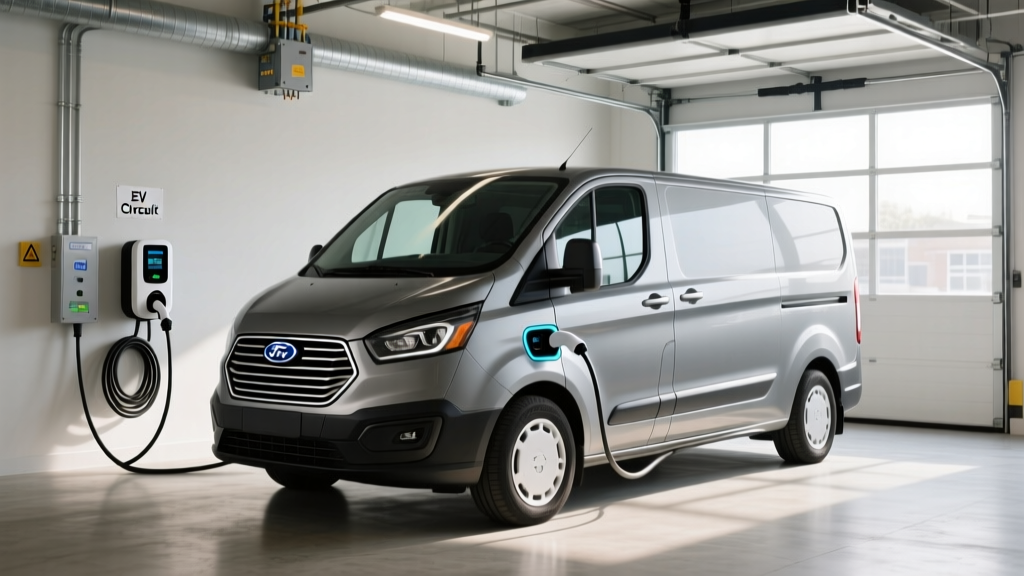
- Ford E-Transit (68 kWh usable, NMC): Level 2 at 11.5 kW → ~7 hours. DCFC at 115 kW peak → ~45 minutes (tapers significantly above 80%).
- Chevrolet Silverado EV (200+ kWh, NMC): Level 2 at 19.2 kW → ~11 hours. DCFC at 350 kW peak → ~40 minutes (sustained curve depends on thermal management).
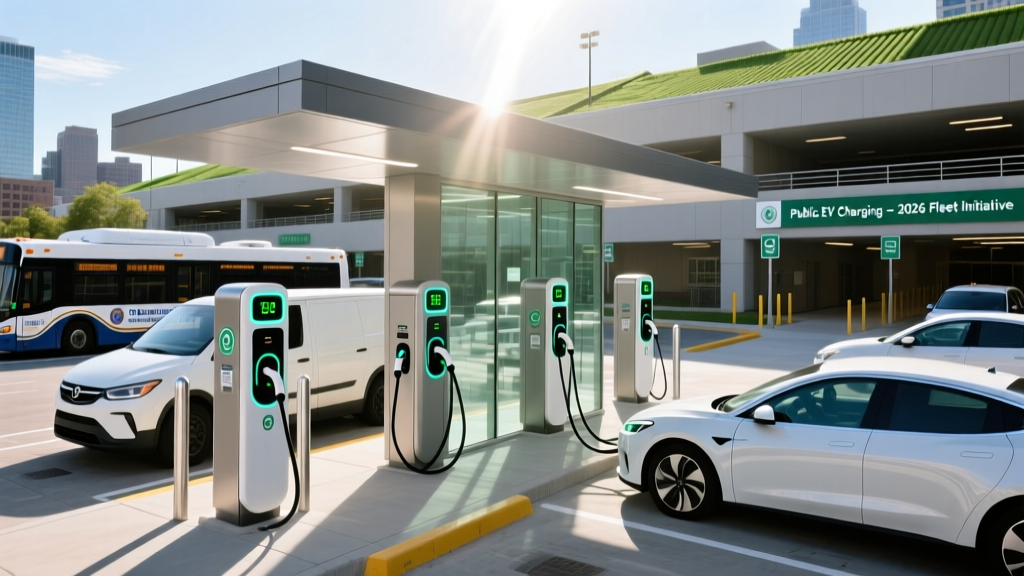
- BYD/Proterra transit bus (400+ kWh, LFP): Level 2 impractical for full charge. DCFC at 150–250 kW → 2–4 hours depending on pack size.
Charge curve reality: Peak kW is marketing. Sustained kW is physics. Most DCFC sessions average 40–60% of peak rate over the full 10–80% session because charging slows dramatically above ~80% SoC to protect battery chemistry. Budget planning should use sustained averages, not peak numbers.
Home and Depot Installation: Electrical Requirements and Costs
Whether you're installing a single Level 2 unit at a fleet manager's residence or a 20-stall depot, the electrical fundamentals are identical — just scaled.
Electrical Requirements by Charging Level
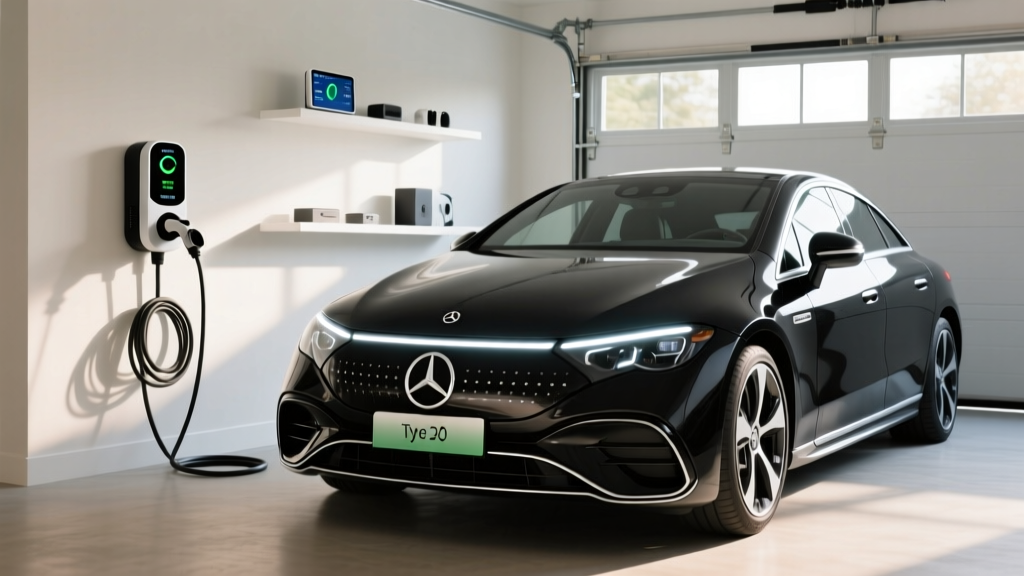
- Level 2 (single port, 11.5 kW): Requires a dedicated 240V/60A circuit (delivers 48A continuous per NEC 80% rule). NEMA 14-50 outlet or hardwired.
- Level 2 (dual-port, 19.2 kW): Dedicated 240V/100A circuit. Hardwired only.
- DCFC (50–150 kW): 480V three-phase commercial service. Requires utility coordination, dedicated transformer, and switchgear.
- DCFC (350 kW): 480V three-phase with substantial amperage. Often requires new utility feed or on-site energy storage to manage demand charges.
| Cost Component | Low Estimate | High Estimate | Notes |
|---|---|---|---|
| Charger hardware (11.5–19.2 kW) | $600 | $2,500 | Varies by brand, smart features, cable length |
| Electrical materials (conduit, wire, breaker) | $200 | $800 | Distance from panel drives cost |
| Electrician labor | $800 | $3,500 | Complexity, trenching, wall penetration |
| Permit and inspection | $100 | $500 | Varies by municipality |
| Panel upgrade (if needed) | $2,000 | $5,000 | 200A→400A upgrade for multi-port depots |
| Total per port | $1,700 | $12,300 | Typical single-port: $2,500–$5,000 |
For DCFC installations, expect $50,000–$150,000+ per stall including utility upgrades, switchgear, concrete pads, and permitting. This is where public sector grants become essential.
Connector Compatibility: NACS, CCS1, and the Fleet Transition
The connector landscape shifted dramatically between 2023 and 2026. Ford, GM, Rivian, Volvo, and most major OEMs have adopted the North American Charging Standard (NACS), originally developed by Tesla. For public sector fleets procuring vehicles through 2030, connector choice directly impacts charger procurement.
| Connector | OEMs Using It | Notes for Public Fleets |
|---|---|---|
| NACS (J3400) | Tesla, Ford, GM, Rivian, Volvo, Polestar, Mercedes-Benz, Hyundai/Kia (2025+) | Becoming dominant standard; prioritize for new depot builds |
| CCS1 | Legacy BMW, VW ID.4 (pre-2025), Stellantis, Honda Prologue (adapter) | Still common in existing public DCFC networks; adapters available |
| CHAdeMO | Nissan Leaf (legacy only) | Being phased out; avoid for new infrastructure |
Adapter strategy: If your fleet is mixed or you're building public-facing chargers, specify dual-cable stations (NACS + CCS1) or budget $200–$400 per vehicle for OEM-approved adapters. Tesla's CCS-to-NACS adapter and Ford's included adapter both support DCFC at full rated speeds.
Charging Cost Per Mile: EV Fleet vs. Gas Fleet Economics
The operational savings case for fleet electrification rests on fuel cost. Here's how it breaks down in 2026:
| Scenario | Rate | Cost per Mile* |
|---|---|---|
| Home/depot Level 2 (off-peak utility rate) | $0.09–$0.14/kWh | $0.027–$0.042 |
| Depot Level 2 (commercial rate, no demand charge) | $0.12–$0.20/kWh | $0.036–$0.060 |
| Public DCFC (Electrify America, EVgo, etc.) | $0.35–$0.55/kWh | $0.105–$0.165 |
| Gasoline fleet vehicle (25 MPG avg, $3.40/gal) | $3.40/gallon | $0.136 |
| Gasoline fleet vehicle (18 MPG truck, $3.40/gal) | $3.40/gallon | $0.189 |
*Based on 3.0–3.5 miles per kWh efficiency (typical for fleet sedans/SUVs). Source: fueleconomy.gov EPA data.
Depot-charged EVs deliver 60–80% lower fuel cost per mile versus a 25 MPG gas fleet vehicle. Even public DCFC charging is competitive with or cheaper than gasoline for most vehicles. However, utility demand charges (per-kW fees for peak power draw) can erode savings for DCFC depots without careful load management or on-site battery buffering.
Equipment Recommendations: Fleet-Grade Chargers for 2026
Public sector procurement requires equipment that meets network management (OCPP compliance), ADA accessibility, ruggedized enclosures, and multi-year warranties. Here are proven options:
ChargePoint Flex (Level 2)
- Power: Up to 19.2 kW (80A)
- Connector: NACS or CCS1 (configurable)
- Cable: 25 ft standard
- Smart features: OCPP 2.0.1, load sharing, fleet dashboard, RFID access
- Price: ~$1,800–$2,400 per port
- Best for: Multi-port depot installations with load management
Emporia Level 2 Smart Charger
- Power: 11.5 kW (48A)
- Connector: NACS (J3400) native
- Cable: 24 ft
- Smart features: Wi-Fi, app scheduling, energy monitoring, solar integration
- Price: ~$600–$750
- Best for: Single-vehicle fleet manager home charging, small fleet top-up
Tritium RT175 (DCFC)
- Power: 175 kW peak
- Connector: Dual cable — NACS + CCS1
- Smart features: OCPP 2.0.1, remote diagnostics, payment terminal
- Price: ~$65,000–$85,000 (hardware only)
- Best for: Public-facing municipal chargers, transit quick-charge
ABB Terra 360 (DCFC)
- Power: Up to 360 kW peak
- Connector: NACS + CCS1 + optional CHAdeMO
- Smart features: OCPP, dynamic power sharing across 4 ports
- Price: ~$120,000–$160,000 (hardware only)
- Best for: Highway corridor public chargers, high-throughput fleet hubs
Funding the Build: Federal and State Grant Opportunities
Public sector entities have access to funding streams that private fleets do not. As of early 2026, the primary federal mechanisms include:
- IRA §30C Alternative Fuel Vehicle Refueling Property Credit: Up to 30% of hardware and installation costs (capped at $100,000 per item of property) for chargers placed in service in eligible census tracts. Check IRS §30C guidelines for tract eligibility.
- EPA Clean School Bus Program: Grants covering up to $375,000 per electric school bus plus charging infrastructure for qualifying districts.
- FHWA NEVI Formula Program: $5 billion in state-administered funds for highway corridor DCFC — many states allocate portions to public fleet depot co-location.
- State-level programs: Vary widely. California's HVIP, New York's Charge Ready NY, and Colorado's EV Fast-Charging Fund all subsidize public sector installs. Consult your state energy office for current allocations.
Safety, Code, and ADA Compliance for Public Sector Stations
Public sector installations carry obligations that private home chargers do not. Key requirements:
- NEC Article 625: All EV supply equipment must be on a dedicated circuit with GFCI protection. Outdoor installations require NEMA 4-rated (weatherproof) enclosures.
- ADA Accessibility: Public-facing chargers must meet ADA standards — accessible route, operable parts within reach range (15–48 inches), clear floor space for wheelchair approach, and accessible payment interfaces. Plan for at least one ADA-compliant stall per site.
- Utility interconnection: DCFC installations above 50 kW typically require a utility interconnection agreement, which can take 3–9 months to process. Start early.
- Fire code: Indoor charging (parking garages, maintenance bays) may require enhanced ventilation, fire suppression upgrades, or battery storage separation per local fire marshal requirements.
- Cybersecurity: Networked chargers (OCPP-compliant) should be on a segregated VLAN with firmware update policies. Federal fleets may require FIPS 140-2 encryption on communications.
Frequently Asked Questions
How much does it cost to install a home or depot EV charger?
A single Level 2 port (11.5 kW, 48A) typically costs $2,500–$5,000 installed, including hardware, electrical labor, permit, and a short conduit run. Costs climb to $5,000–$12,000+ if a panel upgrade is needed, conduit runs exceed 50 feet, or trenching is required. DCFC stalls start around $50,000 and can exceed $150,000 with utility upgrades.
How fast will each charging level add range?
Level 1 adds 3–5 miles per hour. Level 2 adds 20–65 miles per hour depending on power output (7.2–19.2 kW) and vehicle efficiency. DC Fast Charging adds 150–1,000+ miles per hour at peak, but real-world 10–80% sessions average 20–45 minutes depending on battery size and charge curve taper.
Which connector is compatible with my fleet EV?
For 2025–2026 model-year vehicles from Ford, GM, Rivian, Tesla, Volvo, and Hyundai/Kia, the answer is NACS (J3400). Older fleet EVs or VW ID.4 models may use CCS1. CHAdeMO is limited to legacy Nissan Leaf units. If running a mixed fleet, specify dual-cable chargers or budget for OEM adapters ($200–$400 each).
How much does EV charging cost per mile compared to gas?
Depot Level 2 charging at off-peak commercial rates ($0.12–$0.14/kWh) costs approximately $0.036–$0.042 per mile for a typical fleet SUV getting 3.0 mi/kWh. A comparable 25 MPG gas vehicle at $3.40/gallon costs $0.136 per mile — roughly 3–4× more. Public DCFC rates ($0.35–$0.55/kWh) narrow the gap but still undercut gasoline for most vehicles.
What electrical upgrades might I need for a multi-port depot?
Adding 4–8 Level 2 ports (each at 11.5 kW) draws 46–92 kW continuous — roughly 190–380 amps at 240V. Most existing 200A residential or light-commercial panels cannot support this. Expect a 400A or 800A panel upgrade ($3,000–$8,000), and for DCFC depots, a utility service upgrade to 480V three-phase ($15,000–$75,000+ depending on distance from transformer). Engage your utility and a licensed electrical engineer early in the planning process.