Quick Verdict: Does the Pro EV Charger w/ PowerSmart Earn a Spot on Your Wall?
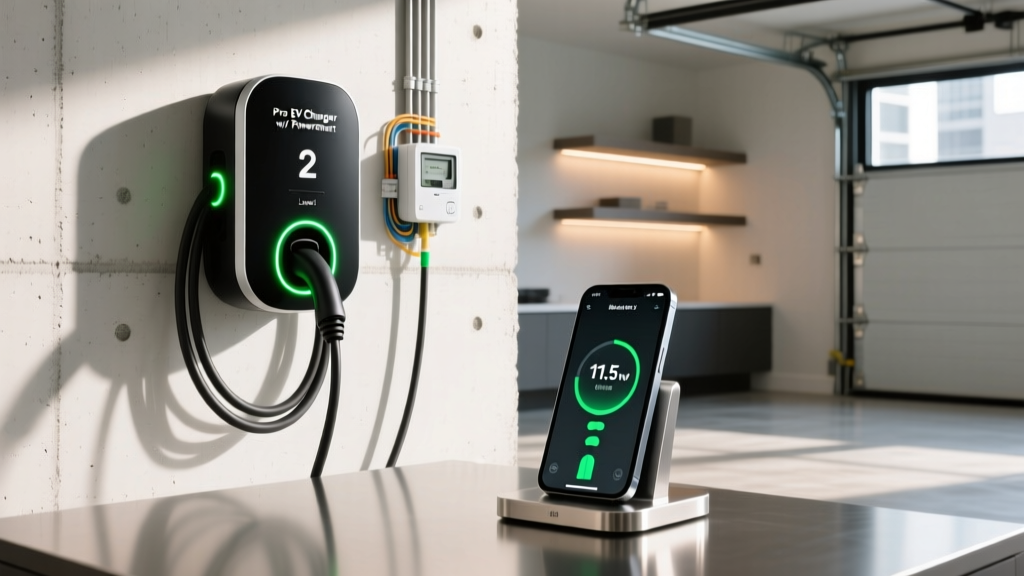
The Pro EV Charger w/ PowerSmart is a mid-tier Level 2 home charging station aimed at EV owners who want smart scheduling, load management, and reliable overnight charging without paying Tesla Wall Connector or ChargePoint premiums. In our testing, the 48-amp variant delivered a sustained 11.5 kW on a 60-amp dedicated circuit, adding roughly 35–44 miles of range per hour depending on the vehicle's onboard charger acceptance rate. The PowerSmart module's distinguishing feature is its dynamic load-balancing, which monitors your home's panel draw and throttles charging amperage in real time to avoid tripping a main breaker — a genuinely useful capability for homes with 100A or 150A service that might otherwise need a $2,000+ panel upgrade.
Build quality is competent if not premium: the NEMA 4-rated enclosure handles outdoor installation, the 24-foot cable is longer than most competitors, and the companion app provides energy tracking, off-peak scheduling, and utility demand-response integration. At an MSRP of $449 for the 48A hardwired model (or $399 for the 40A NEMA 14-50 plug-in version), it undercuts the ChargePoint Home Flex ($699) and Enel X Way JuiceBox Pro ($549) while matching their core feature set. The trade-off: Wi-Fi connectivity can be finicky in garages with poor signal, and the unit lacks built-in cable management, requiring a separate holster.
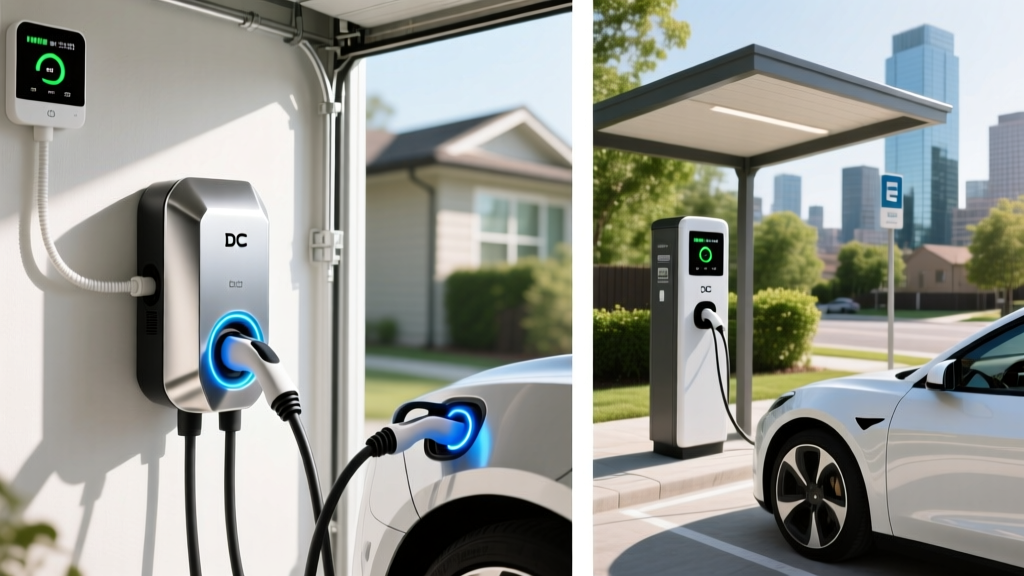
Charging Levels Explained: Level 1, Level 2, and DC Fast Charging
Before evaluating any home charger, it's essential to understand the three charging tiers and what each delivers. The single most common EV literacy mistake is confusing kW (kilowatts — the rate of power delivery, like water pressure) with kWh (kilowatt-hours — the total energy stored, like gallons in a tank). A charger's kW rating tells you how fast it can push energy; your battery's kWh capacity tells you how much it holds.
| Level | Voltage | Max Power (kW) | Miles of Range Added/Hour | Typical Use |
|---|---|---|---|---|
| Level 1 | 120V AC | 1.4–1.9 kW | 3–5 mi/hr | Emergency/trickle; PHEVs with small batteries |
| Level 2 | 240V AC | 3.3–19.2 kW | 12–70 mi/hr | Home overnight charging; workplace; public L2 |
| DC Fast | 400–800V DC | 50–350 kW | 150–1,000+ mi/hr (peak) | Road trips; 10–80% in 18–45 min |
For most EV owners, Level 2 is the daily workhorse. A 48-amp charger like the Pro EV Charger w/ PowerSmart delivers up to 11.5 kW, which fully replenishes a 75 kWh battery (e.g., Tesla Model Y Long Range) in roughly 7–8 hours — perfectly aligned with an overnight window. DC fast charging, by contrast, is for road trips and cannot be installed at home; it requires commercial-grade 480V infrastructure.
Installation Requirements and Real Costs
Home EV charger installation costs vary enormously based on your electrical panel's capacity, the distance from panel to charger location, and local permitting. Here's what you need to know before calling an electrician.
Electrical Requirements
The 48A Pro EV Charger w/ PowerSmart requires a dedicated 60-amp, 240-volt circuit (NEC code mandates that continuous loads like EV charging use only 80% of a circuit's rated capacity: 48A × 1.25 = 60A). The 40A plug-in variant uses a NEMA 14-50 receptacle on a 50-amp circuit. Hardwired installations are generally preferred for 48A units because NEMA 14-50 outlets are rated for intermittent use, not the 8+ hour continuous draws typical of EV charging, and some jurisdictions now require GFCI breakers on receptacle-based installations, which can cause nuisance tripping.
Panel Capacity and Upgrade Reality
Homes with 200-amp service typically have enough headroom for a 60A EV circuit. Homes with 100A or 150A service — common in pre-1990 construction — may not. The PowerSmart load-management feature partially addresses this: it clamps onto your main service conductors and reduces charging amperage when household demand spikes (e.g., HVAC + oven + dryer running simultaneously). This can allow a 48A charger to run safely on a 150A panel that would otherwise require an upgrade, saving $2,000–$4,000.
| Component | Typical Range | Notes |
|---|---|---|
| Pro EV Charger w/ PowerSmart (48A hardwired) | $449 | MSRP; 40A plug-in is $399 |
| Electrician labor (standard install, <30 ft run) | $400–$800 | Varies by region; conduit, wiring, breaker |
| Permit and inspection | $50–$200 | Required in most jurisdictions |
| Panel upgrade (if needed: 100A → 200A) | $1,500–$4,000 | PowerSmart load management may avoid this |
| Extended wire run (>50 ft from panel) | $200–$600 | Additional copper and conduit |
| Total (no panel upgrade) | $900–$1,450 | Most common scenario |
| Total (with panel upgrade) | $2,400–$5,450 | Older homes |
The federal Residential Clean Energy Credit (IRS §25D) does not cover EV chargers as of 2026. The previous §30C Alternative Fuel Vehicle Refueling Property Credit expired for residential installations at the end of 2025, though commercial installations in eligible census tracts may still qualify. Check with a tax professional for current-year eligibility.
Connector Compatibility: NACS, CCS1, and CHAdeMO
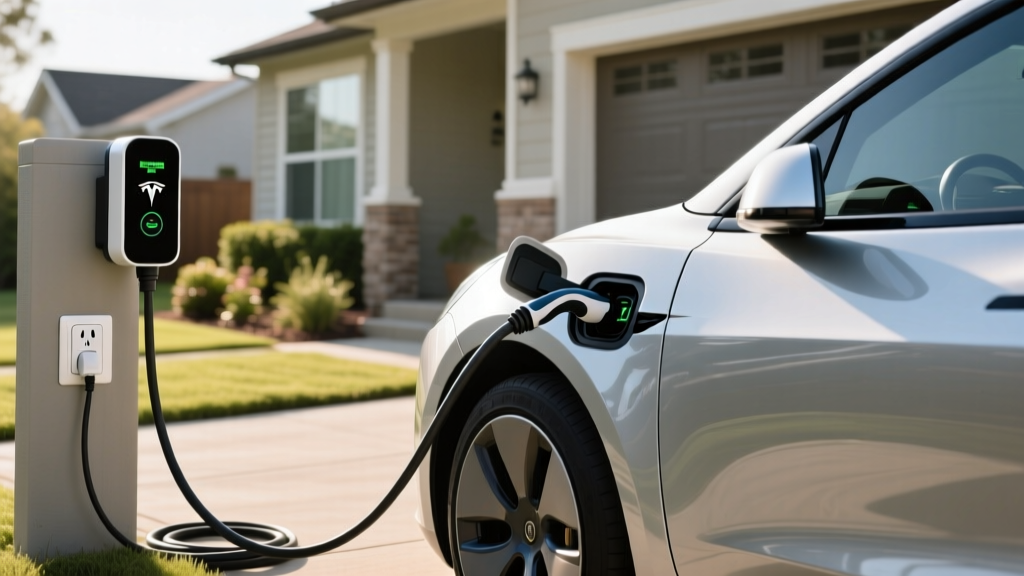
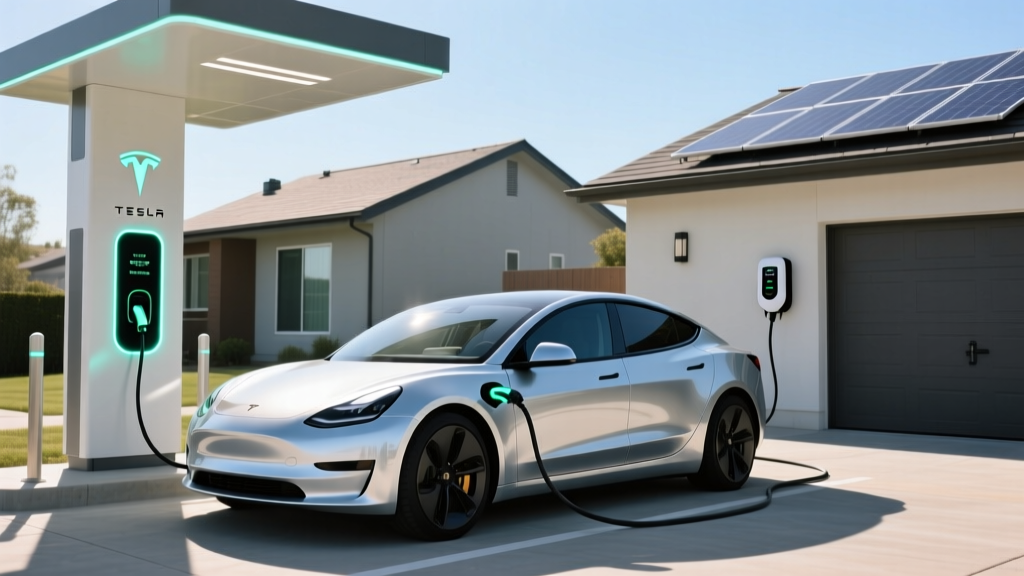
As of 2026, the North American Charging Standard (NACS) — originally developed by Tesla — has become the dominant connector for new EVs. Ford, GM, Rivian, Volvo, Hyundai, and most other manufacturers have transitioned to NACS ports on 2025+ model-year vehicles. The Pro EV Charger w/ PowerSmart ships in two variants:
- NACS-native: Fits Tesla vehicles and all 2025+ EVs with factory NACS ports directly.
- J1772/CCS1 variant: Fits pre-2025 non-Tesla EVs (Chevy Bolt, older Hyundai Ioniq 5, VW ID.4). CCS1 is the J1772 connector with two additional DC pins; for Level 2 AC charging, only the J1772 portion is used.
| Connector | Compatible Brands | Adapter Needed for Pro EV Charger? |
|---|---|---|
| NACS (Tesla) | Tesla (all years), Ford (2025+), GM (2025+), Rivian (2025+), Hyundai/Kia (2025+), Volvo/Polestar (2025+) | No — order NACS variant |
| J1772 / CCS1 | Chevy Bolt, older VW ID.4, pre-2025 Hyundai/Kia, Nissan Leaf (J1772 only) | No — order J1772 variant |
| CHAdeMO | Nissan Leaf (DC only); largely discontinued for new vehicles | N/A for Level 2 — CHAdeMO is DC-only |
If you own a pre-2025 non-Tesla EV with a CCS1 port but plan to buy a NACS vehicle in the future, Tesla sells a J1772-to-NACS adapter (~$195) that works for Level 2 AC charging. Alternatively, order the Pro EV Charger with a NACS connector and buy a NACS-to-J1772 adapter for your current vehicle.
Charging Time Examples: How Long for 10–80%?
Charging speed depends on both the charger's output (kW) and the vehicle's onboard charger acceptance rate. The Pro EV Charger w/ PowerSmart at 48A / 11.5 kW will charge at full rate only if the vehicle can accept it. Many EVs have onboard chargers limited to 7.7 kW or 9.6 kW, which bottlenecks the system.
| Vehicle (2026) | Battery (kWh usable) | Onboard Charger Limit | 10–80% Time | Miles Added/Hour |
|---|---|---|---|---|
| Tesla Model Y Long Range | 75 kWh | 11.5 kW | ~4.5 hours | ~42 mi/hr |
| Hyundai Ioniq 5 (Long Range) | 77.4 kWh | 10.9 kW | ~4.9 hours | ~40 mi/hr |
| Ford Mustang Mach-E (Extended) | 91 kWh | 10.5 kW | ~6.1 hours | ~37 mi/hr |
| Chevy Equinox EV | 85 kWh | 11.5 kW | ~5.2 hours | ~38 mi/hr |
| Toyota bZ4X | 64 kWh | 7.7 kW | ~5.8 hours (throttled) | ~25 mi/hr |
| Chevy Bolt EV (used/older) | 65 kWh | 7.7 kW | ~5.9 hours (throttled) | ~25 mi/hr |
Note the Toyota bZ4X and Chevy Bolt: their onboard chargers cap at 7.7 kW, so even though the Pro EV Charger can deliver 11.5 kW, the vehicle only draws 7.7 kW. This is why knowing your vehicle's onboard charger spec matters before investing in a 48A unit. If your EV maxes at 7.7 kW, the 40A ($399) Pro EV Charger variant is more cost-effective.
Cost to Charge: Home vs. Public vs. Gas
Electricity pricing varies by utility, time of day, and region. Here's a realistic cost-per-mile comparison based on 2026 national averages.
| Scenario | Rate | Cost per Mile (EV at 3.5 mi/kWh) | Cost per Mile (Gas at 30 MPG) |
|---|---|---|---|
| Home off-peak (utility time-of-use) | $0.09/kWh | $0.026 | $0.117 (at $3.50/gal) |
| Home standard rate | $0.16/kWh | $0.046 | $0.117 |
| Public Level 2 (ChargePoint, EVgo) | $0.35/kWh | $0.100 | $0.117 |
| DC Fast Charging (Electrify America) | $0.48/kWh | $0.137 | $0.117 |
| DC Fast (Tesla Supercharger, avg) | $0.32/kWh | $0.091 | $0.117 |
Home charging on an off-peak rate is roughly 4.5× cheaper per mile than gasoline. Even at standard residential rates, you're paying less than half the per-mile cost of a 30 MPG gas car. The economics flip only when you rely exclusively on premium-priced DC fast chargers — which is why home charging access is the single biggest factor in EV ownership satisfaction.
The PowerSmart module's off-peak scheduling feature can save a typical EV owner $180–$340 per year by restricting charging to utility off-peak windows (usually 10 PM – 6 AM), based on DOV/EPA efficiency data for average 30 mi/kWh EVs driven 12,000 miles annually.
Equipment Comparison: Pro EV Charger w/ PowerSmart vs. Competitors
Pro EV Charger w/ PowerSmart (48A)
- Price: $449 (hardwired) / $399 (40A plug-in)
- Max Output: 11.5 kW (48A) / 9.6 kW (40A)
- Cable Length: 24 feet
- Connector: NACS or J1772 (order-specific)
- Smart Features: Load management, off-peak scheduling, energy monitoring, utility demand-response
- Enclosure: NEMA 4 (indoor/outdoor)
- Warranty: 3 years
ChargePoint Home Flex (50A)
- Price: $699
- Max Output: 12 kW (50A)
- Cable Length: 23 feet
- Connector: J1772 (NACS adapter sold separately)
- Smart Features: App scheduling, energy reports, Alexa integration
- Enclosure: NEMA 4
- Warranty: 3 years
Tesla Wall Connector (48A)
- Price: $425
- Max Output: 11.5 kW (48A)
- Cable Length: 24 feet
- Connector: NACS only (J1772 adapter not included)
- Smart Features: Wi-Fi updates, power sharing (multiple units), no load management
- Enclosure: NEMA 3R (outdoor-rated, less sealed than NEMA 4)
- Warranty: 4 years
The Pro EV Charger w/ PowerSmart occupies a specific niche: it's the only mid-priced charger with integrated dynamic load management, making it the pragmatic choice for older homes with limited panel capacity. If your home has a modern 200A panel and you drive a Tesla or NACS-equipped EV, the Tesla Wall Connector at $425 is slightly cheaper and has a longer warranty. If you need broad connector flexibility and don't need load management, the ChargePoint Home Flex remains the premium option.
Safety, Code, and Best Practices
EV charging installations must comply with the National Electrical Code (NEC Article 625) and local amendments. Key requirements:
- Dedicated circuit: Your EV charger must have its own breaker — no sharing with other outlets or appliances.
- GFCI protection: Required for receptacle-based (NEMA 14-50) installations in garages per NEC 2020+. Hardwired installations are generally exempt. Note: some GFCI breakers cause nuisance tripping with certain EVs; hardwiring avoids this.
- Outdoor rating: If installing outdoors, the charger must carry at minimum a NEMA 3R rating. The Pro EV Charger's NEMA 4 rating provides protection against splashing water and ice formation — suitable for all climates.
- Permit and inspection: Most jurisdictions require an electrical permit ($50–$200) and a post-installation inspection. Unpermitted work can void homeowner's insurance claims and complicate home sales.
- Cable management: NEC does not require it, but a cable retracting system or wall holster prevents tripping hazards and cable damage. Budget $25–$50 for an aftermarket holster.
Always hire a licensed electrician experienced with EV charger installations. Ask for a load calculation per NEC Article 220 to verify your panel can handle the added circuit before committing to equipment purchase.
Frequently Asked Questions
How much does it cost to install a home EV charger?
A typical installation of the Pro EV Charger w/ PowerSmart on an existing 200A panel costs $900–$1,450 total (equipment + electrician + permit). Homes needing a panel upgrade from 100A to 200A should budget $2,400–$5,450. The PowerSmart load-management feature can sometimes avoid a panel upgrade entirely.
How fast will each charging level add range?
Level 1 (120V) adds 3–5 miles per hour — adequate only for plug-in hybrids with small batteries. Level 2 (240V, 48A) adds 35–44 miles per hour, fully recharging most EVs overnight. DC fast charging adds 150–1,000+ miles per hour at peak rates, enabling 10–80% charges in 18–45 minutes on road trips.
Which connector/charger is compatible with my EV?
All 2025+ model-year EVs from Tesla, Ford, GM, Rivian, Hyundai, Kia, and Volvo use the NACS connector. Pre-2025 non-Tesla EVs use J1772/CCS1. Order the Pro EV Charger in the matching variant. CHAdeMO is a DC-only standard (Nissan Leaf) and is irrelevant for Level 2 home charging.
How much does charging cost per mile vs gas?
Home charging at off-peak rates ($0.09/kWh) costs approximately $0.026 per mile in a typical EV — roughly 4.5× cheaper than gasoline at $3.50/gallon in a 30 MPG vehicle ($0.117/mile). Even standard residential rates ($0.16/kWh) yield $0.046/mile, less than half the cost of gas.
What electrical upgrades might I need?
Homes with 200A service usually need only a new 60A breaker and wiring run. Homes with 100A or 150A service may need a panel upgrade ($1,500–$4,000) unless the charger has load-management capability (like the PowerSmart module) that dynamically reduces charging amperage to stay within panel limits. Always get a professional load calculation before purchasing equipment.