2026 Prius Plug-In Range: What the EPA Sticker Doesn't Tell You
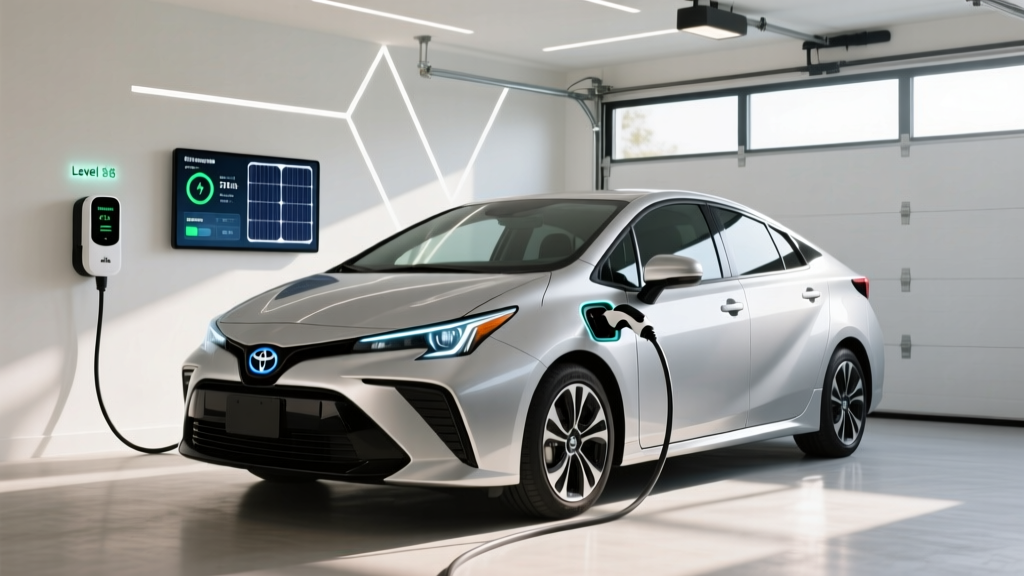
The 2026 Toyota Prius Plug-In Hybrid (sold globally as the Prius Prime) pairs a 2.0-liter four-cylinder with a 13.6 kWh lithium-ion battery pack. The EPA rates the top SE trim at 44 miles of electric-only range, while the heavier XSE and XSE Premium trims drop to 40 miles due to larger 19-inch wheels and added equipment. Combined gas-electric fuel economy reaches 127 MPGe in electric mode and 52 MPG once the battery depletes.
But EPA range stickers assume moderate temperatures, mixed city-highway driving, and no climate load. Real-world results differ.
| Condition | SE Trim (EPA 44 mi) | XSE Trim (EPA 40 mi) |
|---|---|---|
| Mild weather, city driving | 40–44 mi | 36–40 mi |
| Highway 70 mph sustained | 34–38 mi | 30–34 mi |
| Cold weather (below 32°F) | 28–34 mi | 24–30 mi |
| Cold + highway + heat on | 22–28 mi | 20–24 mi |
Source: fueleconomy.gov, real-world owner data aggregations. Cold weather reduces battery chemical efficiency and cabin heating draws significant power.
Prius Plug-In Charging Levels: How Fast Can You Add Range?
The Prius Plug-In uses a standard J1772 connector for AC charging and does not support DC fast charging. This is typical for PHEVs with smaller batteries — the 13.6 kWh pack simply doesn't justify the cost and weight of DC fast-charge hardware. Here's what each charging level delivers:
| Level | Voltage / Amperage | Max Power (kW) | Miles of EV Range Added/Hour | Full Charge Time (0–100%) |
|---|---|---|---|---|
| Level 1 (standard outlet) | 120V / 12A | ~1.4 kW | ~4–5 mi/hr | ~10–11 hours |
| Level 2 (240V home/public) | 240V / 16A–32A | 3.5 kW (vehicle max) | ~12–15 mi/hr | ~4 hours |
| DC Fast | N/A | Not supported | N/A | N/A |
Key distinction — kW vs. kWh: The Prius Plug-In's onboard charger maxes out at 3.5 kW (power — how fast energy flows in). Its battery holds 13.6 kWh (energy — how much the tank holds). Even if you plug into a 48-amp Level 2 station capable of 11.5 kW, the car will only draw 3.5 kW. This means a higher-powered charger won't charge the Prius any faster, though it will still work fine and can serve future EVs with higher acceptance rates.
Home Charger Installation: Electrical Requirements and Costs
Because the Prius Plug-In tops out at 3.5 kW, you don't need the most powerful home charger on the market. A 240V / 16-amp circuit delivers the full 3.5 kW the car can accept. However, most homeowners install a 40-amp or 48-amp circuit for future-proofing — useful if you later add a BEV that charges at 7–11 kW.
Electrical Requirements
- Minimum for Prius Plug-In: 240V, 20-amp dedicated circuit (delivers 16A continuous = 3.8 kW)
- Recommended for future-proofing: 240V, 50-amp or 60-amp dedicated circuit (supports 40A–48A continuous chargers)
- Panel capacity: Most modern 200-amp panels can accommodate a 40–50A EV circuit. Older 100-amp panels may require a service upgrade ($1,500–$3,500).
- Permit: Most jurisdictions require an electrical permit for new 240V circuits; costs vary by municipality ($50–$250).
Panel Upgrade Reality Check
If your home has a 100-amp electrical panel and it's already near capacity (electric dryer, range, HVAC), adding a 40A or 50A EV circuit may exceed the panel's rating. An electrician will perform a load calculation per NEC Article 220 to determine this. If an upgrade is needed, expect a 200-amp panel upgrade to cost $1,500–$3,500 depending on local labor rates and whether the utility needs to upgrade the service drop.
| Component | Basic Install (20A, short run) | Standard Install (50A, moderate run) | Complex Install (panel upgrade + long run) |
|---|---|---|---|
| Level 2 charger (equipment) | $300–$500 | $400–$700 | $400–$700 |
| Electrician labor + materials | $400–$800 | $800–$1,500 | $1,500–$3,000 |
| Permit & inspection | $50–$150 | $100–$200 | $150–$300 |
| Panel upgrade (if needed) | $0 | $0 | $1,500–$3,500 |
| Total Range | $750–$1,450 | $1,300–$2,400 | $3,550–$7,500 |
Note: Some utilities offer rebates of $250–$500 for Level 2 charger installation. Check with your local provider. Federal Residential Clean Energy Credit (25C) may cover 30% of charger equipment and installation costs up to $1,000 for qualifying installations.
Connector Compatibility: J1772, NACS, and Adapter Considerations
The 2026 Prius Plug-In uses the J1772 connector for all AC charging — both Level 1 (included cord) and Level 2. It does not have a DC fast-charge port.
| Connector Type | Used By | Prius Plug-In Compatible? | Adapter Needed? |
|---|---|---|---|
| J1772 (AC Level 1/2) | Most non-Tesla EVs, all public L2 stations | ✅ Yes — native port | None |
| NACS / Tesla (AC & DC) | Tesla vehicles; Ford, GM, Rivian, Hyundai (2025+) | ⚠️ With adapter | NACS-to-J1772 adapter (~$100–$200) for AC only |
| CCS1 (DC fast) | Most non-Tesla BEVs | ❌ Not applicable | N/A — no DC port |
| CHAdeMO (DC fast) | Nissan Leaf (legacy) | ❌ Not applicable | N/A — no DC port |
Practical takeaway: Install a J1772 Level 2 charger at home and you'll plug in natively. If you also own a Tesla or plan to buy a NACS-equipped vehicle later, consider a charger with a swappable connector or purchase a J1772-to-NACS adapter. For public charging, virtually every Level 2 public station in the U.S. uses J1772, so the Prius Plug-In connects everywhere without adapters.
Charging Cost Per Mile: Prius Plug-In vs. Gas
One of the strongest arguments for the Prius Plug-In is the cost advantage of electric miles over gasoline. Here's how it breaks down using the Prius Plug-In's efficiency of approximately 25 kWh per 100 miles in EV mode and 52 MPG combined in hybrid mode.
| Charging Scenario | Cost per kWh / Gallon | Cost per Mile (EV Mode) | Annual Fuel Cost* |
|---|---|---|---|
| Home Level 1/2 (off-peak utility rate) | $0.10/kWh | $0.025 | $300 (12,000 mi) |
| Home Level 2 (avg. national rate) | $0.16/kWh | $0.040 | $480 (12,000 mi) |
| Public Level 2 (ChargePoint, etc.) | $0.25–$0.40/kWh | $0.063–$0.100 | $750–$1,200 |
| Gasoline only (hybrid mode, 52 MPG) | $3.30/gallon | $0.063 | $760 (12,000 mi) |
| Gas-only sedan (30 MPG comparison) | $3.30/gallon | $0.110 | $1,320 |
*Annual cost assumes 12,000 miles/year. Actual costs depend on local electricity rates, gas prices, and the proportion of EV vs. hybrid miles driven. Source: U.S. average electricity rate from EIA; gas prices from AAA national average.
The math is clear: if you charge at home on off-peak rates and drive within the 40–44-mile electric range daily, you'll spend roughly $0.025 per mile — less than half the cost of even the Prius's excellent 52 MPG hybrid mode. Over 12,000 miles of mostly electric commuting, annual fuel costs drop to $300–$480 versus $760 in hybrid-only mode or $1,320 in a typical 30-MPG gas car.
Recommended Level 2 Chargers for the Prius Plug-In
Since the Prius tops out at 3.5 kW, you don't need a 48-amp charger to max it out — but installing a higher-capacity unit future-proofs your garage for a future BEV. Here are three well-regarded options across price tiers:
Best Value: Emporia Level 2 Charger
- Power output: Up to 48A / 11.5 kW (Prius draws 3.5 kW max)
- Connector: J1772 (NACS adapter available)
- Cable length: 24 ft
- Smart features: Wi-Fi, energy monitoring, solar integration, scheduling via app
- Price: ~$399
- Why for Prius: Affordable, energy monitoring shows exact charging cost, 48A capacity means no re-install when you upgrade to a BEV
Best Smart Charger: ChargePoint Home Flex
- Power output: Configurable 16A–50A / up to 12 kW
- Connector: J1772 (NACS version also available)
- Cable length: 23 ft
- Smart features: Wi-Fi, Alexa/Google integration, charge scheduling, public network access via same app
- Price: ~$549–$649
- Why for Prius: Amperage is configurable at install — set to 16A on a 20A circuit or 40A on a 50A circuit. Seamless app experience.
Premium Pick: Tesla Universal Wall Connector
- Power output: Up to 48A / 11.5 kW
- Connector: Built-in J1772 + integrated NACS (Magic Dock style — charges both natively)
- Cable length: 24 ft
- Smart features: Wi-Fi, OTA updates, power sharing between two units, load management
- Price: ~$599
- Why for Prius: If your household has both a Tesla and the Prius Plug-In, this single charger handles both without adapters.
Safety, Code, and Installation Considerations
Home EV charging is safe when installed to code, but cutting corners creates real fire and shock hazards. Here's what to insist on:
- Dedicated circuit: Your Level 2 charger must be on its own dedicated breaker — never shared with other appliances. NEC 625 governs EV charging equipment.
- GFCI protection: The 2020 NEC and later require GFCI protection for all EV charging outlets (NEMA 14-50 or hardwired). Hardwired chargers with built-in GFCI satisfy this requirement.
- Outdoor rating: If your charger is installed outside or in an unsealed garage, ensure it carries a NEMA 4 or IP65 weather rating. All three chargers recommended above are outdoor-rated.
- Wire gauge: A 50-amp circuit requires 6 AWG copper wire; a 40-amp circuit uses 8 AWG. Your electrician will size this correctly — don't let anyone undersize the wire.
- NEMA 14-50 vs. hardwired: A NEMA 14-50 outlet lets you unplug and take the charger when you move, but some jurisdictions now require GFCI breakers for receptacles (adding $100–$200). Hardwired installations are often cheaper and cleaner but permanent.
- Permit and inspection: Always pull a permit. An unpermitted installation can void your homeowner's insurance in the event of an electrical fire and may cause issues at resale.
Frequently Asked Questions
How much does it cost to install a home EV charger for the Prius Plug-In?
A straightforward Level 2 installation with a 20-amp circuit and short wire run costs $750–$1,450 including equipment, electrician labor, and permit. A more common 50-amp future-proofed install runs $1,300–$2,400. If your home needs a panel upgrade from 100A to 200A, total costs can reach $3,500–$7,500.
How fast will each charging level add range to the Prius Plug-In?
Level 1 (120V standard outlet) adds roughly 4–5 miles of EV range per hour — enough to fully recharge overnight in about 10–11 hours. Level 2 (240V) adds about 12–15 miles per hour and fully recharges the 13.6 kWh battery in approximately 4 hours. The Prius Plug-In does not support DC fast charging.
Which connector and charger is compatible with my Prius Plug-In?
The Prius Plug-In uses a J1772 connector for all AC charging. Any Level 1 or Level 2 charger with a J1772 plug will work natively. You do not need a NACS, CCS, or CHAdeMO connector. If you also own a Tesla, the Tesla Universal Wall Connector has built-in J1772 compatibility.
How much does charging the Prius Plug-In cost per mile versus gas?
At home on off-peak electricity ($0.10/kWh), driving on battery costs about $0.025 per mile. On the national average rate ($0.16/kWh), it's $0.04 per mile. In hybrid mode burning gas at $3.30/gallon and 52 MPG, it costs $0.063 per mile. A comparable 30-MPG gas car costs $0.11 per mile. Home charging is roughly 2.5× cheaper than even the Prius's efficient hybrid mode.
What electrical upgrades might I need for a Level 2 charger?
If you have a modern 200-amp electrical panel with available capacity, you likely need only a new dedicated circuit and breaker — no panel upgrade. Homes with 100-amp panels or panels already near capacity (multiple electric appliances, HVAC) may require a service upgrade to 200 amps, which costs $1,500–$3,500. A licensed electrician will perform a NEC Article 220 load calculation to determine this before installation.
Does the 2026 Prius Plug-In qualify for federal tax credits?
The Prius Plug-In's eligibility for the §30D Clean Vehicle Credit depends on current-year battery sourcing, critical minerals requirements, MSRP caps ($55,000 for sedans), and buyer income limits ($150K single / $300K joint). The credit can be up to $7,500 and may be transferred to the dealer as a point-of-sale discount. Because sourcing rules change annually, verify eligibility on the IRS website or with a tax professional at the time of purchase.
Can I just use the included Level 1 cord and skip installing a Level 2 charger?
Yes. The Prius Plug-In's 13.6 kWh battery is small enough that Level 1 charging (120V, ~1.4 kW) will fully recharge it in about 10–11 hours. If you drive 30–40 miles per day and plug in every night, Level 1 may suffice. However, Level 2 is strongly recommended if you want faster turnaround between trips, plan to precondition the cabin while plugged in (preserving battery range in cold weather), or anticipate owning a larger-battery EV in the future.
Bottom Line: Charging the Prius Plug-In Is Simple and Cheap
The 2026 Prius Plug-In's 44-mile electric range and 3.5 kW charge rate make it one of the least demanding electrified vehicles to charge at home. A basic 240V / 20-amp circuit delivers its full charging speed, and even Level 1 can handle overnight replenishment for most commuters. Total home installation costs start around $750 for a simple setup, and fuel costs drop to $0.025–$0.04 per mile on home electricity — a fraction of what you'd spend on gasoline. The main limitation is the lack of DC fast charging, which is irrelevant for daily commuting but means you can't quick-charge on road trips. For the target buyer — someone with home charging access and a sub-40-mile daily commute — the Prius Plug-In's charging profile is a feature, not a compromise.