What Is EV Charging Theft and Why It Matters
As EV adoption accelerates, so does a frustrating side effect: charging theft. This isn't about stealing the vehicle itself — it's about unauthorized use of your electricity, your charging cable, or your reserved charging spot. For EV owners investing $500–$1,200 in home Level 2 equipment and paying $0.12–$0.35/kWh for electrons, protecting your charging infrastructure is a real ownership concern.
Charging theft typically falls into three categories:
- Electricity theft: Someone plugs into your unlocked home or workplace charger and consumes your power.
- Cable/equipment theft: Thieves cut or unplug your charging cable or wall-mounted unit for resale.
- Spot hijacking (ICEing or EV-squatting): A non-charging vehicle blocks your reserved spot, or another EV unplugs your car mid-session to steal your spot.
Before we cover prevention strategies, you need to understand the charging ecosystem you're protecting — because the right hardware choices double as theft deterrents.
Charging Levels: What You're Actually Protecting
Every EV owner deals with three charging tiers. The equipment at each level has different theft vulnerability profiles.
| Level | Voltage | Power (kW) | Miles of Range Added per Hour | Typical Use | Theft Risk |
|---|---|---|---|---|---|
| Level 1 | 120V AC | 1.0–1.4 kW | 3–5 mi/hr | Emergency / overnight trickle | Low (indoor, portable) |
| Level 2 | 240V AC | 3.3–19.2 kW | 12–75 mi/hr | Home daily charging, workplace | Moderate (outdoor-mounted, valuable) |
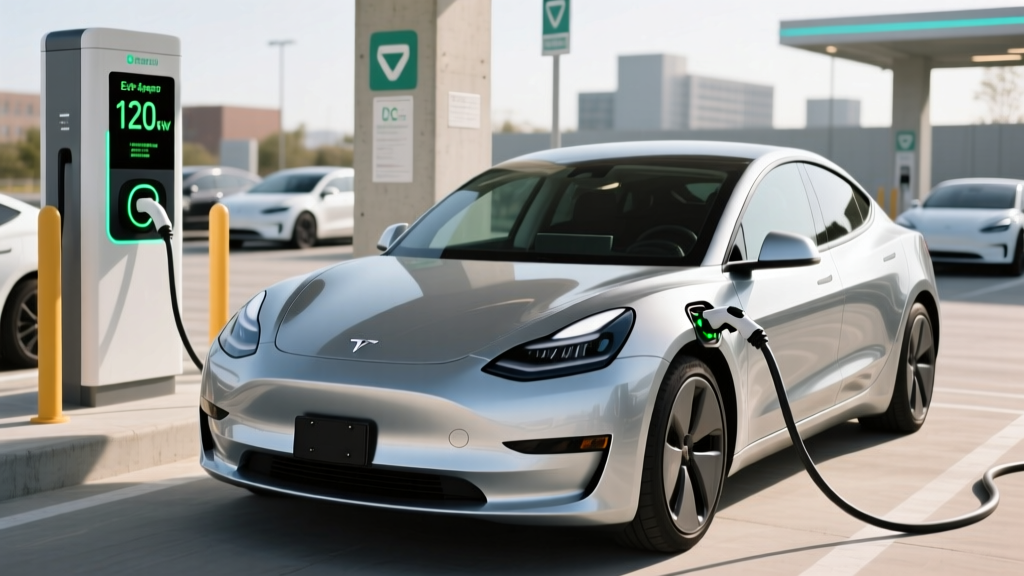
| DC Fast Charging | 400–800V DC | 50–350+ kW | 150–1,000+ mi/hr | Road trips, public stations | Spot hijacking / unplugging |
A critical distinction: kW (kilowatts) measures power — the rate of energy flow, like water pressure. kWh (kilowatt-hours) measures energy — the total amount stored or consumed, like gallons in a tank. A 10 kWh battery charged at 5 kW takes roughly 2 hours. Confusing these two is the single most common EV literacy gap.
- 60 kWh battery (e.g., Nissan Leaf, base Hyundai Kona Electric): ~6–7 hrs on 7.2 kW Level 2; ~25–30 min on 100 kW DC fast charger.
- 82 kWh battery (e.g., Tesla Model Y Long Range): ~8–9 hrs on 7.2 kW Level 2; ~25–35 min on 250 kW Supercharger (peak rate tapers above 80% SoC).
- 116 kWh battery (e.g., Ford F-150 Lightning Extended Range): ~12 hrs on 9.6 kW Level 2; ~40 min on 150 kW DC fast charger.
Note: DC fast charging speeds are peak rates — sustained speeds are lower due to the charge curve taper. Expect 10–80% times to exceed peak-rate math by 20–40%.
Home Charger Installation: Costs, Requirements, and Security Baseline
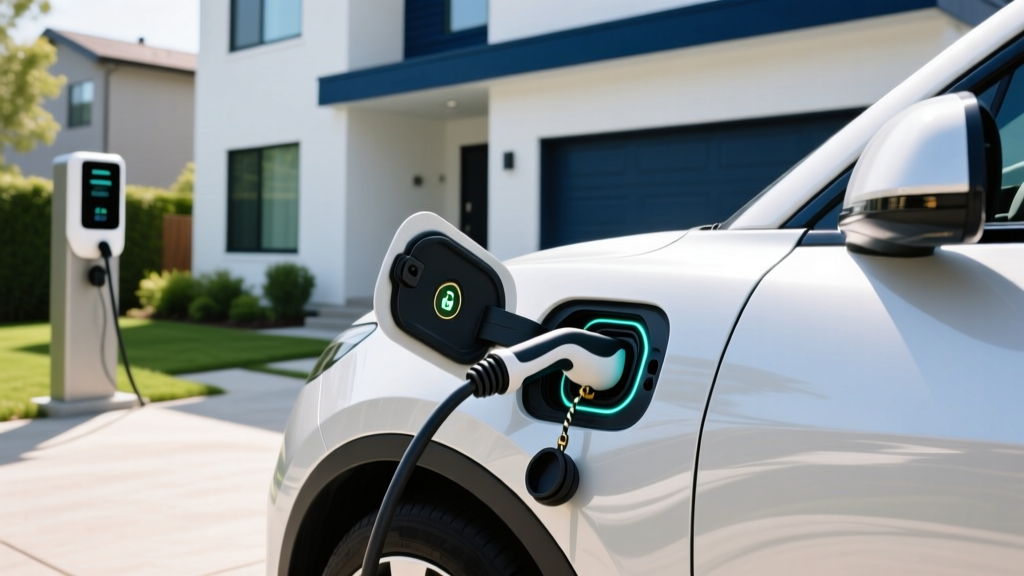
A properly installed home Level 2 charger is your first line of defense against charging theft. Hardwired units are inherently more secure than plug-in models because there's no cord for thieves to walk off with.
Electrical Requirements
Most home Level 2 chargers require a 240V dedicated circuit — the same voltage as your electric dryer or oven. Common configurations:
- 32A circuit (7.7 kW): Requires a 40A breaker (NEC 80% continuous-load rule). Sufficient for most daily driving under 60 miles.
- 40A circuit (9.6 kW): Requires a 50A breaker. Ideal for larger batteries (80+ kWh) or two-EV households.
- 48A circuit (11.5 kW): Requires a 60A breaker. Fastest residential option — needs robust panel capacity.
Panel Upgrade Reality Check
Homes built before 1990 often have 100A main panels. Adding a 40–50A EV circuit to an already-loaded panel may require a panel upgrade to 200A, which adds $1,500–$3,000 to your project. Even some newer homes with 200A panels may need a load calculation if you're running electric heat, a hot tub, and an EV charger simultaneously. Always get a licensed electrician to perform a NEC Article 220 load calculation before committing to equipment.
| Component | Cost Range | Notes |
|---|---|---|
| Level 2 charger equipment | $300–$750 | Varies by kW output, cable length, smart features |
| Electrician labor (standard install) | $400–$1,200 | Depends on run distance from panel to garage/driveway |
| Electrical permit | $50–$250 | Required in most jurisdictions; varies by municipality |
| Panel upgrade (if needed) | $1,500–$3,000 | 100A→200A upgrade; not needed in most modern homes |
| Conduit/wiring materials | $100–$400 | Long runs (>50 ft from panel) increase cost |
| Total (no panel upgrade) | $750–$2,350 | Typical range for most homeowners |
| Total (with panel upgrade) | $2,250–$5,350 | Older homes or high-load situations |
Safety and Code Considerations
- Dedicated circuit: Your EV charger must be on its own breaker — never share with other appliances (NEC 511.8).
- GFCI protection: Required for all outdoor receptacles; hardwired installations may also need GFCI breakers depending on local code.
- Outdoor rating: If mounted outside, your charger must carry a NEMA 3R or NEMA 4 rating for weather resistance.
- Disconnect: Some jurisdictions require a visible disconnect switch within sight of the charger.
How to Secure Your Home Charger Against Theft
This is where equipment selection directly intersects with theft prevention. Here are the strategies ranked by effectiveness:
1. Choose a Smart Charger with Access Controls
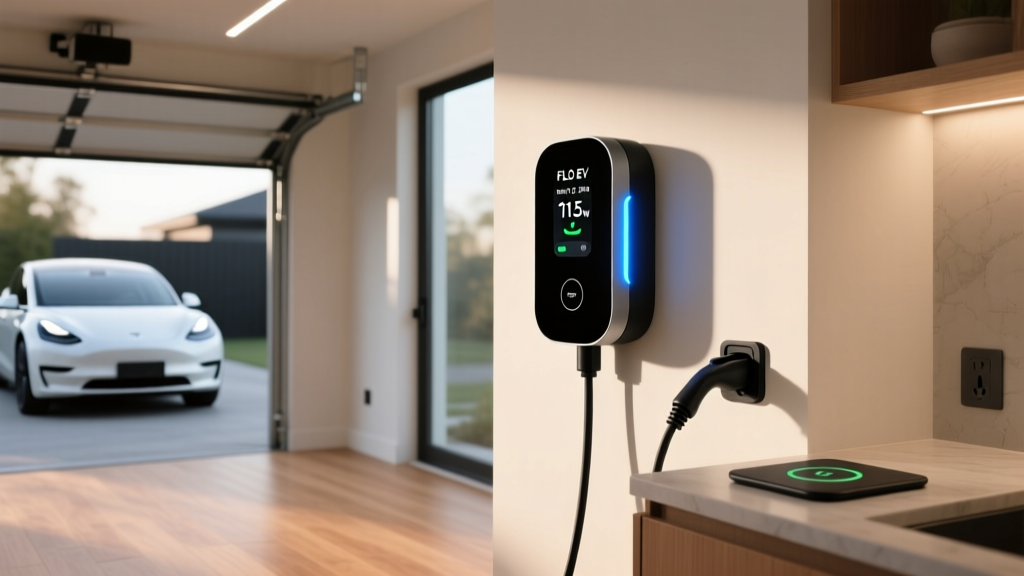
Smart chargers let you lock charging sessions via an app, set schedules, and receive alerts if someone plugs in without authorization. Key features to look for:
- RFID authentication: Requires a physical card or fob to start a session — ideal for shared driveways or multi-unit buildings.
- App-based locking: Remotely enable/disable the charger from your phone.
- Session notifications: Get an alert the moment a plug is inserted.
- Energy monitoring: Track kWh consumed per session to detect unauthorized draws.
2. Hardwire Instead of Plug-In
A hardwired charger eliminates the NEMA 14-50 or 6-50 plug that thieves could disconnect. It also removes the requirement for a GFCI breaker (in many jurisdictions), saving $50–$150 on the electrical install. The tradeoff: you can't take the charger with you if you move.
3. Physical Cable Locks and Enclosures
For chargers with attached cables (most Level 2 units), aftermarket cable locks ($25–$60) loop through the cable and anchor to the wall or a ground bolt. Lockable charger enclosures ($80–$200) add another layer — particularly useful in shared parking areas or apartment complexes.
4. Camera Coverage and Lighting
A visible security camera pointed at your charging area is a powerful deterrent. Motion-activated lighting serves the same purpose at lower cost. Many EV owners use doorbell cameras or dedicated outdoor cams with smartphone alerts.
Recommended Home Chargers with Built-In Security Features
| Charger Model | Max Power | Cable Length | Security Features | Connector | Approx. Price |
|---|---|---|---|---|---|
| ChargePoint Home Flex | 12 kW (50A) | 23 ft | App lock, scheduling, session alerts, energy dashboard | NACS or J1772 (configurable) | $550–$650 |
| Emporia Vue EV Charger | 11.5 kW (48A) | 24 ft | App scheduling, RFID option, solar integration, energy tracking | J1772 (NACS adapter avail.) | $400–$500 |
| Tesla Wall Connector | 11.5 kW (48A) | 24 ft | Access control list (approve specific VINs), Wi-Fi updates | NACS (native Tesla) | $475 |
| Grizzl-E Smart | 10 kW (40A) | 24 ft | App control, RFID, OCPP support for commercial use | J1772 or NACS | $500–$600 |
| Wallbox Pulsar Plus | 11.5 kW (48A) | 25 ft | App lock, Power Sharing for 2-EV homes, scheduler | J1772 or NACS | $550–$700 |
For maximum theft resistance, the Tesla Wall Connector's VIN-based access control is the gold standard for Tesla owners — only pre-approved vehicles can initiate a charge. For non-Tesla EVs, the ChargePoint Home Flex and Wallbox Pulsar Plus offer the best combination of app-based locking and energy monitoring.
Public Charging Theft: Spot Hijacking and Cable Security
At public DC fast charging stations, the theft risk shifts from electricity to spot access. Here's what happens and how to mitigate it:
Unplugging Mid-Session
At busy stations, a frustrated driver may unplug your vehicle to claim the spot. Prevention tactics:
- Lock your cable: Most EVs lock the charge port when the vehicle is locked (Tesla, Hyundai, Kia, Ford, BMW). Always lock your car before walking away. Some models (Rivian, Lucid) have additional port-lock pins.
- Use the station app: Apps from Electrify America, EVgo, and ChargePoint show real-time session status — you'll get a notification if your session stops unexpectedly.
- Leave a visible note: A dashboard card reading "Currently charging — please do not unplug" with your phone number adds social pressure.
ICEing and EV-Squatting
Gas vehicles blocking EV spots (ICEing) or fully-charged EVs hogging spots are pervasive problems. Reporting tools in station apps and social media shaming have modest deterrent effect. Some municipalities now enforce EV-only parking with fines — check your local ordinances.
Connector Compatibility Quick Reference
| Connector | Brands Using It | Adapter Needed? | Notes |
|---|---|---|---|
| NACS (Tesla / SAE J3400) | Tesla (all), Ford, GM, Rivian, Volvo, Polestar, Hyundai, Kia (2025+ models) | CCS→NACS adapter for older CCS vehicles at Superchargers | Now the dominant North American standard; most new 2025–2026 EVs ship with NACS ports |
| CCS1 (Combined Charging System) | VW ID.4 (pre-2026), BMW iX (pre-2026), older Hyundai/Kia, Stellantis | NACS→CCS adapter needed for Tesla Superchargers | Being phased out on new models; still common on Electrify America, EVgo stations |
| CHAdeMO | Nissan Leaf (legacy) | No adapter available for NACS/CCS stations | Effectively discontinued; avoid if buying new |
| J1772 (Level 1/2 only) | All non-Tesla EVs (Level 2 AC charging) | Tesla Mobile Connector includes J1772 adapter; NACS vehicles use J1772→NACS adapter | Standard for AC Level 2 public and home charging |
Charging Cost per Mile: What Thieves Are Stealing
Understanding your electricity cost makes the stakes of charging theft concrete. Here's what you're paying — and what a thief consumes:
| Scenario | Rate ($/kWh) | Cost per Gallon-Equivalent* | Cost per Mile (250 Wh/mi EV) | Equivalent MPG at $3.50/gal Gas |
|---|---|---|---|---|
| Home off-peak (utility TOU rate) | $0.08–$0.12 | $2.70–$4.05 | $0.020–$0.030 | 117–175 MPG |
| Home standard rate | $0.13–$0.18 | $4.39–$6.08 | $0.033–$0.045 | 78–106 MPG |
| Public Level 2 (workplace/retail) | $0.20–$0.35 | $6.75–$11.81 | $0.050–$0.088 | 40–70 MPG |
| DC Fast Charging (public) | $0.30–$0.55 | $10.13–$18.56 | $0.075–$0.138 | 25–47 MPG |
| Gas vehicle (30 MPG combined) | — | $3.50/gallon | $0.117 | 30 MPG |
*One gallon of gasoline ≈ 33.7 kWh of energy (per fueleconomy.gov). Actual EV efficiency varies: compact EVs average 240–280 Wh/mi; trucks/SUVs average 300–400 Wh/mi.
If a neighbor plugs into your unlocked 7.2 kW charger overnight and draws 40 kWh, that's $5.20–$7.20 in stolen electricity at typical residential rates — or $14–$22 if they're drawing from a workplace charger you manage. Repeat offenders make this a material cost.
Workplace and Multi-Unit Dwelling Charging: Access Control Is Essential
Charging theft risk multiplies in shared environments. If you're installing chargers at a workplace, apartment complex, or HOA, these access-control features are non-negotiable:
- RFID or app authentication for every session — no open-access chargers in shared spaces.
- Billing integration so each user pays for their own kWh (networked chargers from ChargePoint, EV Connectors, or Blink handle this).
- Idle fees that kick in after a session completes — prevents spot-squatting and discourages non-paying users from lingering.
- Load management so multiple chargers share available panel capacity without tripping breakers.
For property managers, the IRS §30C Alternative Fuel Vehicle Refueling Property Credit may cover up to 30% of installation costs (capped at $100,000 per item of property) for commercial charger installations in eligible census tracts. Consult a tax professional for eligibility specifics.
What to Do If Your Charging Is Stolen
- Document it: Check your charger's app for session logs — most smart chargers record start/stop times, kWh delivered, and sometimes the vehicle VIN or RFID used.
- Review camera footage: Timestamped video of the unauthorized plug-in is definitive evidence.
- Report to property management or HOA: In multi-unit buildings, management can enforce charging policies and levy fines.
- File a police report for repeat offenses: Electricity theft is a crime in all 50 states, typically classified as utility theft or larceny. Documented patterns strengthen your case.
- Lock down your charger: Enable app-based access controls, install a cable lock, or add a lockable enclosure immediately.
Frequently Asked Questions
Can someone steal electricity from my home EV charger?
Yes, if your charger is outdoors, unlocked, and accessible from a public area (sidewalk, shared driveway). Smart chargers with app-lock or RFID authentication prevent this entirely. A basic cable lock or lockable enclosure adds physical security for non-smart chargers.
Is it illegal to unplug someone's EV at a public charger?
Laws vary by jurisdiction, but unplugging a actively-charging vehicle to use the spot yourself is generally considered tampering with another person's property. Some states and municipalities have specific EV charging protection ordinances with fines up to $250–$500. Check your local laws.
Do Tesla Superchargers have theft protection?
Tesla's charging network authenticates vehicles by VIN — only the plugged-in Tesla (or approved NACS vehicle via the Tesla app) can initiate a session. The cable locks into the vehicle's charge port when the car is locked. Theft of electricity at Superchargers is effectively impossible. Spot hijacking (unplugging another Tesla) is rare because the cable locks prevent it.
How much does a lockable charger enclosure cost?
Basic lockable steel enclosures run $80–$150; heavy-duty outdoor-rated pedestals with locks cost $150–$300. These are most useful in apartment complexes, shared driveways, or curbside installations where the charger faces foot traffic.
Will my homeowner's insurance cover charger theft?
Most homeowner's policies cover permanently installed EV chargers under dwelling coverage (similar to an HVAC unit). Portable chargers and cables are covered under personal property. Verify with your insurer — some require the charger to be listed on your policy schedule. Filing a police report is typically required for claims.
How do I know if my charger supports access control?
Check the manufacturer's app or spec sheet for features labeled "access control," "RFID authentication," "authorized vehicles," or "charger locking." Networked chargers (ChargePoint, EVgo home units, Wallbox) almost always include these features. Non-networked "dumb" chargers (Lectron, basic Amazon units) typically do not.