The Porsche Taycan remains one of the most technically advanced electric sports sedans on the road, and its 800-volt architecture delivers some of the fastest DC charging speeds in the industry. But extracting the full Taycan range from its battery—and replenishing it efficiently at home or on the road—requires matching the right charging equipment to Porsche's specific powertrain demands. Whether you own a base Taycan, a 4S, a GTS, or a Turbo S, this guide walks through exactly what you need to charge at every level, what it costs, and how to avoid expensive electrical surprises.
Taycan Battery and Range Specs by Model Year
Before sizing a charger, you need to know what you're filling. Porsche revised the Taycan lineup significantly for the 2025 model year, adding battery capacity and improving efficiency. Here's where the current lineup stands for 2026:
| Trim | Usable Battery (kWh) | Chemistry | EPA Range (mi) | Real-World Highway Est. | Peak DC Charge (kW) |
|---|---|---|---|---|---|
| Taycan (RWD) | 82.3 | NMC | 318 | ~255–275 | 320 |
| Taycan 4S | 82.3 | NMC | 306 | ~245–265 | 320 |
| Taycan GTS | 82.3 | NMC | 293 | ~235–255 | 320 |
| Taycan Turbo | 82.3 | NMC | 297 | ~240–260 | 320 |
| Taycan Turbo S | 82.3 | NMC | 284 | ~230–250 | 320 |
Charging Levels Explained: kW, Speed, and What the Taycan Accepts
Understanding the three charging tiers is essential. kW (kilowatts) measures the rate of power delivery—how fast energy flows into the battery. kWh (kilowatt-hours) measures total energy stored—think of it as the size of the fuel tank. You fill an 82.3 kWh battery faster with more kW.
| Level | Power Source | Max kW | Miles of Range Added per Hour | Best Use Case |
|---|---|---|---|---|
| Level 1 | 120V household outlet | 1.2–1.4 kW | ~3–5 mi/hr | Emergency top-ups, overnight trickle |
| Level 2 | 240V dedicated circuit | 7.2–19.2 kW | ~20–65 mi/hr | Daily home charging, workplace |
| DC Fast Charging | 400V or 800V public station | 50–350+ kW | ~150–700+ mi/hr | Road trips, rapid replenishment |
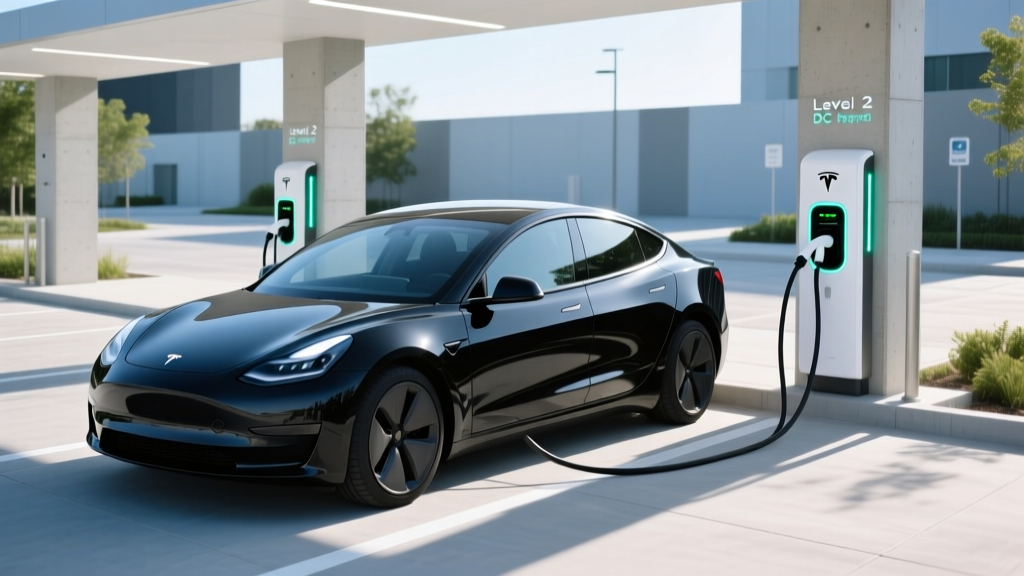
The Taycan's onboard AC charger accepts up to 19.2 kW on Level 2 (with the optional 22 kW onboard charger upgrade; the standard unit is 9.6 kW). On DC fast charging, the Taycan's 800-volt architecture lets it accept up to 320 kW at compatible 350 kW chargers—among the fastest in production. This means a 10–80% charge in approximately 18 minutes under optimal conditions, though real-world sessions average closer to 22–25 minutes once you account for charging-curve taper above 80% and battery preconditioning status.
Home Level 2 Installation: Electrical Requirements and Costs
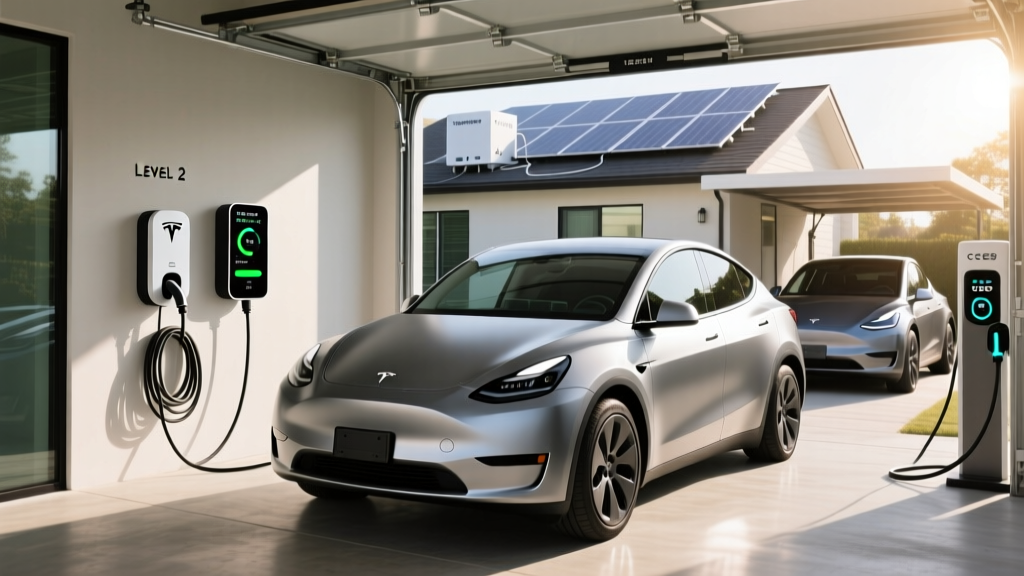
A proper Level 2 home charger is the backbone of Taycan ownership. With an 82.3 kWh battery, Level 1 charging would take roughly 60–70 hours for a full charge—essentially unusable. Level 2 at 9.6 kW completes a full charge in about 9–10 hours; at 19.2 kW, roughly 5 hours.
Electrical Requirements
- Circuit: Dedicated 240V circuit. For a 48-amp charger, you need a 60-amp breaker (NEC code requires circuits rated at 125% of continuous load).
- Wire gauge: Typically 6 AWG copper for a 60A circuit; 4 AWG for longer runs.
- Panel capacity: Most modern homes with 200-amp service can accommodate an EV circuit. Older homes with 100-amp panels often require an upgrade ($1,500–$3,500) or a load-management device.
- Permit: Required in nearly all jurisdictions. Your electrician pulls this; cost varies by municipality ($50–$300).
| Component | Low Estimate | High Estimate | Notes |
|---|---|---|---|
| Level 2 Charger (hardware) | $400 | $750 | 40A–48A smart charger; higher for 80A units |
| Electrician labor (standard install) | $500 | $1,200 | Short run from panel to garage; longer runs cost more |
| Electrical materials (wire, conduit, breaker) | $150 | $400 | Depends on run length and local code |
| Permit and inspection | $50 | $300 | Varies by city/county |
| Panel upgrade (if needed) | $1,500 | $3,500 | 100A → 200A service; not always required |
| Total (no panel upgrade) | $1,100 | $2,650 | Most common scenario for modern homes |
| Total (with panel upgrade) | $2,600 | $6,150 | Older homes or high-load situations |
The IRS §30D tax credit does not cover home charging equipment directly for most buyers (the Alternative Fuel Vehicle Refueling Property Credit, §30C, covers up to $1,000 for charger installation but is subject to census-tract eligibility). Check your specific location on the IRS site or consult a tax professional.
Which Connector Does the Taycan Use? Compatibility Guide
Porsche uses the CCS1 (Combined Charging System) connector on all Taycan models sold in North America through the 2026 model year. This differs from Tesla's NACS connector and from the CHAdeMO standard used by the Nissan Leaf. Here's how connector compatibility breaks down:
| Connector | Brands Using It | Taycan Compatible? | Adapter Needed? |
|---|---|---|---|
| CCS1 | Porsche, VW, BMW, Ford, GM, Hyundai/Kia, most non-Tesla | Yes — native | No |
| NACS (Tesla) | Tesla; Ford, GM, Rivian, Volvo adopting (2025+) | With adapter | Yes — Porsche does not yet offer a first-party NACS adapter; third-party CCS-to-NACS adapters available (~$200–$350) |
| CHAdeMO | Nissan Leaf, Mitsubishi (legacy) | No | No practical adapter exists |
| J1772 (Level 2 AC) | All non-Tesla EVs | Yes — native | No (CCS inlet includes J1772 for AC) |
For Tesla Supercharger access, Porsche has indicated that NACS adoption is coming for future models, but 2026 Taycan owners will need a CCS-to-NACS adapter to use Superchargers. Electrify America, EVgo, and ChargePoint stations all natively support CCS1, so Taycan owners have broad public-charging access without adapters at non-Tesla networks.
Charging Cost Per Mile: Taycan vs. Gas Sports Sedans
The Taycan's efficiency averages around 2.0–2.4 kWh per mile depending on trim and driving style (the EPA rates the Taycan 4S at roughly 85 MPGe combined, or about 40 kWh/100 mi according to fueleconomy.gov). Let's translate that into real cost-per-mile figures:
| Scenario | Rate ($/kWh) | Cost per Mile (Taycan 4S) | Comparable Gas Car (25 MPG @ $3.50/gal) |
|---|---|---|---|
| Home charging (off-peak utility rate) | $0.12 | $0.048 | $0.14 |
| Home charging (average US residential) | $0.17 | $0.068 | $0.14 |
| Public Level 2 (ChargePoint, EVgo) | $0.25–$0.35 | $0.10–$0.14 | $0.14 |
| DC Fast Charging (Electrify America) | $0.35–$0.50 | $0.14–$0.20 | $0.14 |
Home charging is where the Taycan delivers dramatic savings—roughly one-third the cost per mile of a gas-powered sports sedan like the BMW M5 or Mercedes-AMG GT. Public DC fast charging, however, can equal or exceed gasoline costs per mile. For road-trip-heavy owners, budgeting $0.40–$0.48/kWh at highway chargers is realistic. Electrify America's Pass+ subscription ($4/month) reduces rates to roughly $0.31/kWh, which brings DC fast charging costs closer to $0.12/mile.
Recommended Home Chargers for the Porsche Taycan
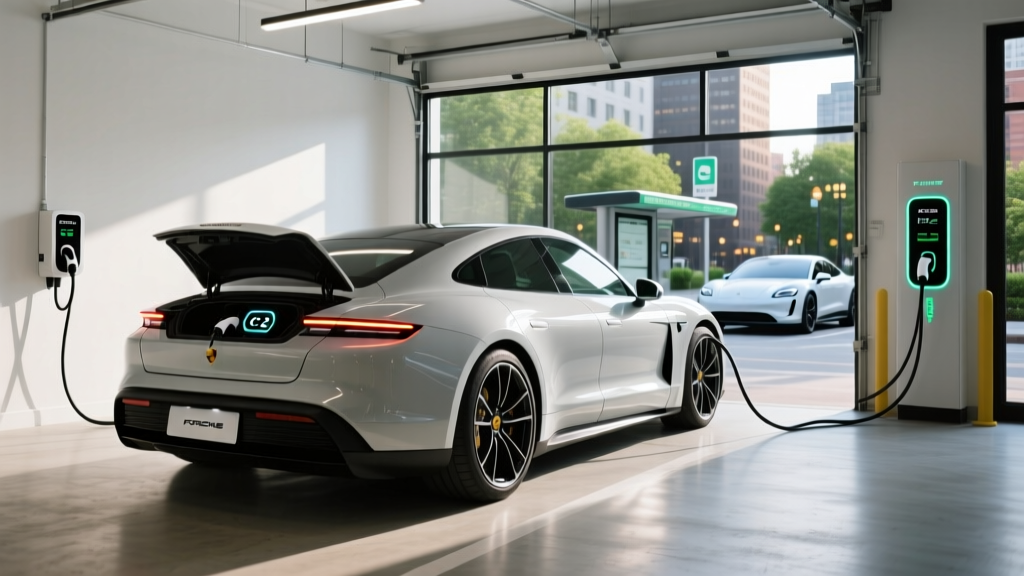
With the Taycan's 82.3 kWh battery, you want a Level 2 charger that delivers meaningful range recovery overnight. Here are three proven options, each with a J1772 connector (compatible with the Taycan's CCS inlet for AC charging):
ChargePoint Home Flex
- Power output: Up to 12 kW (50A) on a 240V/50A circuit; configurable down to 16A for lower-capacity panels
- Cable length: 23 feet
- Connector: J1772
- Smart features: Wi-Fi connected, ChargePoint app scheduling, Alexa integration, energy-use tracking
- Price: ~$549–$649
- Why for Taycan: Flexible amperage lets you match your panel's capacity; solid app; UL-listed
Emporia Vue Smart EV Charger
- Power output: Up to 11.5 kW (48A) on a 240V/60A circuit
- Cable length: 24 feet
- Connector: J1772
- Smart features: Wi-Fi, solar-integration scheduling (pairs with Emporia Vue energy monitor), time-of-use optimization
- Price: ~$399–$449
- Why for Taycan: Best value for a 48A smart charger; ideal if you have solar and want to charge on excess production
Porsche Mobile Charger Connect
- Power output: Up to 9.6 kW (40A) on a 240V/50A circuit
- Cable length: ~16 feet
- Connector: J1772
- Smart features: Porsche Communication Management integration, touchscreen display, timer function, available with NEMA 14-50 plug for portability
- Price: ~$600–$700 (often included or discounted with new Taycan purchase)
- Why for Taycan: OEM integration; portable option for travel; but lower max output than aftermarket 48A options
If you opted for the Taycan's 22 kW onboard charger upgrade ($1,680 option), you'd need a hardwired 80A Level 2 charger and a 100A dedicated circuit to realize the full 19.2 kW AC rate. This requires significant electrical infrastructure—most homes cannot support this without a panel upgrade, and the practical benefit over a 48A/11.5 kW charger is modest (roughly 5 hours vs. 7.5 hours for a full charge). For most owners, a 48A charger is the sweet spot.
Safety, Code, and Outdoor Installation Considerations
EV charging involves sustained high-current draw, which is more demanding on home wiring than intermittent loads like dryers. Key safety and code points:
- Dedicated circuit: NEC Article 625 requires a dedicated circuit for EVSE (Electric Vehicle Supply Equipment). You cannot share the circuit with other appliances.
- GFCI protection: NEC 2020 and later requires GFCI protection for all receptacles used for EV charging, including 240V outlets like NEMA 14-50. Hardwired installations may have different GFCI requirements depending on local amendments.
- Outdoor rating: If your charger is mounted outside (carport, driveway), ensure it carries a NEMA 4 or IP65 rating. The ChargePoint Home Flex and Emporia Vue are both rated for outdoor use.
- NEMA 14-50 vs. hardwired: A NEMA 14-50 outlet gives you portability (take the charger when you move), but hardwired installations can support higher amperage (60A–80A) and avoid the GFCI breaker requirement that some jurisdictions impose on 14-50 receptacles.
- Load management: If your panel is near capacity, devices like the Emporia Vue's smart panel integration or a dedicated load-management system (e.g., Myenergi libbi) can dynamically throttle charger draw to prevent tripping the main breaker.
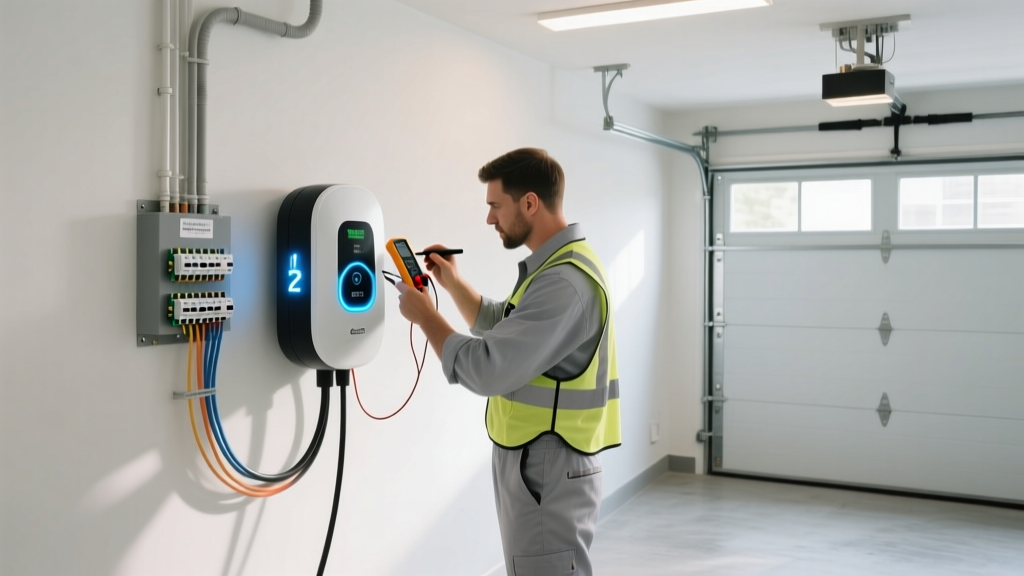
Always hire a licensed electrician familiar with NEC Article 625 (EV charging). Ask for a load calculation before installation to confirm your panel can handle the added circuit.
DC Fast Charging on the Road: Networks and Taycan Charging Times
The Taycan's 800V architecture is its biggest charging advantage. While most EVs operate on 400V systems, the Taycan's higher voltage allows faster charging with lower current, reducing heat and improving efficiency. Here's what 10–80% charging looks like at common public stations:
| Charger Rating | Network Examples | 10–80% Estimated Time | Range Added in 15 Min |
|---|---|---|---|
| 350 kW | Electrify America, Ionity (EU) | ~18–22 minutes | ~150–175 mi |
| 150 kW | EVgo, ChargePoint, some EA stations | ~28–35 minutes | ~95–115 mi |
| 50 kW | Older CHAdeMO/CCS stations | ~75–90 minutes | ~40–50 mi |
To get the fastest charge, always navigate to the charger using the Taycan's built-in routing. This triggers battery preconditioning—heating or cooling the pack to optimal temperature for maximum charge acceptance. Showing up at a 350 kW charger without preconditioning (for example, driving there without using navigation) can add 5–10 minutes to your session as the battery ramps up more slowly.
Porsche has partnered with Electrify America to offer Taycan owners complimentary charging plans (typically 3 years of included sessions or kWh credits with new vehicle purchase). Verify current program details with your dealer, as these offers change by model year.
Frequently Asked Questions
How much does it cost to install a home EV charger for the Taycan?
For a typical home with a 200-amp electrical panel and a short wire run to the garage, expect $1,100–$2,650 including the charger hardware, electrician labor, materials, and permit. Homes needing a panel upgrade (100A to 200A) will add $1,500–$3,500 to that total. Get at least two quotes from licensed electricians and confirm they are familiar with NEC Article 625 for EV charging circuits.
How fast will each charging level add range to the Taycan?
Level 1 (120V) adds roughly 3–5 miles of range per hour—adequate only for emergency trickle charging. Level 2 at 48A (11.5 kW) adds approximately 38–45 miles per hour, fully replenishing the 82.3 kWh battery in about 7–8 hours. DC fast charging at 350 kW can add up to 175 miles in 15 minutes under optimal conditions with battery preconditioning active.
Which connector is compatible with the Porsche Taycan?
The Taycan uses a CCS1 connector for DC fast charging and a J1772 inlet for Level 2 AC charging (both integrated into the same charge port). Tesla Supercharger access requires a CCS-to-NACS adapter. All Electrify America, EVgo, and ChargePoint CCS stations are natively compatible without any adapter.
How much does charging the Taycan cost per mile compared to gasoline?
At the US average residential electricity rate of ~$0.17/kWh, the Taycan 4S costs approximately $0.07 per mile to charge at home—about half the cost of a 25 MPG gas sports sedan at $3.50/gallon ($0.14/mile). Public DC fast charging at $0.40–$0.50/kWh pushes the cost to $0.14–$0.20 per mile, which equals or exceeds gasoline. Maximize home charging for the best economics.
What electrical upgrades might I need for a Taycan home charger?
If your home has a 200-amp panel with available breaker slots and capacity, you likely need only a dedicated 50A or 60A circuit. Homes with 100-amp service, fully loaded panels, or long wire runs from the panel to the garage may require a panel upgrade ($1,500–$3,500), a sub-panel installation, or a load-management device. A licensed electrician's load calculation will determine this before any work begins.
Does the Taycan's 800-volt system require special home charging equipment?
No. The Taycan's 800V architecture applies only to DC fast charging, where it enables the 320 kW peak rate. For home Level 2 AC charging, the Taycan converts incoming 240V AC to DC internally using its onboard charger, just like any other EV. Standard J1772 Level 2 chargers work without any special equipment.
Sources: EPA range and efficiency data from fueleconomy.gov; Porsche Taycan specifications from Porsche USA; IRS clean vehicle credit rules from irs.gov. Tax credit eligibility varies by buyer income, vehicle MSRP, and battery sourcing requirements—consult a tax professional for your specific situation.