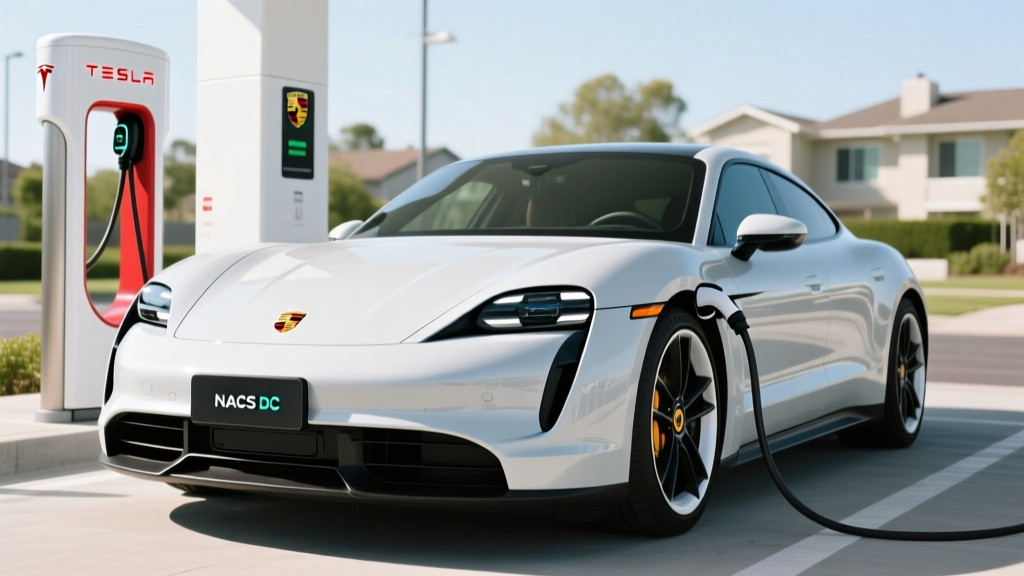
Porsche's transition to the North American Charging Standard (NACS) has left many Taycan owners and prospective buyers with a critical question: how do you actually use Tesla Superchargers with a Porsche? The answer centers on the Porsche NACS DC adapter — a hardware bridge that lets CCS1-equipped Taycans access the largest fast-charging network in North America. This guide covers the adapter's capabilities, what it means for your charging routine, and how home and public charging fit into the broader picture of Taycan ownership.
Why Porsche Taycan Owners Need the NACS DC Adapter
Through the 2024 and 2025 model years, every Porsche Taycan sold in North America shipped with a CCS1 (Combined Charging System) charge port. Starting with the 2026 model year, Porsche began transitioning to NACS-native ports on new-production Taycans. But for the tens of thousands of CCS1-equipped Taycans already on the road — and any 2025 or earlier model you might buy new or used — the NACS port isn't built in. That's where the adapter comes in.
Tesla's Supercharger network now includes over 25,000 stalls across North America, many of which have been opened to non-Tesla EVs via the "Magic Dock" built-in adapter or through NACS-native compatibility. Without a Porsche NACS DC adapter, a CCS1 Taycan can only access Electrify America, EVgo, and other CCS networks — which, depending on your region, may mean fewer stalls, more broken chargers, and longer detours on road trips.
| Model Year | Native Port | Tesla Supercharger Access | Adapter Needed |
|---|---|---|---|
| 2020–2025 | CCS1 | Via adapter or Magic Dock stalls | Porsche NACS DC adapter (or Tesla CCS adapter at Magic Dock stalls) |
| 2026+ | NACS | Native — no adapter | CCS1 adapter needed for non-Tesla DC networks |
Charging Levels Explained: Speeds, Power, and Range Added
Before diving into adapter specifics, let's ground the conversation in the three charging levels every Taycan owner should understand. Power is measured in kW (kilowatts) — the rate at which energy flows. Energy is measured in kWh (kilowatt-hours) — the total capacity stored in your battery. The Taycan's usable battery capacity ranges from roughly 79.2 kWh (base/standard) to 93.4 kWh (Performance Battery Plus). Confusing kW and kWh is the single most common EV mistake — keep them straight and everything else falls into place.
| Level | Power Source | Max kW | Approx. Miles of Range per Hour | Best For |
|---|---|---|---|---|
| Level 1 | 120V household outlet | ~1.4 kW | 3–5 mi/hr | Emergency top-ups, overnight trickle |
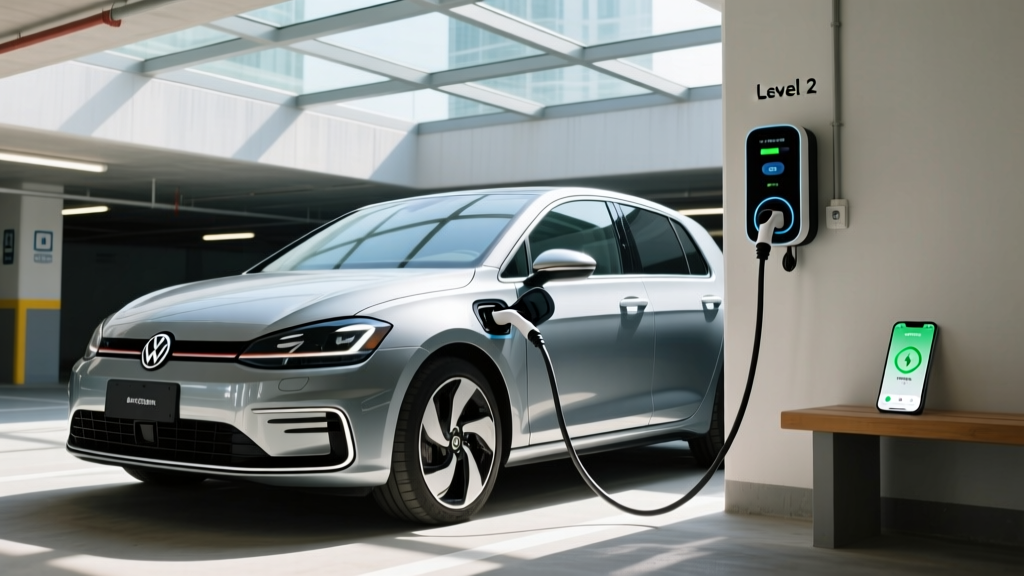
| Level 2 | 240V (home/public AC) | Up to 19.2 kW (Taycan onboard charger) | 40–65 mi/hr | Daily home charging, destination charging |
| DC Fast Charging | 400V–800V public DC stations | Up to 270 kW (Taycan 800V architecture) | 500–900 mi/hr (at peak) | Road trips, rapid replenishment |
The Taycan's 800-volt architecture is a genuine engineering advantage here. While many competitors are limited to 400V and peak around 150–175 kW on DC fast chargers, the Taycan can sustain high charge rates longer. On a 350 kW-capable Electrify America stall (or a 250 kW V3 Tesla Supercharger via adapter), a Taycan with the Performance Battery Plus can charge from 10% to 80% in approximately 22–23 minutes under ideal thermal conditions. That's real-world tested, not just a marketing headline.
Real-World Range Note: The 2025 Taycan 4S with Performance Battery Plus carries an EPA range of up to 277 miles. On highway road trips at 70+ mph, expect roughly 230–250 miles of usable range. In cold weather (below 32°F), plan for a further 15–25% reduction. Always plan DC fast-charge stops with a 20% buffer.
How the Porsche NACS DC Adapter Works
The Porsche NACS DC adapter is a physical connector adapter that converts your Taycan's CCS1 charge port inlet to accept a NACS (Tesla-style) DC fast-charging plug. It handles the pin-protocol translation between the CCS communication standard and the NACS protocol so that the Supercharger stall recognizes the Taycan, initiates a session, and delivers DC current safely.
Key specifications to understand:
- Max DC throughput: Rated for up to 250 kW (matching V3 Supercharger output; the Taycan's 270 kW peak capability on CCS1 stations won't be fully utilized on 250 kW NACS stalls)
- Weight: Approximately 1.5–2 lbs — compact enough to store in the frunk or rear cargo area
- Compatibility: Works with Tesla V3 (250 kW) and V4 Supercharger stalls open to non-Tesla vehicles
- AC charging: The adapter is for DC fast charging only. For Level 2 AC charging at Tesla Destination Chargers or Wall Connectors, a separate NACS-to-J1772 AC adapter is required (sold separately)
One practical limitation: not every Supercharger stall in a given plaza may be enabled for non-Tesla use. Tesla has been progressively opening stalls, but you'll want to check the Tesla app or your vehicle's infotainment system for real-time stall availability before relying on a Supercharger stop in a remote area.
Home Charging Setup: Electrical Requirements and Installation Costs
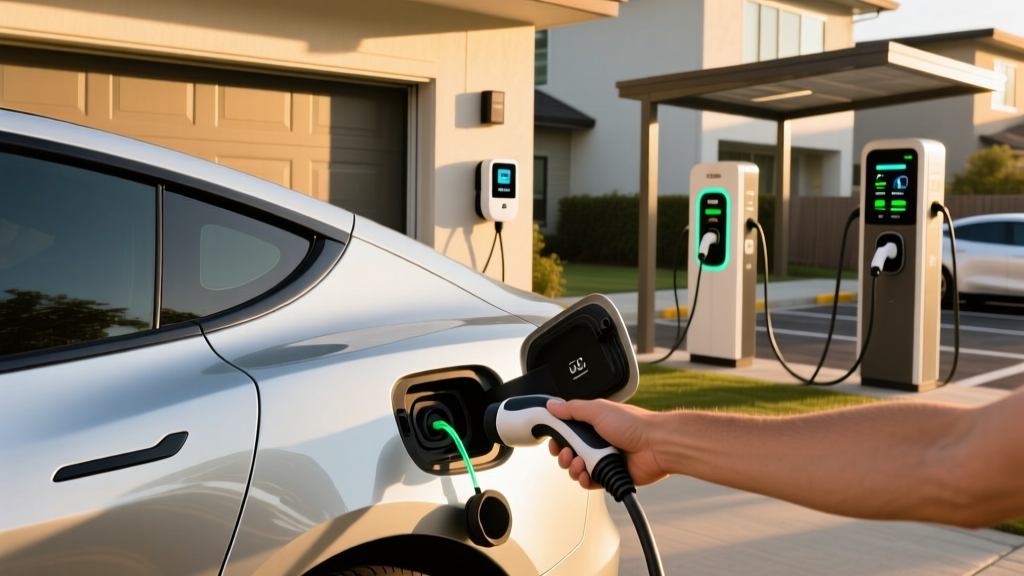
The adapter solves road-trip charging, but most Taycan charging — roughly 80–90% for typical owners — happens at home. Getting your home Level 2 setup right is the single highest-impact decision you'll make as a Taycan owner.
The Taycan's onboard AC charger supports up to 19.2 kW (with the optional upgraded onboard charger) or 9.6 kW (standard). At 19.2 kW, you'll need a 240V circuit rated for at least 100 amps — which most residential panels cannot support without an upgrade. The more practical and common setup is a 48-amp or 60-amp dedicated circuit delivering 11.5 kW to 14.4 kW through a hardwired Level 2 station. That's plenty to fully replenish a Taycan overnight.
What Electrical Upgrades Might You Need?
Older homes (pre-2000 construction) often have 100-amp or 150-amp main service panels. Adding a 60-amp EV circuit to an already-loaded panel may require a panel upgrade to 200 amps, which is the single largest variable in home charging cost. Newer homes with 200-amp panels usually have enough headroom, but a licensed electrician needs to perform a load calculation to confirm.
| Component | Typical Cost Range | Notes |
|---|---|---|
| Level 2 Charger (Equipment) | $400–$1,200 | Varies by brand, power output, cable length, smart features |
| Electrician Labor (Standard Install) | $500–$1,500 | Short run from panel to garage; longer runs cost more |
| Permit & Inspection | $50–$300 | Required in most jurisdictions; varies by municipality |
| Electrical Panel Upgrade (if needed) | $1,500–$4,000 | 200-amp service upgrade; not always required |
| Total (No Panel Upgrade) | $950–$3,000 | Most common scenario for newer homes |
| Total (With Panel Upgrade) | $2,450–$7,000 | Older homes with insufficient service |
The IRS §30D tax credit does not cover home charging equipment directly, but the separate §30C Alternative Fuel Vehicle Refueling Property Credit offers up to $1,000 for residential charger installation — subject to census-tract eligibility and income limits. Check with a tax professional before claiming.
Safety and Code Considerations
Every Level 2 installation should meet these baseline requirements:
- Dedicated circuit: The charger must be on its own breaker — not shared with other appliances
- GFCI protection: Required by NEC 2020+ for EV charging outlets (hardwired installations may have different requirements depending on jurisdiction)
- Outdoor rating: If your charger is installed outside (driveway, exterior wall), the unit must carry a NEMA 4 or IP65 rating for weather resistance
- Wire gauge: A 60-amp circuit typically requires 6 AWG copper wire; a 48-amp circuit needs 8 AWG — your electrician will spec this based on run length and local code
- Smart vs. dumb charger: Smart chargers with Wi-Fi enable scheduling (for off-peak utility rates), energy monitoring, and remote diagnostics — worth the premium for most Taycan owners
Recommended Level 2 Chargers for Porsche Taycan Owners
Here are three Level 2 stations well-matched to the Taycan's charging capability, spanning budget to premium:
ChargePoint Home Flex
- Power Output: Up to 12 kW (50 amps) on a 60-amp circuit
- Connector: J1772 (NACS adapter included in newer versions)
- Cable Length: 23 feet
- Smart Features: Wi-Fi, app scheduling, Alexa integration, energy reports
- Price: ~$550–$650
Best for: Most Taycan owners. Reliable, well-supported app, and flexible amperage settings.
Ford Charge Station Pro (by Enel X Way)
- Power Output: Up to 19.2 kW (80 amps) on a 100-amp circuit
- Connector: J1772 (NACS version available)
- Cable Length: 25 feet
- Smart Features: Wi-Fi, app control, OTA updates, V2H-capable with compatible vehicles
- Price: ~$900–$1,200
Best for: Taycan owners with the optional 19.2 kW onboard charger who want maximum AC speed.
Grizzl-E Smart
- Power Output: Up to 9.6 kW (40 amps) on a 50-amp circuit
- Connector: J1772
- Cable Length: 24 feet
- Smart Features: Wi-Fi, OCPP-compatible, adjustable amperage
- Price: ~$400–$500
Best for: Budget-conscious installations, older panels with limited capacity, outdoor installs (ruggedized housing).
Charging Cost Per Mile: Home vs. Public vs. Gas
One of the strongest ownership arguments for the Taycan over a comparably performing gas sports sedan is fuel cost. Here's how the numbers stack up across common charging scenarios, using a Taycan with the 93.4 kWh Performance Battery Plus (approximately 3.0–3.3 miles per kWh efficiency):
| Scenario | Rate | Cost per kWh | Cost per Mile |
|---|---|---|---|
| Home Off-Peak (Time-of-Use Plan) | $0.08–$0.12/kWh | $0.10 avg | ~$0.03–$0.04 |
| Home Standard Rate | $0.13–$0.18/kWh | $0.15 avg | ~$0.05 |
| Public Level 2 (ChargePoint, EVgo) | $0.25–$0.49/kWh | $0.35 avg | ~$0.11–$0.12 |
| DC Fast Charging (Electrify America) | $0.35–$0.56/kWh | $0.48 avg | ~$0.15–$0.16 |
| Tesla Supercharger (via NACS adapter) | $0.25–$0.40/kWh | $0.32 avg | ~$0.10–$0.11 |
| Gas Sedan (25 MPG combined, $3.50/gal) | — | — | ~$0.14 |
The takeaway: home charging on an off-peak plan delivers fuel costs at roughly one-quarter to one-third of a gasoline equivalent. Even DC fast charging on the road is competitive with or cheaper than premium gasoline. Tesla Superchargers accessed via the NACS adapter tend to be priced at the lower end of public DC rates, which is a meaningful ownership advantage for road-trip-heavy Taycan drivers.
According to fueleconomy.gov, the 2025 Taycan 4S achieves an EPA-rated 83 MPGe combined — a useful benchmark for comparing against ICE alternatives like the BMW M5 or Mercedes-AMG GT, which return 16–19 MPG combined on premium fuel.
Charging Time Examples: What to Expect with a Taycan Battery
Charge times vary with battery size, state of charge, ambient temperature, and station output. Here are realistic benchmarks for the Taycan's two battery configurations:
Performance Battery (79.2 kWh usable)
- Level 1 (120V, 1.4 kW): 0–100% in approximately 57+ hours — emergency use only
- Level 2 (240V, 9.6 kW): 0–100% in approximately 8.5 hours
- Level 2 (240V, 19.2 kW with upgraded onboard charger): 0–100% in approximately 4.5 hours
- DC Fast (270 kW peak, CCS1 station): 10–80% in approximately 20–22 minutes
- DC Fast (250 kW, Tesla Supercharger via NACS adapter): 10–80% in approximately 23–25 minutes
Performance Battery Plus (93.4 kWh usable)
- Level 1 (120V, 1.4 kW): 0–100% in approximately 67+ hours
- Level 2 (240V, 9.6 kW): 0–100% in approximately 10 hours
- Level 2 (240V, 19.2 kW): 0–100% in approximately 5 hours
- DC Fast (270 kW peak, CCS1 station): 10–80% in approximately 22–24 minutes
- DC Fast (250 kW, Tesla Supercharger via NACS adapter): 10–80% in approximately 25–28 minutes
Charging curve reality check: Peak kW is not sustained kW. The Taycan hits its maximum charge rate between roughly 10% and 40% state of charge, then progressively tapers. Above 80% SoC, charge speed drops significantly — often below 50 kW — to protect battery longevity. This is why the industry standard metric is 10–80%, not 0–100%. Plan your road-trip stops around the 10–80% window for the most efficient use of time.
Frequently Asked Questions
How much does it cost to install a home EV charger for a Porsche Taycan?
A standard Level 2 home installation (equipment, electrician labor, and permit) typically costs between $950 and $3,000 if your electrical panel has sufficient capacity. If a panel upgrade to 200-amp service is needed, total costs can range from $2,450 to $7,000. Always get a load calculation from a licensed electrician before committing to a charger size.
How fast will each charging level add range to my Taycan?
Level 1 (120V) adds roughly 3–5 miles per hour. Level 2 (240V) adds 40–65 miles per hour depending on your onboard charger configuration (9.6 kW or 19.2 kW). DC fast charging at peak power can add 500–900 miles per hour of equivalent charging time, though this rate only sustains for a portion of the session before tapering.
Which connector and charger is compatible with my Porsche Taycan?
Model-year 2020–2025 Taycans have a native CCS1 port. For home Level 2 charging, any J1772 connector works. For DC fast charging on CCS networks (Electrify America, EVgo), no adapter is needed. For Tesla Supercharger access, you need the Porsche NACS DC adapter. Model-year 2026+ Taycans feature a native NACS port and will need a CCS1 adapter for non-Tesla DC networks instead.
How much does charging a Taycan cost per mile compared to gas?
Home charging on an off-peak utility plan costs roughly $0.03–$0.04 per mile. Public DC fast charging costs $0.10–$0.16 per mile depending on the network. A comparable gasoline sports sedan at 25 MPG on $3.50/gallon premium fuel costs about $0.14 per mile. Most Taycan owners who charge primarily at home see fuel savings of 60–75% versus a gas equivalent.
What electrical upgrades might I need for a home Taycan charger?
The most common upgrade is ensuring your main service panel has enough spare capacity for a dedicated 48-amp to 60-amp circuit. Homes with 100-amp or 150-amp panels may need a full upgrade to 200-amp service ($1,500–$4,000). You may also need a conduit run if your garage is far from the panel, and older wiring may need to be brought up to current NEC code. A licensed electrician should perform a load calculation before you purchase equipment.
Does the Porsche NACS DC adapter work with Tesla Destination Chargers?
No. The NACS DC adapter is designed for DC fast-charging Supercharger stalls only. Tesla Destination Chargers provide Level 2 AC power and use a different protocol. To charge at a Tesla Destination Charger or Wall Connector, you need a separate NACS-to-J1772 AC adapter.
Will the NACS adapter reduce my Taycan's maximum DC charge speed?
Slightly. The Taycan can accept up to 270 kW on a capable CCS1 station. Current V3 Tesla Superchargers max out at 250 kW, so you lose roughly 20 kW of peak throughput when using the adapter. In practice, this adds approximately 2–3 minutes to a 10–80% session — a marginal difference against the benefit of Supercharger network access.
For the latest Taycan specifications and charging compatibility details, refer to Porsche's official Taycan page and the EPA's fueleconomy.gov Taycan listing.