The Porsche NACS Shift: What Changed and Why It Matters
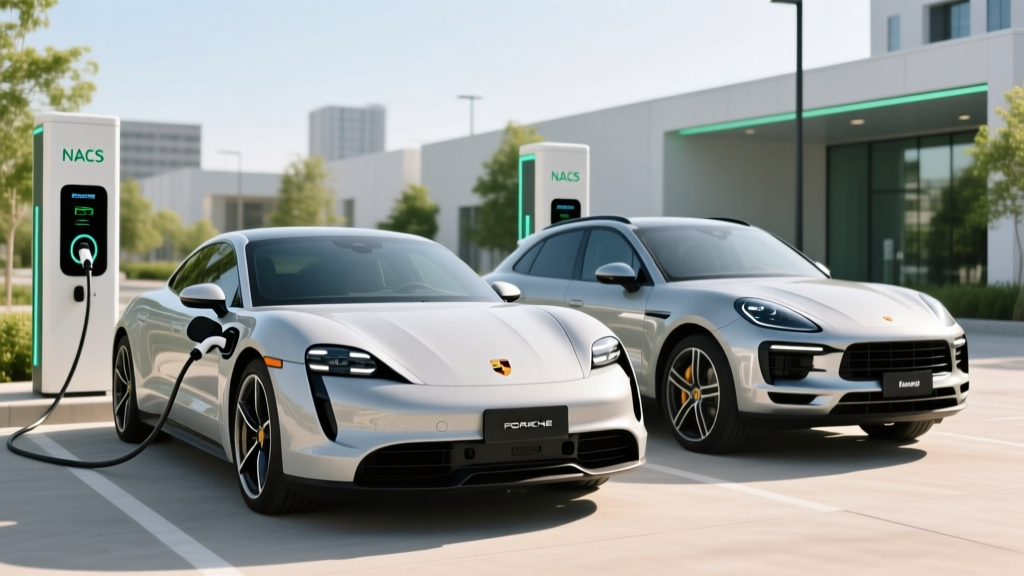
Porsche confirmed that all new EVs sold in North America from model year 2025 onward will use the North American Charging Standard (NACS) connector — the same plug Tesla pioneered and that nearly every major automaker has adopted. For Porsche owners, this means direct access to Tesla's Supercharger network (over 25,000 stalls in the U.S. and Canada as of early 2026) without an adapter, plus a growing ecosystem of third-party NACS chargers from Electrify America, EVgo, and others.
But the transition isn't uniform across the lineup. The 2025 Macan EV launched with a native NACS port. The Taycan, which received a significant refresh for 2025, still ships with CCS1 in some markets and configurations, requiring a CCS-to-NACS adapter for Supercharger access. If you're shopping for a new or used Porsche EV, understanding exactly what plug your vehicle has — and what charging infrastructure supports it — is critical before you sign the paperwork.
This guide covers everything Porsche owners need to know about charging under the NACS standard: charging levels and speeds, home installation costs, connector compatibility across the lineup, real-world cost per mile, and equipment recommendations.
Charging Levels Explained: Speeds in kW and Miles Per Hour
Before we get into Porsche-specific details, let's establish the three charging tiers every EV owner must understand. The critical distinction: kW (kilowatts) measures power — how fast energy flows into the battery. kWh (kilowatt-hours) measures energy — how much the battery stores. Think of kW as the flow rate of a hose and kWh as the size of the bucket.
| Level | Voltage | Max Power (kW) | Miles of Range Added Per Hour | Typical Use Case |
|---|---|---|---|---|
| Level 1 | 120V AC | 1.4 kW | ~3–5 mi/hr | Emergency / overnight trickle (not practical for daily use on large Porsche batteries) |
| Level 2 | 240V AC | 9.6–19.2 kW | ~28–55 mi/hr | Home charging, workplace, hotels, shopping centers |
| DC Fast Charging | 400V–800V DC | Up to 270 kW (Taycan) / 270 kW (Macan EV) | ~180–250 mi in 20 min (10–80%) | Road trips, highway corridors, Superchargers |
The Taycan's 800-volt architecture is one of its defining technical advantages. While most EVs use 400V systems, the Taycan's higher voltage allows it to accept DC fast charging at up to 270 kW (on 800V stalls) with less heat generation and sustained higher power deeper into the charge curve. The Macan EV also uses an 800V platform with similar peak rates.
Real-world caveat: Peak kW is not sustained kW. A Taycan hitting 270 kW at 10% State of Charge (SoC) will taper to roughly 150 kW by 50% SoC and drop further above 80%. Porsche's 10–80% claim of approximately 22 minutes assumes an 800V charger delivering sustained high power. On a 400V Supercharger (most current V3 stalls are 400V/250 kW), expect 10–80% in roughly 25–30 minutes.
Connector Compatibility: NACS, CCS1, and the Adapter Question
Here's where Porsche's transition gets nuanced. Not every Porsche EV on the road in 2026 has the same plug.
| Model / Year | Native Connector | Supercharger Access | Adapter Needed? |
|---|---|---|---|
| 2025–2026 Macan EV | NACS | Direct (native) | No — plug and charge |
| 2025–2026 Taycan (refresh) | CCS1 (some trims/markets) or NACS | Yes (via adapter or native) | CCS-to-NACS adapter if equipped with CCS1 |
| 2020–2024 Taycan | CCS1 | Yes (via adapter) | Yes — Porsche-approved CCS-to-NACS adapter (~$200–$250) |
Porsche has offered a manufacturer-approved CCS-to-NACS adapter for older Taycan models, enabling access to V3 and V4 Superchargers. The adapter weighs about 2 pounds and lives in the frunk. One limitation: when using an adapter on a CCS1-equipped Taycan, charging speed may be limited by the adapter's thermal rating — typically capped around 200–250 kW rather than the car's theoretical 270 kW peak.
For the broader charging ecosystem, here's how connectors break down across networks:
| Network | Connector(s) Available | NACS Availability (2026) |
|---|---|---|
| Tesla Supercharger | NACS | Yes — all stalls |
| Electrify America | CCS1, NACS (expanding) | Growing — many new stations include NACS |
| EVgo | CCS1, CHAdeMO, NACS | Yes — retrofitting existing stalls |
| ChargePoint | CCS1, NACS (newer stations) | Expanding |
The trend is clear: NACS is becoming the default DC fast-charging connector in North America. Tesla's Supercharger network, now open to non-Tesla EVs via the NACS standard, remains the most reliable and geographically comprehensive fast-charging system in the U.S.
Home Charger Installation: Electrical Requirements and Costs
Most Porsche EV owners will do 80–90% of their charging at home on Level 2. Here's what a proper installation requires.
Electrical Requirements
A Level 2 home charger for a Taycan or Macan EV typically runs on a 240V dedicated circuit. The circuit amperage should be rated at 125% of the charger's continuous draw (per National Electrical Code). For example:
- A 48A charger (11.5 kW) requires a 60A breaker
- A 40A charger (9.6 kW) requires a 50A breaker
- A 32A charger (7.7 kW) requires a 40A breaker
The Taycan's onboard AC charger accepts up to 9.6 kW (single-phase, 40A) in standard configuration, or up to 19.2 kW with the optional 19.2 kW onboard charger (available on certain trims). The Macan EV accepts up to 11 kW AC. Matching your charger's output to your car's onboard charger capability prevents overspending on hardware you can't fully utilize.
Panel Upgrade Considerations
Most modern homes have a 200A electrical panel, which can typically support a 60A EV circuit alongside existing loads. However, older homes with 100A service, or homes already running high-draw appliances (electric range, dryer, HVAC, hot tub), may need a panel upgrade to 200A or even 400A. A panel upgrade adds $1,500–$4,000 to the project and may require utility coordination.
Some jurisdictions now allow automated load management systems (like the Emporia Smart Load Management or Span panel integration) that let you add an EV circuit without a full panel upgrade by dynamically throttling the charger when other appliances are running.
| Component | Cost Range | Notes |
|---|---|---|
| Level 2 Charger Equipment | $400–$750 | Hardwired units; plug-in (NEMA 14-50) models slightly less |
| Electrician Labor (standard install) | $600–$1,800 | Depends on run length from panel to garage; longer runs = more conduit and wire |
| Permit & Inspection | $50–$250 | Varies by municipality; some utilities bundle this |
| Panel Upgrade (if needed) | $1,500–$4,000 | 100A → 200A or 200A → 400A; includes utility coordination |
| Total (no panel upgrade) | $1,050–$2,800 | Typical scenario for most 200A-panel homes |
| Total (with panel upgrade) | $2,550–$6,800 | Older homes or high-load homes |
Always hire a licensed electrician familiar with EV charger installations. The work requires a dedicated circuit (never share with another appliance), proper grounding, and in many jurisdictions a GFCI breaker for outdoor installations. The National Electrical Code (NEC) governs these requirements, and local amendments may add further stipulations.
Charging Cost Per Mile: Home vs. Public vs. Gas
One of the strongest ownership arguments for a Porsche EV is fuel cost savings — but the math depends heavily on where and when you charge.
| Scenario | Rate | Cost Per Mile (Taycan, ~3.0 mi/kWh) | Cost Per Mile (Gas Car, 25 MPG, $3.50/gal) |
|---|---|---|---|
| Home — Off-Peak TOU Rate | $0.08–$0.12/kWh | $0.03–$0.04 | $0.14 |
| Home — Standard Residential | $0.14–$0.18/kWh | $0.05–$0.06 | $0.14 |
| Public Level 2 | $0.20–$0.35/kWh | $0.07–$0.12 | $0.14 |
| DC Fast Charging (Supercharger V3) | $0.28–$0.40/kWh | $0.09–$0.13 | $0.14 |
| DC Fast Charging (Electrify America) | $0.35–$0.55/kWh | $0.12–$0.18 | $0.14 |
The Taycan's efficiency averages roughly 2.8–3.2 miles per kWh depending on trim, wheel size, and driving style (per EPA data on fueleconomy.gov). The Macan EV, being an SUV, runs closer to 2.5–2.9 mi/kWh.
Bottom line: If you charge primarily at home on off-peak rates, your per-mile fuel cost is roughly 75% less than a comparable gas Porsche. Even exclusive DC fast charging is competitive with or cheaper than premium gasoline. A Taycan owner driving 12,000 miles/year and charging at home at $0.12/kWh spends roughly $480/year on electricity versus $1,680 on premium gas at $3.50/gallon for a Panamera getting 25 MPG.
Charging Time Examples: What to Expect with Porsche Battery Sizes
The Taycan offers two battery configurations: the standard Performance Battery (79.2 kWh usable, ~83.7 kWh gross) and the larger Performance Battery Plus (93.4 kWh usable, ~100 kWh gross). The Macan EV uses a ~95 kWh usable battery. Here are realistic charge times:
| Scenario | Battery Size | Charger Type | Time (10–80% SoC) |
|---|---|---|---|
| Taycan (Performance Battery) | 79.2 kWh usable | 270 kW DC (800V stall) | ~20–22 minutes |
| Taycan (Performance Battery Plus) | 93.4 kWh usable | 270 kW DC (800V stall) | ~22–25 minutes |
| Taycan (Perf. Battery Plus) | 93.4 kWh usable | 250 kW DC (400V Supercharger V3) | ~25–30 minutes |
| Macan EV | ~95 kWh usable | 270 kW DC (800V stall) | ~21–24 minutes |
| Taycan or Macan EV (any battery) | Any | Level 2, 9.6 kW (40A home charger) | ~8–10 hours (full charge) |
| Taycan (19.2 kW onboard option) | 93.4 kWh usable | Level 2, 19.2 kW (80A charger) | ~4.5–5 hours (full charge) |
Charge curve reality check: The "10–80% in 22 minutes" figure is achievable on an 800V DC fast charger with proper battery preconditioning. The Taycan's thermal management system actively heats or cools the battery when navigation is set to a charger, optimizing the pack for maximum charge acceptance. Without preconditioning — for example, pulling into a charger after city driving in cold weather — your initial charge rate may be significantly lower, adding 5–10 minutes to the session.
Above 80% SoC, charging slows dramatically to protect battery longevity. Going from 80% to 100% on DC fast charging can take as long as the 10–80% portion. For daily driving, charging to 80% is recommended; save 100% fills for road trip mornings.
Equipment Recommendations: Best Home Chargers for Porsche NACS
With NACS now the standard, home charger selection has simplified. Here are top picks for Porsche owners, all with NACS connectors native or available:
ChargePoint Home Flex (NACS)
- Power Output: Up to 12 kW (50A) — adjustable down to 16A
- Connector: Native NACS
- Cable Length: 23 feet
- Smart Features: Wi-Fi, app scheduling, Alexa integration, energy tracking
- Installation: Hardwired or NEMA 14-50 plug
- Price: ~$550–$650
Best for: Most Porsche owners. The 50A output covers the Taycan's 9.6 kW onboard charger and provides flexibility for future vehicles.
Tesla Wall Connector (NACS)
- Power Output: Up to 11.5 kW (48A)
- Connector: Native NACS
- Cable Length: 24 feet
- Smart Features: Wi-Fi, over-the-air updates, power sharing (multiple units on one circuit), load management
- Installation: Hardwired only
- Price: ~$425–$475
Best for: Porsche owners who also use Superchargers frequently and want ecosystem consistency. The power-sharing feature is ideal for two-EV households.
Emporia Vue Level 2 EV Charger
- Power Output: Up to 11.5 kW (48A)
- Connector: Native NACS
- Cable Length: 24 feet
- Smart Features: Integrated with Emporia Vue energy monitoring panel, solar-aware scheduling, TOU rate optimization
- Installation: Hardwired or plug-in
- Price: ~$400–$500
Best for: Homes with solar panels or time-of-use electricity rates. The whole-home energy monitoring integration is unmatched.
Porsche Mobile Charger Connect (NACS update)
- Power Output: Up to 9.6 kW (40A)
- Connector: NACS (updated version for 2025+ models)
- Cable Length: ~16 feet
- Smart Features: Porsche app integration, charge scheduling, departure timer sync
- Installation: Plug-in (NEMA 14-50) or hardwired with optional dock
- Price: Included with vehicle or ~$700–$800 replacement
Best for: Owners who want OEM integration and don't need more than 9.6 kW. Note: if you spec'd the 19.2 kW onboard charger, this unit won't utilize its full capability.
Safety, Code, and Installation Best Practices
A Level 2 charger installation is a significant electrical project. Cutting corners creates fire risk and may void your homeowner's insurance. Here's what to insist on:
- Dedicated circuit: Your EV charger must have its own breaker — never shared with a dryer, range, or HVAC system.
- GFCI protection: Required by NEC 2020+ for outdoor receptacles and recommended for garage installations in many jurisdictions. Hardwired units may have GFCI built into the charger itself.
- Outdoor rating: If your charger is installed outside (driveway, carport), the unit must carry a NEMA 4 or IP65 rating for weather resistance. All four recommendations above qualify.
- Wire gauge: Your electrician will size wire based on circuit amperage and run length. A 60A circuit typically requires 6 AWG copper (or 4 AWG aluminum) for runs under 50 feet; longer runs may need thicker wire to prevent voltage drop.
- Permit and inspection: Most municipalities require an electrical permit for EV charger installation. The inspection ensures code compliance and protects your home's insurability.
- Utility rebates: Many utilities offer $250–$1,000 rebates for Level 2 charger installation, particularly if you agree to a managed-charging program that allows the utility to throttle your charger during peak demand. Check your local utility's EV programs before installing.
Frequently Asked Questions
How much does it cost to install a home EV charger for my Porsche?
A standard Level 2 installation in a home with a 200A panel runs $1,050–$2,800 including equipment ($400–$750), electrician labor ($600–$1,800), and permit ($50–$250). If your home needs a panel upgrade from 100A to 200A, add $1,500–$4,000, bringing the total to $2,550–$6,800. Get at least two quotes from licensed electricians, and confirm they have specific EV charger installation experience.
How fast will each charging level add range to my Taycan or Macan EV?
Level 1 (120V) adds roughly 3–5 miles per hour — essentially unusable for a Porsche's large battery. Level 2 (240V, 40A/9.6 kW) adds approximately 28–32 miles per hour for the Taycan, enough for a full overnight charge. DC fast charging at 270 kW adds roughly 180–250 miles in a 20-minute session (10–80% SoC), depending on battery size and charger voltage.
Which connector does my Porsche EV use, and do I need an adapter?
The 2025–2026 Macan EV uses a native NACS connector — no adapter needed for Superchargers or NACS public chargers. The Taycan's connector depends on model year and market: 2020–2024 Taycans have CCS1 and require a Porsche-approved CCS-to-NACS adapter (~$200–$250) for Supercharger access. Check your specific vehicle's charge port before purchasing an adapter. CCS1 chargers at Electrify America and EVgo work directly with older Taycans.
How much does charging a Porsche EV cost per mile compared to gas?
Charging at home on off-peak electricity ($0.08–$0.12/kWh) costs roughly $0.03–$0.04 per mile in a Taycan — about 75% less than a gas Porsche at $0.14/mile (25 MPG, $3.50/gallon premium). Even public DC fast charging at $0.28–$0.40/kWh costs $0.09–$0.13 per mile, still competitive with or cheaper than premium gasoline. Over 12,000 annual miles, home charging saves roughly $1,000–$1,200 versus gas.
What electrical upgrades might I need for a home charger?
If your home has a 200A electrical panel with available capacity, you likely need only a new dedicated 50A or 60A breaker and a wire run to your garage or parking spot. If your panel is 100A (common in homes built before the 1990s) or already heavily loaded, you may need a panel upgrade to 200A or 400A ($1,500–$4,000). An electrician can perform a load calculation to determine your panel's available capacity. Automated load management systems offer an alternative to full panel upgrades in some cases.
Can I use Tesla Superchargers with my older CCS1-equipped Taycan?
Yes. Porsche offers a manufacturer-approved CCS-to-NACS adapter that enables Supercharger access for CCS1-equipped Taycans (2020–2024 models). The adapter supports DC fast charging, though peak rates may be limited to roughly 200–250 kW due to the adapter's thermal constraints. You'll use the Tesla app or your Porsche Connect app to initiate and pay for sessions. Porsche's official site lists compatible adapter part numbers and approved Supercharger locations.
Should I charge my Porsche EV to 100% every day?
For daily driving, Porsche recommends setting the charge limit to 80–85% to maximize long-term battery health. The Taycan and Macan EV use NMC (nickel manganese cobalt) battery chemistry, which degrades faster when held at high SoC for extended periods. Reserve 100% charges for road trips or days when you need maximum range. Porsche's battery warranty covers 8 years/100,000 miles with a capacity retention threshold — typically 70% of original capacity, per manufacturer specifications.