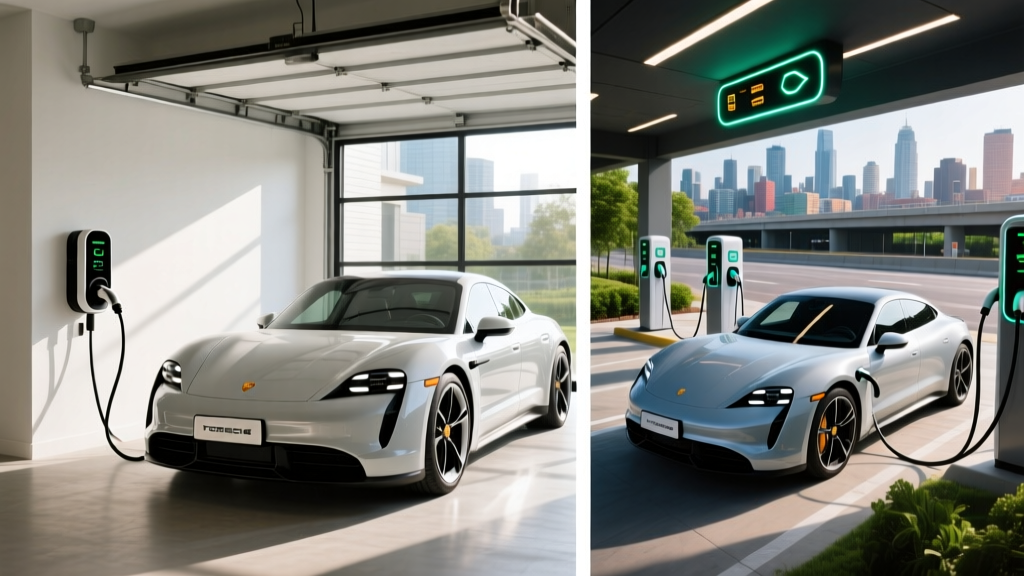
If you own a Porsche Taycan or are eyeing the all-electric Macan, understanding the Porsche Charging Service ecosystem is essential for maximizing your ownership experience. Porsche's electric lineup boasts some of the fastest charging architectures in the industry — the Taycan's 800-volt system can peak at up to 320 kW on compatible DC fast chargers — but extracting that performance requires knowing which networks, connectors, and home setups actually deliver. This guide breaks down every layer of charging a Porsche EV, from your garage outlet to cross-country road trips, with the exact numbers you need to plan and budget.
Understanding Porsche Charging Service: What It Actually Covers
Porsche Charging Service is the brand's integrated access platform that routes Taycan and electric Macan drivers to multiple public charging networks through a single interface — the My Porsche app or the vehicle's built-in navigation. Rather than building its own proprietary network like Tesla, Porsche partners with Electrify America, EVgo, and other providers to give owners access to tens of thousands of public chargers across the U.S. New Taycan buyers typically receive three years of complimentary charging through this partnership, currently valued at roughly $1,500–$2,000 in electricity depending on usage patterns.
The service handles authentication, billing, and route planning with integrated preconditioning — meaning your Taycan will warm or cool its battery en route to a DC fast charger so you hit peak charge rate upon arrival. This is critical: without preconditioning, a cold battery might accept only 50–75 kW instead of the 270–320 kW the Taycan is capable of.
Charging Levels Explained: Speeds, kW, and Real-World Range Added
Before we get into Porsche-specific numbers, let's establish the three charging tiers every EV owner must understand. Remember: kW (kilowatts) measures power — how fast energy flows into your battery. kWh (kilowatt-hours) measures energy — the total capacity of your battery, like gallons in a fuel tank.
| Level | Voltage / Amperage | Max Power (kW) | Miles of Range Added Per Hour | Typical Use Case |
|---|---|---|---|---|
| Level 1 (120V) | 120V / 12A | 1.4 kW | ~3–4 mi/hr | Emergency top-ups, overnight trickle |
| Level 2 (240V) | 240V / 48A | 11.5 kW (Taycan onboard limit) | ~30–35 mi/hr | Home daily charging, workplace |
| DC Fast Charging | 800V architecture | Up to 320 kW (2025+ Taycan) | ~180–220 mi in 10 min (peak) | Road trips, rapid top-ups |
A few real-world caveats: The Taycan's Level 2 onboard charger maxes out at 11.5 kW (some older model years at 9.6 kW), so even if you install a 19.2 kW home charger, the car will only draw 11.5 kW. On DC fast charging, the 320 kW peak applies only to the refreshed 2025+ Taycan on chargers capable of 800V+ output. Earlier Taycan models (2020–2024) peak at 270 kW. Sustained rates are lower — expect an average of roughly 175–200 kW across a 10–80% session on a 350 kW Electrify America station.
• Level 1 (1.4 kW): 0–100% in ~60 hours — impractical for daily use
• Level 2 (11.5 kW): 0–100% in ~7.5 hours; 10–80% in ~5 hours
• DC Fast (320 kW peak, 2025+): 10–80% in approximately 18 minutes
• DC Fast (270 kW peak, 2020–2024): 10–80% in approximately 22–23 minutes
Note: Charge rate tapers significantly above 80%. Charging from 80–100% on DC fast can take as long as 10–80%. Always plan to charge to 80% on road trips for time efficiency.
Home Charger Installation: Electrical Requirements, Costs, and Panel Upgrades
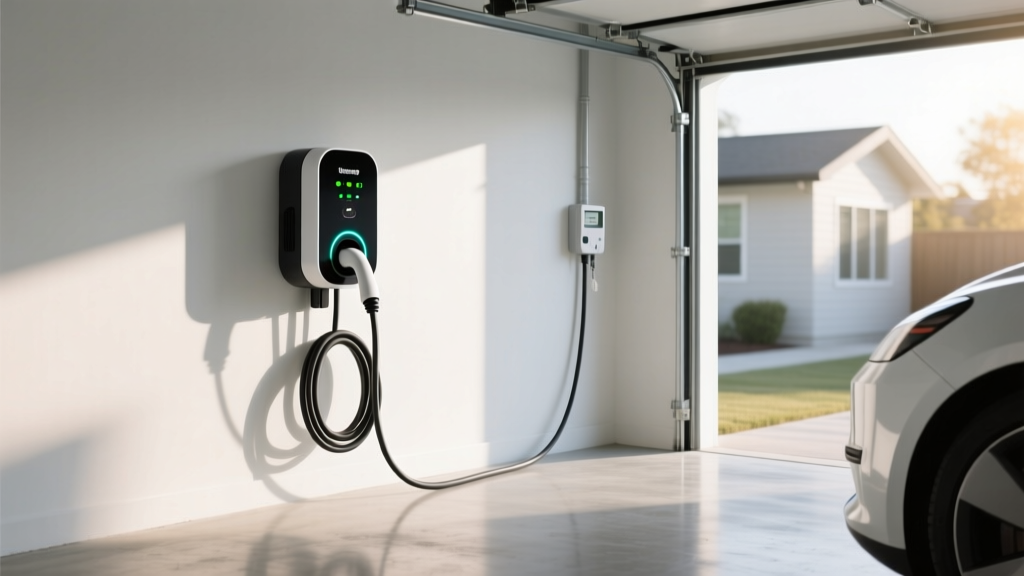
Home Level 2 charging is where the vast majority of Porsche owners will replenish their batteries. To take full advantage of the Taycan's 11.5 kW onboard charger, you need a 240-volt circuit rated for at least 60 amps (which delivers 48 amps continuous to the vehicle, per the National Electrical Code's 80% rule for continuous loads).
Here's what that looks like in practice:
- Circuit: Dedicated 60-amp, 240V breaker
- Wire: 6 AWG copper (or 4 AWG aluminum) run from panel to charger location
- Outlet vs. hardwired: Hardwired is preferred for 48A+ circuits (NEMA 14-50 outlets are rated for 50A max and can overheat at sustained 48A draw — many electricians now recommend hardwiring for anything above 40A continuous)
- Panel capacity: Your electrical panel must have spare capacity. A 200-amp panel in a modern home usually accommodates a 60A EV circuit. Older homes with 100-amp or 150-amp service may require a panel upgrade.
| Component | Low End | High End | Notes |
|---|---|---|---|
| Level 2 Charger Equipment | $400 | $750 | Porsche Mobile Charger Connect or quality third-party (ChargePoint, Emporia, Wallbox) |
| Electrician Labor (standard install) | $600 | $1,500 | Depends on run length, wall type, conduit needs |
| Electrical Permit | $50 | $250 | Varies by municipality; required by code in most jurisdictions |
| Panel Upgrade (if needed) | $1,500 | $4,000 | 100A→200A upgrade; not always required |
| Total (no panel upgrade) | $1,050 | $2,500 | Most homes with 200A service |
| Total (with panel upgrade) | $2,550 | $6,500 | Older homes with 100A/150A service |
Panel upgrade reality check: Roughly 20–30% of homes built before 1990 have 100-amp service, which often cannot support a 60A EV circuit alongside existing loads (HVAC, electric range, dryer). A licensed electrician will perform a load calculation per NEC Article 220 to determine if your panel can handle the addition. If not, budget for the upgrade — and check with your utility, as some offer rebates covering $500–$1,000 of panel-upgrade costs when paired with EV charger installation.
Which Connector Does Your Porsche EV Use?
This is where the North American charging landscape gets complicated, and Porsche owners sit at a transition point.
| Model / Year | AC Level 2 Connector | DC Fast Connector | NACS Adapter Needed? |
|---|---|---|---|
| Taycan (2020–2024) | J1772 | CCS1 | Yes, for Tesla Supercharger access |
| Taycan (2025+) | J1772 / NACS (market-dependent) | CCS1 / NACS (market-dependent) | Check model-year specs; Porsche began NACS transition |
| Macan Electric (2024+) | J1772 / NACS | CCS1 / NACS | Varies by build date; confirm with dealer |
As of 2025–2026, Porsche is in the process of adopting the NACS (North American Charging Standard) — Tesla's connector — across its lineup, following the broader industry shift. However, many Taycan models on the road and in dealer inventory still use CCS1 for DC fast charging. If your Porsche has CCS1, you can access Tesla Superchargers using a NACS-to-CCS adapter (approximately $200–$250 from approved manufacturers). Porsche has also offered a complimentary adapter program for some model years — check with your dealer.
For home Level 2 charging, the J1772 connector remains universal across all non-Tesla EVs, and most home chargers ship with J1772 plugs. If you also own a Tesla or plan to, consider a dual-connector home charger or keep a J1772-to-NACS adapter on hand.
Charging Cost Per Mile: Home vs. Public vs. Gas
One of the strongest ownership arguments for the Taycan is fuel-cost savings, though the gap narrows when you rely heavily on public DC fast charging. Here's how the math works out for a Taycan 4S, which averages roughly 2.0 kWh per mile (or about 50 MPGe combined, per fueleconomy.gov data):
| Charging / Fueling Scenario | Rate | Cost Per Mile (Taycan) | Cost Per Mile (Panamera, 21 MPG combined) |
|---|---|---|---|
| Home Level 2 (off-peak utility rate) | $0.12/kWh | $0.024 | — |
| Home Level 2 (average U.S. rate) | $0.17/kWh | $0.034 | — |
| Public Level 2 (ChargePoint, etc.) | $0.25–$0.39/kWh | $0.05–$0.078 | — |
| DC Fast Charging (Electrify America) | $0.43–$0.56/kWh | $0.086–$0.112 | — |
| Premium Gasoline ($4.10/gal) | — | — | $0.195 |
At home off-peak rates, the Taycan costs roughly 88% less per mile than a gasoline Panamera. Even on the most expensive DC fast chargers, you're still paying roughly half what a premium-gas Porsche costs per mile. The three years of complimentary Electrify America charging included with new Taycan purchases effectively makes road-trip charging free during that period — a meaningful savings for frequent travelers.
To check current electricity rates in your area, the U.S. Energy Information Administration publishes state-by-state average residential rates monthly.
Recommended Home Chargers for Porsche EVs
Given the Taycan's 11.5 kW onboard charging limit, you want a Level 2 unit that delivers at least 48 amps (11.5 kW at 240V). Here are three options well-suited to Porsche owners, ranging from the OEM solution to value-oriented smart chargers:
Porsche Mobile Charger Connect
Power Output: Up to 9.6 kW (40A) — note: this does NOT max out the Taycan's 11.5 kW capability
Connector: J1772 (CCS combo not included for DC)
Cable Length: 23 ft
Smart Features: Wi-Fi, My Porsche app integration, solar-charging optimization, usage tracking
Price: ~$700 (often included with new Taycan purchase)
Verdict: OEM integration is excellent, but 40A output means slightly slower home fills. Adequate for overnight charging (8+ hours covers a full battery), but not the fastest option available.
ChargePoint Home Flex
Power Output: Up to 12 kW (50A) — fully utilizes the Taycan's 11.5 kW limit
Connector: J1772 (25-ft cable)
Cable Length: 25 ft
Smart Features: Wi-Fi, ChargePoint app, Alexa integration, flexible amperage settings (16A–50A via DIP switch), Energy Star certified
Price: ~$550–$650
Verdict: Best balance of output, smart features, and reliability. The adjustable amperage is ideal if your panel can't support a full 60A circuit — you can dial it down to 32A or 40A without buying different hardware.
Emporia Vue 2 + EV Charger
Power Output: Up to 11.5 kW (48A)
Connector: J1772 (24-ft cable)
Cable Length: 24 ft
Smart Features: Whole-home energy monitoring (with Vue panel sensors), solar integration, scheduled charging, app control
Price: ~$400–$500 (charger); ~$100 additional for Vue energy monitor
Verdict: Best value with energy-monitoring integration. If you're considering solar or want granular visibility into how your EV charging affects your electricity bill, this is the smartest budget option.
For all three chargers, hardwired installation on a dedicated 60A circuit is recommended over a NEMA 14-50 plug for the Taycan's sustained high-amperage draws. Hardwiring eliminates the plug as a potential failure point and is required by some local codes for circuits above 40A continuous.
Safety, Electrical Code, and Installation Best Practices
EV charging is a continuous high-load application — your charger will run at near-maximum draw for 5–8 hours at a time. This makes proper installation non-negotiable:
- Dedicated circuit: Your Level 2 charger must be on its own dedicated breaker — never shared with other appliances. A 60A breaker serves a 48A continuous load.
- GFCI protection: The 2020 NEC requires GFCI protection for outdoor EV outlets. Hardwired indoor installations may be exempt depending on jurisdiction, but many inspectors now require GFCI breakers for all EV circuits. Budget $80–$150 for a GFCI breaker if your panel requires one.
- Outdoor rating: If your charger is mounted outside, ensure it carries a NEMA 4 or NEMA 4X rating (weather and hose-directed water resistant). All three chargers above carry appropriate outdoor ratings.
- Wire gauge: 6 AWG copper for runs up to 50 feet; 4 AWG for longer runs to prevent voltage drop. Your electrician will calculate this based on actual run length.
- Permit and inspection: Most municipalities require an electrical permit and post-installation inspection for EV charger circuits. Skipping this can void your homeowner's insurance coverage for electrical fires and may cause issues at home sale. Permit costs typically range from $50 to $250.
Always hire a licensed electrician experienced with EV charger installations. Ask for their load calculation documentation and ensure they pull the required permits. The National Fire Protection Association publishes the NEC standards that govern these installations.
Public Charging on Road Trips: Maximizing the Taycan's 800V Architecture
The Taycan's 800-volt battery architecture is its most significant charging advantage. While most EVs use 400V systems that peak at 150–200 kW, the Taycan can accept 270–320 kW on compatible chargers, translating to a 10–80% charge in roughly 18–23 minutes depending on model year and charger capability.
To actually achieve these speeds, you need:
- A charger rated for 350 kW or higher — Electrify America's newest stations and some EVgo HyperFast locations support this. Standard 150 kW chargers will cap your Taycan at ~130–150 kW regardless of its capability.
- Battery preconditioning enabled — Navigate to the charger using the Taycan's built-in navigation or the My Porsche app, and the car will automatically begin thermal management 15–30 minutes before arrival.
- State of Charge below 30% on arrival — The charge curve peaks early. Arriving at 10–20% SoC yields the fastest average rate. Arriving at 50%+ means you'll see significantly lower peak kW.
- Warm ambient conditions — Battery temperature matters. In sub-40°F weather, expect charge rates 15–25% lower than summer rates, even with preconditioning.
Through Porsche Charging Service, the My Porsche app shows real-time charger availability, pricing, and estimated charge times for partner stations. On a typical 300-mile highway trip (say, Los Angeles to Las Vegas), a Taycan 4S with an EPA-estimated 246 miles of range will need one charging stop of approximately 20 minutes at a 350 kW station — competitive with a gas stop and bathroom break.
Frequently Asked Questions
How much does it cost to install a home EV charger for my Porsche Taycan?
Expect $1,050–$2,500 for a standard installation (equipment, electrician labor, and permit) if your home already has a 200-amp electrical panel. If you need a panel upgrade from 100A to 200A, add $1,500–$4,000. The Porsche Mobile Charger Connect (~$700) is often included with a new Taycan, which reduces equipment cost to zero if you use the OEM unit.
How fast will each charging level add range to my Taycan?
Level 1 (120V) adds roughly 3–4 miles per hour — essentially useless for daily driving. Level 2 (240V, 48A) adds approximately 30–35 miles per hour, fully replenishing the battery overnight in about 7.5 hours. DC fast charging at a 350 kW station adds roughly 180–220 miles in a 10-minute window during peak charge rate (10–40% SoC).
Which connector does my Porsche use, and do I need an adapter?
Model years 2020–2024 use CCS1 for DC fast charging and J1772 for Level 2. Porsche began transitioning to NACS (Tesla's connector) for 2025+ models. If your Taycan has CCS1 and you want access to Tesla Superchargers, you'll need a NACS-to-CCS adapter (~$200–$250). Check with your dealer — Porsche has offered complimentary adapters for some model years.
How much does charging cost per mile compared to gas?
At average U.S. residential electricity rates ($0.17/kWh), the Taycan costs about $0.034 per mile. A comparable gasoline Porsche Panamera at 21 MPG combined with premium fuel at $4.10/gallon costs about $0.195 per mile — nearly 6× more. Even on the most expensive public DC fast chargers ($0.56/kWh), the Taycan costs roughly $0.112/mile, still significantly cheaper than gas.
What electrical upgrades might I need for a home charger?
The most common upgrade is a panel replacement from 100-amp to 200-amp service, needed in roughly 20–30% of older homes. Your electrician will perform a NEC Article 220 load calculation. Other potential upgrades include: running a new 240V circuit from the panel (standard), adding a sub-panel if your main panel is full ($500–$1,500), or upgrading your utility service drop if even 200A is insufficient (rare, but possible in all-electric homes with heat pumps — $3,000–$8,000).
Is Porsche Charging Service free?
New Taycan and Macan Electric buyers typically receive three years of complimentary DC fast charging through Electrify America via Porsche Charging Service. After the complimentary period expires, you'll pay Electrify America's standard rates (typically $0.43–$0.56/kWh for Guest pricing, less with a subscription plan). The My Porsche app and navigation integration remain free indefinitely.
Can I charge my Porsche Taycan at Tesla Superchargers?
Yes, with an adapter. If your Taycan has a CCS1 port, a NACS-to-CCS adapter enables access to Tesla Superchargers. Tesla's network has expanded NACS access to non-Tesla vehicles through their "Open Supercharging" program, though not all stations are enabled. Check Tesla's in-app map for compatible locations. Porsche's transition to native NACS ports on newer models will eventually eliminate the adapter requirement.