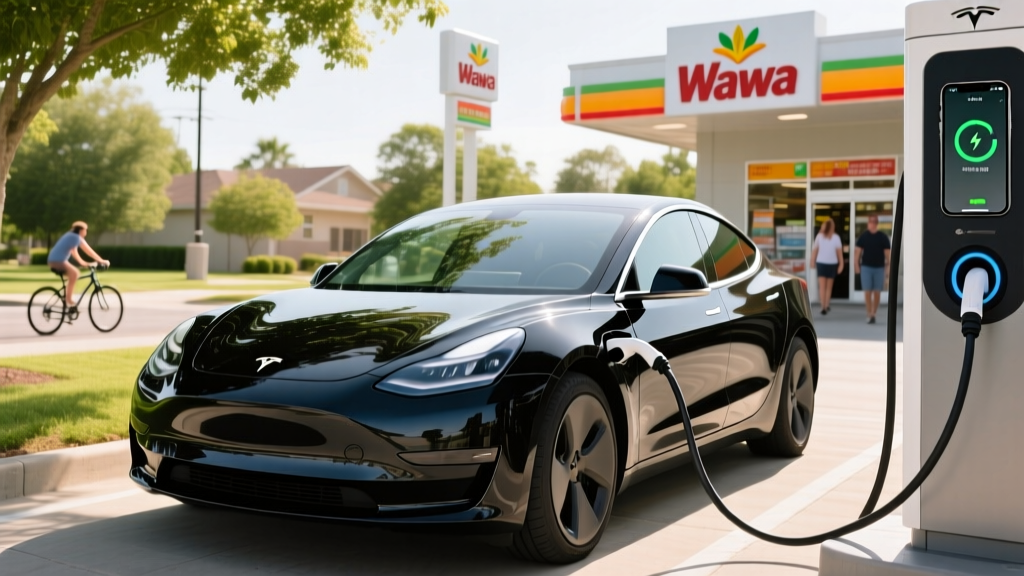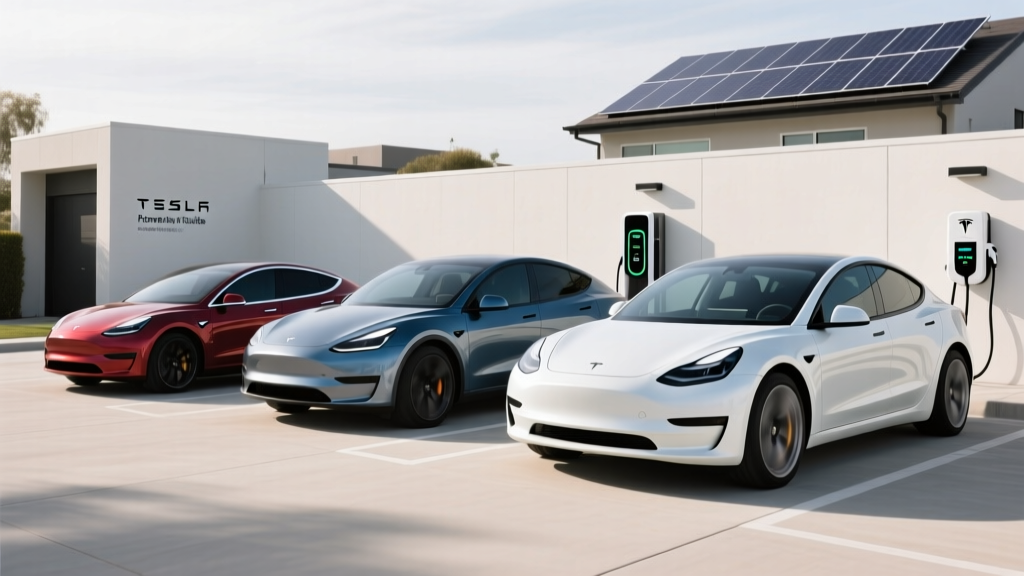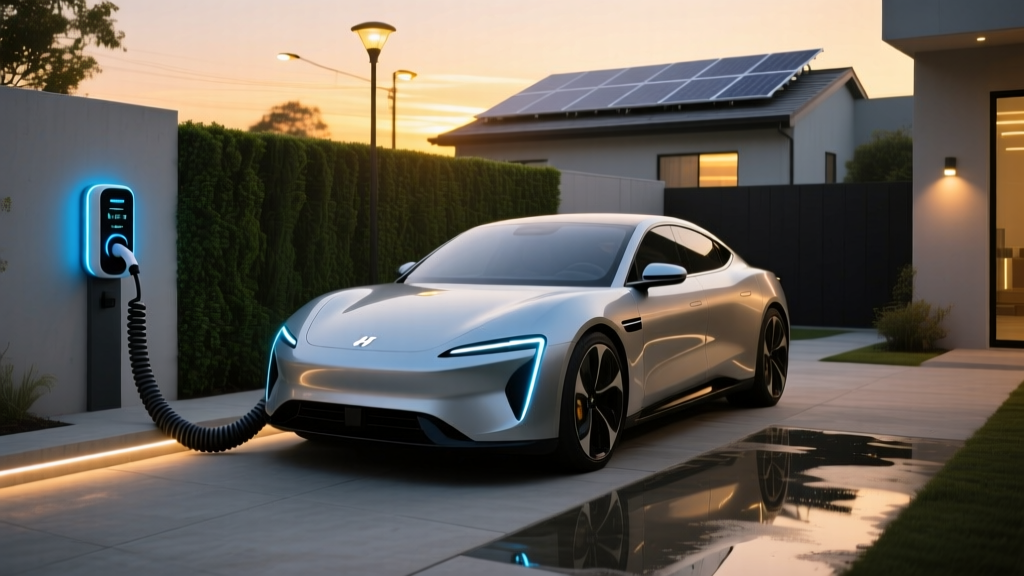
If you've spent years wringing 240 horsepower out of a 3.8L supercharged V6 in a Pontiac GTP, the jump to an electric vehicle can feel like stepping onto another planet. No supercharger whine, no 5,000-RPM shifts — just instant torque and a completely new fueling paradigm. The biggest adjustment isn't the driving; it's understanding how to "refuel" an EV at home, in public, and on road trips. This guide translates everything you need to know into concrete numbers: kW, kWh, dollars, and minutes.
Charging Levels Explained: Level 1, Level 2, and DC Fast Charging
EV charging happens at three distinct levels. The single most important distinction to internalize: kW (kilowatts) measures power — how fast energy flows into the battery. kWh (kilowatt-hours) measures energy — the total capacity of the battery, like gallons in a gas tank. A 75 kWh battery charged at 11.5 kW takes roughly 6.5 hours from empty to full. Here's how each level breaks down in 2026:
| Level | Voltage / Amperage | Max Power (kW) | Miles of Range Added per Hour | Best Use Case |
|---|---|---|---|---|
| Level 1 | 120V / 12A | 1.4 kW | 3–5 miles | Overnight top-ups, PHEVs, low-mileage drivers |
| Level 2 | 240V / 32A–48A | 7.7–11.5 kW | 25–44 miles | Daily home charging, most BEV owners |
| DC Fast Charging | 400V–800V DC | 50–350 kW | 150–1,200+ miles (equivalent per hour) | Road trips, quick 10–80% top-ups |
How Much Does It Cost to Install a Home EV Charger?
This is the question every new EV owner asks, and the answer varies enormously based on your home's electrical panel. A straightforward install on a modern 200-amp panel with short conduit runs might cost under $800. An older home — like one built around the same era as your 2004 GTP — may need a panel upgrade adding $1,500–$3,500. Here's a realistic breakdown for a hardwired 48-amp (11.5 kW) Level 2 charger in 2026:
| Component | Simple Install (Modern Panel, Short Run) | Complex Install (Panel Upgrade, Long Run) |
|---|---|---|
| Level 2 Charger Equipment | $350–$700 | $350–$700 |
| Electrician Labor (2–6 hours) | $300–$600 | $800–$1,500 |
| Permit & Inspection | $50–$150 | $100–$300 |
| Electrical Panel Upgrade (if needed) | $0 | $1,500–$3,500 |
| Conduit, Wiring, Misc. Materials | $50–$150 | $200–$500 |
| Total Estimated Range | $750–$1,600 | $2,950–$6,500 |
Electrical Requirements and Panel Considerations
A 48-amp continuous-draw Level 2 charger requires a 60-amp dedicated circuit (the National Electrical Code requires circuits to be rated at 125% of continuous load). Your home's electrical panel must have enough spare capacity to accommodate this. A licensed electrician will perform a load calculation per NEC Article 220. If your panel is 100-amp — common in homes built before the 1990s — an upgrade to 200-amp service is almost certainly required. Always hire a licensed electrician and pull a permit; unpermitted work can void homeowner's insurance and create fire risk.
Connector Compatibility: NACS, CCS1, and CHAdeMO
The connector landscape shifted dramatically between 2023 and 2026. Tesla's North American Charging Standard (NACS) has been adopted by Ford, GM, Rivian, Volvo, Hyundai, Kia, and most other major automakers. CCS1 (Combined Charging System) remains on many 2023–2025 models and is still widely supported at public stations. CHAdeMO is effectively legacy, found primarily on older Nissan Leafs.
| Connector | Brands Using It (2026) | Public Network Support | Adapter Needed? |
|---|---|---|---|
| NACS (Tesla) | Tesla, Ford, GM, Rivian, Volvo, Polestar, Hyundai, Kia, BMW (2025+), Toyota (2025+) | Tesla Supercharger (17,000+ stalls), Electrify America, EVgo, ChargePoint | CCS-to-NACS adapter for older CCS vehicles (~$150–$200) |
| CCS1 | VW (pre-2026), some Stellantis models, older BMW, Mercedes (2023–2024) | Electrify America, EVgo, ChargePoint, Ionity (EU) | NACS-to-CCS adapter for Tesla Superchargers (some OEMs provide free) |
| CHAdeMO | Nissan Leaf (legacy), Mitsubishi Outlander PHEV (older) | Limited and shrinking; Electrify America still supports some stalls | No practical adapter to NACS/CCS for DC fast charging |
If you're buying a new EV in 2026, NACS is the connector to choose unless you have a specific reason to retain CCS. For Level 2 home charging, all vehicles use a J1772 inlet (or NACS, which handles AC natively on Teslas), and every home charger ships with the correct connector or includes an adapter.
Charging Cost per Mile: EV vs. Gas (Goodbye, Supercharged V6)
The Pontiac GTP Supercharged returned roughly 18 MPG city / 28 MPG highway per fueleconomy.gov. At $3.40/gallon, that's about $0.15–$0.19 per mile. Let's compare that to charging a typical 2026 EV with a 75 kWh battery and 3.5 miles per kWh efficiency (roughly 263 EPA miles of range):
| Scenario | Rate / Price | Cost per Mile | Annual Cost (12,000 mi) |
|---|---|---|---|
| Home Level 2 (off-peak utility rate) | $0.08–$0.13/kWh | $0.023–$0.037 | $276–$444 |
| Home Level 2 (standard residential rate) | $0.14–$0.18/kWh | $0.040–$0.051 | $480–$612 |
| Public Level 2 (network pricing) | $0.25–$0.40/kWh | $0.071–$0.114 | $852–$1,368 |
| DC Fast Charging (public) | $0.30–$0.55/kWh | $0.086–$0.157 | $1,032–$1,884 |
| Pontiac GTP Supercharged (gas, 23 MPG combined) | $3.40/gallon | $0.148 | $1,776 |
Charging Time Examples: How Long Does a Session Actually Take?
Charging time depends on battery size (kWh), charger power (kW), and the charge curve — the rate at which charging slows as the battery fills. Here are real-world estimates for common 2026 battery sizes, assuming the battery is preconditioned:
| Battery Size | Example Vehicles | Level 2 (11.5 kW) | 150 kW DC Fast | 250–350 kW DC Fast |
|---|---|---|---|---|
| 60 kWh (usable) | Chevrolet Equinox EV, Volvo EX30 | ~3.6 hours | ~28 minutes | ~20 minutes |
| 75 kWh (usable) | Tesla Model Y, Hyundai Ioniq 5 | ~4.5 hours | ~32 minutes | ~18 minutes |
| 100 kWh (usable) | Ford F-150 Lightning Ext. Range, Rivian R1S | ~6.1 hours | ~42 minutes | ~25 minutes |
Why charging slows above 80%: Lithium-ion cells accept charge fastest at low SoC. As cells approach full capacity, the Battery Management System (BMS) reduces current to prevent lithium plating and thermal stress. A session from 80–100% can take as long as 10–80%. This is why road-trip strategy focuses on 10–80% charges — plug in, stretch your legs, and unplug before the taper.
Level 2 Home Charger Equipment Picks for 2026
After testing dozens of units across multiple homes and EVs, here are three chargers that consistently deliver reliability, smart features, and correct power output for daily use:
ChargePoint Home Flex (NACS or J1772)
- Power Output: Up to 11.5 kW (48A) on a 60A circuit; adjustable down to 16A for smaller circuits
- Cable Length: 23 feet
- Smart Features: Wi-Fi, app scheduling, utility demand-response integration, Alexa support
- Connector: Available in NACS or J1772; NACS-to-J1772 adapter included for non-Tesla EVs
- Price: ~$550–$650
Grizzl-E Smart (J1772 with NACS adapter option)
- Power Output: Up to 10 kW (40A) on a 50A circuit
- Cable Length: 24 feet
- Smart Features: OCPP-compatible, over-the-air firmware updates, load sharing for dual-charger setups
- Connector: J1772 (NACS adapter sold separately, ~$80)
- Price: ~$450–$550
Tesla Wall Connector (NACS native)
- Power Output: Up to 11.5 kW (48A) on a 60A circuit
- Cable Length: 24 feet
- Smart Features: Wi-Fi, OTA updates, Power Sharing (up to 6 units on one circuit), vehicle-integrated scheduling
- Connector: NACS native; includes J1772 adapter for non-Tesla EVs
- Price: ~$420–$480
Safety, Electrical Code, and Installation Best Practices
EV chargers draw significant continuous current — more than most household appliances. Proper installation isn't optional; it's a safety requirement. Here's what your electrician must address, per the 2023 NEC (adopted in most jurisdictions by 2026):
- Dedicated circuit: Your Level 2 charger must be on its own breaker — no shared circuits with dryers, HVAC, or other appliances.
- GFCI protection: NEC 2023 Section 625.54 requires GFCI protection for all receptacle-based EV charging outlets rated 150V to ground or less and 50A or less. Hardwired units are exempt from the GFCI requirement but must still meet grounding rules.
- Outdoor rating: If your charger is installed outdoors (garage-adjacent carport, driveway pedestal), the unit must carry a NEMA 4 or NEMA 4X rating for weather resistance. All three chargers recommended above meet this standard.
- Wire gauge: A 60A circuit requires 6 AWG copper wire (THHN in conduit) or 4 AWG aluminum. Your electrician will specify based on run length and local code amendments.
- Permit and inspection: Nearly all jurisdictions require a permit for EV charger installation. The inspection verifies wire gauge, breaker sizing, grounding, and GFCI compliance. Skipping this step risks insurance claim denial in the event of an electrical fire.
For the definitive electrical code requirements, consult the National Fire Protection Association's NEC resources and always defer final specifications to a licensed electrician familiar with your local amendments.
Frequently Asked Questions
Can I just plug an EV into a regular 120V outlet?
Yes — that's Level 1 charging, and every EV ships with a mobile cord that does exactly this. But at 1.4 kW, you'll add only 3–5 miles of range per hour. For a 75 kWh battery, a full charge from empty takes over 50 hours. Level 1 works for plug-in hybrids with small batteries (10–18 kWh) or for BEV owners who drive fewer than 30 miles daily. Everyone else needs Level 2.
Do I need a Tesla Wall Connector if I buy a non-Tesla EV with NACS?
No. The Tesla Wall Connector works with any NACS-equipped vehicle, and many third-party chargers now ship with native NACS connectors. Ford, GM, and Rivian owners with NACS ports can use any NACS-compatible home charger. The Tesla Wall Connector is simply one of the most affordable and reliable options on the market, which is why it frequently appears in recommendations.
What if my home only has a 100-amp electrical panel?
A 100-amp panel may not have enough spare capacity for a 60-amp EV charger circuit, especially if you already have electric range, dryer, and HVAC loads. Options include: (1) upgrading to a 200-amp panel ($1,500–$3,500), (2) installing a lower-amperage charger (16A or 24A) on a smaller circuit, or (3) using an automatic load-management device like the Emporia V2i or Span smart panel that dynamically throttles charger draw when other appliances activate. Your electrician will perform a NEC Article 220 load calculation to determine the safe path.
Is DC fast charging bad for my battery long-term?
Modern Battery Management Systems (BMS) actively manage heat and current during DC fast charging to minimize degradation. Studies from Argonne National Laboratory and real-world fleet data show that exclusive DC fast charging increases degradation by roughly 2–5% over 100,000 miles compared to Level 2 charging. For most owners doing 80%+ home Level 2 charging with occasional road-trip DC fast sessions, long-term degradation remains well within the manufacturer's warranty threshold (typically 70% capacity retention at 8 years/100,000 miles).
How do I find reliable public chargers on road trips?
The Tesla Supercharger network remains the most reliable DC fast charging network in North America, with 99%+ uptime and consistent peak-power delivery. For non-Tesla NACS and CCS vehicles, PlugShare and A Better Routeplanner (ABRP) provide real-time stall availability, user-reported reliability scores, and route planning with charging stops. Electrify America and EVgo have improved significantly since 2023, but uptime still varies by location — check recent user reviews before relying on a specific station in a rural area.
Making the switch from a supercharged V6 to an EV is a bigger lifestyle adjustment than most buyers anticipate — but the fueling math overwhelmingly favors electricity, especially with home Level 2 access. Start with a professional electrical assessment, choose a quality charger matched to your panel capacity, and let the nightly top-up replace the gas station forever.