If you're coming from a performance sedan like the Pontiac Grand Prix Supercharged — with its 3.8L V6 pushing 240 horsepower and 280 lb-ft of torque — you already understand that quick acceleration and real-world practicality can coexist. Now that you're evaluating an electric vehicle as your next daily driver, the biggest adjustment won't be the power delivery (modern EVs match or beat that supercharged V6 off the line). The shift is refueling: from 10-minute gas station stops to a charging routine built around your home, your schedule, and your electrical panel.
This guide covers exactly what you need to know to set up EV charging in 2026 — from a basic 120V outlet to a hardwired 48-amp Level 2 station, plus what public DC fast charging looks like on a road trip. Every figure here is grounded in real specs and current pricing.
Charging Levels Explained: Level 1, Level 2, and DC Fast
The single most important distinction in EV charging is between kW (kilowatts, the rate of power flow — think of it as how wide the hose is) and kWh (kilowatt-hours, the total energy stored — the size of the tank). A charger's kW rating tells you how fast it can push energy into your battery. Your battery's kWh capacity tells you how much it holds.
Here's how each level breaks down in practical terms:
| Level | Voltage | Max Power (kW) | Miles of Range Added Per Hour | Typical Use Case |
|---|---|---|---|---|
| Level 1 | 120V AC | 1.4–1.9 kW | 3–5 miles/hr | Overnight top-ups, PHEVs, low-mileage drivers |
| Level 2 | 240V AC | 7.2–19.2 kW | 20–60 miles/hr | Primary home charging, workplace, shopping centers |
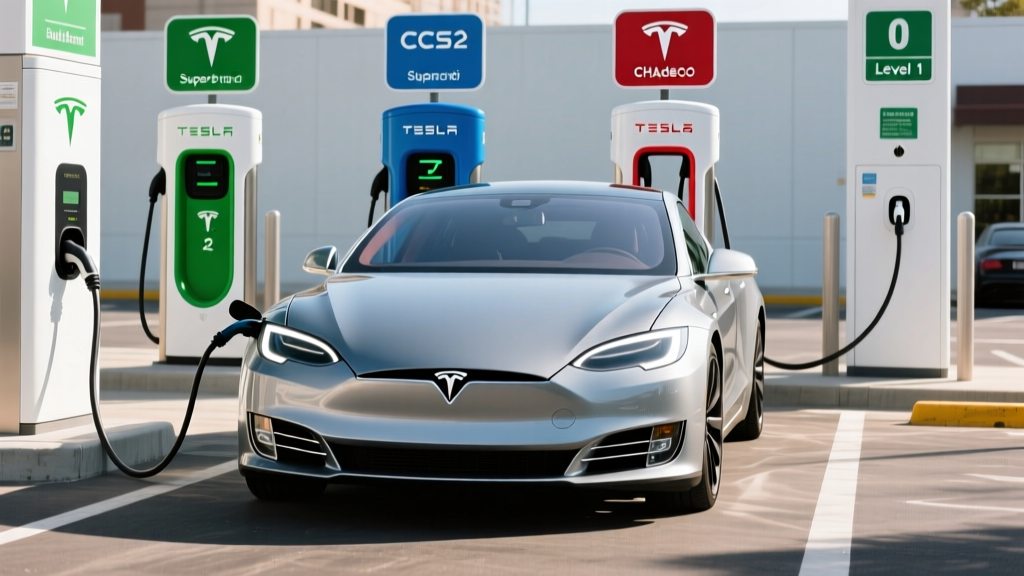
| DC Fast | 400–800V DC | 50–350 kW | 150–1,200 miles/hr (peak) | Road trips, highway corridors, quick top-ups |
A few critical nuances:
- Peak vs. sustained: A 350 kW DC fast charger doesn't deliver 350 kW for the entire session. Charge curves taper significantly above 80% state of charge (SoC). A vehicle peaking at 250 kW might average only 120–150 kW over a 10–80% session.
- Level 2 variability: Your actual Level 2 speed depends on both the charger's output and the vehicle's onboard charger. A 48-amp (11.5 kW) charger paired with a vehicle that only accepts 7.7 kW will charge at 7.7 kW.
- Real-world charging time: For a typical 75–85 kWh battery (common in midsize EV SUVs and sedans), a 10–80% DC fast charge takes roughly 18–35 minutes depending on the vehicle's peak acceptance rate and battery preconditioning.
Home Charger Installation: Electrical Requirements and Real Costs
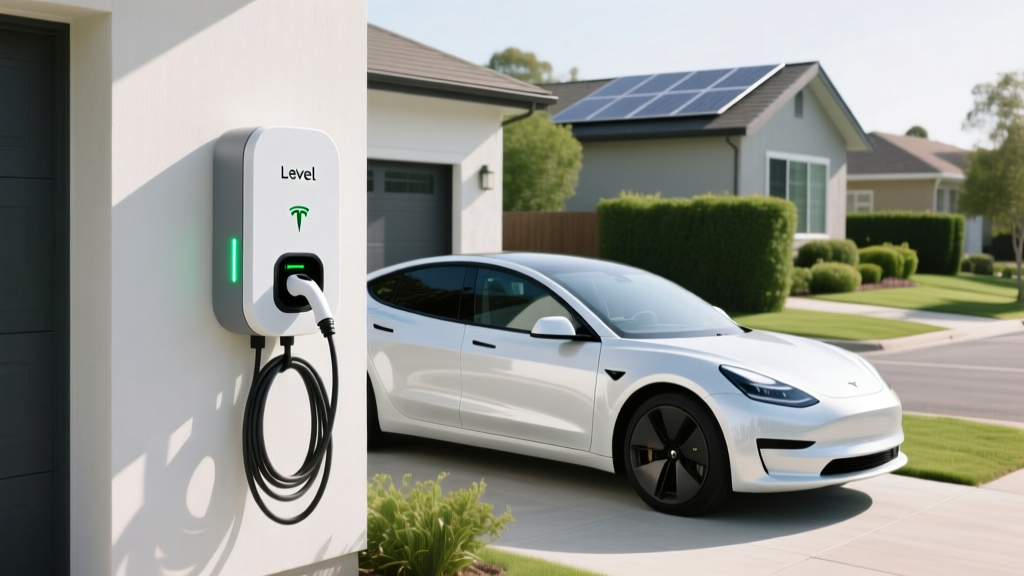
Most EV owners do 80% or more of their charging at home. A properly installed Level 2 home charger is the foundation of convenient EV ownership — plug in when you arrive home, wake up with a full battery every morning. But the installation cost varies dramatically based on your home's existing electrical infrastructure.
What Your Electrical Panel Needs
A Level 2 charger requires a dedicated 240V circuit. The most common residential setups:
- 40-amp circuit / 32-amp charger (7.7 kW): Adequate for most daily driving. Adds ~25–30 miles of range per hour. Requires a double-pole 40A breaker.
- 50-amp circuit / 40-amp charger (9.6 kW): A popular sweet spot. Adds ~30–38 miles per hour. Requires a double-pole 50A breaker.
- 60-amp circuit / 48-amp charger (11.5 kW): Maximizes most residential panels. Adds ~38–45 miles per hour. Requires a double-pole 60A breaker.
Per the National Electrical Code (NEC) Article 625, EV charging circuits must be rated for continuous duty (operating at 80% of breaker capacity), which is why a 40A breaker supports a 32A charger, not a 40A charger.
The Panel Upgrade Question
This is where costs can escalate. Many older homes (especially those built before 1990) have 100-amp main panels. A licensed electrician will perform a load calculation to determine if your panel has spare capacity for a new 40–60A circuit. If your panel is already near capacity — running central AC, an electric dryer, and an electric range — you may need a panel upgrade to 200A, which typically runs $1,500–$3,500 on its own.
Newer homes with 200A panels usually have adequate headroom, but it depends on existing loads. This is not optional — skipping the load calculation risks overloading your panel and creating a fire hazard.
| Component | Low Estimate | High Estimate | Notes |
|---|---|---|---|
| Level 2 charger (hardware) | $300 | $750 | 32A–48A smart chargers, NACS or J1772 |
| Electrician labor (2–6 hours) | $300 | $900 | Varies by region, complexity, conduit run length |
| Materials (wire, conduit, breaker) | $100 | $400 | Longer wire runs and outdoor installations cost more |
| Permit and inspection | $50 | $250 | Required by most jurisdictions; varies by municipality |
| Panel upgrade (if needed) | $1,500 | $3,500 | 100A → 200A upgrade; only if load calculation requires it |
| Total (no panel upgrade) | $750 | $2,300 | Typical scenario for newer homes |
| Total (with panel upgrade) | $2,250 | $5,800 | Older homes needing 200A service |
Some utilities offer rebates of $250–$500 for Level 2 charger installation, and certain states provide additional incentives. Check your local utility's EV program page before scheduling work.
Connector Compatibility: NACS, CCS, and CHAdeMO in 2026
The connector landscape has consolidated significantly since Tesla opened its Supercharger network. Here's where things stand for the 2026 model year:
| Connector | Brands Using It (Native) | DC Fast Charge Availability | Adapter Needed For |
|---|---|---|---|
| NACS (Tesla / SAE J3400) | Tesla, Ford, GM, Rivian, Volvo, Polestar, Mercedes-Benz, Nissan (2026+), Honda, Fisker | Tesla Supercharger network (250–350 kW), growing third-party NACS stations | CCS stations require NACS-to-CCS adapter ($150–$250) |
| CCS1 (Combined Charging System) | Hyundai, Kia, BMW, VW, Audi, Porsche, Stellantis, Subaru, Toyota (bZ series), Lucid | Electrify America, EVgo, ChargePoint, Ionity (350 kW capable) | Tesla Superchargers require CCS-to-NACS adapter (included with some vehicles) |
| CHAdeMO | Nissan Leaf (legacy, pre-2026), Mitsubishi Outlander PHEV (older models) | Declining network support; limited new station installs | No reliable adapter to NACS/CCS; plan for network limitations |
Practical advice: If you're buying a new EV in 2026, NACS and CCS1 are both viable. NACS gives native access to the Tesla Supercharger network, which remains the most reliable DC fast charging infrastructure in the U.S. CCS1 vehicles can access Superchargers via adapter, and CCS stations from Electrify America and EVgo are widely available on highway corridors. CHAdeMO is effectively legacy — avoid it unless you're buying a used Nissan Leaf and understand the charging limitations.
For home Level 2 charging, the physical connector matters less: most home chargers come with either a J1772 plug (which all non-Tesla EVs accept) or a NACS plug (for Tesla and newer NACS-native vehicles). Many chargers now offer both, or you can use a simple $30–$50 J1772-to-NACS adapter.
Cost to Charge: Home, Public, and DC Fast vs. Gas
One of the strongest arguments for switching from a supercharged V6 to an EV is fuel cost. Let's put real numbers to it.
According to fueleconomy.gov, a midsize performance sedan from the Grand Prix Supercharged era averaged roughly 18–20 MPG combined. At $3.40/gallon (2026 national average), that's approximately $0.17–$0.19 per mile in fuel alone.
Here's how EV charging costs compare across scenarios:
| Charging Scenario | Cost per kWh | Cost Per Mile* | Annual Fuel Cost (12,000 mi) |
|---|---|---|---|
| Home, off-peak utility rate | $0.08–$0.14 | $0.02–$0.04 | $240–$480 |
| Home, standard residential rate | $0.14–$0.20 | $0.04–$0.06 | $480–$720 |
| Public Level 2 (workplace, shopping) | $0.20–$0.35 | $0.06–$0.11 | $720–$1,320 |
| DC Fast Charging (public) | $0.30–$0.55 | $0.09–$0.17 | $1,080–$2,040 |
| Gasoline (20 MPG, $3.40/gal) | N/A | $0.17 | $2,040 |
*Based on an EV averaging 3.0–3.5 miles per kWh (typical for a midsize sedan or crossover in 2026). Efficiency varies: a sleek sedan like the Hyundai Ioniq 6 achieves ~4.0 mi/kWh, while a large SUV like the Rivian R1S averages ~2.5 mi/kWh.
The takeaway: if you charge primarily at home on off-peak rates, your "fuel" cost drops to roughly $0.03/mile — an 80%+ reduction versus a supercharged gas sedan. Even exclusive DC fast charging on road trips comes in comparable to or slightly below gas prices, and most owners do 80–90% of charging at home.
Recommended Home Chargers: Power, Features, and Price
Not all Level 2 chargers are equal. Here are four well-regarded options for 2026, chosen for reliability, smart features, and value:
Emporia Vue EV Charger (48A)
- Power output: 11.5 kW (48 amps, hardwired) or 9.6 kW (40 amps, plug-in NEMA 14-50)
- Connector: J1772 (includes NACS adapter in box for 2026 models)
- Cable length: 24 feet
- Smart features: Wi-Fi, energy monitoring via Emporia Vue panel integration, scheduled charging, solar-aware charging
- Price: ~$350–$400
- Best for: Budget-conscious buyers who want energy monitoring and solar integration
ChargePoint Home Flex (50A)
- Power output: Up to 12 kW (50 amps, adjustable 16A–50A via DIP switches)
- Connector: J1772 or NACS (select at purchase)
- Cable length: 23 feet
- Smart features: Wi-Fi, Alexa integration, scheduled charging, ChargePoint network account, detailed session history
- Price: ~$550–$650
- Best for: Users wanting flexible amperage settings and a proven brand with strong app
Tesla Wall Connector (48A)
- Power output: 11.5 kW (48 amps, hardwired)
- Connector: NACS native; includes J1772 adapter for non-Tesla EVs
- Cable length: 24 feet
- Smart features: Wi-Fi, over-the-air updates, power sharing (link multiple units on one circuit), vehicle-specific access control
- Price: ~$425–$475
- Best for: Tesla owners or households with NACS-native vehicles; excellent build quality
Grizzl-E Smart (40A)
- Power output: 9.6 kW (40 amps, NEMA 14-50 plug or hardwired)
- Connector: J1772 (NACS adapter available separately)
- Cable length: 24 feet
- Smart features: Wi-Fi, OCPP-compatible (works with utility demand-response programs), adjustable amperage
- Price: ~$400–$500
- Best for: Cold-climate owners (rated to -40°F) and those wanting utility-program compatibility
Safety, Permits, and Code Compliance
EV charging installations are governed by NEC Article 625 and local electrical codes. Skipping permits or using an unlicensed installer may void your homeowner's insurance coverage if an electrical fire occurs. Here's what proper installation requires:
- Dedicated circuit: Your Level 2 charger must be on its own dedicated breaker — not shared with other outlets or appliances.
- GFCI protection: The 2020 NEC (and later) requires GFCI (ground-fault circuit interrupter) protection for outdoor EV charging receptacles. Hardwired chargers with built-in ground-fault protection satisfy this requirement.
- Outdoor rating: If your charger is installed outdoors (garage-less homes, driveways), it must carry a NEMA 3R or NEMA 4 weather-resistance rating. All four chargers recommended above meet this standard.
- Wire gauge: A 48-amp hardwired charger typically requires 6 AWG copper wire; a 40-amp plug-in on a NEMA 14-50 receptacle requires 6 AWG or 8 AWG depending on run length. Your electrician will specify based on the installation.
- Permit and inspection: Most municipalities require a permit ($50–$250) and a post-installation inspection. The U.S. Department of Energy's AFDC maintains state-by-state EV infrastructure policy information.
Charging Time Examples: What to Expect With Common Battery Sizes
Here's how long a 10–80% charge takes across popular 2026 EV battery sizes and charger types. We use 10–80% because charging above 80% slows dramatically (the charge curve tapers to protect battery health — think of it like topping off a glass of water slowly to avoid overflow).
| Battery Size (usable kWh) | Example Vehicles | Level 2 (11.5 kW) | DC Fast (150 kW peak) | DC Fast (250 kW peak) |
|---|---|---|---|---|
| 60 kWh | Chevrolet Equinox EV, Nissan Ariana (base) | ~3.5 hours | ~25–30 min | ~20–25 min |
| 77 kWh | Ford Mustang Mach-E (ER), Hyundai Ioniq 5 | ~4.5 hours | ~28–35 min | ~18–22 min |
| 85 kWh | Tesla Model Y (LR), BMW iX xDrive50 | ~5 hours | ~32–38 min | ~20–25 min |
| 100+ kWh | Tesla Model S, GMC Hummer EV, Rivian R1T (Max Pack) | ~6+ hours | ~40–50 min | ~25–35 min |
Preconditioning matters: Most modern EVs will warm or cool the battery to its optimal charging temperature when you navigate to a DC fast charger. This preconditioning can shave 5–10 minutes off your 10–80% time, especially in cold weather. If you arrive at a fast charger with a cold, un-preconditioned battery, expect significantly slower initial charge rates.
Frequently Asked Questions
How much does it cost to install a home EV charger?
A typical Level 2 home charger installation runs $750–$2,300 if your electrical panel has adequate capacity. If you need a panel upgrade from 100A to 200A, add $1,500–$3,500. The charger hardware itself costs $300–$750. Always get a quote from a licensed electrician who performs a load calculation before committing.
How fast will each charging level add range?
Level 1 (120V) adds 3–5 miles per hour — adequate for plug-in hybrids with small batteries or drivers covering under 30 miles daily. Level 2 (240V) adds 20–60 miles per hour depending on amperage, fully replenishing most EVs overnight. DC fast charging adds 150–1,200 miles per hour at peak rates, but sessions are typically limited to 10–80% (18–40 minutes) because the charge rate tapers above 80%.
Which connector and charger is compatible with my EV?
For 2026 model-year vehicles: Tesla, Ford, GM, Rivian, Volvo, and Honda use NACS. Hyundai, Kia, BMW, VW, and most Stellantis brands use CCS1. Check your vehicle's charge port before buying a home charger. Most chargers are available in either connector type, and adapters ($30–$250) bridge the gap when needed.
How much does charging cost per mile vs. gas?
Home charging at standard residential rates ($0.14–$0.20/kWh) costs roughly $0.04–$0.06 per mile for a typical EV. A comparable gas vehicle at 20 MPG and $3.40/gallon costs about $0.17 per mile. That's a savings of $1,300–$1,500 annually at 12,000 miles per year. Even exclusive public DC fast charging ($0.30–$0.55/kWh) costs $0.09–$0.17 per mile — comparable to or below gas.
What electrical upgrades might I need?
The most common upgrade is adding a 240V circuit with a 40–60 amp double-pole breaker. If your panel is a 100-amp service and already near capacity, you'll need a 200-amp panel upgrade ($1,500–$3,500). Homes with existing 200-amp panels usually have enough headroom. Some utilities offer "make-ready" programs that cover the cost of wiring from the panel to the charger location — check with your provider.
Is Level 1 charging enough if I drive under 40 miles a day?
It can be. Level 1 adds roughly 30–50 miles of range over a 10-hour overnight session. If your daily driving stays under 40 miles and you have predictable routines, Level 1 avoids the installation cost entirely. However, Level 2 is strongly recommended if you ever take longer trips (reducing turnaround time from days to hours), live in cold climates (where efficiency drops 20–30%), or own a larger-battery EV that would take 3+ days to fill on Level 1.
Switching from a supercharged gas sedan to an EV doesn't mean sacrificing performance — it means shifting your refueling paradigm from gas stations to your garage. With a properly installed Level 2 charger, you'll start every day with a full "tank," spend a fraction on fuel, and never idle at a pump again. The upfront investment in home charging infrastructure ($750–$2,300 in most cases) typically pays for itself within 12–24 months through fuel savings alone.