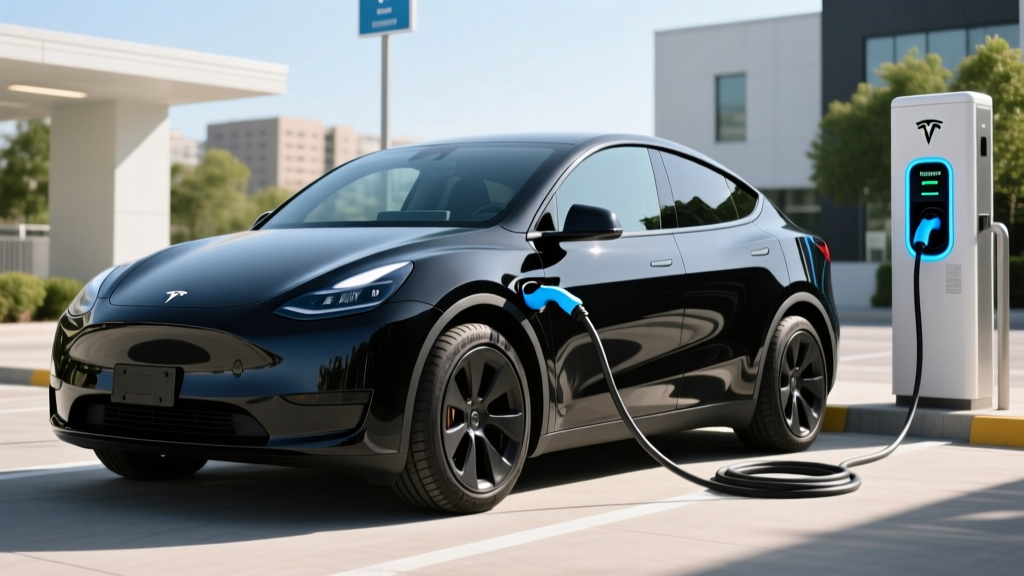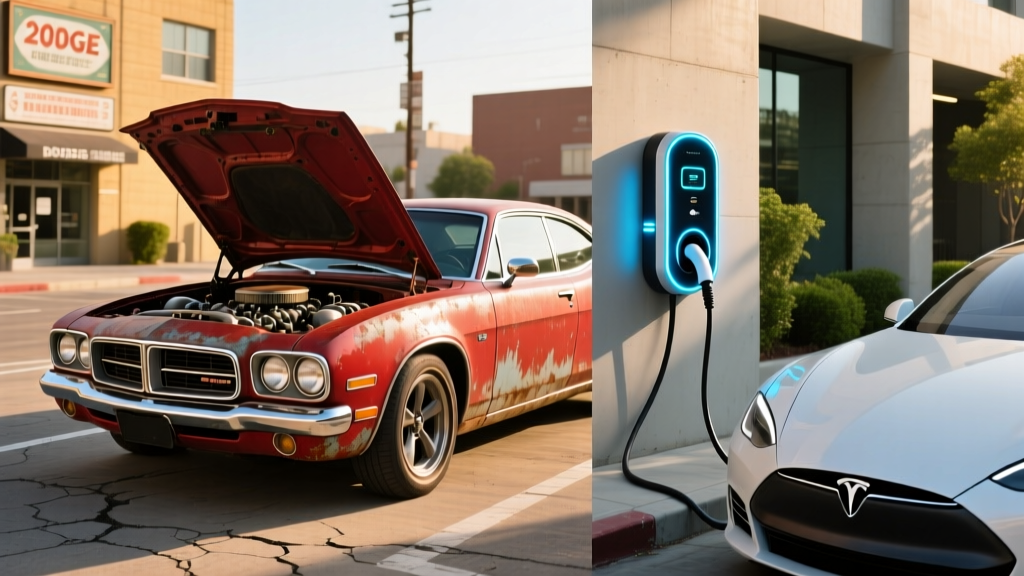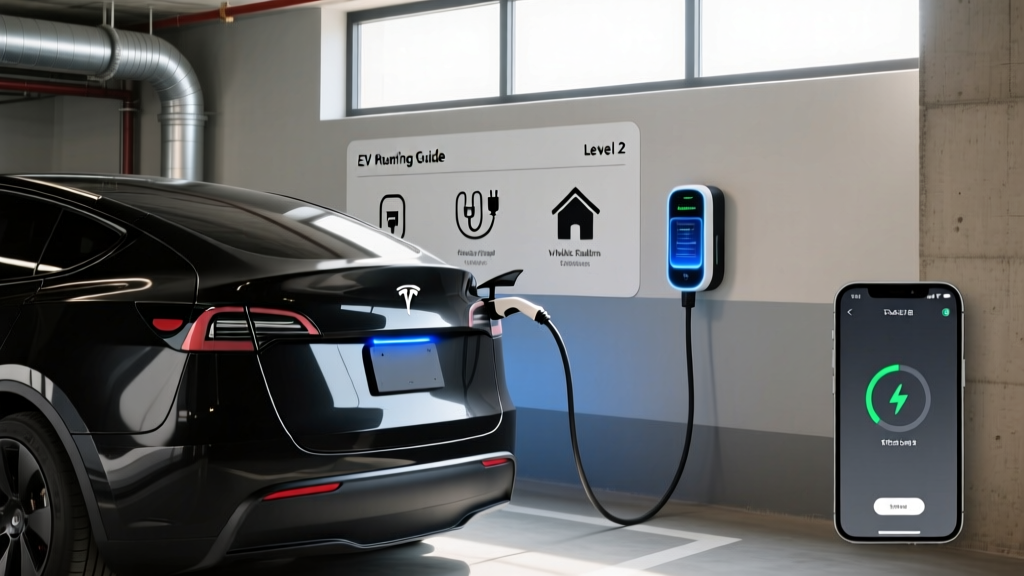
If you're finally retiring a supercharged 3800 Series V6 legend like the 2004 Pontiac Grand Prix GTP Supercharged and stepping into your first battery-electric vehicle, the biggest mental shift isn't the lack of a blower whine — it's fueling. You'll never visit a gas station again for daily driving, but you will need to understand home electrical circuits, connector standards, and the difference between kW (power, how fast energy flows) and kWh (energy, what's actually stored in the pack). This guide is written for that exact transition: what you need on day one, what you'll actually spend, and which gear holds up in 2026.
Why the Grand Prix GTP Owner Needs to Rethink "Fueling"
The 2004 GTP pushed 240 hp from a 3.8L supercharged V6 and returned roughly 18/28 mpg city/highway per fueleconomy.gov. At 12,000 miles per year and $3.40/gallon, that's roughly $1,700 annually in fuel. A modern midsize EV using 30 kWh/100 mi charged at home off-peak ($0.13/kWh) spends about $470/year on the same mileage. That gap is what funds your Level 2 home charger install in year one.
But the swap only works if your home electrical system can support a 240V dedicated circuit. Older homes — the kind a GTP-era buyer may still own — often need a panel evaluation before hanging a wall connector.
The Three Charging Levels, With Real Numbers
Forget marketing terms. Here's what each level actually delivers to your battery, measured in kilowatts (kW) of power flow and approximate miles of range added per hour of charging.
| Level | Voltage / Amps | Power (kW) | Miles of Range / Hour | Best Use |
|---|---|---|---|---|
| Level 1 | 120V / 12A | ~1.4 kW | 3–5 mi/hr | Overnight top-offs, PHEVs |
| Level 2 (home) | 240V / 32–48A | 7.7–11.5 kW | 25–45 mi/hr | Daily primary charging |
| DC Fast (public) | 400–800V DC | 50–350 kW peak | 150–800+ mi/hr (peak) | Road trips, quick top-ups |
Real-world note: DC fast chargers don't sustain peak power. A 250 kW stall might deliver that rate only between 10–40% state of charge (SoC), then taper to 80–100 kW as the battery fills and warms. Expect 10–80% in 18–28 minutes on a modern 800V architecture pack (Hyundai Ioniq 5/6, Kia EV6, Porsche Taycan), and 25–45 minutes on a 400V pack (most Tesla, Ford, VW, GM Ultium).
Home Level 2 Installation: What It Actually Costs
This is where most first-time EV buyers get sticker shock. The charger itself is the cheap part. The electrician, wire run, permits, and potential panel upgrade are where the budget lives.
| Item | Typical Range | Notes |
|---|---|---|
| Level 2 charger hardware | $400–$750 | 40A–48A Wi-Fi smart unit, NACS or J1772 |
| Electrician labor (240V/50A circuit) | $600–$2,000 | Depends on panel-to-garage distance, wall type |
| Permit and inspection | $100–$350 | Required in most US jurisdictions |
| Panel upgrade (100A → 200A) | $1,800–$4,500 | Only if existing panel lacks capacity |
| Total (no panel upgrade) | $1,100–$3,100 | Most homes with 200A service |
| Total (with panel upgrade) | $2,900–$7,600 | Older 100A service homes |
Panel upgrade reality check: If you own a home built before the 1990s with 100-amp service and you're already running central A/C, an electric dryer, and an electric range, adding a 40A continuous EV load will likely require a service upgrade. Ask your electrician for a load calculation (NEC Article 220) before committing to hardware.
Connectors in 2026: NACS Wins, But Adapters Exist
The North American Charging Standard (NACS), originally Tesla's proprietary connector, is now the default on nearly every new EV sold in the US as of the 2025–2026 model years. Ford, GM, Rivian, Volvo, Polestar, and others have adopted it. CCS1 (Combined Charging System) remains on many 2020–2024 models still on the road. CHAdeMO is effectively legacy — only the Nissan Leaf continues to use it, and production has wound down.
| Connector | Brands Using It (2026) | Adapter Needed? |
|---|---|---|
| NACS (Tesla-style) | Tesla, Ford, GM, Rivian, Volvo, Polestar, Hyundai/Kia (2025+) | None on new vehicles |
| CCS1 | VW ID.4 (pre-2026), BMW i4/iX, Mercedes EQE/EQS, older Ford/GM | CCS→NACS adapter for Tesla Superchargers ($150–$230) |
| CHAdeMO | Nissan Leaf (legacy) | Increasingly limited public infrastructure |
For home Level 2 charging, most wall connectors now ship with NACS plugs, but universal J1772 units with a NACS adapter in the glovebox remain a safe bet if you swap EVs frequently.
Cost Per Mile: EV Electricity vs. the GTP's Gas Bill
Here's the comparison that matters. We'll pit the 2004 Grand Prix GTP (18/28 mpg, ~23 mpg combined real-world) against a typical 2026 midsize EV at 30 kWh/100 mi (EPA combined).
| Scenario | Cost per kWh / Gallon | Cost per Mile | Annual @ 12,000 mi |
|---|---|---|---|
| 2004 GTP Supercharged (23 mpg) | $3.40/gal | $0.148 | $1,774 |
| EV, home off-peak (utility rate) | $0.13/kWh | $0.039 | $468 |
| EV, home peak rate | $0.28/kWh | $0.084 | $1,008 |
| EV, public Level 2 (EA, ChargePoint) | $0.38/kWh | $0.114 | $1,368 |
| EV, DC fast charger (road trip) | $0.48/kWh | $0.144 | $1,728* |
*Assumes 100% DC fast use — unrealistic for most owners. Typical mix: 85% home, 15% public = ~$560/yr.
The takeaway: home charging is where the economics crush gasoline. Relying exclusively on public DC fast charging erases most of the cost advantage, though you still avoid oil changes, spark plugs, and supercharger-belt tensioners.
Charging Time Examples: What to Expect by Battery Size
Charge time depends on battery capacity (kWh) and the charger's sustained power (kW), not its peak number on the sticker. Here are realistic 10–80% times for common 2026 pack sizes:
- 60 kWh pack (base Hyundai Kona Electric, Mini Cooper SE): 40A Level 2 home — ~7 hours; 150 kW DC fast — ~28 minutes.
- 77–82 kWh pack (Tesla Model Y LR, Ford Mustang Mach-E Extended): 48A Level 2 home — ~9 hours; 250 kW DC fast — ~24 minutes.
- 100 kWh pack (Rivian R1T Dual, Tesla Model S, GMC Sierra EV): 48A Level 2 home — ~12 hours; 350 kW DC fast (800V) — ~22 minutes.
Charge curve taper: Above 80% SoC, DC fast charging slows dramatically to protect the battery. That last 20% can take as long as the first 60%. For road trips, plan to hop from charger to charger at 80% rather than waiting for a full fill.
Recommended Level 2 Home Chargers (2026 Tested Picks)
Emporia Level 2 Smart Charger
Power: 48A / 11.5 kW (240V hardwired) · Cable: 24 ft · Connector: NACS or J1772 · Smart features: Wi-Fi, app scheduling, solar integration, energy monitoring · Price: ~$400 · Verdict: Best value for the feature set. Requires hardwire for full 48A — no plug-in 14-50 option at that amperage.
Tesla Wall Connector (Gen 4)
Power: 48A / 11.5 kW (240V hardwired) · Cable: 24 ft · Connector: NACS native · Smart features: Wi-Fi, OTA updates, Power-Share load balancing between two units · Price: ~$475 · Verdict: Best for NACS-native EVs. CCS owners need the $230 Magic Dock adapter or an aftermarket unit.
ChargePoint Home Flex (2nd Gen)
Power: Configurable 16A–50A (up to 12 kW hardwired) · Cable: 23 ft · Connector: J1772 with NACS adapter included · Smart features: Wi-Fi, Alexa, scheduling, utility demand-response programs · Price: ~$650 · Verdict: Best universal pick — works with any EV you might buy next.
Safety, Electrical Code, and Permit Essentials
A Level 2 charger is a continuous load under the National Electrical Code (NEC), meaning the circuit must be rated for 125% of the charger's max draw. A 48A charger requires a 60A breaker and 6 AWG copper wire (or 4 AWG aluminum). Do not let anyone talk you into undersizing this.
- Dedicated circuit: The charger must have its own double-pole breaker — no sharing with dryers or welders.
- GFCI protection: NEC 2020/2023 requires GFCI on 240V receptacles in garages. Hardwired units often avoid this requirement and are preferred by many electricians because GFCI breakers on EV circuits are a known nuisance-trip source.
- Outdoor rating: If mounting outside, confirm the unit is NEMA 4 rated. Most modern wall connectors are, but the plug holster and cable management should be weather-protected.
- Permit and inspection: Nearly all jurisdictions require an electrical permit for a new 240V circuit. The inspection ensures correct wire gauge, breaker sizing, and grounding. Skipping this risks insurance denial if an electrical fire occurs.
For the final electrical spec, always defer to a licensed electrician who has performed an on-site load calculation. Manufacturer install guides and this article provide planning ranges, not site-specific engineering.
Tax Credits and Incentives for Home Charging
The federal Alternative Fuel Vehicle Refueling Property Credit (IRS Form 8911) covers 30% of home charger hardware and installation costs, up to $1,000, for equipment placed in service through 2032 — but only if your home is in an eligible census tract (non-urban or low-income). Many buyers in suburban/urban tracts do not qualify. Consult a tax professional and verify tract eligibility before counting on this credit.
Separately, many utilities (PG&E, Xcel, ConEd, Duke) offer $300–$800 rebates for smart Level 2 chargers enrolled in managed-charging programs. These stack with the federal credit where eligible.
Frequently Asked Questions
How much does it cost to install a home EV charger?
Most homes with existing 200A service spend $1,100–$3,100 total (charger, electrician, permit). Homes needing a panel upgrade to 200A spend $2,900–$7,600. Get three quotes and demand a written load calculation.
How fast will each charging level add range?
Level 1 (120V): 3–5 miles per hour. Level 2 (240V/48A): 25–45 miles per hour. DC fast charging: up to 800+ miles per hour at peak, but sustained averages are far lower due to charge-curve taper above 50% SoC.
Which connector/charger is compatible with my EV?
Check your vehicle's charge port. 2025–2026 model-year EVs from Tesla, Ford, GM, Rivian, Volvo, and Hyundai/Kia use NACS. Older VW, BMW, Mercedes, and Stellantis EVs use CCS1. Nissan Leaf uses CHAdeMO. Home chargers are available in all three, and adapters bridge the gaps.
How much does charging cost per mile vs gas?
At a $0.13/kWh off-peak home rate and 30 kWh/100 mi efficiency, an EV costs ~$0.039/mile. A 23-mpg gas car at $3.40/gallon costs ~$0.148/mile. That's nearly a 4:1 advantage for home-charged EVs.
What electrical upgrades might I need?
If your home has 100A service, or a 200A panel already loaded with electric heat, A/C, dryer, range, and a hot tub, you'll likely need a service upgrade ($1,800–$4,500) or a smart load-management device like the Emporia VUE with automatic charger throttling.
Can I just plug into a dryer outlet?
You can use a NEMA 14-50 receptacle (the same as an electric dryer) if it's on a dedicated 50A circuit and you use a plug-in charger rated for 40A or less. Never share a dryer outlet with a Y-adapter — it's a fire risk and a code violation.
Does fast charging degrade my battery?
Exclusively using DC fast charging accelerates degradation modestly — studies from NREL and real-world fleet data show ~2–4% additional capacity loss over 100,000 miles vs. Level 2 only. Modern thermal management systems have made this a minor concern for most owners, but daily fast-charging to 100% is still not recommended.