If you're still driving a 2006 Pontiac Grand Prix GT Supercharged — that beloved 260-hp, 3.8L V6 sedan that sips premium fuel at roughly 18/28 MPG — you're probably spending $2,400 to $3,200 a year on gas depending on your commute. As EV adoption widens in 2026, many owners of aging ICE sedans are asking the same question: what does it actually take to charge an EV at home, and how does the cost compare to filling up that supercharged 3800 Series III engine?
This guide walks through every layer of home EV charging — from Level 1 trickle charging to DC fast-charging fundamentals, electrical panel realities, connector compatibility, and hard cost-per-mile math. We'll use the Grand Prix GT as a baseline comparison throughout, because if you're coming from that car, you deserve exact numbers, not marketing fluff.
Charging Levels Explained: Level 1, Level 2, and DC Fast Charging
Before we talk equipment and costs, let's nail down the three charging tiers. The single most important distinction in EV literacy is this: kW (kilowatts) measures power — how fast energy flows into the battery. kWh (kilowatt-hours) measures energy — the total capacity of the battery, like gallons in a fuel tank. A 75 kWh battery charged at 7 kW takes roughly 10.7 hours from empty to full (minus inefficiencies).
| Level | Voltage | Power (kW) | Miles of Range Added per Hour | Typical Use Case |
|---|---|---|---|---|
| Level 1 | 120V AC | 1.2 – 1.9 kW | 3 – 5 miles | Overnight top-ups, low-mileage drivers, PHEVs |
| Level 2 | 240V AC | 3.3 – 19.2 kW | 12 – 75 miles | Daily home charging, workplace, hotels |
| DC Fast Charging | 200 – 800V DC | 50 – 350+ kW | 150 – 1,200+ miles/hr (equivalent) | Road trips, highway corridors, 10-80% in 15-35 min |
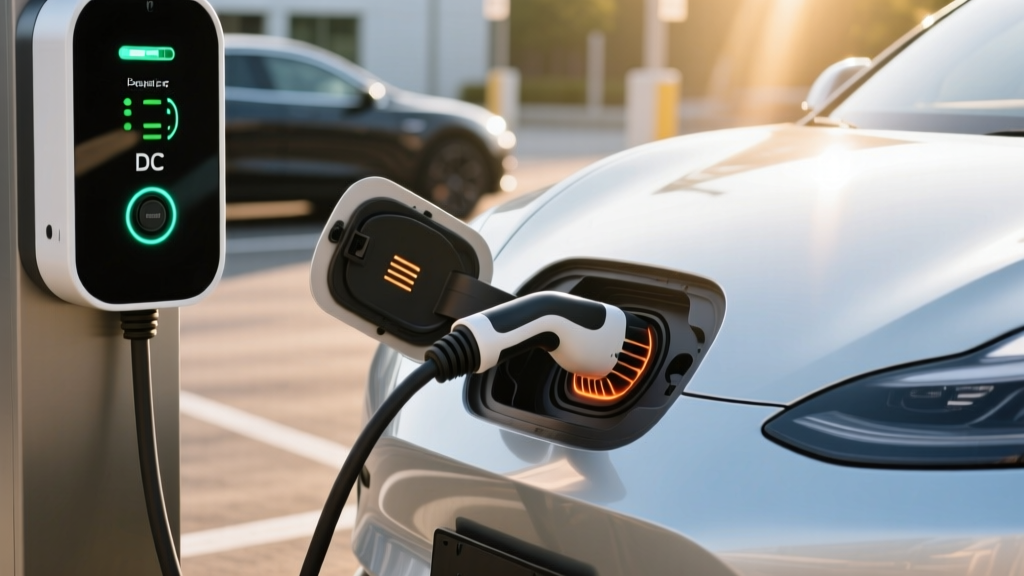
A few real-world caveats: DC fast-charging speeds are peak numbers. A vehicle rated for 250 kW peak will only sustain that rate for a portion of the charge session — typically between 10% and 40% State of Charge (SoC). Above 80%, the charge curve tapers sharply to protect battery health. This is why manufacturers advertise "10-80%" times rather than 0-100%. For a typical 75-85 kWh battery pack in 2026 models like the Tesla Model Y or Hyundai Ioniq 5, expect 10-80% in roughly 18-25 minutes at a 250-350 kW station, but budget 35-45 minutes if you're using a 50-150 kW charger.
Home Level 2 Installation: Electrical Requirements, Costs, and Panel Gotchas
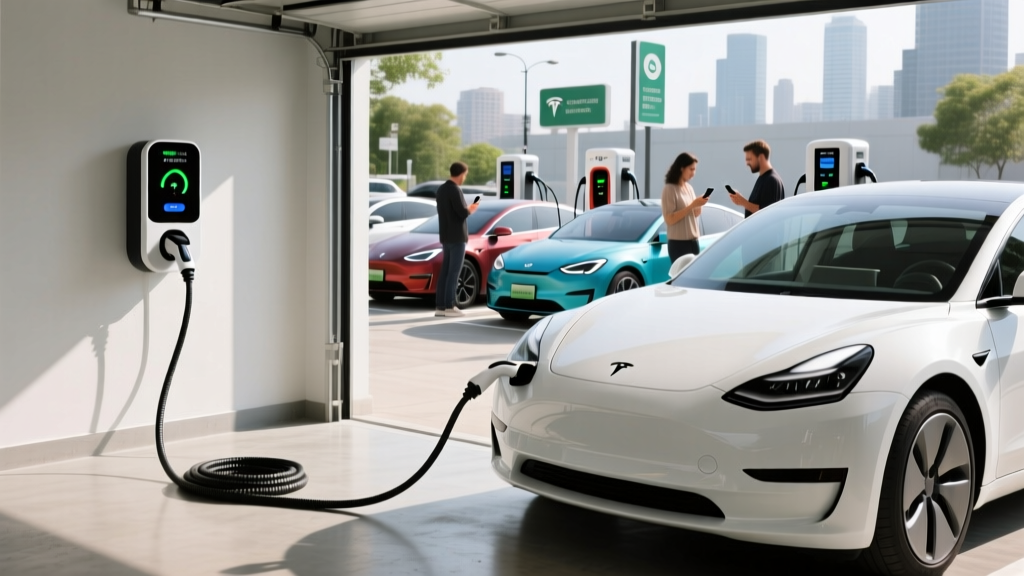
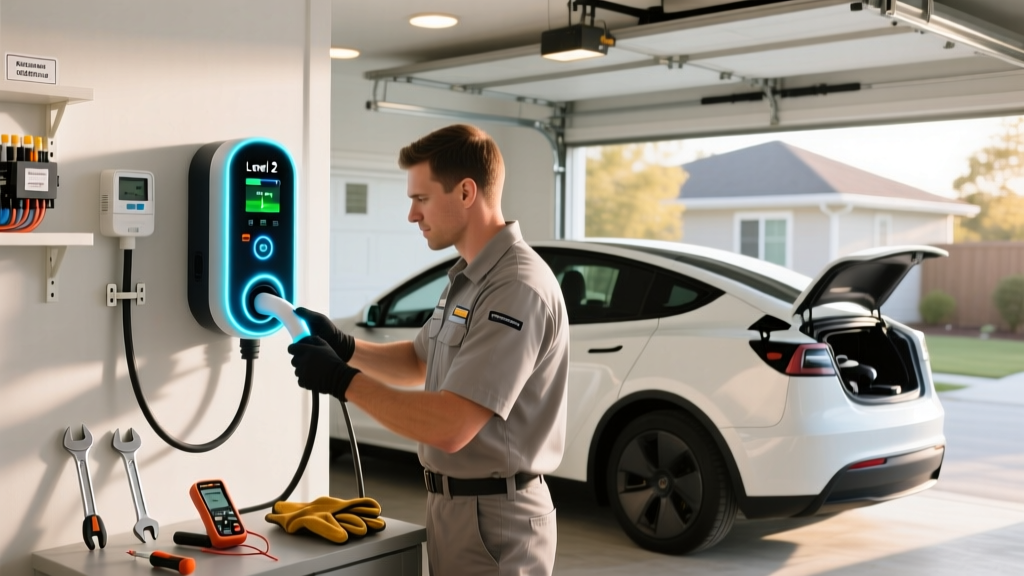
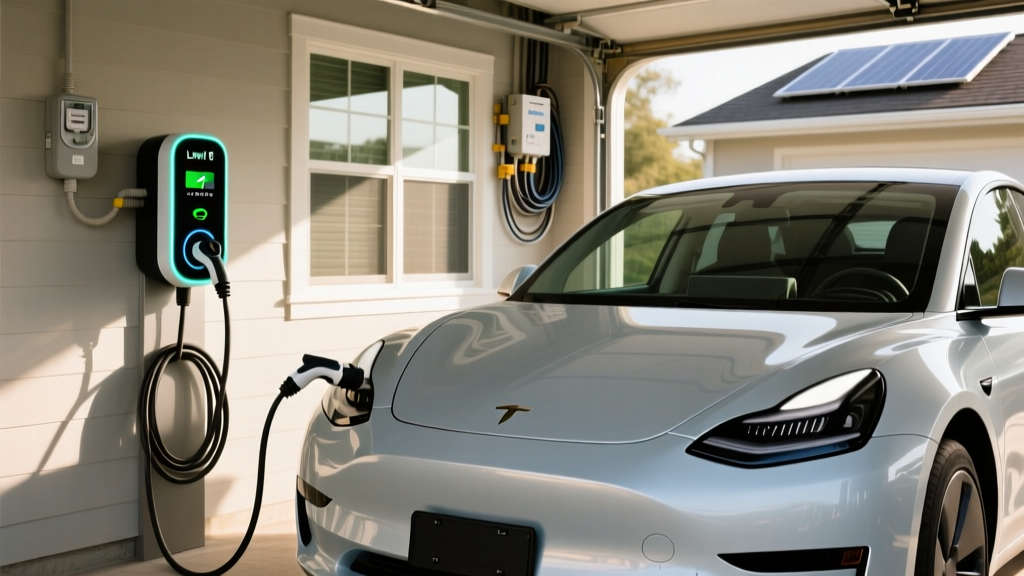
Most EV owners install a Level 2 home charger — and this is where the 2006 Grand Prix comparison ends, because you're now dealing with electrical infrastructure rather than a gas station. A Level 2 charger requires a 240V circuit, identical in principle to what powers your electric dryer or oven.
Typical Electrical Specs for a Home Level 2 Charger
- Circuit: Dedicated 40A, 50A, or 60A breaker (continuous load must not exceed 80% of breaker rating, so a 50A breaker supports a 40A / 9.6 kW charger)
- Voltage: 240V single-phase
- Wire gauge: 6 AWG copper for 50A circuits; 4 AWG for 60A
- Outlet type: NEMA 14-50 (most common) or hardwired connection
Does Your Electrical Panel Need an Upgrade?
This is the variable most online guides gloss over. Most homes built after 1990 have 200A main panels with sufficient spare capacity for a 40-50A EV circuit. Older homes — especially those built before 1980 — may have 100A or even 60A panels, which often cannot support an EV charger without a panel upgrade.
A panel upgrade from 100A to 200A typically costs $1,500 to $3,500 depending on your utility's requirements, local labor rates, and whether the service drop from the street also needs replacement. In some jurisdictions, the utility charges a separate fee for upgrading the meter base or transformer. This is a real cost that can double your total installation budget, and no online calculator can predict it — you need a licensed electrician to perform a load calculation per NEC Article 220.
| Component | Low-End Estimate | High-End Estimate | Notes |
|---|---|---|---|
| Level 2 Charger (Equipment) | $350 | $750 | 32A-48A smart chargers; Wi-Fi enabled models cost more |
| Electrician Labor (Standard Install) | $600 | $1,500 | Assumes panel has capacity, charger within 30 ft of panel |
| Electrical Permit | $50 | $250 | Varies by municipality; some jurisdictions bundle with inspection |
| Conduit/Wire Run (Long Distance) | $0 | $1,200 | If charger is in detached garage or far from panel |
| Panel Upgrade (If Needed) | $1,500 | $3,500 | 100A → 200A; may require utility coordination |
| Total (No Panel Upgrade) | $1,000 | $3,700 | Most common scenario for homes built after 1990 |
| Total (With Panel Upgrade) | $2,500 | $7,200 | Older homes, pre-1980 construction |
The federal government and many utilities offer rebates for home charger installation. The residential clean energy credit under IRC §25C covers 30% of charger hardware and installation costs up to $1,000 through 2032, though eligibility depends on census-tract qualification. Check with your local utility — many offer $250-$500 rebates on top of federal incentives.
Connector Compatibility: NACS, CCS, and CHAdeMO in 2026
If you're coming from a world where every gas car uses the same fuel nozzle, EV connectors require a brief orientation. As of 2026, the North American market has largely standardized around two connectors for Level 2 and DC fast charging:
| Connector | Also Known As | Used By (2026 Models) | Level 2? | DC Fast? |
|---|---|---|---|---|
| NACS | Tesla connector, J3400 | Tesla (all), Ford, GM, Rivian, Hyundai, Kia, BMW, most new 2025+ models | Yes | Yes (Supercharger + open networks) |
| CCS1 | Combined Charging System | Legacy VW ID.4, older Bolt EV/EUV, some Stellantis models, pre-2025 inventory | Yes (via J1772 upper) | Yes (Electrify America, EVgo) |
| CHAdeMO | — | Discontinued in US; legacy Nissan Leaf only | No | Yes (declining infrastructure) |
What this means practically: If you buy a new EV in 2026, it almost certainly has a NACS port. You can charge at home on any Level 2 charger with a J1772 connector using a $50-$100 NACS-to-J1772 adapter, or buy a NACS-native Level 2 unit. For public DC fast charging, NACS vehicles access Tesla Superchargers (now open to other brands via the "Magic Dock" adapter at many stalls) as well as Electrify America and EVgo stations with CCS adapters.
Legacy CCS vehicles can access NACS Superchargers using a CCS-to-NACS adapter (approximately $175-$225 from Tesla or third-party makers). CHAdeMO owners — primarily Nissan Leaf drivers — face shrinking infrastructure and should plan accordingly.
Cost to Charge: $/kWh Scenarios and Cost-Per-Mile vs. Your Grand Prix GT
This is the calculation that matters most. Let's compare your 2006 Pontiac Grand Prix GT Supercharged against a representative 2026 EV — the Tesla Model Y Long Range AWD (75 kWh usable battery, 310 miles EPA range, roughly 4.0 miles/kWh efficiency).
| Scenario | Cost per kWh or Gallon | Vehicle Efficiency | Cost per Mile | Annual Cost (12,000 mi) |
|---|---|---|---|---|
| 2006 Grand Prix GT (Regular Unleaded) | $3.35/gal (national avg) | 20 MPG combined | $0.168 | $2,016 |
| EV: Home Charging (Off-Peak TOU Rate) | $0.09/kWh | 4.0 mi/kWh | $0.023 | $270 |
| EV: Home Charging (Standard Rate) | $0.15/kWh | 4.0 mi/kWh | $0.038 | $450 |
| EV: Public Level 2 (Workplace/Mall) | $0.25/kWh | 4.0 mi/kWh | $0.063 | $750 |
| EV: DC Fast Charging (Road Trip) | $0.40/kWh | 4.0 mi/kWh | $0.100 | $1,200 (if used exclusively) |
The takeaway: home charging at off-peak rates saves roughly $1,700-$1,750 per year compared to fueling the Grand Prix GT at 12,000 miles annually. Even at standard residential rates, you save $1,500+. The savings narrow if you rely entirely on DC fast charging, but most EV owners do 85-90% of their charging at home.
One nuance worth flagging: the Grand Prix GT Supercharged requires premium fuel (91+ octane) for optimal performance, though it can run on regular with reduced power output. If you've been buying premium at $3.85-$4.20/gal, your actual fuel cost per mile is closer to $0.19-$0.21, widening the EV savings gap further.
Charging Time Examples: What to Expect by Battery Size
Charge times depend on two variables: battery capacity (kWh) and charger power output (kW). Here's how common 2026 EV battery sizes perform across charging levels. These times assume a 10-80% charge window, which is what you'll use in practice to preserve battery health.
| Battery Size | Example Vehicles (2026) | Level 1 (1.4 kW) | Level 2 (9.6 kW / 40A) | Level 2 (11.5 kW / 48A) | DC Fast (150 kW peak) | DC Fast (250 kW peak) |
|---|---|---|---|---|---|---|
| 40 kWh | Nissan Leaf S, base PHEV packs | ~23 hrs | ~3 hrs | ~2.5 hrs | ~25 min | ~20 min |
| 65 kWh | Chevy Equinox EV, VW ID.4 | ~37 hrs | ~4.8 hrs | ~4 hrs | ~30 min | ~22 min |
| 75-82 kWh | Tesla Model Y, Hyundai Ioniq 5 | ~44 hrs | ~5.8 hrs | ~4.8 hrs | ~35 min | ~18 min |
| 90-100 kWh | Ford F-150 Lightning Ext, Rivian R1S | ~55 hrs | ~7.2 hrs | ~6 hrs | ~45 min | ~28 min |
Real-world note: These DC fast times assume optimal conditions — battery preconditioned to ideal temperature (typically 85-95°F), starting at 10% SoC, and a charger delivering its rated peak. In cold weather (below 30°F), expect 20-40% longer charge times unless the vehicle has active battery preconditioning, which most 2026 models do.
Equipment Recommendations: Level 2 Chargers Worth Buying in 2026
Not all Level 2 chargers are equal. Here are four proven units across price tiers, each with specific output ratings and connector options:
Emporia Level 2 Smart Charger
- Power Output: 48A / 11.5 kW (on 60A circuit)
- Connector: J1772 (NACS adapter included)
- Cable Length: 24 ft
- Smart Features: Wi-Fi, energy monitoring, solar integration, scheduling via app
- Price: ~$399
- Best For: Budget-conscious buyers who want smart features and energy tracking
ChargePoint Home Flex
- Power Output: Up to 50A / 12 kW (adjustable 16A-50A via DIP switches)
- Connector: J1772 or NACS (select at purchase)
- Cable Length: 23 ft
- Smart Features: Wi-Fi, Alexa integration, charge scheduling, detailed session history
- Price: ~$599-$649
- Best For: Flexibility — adjustable amperage works with any panel capacity
Tesla Wall Connector
- Power Output: 48A / 11.5 kW (on 60A circuit)
- Connector: NACS native (includes J1772 adapter for non-Tesla EVs)
- Cable Length: 24 ft
- Smart Features: Wi-Fi, over-the-air updates, power sharing (link multiple units on one circuit), access control
- Price: ~$475
- Best For: Tesla owners and multi-EV households; best-in-class power sharing
Grizzl-E Smart
- Power Output: 40A / 9.6 kW (on 50A circuit)
- Connector: J1772 or NACS (select at purchase)
- Cable Length: 24 ft
- Smart Features: OCPP-compatible, works with utility demand-response programs, ruggedized
- Price: ~$449
- Best For: Outdoor installations, extreme climates (-40°F rated), utility program participants
Safety, Code Compliance, and Installation Best Practices
EV charging is a high-draw, continuous electrical load — the National Electrical Code (NEC) treats it seriously, and so should you. Here are the non-negotiable safety and code requirements:
- Dedicated circuit: Your EV charger must have its own dedicated breaker — never share a circuit with other appliances. A 48A charger on a shared 60A circuit is a fire hazard.
- GFCI protection: NEC 2020 and later (adopted by most jurisdictions by 2026) requires GFCI protection for all 240V EV charging outlets. Hardwired chargers may have GFCI built into the unit. If your charger trips a GFCI breaker repeatedly, this usually indicates a ground fault in the wiring — call your electrician, don't just reset it.
- Outdoor rating: If your charger is installed outdoors, both the unit and the outlet must carry a NEMA 3R or NEMA 4 weatherproof rating. Use an in-use bubble cover for NEMA 14-50 outlets. Hardwired units eliminate the outlet as a failure point and are preferred for outdoor installs.
- Permit and inspection: Every jurisdiction requires an electrical permit for EV charger installation. The inspection verifies wire gauge, breaker sizing, grounding, and GFCI compliance. Skipping the permit voids most homeowner insurance coverage for electrical fires — not worth the risk.
- Load management: If your panel is near capacity but you don't want to pay for a full upgrade, consider an EV Energy Management System (EVEMS) — devices like the Emporia VUE with smart breaker or the Span panel that dynamically limit charger draw based on real-time household load. These are code-compliant and can save $1,000-$2,000 vs. a panel upgrade.
Frequently Asked Questions
How much does it cost to install a home EV charger?
A standard Level 2 home charger installation costs $1,000 to $3,700 including equipment, electrician labor, and permits — assuming your electrical panel has sufficient capacity. If a panel upgrade from 100A to 200A is required, add $1,500 to $3,500, bringing the total to $2,500-$7,200. Get at least two quotes from licensed electricians and confirm they perform a NEC Article 220 load calculation before recommending a panel upgrade.
How fast will each charging level add range?
Level 1 (120V) adds 3-5 miles per hour — adequate for PHEVs with small batteries but impractical for full EVs. Level 2 (240V, 40-48A) adds 25-35 miles per hour for most EVs, easily replenishing a full day's driving overnight. DC fast charging adds the equivalent of 150-1,200 miles per hour at peak, delivering a 10-80% charge in 18-35 minutes depending on battery size and charger power.
Which connector/charger is compatible with my EV?
Check your vehicle's charge port. Nearly all new 2026 EVs use the NACS (J3400) connector. If your EV has a CCS1 port (common on 2021-2024 models from VW, Hyundai, and GM), you'll need a CCS-to-NACS adapter (~$175-$225) to use Tesla Superchargers, or you can charge at Electrify America and EVgo stations natively. For home Level 2 charging, any J1772 charger works with NACS vehicles using a simple adapter, and most new chargers now offer NACS as a native option.
How much does charging cost per mile vs. gas?
At the 2026 national average electricity rate of $0.15/kWh and a typical EV efficiency of 4.0 mi/kWh, home charging costs roughly $0.038 per mile. Your 2006 Grand Prix GT at 20 MPG combined and $3.35/gal costs $0.168 per mile — roughly 4.4x more. If you use time-of-use rates and charge off-peak at $0.09/kWh, your EV cost drops to $0.023/mile, a 7.3x savings.
What electrical upgrades might I need?
The most common upgrade is a new 50A or 60A double-pole breaker and corresponding wire run from your panel to the charger location — standard work for any licensed electrician. If your panel lacks physical breaker spaces, a sub-panel ($300-$600) may be needed. Homes with 100A main service often require a full panel upgrade to 200A ($1,500-$3,500). Homes with knob-and-tube wiring or Federal Pacific/Zinsco panels (common in pre-1980 construction) may need full rewiring or panel replacement for safety reasons — consult a qualified electrician for an assessment. The National Electrical Contractors Association maintains a directory of certified EV installer training programs.
Can I use a dryer outlet for EV charging?
Technically, a NEMA 14-50 outlet (the same as a dryer) can power a Level 2 charger, but sharing the outlet with a dryer via a splitter or manually unplugging is not recommended. The NEC requires a dedicated circuit for continuous EV loads. If your dryer outlet is in the garage and the dryer is elsewhere, you can have an electrician verify the circuit is dedicated and install a charger on it — but never use a splitter or switch between dryer and EV on the same breaker.
Transitioning from a 2006 Pontiac Grand Prix GT Supercharged to an EV is one of the most dramatic per-mile cost reductions available to any driver. The upfront investment in a Level 2 home charger — typically $1,000-$3,700 — pays for itself in fuel savings within 8-18 months for most drivers. Get a load calculation from a licensed electrician, choose a charger that matches your panel capacity and vehicle connector, and always pull a permit. The math works; the infrastructure is here.