If you own a Polestar 2, Polestar 3, or the newer Polestar 4, you've likely noticed the Tesla Supercharger network dwarfing every other DC fast-charging footprint in the U.S. The short answer to can Polestar use Tesla chargers is yes — but the details around adapters, connector types, billing, and charging speed matter if you want a seamless experience. This guide walks through exactly how Polestar EVs connect to Tesla's network, what equipment you need, and how to set up reliable charging at home.
Polestar's Connector History and the Shift to NACS
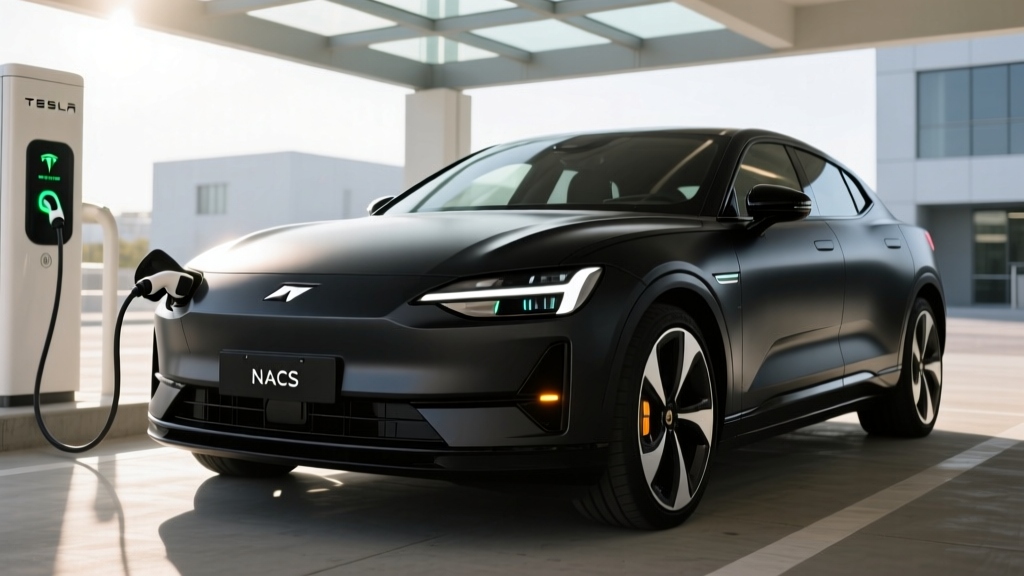
Polestar vehicles sold in North America through model year 2024 shipped with the CCS1 (Combined Charging System) port. Starting with model year 2025, Polestar began transitioning to the NACS (North American Charging Standard) connector — the same physical plug Tesla uses — on new-production vehicles like the Polestar 4 and updated Polestar 3. If your Polestar has a CCS1 port, you'll need an adapter to physically connect to a Tesla Supercharger's NACS cable. If your Polestar already has a native NACS port, you can plug in directly.
Tesla opened its Supercharger network to non-Tesla EVs through what it calls "Magic Dock" equipped stalls (which have a built-in CCS1 adapter) and, more broadly, through approved third-party NACS adapters. Polestar officially endorsed NACS adapter use starting in late 2024, and by 2026, most major Supercharger corridors support non-Tesla vehicles either natively or via adapter.
| Polestar Model | Model Year | Native Port | Tesla Supercharger Access | Adapter Needed? |
|---|---|---|---|---|
| Polestar 2 | 2021–2024 | CCS1 | Via NACS adapter or Magic Dock stall | Yes (CCS1-to-NACS) |
| Polestar 2 | 2025–2026 | NACS | Direct plug-in | No |
| Polestar 3 | 2024 (early) | CCS1 | Via NACS adapter | Yes (CCS1-to-NACS) |
| Polestar 3 | 2025–2026 | NACS | Direct plug-in | No |
| Polestar 4 | 2025–2026 | NACS | Direct plug-in | No |
How Fast Will Each Charging Level Add Range?
Before we get to Supercharger specifics, here's a refresher on the three charging levels available to Polestar owners. Note that kW (kilowatts) measures power — the rate at which energy flows — while kWh (kilowatt-hours) measures energy stored in the battery. A 78 kWh battery charged at 11 kW takes roughly 7 hours from empty; charged at 150 kW, it takes under 30 minutes to 80%.
| Level | Voltage / Power | Typical kW | Miles of Range Added per Hour | Best For |
|---|---|---|---|---|
| Level 1 | 120V AC | 1.2–1.9 kW | 3–5 mi/hr | Overnight trickle, PHEVs, emergencies |
| Level 2 | 240V AC | 7.2–19.2 kW | 20–60 mi/hr | Daily home and workplace charging |
| DC Fast (CCS/NACS) | 400V+ DC | 50–250 kW | 150–600+ mi/hr (peak) | Road trips, rapid top-ups |
For context, the Polestar 2 Long Range Dual Motor carries a 78 kWh usable battery (NMC chemistry) and achieves an EPA-estimated 276 miles of range. At a Level 2 charger delivering 11 kW, a full 10–100% charge takes approximately 7 hours. On a Tesla V3 Supercharger capable of 250 kW peak, the same Polestar 2 can charge from 10–80% in roughly 28–32 minutes, though sustained rates taper significantly above 80% state of charge. Real-world highway range for the Polestar 2 LRDM typically lands between 230–250 miles depending on speed, temperature, and terrain.
Using Tesla Superchargers With a Polestar: Step by Step
Here's what the actual process looks like depending on your Polestar's model year and port type:
If your Polestar has a CCS1 port (2021–2024 models)
- Purchase an approved CCS1-to-NACS adapter. Tesla sells its own adapter, and third-party options from Lectron and A2Z are also widely available. Expect to pay $150–$300. Look for adapters rated for at least 250 kW DC and 400V+.
- Use the Tesla app or a Tesla Supercharger stall with Magic Dock. Some Supercharger stalls in high-traffic corridors have a built-in Magic Dock adapter, eliminating the need for your own. For stalls without Magic Dock, you'll initiate the session via the Tesla app by selecting the stall number.
- Plug in and monitor. The Polestar 2's peak DC fast-charge rate is approximately 200 kW (on 2024+ models with updated software; earlier models peaked around 150 kW). You won't see the full 250 kW the Supercharger can deliver — the vehicle's battery management system limits intake to protect the cells.
If your Polestar has a native NACS port (2025–2026 models)
- Pull up to any open Supercharger stall. No adapter needed.
- Plug in directly. Authentication happens via the Tesla app or through Polestar's integrated charging agreement with Tesla's network (rolled out progressively through 2025–2026).
- Charge at your vehicle's peak rate. The Polestar 3 with its 111 kWh battery supports up to 250 kW DC fast charging, reaching 10–80% in approximately 25–30 minutes at a V3 or V4 Supercharger.
How Much Does Charging Cost per Mile vs. Gas?
One of the strongest arguments for switching to electric is the per-mile fuel cost. Here's how Polestar charging costs compare to a similar gas vehicle (we'll use a Volvo XC60 as a comparable baseline, averaging 25 MPG combined) across typical scenarios.
| Scenario | Rate | Cost per kWh | Cost per Mile (Polestar 2) | Cost per Mile (Gas, 25 MPG) |
|---|---|---|---|---|
| Home Level 2 (off-peak utility rate) | Residential TOU | $0.08–$0.13/kWh | $0.025–$0.04 | $0.14 (at $3.50/gal) |
| Home Level 2 (standard rate) | Residential flat | $0.14–$0.18/kWh | $0.04–$0.055 | $0.14 |
| Public Level 2 (workplace/mall) | Commercial | $0.20–$0.35/kWh | $0.06–$0.10 | $0.14 |
| Tesla Supercharger (V3 DC fast) | Per-kWh pricing | $0.28–$0.48/kWh | $0.08–$0.14 | $0.14 |
| Electrify America / third-party DC | Per-kWh pricing | $0.35–$0.55/kWh | $0.10–$0.16 | $0.14 |
The Polestar 2 LRDM consumes approximately 3.1–3.3 kWh per 10 miles (roughly 31–33 kWh/100mi) in mixed driving, per EPA data on fueleconomy.gov. At home off-peak rates, that translates to about 3 cents per mile — roughly one-quarter the cost of gasoline. Even at Tesla Supercharger rates, you're often breaking even or slightly beating gas on a per-mile basis, and you're paying for the convenience of a 20-minute road-trip stop.
Home Charger Installation: Requirements and Cost Breakdown
Most Polestar owners do the vast majority of their charging at home on a Level 2 station. Here's what a proper installation involves and what it costs.
Electrical Requirements
A Level 2 home charger requires a dedicated 240V circuit. For a typical 48-amp charger (delivering up to 11.5 kW), you need a 60-amp breaker (NEC code requires the breaker to be rated at 125% of the continuous load). Key specifications:
- Voltage: 240V (split-phase, standard U.S. residential)
- Circuit breaker: 50A or 60A depending on charger amperage
- Wire gauge: 6 AWG copper for 50A; 4 AWG for 60A runs over 50 feet
- Outlet type: NEMA 14-50 (most common) or hardwired connection
- GFCI protection: Required by NEC 2020+ for EV receptacles in garages
Panel Upgrade Considerations
This is the hidden cost that catches many homeowners off guard. If your home has a 100-amp main panel — common in homes built before 1990 — adding a 50–60A EV circuit may exceed your panel's capacity, especially if you already run electric range, dryer, and HVAC. A licensed electrician will perform a load calculation (NEC Article 220) to determine if your panel can handle the additional draw. If not, a panel upgrade to 200A typically costs $1,500–$3,000 before the charger circuit is even installed.
| Component | Low-End Estimate | High-End Estimate | Notes |
|---|---|---|---|
| Level 2 charger unit | $350 | $700 | 40A–48A smart charger, 18–25 ft cable |
| Electrician labor (circuit + install) | $500 | $2,000 | Depends on panel proximity, wall type, conduit run |
| Electrical permit | $50 | $200 | Varies by municipality; some jurisdictions bundle |
| Panel upgrade (if needed) | $1,500 | $3,000 | 100A to 200A service upgrade; not always required |
| Total (no panel upgrade) | $900 | $2,900 | Most installations fall in $1,200–$1,800 range |
| Total (with panel upgrade) | $2,400 | $5,900 | Older homes with 100A service |
Always hire a licensed electrician and pull a permit. Unpermitted EV charger installations can void homeowner's insurance claims and create fire-risk liability. The National Electrical Code (NEC) governs these installations, and local amendments may add requirements like exterior-rated enclosures or specific GFCI breaker types.
Recommended Home Chargers for Polestar EVs
Polestar vehicles accept up to 11 kW on Level 2 AC charging (3-phase in Europe, but in the U.S. market, most Level 2 is single-phase, limiting practical charge rates to 7.2–11.5 kW depending on the onboard charger configuration). Here are three chargers that pair well with Polestar models:
ChargePoint Home Flex
- Power output: Up to 12 kW (50A) — adjustable via DIP switches down to 16A
- Connector: NACS (native on 2025+ models) or J1772 with NACS adapter
- Cable length: 23 feet
- Smart features: Wi-Fi, app-based scheduling, utility TOU integration, Alexa/Google Home
- Price: $499–$549
- Best for: Polestar owners who want flexible amperage tuning for older panels
Wallbox Pulsar Plus (48A)
- Power output: Up to 11.5 kW (48A)
- Connector: J1772 (NACS version available for 2025+ Polestars)
- Cable length: 25 feet
- Smart features: Wi-Fi + Bluetooth, Power Sharing (two chargers on one circuit), load balancing
- Price: $449–$499
- Best for: Multi-EV households wanting dual-charger load management
Tesla Wall Connector (Gen 4)
- Power output: Up to 11.5 kW (48A on 60A circuit)
- Connector: NACS native — ideal for 2025+ Polestar models with NACS port
- Cable length: 24 feet
- Smart features: Wi-Fi, OTA updates, power sharing, integrated cable management
- Price: $420–$475
- Best for: Polestar owners with NACS ports who also charge a Tesla; seamless ecosystem
If your Polestar still has a CCS1 port and you use a J1772-to-CCS adapter for Level 2 AC charging at home, any quality J1772 charger will work. For DC fast charging on the road, you'll need the CCS1-to-NACS adapter for Tesla Superchargers or use Electrify America, EVgo, and other CCS-native networks directly.
Real-World Charging Times for Polestar Models
Charging speed isn't just about peak kW — the charge curve matters. Lithium-ion batteries accept charge fastest at low states of charge and taper significantly above 80% SoC to protect cell health. Here's what to expect for common Polestar models at different charger types:
| Model | Battery (usable kWh) | Peak DC Rate | Level 2 at 11 kW | DC Fast 10–80% | Supercharger 10–80% |
|---|---|---|---|---|---|
| Polestar 2 Std Range SM | 67 kWh (NMC) | ~135 kW | ~6.5 hrs | ~35 min (150 kW station) | ~38 min (via adapter) |
| Polestar 2 LR Dual Motor | 78 kWh (NMC) | ~200 kW | ~7.5 hrs | ~28 min (200 kW station) | ~30 min (via adapter) |
| Polestar 3 LRDM | 111 kWh (NMC) | ~250 kW | ~10.5 hrs | ~25 min (250 kW station) | ~25 min (native NACS) |
| Polestar 4 LRDM | 102 kWh (NMC) | ~200 kW | ~9.5 hrs | ~30 min (200 kW station) | ~30 min (native NACS) |
Note that Supercharger times via CCS1-to-NACS adapter may be 2–5 minutes longer than native NACS connections due to minor communication overhead and potential thermal throttling at the adapter junction. In cold weather (below 32°F / 0°C), precondition your Polestar's battery before arriving at a DC fast charger — the vehicle's thermal management system needs to warm the cells to accept peak charge rates. Without preconditioning, expect 10–80% times to increase by 30–50%.
Safety, Code, and Connector Care
Whether you're plugging into a Supercharger or your home Level 2 station, a few safety principles apply universally:
- Dedicated circuit: Your home Level 2 charger must be on its own dedicated breaker. Sharing a circuit with a dryer or range is a code violation and a fire hazard.
- GFCI protection: NEC 2020 and later require ground-fault circuit interrupter protection on EV supply receptacles. Many modern chargers have built-in GFCI, but your breaker panel may need a GFCI breaker as well — check with your electrician.
- Outdoor rating: If your charger is mounted outdoors (carport, driveway), ensure it carries a NEMA 4 or IP65 rating for weather resistance. The ChargePoint Home Flex and Tesla Wall Connector both meet outdoor-use standards.
- Adapter inspection: If you use a CCS1-to-NACS adapter, inspect the pins and housing monthly for heat discoloration, melting, or debris. Adapters carry high DC current and any resistance at the connection point generates heat. Store adapters in a dry, padded case — not loose in the frunk.
- Cable management: Avoid running charging cables across walkways or driveways where they can be tripped over or driven on. Use wall-mounted cable organizers.
Frequently Asked Questions
Can Polestar use Tesla chargers without an adapter?
Yes, if your Polestar has a native NACS port (model year 2025 and later for the Polestar 3 and Polestar 4, and 2025+ Polestar 2 refresh). If your Polestar has a CCS1 port (model years 2021–2024), you'll need a CCS1-to-NACS adapter or a Supercharger stall equipped with Tesla's Magic Dock.
How much does it cost to install a home EV charger?
A typical Level 2 home charger installation runs $900–$2,900 including the charger unit, electrician labor, and permit — assuming your electrical panel has sufficient capacity. If a panel upgrade from 100A to 200A is needed, add $1,500–$3,000. Always get at least two quotes from licensed electricians and confirm the permit is pulled.
Will using a CCS1-to-NACS adapter slow down my charging?
Minimally. A quality adapter rated for 250 kW introduces negligible resistance. However, the adapter junction can generate slightly more heat than a native connection, and in sustained high-power sessions, the Polestar's battery management system may throttle charge rate 5–10 kW earlier to manage thermal load. Expect 10–80% times to be within 2–5 minutes of a native NACS session.
How much does charging cost per mile vs. gas?
At home off-peak rates ($0.08–$0.13/kWh), a Polestar 2 costs roughly $0.025–$0.04 per mile — about one-quarter the cost of a comparable gas vehicle at $3.50/gallon and 25 MPG. Even at Tesla Supercharger rates ($0.28–$0.48/kWh), per-mile cost is roughly $0.08–$0.14, competitive with or cheaper than gasoline.
What electrical upgrades might I need for a home charger?
The most common upgrade is a panel capacity increase if your home has a 100-amp main service. The electrician will run a load calculation per NEC Article 220. Other potential upgrades include running a new 240V circuit from the panel to your garage or carport, installing a NEMA 14-50 receptacle, and adding a GFCI breaker. Homes with 200A panels built after 2000 rarely need a panel upgrade for a single Level 2 charger.
Which CCS1-to-NACS adapter should I buy for my Polestar?
Tesla's official CCS1-to-NACS adapter (~$250) is the most widely tested and is explicitly supported by Tesla's Supercharger network for non-Tesla vehicles. Third-party adapters from Lectron (~$180) and A2Z (~$160) also function, but ensure any adapter you purchase is rated for at least 250 kW DC, 500V, and carries UL or equivalent safety certification. Avoid unbranded adapters from marketplace sellers — the current loads involved make safety certification essential.
Can I use Electrify America or EVgo with my Polestar?
Yes. If your Polestar has a CCS1 port, you can plug directly into Electrify America, EVgo, and most other U.S. DC fast-charging networks without any adapter. If your Polestar has a native NACS port (2025+), you'll need a NACS-to-CCS1 adapter for non-Tesla DC networks — or wait as those networks progressively add NACS cables to their stations through 2026.
For the latest on Polestar's charging partnerships and network access, check Polestar's official U.S. site and the IRS guidance on clean vehicle credits if you're also evaluating the federal tax credit for a new Polestar purchase. The charging landscape continues to consolidate around NACS through 2026, making Tesla's Supercharger network an increasingly universal option regardless of which EV brand you drive.