If you own a Polestar 2 or are considering the Polestar 3 or 4, one of the most common questions is whether you can access the Tesla Supercharger network — and whether any official discount applies. Polestar's charging strategy has evolved significantly since the brand began transitioning to the North American Charging Standard (NACS) for its newer models. This guide covers exactly how Polestar vehicles interact with Tesla Superchargers, what adapters you need, how to charge at home, and what it all costs per mile compared to gasoline.
Polestar and Tesla Supercharger Access: The Official Picture
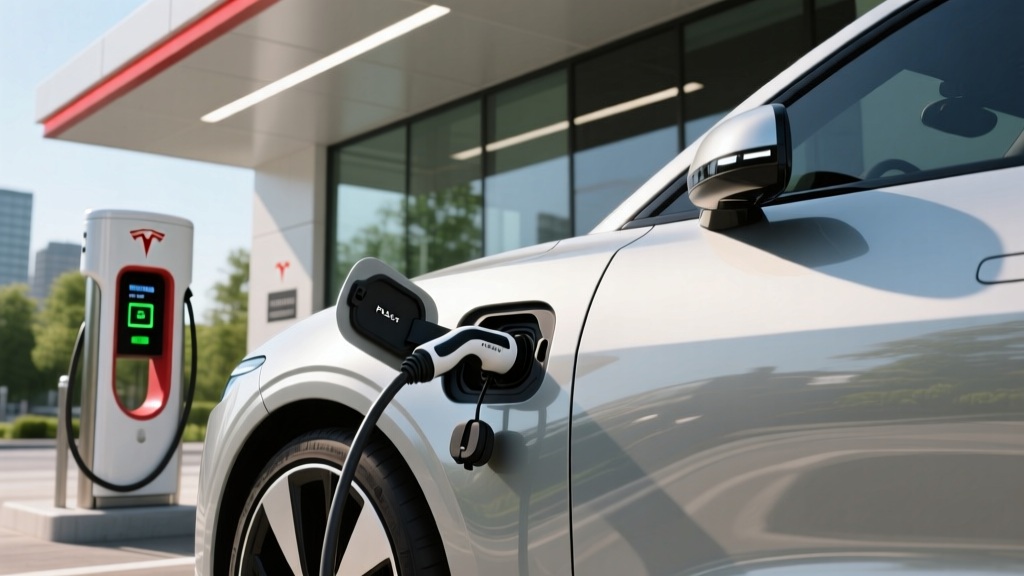
Starting with the 2025 model year, Polestar began equipping new vehicles sold in North America with native NACS charge ports, joining Ford, Rivian, and other automakers in adopting the Tesla-originated connector. For 2026, the Polestar 3 and Polestar 4 ship with NACS ports standard, granting direct plug-in access to over 20,000 Tesla Supercharger stalls across the U.S. and Canada.
For Polestar 2 owners (which retain the CCS1 port), Tesla opened select Supercharger stations to non-Tesla EVs through the Magic Dock adapter program. However, access remains limited to specific locations — not every Supercharger station supports CCS vehicles. Polestar has directed owners to use the Tesla app or in-car navigation to identify compatible stations.
Regarding a Polestar charge Tesla Supercharger discount official program: as of early 2026, Polestar does not offer a standalone, branded Supercharger discount program comparable to Ford's or Rivian's introductory free-charging promotions. Tesla's pricing at open Superchargers is standardized per kWh and displayed in the Tesla app, typically ranging from $0.25 to $0.48/kWh depending on location and time-of-use. Some Polestar lease and promotional packages have included complimentary charging credits redeemable on partner networks (primarily Electrify America), but these are not Supercharger-specific discounts. Always check Polestar's official charging page for any current promotions, as these can change quarterly.
Charging Levels Explained: Speeds, kW, and Real-World Range Added
Understanding charging speed requires distinguishing between kW (kilowatts), which measures power — the rate electricity flows — and kWh (kilowatt-hours), which measures energy capacity — how much the battery holds. Think of kW as the diameter of a hose and kWh as the size of the bucket.
| Level | Voltage / Amps | Power (kW) | Miles of Range Added Per Hour | Best For |
|---|---|---|---|---|
| Level 1 (120V household) | 120V / 12A | ~1.4 kW | 3–5 mi/hr | Overnight top-ups, emergencies |
| Level 2 (240V home/public) | 240V / 32–48A | 7.7–11.5 kW | 25–40 mi/hr | Daily home charging, workplace |
| DC Fast Charging | 400V+ architecture | 50–205 kW (Polestar 2 peak: 205 kW) | 150–600+ mi/hr (peak) | Road trips, rapid top-ups |
For a Polestar 2 Long Range Dual Motor with its 78 kWh usable battery (NMC chemistry), a full Level 2 charge from 10% to 100% takes roughly 8–9 hours on an 11.5 kW home charger. On a DC fast charger, Polestar rates the 2024+ Polestar 2 at up to 205 kW peak, achieving a 10–80% charge in approximately 27 minutes under ideal conditions — though expect real-world sessions closer to 30–35 minutes due to charge-curve tapering above 80%.
The Polestar 3 Long Range (111 kWh usable, NMC) supports up to 250 kW DC fast charging via its NACS port, with a 10–80% time of approximately 30 minutes at compatible V4 Supercharger stalls.
Connector Compatibility: NACS, CCS1, and Adapter Requirements
The connector landscape in North America has consolidated rapidly around NACS, but your Polestar's model year determines what you plug into.
| Model / Year | Native Port | Tesla Supercharger (NACS) | CCS Public Stations | Adapter Needed? |
|---|---|---|---|---|
| Polestar 2 (2021–2024) | CCS1 | Magic Dock stations only (limited) | Direct plug | None for CCS; no NACS adapter officially offered |
| Polestar 2 (2025+) | NACS | Direct plug | Requires NACS-to-CCS adapter | NACS-to-CCS adapter (dealer or aftermarket) |
| Polestar 3 (2025–2026) | NACS | Direct plug | Requires NACS-to-CCS adapter | Typically included at delivery |
| Polestar 4 (2026) | NACS | Direct plug | Requires NACS-to-CCS adapter | Typically included at delivery |
If you're buying a used Polestar 2 from the 2021–2024 model years, you're locked to CCS1 natively. You can use Tesla Supercharger Magic Dock stations where deployed, but these represent a minority of the Supercharger network. For broader Supercharger access, your practical options are third-party CCS-to-NACS adapters (priced around $150–$250 from brands like Lectron or A2Z), though Polestar has not officially endorsed these for legacy Polestar 2 vehicles. Always verify adapter safety certifications before purchasing.
Home Charger Installation: Electrical Requirements and Real Costs
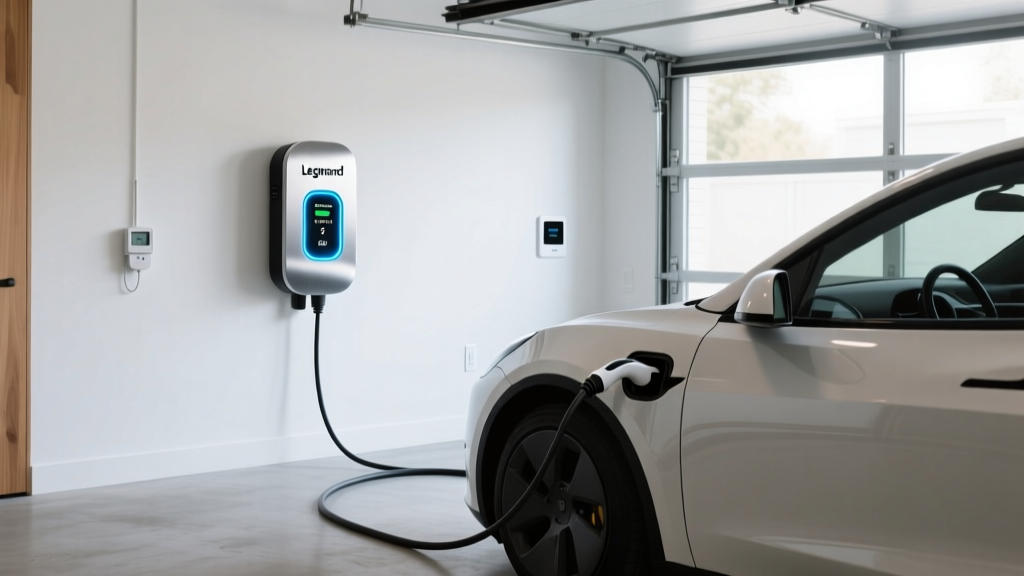
Home Level 2 charging is the backbone of practical EV ownership. For a Polestar 2 or 3, you'll want a 240V dedicated circuit delivering 32A to 48A to fully utilize the vehicle's onboard charger (rated at 11 kW AC for the Polestar 2, and up to 22 kW AC for the Polestar 3 with the optional dual-charger package).
Electrical requirements for a typical Polestar home charging setup:
- Circuit: Dedicated 40A or 50A breaker (240V)
- Wire gauge: 6 AWG copper for 50A circuits; 8 AWG for 40A
- Outlet vs. hardwired: NEMA 14-50 outlet offers portability; hardwired is preferred for 48A+ chargers (National Electrical Code requires hardwiring for continuous loads above 40A on a receptacle)
- Panel capacity: Your main service panel must have room for a double-pole breaker and sufficient amperage headroom. A 200A panel is standard for modern homes; older homes with 100A service may need an upgrade
- Permit: Most jurisdictions require an electrical permit for EV charger installation — budget $50–$250 depending on your city
| Component | Low End | Typical | High End |
|---|---|---|---|
| Level 2 charger equipment (32A–48A) | $350 | $550 | $750 |
| Electrician labor (standard install, panel nearby) | $400 | $800 | $1,500 |
| Electrical permit | $50 | $125 | $250 |
| Panel upgrade (100A → 200A, if needed) | $1,500 | $2,500 | $4,000 |
| Total (no panel upgrade) | $800 | $1,475 | $2,500 |
| Total (with panel upgrade) | $2,300 | $3,975 | $6,500 |
The single biggest cost variable is whether your electrical panel needs upgrading. Homes built after 2000 with 200A service and open breaker slots typically see straightforward installs in the $800–$1,800 range. Older homes, homes with long conduit runs from the panel to the garage, or those needing a panel upgrade will push costs significantly higher. Always get a site assessment from a licensed electrician before purchasing equipment.
Cost to Charge: Home vs. Public vs. Gasoline Per Mile
One of the strongest arguments for EV ownership is fuel-cost savings, but the actual number depends heavily on where and when you charge. Here's how the math works for a Polestar 2 Long Range Dual Motor, rated at approximately 270 miles of EPA range and consuming roughly 33 kWh per 100 miles (about 3.0 miles/kWh).
| Scenario | Rate | Cost Per 100 Miles | Cost Per Mile |
|---|---|---|---|
| Home charging (off-peak utility rate) | $0.11/kWh | $3.63 | $0.036 |
| Home charging (national avg. residential) | $0.17/kWh | $5.61 | $0.056 |
| Tesla Supercharger (avg. 2026) | $0.35/kWh | $11.55 | $0.116 |
| Electrify America / public DC fast | $0.43/kWh | $14.19 | $0.142 |
| Gas vehicle (30 MPG combined, $3.40/gal) | $3.40/gal | $11.33 | $0.113 |
At home on off-peak rates, the Polestar 2 costs roughly $0.04 per mile — about one-third the cost of gasoline. Even on public DC fast chargers at $0.43/kWh, the cost is comparable to gasoline. The savings compound over ownership: driving 12,000 miles annually at home off-peak rates saves approximately $920 per year compared to a 30 MPG gas car at $3.40/gallon.
However, if you rely exclusively on public DC fast charging at $0.35–$0.45/kWh, your per-mile cost matches or exceeds gasoline. Home charging access is the economic linchpin of EV ownership.
Recommended Home Charging Equipment for Polestar Owners
Based on power output, reliability, smart features, and compatibility with Polestar's NACS and CCS1 vehicles, here are our top home charger recommendations for 2026:
Best Overall: ChargePoint Home Flex (NACS)
- Power: Up to 12 kW (50A / 240V)
- Connector: NACS (CCS1 adapter available)
- Cable length: 23 feet
- Smart features: Wi-Fi, app scheduling, Alexa integration, energy reports
- Price: ~$599
- Why: Adjustable amperage (16A–50A) lets you match your circuit; excellent app; UL-listed
Best Value: Emporia Level 2 EV Charger
- Power: Up to 11.5 kW (48A / 240V)
- Connector: J1772 (NACS adapter included with newer units)
- Cable length: 24 feet
- Smart features: Wi-Fi, app control, solar integration, load management
- Price: ~$399
- Why: Lowest-cost smart charger with full features; ideal if you have Emporia energy monitoring
Premium Pick: Tesla Wall Connector (NACS)
- Power: Up to 11.5 kW (48A / 240V)
- Connector: NACS native
- Cable length: 24 feet
- Smart features: Wi-Fi, OTA updates, power sharing (dual units on one circuit)
- Price: ~$450
- Why: Best build quality; seamless if you also own a Tesla; power-sharing feature for two-car garages
Best for Polestar 2 (CCS1): Grizzl-E Smart
- Power: Up to 10 kW (40A / 240V)
- Connector: J1772 (CCS1 compatible)
- Cable length: 24 feet
- Smart features: OCPP-compatible, app control, load balancing
- Price: ~$499
- Why: Rugged, cold-weather rated to -40°F; Canadian-built; excellent warranty (3 years)
All chargers listed above are hardwired or NEMA 14-50 compatible. For 48A chargers, the National Electrical Code (NEC) requires hardwiring or a 60A-rated receptacle — do not plug a 48A charger into a 50A NEMA 14-50 outlet, as this creates a continuous-load safety violation.
Safety, Code, and Installation Considerations
EV charging draws sustained high current for hours — this is fundamentally different from intermittent appliance use. Proper installation is non-negotiable for safety and insurance compliance.
- Dedicated circuit: Your EV charger must be on its own dedicated double-pole breaker. Never share a circuit with other large loads (dryer, oven, HVAC).
- GFCI protection: The 2020 NEC and later require GFCI protection for outdoor receptacles used for EV charging. Hardwired installations may not require a GFCI breaker depending on local code — your electrician will advise.
- Outdoor rating: If your charger is installed outdoors or in an unconditioned garage, verify it carries a NEMA 4 (weatherproof) rating. All recommended chargers above meet this standard.
- Cable management: Use a wall-mounted cable organizer to prevent tripping hazards and cord damage. Never run charging cables across driveways or doorways.
- Load calculation: Your electrician should perform a NEC Article 220 load calculation to confirm your panel can support the charger alongside existing loads. If the calculation is tight, consider a smart charger with load management (like the Emporia or Grizzl-E) that dynamically reduces charging current when other household loads spike.
Frequently Asked Questions
How much does it cost to install a home EV charger for my Polestar?
A standard Level 2 home charger installation with an existing 200A panel and nearby garage location typically costs $800–$2,500 including equipment, electrician labor, and permit. If your home requires a panel upgrade from 100A to 200A, add $1,500–$4,000. Always get a site-specific quote from a licensed electrician.
How fast will each charging level add range to a Polestar?
Level 1 (120V) adds roughly 3–5 miles of range per hour — adequate only for overnight top-ups on low-mileage days. Level 2 (240V, 40A–48A) adds 25–40 miles per hour, fully recharging a Polestar 2 overnight. DC fast charging at 150–205 kW can add 150+ miles in 15–20 minutes during the peak portion of the charge curve, tapering significantly above 80% SoC.
Which connector and charger is compatible with my Polestar?
Polestar 2 models from 2021–2024 use CCS1 natively. Polestar 2 (2025+), Polestar 3, and Polestar 4 use NACS natively. For home charging, choose a charger matching your vehicle's native port to avoid adapter dependency. CCS1 owners should look for J1772 or CCS chargers; NACS owners should choose a NACS-native charger like the Tesla Wall Connector or ChargePoint Home Flex NACS.
How much does charging a Polestar cost per mile vs. gas?
At home off-peak rates (~$0.11/kWh), a Polestar 2 costs approximately $0.04 per mile. On public DC fast chargers ($0.35–$0.43/kWh), cost rises to $0.12–$0.14 per mile. A comparable 30 MPG gas car at $3.40/gallon costs about $0.11 per mile. Home charging delivers the most significant savings — roughly $900+ annually for a 12,000-mile driver.
What electrical upgrades might I need for a home charger?
The most common upgrade is a panel capacity increase from 100A to 200A, required when your existing panel lacks headroom for a 40A–50A dedicated EV circuit. Other potential upgrades include replacing a Federal Pacific or Zinsco panel (known safety hazards), adding a sub-panel if the main panel is far from the garage, or upgrading the utility service drop for homes with very old wiring. Your electrician's load calculation will determine what's required.
Does Polestar offer any official Supercharger discount or free charging?
As of 2026, Polestar does not maintain a permanent, official Tesla Supercharger discount program. Promotional complimentary charging has been offered on a limited basis through lease deals or launch events, typically on partner networks like Electrify America rather than Tesla Superchargers. Check Polestar's official site or your dealer for any current-time offers, as these vary by quarter and model.