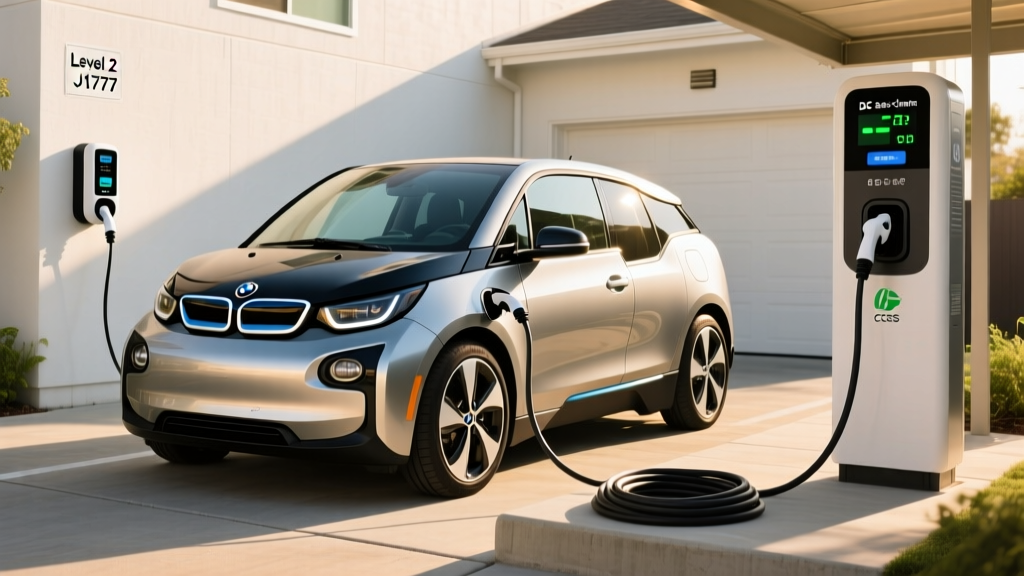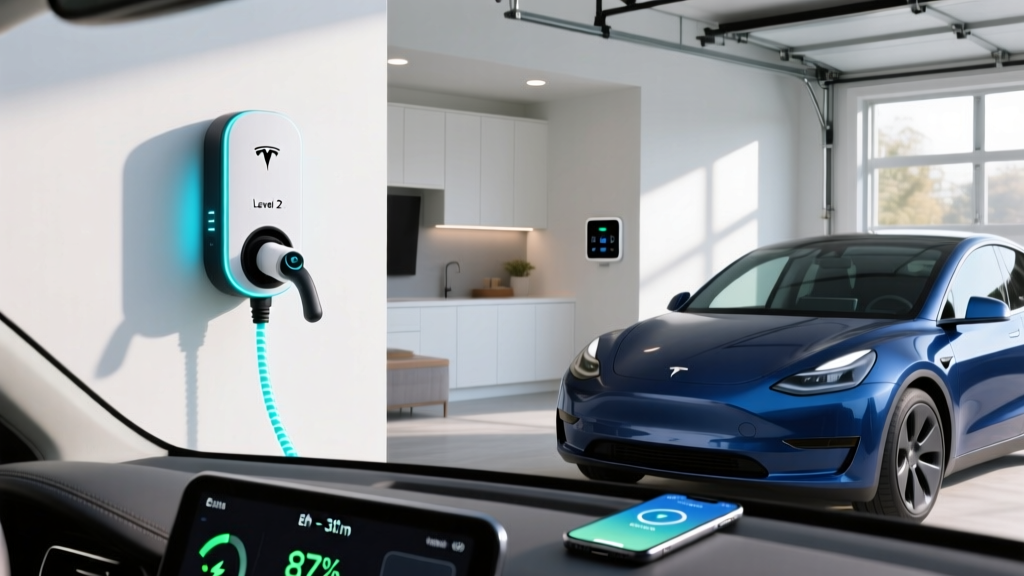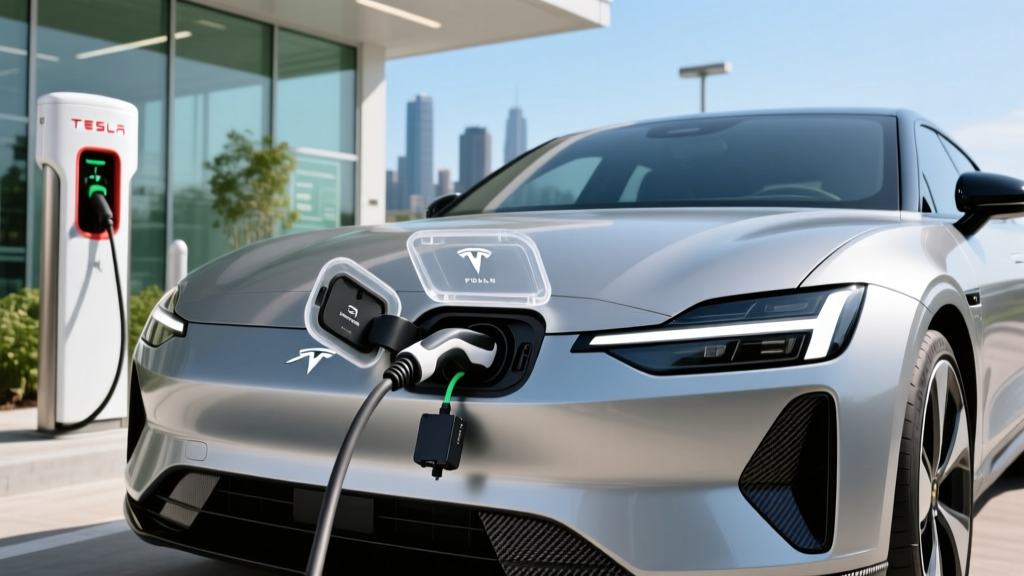
If you own a Polestar 2, Polestar 3, or Polestar 4, the short answer to can Polestar use Tesla Supercharger stations is yes — but the details matter. Polestar vehicles sold in North America through model year 2025 shipped with a CCS1 charge port. Beginning in mid-2025, Polestar started offering a manufacturer-approved NACS adapter that unlocks access to Tesla's Supercharger network, and newer Polestar models are transitioning to native NACS ports. Here's exactly how it works, what it costs, and how to set up reliable charging at home.
How Polestar Connects to Tesla Superchargers
Tesla opened its Supercharger network to non-Tesla EVs under the "Superchargers with Magic Dock" program and, more broadly, by allowing CCS-equipped vehicles to use Tesla stations via approved adapters. Polestar joined the NACS adoption coalition in 2024, confirming that Polestar drivers would gain Supercharger access through a NACS-to-CCS adapter.
Here's how compatibility breaks down by model and model year:
| Polestar Model | Native Port | Adapter Needed for Tesla SC | Max DC Charge Rate |
|---|---|---|---|
| Polestar 2 (2021–2025) | CCS1 | NACS-to-CCS adapter | 205 kW (peak) |
| Polestar 3 (2025–2026) | CCS1 / NACS (late 2025+) | Adapter if CCS1 port | 250 kW (peak) |
| Polestar 4 (2025–2026) | CCS1 / NACS (late 2025+) | Adapter if CCS1 port | 200 kW (peak) |
The adapter Polestar officially recommends is the Tesla-approved NACS adapter available through Polestar's parts channel or Tesla's online store (approximately $199–$249). Third-party adapters from Lectron and A2Z EV also work but may not be covered under Polestar's warranty if a charging-related fault occurs. Always confirm your adapter is rated for the full DC fast-charge current — cheap adapters may limit you to Level 2 speeds or overheat under sustained high-power sessions.
Charging Levels Explained: Speeds, kW, and Real-World Range Added
Before we get into home installation, let's nail down the three charging levels and how fast each one adds range to a Polestar. The critical distinction: kW (kilowatts) measures power — how fast energy flows into your battery. kWh (kilowatt-hours) measures energy — the total capacity of your battery. Think of kW as the flow rate of a hose and kWh as the size of the bucket.
| Charging Level | Voltage / Phase | Power (kW) | Miles of Range Added per Hour | Typical Use Case |
|---|---|---|---|---|
| Level 1 (120V) | 120V / Single | 1.4–1.9 kW | 3–5 miles/hr | Overnight trickle, emergency top-up |
| Level 2 (240V) | 240V / Single | 7.2–19.2 kW | 20–60 miles/hr | Home daily charging, workplace |
| DC Fast Charging | 400V+ / DC | 50–250+ kW | 150–600+ miles/hr | Road trips, rapid top-up |
Real-World Charging Time Examples for Polestar
Using the Polestar 2 Long Range Dual Motor (82 kWh usable battery, NMC chemistry) as our baseline:
- Level 1 (120V, 12A): 10–80% in approximately 45–50 hours. Only practical for plug-in hybrids or emergency use.
- Level 2 (240V, 48A / 11.5 kW): 10–80% in roughly 5.5–6 hours. Ideal overnight charge.
- Level 2 (240V, 32A / 7.7 kW): 10–80% in about 8 hours. Common for portable or lower-amperage circuits.
- DC Fast Charge (Tesla V3 Supercharger, 250 kW peak): 10–80% in approximately 28–32 minutes (Polestar 2 peaks at ~205 kW and tapers above 60% SoC).
- DC Fast Charge (Tesla V4 Supercharger): Similar or slightly faster for Polestar 3/4 models with higher peak acceptance.
The charge curve matters: your Polestar will pull peak kW only between roughly 10–40% State of Charge. Above 60%, the rate tapers significantly to protect battery health. That's why the industry standard metric is 10–80%, not 0–100%. Charging from 80–100% can take as long as the 10–80% session.
Home Charger Installation: Electrical Requirements and Costs
A Level 2 home charger is the single most impactful upgrade for daily EV ownership. For a Polestar 2 or 3, a 48-amp Level 2 charger on a dedicated 60-amp 240V circuit delivers approximately 11.5 kW — enough to fully replenish a day's driving in 1–2 hours and complete a 10–80% charge overnight.
Electrical Requirements
- Circuit: Dedicated 60-amp breaker for a 48A continuous-load charger (NEC requires 125% overhead: 48A × 1.25 = 60A breaker).
- Voltage: 240V single-phase, hardwired or NEMA 14-50 outlet.
- Wire gauge: 6 AWG copper (THHN in conduit) for runs up to ~50 feet; 4 AWG for longer runs to mitigate voltage drop.
- GFCI protection: Required for receptacle-based (NEMA 14-50) installations per NEC 2020/2023. Hardwired units may not require a GFCI breaker depending on local code.
- Outdoor rating: If your charger mounts outdoors, ensure the unit carries a NEMA 4 or IP65 rating. All recommended units below meet this.
Panel Upgrade: The Hidden Cost
Many homes built before 2000 have 100-amp or 150-amp electrical panels. Adding a 60-amp EV circuit may push your panel beyond its safe capacity, especially if you also run electric dryers, ovens, or HVAC. A licensed electrician will perform a load calculation per NEC Article 220 to determine if your panel can handle the addition.
If you need a panel upgrade to 200 amps, expect to add $1,500–$3,500 to your total project cost. This is the single biggest variable in home charger installation and the one most online guides gloss over.
| Component | Typical Cost Range | Notes |
|---|---|---|
| Level 2 Charger (hardware) | $350–$750 | 48A smart charger; varies by brand/features |
| Electrician labor (standard install) | $500–$1,500 | Assumes panel is adjacent to garage; short wire run |
| Electrical permit | $50–$200 | Varies by municipality; required in most jurisdictions |
| Panel upgrade (if needed) | $1,500–$3,500 | 200A service upgrade; not always required |
| NEMA 14-50 outlet (if not hardwired) | $100–$300 | Includes outlet, box, GFCI breaker if required |
| Total (no panel upgrade) | $900–$2,450 | Most common scenario for newer homes |
| Total (with panel upgrade) | $2,400–$5,950 | Older homes or maxed-out panels |
Always get at least two quotes from licensed electricians and confirm they have specific EV charger installation experience. Ask whether the quote includes the permit and final inspection.
Cost to Charge: Home vs. Public vs. Gas
One of the strongest arguments for home charging is cost. Let's compare what it actually costs to "fuel" a Polestar 2 Long Range Dual Motor (EPA-rated 276 miles; real-world highway expect ~240–255 miles) against a comparable gas sedan averaging 28 MPG combined.
| Charging/Fueling Scenario | Cost per kWh or Gallon | Cost per Mile | Cost for 300-Mile Trip |
|---|---|---|---|
| Home Level 2 (off-peak utility rate) | $0.10–$0.14/kWh | $0.03–$0.04 | $9–$12 |
| Home Level 2 (standard rate, no TOU) | $0.15–$0.18/kWh | $0.04–$0.05 | $12–$15 |
| Tesla Supercharger (NACS adapter) | $0.28–$0.36/kWh | $0.08–$0.10 | $24–$30 |
| Electrify America / public DCFC | $0.32–$0.48/kWh | $0.09–$0.14 | $27–$42 |
| Gas car (28 MPG, $3.40/gal) | $3.40/gallon | $0.12 | $36 |
The Polestar 2 Long Range consumes approximately 3.3–3.5 miles per kWh (roughly 29–30 kWh per 100 miles). At home off-peak rates, you'll spend roughly $0.035 per mile — about one-quarter the cost of gasoline. Even at Tesla Supercharger rates, the per-mile cost is competitive with or below gas, especially as fuel prices fluctuate.
For a detailed breakdown of your local utility's time-of-use (TOU) rates, check your provider's EV-specific plans. Many utilities offer overnight rates below $0.10/kWh, making a full Polestar 2 charge (82 kWh × $0.10 = $8.20) cheaper than a single fast-food meal.
Recommended Home Level 2 Chargers for Polestar
These chargers are all CCS1-compatible (the native Polestar port), hardwirable or NEMA 14-50 capable, and offer smart features for scheduling and energy monitoring. All carry UL or ETL certification.
ChargePoint Home Flex
- Power Output: Up to 12 kW (50A) on a 60A circuit; configurable down to 16A for smaller panels
- Connector: CCS1 (J1772 + CCS combo), 24-foot cable
- Smart Features: Wi-Fi, app scheduling, Alexa integration, energy reports, ChargePoint network account
- Price: ~$699 (charger only); frequently discounted to $549–$599
- Best For: Flexibility — adjustable amperage means it works even if your panel can't support a full 60A circuit
Wallbox Pulsar Plus
- Power Output: Up to 11.5 kW (48A) on a 60A circuit
- Connector: CCS1, 25-foot cable
- Smart Features: Wi-Fi + Bluetooth, myWallbox app, load-balancing with optional Power Meter accessory, solar integration
- Price: ~$599–$649
- Best For: Compact size (smallest in class) and solar-panel owners who want to charge on excess solar production
Emporia Level 2 EV Charger
- Power Output: Up to 11.5 kW (48A) on a 60A circuit
- Connector: CCS1, 24-foot cable
- Smart Features: Wi-Fi, Emporia app with real-time energy monitoring, integration with Emporia Vue whole-home energy monitor, TOU scheduling
- Price: ~$399–$449 (best value in class)
- Best For: Budget-conscious buyers who still want full smart features and detailed energy tracking
For Polestar 3 and Polestar 4 owners whose vehicles may ship with native NACS ports, any of the above chargers can be ordered with a NACS connector instead, or you can use a J1772-to-NACS adapter (approximately $100–$150) for backward compatibility.
Using Tesla Superchargers on Road Trips: Practical Tips
Accessing Tesla Superchargers with a Polestar via NACS adapter opens up the largest fast-charging network in North America — over 25,000 stalls as of early 2026, per Tesla's Supercharger page. Here's how to make it seamless:
- Set up a Tesla account in the Tesla app (free to create). Add your Polestar as a non-Tesla vehicle and register your adapter's serial number if prompted.
- Enable "Charge with NACS Adapter" in your Polestar's charging settings menu (available via OTA update on 2024+ Polestar 2 models and standard on Polestar 3/4).
- Find open stalls using the Tesla app, PlugShare, or A Better Routeplanner (ABRP). Not all Supercharger locations are open to non-Tesla EVs — filter accordingly.
- Precondition your battery by navigating to the Supercharger in your route planner. The Polestar's thermal management system will warm the battery for optimal charge acceptance, reducing your 10–80% time by 3–5 minutes in cold weather.
- Expect cable reach limitations. Tesla Supercharger cables are optimized for Tesla's rear-driver-side charge port. The Polestar 2's charge port is on the rear driver side as well, so most stalls will reach — but some pull-through or angled stalls may require you to park carefully or use an extension (not recommended for DC fast charging).
On a 300-mile highway trip, a Polestar 2 Long Range will typically need one 25–30-minute Supercharger stop to go from 20% to 80%, adding roughly 160–170 miles of range. The Polestar 3 Long Range (111 kWh usable battery, EPA ~315 miles) may stretch further between stops but will take slightly longer to charge due to the larger battery.
Safety, Code Compliance, and the §30D Tax Credit
Safety Essentials
- Never use an extension cord with a Level 2 charger.
- Ensure your charger is UL-listed or ETL-certified — cheap imports without certification pose fire and liability risks.
- For outdoor installations, confirm the charger is rated NEMA 4 (weather-resistant) and mounted with the connector holster facing downward to prevent water ingress.
- If installing a NEMA 14-50 receptacle, use an industrial-grade outlet (Hubbell or Bryant) — residential-grade 14-50 outlets have been linked to overheating under sustained EV loads.
Federal Tax Credit for Home Charging Equipment
Under IRS rules for the Alternative Fuel Vehicle Refueling Property Credit, you may claim up to 30% of the cost of home EV charging equipment and installation, capped at $1,000. This applies to both the charger hardware and the electrical work.
Key restrictions for 2026:
- The property must be located in an eligible census tract (rural or low-income community as defined by the IRS — use the IRS eligibility tool to check your address).
- The credit is non-refundable (it reduces your tax liability to zero but won't generate a refund beyond that).
- Keep receipts for both equipment and electrician labor; both count toward the $1,000 cap.
This is separate from the §30D New Clean Vehicle Credit (up to $7,500) that may apply when purchasing a new Polestar, which has its own MSRP caps, buyer income limits, and battery-sourcing requirements.
Frequently Asked Questions
Can Polestar use Tesla Supercharger stations without an adapter?
No. Polestar vehicles with a CCS1 charge port (all models through early 2025) require a NACS-to-CCS adapter to physically connect to Tesla Supercharger stalls. Late-2025 and 2026 Polestar models transitioning to native NACS ports will plug in directly. Tesla's Magic Dock stations have a built-in CCS adapter, but these are limited to select urban locations.
How much does it cost to install a home EV charger?
A standard Level 2 home charger installation runs $900–$2,450 including the charger, electrician labor, and permit — assuming your electrical panel has sufficient capacity. If a 200-amp panel upgrade is required, add $1,500–$3,500. Always get a professional load calculation before assuming your panel can handle a new 60-amp circuit.
How fast will each charging level add range to my Polestar?
Level 1 (120V) adds about 3–5 miles of range per hour. Level 2 (240V, 48A) adds roughly 35–40 miles per hour for a Polestar 2. DC fast charging at a Tesla V3 Supercharger can add up to 150–180 miles in 15 minutes at peak charge rate, though sustained rates taper above 60% SoC.
Which connector is compatible with my Polestar?
Model-year 2021–2025 Polestar vehicles use CCS1 natively. For Tesla Supercharger access, you need a NACS-to-CCS adapter (~$199–$249). For public CCS stations (Electrify America, EVgo, ChargePoint), no adapter is needed. Late-2025+ models may ship with native NACS, eliminating the adapter requirement for Tesla but requiring a NACS-to-CCS adapter for legacy CCS stations.
How much does charging a Polestar cost per mile vs. gas?
At home off-peak rates ($0.12/kWh), a Polestar 2 costs approximately $0.035–$0.04 per mile. A comparable 28-MPG gas car at $3.40/gallon costs about $0.12 per mile. Even at Tesla Supercharger rates ($0.32/kWh average), the Polestar costs roughly $0.09 per mile — still below gasoline. See the cost comparison table above for detailed scenarios.
What electrical upgrades might I need for a home charger?
The most common upgrade is a 200-amp panel replacement if your existing panel (often 100A or 150A in older homes) can't accommodate a new 60-amp circuit. Other potential needs include replacing a Federal Pacific or Zinsco panel (known safety hazards), upgrading service entrance wiring, or adding a sub-panel if your main panel is far from the garage. A licensed electrician's load calculation will determine what's required.
Does using a NACS adapter void my Polestar warranty?
Using a Tesla-approved or Polestar-recommended NACS adapter does not void your vehicle warranty. However, damage caused by a third-party adapter that fails or delivers improper voltage may not be covered. Stick with adapters sold or recommended by Polestar or Tesla, and retain proof of purchase.
For Polestar owners, the combination of home Level 2 charging and Supercharger access via a NACS adapter covers virtually every charging scenario — from $8 overnight fills to 25-minute road-trip stops. The key is investing in a quality adapter, a properly installed 48-amp home charger, and understanding your electrical panel's capacity before you start.