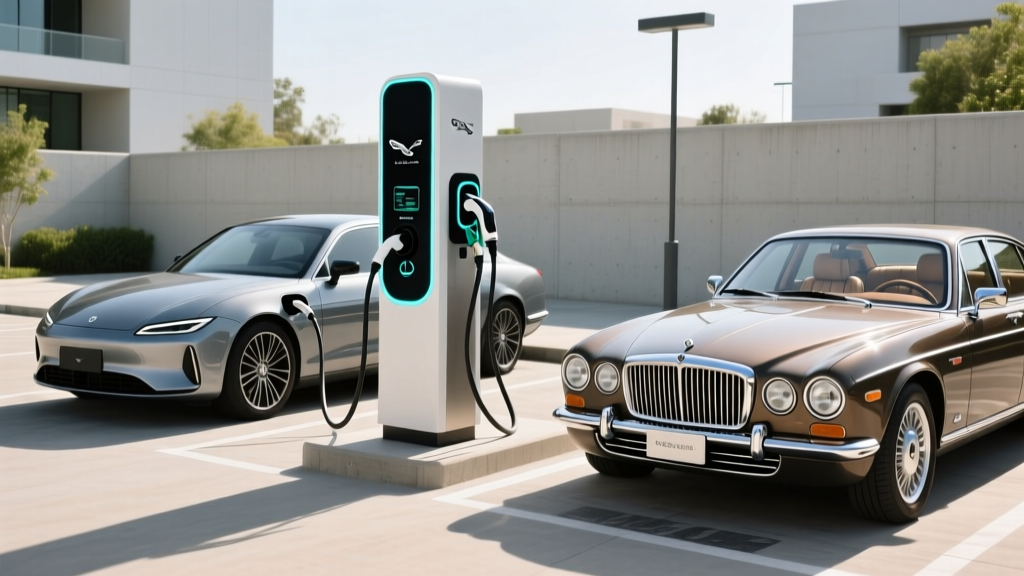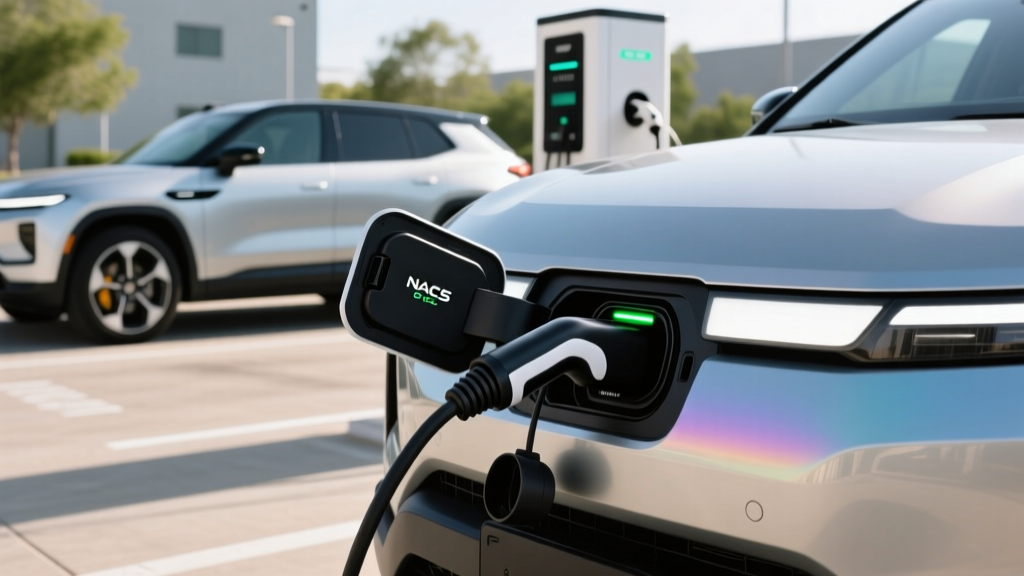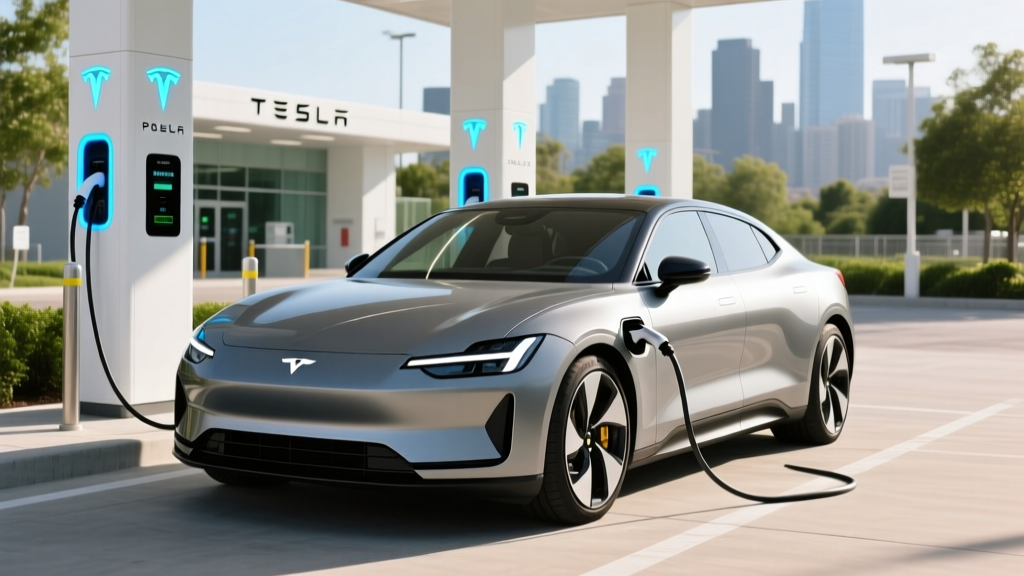
Polestar owners have had access to the Tesla Supercharger network since mid-2024, and by 2026 the integration is mature. Every current Polestar sold in the U.S. — the Polestar 2, Polestar 3, and Polestar 4 — ships with a native NACS charge port or includes a factory-approved CCS-to-NACS adapter. That means roughly 20,000+ Supercharger stalls across North America are available for DC fast charging, dramatically expanding the public charging map beyond Electrify America and EVgo.
But Supercharger access is only one piece of the ownership puzzle. Most of your charging will happen at home, and understanding the difference between Level 1, Level 2, and DC fast charging — along with the real costs of home installation — is what separates confident EV owners from frustrated ones. This guide covers the full charging picture for Polestar owners in 2026.
Charging Levels Explained: Speeds, Power, and What to Expect
The single most important distinction in EV charging is between kW (kilowatts — the rate of power delivery) and kWh (kilowatt-hours — the total energy stored in your battery). Think of kW as how fast water flows from a hose, and kWh as the size of the bucket. A higher kW charger fills your battery faster, but the battery capacity (in kWh) determines how much total energy it holds.
Here is how the three charging levels break down for real-world Polestar ownership:
| Level | Voltage | Power (kW) | Miles of Range Added per Hour | Typical Use Case |
|---|---|---|---|---|
| Level 1 | 120V AC | 1.0–1.4 kW | 3–5 mi/hr | Overnight top-up; emergency only |
| Level 2 | 240V AC | 7.2–11.5 kW | 25–45 mi/hr | Daily home & workplace charging |
| DC Fast Charging | 400V+ DC | 50–205 kW | 150–650 mi/hr (peak) | Road trips; Supercharger/EA stations |
For a Polestar 2 Long Range Dual Motor (78 kWh usable battery, EPA 276 miles), Level 2 at 11.5 kW adds a full charge in roughly 8 hours — ideal for overnight. On a Tesla V3 Supercharger (250 kW peak), the Polestar 2 peaks at around 205 kW and charges from 10–80% in approximately 28 minutes, though the charge curve tapers significantly above 80%, so plan to unplug at 80% on road trips to keep stops short.
Polestar and Tesla Supercharger Compatibility: Connectors and Adapters
The North American Charging Standard (NACS) — originally Tesla's proprietary connector — has become the dominant fast-charging standard in the U.S. Here is where each Polestar model stands for 2026:
| Model | Native Port | Adapter Needed for Supercharger? | Adapter Needed for CCS Stations? |
|---|---|---|---|
| Polestar 2 (2025–2026) | NACS | No — plug directly into V3/V4 stalls | Yes — NACS-to-CCS adapter (available from Polestar) |
| Polestar 3 (2025–2026) | NACS | No — native NACS | Yes — NACS-to-CCS adapter included |
| Polestar 4 (2026) | NACS | No — native NACS | Yes — NACS-to-CCS adapter included |
| Polestar 2 (pre-2025, CCS) | CCS1 | Yes — CCS-to-NACS adapter required | No — plug directly |
If you own an earlier Polestar 2 with a CCS1 port, Polestar offers an approved CCS-to-NACS adapter (roughly $200–$250) that enables Supercharger access. Third-party adapters exist but may not be supported under warranty — stick with the OEM option. The adapter adds roughly 2–3 inches of length between the cable and your charge port, which can make some tight Supercharger stalls slightly awkward, especially with the shorter V3 cables.
For Supercharger navigation, Polestar's infotainment (Android Automotive OS) now includes Supercharger locations in the native navigation. You can also use the Tesla app or the Polestar app to locate and activate stalls. Payment is handled through the Polestar charging account linked to the Tesla network, or via the Tesla app with your VIN registered.
Home Charger Installation: Costs, Electrical Requirements, and Upgrades
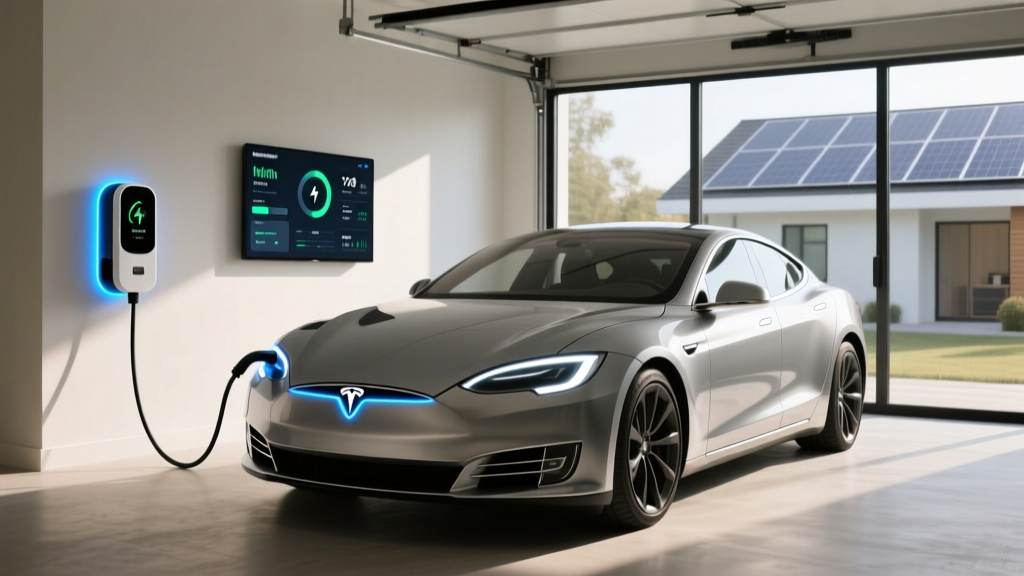
Most Polestar owners do 80–90% of their charging at home on a Level 2 charger. The installation cost varies enormously depending on your home's electrical panel, the distance from the panel to the charger location, and local permitting requirements.
Electrical Requirements
A standard Level 2 home charger requires a dedicated 240V circuit. The most common configurations:
- 40-amp circuit (delivers 32 amps / 7.7 kW continuous) — adequate for overnight charging of all Polestar models
- 50-amp circuit (delivers 40 amps / 9.6 kW continuous) — faster, recommended if your panel has capacity
- 60-amp circuit (delivers 48 amps / 11.5 kW continuous) — maximum Level 2 speed for Polestar's onboard charger
The Polestar 2 and 3 have an 11 kW onboard AC charger, meaning they can accept up to 48 amps at 240V. Wiring a 60-amp circuit lets you take full advantage of that capability.
Panel Upgrade: The Hidden Cost
Homes with a 100-amp main electrical panel often lack the capacity for a dedicated 50–60 amp EV circuit, especially if you also run electric heat, a dryer, and an electric oven. A panel upgrade to 200 amps typically costs $1,500–$3,000 before any EV charger work begins. Homes built after 2000 usually have 200-amp panels and can accommodate a Level 2 circuit without an upgrade, but a licensed electrician must perform a load calculation to confirm.
| Item | Cost Range | Notes |
|---|---|---|
| Level 2 Charger (hardware) | $350–$750 | Varies by brand, power, cable length |
| Electrician labor (standard install) | $500–$1,500 | 20–40 ft run from panel, conduit, wiring |
| Electrician labor (complex install) | $1,500–$3,000+ | Long runs, trenching, wall penetration |
| Permit and inspection | $50–$300 | Varies by municipality |
| Panel upgrade (if needed) | $1,500–$3,000 | 100A to 200A service upgrade |
| Total (no panel upgrade) | $900–$2,550 | Most common scenario |
| Total (with panel upgrade) | $2,400–$5,550+ | Older homes with 100A service |
Always get at least two quotes from licensed electricians, and confirm that the quote includes the permit and final inspection. Unpermitted work can void your homeowner's insurance and cause issues at resale.
Charging Cost Per Mile: Home vs. Public vs. Gas
One of the strongest arguments for EV ownership is lower fueling cost — but the savings depend heavily on where and when you charge. Here is a realistic breakdown for a Polestar 2 Long Range (efficiency approximately 3.0 miles per kWh, or about 33 kWh per 100 miles):
| Scenario | Rate ($/kWh) | Cost per 100 Miles | Cost per Mile |
|---|---|---|---|
| Home (off-peak utility rate) | $0.08–$0.12 | $2.64–$3.96 | $0.026–$0.040 |
| Home (average U.S. rate) | $0.16–$0.20 | $5.28–$6.60 | $0.053–$0.066 |
| Tesla Supercharger (average) | $0.28–$0.36 | $9.24–$11.88 | $0.092–$0.119 |
| Electrify America / public DC | $0.35–$0.48 | $11.55–$15.84 | $0.116–$0.158 |
| Gas equivalent (25 MPG, $3.40/gal) | — | $13.60 | $0.136 |
At off-peak home rates, charging a Polestar 2 costs roughly 3–4 cents per mile — about a quarter of what a 25 MPG gas car costs at $3.40/gallon. Even at Supercharger rates, you are often paying less per mile than gasoline. The savings are most dramatic for high-mileage drivers and those with access to time-of-use utility plans.
The IRS also offers the Residential Clean Energy Credit, which covers 30% of the cost of home EV charging equipment and installation (up to $1,000). Check irs.gov for current eligibility, as income and location-based restrictions may apply.
Recommended Home Chargers for Polestar Owners
These Level 2 chargers pair well with Polestar's 11 kW onboard charger and NACS charge port:
Tesla Wall Connector (NACS)
- Power: Up to 11.5 kW (48 amps at 240V)
- Connector: Native NACS — plugs directly into 2025+ Polestar models
- Cable length: 24 feet
- Smart features: Wi-Fi, OTA updates, power sharing between units, load management
- Price: ~$475
- Best for: Polestar owners who also use Superchargers frequently — same connector, proven reliability
ChargePoint Home Flex (NACS)
- Power: Up to 12 kW (50 amps at 240V); adjustable down to 16A for lower-capacity panels
- Connector: NACS (2025+ version) or J1772 with adapter
- Cable length: 23 feet
- Smart features: Wi-Fi, Alexa integration, scheduling, detailed energy tracking via app
- Price: ~$650
- Best for: Owners wanting detailed app analytics and flexible amperage settings
Emporia Vue Level 2 Charger
- Power: Up to 11.5 kW (48 amps)
- Connector: NACS (2025+ version)
- Cable length: 24 feet
- Smart features: Wi-Fi, solar integration, energy monitoring, works with Emporia whole-home energy panel
- Price: ~$400
- Best for: Budget-conscious buyers or homes with solar panels
For pre-2025 Polestar 2 owners with CCS ports, the Grizzl-E Smart (~$450, up to 10 kW, J1772 connector) is a durable, weather-resistant option — you would use your CCS-to-NACS adapter only at public DC stations, while Level 2 home charging uses J1772 (which fits CCS ports natively).
Charging Time Examples: What to Expect
Here are approximate charging times for current Polestar models at various power levels. All times assume starting from 10% SoC:
| Model | Battery (kWh usable) | Level 2 at 11.5 kW (10–100%) | Tesla V3 Supercharger (10–80%) | 50 kW DC Fast (10–80%) |
|---|---|---|---|---|
| Polestar 2 LRDM | 78 kWh | ~7.5 hours | ~28 min | ~75 min |
| Polestar 3 LRDM | 107 kWh | ~10 hours | ~30 min | ~100 min |
| Polestar 4 LRDM | 100 kWh | ~9.5 hours | ~25 min | ~95 min |
The Polestar 3 and 4 use 800V battery architectures (sourced from Gea/Volvo's SPA2/SEA platforms), which enables faster DC charging speeds than the 400V Polestar 2. On a V4 Supercharger (which can deliver 350+ kW), the Polestar 4 is expected to accept up to 210 kW peak, though real-world sustained rates average around 140–160 kW across the 10–80% window.
Safety, Code, and Best Practices
Home EV charger installation must comply with the National Electrical Code (NEC) Article 625, which governs electric vehicle charging systems. Key requirements:
- Dedicated circuit: Your Level 2 charger must be on its own dedicated breaker — not shared with other appliances
- GFCI protection: NEC 2020 and later requires GFCI (Ground Fault Circuit Interrupter) protection for EV charging outlets. Hardwired chargers typically have GFCI built in; receptacle-based installs need a GFCI breaker
- Outdoor rating: If installing outdoors, the charger must carry a NEMA 4 (or IP65+) rating. All three chargers recommended above are outdoor-rated
- Cable management: NEC requires that the charging cable not create a trip hazard — wall-mounted retractors or cable organizers are recommended
- Permit and inspection: Nearly all jurisdictions require an electrical permit for EV charger installation. The inspection ensures proper wire gauge, breaker sizing, and grounding
Never use an extension cord with a Level 2 charger. The sustained high current (32–48 amps for hours) generates significant heat, and undersized extension cords are a fire risk. If the charger cable does not reach your car's charge port, have an electrician relocate the charger or install a longer approved cable.
Frequently Asked Questions
How much does it cost to install a home EV charger for my Polestar?
A standard Level 2 installation (50-amp circuit, 20–40 foot wire run, no panel upgrade) typically costs $900–$2,550 total including hardware, electrician labor, and permit. If your home needs a 200-amp panel upgrade, add $1,500–$3,000. The federal Residential Clean Energy Credit may cover 30% of equipment and installation costs, up to $1,000.
How fast will each charging level add range to my Polestar?
Level 1 (120V) adds roughly 3–5 miles per hour — essentially useless for daily driving but fine for maintaining charge. Level 2 (240V, 48 amps) adds 35–45 miles per hour, enough to fully recharge overnight. DC fast charging at a Tesla V3 Supercharger adds roughly 150–200 miles in 15 minutes at peak speeds, though the rate tapers as the battery fills.
Can I use a Tesla Supercharger with my older Polestar 2 that has a CCS port?
Yes, but you need a CCS-to-NACS adapter. Polestar sells an approved adapter for approximately $200–$250. Register your vehicle's VIN in the Tesla app or your Polestar charging account, then plug in at any Supercharger stall. Expect slightly reduced peak charge rates through the adapter due to the additional connection point.
How much does charging cost per mile compared to gas?
At home on an average utility rate ($0.17/kWh), a Polestar 2 costs about 5–6 cents per mile to fuel. At a Tesla Supercharger ($0.30–$0.36/kWh), it costs about 10–12 cents per mile. A comparable gas car at 25 MPG with $3.40/gallon fuel costs about 13.6 cents per mile. Home charging delivers the largest savings — often 60–70% less than gasoline per mile.
What electrical upgrades might my home need for a Level 2 charger?
The most common upgrade is a panel capacity increase from 100 amps to 200 amps, needed in older homes that lack spare capacity for a dedicated 50–60 amp circuit. Your electrician will perform a load calculation per NEC Article 220 to determine if your current panel can support the charger. Homes with gas appliances (stove, dryer, heat) often have more electrical headroom than all-electric homes. Some utilities offer "make-ready" programs that subsidize panel upgrades for EV adoption.
Do I need to precondition my Polestar before Supercharging?
Yes. Navigate to the Supercharger in your Polestar's built-in Google Maps navigation, and the car will automatically begin preconditioning the battery — warming it to the optimal temperature for fast DC charging. In cold weather (below 40°F), preconditioning can improve your peak charge rate by 30–50% and reduce your 10–80% time by several minutes. Skipping preconditioning in winter can result in painfully slow initial charge rates as the cold battery limits current acceptance.