Why Polestar Range Miles Don't Tell the Whole Charging Story
If you own or are shopping for a Polestar, you've probably memorized the EPA range sticker. But range is only half the equation — the other half is how quickly and cheaply you can put those miles back into the battery. A 2026 Polestar 4 with its 100 kWh (usable) NMC battery and EPA-estimated 325 miles of range will behave very differently at a 50 kW public charger than at a 250 kW DC fast station or a hardwired 48-amp home wall connector.
This guide maps every current Polestar model's real-world range expectations to actual charging times, home installation costs, and per-mile economics — so you can plan a charging setup that matches the car you actually drive.
2026 Polestar Lineup: Range, Battery, and Charging Specs at a Glance
| Model | Battery (usable kWh) | EPA Range (mi) | Real-World Range (mi) | Peak DC Charge (kW) | 10–80% DC Time | Level 2 Rate (kW) | Base MSRP |
|---|---|---|---|---|---|---|---|
| Polestar 2 LR Single Motor | 79 kWh NMC | 276 | 220–250 | 200 kW | ~28 min | 11 kW | $49,900 |
| Polestar 2 LR Dual Motor | 79 kWh NMC | 276 | 215–245 | 200 kW | ~28 min | 11 kW | $54,900 |
| Polestar 3 LR Dual Motor | 107 kWh NMC | 315 | 260–290 | 250 kW | ~25 min | 11 kW | $67,900 |
| Polestar 4 LR Dual Motor | 100 kWh NMC | 325 | 270–300 | 220 kW | ~26 min | 22 kW (3-phase) / 11 kW (1-phase) | $59,900 |
Sources: fueleconomy.gov, Polestar US specifications. Real-world range estimates based on highway driving at 70 mph and 30–45°F conditions.
Charging Levels Explained: How Fast Will Each Add Polestar Range Miles?
The single most important distinction in EV charging is kW (kilowatts) = power (how fast energy flows) versus kWh (kilowatt-hours) = energy (how much the battery holds). A 79 kWh Polestar 2 battery charged at 11 kW takes roughly 7 hours from empty; at 1.4 kW (Level 1), it takes over 56 hours.
| Level | Voltage / Amperage | Power (kW) | Miles Added per Hour | Best For |
|---|---|---|---|---|
| Level 1 (120V outlet) | 120V / 12A | 1.4 kW | 3–5 mi/hr | Overnight top-up, low-mileage drivers |
| Level 2 (240V home) | 240V / 40–48A | 9.6–11.5 kW | 28–38 mi/hr | Daily home charging, full overnight recharge |
| DC Fast Charging | 400–800V DC | 50–250 kW | 150–650 mi/hr (peak) | Road trips, quick top-ups |
Understanding the DC Fast-Charging Curve
Polestar's advertised peak charge rate (e.g., 200 kW for the Polestar 2) is only sustained for a portion of the session. A typical charge curve for the Polestar 2 Long Range at a 200+ kW station looks like this:
- 10–40% SoC: Sustains near peak (~180–200 kW) — fastest segment
- 40–60% SoC: Tapers to ~140–160 kW
- 60–80% SoC: Tapers further to ~80–100 kW
- 80–100% SoC: Drops sharply to ~30–50 kW — charging above 80% can add 20+ extra minutes
This is why manufacturers quote 10–80% times rather than full-charge times. On road trips, charging to 80% and driving on is almost always faster than waiting for a full battery.
Home Charger Installation: Electrical Requirements, Costs, and Panel Upgrades
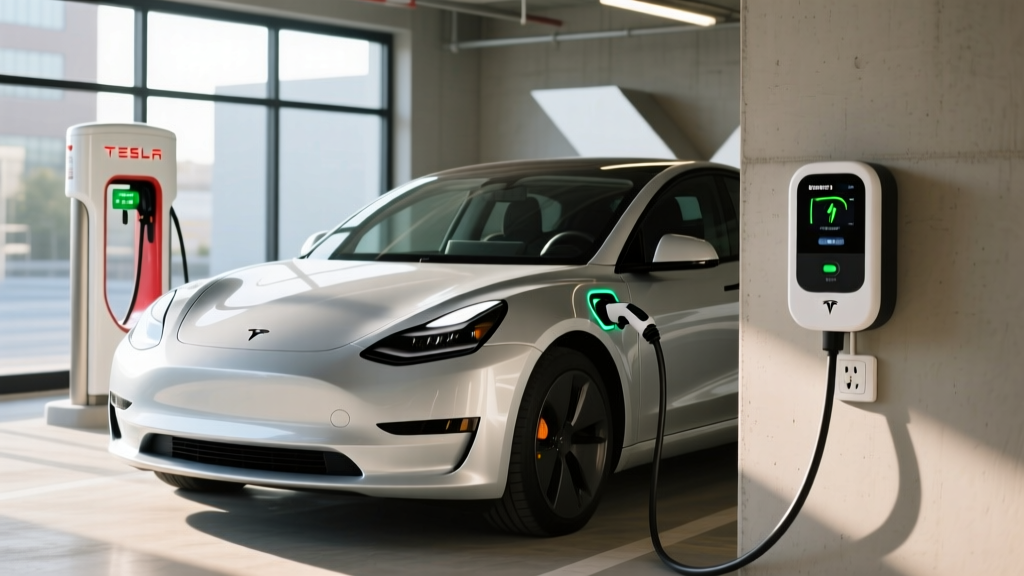
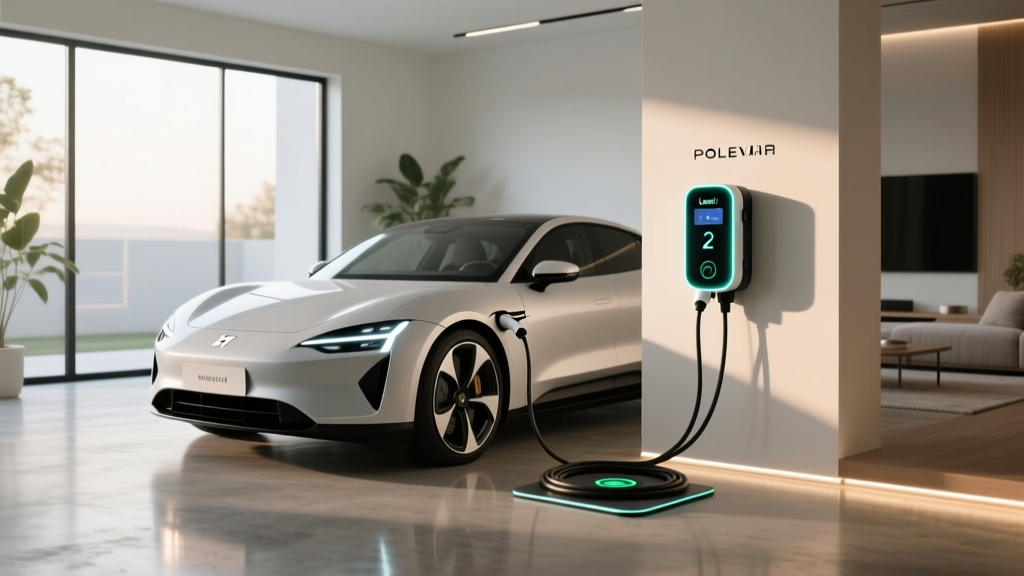
Installing a Level 2 home charger for your Polestar is the single highest-impact ownership decision you'll make. It transforms charging from a chore into something that happens invisibly overnight.
Electrical Requirements
Most Polestar models accept up to 11 kW on Level 2 (single-phase, 240V/48A). The Polestar 4 supports up to 22 kW on three-phase power, but US residential service is almost exclusively single-phase, so expect 11 kW in practice.
- Circuit requirement: Dedicated 50-amp or 60-amp breaker (for 40A or 48A continuous charging, respectively)
- Wire gauge: 6 AWG copper for 50A circuits; 4 AWG for 60A
- NEMA 14-50 outlet (plug-in) or hardwired connection — hardwired is required for circuits over 50A per NEC and allows higher continuous amperage
Installation Cost Breakdown
| Component | Simple Install (panel nearby) | Complex Install (long run / panel upgrade) |
|---|---|---|
| Level 2 charger (equipment) | $400–$700 | $400–$700 |
| Electrician labor + materials | $500–$1,200 | $1,500–$3,500 |
| Permit fees | $50–$200 | $50–$200 |
| Panel upgrade (if needed: 100A → 200A) | N/A | $1,500–$3,500 |
| Total Range | $950–$2,100 | $3,450–$7,900 |
Panel upgrade reality: Homes built before 1990 often have 100-amp service. Adding a 50A EV circuit may require upgrading to 200A service — a $1,500–$3,500 job. Always get a licensed electrician's load calculation before committing. The federal IRS §30D credit does not cover home charger installation, but the separate §25C Energy Efficient Home Improvement Credit may cover up to $1,000 (30% of cost) for qualified charger equipment and installation — consult a tax professional for eligibility.
Connector Compatibility: Which Plug Does Your Polestar Use?
Polestar's connector situation in 2026 requires attention, especially for public charging access.
| Model / Year | Native Connector | Tesla Supercharger Access | Adapter Needed? |
|---|---|---|---|
| Polestar 2 (2024–2026) | CCS1 | Yes (via adapter) | CCS-to-NACS adapter (~$200–$250) |
| Polestar 3 (2025–2026) | CCS1 | Yes (via adapter) | CCS-to-NACS adapter (~$200–$250) |
| Polestar 4 (2025–2026) | CCS1 | Yes (via adapter) | CCS-to-NACS adapter (~$200–$250) |
All current US-market Polestars ship with CCS1. Tesla's Supercharger network — the largest and most reliable DC fast-charging network in North America — is accessible to Polestar owners using a CCS-to-NACS adapter. Polestar has confirmed Supercharger compatibility for the Polestar 2 via adapter; check Polestar's charging page for the latest compatibility updates on the 3 and 4. For home Level 2 charging, all Polestars use the standard J1772 connector, which every home wall connector provides.
Charging Cost per Mile: Polestar vs Gas
The economic case for a Polestar hinges on where and when you charge. Here's how costs break down across scenarios:
| Scenario | Rate ($/kWh) | Polestar 2 Cost/Mile | Gas Car (28 MPG, $3.40/gal) |
|---|---|---|---|
| Home (off-peak utility rate) | $0.09/kWh | $0.026/mi | $0.121/mi |
| Home (national avg $0.17/kWh) | $0.17/kWh | $0.049/mi | $0.121/mi |
| Public Level 2 (ChargePoint/EVgo) | $0.25–$0.39/kWh | $0.072–$0.112/mi | $0.121/mi |
| DC Fast Charging (Electrify America/EA) | $0.43–$0.56/kWh | $0.124–$0.161/mi | $0.121/mi |
Calculations based on Polestar 2 Long Range Single Motor efficiency of ~3.5 mi/kWh (EPA combined). Gas comparison assumes a comparable compact premium sedan at 28 MPG combined.
Key takeaway: Home charging at off-peak rates delivers fuel costs roughly 75–80% lower than gasoline. Even at national-average residential rates, you'll save about 60%. However, exclusive reliance on DC fast charging can push per-mile costs above gasoline — home charging access is essential to the economic argument.
Best Home Chargers for Polestar: Equipment Picks
Every Polestar accepts up to 11 kW on Level 2, so a 48-amp charger on a 60-amp circuit maximizes your charging speed. Here are top picks:
ChargePoint Home Flex
- Power: Up to 11.5 kW (48A) on 60A circuit; adjustable down to 16A
- Connector: J1772 (fits all Polestars natively)
- Cable length: 23 ft
- Smart features: Wi-Fi, scheduling, Alexa, energy tracking via app
- Price: ~$549
- Best for: Flexibility — amperage adjustable to match your circuit
Emporia Vue Level 2 Charger
- Power: Up to 11.5 kW (48A)
- Connector: J1772
- Cable length: 24 ft
- Smart features: Wi-Fi, energy monitoring, solar integration, scheduling
- Price: ~$399
- Best for: Budget-conscious buyers who still want smart features
Wallbox Pulsar Plus
- Power: Up to 11.5 kW (48A)
- Connector: J1772
- Cable length: 25 ft
- Smart features: Wi-Fi + Bluetooth, Power Sharing (daisy-chain two units), app scheduling
- Price: ~$599
- Best for: Two-EV households needing load management
Grizzl-E Smart
- Power: Up to 9.6 kW (40A) on 50A circuit
- Connector: J1772
- Cable length: 24 ft
- Smart features: Wi-Fi, OCPP support, durable aluminum case
- Price: ~$449
- Best for: Cold-climate and outdoor installations — rated to -40°F
Safety, Code, and Installation Considerations
EV charging circuits carry sustained high current for hours — this is not the same as a dryer or oven that cycles on and off. The National Electrical Code (NEC) treats EV charging as a continuous load, meaning the circuit must be rated for 125% of the charger's maximum draw. A 48-amp charger requires a 60-amp breaker.
Must-Have Safety Features
- Dedicated circuit: Never share an EV charging circuit with other appliances
- GFCI protection: Required by NEC 2020+ for outdoor receptacles; some jurisdictions also require it for garage outlets. Hardwired chargers may exempt you from GFCI breaker requirements in some jurisdictions — check local code
- Outdoor rating: If mounting outside, ensure NEMA 4 (weatherproof) rating on both the charger and any conduit connections
- UL listing: Only install chargers that are UL-listed or ETL-listed — non-listed units may void homeowner's insurance and fail inspection
- Permit and inspection: Most municipalities require an electrical permit ($50–$200) and a post-installation inspection. Skipping this risks insurance denial in the event of an electrical fire
Always hire a licensed electrician. Get a load calculation on your panel before installing — this $0–$150 step prevents the unpleasant surprise of a mandatory panel upgrade mid-project.
Polestar Charging FAQ
How much does it cost to install a home EV charger for my Polestar?
A straightforward installation (short wire run, adequate panel capacity) typically costs $950–$2,100 including equipment, labor, and permits. If your home needs a panel upgrade from 100A to 200A service, total costs can reach $3,450–$7,900. Always get a professional load calculation first.
How fast will each charging level add range to my Polestar?
Level 1 (120V) adds 3–5 miles per hour — adequate only for low-mileage drivers. Level 2 (240V, 48A) adds 28–38 miles per hour and will fully recharge any Polestar overnight. DC fast charging adds 150–650 miles per hour at peak, but the charge curve tapers significantly above 60% SoC.
Which connector and charger is compatible with my Polestar?
All 2024–2026 US-market Polestars use CCS1 for DC fast charging and J1772 for Level 2. To access Tesla Superchargers, you'll need a CCS-to-NACS adapter ($200–$250). Any J1772 home wall connector will work natively.
How much does charging a Polestar cost per mile vs gas?
Home charging at off-peak rates ($0.09/kWh) costs about $0.026/mile — roughly 78% cheaper than a 28 MPG gas car at $3.40/gallon. At national average residential rates ($0.17/kWh), the cost is about $0.049/mile — still 60% cheaper. DC fast charging at $0.48/kWh can exceed gas costs.
What electrical upgrades might I need for a Polestar home charger?
You'll need a dedicated 50A or 60A breaker on a 240V circuit. If your panel is already near capacity (common in older homes with 100A service), an upgrade to 200A service may be required — adding $1,500–$3,500. Homes with existing 200A panels and adequate spare capacity typically need only the new breaker, wire run, and outlet or hardwire connection.
Should I precondition my Polestar before DC fast charging?
Yes. Battery preconditioning warms the NMC cells to optimal charging temperature (~77–95°F), enabling the car to reach peak charge rate faster and sustain it longer. Enable preconditioning via the Polestar app or navigation when routing to a charger — especially critical in cold weather, where an un-preconditioned battery may limit DC charging to 50–80 kW until it warms up.