Why Polestar Owners Need to Understand Electrify America
If you own or are considering a Polestar 2, Polestar 3, or the upcoming Polestar 4, one of the most practical questions you'll face is where and how to charge on the road. While Polestar has announced integration with Tesla's Supercharger network via NACS adapters, Electrify America (EA) remains one of the largest open DC fast-charging networks in the U.S. — and it's the network Polestar originally partnered with for complimentary charging on early model-year vehicles.
This guide breaks down exactly how Polestar models interact with Electrify America stations, what charge speeds you can expect in the real world, how to set up home Level 2 charging, and what the true cost-per-mile looks like compared to gasoline. We'll cover connector compatibility, installation costs with full breakdowns, and equipment picks that pair well with Polestar's onboard charger specifications.
Charging Levels Explained: Speeds, Power, and Range Recovery
Before we get into network specifics, let's establish the three charging levels every Polestar owner must understand. The critical distinction: kW (kilowatts) measures power — the rate at which energy flows. kWh (kilowatt-hours) measures energy — the total capacity of your battery. Think of kW as the speed of water flowing through a hose, and kWh as the size of the bucket you're filling.
| Level | Voltage | Power (kW) | Miles of Range Added per Hour | Typical Use Case |
|---|---|---|---|---|
| Level 1 | 120V AC | 1.2–1.9 kW | 3–5 mi/hr | Overnight trickle; emergency backup |
| Level 2 | 240V AC | 7.2–19.2 kW | 20–60 mi/hr | Home daily charging; workplace; hotels |
| DC Fast Charging | 400–800V DC | 50–350 kW | 150–1,200+ mi/hr (peak) | Road trips; rapid top-ups on highways |
For a Polestar 2 with its 78 kWh usable battery (Long Range Dual Motor), Level 1 charging would take roughly 50+ hours from empty — essentially impractical. Level 2 at 11 kW (the Polestar 2's onboard AC charger limit) replenishes the full battery in about 7–8 hours. DC fast charging at an Electrify America 150 kW or 350 kW stall is where road-trip viability lives.
Polestar Models on Electrify America: Charge Speeds and 10–80% Times
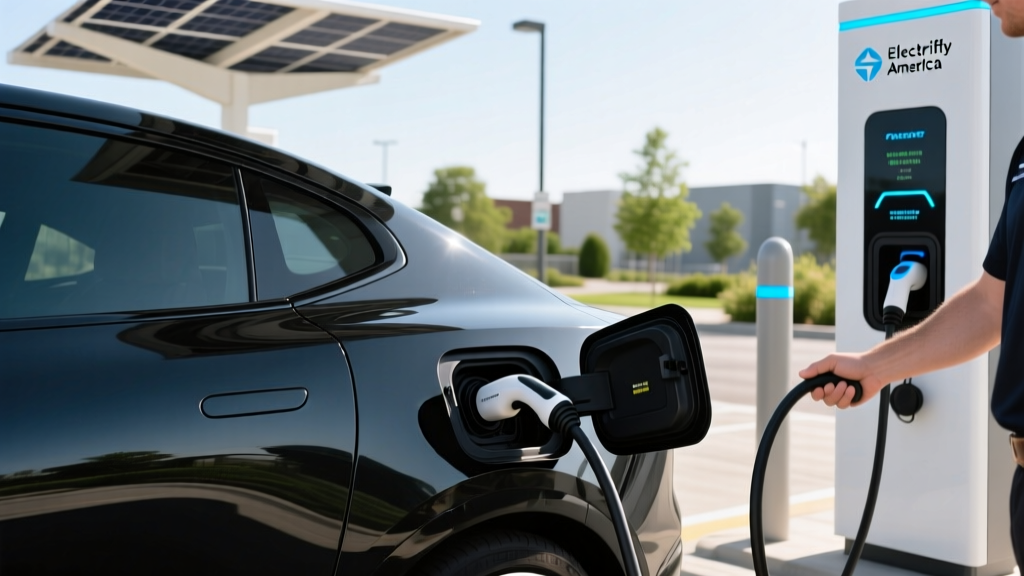
Electrify America operates over 1,000 stations and 5,000+ individual chargers across the U.S., with a mix of 50 kW, 150 kW, and 350 kW hardware. Here's what each current Polestar model can actually pull on EA's network:
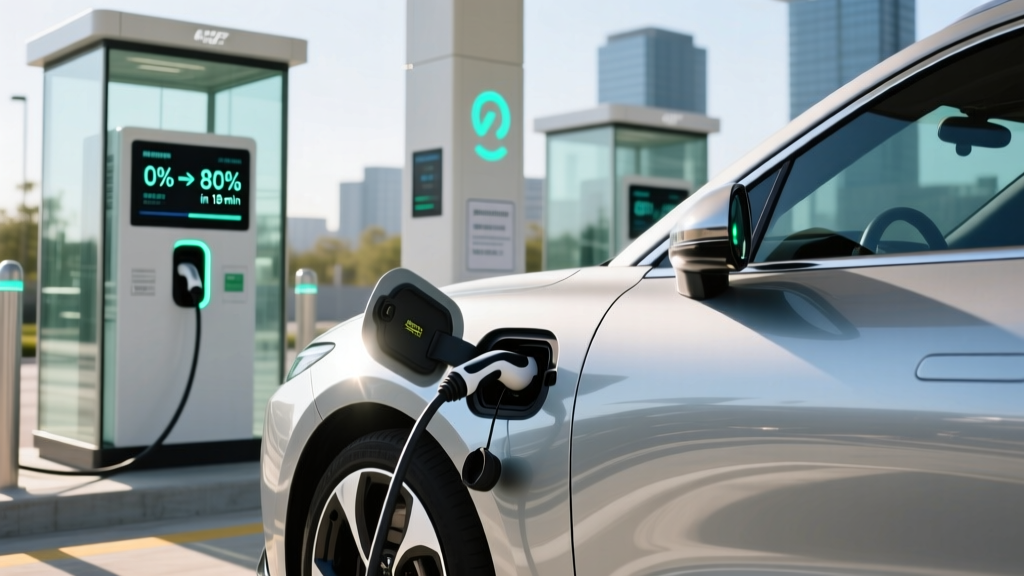
Polestar 2 (2025–2026 Long Range, 78 kWh NMC battery): The PST2 peaks at approximately 200 kW on DC fast chargers under ideal conditions. On an EA 350 kW stall, expect a 10–80% charge in roughly 27–30 minutes. On a 150 kW stall, that stretches to about 33–38 minutes. Real-world note: peak charge rates only hold between roughly 10–40% state of charge; above 60%, the charge curve tapers significantly to protect battery health. At 80%, you may be pulling only 40–50 kW.
Polestar 3 (2025–2026, 111 kWh NMC battery): Built on Volvo/Polestar's SPA2 platform with 800V-capable architecture, the Polestar 3 can accept up to 250 kW DC. On an EA 350 kW charger, plan for 10–80% in approximately 25–30 minutes. The larger battery means more total energy to push, but the higher peak rate compensates.
Polestar 4 (2026 model year, 102 kWh battery): The coupe-SUV variant also supports up to 200–250 kW DC fast charging, with 10–80% times in the 24–28 minute range on 350 kW hardware.
Connector Compatibility: CCS1, NACS, and the Adapter Question
This is where the charging landscape has shifted dramatically. Here's the connector situation for Polestar owners in 2026:
| Connector | Polestar Native Port | Electrify America Stations | Tesla Superchargers | Adapter Needed? |
|---|---|---|---|---|
| CCS1 (Combo) | Yes (Polestar 2) | Yes — all EA stalls | No (without adapter) | N/A — native |
| NACS (Tesla) | Yes (Polestar 3, 4 — newer builds) | Yes — EA adding NACS cables | Yes — native or via adapter | CCS-to-NACS adapter for older CCS ports |
| CHAdeMO | No | Rare legacy stalls | No | Not recommended; no Polestar support |
Key takeaway: Electrify America has been retrofitting stations with NACS connectors alongside existing CCS1 cables. If your Polestar 2 has a CCS1 port, you can use any EA stall natively. If you want Tesla Supercharger access, you'll need Polestar's approved CCS-to-NACS adapter (approximately $200–250). The Polestar 3 and 4 are being built with native NACS ports on newer production runs, simplifying the picture.
According to Electrify America's station locator, over 70% of their new installations now include both CCS1 and NACS connectors. Always verify the specific station in your EA app before driving there.
Home Level 2 Charging: Installation Costs and Electrical Requirements
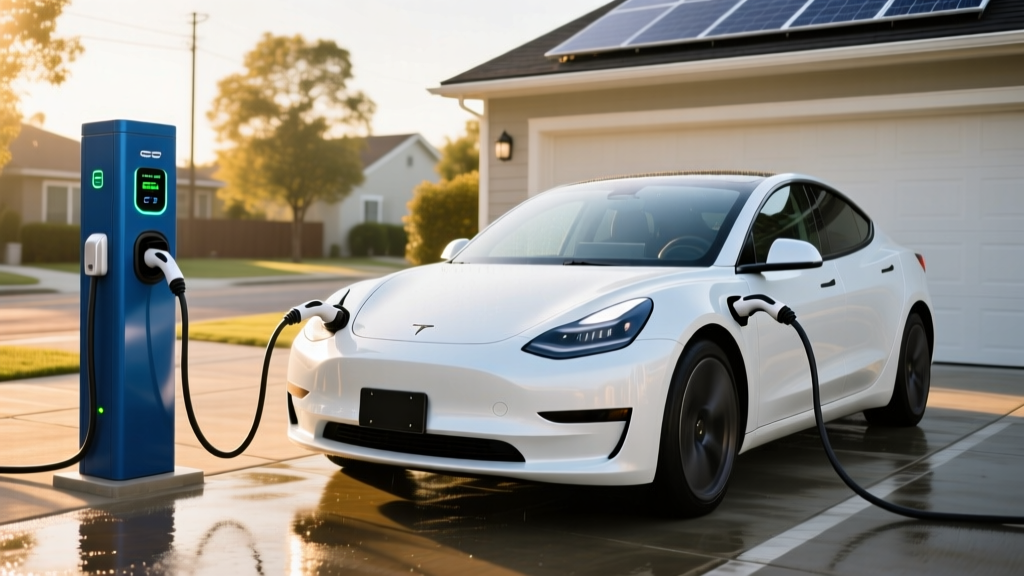
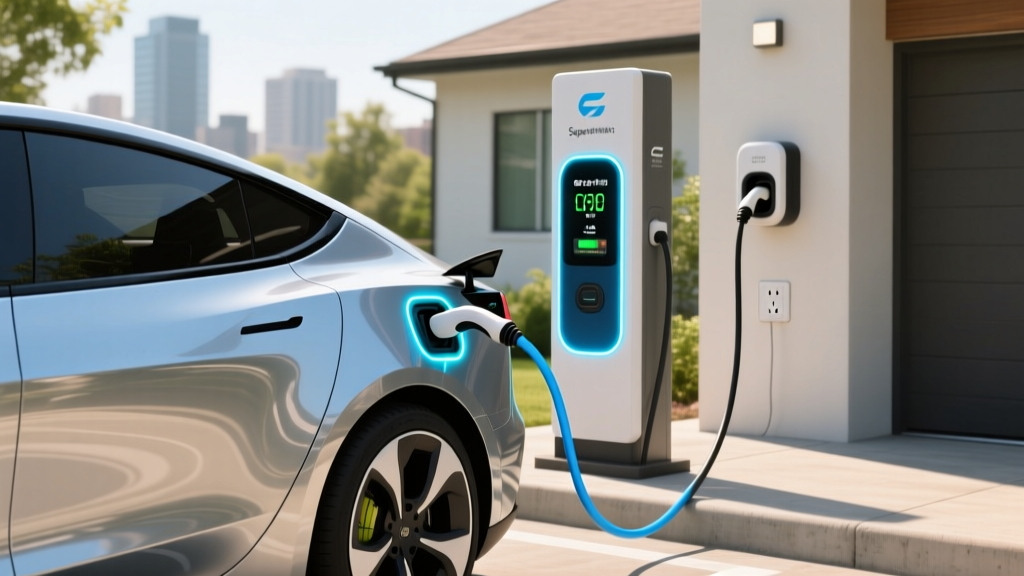
Home charging is where 80–90% of all EV charging happens, according to fueleconomy.gov. For Polestar owners, a Level 2 home charger is essentially mandatory to take advantage of the car's 11 kW onboard AC charger (Level 1 at 1.9 kW is painfully slow for a 78–111 kWh battery).
Electrical Requirements
To charge a Polestar 2 at its full 11 kW AC rate, you need a 240V circuit rated for at least 48 amps (the National Electrical Code requires circuits to be rated at 125% of continuous load, so a 48A charger needs a 60A breaker). Most homes have a 200A main electrical panel, but available capacity varies enormously.
Panel upgrade reality: If your home has a 100A panel (common in pre-1990 construction) or your panel is near capacity with existing loads (HVAC, electric range, dryer), adding a 60A EV circuit may require a panel upgrade to 200A. This is the single biggest variable in installation cost.
| Component | Typical Cost Range | Notes |
|---|---|---|
| Level 2 Charger (hardware) | $350–$750 | Smart Wi-Fi-enabled units; basic units from $250 |
| Electrician labor (standard install) | $500–$1,500 | Run from panel to garage/carport; varies by distance |
| Permit and inspection | $100–$350 | Required in most jurisdictions; varies by municipality |
| Electrical panel upgrade (if needed) | $1,500–$4,000 | 100A → 200A upgrade; not always required |
| Total (no panel upgrade) | $950–$2,600 | Most common scenario for modern homes |
| Total (with panel upgrade) | $2,450–$6,600 | Older homes or high-load panels |
Federal incentive note: The IRS §30C Alternative Fuel Vehicle Refueling Property Credit can cover up to 30% of home charger equipment and installation costs (capped at $1,000), but eligibility depends on whether you live in a qualifying census tract. Check IRS guidelines and consult a tax professional before claiming.
Recommended Level 2 Chargers for Polestar
ChargePoint Home Flex
- Power: Up to 12 kW (50A) on a 60A circuit; configurable down to 16A
- Connector: J1772 (CCS-compatible with your Polestar's port)
- Cable length: 23 feet
- Smart features: Wi-Fi, scheduling, Alexa, energy tracking via app
- Price: ~$550–$650
- Why it works: Flexible amperage lets you match your panel capacity; UL-listed; NEMA 4 outdoor-rated
Emporia Vue Level 2 Charger
- Power: Up to 11.5 kW (48A) on a 60A circuit
- Connector: J1772
- Cable length: 24 feet
- Smart features: Wi-Fi, solar integration, energy monitoring, scheduling
- Price: ~$399–$450
- Why it works: Best value smart charger; pairs well with solar panels; real-time energy data
Wallbox Pulsar Plus
- Power: Up to 11.5 kW (48A)
- Connector: J1772
- Cable length: 25 feet (longest in class)
- Smart features: Wi-Fi + Bluetooth, load balancing, app control
- Price: ~$500–$600
- Why it works: Compact form factor; Power Sharing feature allows two units on one circuit for two-car garages
All three units are hardwired (no plug), require a dedicated circuit with GFCI breaker protection per NEC 2023/2026 code, and carry NEMA 4 or 4X outdoor ratings if you need exterior mounting. Your licensed electrician will pull the appropriate permit and ensure the installation meets local code.
Cost to Charge: Polestar on Electrify America vs. Home vs. Gas
The economics of EV ownership hinge on where you charge. Here's a data-driven breakdown using the Polestar 2 Long Range Dual Motor (78 kWh usable battery, EPA combined efficiency of 92 MPGe, or roughly 3.0 miles per kWh):
| Charging Scenario | Cost per kWh | Cost for 10–80% (54.6 kWh) | Cost per Mile (at 3.0 mi/kWh) |
|---|---|---|---|
| Home (off-peak utility rate) | $0.08–$0.14 | $4.37–$7.64 | $0.027–$0.047 |
| Home (average U.S. rate) | $0.16–$0.18 | $8.74–$9.83 | $0.053–$0.060 |
| Electrify America (standard pricing) | $0.43–$0.56 | $23.48–$30.58 | $0.143–$0.187 |
| Electrify America (Pass+ subscription, $4/mo) | $0.31–$0.40 | $16.93–$21.84 | $0.103–$0.133 |
| Gas equivalent (25 MPG combined, $3.40/gal) | — | — | $0.136 |
The bottom line: Home charging at off-peak rates makes the Polestar 2 roughly 3–5x cheaper per mile than a comparable gas car. Even Electrify America's standard rates are competitive with gasoline on a per-mile basis. The Pass+ subscription ($4/month) is worth it if you DC fast-charge more than twice per month on the road.
Electrify America's pricing varies by location and time of day. Some stations use per-kWh billing (fair and transparent), while a legacy handful still charge per-minute — avoid those, as you're paying for time, not energy, and charge-curve taper punishes you above 60% SoC.
Safety, Code, and Installation Best Practices
EV charging draws sustained high current for hours — this is not the same as plugging in a dryer. Key safety requirements your installation must meet:
- Dedicated circuit: Your Level 2 charger must be on its own dedicated breaker — no shared circuits with other appliances.
- GFCI protection: NEC 2023 and 2026 code requires GFCI (Ground Fault Circuit Interrupter) protection for all EV charging outlets and hardwired installations. Most modern Level 2 chargers have built-in GFCI, but your breaker panel may need a GFCI breaker as well.
- Outdoor rating: If your charger is mounted outside (carport, driveway wall), it must carry a NEMA 4 or 4X rating for weather resistance. All three recommended chargers above qualify.
- Wire gauge: A 60A circuit requires 6 AWG copper wire (or 4 AWG aluminum). Your electrician will size this correctly — don't attempt DIY on high-amperage circuits.
- Load management: If your panel is tight on capacity, consider a smart charger with load-balancing features (like the Wallbox Power Sharing or Emporia's integration with their home energy monitor) that dynamically adjusts charge rate to avoid tripping your main breaker.
Maximizing Your Electrify America Experience
A few practical tips from real-world DC fast charging with Polestar vehicles on EA's network:
Precondition your battery. The Polestar 2, 3, and 4 all feature battery thermal preconditioning. When you set an EA station as your navigation destination, the car will warm or cool the battery to optimal temperature for fast charging. Skipping this step — especially in cold weather — can reduce your peak charge rate by 30–50%. A battery at 32°F may only accept 60–80 kW until it warms up, even on a 350 kW stall.
Use the EA app, not just the in-car nav. The Electrify America app shows real-time stall availability, current pricing, and whether a station has 150 kW or 350 kW hardware. Always aim for 350 kW stalls to get the fastest charge your Polestar can accept.
Charge to 80%, then move on. The charge curve above 80% SoC slows dramatically. Going from 80–100% can take as long as 10–80%. Unless you absolutely need a full battery, charge to 80% and drive — you'll save significant time on road trips.
Complimentary charging status: Early Polestar 2 models (2021–2023) included 2 years of unlimited complimentary charging on Electrify America. If you're buying a used Polestar 2, check whether this benefit has expired — most have by 2026. New 2025–2026 Polestar models may include limited complimentary EA charging (typically 250–350 kWh); confirm with your dealer.
Frequently Asked Questions
How much does it cost to install a home EV charger for my Polestar?
For a standard installation without a panel upgrade, expect $950–$2,600 total (charger hardware, electrician labor, and permit). If your home needs a 100A-to-200A panel upgrade, total costs range from $2,450–$6,600. Get at least two quotes from licensed electricians, and confirm they pull a permit — unpermitted work can void your homeowner's insurance and cause issues at resale.
How fast will each charging level add range to my Polestar?
Level 1 (120V): roughly 3–5 miles of range per hour. Level 2 (240V, 48A): approximately 30–35 miles per hour on the Polestar 2. DC fast charging at 150 kW: roughly 180–200 miles added in 30 minutes (10–80%). DC fast charging at 350 kW (Polestar 2 peak ~200 kW): about 200–230 miles in 27–30 minutes (10–80%).
Which connector does my Polestar use, and is it compatible with Electrify America?
The Polestar 2 uses a native CCS1 connector, which is fully compatible with all Electrify America stations. The Polestar 3 and 4 (newer production) use native NACS. EA is adding NACS cables to new and retrofitted stations. For Tesla Supercharger access from a CCS1-equipped Polestar 2, you'll need a CCS-to-NACS adapter (~$200–250).
How much does charging a Polestar cost per mile compared to gas?
At home on average U.S. electricity rates ($0.16–0.18/kWh), the Polestar 2 costs about $0.05–0.06 per mile. On Electrify America at standard rates ($0.43–0.56/kWh), it's $0.14–0.19 per mile. A comparable 25 MPG gas car at $3.40/gallon costs $0.14 per mile. Home charging is dramatically cheaper; public DC fast charging is roughly on par with gasoline.
What electrical upgrades might I need for a home charger?
The most common upgrade is a panel capacity increase from 100A to 200A ($1,500–$4,000). You may also need a new dedicated 60A breaker slot, upgraded service wiring, or a sub-panel if your charger is far from the main panel (e.g., a detached garage). A licensed electrician's load calculation will determine exactly what's needed before any work begins.
Is Electrify America reliable enough for road trips in a Polestar?
EA's uptime has improved significantly, averaging 95%+ across the network as of 2025–2026. However, individual station experiences vary. Always check the EA app for real-time stall status before diverting to a station, and keep a backup option (ChargePoint, EVgo, or Tesla Supercharger via adapter) in your route planning. On a 300-mile road trip, plan one DC fast stop at a multi-stall EA location for the best experience.