Polestar 3 Long Range Single Motor: Charging Specs at a Glance
The Polestar 3 Long Range Single Motor (LRSM) pairs a 111 kWh usable battery pack (NMC chemistry) with a rear-mounted 299 hp motor, delivering an EPA-estimated 348 miles of range. But range is only half the equation — how quickly and affordably you can replenish that pack determines real-world usability. This guide covers every charging scenario for the Polestar 3 LRSM, from overnight Level 2 home charging to DC fast charging on road trips, with exact numbers, installation costs, and equipment picks.
| Spec | Value |
|---|---|
| Battery Capacity (usable) | 111 kWh (NMC) |
| EPA Range | 348 miles |
| Real-World Range (highway, 70 mph) | ~290–310 miles |
| Real-World Range (cold weather, 30°F) | ~250–280 miles |
| Max DC Fast Charge Rate | 250 kW (peak) |
| DC Fast Charge 10–80% | ~30 minutes |
| Level 2 AC Charge Rate (onboard charger) | 11 kW |
| Level 2 Full Charge (0–100%) | ~11 hours |
| Charging Port / Connector | NACS (native, 2025+ models) |
| Motor Output | 299 hp / 361 lb-ft torque |
| 0–60 mph | 7.6 seconds |
| Base MSRP (LRSM) | ~$67,500 (before incentives) |
| Battery Warranty | 8 years / 100,000 miles |
Understanding Charging Levels: How Fast Will Each Add Range?
EV charging is measured in kW (kilowatts), which represents power — the rate of energy delivery. Your battery capacity is measured in kWh (kilowatt-hours), which represents energy — the total amount stored. Think of kW as the width of a hose and kWh as the size of the bucket. A wider hose (higher kW) fills the bucket faster.
| Level | Voltage / Amperage | Power (kW) | Miles of Range Added per Hour | Full Charge Time (0–100%) |
|---|---|---|---|---|
| Level 1 (standard outlet) | 120V / 12A | ~1.4 kW | ~4–5 miles/hr | ~80+ hours |
| Level 2 (home/public AC) | 240V / 48A | 11.5 kW | ~34–38 miles/hr | ~11 hours |
| Level 2 (lower-amperage) | 240V / 32A | 7.7 kW | ~23–26 miles/hr | ~15 hours |
| DC Fast Charging | 400V+ DC | Up to 250 kW peak | ~600+ miles/hr (peak rate) | 10–80% in ~30 min |
Level 1 uses a standard 120V household outlet. At ~1.4 kW, it adds roughly 4–5 miles of range per hour — adequate only for PHEVs or as an emergency trickle for BEVs. For the Polestar 3's 111 kWh pack, a full Level 1 charge would take over 80 hours. It is not a practical daily solution.
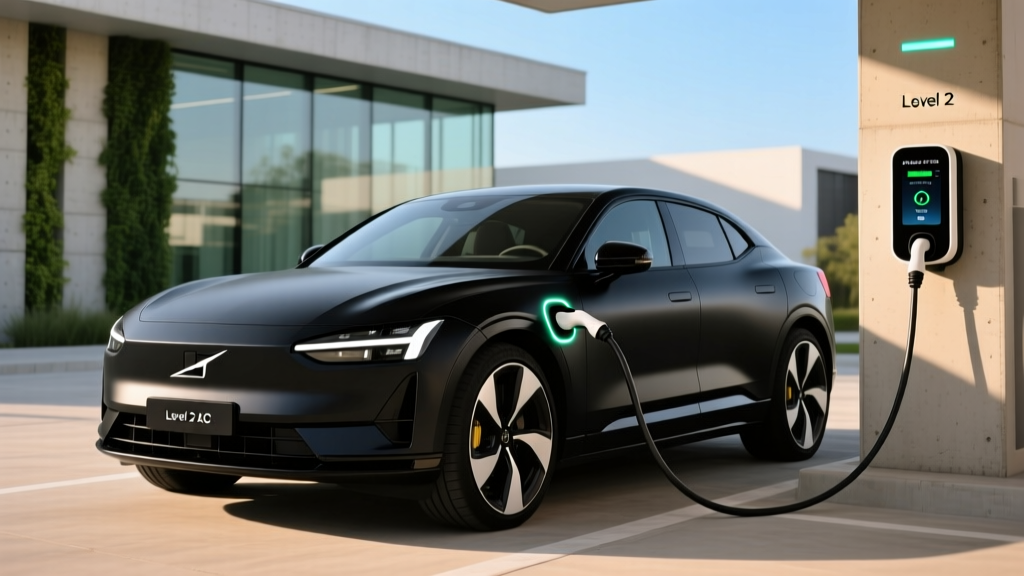
Level 2 uses a 240V circuit (the same voltage as a dryer or oven) and is the backbone of home EV charging. The Polestar 3 LRSM has an 11 kW onboard AC charger, meaning it can accept up to ~11.5 kW from a 48A Level 2 station. At this rate, you'll recover roughly 35 miles of range per hour, easily replenishing a day's driving overnight. Most owners plug in each evening and wake up with a full or near-full battery.
DC Fast Charging bypasses the onboard charger entirely, feeding DC current directly to the battery. The Polestar 3 LRSM supports up to 250 kW peak on compatible CCS or NACS DC fast chargers. However, peak rate is not sustained rate — the charging curve tapers significantly above 80% State of Charge (SoC) to protect battery health. Expect the 10–80% session to take approximately 30 minutes at a 250 kW or higher station. Above 80%, the rate drops to ~50 kW or less, so avoid charging past 80% on road trips unless necessary.
Home Charger Installation: Electrical Requirements & Costs
Installing a Level 2 home charger for the Polestar 3 LRSM requires a dedicated 240V circuit, typically 60A to support a 48A continuous-draw charger (the National Electrical Code requires circuits to be rated at 125% of continuous load). Here's what that involves and what it costs.
Electrical Requirements
- Circuit: Dedicated 60A, 240V breaker (for a 48A charger)
- Wire: 6 AWG copper (or 4 AWG aluminum) run from panel to charger location
- Panel capacity: Your main electrical panel must have sufficient amperage headroom. Most modern homes with 200A service can accommodate an EV charger. Older homes with 100A service may need a panel upgrade.
- Hardwired vs. plug: Chargers rated above 40A continuous must be hardwired per NEC. A 48A charger like the ChargePoint Home Flex or Tesla Wall Connector requires hardwiring by a licensed electrician.
- GFCI: NEC 2020+ requires GFCI protection for EV circuits in many jurisdictions. Hardwired chargers often include internal ground-fault protection, but confirm with your electrician and local code.
- Outdoor rating: If your charger is mounted outside (garage-less homes, driveways), ensure the unit carries a NEMA 4 or NEMA 4X weather rating.
Panel Upgrade: The Hidden Cost
If your home has a 100A main panel or your panel is near capacity, adding a 60A EV circuit may require a service upgrade to 200A. This is one of the most significant variables in home charging cost. A panel upgrade involves utility coordination, new meter hardware, and significant electrician labor.
| Item | Cost Range | Notes |
|---|---|---|
| Level 2 Charger Equipment (48A) | $500 – $750 | ChargePoint Home Flex, Tesla Wall Connector, Emporia Vue |
| Electrician Labor (standard install) | $600 – $1,800 | Varies by wire run length, wall type, conduit needs |
| Electrical Permit | $50 – $250 | Required in most jurisdictions; inspection included |
| Panel Upgrade (if needed) | $1,500 – $4,000 | 100A → 200A service upgrade; not required for most modern homes |
| Total (no panel upgrade) | $1,150 – $2,800 | Typical for homes with 200A service and short wire runs |
| Total (with panel upgrade) | $2,650 – $6,800 | Older homes or panels at capacity |
Always get a detailed quote from a licensed electrician before committing. Some utilities offer rebates of $250–$1,000 for Level 2 installation — check with your local provider. The federal Alternative Fuel Vehicle Refueling Property Credit (IRS §30C) may cover up to 30% of home charging equipment and installation costs (capped at $1,000), subject to census-tract eligibility. Consult a tax professional for your specific situation.
Connector Compatibility: NACS, CCS1, and the Polestar 3
The Polestar 3 sold in North America for the 2025 and 2026 model years comes equipped with the NACS (North American Charging Standard) port, the connector pioneered by Tesla and now adopted industry-wide. This is a significant advantage for charging access.
| Connector Type | Compatibility | Network Access |
|---|---|---|
| NACS (native) | ✅ Built-in | Tesla Supercharger network (17,000+ stalls), Electrify America (newer stations), Rivian Adventure Network, and growing NACS-native public chargers |
| CCS1 | ✅ With NACS-to-CCS adapter | Electrify America, EVgo, ChargePoint DC stations, and legacy CCS infrastructure |
| CHAdeMO | ❌ Not supported | Phasing out in North America; no adapter available for NACS vehicles |
| J1772 (Level 2 AC public) | ✅ With NACS-to-J1772 adapter | Public Level 2 stations at malls, workplaces, hotels |
What this means in practice: With a native NACS port, the Polestar 3 LRSM has the broadest DC fast-charging access of any EV on the road — including the Tesla Supercharger network, which remains the most reliable and extensive fast-charging infrastructure in North America. For the occasional CCS-only station, keep a NACS-to-CCS adapter ($100–$200) in your trunk. Polestar includes a NACS-to-J1772 adapter for public Level 2 AC charging in most markets; confirm with your dealer.
Cost to Charge: Home vs. Public vs. Gas Comparison
One of the strongest ownership arguments for the Polestar 3 LRSM is fuel cost. Electricity prices vary widely, but even at public DC fast-charging rates, the per-mile cost typically undercuts premium gasoline. Here's a breakdown using the Polestar 3's efficiency of approximately 2.8 miles/kWh (roughly 36 kWh/100 miles, based on EPA combined estimates).
| Scenario | Energy Cost | Cost per Mile (Polestar 3) | Cost per Mile (Gas SUV, 24 MPG, $4.50/gal premium) |
|---|---|---|---|
| Home charging (off-peak, national avg.) | $0.13/kWh | $0.047 | $0.188 |
| Home charging (high-cost state, e.g. CA) | $0.28/kWh | $0.100 | $0.188 |
| Home charging (time-of-use off-peak) | $0.08/kWh | $0.029 | $0.188 |
| Public Level 2 (workplace/mall) | $0.20/kWh | $0.071 | $0.188 |
| DC Fast Charging (Electrify America) | $0.48/kWh | $0.171 | $0.188 |
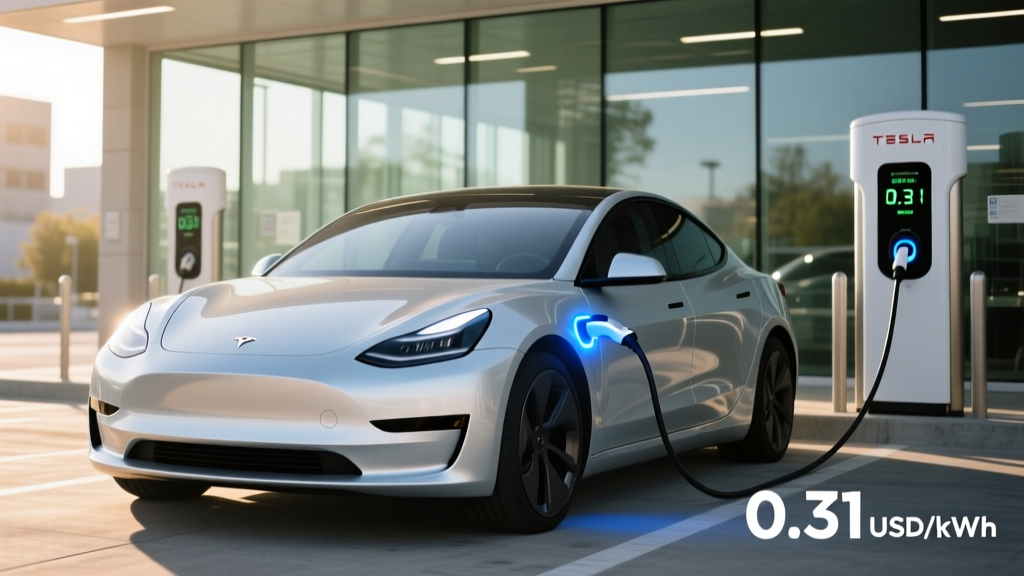
| DC Fast Charging (Tesla Supercharger) | $0.35/kWh | $0.125 | $0.188 |
At national average residential electricity rates ($0.13/kWh per the U.S. EIA), charging the Polestar 3 LRSM at home costs roughly 4.7 cents per mile — about one-quarter the cost of fueling a comparable gas SUV on premium. Even at expensive DC fast chargers, the per-mile cost is competitive with or cheaper than gasoline.
Annual fuel savings estimate: Driving 12,000 miles/year with 80% home charging ($0.13/kWh) and 20% DC fast charging ($0.40/kWh blended), you'd spend approximately $730/year on electricity. A comparable gas SUV at 24 MPG combined on $4.50/gallon premium would cost $2,250/year — a savings of roughly $1,520/year with the Polestar 3.
Best Home Chargers for the Polestar 3 Long Range Single Motor
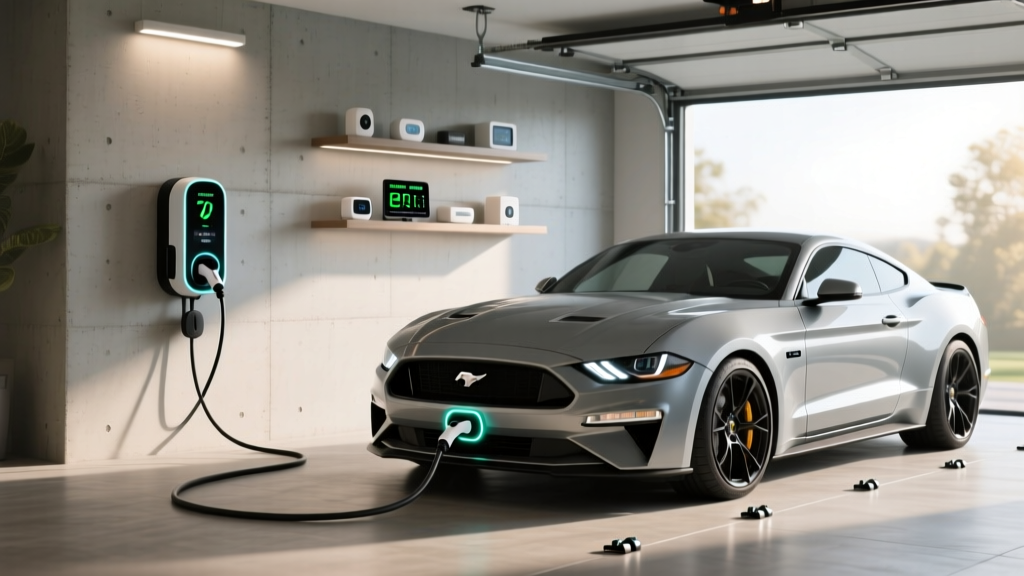
Because the Polestar 3 LRSM has an 11 kW onboard charger, you'll want a Level 2 station that can deliver at least 48A (11.5 kW) to maximize charging speed. Below are three recommended chargers that pair well with this vehicle.
ChargePoint Home Flex (NACS)
- Power Output: Up to 11.5 kW (48A, 240V)
- Connector: NACS native (2025+ models)
- Cable Length: 23 feet
- Smart Features: Wi-Fi connected, ChargePoint app scheduling, Alexa integration, energy reporting, automatic software updates
- Installation: Hardwired, requires 60A dedicated circuit
- Price: ~$649
- Why it's a fit: Matches the Polestar 3's 11 kW onboard charger exactly; robust app and scheduling for time-of-use rate optimization.
Tesla Wall Connector (NACS)
- Power Output: Up to 11.5 kW (48A, 240V)
- Connector: NACS native
- Cable Length: 24 feet
- Smart Features: Wi-Fi, Tesla app integration, power sharing (daisy-chain up to 6 units for multi-EV garages), firmware OTA updates
- Installation: Hardwired, requires 60A dedicated circuit
- Price: ~$475
- Why it's a fit: Best value for NACS-native vehicles; power-sharing feature is ideal if you add a second EV later.
Emporia Vue Smart EV Charger
- Power Output: Up to 11.5 kW (48A, 240V)
- Connector: NACS (with adapter) or J1772 (with NACS adapter included)
- Cable Length: 24 feet
- Smart Features: Deep energy monitoring via Emporia Vue home energy panel, solar integration, time-of-use scheduling, load management
- Installation: Hardwired or NEMA 14-50 plug (40A max on plug); 60A circuit for full 48A hardwired
- Price: ~$399 (charger only) / ~$599 (with Vue energy monitor)
- Why it's a fit: Best option if you have or plan to install solar panels; real-time energy tracking helps maximize self-consumption and minimize grid draw.
DC Fast Charging on the Road: What to Expect
The Polestar 3 LRSM's 250 kW peak DC fast-charge capability places it among the faster-charging large SUVs. Here's what a typical road-trip charging session looks like:
- 10–20% SoC: The pack accepts near-peak power, ramping to ~220–250 kW within minutes if the battery is preconditioned. You'll add roughly 80–100 miles of range in the first 10 minutes.
- 20–60% SoC: Sustained high-rate charging, averaging ~180–200 kW. This is the sweet spot — you'll recover the bulk of your range quickly.
- 60–80% SoC: The charge curve begins tapering, dropping to ~120–150 kW. Still reasonably fast, but noticeably slower than the peak.
- 80–100% SoC: Sharp taper to ~40–50 kW to protect cell health. Charging from 80–100% can take as long as 10–80%. On road trips, stop at 80% and drive on.
Battery preconditioning: The Polestar 3 will automatically precondition (warm or cool) its battery pack when you navigate to a DC fast charger via the built-in navigation system. This is critical in cold weather — an un-preconditioned battery in 30°F weather may accept only 50–80 kW initially, nearly tripling your charge time. Always route through the vehicle's nav to activate preconditioning before a fast-charge stop.
Safety, Code, and Maintenance Considerations
Home EV charging is safe when installed correctly, but the electrical loads involved are substantial. Key safety and code points for Polestar 3 owners:
- Dedicated circuit: Your Level 2 charger must have its own dedicated breaker — never share a circuit with other high-draw appliances. A 48A charger on a 60A breaker is standard.
- Permit and inspection: Most jurisdictions require an electrical permit for EV charger installation. The inspection ensures proper wire gauge, breaker sizing, grounding, and GFCI compliance. Skipping the permit risks insurance claim denial in the event of an electrical fire.
- Cable management: Use a wall-mounted cable organizer or retractable reel to prevent tripping hazards and protect the cable from UV degradation and physical damage.
- Surge protection: Consider a whole-home surge protector or a charger with built-in surge suppression, especially in areas with frequent lightning or grid instability.
- Charger firmware: Keep your smart charger's firmware updated. Manufacturers regularly patch connectivity bugs and add features like improved scheduling or load balancing.
Frequently Asked Questions
How much does it cost to install a home EV charger for the Polestar 3?
For most homes with a 200A electrical panel, expect to spend $1,150–$2,800 total (charger equipment + electrician labor + permit). If your home needs a panel upgrade from 100A to 200A service, add $1,500–$4,000, bringing the total to $2,650–$6,800. Always get an itemized quote from a licensed electrician before proceeding.
How fast will each charging level add range to the Polestar 3 LRSM?
Level 1 (120V) adds ~4–5 miles per hour — impractical for daily use. Level 2 (240V, 48A) adds ~35 miles per hour, fully replenishing the 111 kWh pack in about 11 hours. DC fast charging at 250 kW peak can add 10–80% in approximately 30 minutes, recovering ~240 miles of range.
Which connector does the Polestar 3 use?
The 2025/2026 Polestar 3 in North America uses the NACS connector natively. This gives direct access to the Tesla Supercharger network and a growing number of NACS-equipped public chargers. For legacy CCS1 stations, a NACS-to-CCS adapter is required. CHAdeMO is not supported.
How much does charging the Polestar 3 cost per mile vs. gas?
At the national average residential rate of $0.13/kWh, home charging costs about 4.7 cents per mile. A comparable gas SUV on premium at $4.50/gallon and 24 MPG costs about 18.8 cents per mile — roughly 4x more. Even at expensive DC fast chargers ($0.48/kWh), the Polestar 3 costs ~17 cents per mile, still cheaper than gas.
What electrical upgrades might I need for a Level 2 charger?
You'll need a dedicated 60A, 240V circuit. If your home's main panel is 200A and has open breaker slots, no upgrade is typically needed. Homes with 100A panels or panels near capacity may require a service upgrade ($1,500–$4,000). A licensed electrician can assess your panel during a site visit, often for free or a nominal fee applied to the installation.
Does the Polestar 3 qualify for the federal EV tax credit?
The Polestar 3 is manufactured by a company with significant Chinese ownership ties (Geely/Volvo/Polestar), and federal §30D tax credit eligibility depends on battery sourcing, critical mineral content, MSRP caps ($80,000 for SUVs), and buyer income limits ($300,000 MFJ / $150,000 single). The Polestar 3 LRSM's ~$67,500 MSRP clears the cap, but battery sourcing requirements may limit or eliminate the credit. Check the latest fueleconomy.gov listings and consult a tax professional for your specific eligibility.
Can I use a Tesla Supercharger with the Polestar 3?
Yes. The Polestar 3's native NACS port provides direct access to Tesla's Supercharger network without an adapter. Use the Polestar app or the vehicle's built-in navigation to locate and route to Supercharger stations. Tesla's Plug & Charge protocol is supported for seamless billing.