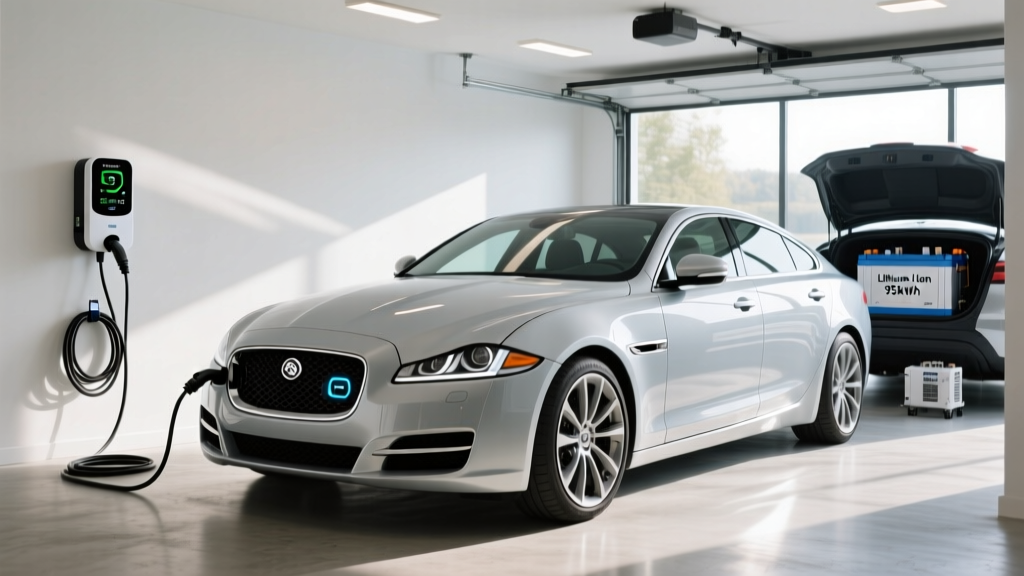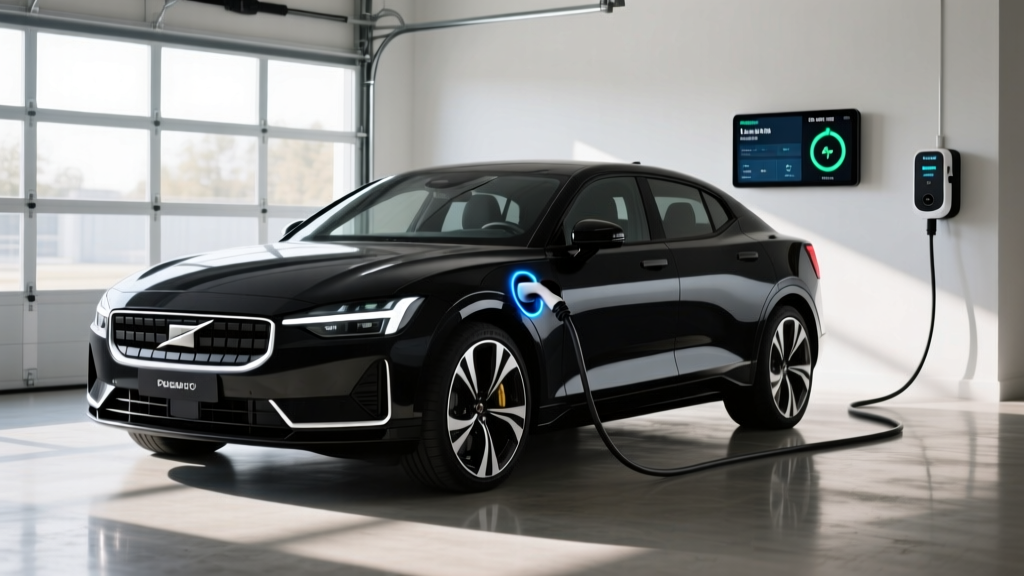
The 2023 Polestar 2 Long Range Dual Motor pairs a 78 kWh (usable) NMC lithium-ion battery with a dual-motor AWD powertrain producing 408 hp and a 0-60 mph time of 4.5 seconds. Its EPA-estimated range sits at 260 miles, though real-world highway driving at 70+ mph typically yields 220–240 miles, and cold-weather operation can reduce that further to roughly 190–210 miles. With a peak DC fast-charge rate of 205 kW (post-OTA update for 2023 models), the Long Range Dual Motor can replenish from 10–80% in approximately 28 minutes under ideal thermal conditions.
But owning this car is only half the equation. How you charge it — at home, on road trips, and at destination chargers — determines your daily convenience and long-term cost. This guide breaks down every charging scenario for the Polestar 2 Long Range Dual Motor with exact numbers, installation costs, and equipment picks.
Charging Levels Explained: Speeds in kW and Miles Per Hour
EV charging falls into three tiers. The critical distinction: kW (kilowatts) measures power — how fast energy flows into your battery. kWh (kilowatt-hours) measures energy — how much your battery holds. The Polestar 2 Long Range Dual Motor's battery stores 78 kWh; the charger's kW rating determines how quickly you fill it.
| Level | Voltage / Amps | Power (kW) | Miles of Range Per Hour | Full Charge Time (0–100%) |
|---|---|---|---|---|
| Level 1 (120V outlet) | 120V / 12A | ~1.4 kW | ~3–4 mi/hr | ~55+ hours |
| Level 2 (240V home/public) | 240V / 32A–48A | 7.7–11.5 kW | ~22–35 mi/hr | ~7–10 hours |
| DC Fast Charging | 400V architecture | Up to 205 kW peak | ~550+ mi/hr (peak) | 10–80% in ~28 min |
The Polestar 2's onboard charger accepts up to 11 kW on Level 2 AC power (three-phase where available; single-phase 240V homes will see approximately 7.7–11.5 kW depending on amperage). For daily ownership, Level 2 is the workhorse — plug in overnight and wake up to a full battery every morning.
Home Charger Installation: Electrical Requirements and Costs
Installing a Level 2 home charger for your Polestar 2 Long Range Dual Motor requires a dedicated 240V circuit. Most EV chargers draw between 32A and 48A, which means you need a 40A or 60A breaker respectively (electrical code requires circuits rated at 125% of continuous load).
Core Electrical Requirements
- Voltage: 240V (standard residential split-phase)
- Amperage: 40A breaker for 32A chargers; 60A breaker for 48A chargers
- Circuit: Dedicated — no sharing with other appliances
- Wiring: 6 AWG copper (40A) or 4 AWG copper (60A) typical
- GFCI protection: Required by NEC 2020+ for EV receptacles; most hardwired EVSE units include built-in ground-fault protection
- Outdoor rating: NEMA 4 or NEMA 4X enclosure if mounted outdoors
Do You Need a Panel Upgrade?
This is the question that separates a $600 installation from a $3,000+ project. Most modern homes have 200A electrical service panels. A licensed electrician will perform a load calculation to determine whether your panel can handle an additional 40A–60A continuous draw.
Homes with 100A or 150A service, older wiring, or panels already near capacity (electric oven, dryer, HVAC, water heater) may require a panel upgrade to 200A — adding $1,500–$3,500 to your total cost. Some jurisdictions now allow automated load-management systems (like the Emporia VUE or Span smart panel) that dynamically throttle EV charging to avoid overloading the panel, potentially avoiding a full upgrade.
| Component | Low Estimate | High Estimate | Notes |
|---|---|---|---|
| EVSE Equipment (Level 2 charger) | $350 | $750 | 32A–48A smart chargers |
| Electrician Labor | $300 | $1,200 | Depends on run length, conduit, wall type |
| Permit & Inspection | $50 | $250 | Varies by municipality |
| Electrical Materials (wire, conduit, breaker) | $100 | $400 | Longer runs cost more |
| Panel Upgrade (if needed) | $1,500 | $3,500 | Only for older/undersized panels |
| Total (no panel upgrade) | $800 | $2,600 | Most typical installations |
| Total (with panel upgrade) | $2,300 | $6,100 | Older homes or high-load panels |
Always hire a licensed electrician and pull a permit. Unpermitted EV charger installations can void homeowner's insurance claims and create fire hazards. Refer to NFPA 70 (National Electrical Code) Article 625 for EV charging system requirements.
Connector Compatibility: What Plugs Into the Polestar 2?
The 2023 Polestar 2 Long Range Dual Motor sold in North America uses the CCS1 (Combined Charging System) connector for both AC Level 2 and DC fast charging. This is the standard shared by most non-Tesla EVs sold in the US through 2024.
| Connector Type | Use Case | Compatible? | Adapter Needed? |
|---|---|---|---|
| CCS1 (Combo) | Level 2 AC + DC Fast Charging | ✅ Native | No |
| J1772 | Level 2 AC only (subset of CCS1) | ✅ Native | No — CCS1 port accepts J1772 |
| NACS (Tesla) | Tesla Superchargers + destination | ⚠️ Via adapter | Yes — CCS-to-NACS adapter required |
| CHAdeMO | Legacy DC fast (Nissan Leaf, etc.) | ❌ Not compatible | No adapter available |
With the industry-wide shift to NACS (Tesla's connector standard), Polestar has confirmed that future models will adopt NACS natively. For the 2023 Polestar 2, you'll need a CCS-to-NACS adapter (available from Tesla and third-party suppliers like Lectron or A2Z) to access Tesla Supercharger stations. These adapters typically cost $150–$250 and support DC fast charging at up to the adapter's rated limit — verify the adapter supports at least 150 kW to avoid bottlenecking the Polestar 2's 205 kW capability.
Check current Supercharger access eligibility on Polestar's official support page, as network-opening policies continue to evolve through 2025–2026.
Charging Cost Per Mile: Polestar 2 vs. Gasoline
The Polestar 2 Long Range Dual Motor carries an EPA efficiency rating of 85 MPGe combined, which translates to approximately 33 kWh per 100 miles (or 0.33 kWh/mile). Let's map that to real costs across different charging scenarios.
| Scenario | Rate | Cost per kWh | Cost per Mile | Cost for 300-mi Trip |
|---|---|---|---|---|
| Home (off-peak utility rate) | $0.12/kWh avg | $0.12 | $0.040 | $11.88 |
| Home (peak / high-cost state) | $0.25/kWh | $0.25 | $0.083 | $24.75 |
| Public Level 2 (ChargePoint, etc.) | $0.30–$0.45/kWh | $0.38 avg | $0.125 | $37.62 |
| DC Fast (Electrify America, EVgo) | $0.40–$0.55/kWh | $0.48 avg | $0.158 | $47.52 |
| Gasoline vehicle (28 MPG avg, $3.50/gal) | $3.50/gallon | N/A | $0.125 | $37.50 |
At off-peak home rates, the Polestar 2 costs roughly $0.04 per mile — about one-third the cost of a comparable 28 MPG gasoline sedan at $3.50/gallon. Even at public DC fast-charging rates, the per-mile cost is competitive with gasoline, though the advantage narrows significantly. The financial case for EV ownership strengthens dramatically with home charging access.
Many utilities offer time-of-use (TOU) plans that provide off-peak rates between 10 PM and 6 AM. Pairing a smart Level 2 charger with scheduled charging on a TOU plan is the single most cost-effective ownership strategy.
DC Fast Charging on Road Trips: 10–80% Times and Network Tips
The 2023 Polestar 2 Long Range Dual Motor received an over-the-air update that raised its peak DC fast-charge rate from 150 kW to 205 kW. Under optimal conditions (battery preconditioned to ~30–35°C, SoC between 10–40%), the vehicle can sustain close to peak power before tapering.
Typical DC Fast-Charge Session: 10–80%
- Time: ~28 minutes (at a 250+ kW station)
- Energy added: ~54 kWh (10% to 80% of 78 kWh usable)
- Range added: ~160–175 miles (real-world highway)
- Average sustained power: ~115–130 kW across the full session
The distinction between peak and sustained power matters. While the Polestar 2 can briefly pull 205 kW, the charge curve tapers meaningfully above 50% SoC. By 80%, charging power typically drops to 50–60 kW. This is why road-trip planning tools (A Better Route Planner, the Polestar app's built-in navigation) recommend charging to 80% and moving on rather than waiting for a full charge.
Preconditioning for Faster Charging
When you set a DC fast-charging station as your navigation destination in the Polestar 2's Google-based infotainment system, the vehicle will automatically precondition the battery — warming it to the optimal temperature for fast charging. In cold weather (below 40°F / 4°C), preconditioning can shave 5–10 minutes off your 10–80% time. Always navigate to the charger rather than just driving there.
Major DC fast-charging networks compatible with the Polestar 2's CCS1 connector include Electrify America, EVgo, ChargePoint, and (with a CCS-to-NACS adapter) Tesla Superchargers. For real-time station availability and reliability data, consult fueleconomy.gov and PlugShare.
Recommended Home Level 2 Chargers for the Polestar 2
Here are three proven Level 2 chargers that pair well with the Polestar 2 Long Range Dual Motor's 11 kW onboard charger acceptance rate:
Emporia Vue Level 2 EV Charger
- Power Output: 48A / 11.5 kW (240V)
- Connector: J1772 (fits Polestar 2 CCS1 port natively)
- Cable Length: 24 ft
- Smart Features: Wi-Fi, app scheduling, energy monitoring, solar integration, load management
- Price: ~$399
- Best For: Budget-conscious buyers wanting full smart features and load-management capability to avoid panel upgrades
ChargePoint Home Flex
- Power Output: Up to 50A / 12 kW (240V, adjustable 16A–50A)
- Connector: J1772 (fits CCS1 port natively)
- Cable Length: 23 ft
- Smart Features: Wi-Fi, app scheduling, Alexa integration, flexible amperage to match your circuit
- Price: ~$699
- Best For: Flexibility — adjustable amperage lets you match any circuit from 20A to 60A without buying a different unit
Grizzl-E Smart
- Power Output: 40A / 9.6 kW (240V)
- Connector: J1772 (fits CCS1 port natively)
- Cable Length: 24 ft
- Smart Features: Wi-Fi, app control, OTA updates, extreme cold rating (-40°F)
- Price: ~$449
- Best For: Cold-climate owners — built in Canada, rated for extreme temperatures, rugged enclosure
All three chargers deliver enough power to fully charge the Polestar 2's 78 kWh battery overnight (7–10 hours). The ChargePoint Home Flex offers the highest output at 12 kW, but remember: the Polestar 2's onboard charger caps AC acceptance at 11 kW, so the practical difference is marginal. Choose based on your circuit capacity, climate, and smart-feature preferences.
Safety, Code Compliance, and Permits
EV charging involves sustained high-current draw — this is not a DIY extension-cord situation. Key safety and code considerations:
- Dedicated circuit: Your EV charger must have its own breaker. Sharing a circuit with a dryer or oven is a code violation and a fire risk.
- GFCI protection: NEC 2020 (Article 625.54) requires GFCI protection for EV receptacles. Hardwired EVSE units typically include integrated ground-fault protection. If you install a NEMA 14-50 receptacle instead of hardwiring, your electrician must install a GFCI breaker.
- Outdoor installation: Use a charger rated NEMA 4 (weatherproof) or install a protective enclosure. The ChargePoint Home Flex and Grizzl-E are both rated for outdoor use.
- Permit and inspection: Most jurisdictions require an electrical permit for EV charger installations. The inspection ensures proper wire gauge, breaker sizing, and grounding. Skipping the permit risks insurance denial in the event of an electrical fire.
- Cable management: Avoid running charging cables across walkways or driveways where they create trip hazards or can be damaged by vehicles.
Frequently Asked Questions
How much does it cost to install a home EV charger for the Polestar 2?
Typical installations range from $800 to $2,600 including equipment, electrician labor, materials, and permit — assuming your electrical panel has sufficient capacity. If a panel upgrade from 100A/150A to 200A is needed, add $1,500–$3,500. The total with a panel upgrade typically falls between $2,300 and $6,100.
How fast will each charging level add range to the Polestar 2 Long Range Dual Motor?
Level 1 (120V) adds roughly 3–4 miles per hour — essentially useless for daily charging of a 78 kWh battery. Level 2 (240V, 48A) adds approximately 30–35 miles per hour, fully recharging overnight. DC fast charging at 205 kW peak can add up to 175 miles of real-world range in a 28-minute session (10–80%).
Which connector and charger is compatible with the 2023 Polestar 2?
The 2023 Polestar 2 uses the CCS1 connector natively. Any J1772 Level 2 charger will fit the CCS1 port for AC charging. For DC fast charging, use CCS1-equipped stations (Electrify America, EVgo, ChargePoint). To access Tesla Superchargers, you'll need a CCS-to-NACS adapter ($150–$250).
How much does charging the Polestar 2 cost per mile compared to gasoline?
At home off-peak rates ($0.12/kWh), the Polestar 2 costs approximately $0.04 per mile — about one-third the cost of a 28 MPG gas car at $3.50/gallon ($0.125/mile). Public DC fast charging at $0.48/kWh raises the cost to roughly $0.16 per mile, slightly above gasoline. Home charging access is the key to maximizing EV savings.
What electrical upgrades might I need for a Level 2 charger?
You need a dedicated 240V circuit with a 40A or 60A breaker, depending on your charger's amperage. If your home has a 100A or 150A service panel, or if your panel is already near its load capacity, you may need a panel upgrade to 200A ($1,500–$3,500). Load-management devices can sometimes avoid a full panel upgrade by dynamically throttling EV charging when other appliances are running.
Does the 2023 Polestar 2 qualify for the federal EV tax credit?
Under current IRS §30D rules, eligibility depends on MSRP caps (sedans capped at $55,000), buyer income limits ($150K single / $300K joint AGI), battery component sourcing requirements, and critical mineral sourcing thresholds. The 2023 Polestar 2 Long Range Dual Motor's MSRP started at approximately $53,300, placing it under the sedan cap. However, battery sourcing requirements have tightened significantly — consult the latest IRS clean vehicle credit guidance and a tax professional to confirm eligibility for your specific purchase.