The Polaris Ranger EV has carved out a niche as one of the most capable electric utility vehicles on the market. Whether you own the Polaris Ranger EV 4x4 or are evaluating one for your property, understanding how to charge it efficiently — at home, on the job site, or using public infrastructure — is essential to getting maximum uptime from this platform. This guide breaks down every charging scenario, connector type, installation cost, and per-mile energy expense you need to know.
Polaris Ranger EV Battery and Charging Overview
The current-generation Polaris Ranger EV is equipped with a lithium-ion battery pack. Polaris rates the usable capacity at approximately 25 kWh (varies slightly by model year and configuration). That's a smaller pack than a passenger EV like the Tesla Model Y (~75 kWh usable), but it's appropriate for a side-by-side UTV designed for low-speed, high-torque work rather than highway cruising.
Before we get into charging specifics, let's clarify the single most important distinction in EV literacy:
kW (kilowatt) = power, or the rate at which energy flows into the battery. Think of it as the size of the hose. A 7.2 kW Level 2 charger delivers energy faster than a 1.4 kW Level 1 outlet.
kWh (kilowatt-hour) = energy, or the total amount of electricity stored in the battery. Think of it as the size of the tank. The Polaris Ranger EV holds roughly 25 kWh of usable energy.
Charging time = kWh needed ÷ kW rate. To fill 20 kWh on a 7.2 kW charger takes roughly 2.8 hours.
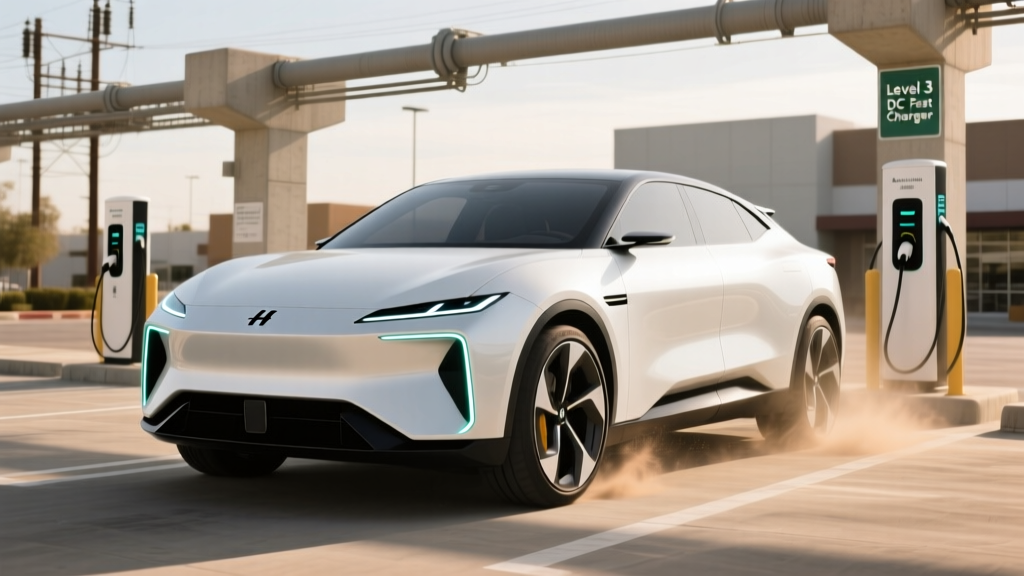
The Polaris Ranger EV accepts Level 1 (120V AC) and Level 2 (240V AC) charging. It does not support DC Fast Charging — a practical limitation given its smaller battery and off-road use case. This is standard for utility-task vehicles in this class.
Charging Levels Explained: Speeds and Range Added
| Level | Voltage | Power (kW) | Range Added/Hour | Full Charge Time (0-100%) |
|---|---|---|---|---|
| Level 1 | 120V AC | 1.2–1.4 kW | ~4–6 miles | ~18–22 hours |
| Level 2 | 240V AC | 3.3–7.2 kW | ~12–25 miles | ~4–8 hours |
| DC Fast | 400–800V DC | N/A | N/A | Not supported |
For context, the Polaris Ranger EV's estimated range is approximately 50–70 miles depending on terrain, payload, speed, and temperature. At Level 1, you'll recover about 5 miles of range per hour of charging — adequate only for occasional top-ups or overnight trickle charges if you've driven less than 20 miles. Level 2 is the practical daily charging solution, replenishing the entire battery in roughly 4–8 hours depending on your charger's amperage and the vehicle's onboard charger acceptance rate.
Home Charger Installation: Electrical Requirements and Costs
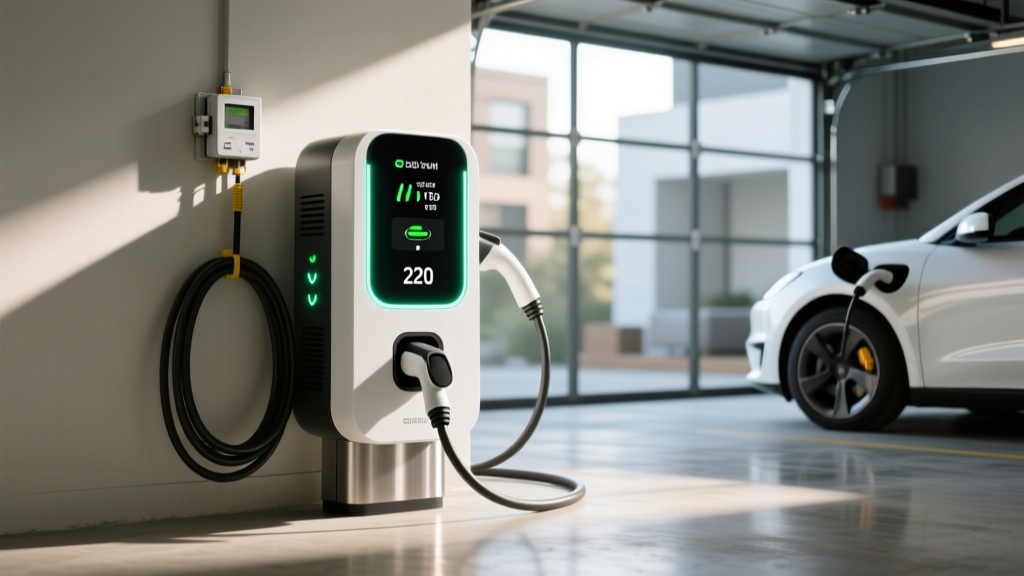
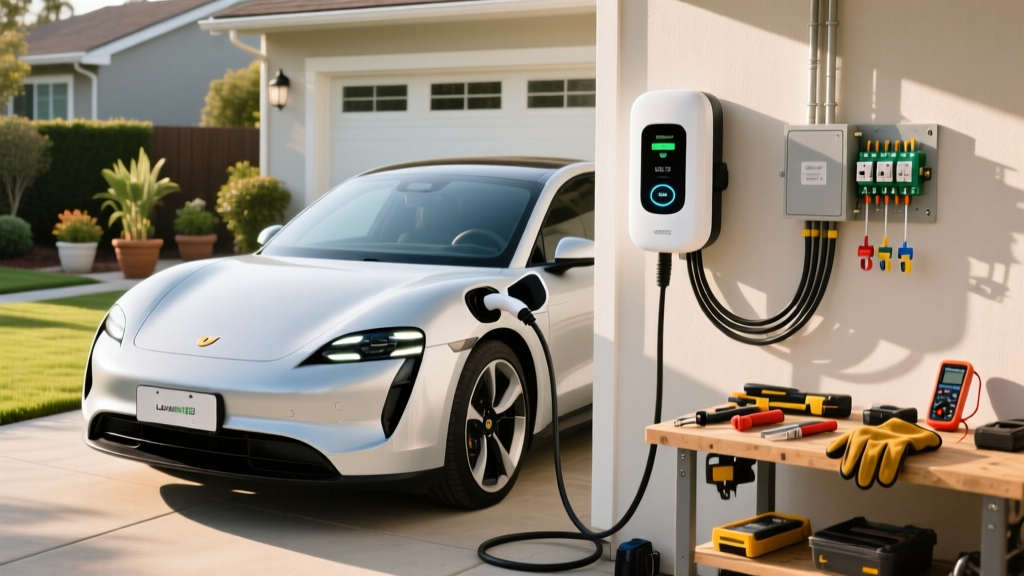
Installing a Level 2 home charger for the Polaris Ranger EV requires a dedicated 240V circuit — the same type of outlet your electric dryer or oven uses. Here are the specifics:
Electrical Requirements
- Voltage: 240V (split-phase, standard US residential)
- Amperage: 20A minimum for a 3.3 kW charger; 40A recommended for a 7.2 kW charger (provides headroom for future vehicles)
- Circuit breaker: Must be rated at 125% of continuous load — a 40A charger requires a 50A breaker
- Wire gauge: 6 AWG copper for a 50A circuit; 10 AWG for a 30A circuit
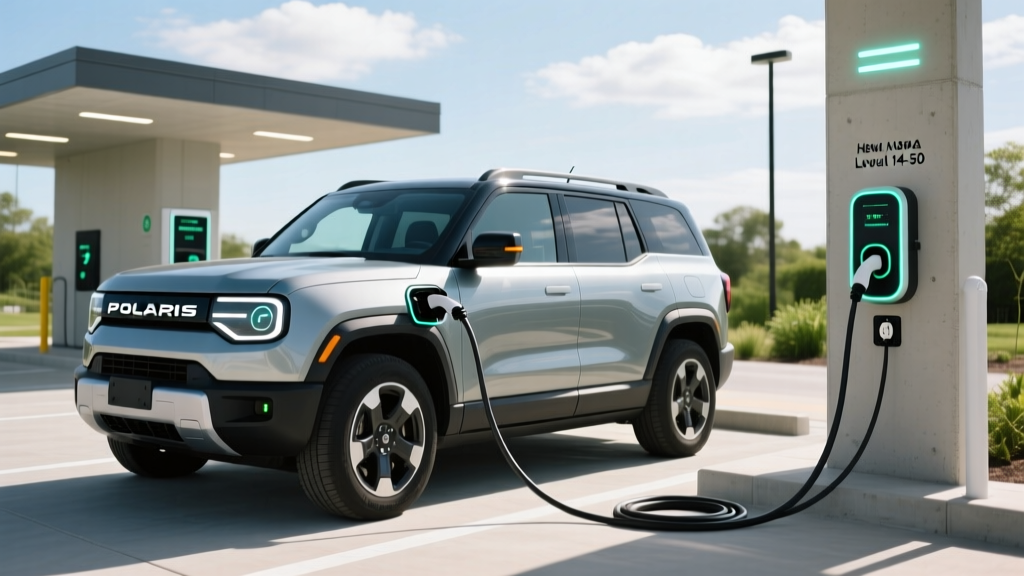
- Outlet type: NEMA 14-50 (most common) or hardwired connection
Panel Capacity Check
Before installing, your electrician will perform a load calculation on your electrical panel. Most modern homes have a 200A main panel, which typically supports a 40–50A EV circuit without issue. However, older homes with 100A or 150A panels — or homes already running multiple high-draw appliances (electric heat, tankless water heater, dryer) — may require a panel upgrade to 200A, which is a significant added cost.
Installation Cost Breakdown
| Component | Low Estimate | High Estimate | Notes |
|---|---|---|---|
| Level 2 Charger (Equipment) | $250 | $700 | Varies by brand, power, smart features |
| Electrician Labor | $400 | $1,500 | Depends on run length, conduit, wall type |
| Electrical Permit | $50 | $200 | Required in most jurisdictions |
| Panel Upgrade (if needed) | $1,500 | $4,000 | 100A→200A upgrade; not always required |
| Total (no panel upgrade) | $700 | $2,400 | Most common scenario |
| Total (with panel upgrade) | $2,200 | $6,400 | Older homes with 100A service |
The wide range reflects real variables: a short conduit run from a panel in an attached garage might cost $500 in labor, while running 60 feet of conduit through a finished wall to a detached barn or workshop could push labor past $1,200. Always get at least three quotes from licensed electricians, and confirm they pull a permit — unpermitted work can void insurance coverage and create a fire hazard.
Connector Compatibility: What Plugs Into the Polaris Ranger EV?
The Polaris Ranger EV uses a standard J1772 connector for AC charging (Level 1 and Level 2). This is the universal AC charging connector for all non-Tesla EVs sold in North America, and it's also compatible with Tesla Mobile Connectors and Wall Connectors when using a Tesla-to-J1772 adapter.
| Connector | Type | Compatible with Ranger EV? | Notes |
|---|---|---|---|
| J1772 | AC (L1/L2) | ✅ Yes — native | Standard plug included with most chargers |
| NACS (Tesla) | AC/DC | ⚠️ Adapter needed | Tesla-to-J1772 adapter (~$150–$250) for AC |
| CCS1 | DC Fast | ❌ No | Ranger EV does not support DC fast charging |
| CHAdeMO | DC Fast | ❌ No | Legacy DC standard; not applicable |
For most Polaris Ranger EV owners, the included Level 1 charging cord (plugging into a standard 120V household outlet) will handle occasional use. For daily or heavy use, a dedicated Level 2 station with a J1772 connector is strongly recommended. If you also own a Tesla or plan to charge other EVs, a NACS-equipped charger with a J1772 adapter gives you flexibility across your fleet.
Recommended Level 2 Chargers for the Polaris Ranger EV
Since the Ranger EV's onboard charger caps at roughly 3.3–6.6 kW (depending on model year), you don't need a 48A charger to max it out. However, installing a higher-capacity unit gives you headroom for future passenger EVs. Here are three proven options:
Best All-Around
- Power: Up to 12 kW (50A) — adjustable
- Connector: J1772 (NACS version also available)
- Cable length: 23 ft
- Smart features: Wi-Fi, app scheduling, energy tracking, Alexa
- Price: ~$550–$650
- Why for Ranger EV: Adjustable amperage lets you match your circuit; robust app; UL-listed
Best Budget Pick
- Power: Up to 11.5 kW (48A)
- Connector: J1772
- Cable length: 24 ft
- Smart features: Wi-Fi, app, energy monitoring, solar integration
- Price: ~$350–$400
- Why for Ranger EV: Lowest-cost smart charger with energy monitoring; pairs well with solar
Best for Mixed Fleets
- Power: Up to 11.5 kW (48A)
- Connector: NACS native; J1772 adapter required for Ranger EV
- Cable length: 24 ft
- Smart features: Wi-Fi, power sharing (multiple units), OTA updates
- Price: ~$425 (charger) + ~$150–$200 (adapter)
- Why for Ranger EV: If you also own a Tesla, one charger serves both vehicles
Charging Cost Per Mile: Polaris Ranger EV vs Gas UTV
One of the strongest arguments for the Polaris Ranger EV is operating cost. Let's run the numbers against a comparable gas-powered UTV averaging 15 MPG (typical for a loaded side-by-side in work conditions).
| Scenario | Rate | Cost/Mile (Ranger EV) | Cost/Mile (Gas UTV) |
|---|---|---|---|
| Home charging (off-peak) | $0.10/kWh | $0.005 | $0.23 (at $3.50/gal) |
| Home charging (standard rate) | $0.16/kWh | $0.008 | $0.23 |
| Home charging (high-cost state) | $0.28/kWh | $0.014 | $0.27 (at $4.00/gal) |
| Solar (after payback) | ~$0.03/kWh | $0.002 | $0.23 |
The math is stark. At the national average electricity rate of roughly $0.16/kWh (per U.S. EIA data) and an efficiency of approximately 0.5 kWh/mile for the Ranger EV under mixed use, you're paying less than one cent per mile to operate. A gas UTV at 15 MPG and $3.50/gallon costs roughly $0.23 per mile in fuel alone — before oil changes, air filters, and other ICE maintenance the Ranger EV eliminates entirely.
Over 5,000 miles of annual use, the Ranger EV saves roughly $1,100–$1,200 per year in fuel costs alone. Over a five-year ownership period, that's $5,500–$6,000 in fuel savings — often enough to offset a significant portion of the vehicle's purchase premium over a gas equivalent.
Safety, Code, and Best Practices for UTV Charging
Because the Polaris Ranger EV is often charged in garages, barns, workshops, or outdoor pads — not just suburban garages — a few safety considerations deserve special attention:
- Dedicated circuit: The National Electrical Code (NEC Article 625) requires EV charging equipment to be on a dedicated circuit not shared with other loads. Your electrician must install a new breaker specifically for the charger.
- GFCI protection: NEC 2020 and later require GFCI (Ground Fault Circuit Interrupter) protection for all 125V–250V EV charging outlets. This is critical in damp or outdoor locations where the Ranger EV typically operates.
- Outdoor rating: If you're charging in a barn, carport, or exterior wall, choose a charger rated NEMA 4 (weatherproof). The ChargePoint Home Flex and Emporia are both rated for outdoor installation. Ensure the connector holster protects the plug from rain and debris when not in use.
- Ventilation: While lithium-ion batteries don't off-gas like lead-acid, charging in a fully enclosed, unventilated space with no temperature management can accelerate battery degradation. Aim for charging ambient temperatures between 32°F and 110°F.
- Cable management: In a workshop or barn environment, a 23-foot charging cable is a trip hazard. Use a retractable reel or wall-mounted hook to keep the cable organized and protected from equipment traffic.
Charging Time Examples for Common Scenarios
Here's what charging looks like in real-world use cases with the Polaris Ranger EV's ~25 kWh battery:
| Scenario | Energy Needed | Charger | Time to Charge |
|---|---|---|---|
| Overnight top-up (30 miles driven) | ~15 kWh | Level 1 (1.4 kW) | ~11 hours |
| Overnight top-up (30 miles driven) | ~15 kWh | Level 2 (3.3 kW) | ~4.5 hours |
| Full charge (0–100%) | ~25 kWh | Level 2 (3.3 kW) | ~7.5 hours |
| Full charge (0–100%) | ~25 kWh | Level 2 (7.2 kW)* | ~4 hours* |
* Actual time depends on the Ranger EV's onboard charger acceptance rate. If the vehicle caps at 3.3 kW, a 7.2 kW charger will still only deliver 3.3 kW to the battery. Check your owner's manual for the exact onboard charger spec.
Frequently Asked Questions
How much does it cost to install a home EV charger for the Polaris Ranger EV?
Expect to pay $700–$2,400 for a standard Level 2 installation (equipment + electrician + permit) if your electrical panel has sufficient capacity. If a panel upgrade from 100A to 200A is required, total costs can reach $2,200–$6,400. Most homes built after 2000 with 200A service won't need a panel upgrade.
How fast will each charging level add range to the Ranger EV?
Level 1 (120V) adds roughly 4–6 miles of range per hour. Level 2 (240V at 3.3 kW) adds approximately 12–15 miles per hour. Since the Ranger EV's total range is roughly 50–70 miles, a single overnight session on Level 2 fully replenishes the battery for most daily work cycles.
Which connector and charger is compatible with the Polaris Ranger EV?
The Ranger EV uses the J1772 connector — the North American standard for AC charging. Any Level 2 charger with a J1772 plug will work natively. Tesla Wall Connectors require a Tesla-to-J1772 adapter (~$150–$250). DC fast charging connectors (CCS1, CHAdeMO, NACS DC) are not applicable — the Ranger EV does not support DC fast charging.
How much does charging the Polaris Ranger EV cost per mile compared to a gas UTV?
At the US average electricity rate of $0.16/kWh, the Ranger EV costs roughly $0.008 per mile to charge at home. A gas UTV getting 15 MPG at $3.50/gallon costs roughly $0.23 per mile in fuel. That's approximately 28x cheaper per mile on electricity, saving $1,100+ annually at 5,000 miles of use.
What electrical upgrades might I need for a Level 2 charger?
At minimum, you'll need a dedicated 240V circuit (30–50A depending on charger power) with a new breaker. If your panel is already near capacity, your electrician may recommend a panel upgrade (100A to 200A, costing $1,500–$4,000). Homes with existing 200A service rarely need this. Your electrician will perform a load calculation per NEC Article 220 to determine your panel's available headroom.
Can I charge the Polaris Ranger EV outdoors or in a barn?
Yes, provided you use a charger rated for outdoor installation (NEMA 4 rating) and the circuit includes GFCI protection as required by NEC Article 625. Both the ChargePoint Home Flex and Emporia chargers are rated for outdoor use. Ensure the connector is stored in a protective holster when not in use to prevent moisture and debris ingress.
Does the Polaris Ranger EV qualify for the federal EV tax credit?
Federal tax credit eligibility under IRS §30D depends on multiple factors including the vehicle's MSRP, battery component sourcing, critical minerals requirements, and the buyer's income. Utility-task vehicles may or may not meet the on-road vehicle classification requirements for the credit. Consult a tax professional and verify current-year eligibility on the IRS website before assuming credit availability. Rules change frequently and vary by model year.
Sources: U.S. Energy Information Administration (EIA), IRS Clean Vehicle Credits, Polaris commercial specifications. All costs are estimates and vary by region, electrician, and site conditions. Consult a licensed electrician for installation quotes specific to your property.