Why Color Matters: The Rise of the Plum Crazy Purple Charger
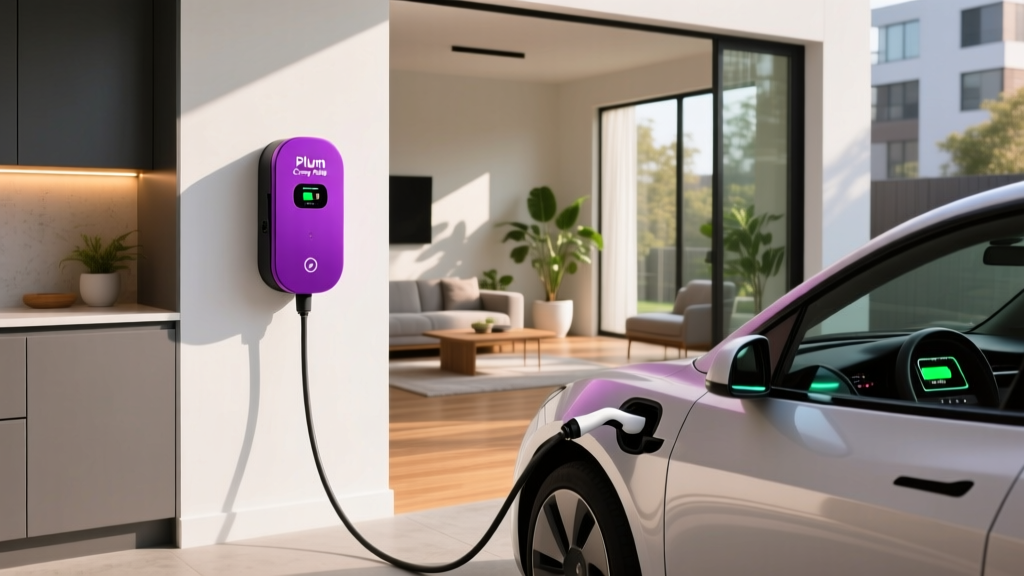
Most home EV chargers come in utilitarian black or white. But a growing wave of EV owners want their garage gear to match their vehicle's personality—or at least stand out on the wall. Enter the plum crazy purple charger aesthetic: bold, custom-color Level 2 charging equipment that turns a mundane utility into a garage conversation piece. Whether you're wrapping a standard unit in vinyl, ordering a custom-color faceplate from a boutique manufacturer, or simply hunting for the closest factory purple option, this guide covers everything you need to know about setting up a colorful, code-compliant home charging station in 2026.
Color aside, the fundamentals of home EV charging remain the same: you need the right voltage, the correct connector, adequate panel capacity, and a clear understanding of what each charging level actually delivers. Let's break it all down.
Charging Levels Explained: Speeds, Power, and Range Added
Before picking equipment, you need to understand the three charging tiers available to EV owners. The critical distinction: kW (kilowatts) measures power—the rate at which energy flows into your battery. kWh (kilowatt-hours) measures energy—the total capacity of your battery. Think of kW as the width of a hose and kWh as the size of the bucket.
| Level | Voltage | Max Power (kW) | Miles of Range Added per Hour | Typical Use Case |
|---|---|---|---|---|
| Level 1 | 120V AC | 1.2–1.9 kW | 3–5 mi/hr | Overnight top-ups, PHEVs, low-mileage drivers |
| Level 2 | 240V AC | 3.3–19.2 kW | 12–75 mi/hr | Daily home charging, most EVs |
| DC Fast Charging | 400–800V DC | 50–350 kW | 150–1,000+ mi/hr (peak) | Road trips, rapid top-ups |
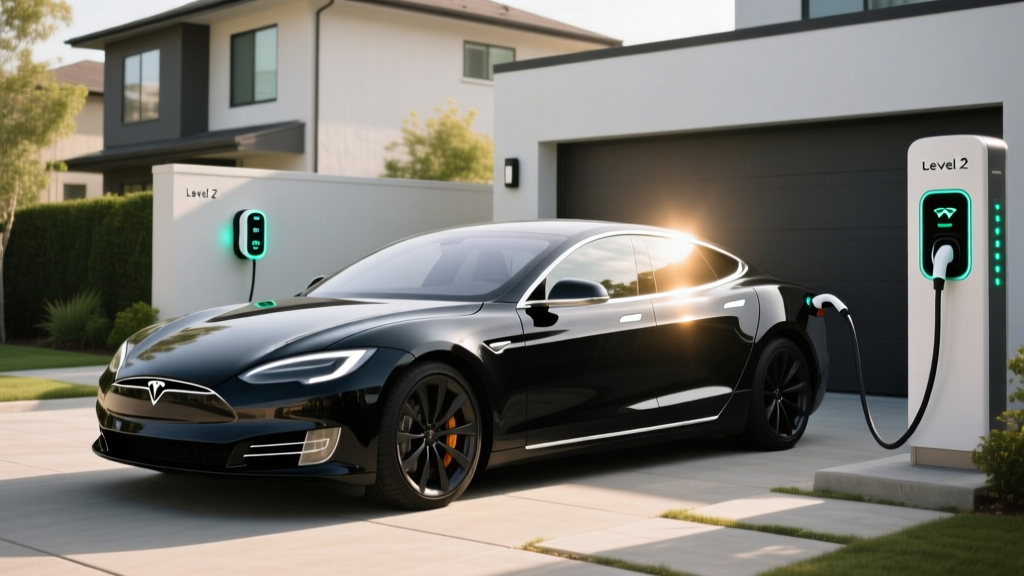
For home installations, Level 2 is the standard. A 48-amp (11.5 kW) Level 2 unit on a 240V circuit will add roughly 35–45 miles of range per hour of charging—enough to fully replenish a 75 kWh battery overnight in about 7–8 hours. DC fast charging is exclusively a public-infrastructure play; you won't install a 350 kW CCS or NACS station in your garage.
How Much Does It Cost to Install a Home EV Charger?
This is the question every EV buyer asks, and the honest answer varies enormously depending on your home's electrical panel, the distance from panel to charger location, and local permit requirements. Here's a realistic breakdown for a typical 48-amp Level 2 installation in 2026:
| Component | Typical Cost Range | Notes |
|---|---|---|
| Level 2 Charger Equipment | $350–$700 | 40A–48A smart charger; custom colors may add $50–$150 |
| Electrician Labor (standard install) | $500–$1,500 | Assumes panel has capacity; 10–40 ft run |
| Electrical Permit | $50–$200 | Varies by municipality |
| Panel Upgrade (if needed) | $1,500–$4,000 | 100A → 200A service upgrade for older homes |
| Conduit/Wiring (long runs) | $200–$800 | $5–$15/ft for runs over 40 ft |
| Total (no panel upgrade) | $900–$2,400 | Most homes built after 2000 |
| Total (with panel upgrade) | $2,400–$6,400 | Older homes with 100A service |
Panel upgrade reality check: If your home has a 100-amp electrical panel—which is common in houses built before the 1990s—adding a 48-amp EV circuit (which draws 60A continuous under NEC derating rules) may max out your service. A licensed electrician will perform a load calculation per NEC Article 220 to determine whether your panel can handle the additional draw. Don't skip this step.
The federal residential clean energy credit (IRC §25C) may cover up to 30% of charger equipment and installation costs, capped at $1,000. Check irs.gov for current-year eligibility and consult a tax professional before claiming.
Connector Compatibility: NACS, CCS1, and CHAdeMO
As of 2026, the North American EV market has largely converged on the NACS (North American Charging Standard) connector, originally developed by Tesla. Most legacy CCS1 vehicles can use a NACS-to-CCS adapter at home or on the road. Here's what you need to know:
| Connector | Brands Using It Natively | Adapter Needed? |
|---|---|---|
| NACS (Tesla-style) | Tesla, Ford, GM, Rivian, Hyundai, Kia, Volvo, Polestar, Nissan (2026+) | No for native; CCS1 vehicles need NACS-to-CCS adapter |
| CCS1 | VW ID.4 (pre-2026), older BMW iX, legacy models | CCS-to-NACS adapter for Supercharger access |
| CHAdeMO | Nissan Leaf (pre-2025), Mitsubishi Outlander PHEV | CHAdeMO-to-NACS adapters available but limited |
For your home Level 2 charger, most 2026 models ship with a NACS connector. If you drive a CCS1-equipped EV, buy a charger with a CCS1 plug or use a Tesla NACS adapter (approximately $200–$250). CHAdeMO owners should verify adapter availability before purchasing any NACS-only unit.
Charging Time Examples: What to Expect with Common Battery Sizes
Charging time depends on your battery's usable capacity (in kWh), the charger's power output (in kW), and your vehicle's onboard charger limit. Most EVs cap Level 2 acceptance at 11.5 kW (48A), though some—like the Ford F-150 Lightning with the extended-range battery—can accept up to 19.2 kW (80A).
- Tesla Model Y (75 kWh usable): 10–80% in ~5.5 hours
- Hyundai Ioniq 5 (77.4 kWh usable): 10–80% in ~5.7 hours
- Ford F-150 Lightning Extended (131 kWh usable): 10–80% in ~9.7 hours at 11.5 kW; ~5.8 hours at 19.2 kW (80A charger)
- Chevrolet Equinox EV (85 kWh usable): 10–80% in ~6.3 hours
- Toyota bZ4X (71.4 kWh usable): 10–80% in ~5.3 hours
Note: These times assume the vehicle's onboard charger accepts the full 11.5 kW. Charging slows above 80% SoC to protect battery health—the "charge curve taper" is normal and expected.
For DC fast charging on road trips, expect 10–80% in 18–25 minutes on a 150–250 kW station for most modern EVs with 800V architectures (Hyundai Ioniq 5, Kia EV6, Porsche Taycan). Vehicles on 400V platforms (older Model 3, VW ID.4) typically take 25–35 minutes for the same session.
Equipment Picks: Purple-Friendly Level 2 Chargers
Finding a factory-plum or purple Level 2 charger is niche territory, but several approaches get you the look—whether through custom faceplates, vinyl wraps, or selecting from brands that offer color options. Here are top-rated 2026 Level 2 chargers with customization potential:
Emporia Vue Level 2 Smart Charger
- Power: 48A (11.5 kW) on 60A circuit
- Connector: NACS (J3400)
- Cable Length: 24 ft
- Smart Features: Wi-Fi, app scheduling, solar integration, energy monitoring
- Price: ~$399
- Purple Potential: Matte-black housing takes vinyl wrap well; custom faceplates available from third-party sellers on Etsy
ChargePoint Home Flex
- Power: Up to 50A (12 kW) on 60A circuit
- Connector: NACS (2026 model); CCS1 available
- Cable Length: 23 ft
- Smart Features: Wi-Fi, Alexa, scheduled charging, amperage adjustment via app
- Price: ~$549
- Purple Potential: Sleek rounded housing; ChargePoint offers limited color accessories—wrap the body in plum vinyl for ~$30–$50
WallConnector (Tesla, 4th Gen)
- Power: 48A (11.5 kW) on 60A circuit
- Connector: NACS native
- Cable Length: 24 ft
- Smart Features: Wi-Fi updates, power sharing, access control, energy tracking
- Price: ~$420
- Purple Potential: White or black glass faceplate swappable; aftermarket plum-tinted glass plates available (~$60–$90)
Pro tip for the plum crazy purple look: Automotive-grade vinyl wrap (3M 1080 or Avery Dennison Supreme Wrapping Film in "Satin Purple" or "Plum Metallic") costs $15–$30 for a sheet large enough to cover most charger housings. Apply it yourself in 20 minutes or pay a local wrap shop $75–$125. This approach lets you buy the best-performing charger regardless of factory color.
Cost to Charge: Home vs. Public vs. Gas
The economic case for home charging is compelling—but the numbers vary significantly depending on where and when you plug in. Here's how costs stack up in 2026:
| Charging Scenario | Average $/kWh | Cost per Mile (at 3.5 mi/kWh) | Annual Cost (12,000 mi) |
|---|---|---|---|
| Home, off-peak (utility TOU rate) | $0.08–$0.14 | $0.023–$0.040 | $275–$480 |
| Home, standard rate (no TOU) | $0.14–$0.20 | $0.040–$0.057 | $480–$685 |
| Public Level 2 (ChargePoint, EVgo L2) | $0.25–$0.49 | $0.071–$0.140 | $855–$1,680 |
| DC Fast Charging (Electrify America, Tesla Supercharger) | $0.30–$0.55 | $0.086–$0.157 | $1,030–$1,885 |
| Gasoline equivalent (28 MPG avg, $3.40/gal) | — | $0.121 | $1,457 |
At home off-peak rates, EV charging costs roughly 70–80% less per mile than gasoline. Even at public DC fast charger rates, most EVs still beat gasoline on a per-mile basis—though the gap narrows considerably. The lesson: home charging is where the savings live. If you can't charge at home, a PHEV may make more financial sense than a BEV.
Most EVs average 3.0–4.0 miles per kWh. A Hyundai Ioniq 5 achieves roughly 3.6 mi/kWh on the EPA combined cycle, while a heavier Ford F-150 Lightning lands around 2.0–2.3 mi/kWh. Adjust the cost-per-mile math for your specific vehicle.
What Electrical Upgrades Might I Need?
Before you order a charger or hire an electrician, assess your home's electrical readiness:
- Panel capacity: A 48A charger requires a dedicated 60A breaker (NEC requires circuits be rated at 125% of continuous load). Your panel must have enough spare capacity after a load calculation. Homes with 200A service typically have room; 100A panels often don't.
- Available breaker slots: You need two adjacent slots in your panel for a 240V double-pole breaker. If your panel is full, a sub-panel or tandem breaker reconfiguration may be required ($200–$500 additional).
- Wire gauge: A 60A circuit requires 6 AWG copper wire (or 4 AWG aluminum). Longer runs may need thicker wire to prevent voltage drop—your electrician will size accordingly.
- GFCI protection: NEC 2020 and later require GFCI protection for EV charging outlets in garages. Hardwired installations may bypass this requirement depending on local code interpretation—another reason to hire a licensed electrician who knows your jurisdiction.
- Outdoor rating: If your charger mounts outside, ensure it carries a NEMA 4 or IP65 rating. Most smart chargers from ChargePoint, Tesla, and Emporia meet this standard, but verify before purchase.
- Permit requirements: Nearly all jurisdictions require an electrical permit for a new 240V circuit. Permit fees range from $50–$200. Skipping the permit risks insurance denial if an electrical fire occurs and may complicate a future home sale.
Smart panel alternative: If a panel upgrade is cost-prohibitive, devices like the Span smart panel or Enphase IQ System Controller can dynamically manage circuit loads, allowing EV charging on a lower-amperage circuit without overloading the panel. These systems cost $1,500–$3,500 installed but can defer or eliminate a full panel upgrade.
Frequently Asked Questions
Can I plug a Level 2 charger into a regular outlet?
No. Level 2 chargers require a dedicated 240V circuit—similar to what an electric dryer or oven uses. A standard 120V household outlet only supports Level 1 charging at 1.2–1.9 kW, which adds just 3–5 miles of range per hour. Some Level 2 chargers (like the ChargePoint Home Flex) offer a NEMA 14-50 plug option, but you still need a 240V/50A outlet installed by an electrician.
Is a hardwired charger better than a plug-in (NEMA 14-50) unit?
Hardwired installations offer three advantages: they can deliver higher amperage (up to 80A vs. 40A for most NEMA 14-50 outlets), they eliminate the plug as a failure point, and they may not require GFCI breakers under some local codes. However, plug-in units are portable—you can take the charger when you move. For most homeowners, a hardwired 60A circuit with a 48A charger is the optimal balance of speed and cost.
Will wrapping my charger in purple vinyl void the warranty?
Possibly. Most charger warranties cover defects in materials and workmanship but exclude damage from modifications. Applying vinyl wrap to the exterior housing generally won't void the warranty unless it blocks ventilation, covers status LEDs, or causes overheating. Avoid wrapping over any vents, screens, or connectors. Document the charger's condition before wrapping in case you need a warranty claim.
How fast will each charging level add range?
Level 1 (120V) adds 3–5 miles per hour. Level 2 (240V, 48A) adds 35–45 miles per hour for most EVs. DC fast charging (150+ kW) can add 150–300 miles in a 20–25 minute session, though charging speed tapers significantly above 80% state of charge to protect the battery.
Which connector do I need for my EV?
If you drive a 2025 or newer Tesla, Ford, GM, Rivian, Hyundai, Kia, or Volvo EV, your vehicle uses the NACS (J3400) connector natively. Older CCS1-equipped EVs need a NACS-to-CCS adapter for Supercharger access. Nissan Leaf owners with CHAdeMO should verify adapter compatibility before purchasing any NACS-only home charger. Check your owner's manual or the fueleconomy.gov vehicle listing for your specific model's connector type.
What's the difference between kW and kWh?
kW (kilowatts) measures power—the rate of energy flow, like water pressure in a hose. kWh (kilowatt-hours) measures energy—the total amount delivered, like gallons in a bucket. A 75 kWh battery charged at 11.5 kW takes roughly 6.5 hours from empty to full. When shopping for chargers, kW tells you how fast it charges; kWh tells you how big your battery is.