Plug-in hybrid electric vehicles (PHEVs) occupy a unique space in the electrified-vehicle landscape. With battery packs typically ranging from 10 to 30 kWh and EPA-rated electric-only distances between 20 and 50 miles, a PHEV's daily usability hinges entirely on one factor: how reliably and quickly you can replenish that smaller battery. Understanding how to charge efficiently is the single biggest lever you have for maximizing your plug-in hybrid range in everyday driving — keeping you in EV mode for daily commutes and errands while the gas engine covers longer trips.
This guide walks through every charging level, home installation requirements, connector compatibility, real-world costs, and the specific equipment that makes the most sense for PHEV owners in 2026.
Charging Levels Explained: How Fast Will Each Level Add Range?
Before evaluating hardware, you need to understand the three charging tiers available to PHEV owners. The critical distinction: kW (kilowatts) measures power — the rate at which energy flows into your battery. kWh (kilowatt-hours) measures energy — the total capacity stored in your battery. Think of kW as the width of a pipe and kWh as the size of the tank you're filling.
Most PHEVs have batteries between 13 and 25 kWh (usable), meaning they require far less energy per fill-up than a full EV with an 80+ kWh pack. That changes the charging calculus significantly.
| Level | Voltage | Power (kW) | Miles of Range Added/Hour | Typical PHEV 0–100% Time |
|---|---|---|---|---|
| Level 1 (standard outlet) | 120V | 1.2–1.9 kW | 3–5 miles | 8–14 hours |
| Level 2 (home/public AC) | 240V | 3.3–7.7 kW | 10–25 miles | 2–5 hours |
| DC Fast Charging | 400V+ | 25–50 kW (PHEV max) | 60–120 miles | 25–45 min (to 80%) |
Level 1 uses a standard 120V household outlet. It's the default cord that ships with most PHEVs. For a Toyota RAV4 Prime (42 miles EPA electric range, 18.1 kWh battery), Level 1 adds roughly 4 miles of range per hour — meaning an overnight 10-hour plug-in yields about 40 miles. For many PHEV owners with short commutes, this is adequate, but it leaves little margin for days with extra driving.
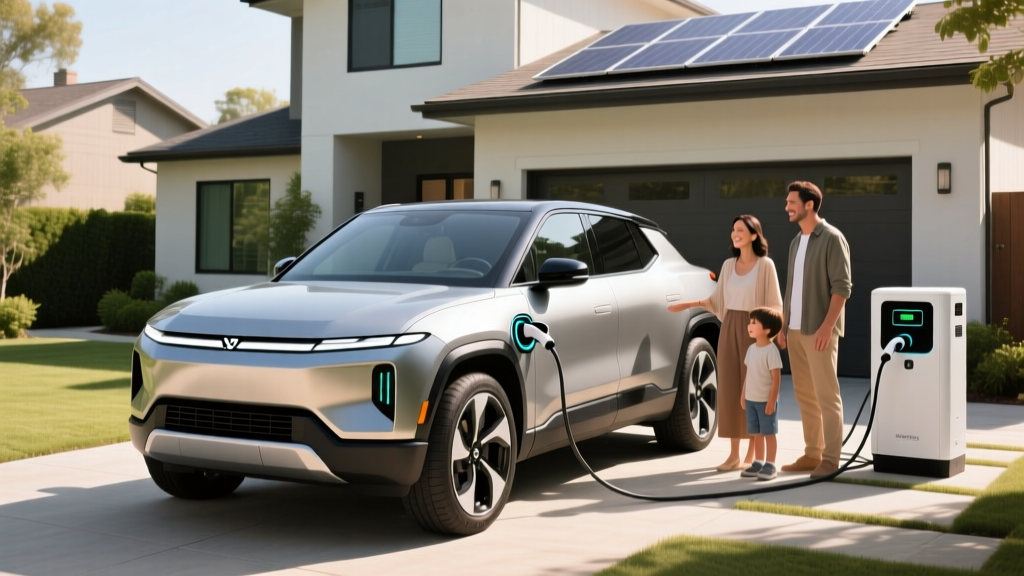
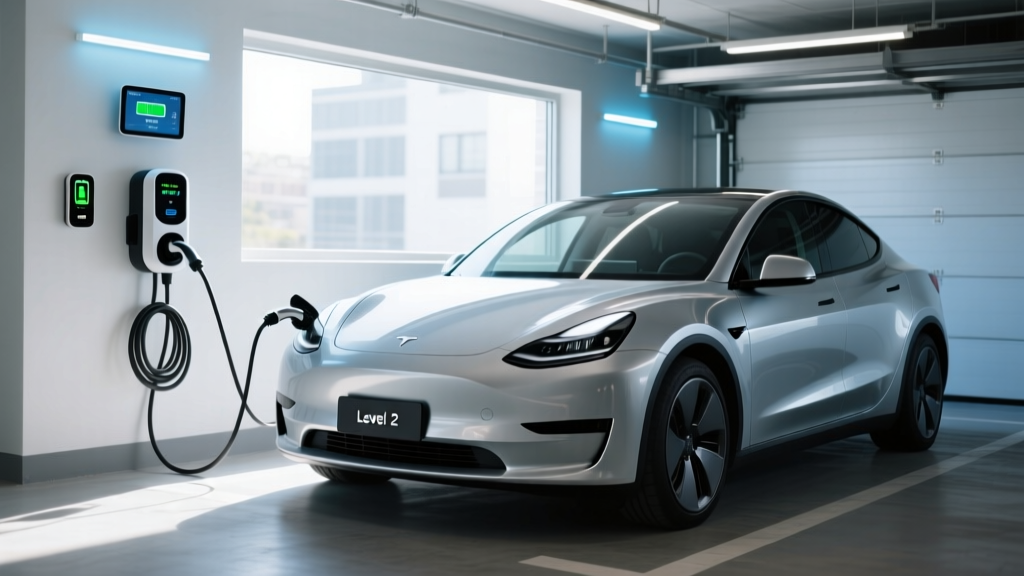
Level 2 requires a 240V circuit — the same voltage your electric dryer uses. At 32 amps (7.7 kW), a Level 2 charger can fully replenish most PHEV batteries in 2 to 3 hours. This means you can top up during a midday break or guarantee a full battery every morning with a shorter overnight window.
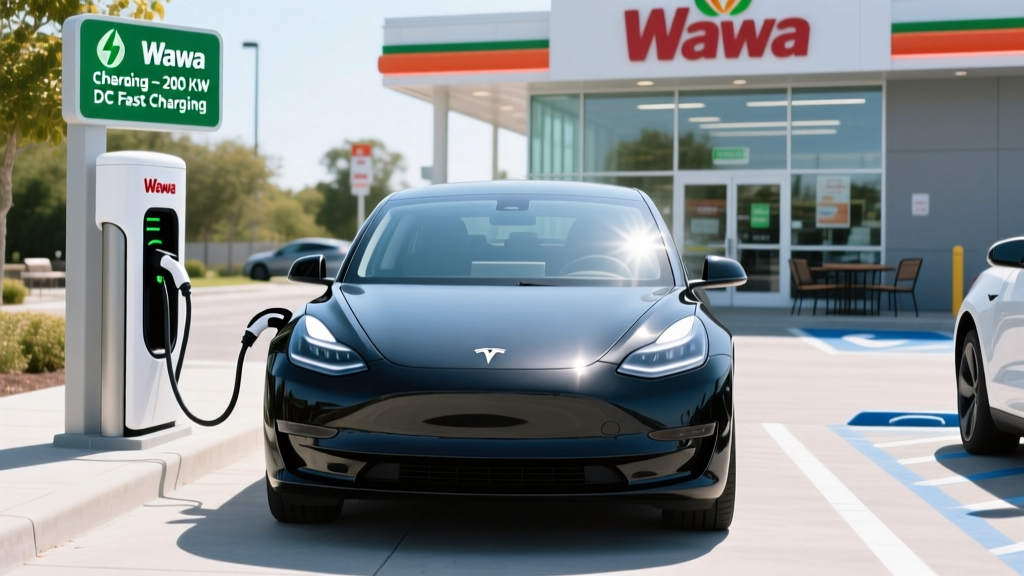
DC Fast Charging is relevant for a limited subset of PHEVs. The Mitsubishi Outlander PHEV and some newer models support DC fast charging at rates up to 22–38 kW. However, many popular PHEVs — including the Toyota RAV4 Prime and Jeep Wrangler 4xe — do not support DC fast charging at all, relying solely on Level 1 and Level 2 AC charging. Always check your specific model's capabilities before investing in DC-compatible equipment.
Home Charger Installation: Electrical Requirements and Costs
Installing a Level 2 home charger is the single most impactful upgrade a PHEV owner can make. But the total cost depends heavily on your home's existing electrical infrastructure.
Electrical Panel Assessment
A dedicated Level 2 circuit requires a 240V breaker, typically 40A or 50A. Your electrical panel must have enough spare capacity to support this new load. Here's what determines whether you need an upgrade:
- 100-amp service panel: Common in older homes. Likely requires a panel upgrade to 200A before adding a 40A EV circuit. This is the single biggest cost variable.
- 150-amp service panel: May have sufficient headroom depending on existing loads (electric oven, dryer, HVAC). A licensed electrician will perform a load calculation per NEC Article 220.
- 200-amp service panel: Most modern homes. Usually accommodates a 40A–50A EV circuit without upgrade, provided physical breaker spaces are available.
Installation Cost Breakdown
| Component | Low Estimate | High Estimate | Notes |
|---|---|---|---|
| Level 2 charger hardware | $250 | $700 | 32A–48A smart chargers; PHEVs rarely need 48A |
| Electrician labor (2–6 hrs) | $400 | $1,500 | Varies by run length from panel to garage/carport |
| Permit and inspection | $50 | $300 | Required in most jurisdictions; varies by municipality |
| Panel upgrade (if needed) | $1,500 | $4,000 | Only for homes with 100A service or insufficient capacity |
| Conduit, wiring, receptacle | $100 | $500 | NEMA 14-50 outlet vs. hardwired; longer runs cost more |
| Total (no panel upgrade) | $800 | $3,000 | Most common scenario for homes with 200A service |
| Total (with panel upgrade) | $2,300 | $7,000 | Older homes or those with high existing electrical loads |
For PHEV owners specifically, a 32-amp (7.7 kW) circuit is usually sufficient. Most PHEV onboard chargers max out at 3.3 kW to 6.6 kW, meaning a 40A circuit provides ample headroom without paying for capacity you'll never use. A 48A charger on a 60A circuit is overkill for a PHEV — save that setup for a full BEV with a large battery.
Connector Compatibility: Which Plug Fits Your PHEV?
The connector landscape has shifted dramatically since Tesla opened its Supercharger network and the North American Charging Standard (NACS) emerged as the dominant connector. Here's what PHEV owners need to know in 2026:
| Connector Type | PHEV Brands Using It | Adapter Needed? |
|---|---|---|
| J1772 (AC Level 1/2) | Toyota, Jeep, Hyundai, Kia, BMW, Volvo, Chrysler | Native on most public AC chargers; NACS-to-J1772 adapter needed at Tesla Destination chargers |
| NACS (Tesla) | Tesla vehicles only (no PHEV currently uses NACS natively) | Tesla Mobile Connector includes J1772 adapter |
| CCS1 (DC Fast) | Most non-Tesla PHEVs with DC fast capability (e.g., Mitsubishi Outlander PHEV) | Increasingly rare as networks adopt NACS |
| CHAdeMO (DC Fast) | Legacy Nissan, Mitsubishi (older models) | Phasing out; limited station availability |
Key takeaway for PHEV owners: Since the vast majority of PHEV charging happens at home or at public Level 2 AC stations, the J1772 connector is your primary interface. If you also own (or plan to own) a Tesla or NACS-equipped EV, investing in a charger with a J1772 plug and keeping a NACS adapter in your vehicle covers both ecosystems.
For the small number of PHEVs supporting DC fast charging (notably the Mitsubishi Outlander PHEV at up to 22 kW DC), CCS1 compatibility matters for road-trip top-ups, but the limited DC charge rate means you won't benefit from 350 kW ultra-fast stations — the vehicle will cap well below the station's maximum.
Cost to Charge: PHEV Electricity Costs vs. Gasoline
The financial case for a PHEV rests on how much of your driving you can cover on electricity. Let's run the numbers for a representative PHEV with a 18 kWh usable battery and 35 miles of EPA electric range.
| Scenario | Rate ($/kWh) | Cost for Full Charge | Cost per Electric Mile | Equiv. Gas Cost (30 MPG, $3.50/gal) |
|---|---|---|---|---|
| Home, off-peak utility rate | $0.08–$0.12 | $1.44–$2.16 | $0.04–$0.06 | $0.12/mile |
| Home, standard residential rate | $0.14–$0.18 | $2.52–$3.24 | $0.07–$0.09 | $0.12/mile |
| Public Level 2 (network pricing) | $0.25–$0.49 | $4.50–$8.82 | $0.13–$0.25 | $0.12/mile |
| DC Fast (where available) | $0.35–$0.55 | $6.30–$9.90 | $0.18–$0.28 | $0.12/mile |
The bottom line: Charging at home on off-peak or standard residential rates delivers a per-mile cost that is 30–65% lower than gasoline. Public Level 2 and DC fast charging, however, can equal or exceed gas costs per mile. This is why home charging infrastructure is the economic linchpin of PHEV ownership — without it, you're paying a premium for the electric drivetrain without capturing the fuel savings.
According to the EPA's PHEV fuel economy data, a vehicle like the 2026 Toyota RAV4 Prime achieves 94 MPGe in electric mode and 38 MPG combined in hybrid mode. Maximizing time spent in electric mode — by charging consistently — is where the efficiency gains live.
Equipment Recommendations: Best Chargers for PHEV Owners
PHEVs don't need the highest-powered chargers on the market. A 32A (7.7 kW) Level 2 unit is the sweet spot — matching or exceeding the onboard charger capacity of virtually every PHEV sold in 2026. Here are three strong options:
Emporia Level 2 EV Charger
- Power Output: 48A max (11.5 kW); adjustable down to 32A
- Connector: J1772 (NACS adapter available)
- Cable Length: 24 ft
- Smart Features: Wi-Fi, energy monitoring via Emporia app, solar integration, scheduling
- Price: ~$350
- Best For: Budget-conscious PHEV owners who want energy tracking and solar-aware scheduling
ChargePoint Home Flex
- Power Output: Up to 50A (12 kW); adjustable via dip switch
- Connector: J1772
- Cable Length: 23 ft
- Smart Features: Wi-Fi, ChargePoint app scheduling, Alexa integration, NEMA 14-50 or hardwired
- Price: ~$550
- Best For: PHEV owners wanting a proven, UL-listed unit from a major network brand
Tesla Wall Connector (with J1772 adapter)
- Power Output: Up to 48A (11.5 kW)
- Connector: NACS native; includes J1772 adapter for non-Tesla PHEVs
- Cable Length: 24 ft
- Smart Features: Wi-Fi, OTA firmware updates, power sharing between two units
- Price: ~$475 (charger) + ~$30 (J1772 adapter)
- Best For: Households with both a Tesla and a PHEV; future-proof for NACS transition
For a PHEV with a 6.6 kW onboard charger (like the Jeep Wrangler 4xe or Hyundai Tucson PHEV), even a basic 32A unit delivers energy faster than the car can accept it. You're paying for convenience, build quality, and smart features rather than raw power.
Charging Time Examples: How Long to Fill Common PHEV Batteries
Because PHEV batteries are small relative to full EVs, charging times are measured in hours, not the marathon sessions BEV owners sometimes face. Here are representative charge times for popular 2026 PHEVs:
| Model | Battery (usable kWh) | EPA Electric Range | Onboard Charger | Level 1 (120V) 0–100% | Level 2 (240V, 32A) 0–100% |
|---|---|---|---|---|---|
| Toyota RAV4 Prime | 18.1 kWh | 42 mi | 3.3 kW | ~12 hours | ~5.5 hours |
| Jeep Wrangler 4xe | 17.3 kWh | 22 mi | 6.6 kW | ~12 hours | ~2.75 hours |
| Hyundai Tucson PHEV | 13.8 kWh | 33 mi | 7.2 kW | ~9 hours | ~2 hours |
| Chrysler Pacifica Hybrid | 16.0 kWh | 32 mi | 6.6 kW | ~13 hours | ~2.5 hours |
| BMW X5 xDrive50e | 25.7 kWh | 40 mi | 7.4 kW | ~18 hours | ~3.5 hours |
Notice that the onboard charger is the bottleneck — not the home charger. A RAV4 Prime limited to 3.3 kW onboard will charge at the same rate on a 32A (7.7 kW) Level 2 circuit as it would on a 16A (3.8 kW) circuit. This means PHEV owners should not overspend on high-amperage chargers; a quality 32A unit paired with a NEMA 14-50 outlet is the most cost-effective setup.
Safety and Electrical Code Considerations
EV charging involves sustained high-current draw — often 8+ hours continuously. The National Electrical Code (NEC) treats this as a continuous load, which triggers specific requirements:
- 80% rule: A 40A breaker can only sustain a 32A continuous load. A 50A breaker supports 40A continuous. Never size your charger amperage above 80% of the breaker rating.
- Dedicated circuit: Your EV charger must have its own dedicated breaker — it cannot share a circuit with other appliances.
- GFCI protection: NEC 2020 and later requires GFCI protection for 240V receptacles used for EV charging in garages. Hardwired installations may be exempt depending on local code interpretation.
- Outdoor rating: If your charger is mounted outside (carport, driveway), it must carry a NEMA 4 or NEMA 4X rating for weather resistance. All chargers recommended above carry appropriate outdoor ratings.
- Permit required: Virtually all jurisdictions require an electrical permit for a new 240V circuit. The inspection ensures proper wire gauge, breaker sizing, and grounding. Skipping the permit risks insurance claim denial in the event of an electrical fire.
Always hire a licensed electrician — not a general handyman — for EV charger installation. The sustained-load nature of EV charging makes proper torque on terminal connections, correct wire gauge (typically 6 AWG for 50A circuits, 8 AWG for 40A), and adequate ventilation critical to long-term safety.
Frequently Asked Questions
How much does it cost to install a home EV charger for my PHEV?
For most homes with a 200-amp electrical panel, expect $800–$3,000 total (charger hardware + electrician labor + permit). If your home has older 100-amp service and needs a panel upgrade, costs rise to $2,300–$7,000. Since PHEVs only need a 32A circuit, you can often save by choosing a lower-amperage charger and a shorter wiring run.
How fast will each charging level add range to my PHEV?
Level 1 (120V) adds roughly 3–5 miles of electric range per hour. Level 2 (240V) adds 10–25 miles per hour depending on the vehicle's onboard charger capacity. DC fast charging (available on select PHEVs only) can add 60–120 miles per hour, but most PHEVs don't support DC fast charging. For a PHEV with 30–42 miles of electric range, Level 2 fully replenishes the battery in 2–5 hours.
Which connector and charger is compatible with my PHEV?
Nearly all non-Tesla PHEVs use the J1772 connector for AC charging (Level 1 and Level 2). This includes Toyota, Jeep, Hyundai, Kia, BMW, Volvo, and Chrysler PHEVs. For DC fast charging (if your PHEV supports it), the CCS1 connector is standard on most 2026 models, though CHAdeMO persists on older Mitsubishi models. A J1772-compatible Level 2 home charger will work with virtually every PHEV on the market.
How much does charging a PHEV cost per mile compared to gas?
At home on standard residential electricity ($0.14–$0.18/kWh), a PHEV costs approximately $0.07–$0.09 per electric mile — roughly 25–40% less than gasoline at $3.50/gallon in a 30 MPG vehicle ($0.12/mile). Off-peak utility rates ($0.08–$0.12/kWh) push savings to 50–65%. However, public Level 2 and DC fast charging at $0.25–$0.55/kWh can equal or exceed gasoline costs. Home charging is essential to capturing PHEV economics.
What electrical upgrades might I need for a PHEV charger?
The most common upgrade is adding a dedicated 240V, 40A breaker and running 6 or 8 AWG wire from your panel to the garage or carport. If your panel lacks physical breaker spaces, a subpanel ($300–$600) may be needed. Homes with 100-amp service may require a full panel upgrade to 200A ($1,500–$4,000). A licensed electrician will perform a load calculation to determine whether your existing service can handle the additional continuous load. Check the IRS §30D guidelines and your utility for possible rebates that offset installation costs.
Can I just use the Level 1 cord that came with my PHEV?
Yes — and for many PHEV owners with short commutes, it's sufficient. If your daily driving is under 30 miles and you can plug in for 10+ hours overnight, Level 1 will replenish most or all of your electric range. However, Level 1 struggles if you make multiple trips per day, drive more than the electric range, or need flexibility for midday top-ups. A Level 2 installation provides a buffer that makes electric-mode driving more practical in varied daily routines.
Do I need a smart charger with Wi-Fi and scheduling?
Not strictly, but smart features add genuine value for PHEV owners. Scheduling charges to off-peak utility hours (often 10 PM–6 AM) can cut electricity costs by 30–50%. Energy monitoring helps you track exactly how much you're spending on electric driving versus gas. If your utility offers time-of-use (TOU) rates, a smart charger that auto-schedules is a no-brainer for maximizing savings.