If you've just ordered an electric vehicle — or are seriously considering one — the single most practical question is probably this: how do I actually plug in an EV charger, and what will it cost? Whether you're parking in a garage with a standard 120V outlet or planning a full 240V hardwired installation, the answer determines your daily convenience, your electricity bill, and whether you'll ever need to visit a public fast-charging station.
This guide breaks down every charging level with exact speeds, walks through real home installation costs (including the panel upgrade nobody warns you about), maps connector compatibility across 2026 models, and shows you what plugging in actually costs per mile compared to gas. No marketing fluff — just the numbers you need to make decisions.
Charging Levels Explained: How Fast Does Each One Add Range?
EV charging comes in three tiers, each defined by power output measured in kilowatts (kW). Note: kW measures the rate of energy delivery (power), while kilowatt-hours (kWh) measures the total energy stored in your battery. Think of kW as the speed of water flowing from a hose, and kWh as the size of the bucket you're filling. You'll see both throughout this guide.
| Level | Voltage / Amperage | Power Output (kW) | Miles of Range Added Per Hour | Typical Use Case |
|---|---|---|---|---|
| Level 1 | 120V / 12A | ~1.4 kW | 3–5 miles | Overnight top-ups, low-mileage drivers, PHEVs |
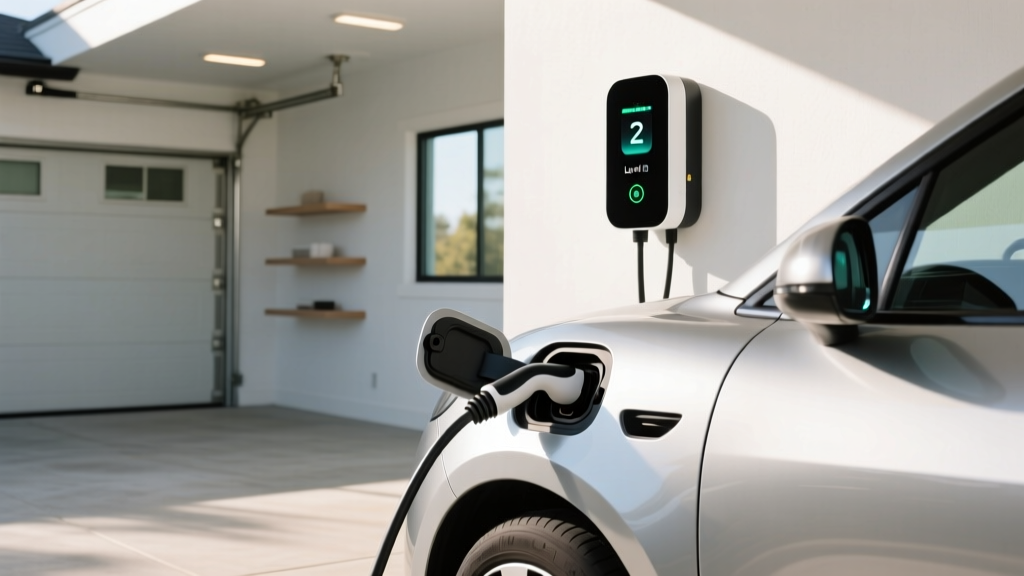
| Level 2 | 240V / 32A–48A | 7.7–11.5 kW | 25–44 miles | Daily home charging, most EV owners' primary method |
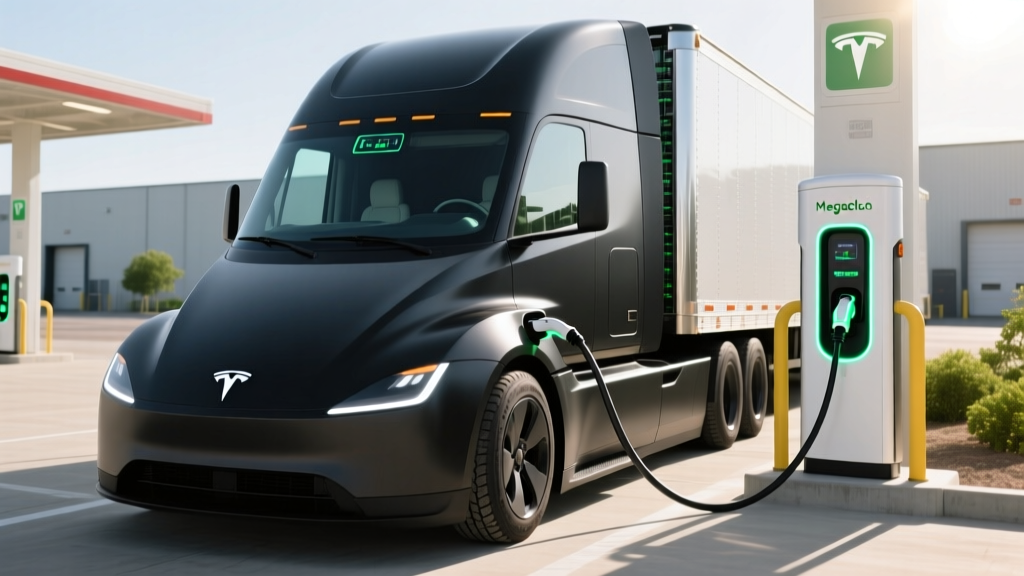
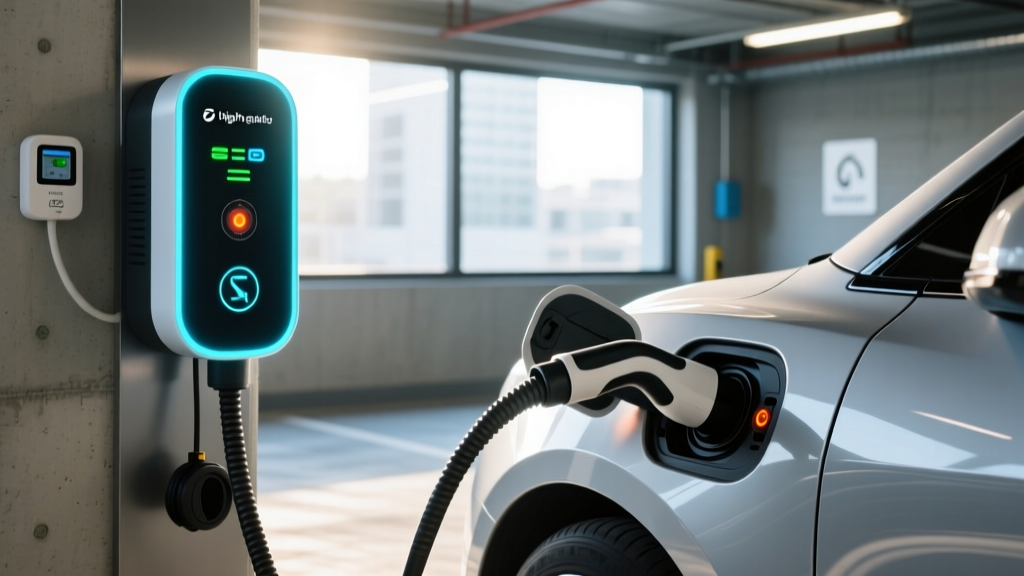
| DC Fast Charging | 400V–800V DC | 50–350 kW | 150–1,200+ miles (per hour equivalent) | Road trips, quick top-ups, commercial fleets |
Real-world charging time examples (10% to 80% State of Charge):
- Tesla Model Y (75 kWh battery, NMC): ~18 minutes on a 250 kW V3 Supercharger; ~8 hours on a 48A Level 2 home charger.
- Hyundai Ioniq 5 (77.4 kWh battery, NMC): ~18 minutes on a 350 kW Electrify America station (800V architecture); ~7.5 hours on a 48A Level 2.
- Ford F-150 Lightning Extended Range (131 kWh battery, NMC): ~41 minutes on a 150 kW DC charger; ~13 hours on a 48A Level 2.
- Toyota Prius Prime PHEV (13.6 kWh battery): ~4 hours on a standard 120V Level 1 outlet; ~1.5 hours on Level 2.
Keep in mind that DC fast charging follows a charge curve: peak kW only applies at low State of Charge (typically 10–30%), then the rate tapers significantly above 80% to protect battery health. A "250 kW" charger doesn't deliver 250 kW for the entire session. This is why manufacturers quote 10–80% times rather than 0–100%.
Home Installation: Electrical Requirements, Costs & Panel Upgrades
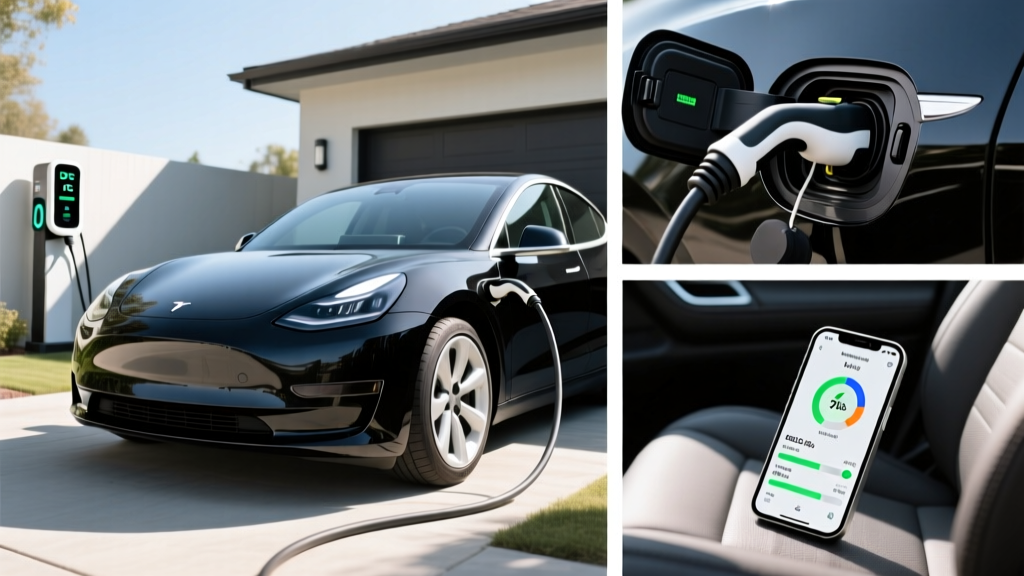
Most EV owners install a Level 2 home charger, which requires a dedicated 240V circuit — the same voltage your electric dryer or oven uses. Here's what that actually involves and what it costs.
Electrical Requirements for a Level 2 Home Charger
- Voltage: 240V (split-phase residential)
- Amperage: 32A, 40A, or 48A circuit depending on charger
- Circuit breaker: Must be rated 125% above continuous load — a 40A charger requires a 50A breaker; a 48A charger requires a 60A breaker
- Wire gauge: 6 AWG copper for 48A–50A circuits; 8 AWG for 32A–40A (varies by run length and local code)
- Connection type: NEMA 14-50 outlet (plug-in) or hardwired junction box
Hardwired vs. plug-in: Hardwired chargers can deliver up to 48A continuously and avoid the ~$80–$150 cost of a high-quality 14-50 receptacle. Plug-in chargers offer portability — you can take the unit when you move — but are generally limited to 40A on a 14-50 outlet and require a properly installed, code-compliant receptacle (not the cheap ones that can melt under continuous EV loads).
The Panel Upgrade Question Most Guides Skip
If your home has a 100A electrical panel (common in homes built before the 1990s), adding a 50A or 60A EV circuit may exceed your panel's capacity, especially if you already run electric heat, a dryer, and an oven. A licensed electrician will perform a load calculation (per NEC Article 220) to determine if your panel can handle the additional draw.
If an upgrade is needed — typically from 100A to 200A service — expect to pay $1,500–$3,500 for the panel upgrade alone, on top of charger installation costs. Homes with 200A panels (standard in most post-2000 construction) rarely need an upgrade for a single Level 2 charger.
Installation Cost Breakdown
| Component | Simple Install (panel nearby, no upgrade) | Complex Install (long run or panel upgrade) |
|---|---|---|
| EV charger equipment (Level 2, 32A–48A) | $300–$700 | $300–$700 |
| Electrician labor (2–6 hours) | $300–$600 | $600–$1,500 |
| Electrical permit | $50–$150 | $50–$200 |
| Wire, conduit, breaker, misc. materials | $100–$300 | $300–$800 |
| Panel upgrade (if needed) | $0 | $1,500–$3,500 |
| Total estimated cost | $750–$1,750 | $2,750–$6,700 |
Always hire a licensed electrician and pull a permit. Unpermitted EV charger installs can void homeowner's insurance claims if an electrical fire occurs, and will be flagged during a home inspection if you sell. The National Electrical Code (NEC) Article 625 governs EV charging installations specifically.
Connector Compatibility: NACS, CCS1, CHAdeMO & Adapters
When you plug in an EV charger, the physical connector must match your vehicle's charge port. As of 2026, the North American charging landscape has consolidated heavily around NACS (the Tesla-designed connector, now standardized as SAE J3400), but millions of CCS1-equipped EVs remain on the road.
| Connector | Brands Using It (Native) | Public Network Availability | Adapter Needed? |
|---|---|---|---|
| NACS (SAE J3400) | Tesla (all), Ford (2025+), GM (2025+), Rivian (2025+), Volvo/Polestar (2025+), Hyundai/Kia (2026+ select models) | Tesla Superchargers (open to all via adapter or native), growing at Electrify America, EVgo, ChargePoint | CCS1 vehicles need a NACS-to-CCS1 adapter (~$150–$250) for Supercharger access |
| CCS1 (Combo) | Hyundai/Kia (pre-2026), VW/Audi, BMW, Mercedes, Stellantis, most legacy models | Electrify America, EVgo, ChargePoint, most non-Tesla networks | NACS vehicles need a CCS1-to-NACS adapter (~$100–$200) for non-Tesla DC networks |
| CHAdeMO | Nissan Leaf (discontinued), Mitsubishi Outlander PHEV (older model years) | Declining rapidly; most networks have removed CHAdeMO stalls | No adapter exists to convert CHAdeMO to NACS/CCS; limited future-proofing |
| J1772 (Level 2 AC) | All non-Tesla EVs for AC Level 2 charging | Universal at public Level 2 stations | Tesla vehicles use a J1772 adapter (included with every Tesla) |
Home charger connector note: Nearly all Level 2 home chargers sold in 2026 come with either a NACS plug or a J1772 plug. If your EV has a NACS port (Tesla, newer Ford/GM/Rivian), buy a NACS-terminated charger. If your EV uses J1772 for AC charging (Hyundai, VW, BMW, etc.), buy a J1772-terminated charger. The J1772-to-NACS adapter included with Teslas also works in reverse for home charging scenarios.
Cost to Charge: Home Electricity vs. Public vs. Gas Per Mile
One of the strongest arguments for plugging in an EV charger at home is cost. Here's how it compares across scenarios, using the national average electricity rate of ~$0.17/kWh (residential, per EIA data) and an average EV efficiency of 3.5 miles/kWh (roughly 115 MPGe combined).
| Scenario | Cost per kWh | Cost Per Mile (EV at 3.5 mi/kWh) | Equivalent Gas Cost (at 30 MPG, $3.40/gal) |
|---|---|---|---|
| Home charging (national avg.) | $0.17 | $0.049 | $0.113 |
| Home off-peak / time-of-use rate | $0.08–$0.12 | $0.023–$0.034 | $0.113 |
| Public Level 2 (ChargePoint, etc.) | $0.25–$0.49 | $0.071–$0.14 | $0.113 |
| DC Fast Charging (Electrify America, EVgo) | $0.35–$0.60 | $0.10–$0.17 | $0.113 |
| Tesla Supercharger (avg.) | $0.28–$0.36 | $0.08–$0.10 | $0.113 |
Annual savings example: A driver covering 12,000 miles per year charging primarily at home on an off-peak rate ($0.10/kWh) spends roughly $343 on electricity. The same miles in a 30 MPG gas car at $3.40/gallon costs $1,360. That's over $1,000 in annual fuel savings — and the gap widens further with higher gas prices or solar-powered home charging.
However, if you rely exclusively on DC fast charging at $0.50/kWh, your per-mile cost ($0.143) actually exceeds the gas car. This is why home Level 2 access is the economic linchpin of EV ownership. Check your utility for time-of-use (TOU) plans — many offer rates 40–60% below standard for overnight charging.
Best Level 2 Home EV Chargers for 2026
Here are five well-regarded Level 2 home chargers that cover a range of budgets, power outputs, and connector types. All are UL-listed (or ETL-listed) for safety certification — never plug in an EV charger that lacks independent safety listing.
ChargePoint Home Flex (NACS or J1772)
- Power output: Up to 11.5 kW (48A) on a 60A circuit; adjustable down to 16A
- Connector: Available in NACS or J1772
- Cable length: 23 feet
- Smart features: Wi-Fi, app scheduling, energy tracking, Alexa integration
- Price: ~$550–$650
- Best for: Flexible amperage adjustment for older panels; robust app ecosystem
Emporia Level 2 EV Charger
- Power output: Up to 11.5 kW (48A) on a 60A circuit
- Connector: J1772 (NACS adapter available separately)
- Cable length: 24 feet
- Smart features: Wi-Fi, app control, solar integration with Emporia Vue energy monitor, TOU scheduling
- Price: ~$350–$400
- Best for: Budget-conscious buyers who want smart features; solar-home integration
Tesla Wall Connector (NACS)
- Power output: Up to 11.5 kW (48A) on a 60A circuit
- Connector: NACS native; includes J1772 adapter for non-Tesla EVs
- Cable length: 24 feet
- Smart features: Wi-Fi, OTA updates, power sharing (link multiple units on one circuit), Tesla app integration
- Price: ~$425–$475
- Best for: Tesla owners and multi-EV households; clean aesthetics
Grizzl-E Smart (J1772 or NACS)
- Power output: Up to 10 kW (40A) on a 50A circuit
- Connector: J1772 or NACS
- Cable length: 24 feet
- Smart features: Optional Wi-Fi smart module; base model is non-smart (dip-switch amperage adjustment)
- Price: ~$350–$450
- Best for: Extreme cold climates (rated to -40°F); outdoor installations; Canadian-built durability
Enel X Way JuiceBox Pro
- Power output: Up to 11.5 kW (48A) on a 60A circuit
- Connector: J1772 (NACS adapter sold separately)
- Cable length: 25 feet
- Smart features: Wi-Fi, app scheduling, utility demand-response programs, energy dashboard
- Price: ~$500–$600
- Best for: Utility rebate compatibility (many utilities discount or reimburse JuiceBox units)
Safety, Code & Best Practices When You Plug In an EV Charger
EV charging involves sustained high-current draw — often 8+ hours continuously — which is a fundamentally different electrical load than intermittent appliances. Here's what keeps the installation safe and code-compliant:
- Dedicated circuit: Your Level 2 charger must be on its own dedicated breaker. Sharing a circuit with other appliances violates NEC Article 625 and creates a fire hazard.
- GFCI protection: NEC 2020 and later require GFCI (ground-fault circuit interrupter) protection for all EV charging outlets. Hardwired chargers may have GFCI built into the unit; outlet-based installs need a GFCI breaker or a GFCI-protected receptacle.
- Outdoor rating: If your charger is installed outdoors (driveway, carport, exterior wall), the unit must carry a NEMA 3R or NEMA 4 weather-resistance rating. All chargers listed above meet this standard.
- NEMA 14-50 receptacle quality: If using a plug-in setup, specify an industrial-grade 14-50 receptacle (Hubbell, Bryant, or Cooper — typically $80–$150). Consumer-grade $12 receptacles from big-box stores have been documented overheating under sustained EV charging loads. This is not a place to save $70.
- Cable management: Use a wall-mounted cable organizer or retractable reel to prevent the charging cable from lying on the ground where it can be driven over, tripped on, or exposed to standing water.
- Load management: If your panel is near capacity, consider a charger with built-in load management (like the ChargePoint Home Flex or Tesla Power Sharing) that dynamically reduces amperage when other household loads spike, avoiding the need for a panel upgrade.
Frequently Asked Questions
How much does it cost to install a home EV charger?
A straightforward Level 2 installation in a home with a 200A panel and the charger located near the electrical panel typically costs $750–$1,750 all-in (equipment, electrician labor, permit, and materials). If your home needs a panel upgrade from 100A to 200A, or if the charger location requires a long conduit run through walls or underground, total costs can reach $2,750–$6,700. Get at least two quotes from licensed electricians and confirm they include permit costs.
How fast will each charging level add range?
Level 1 (120V) adds roughly 3–5 miles of range per hour — enough for PHEVs with small batteries or drivers covering under 30 miles daily. Level 2 (240V) adds 25–44 miles per hour depending on amperage, fully recharging most EVs overnight in 6–10 hours. DC fast charging can add 100–250+ miles in 15–30 minutes at rates from 50–350 kW, though actual speed depends on your vehicle's maximum acceptance rate and the charge curve taper above 80%.
Which connector and charger is compatible with my EV?
Check your vehicle's charge port. If you drive a Tesla, 2025+ Ford, 2025+ GM, or 2025+ Rivian, your vehicle uses NACS natively. Most other 2026 EVs from Hyundai, Kia, VW, BMW, and Mercedes still use CCS1 for DC and J1772 for AC Level 2. For home charging, match the charger's connector to your vehicle's AC port: NACS for Tesla/newer adopters, J1772 for most others. Adapters are available for cross-compatibility. CHAdeMO (older Nissan Leaf) has no viable adapter path and declining public infrastructure.
How much does charging cost per mile compared to gas?
Home charging on a standard residential rate (~$0.17/kWh) costs about $0.05 per mile in an average EV — less than half the $0.11 per mile of a 30 MPG gas car at $3.40/gallon. On off-peak TOU rates ($0.08–$0.12/kWh), EV fuel cost drops to $0.02–$0.03 per mile. However, exclusive reliance on DC fast charging ($0.35–$0.60/kWh) can push EV cost per mile to $0.10–$0.17, matching or exceeding gas. Home Level 2 access is where the economics work best.
What electrical upgrades might I need before installing an EV charger?
The most common upgrade is a panel capacity increase from 100A to 200A service, needed primarily in older homes that already have multiple high-draw electric appliances. Your electrician will perform a NEC Article 220 load calculation. Other potential upgrades include adding a sub-panel (if the main panel is full but has capacity), upgrading service entrance wiring, or replacing an outdated fuse box with a modern breaker panel. Homes with 200A or larger panels built after 2000 rarely need upgrades for a single Level 2 charger. Some utilities offer rebates covering part of the panel upgrade cost — check with your local provider or visit DSIRE for state incentive databases.