Why Charging Your PHEV Range Rover Sport at Home Changes Everything
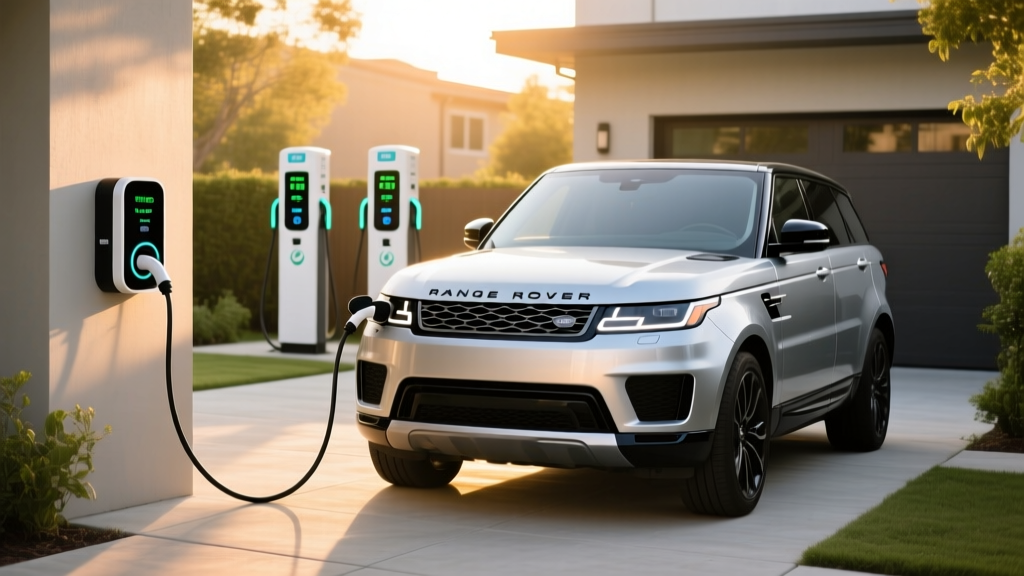
The Land Rover Range Rover Sport PHEV (P460e/P550e variants) pairs a turbocharged inline-six with an electric motor and a 31.8 kWh usable battery pack, delivering an EPA-estimated 48–51 miles of electric-only range. That electric buffer is the whole point of the plug-in hybrid proposition — but only if you actually plug it in. Owners who charge daily at home report running on electricity for 70–80% of their daily miles, reserving the combustion engine for highway cruises and long trips.
This guide walks you through every charging scenario for the PHEV Range Rover Sport: what each level delivers in real speed, what your home electrical panel needs to support, which connectors and adapters apply, and exactly what you'll pay per mile compared to filling up with premium unleaded.
Charging Levels Explained: Speeds, Power, and Range Added
The Range Rover Sport PHEV supports AC charging via its J1772/CCS1 port. Because it's a plug-in hybrid with a relatively small battery, DC fast charging is technically available through the CCS1 connector, but Land Rover caps the DC rate modestly. Here's what each level actually delivers:
| Level | Voltage | Max Power (kW) | Miles of Range Added per Hour | Full Charge Time (0–100%) |
|---|---|---|---|---|
| Level 1 (120V outlet) | 120V | 1.4 kW | ~4–5 mi/hr | ~22–24 hours |
| Level 2 (240V home/public) | 240V | 7.2 kW | ~20–24 mi/hr | ~4.5–5 hours |
| DC Fast (CCS1 public) | 400V+ | ~50 kW (capped) | ~120–150 mi/hr | ~35–45 min (10–80%) |
Real-world note: Level 1 charging from a standard 120V household outlet technically works, but at 4–5 miles of range per hour, it takes nearly a full day to replenish the 31.8 kWh pack. For PHEV owners who drive 30–40 miles daily, a Level 1 trickle can keep up overnight — barely. Level 2 at 7.2 kW is the practical standard: plug in when you get home, and the battery is full by morning regardless of how depleted it was.
DC fast charging on the Range Rover Sport PHEV is available but not class-leading. At roughly 50 kW peak, a 10–80% session takes approximately 35–45 minutes. The charging curve tapers noticeably above 80% state of charge (SoC), so if you're topping up at a highway Electrify America or EVgo station, expect diminishing returns past that threshold. For a PHEV with ~50 miles of electric range, most owners find DC fast charging unnecessary for daily use.
Home Charger Installation: Electrical Requirements and Costs
Installing a dedicated Level 2 home charger is the single most impactful upgrade for PHEV ownership. Here's what's involved electrically and financially.
Electrical Requirements
To deliver the Range Rover Sport PHEV's maximum 7.2 kW AC charge rate, you need a 240V circuit rated for at least 40 amps (a NEMA 14-50 outlet or hardwired connection). A 40A circuit supports continuous draw of 32A (EVSEs are limited to 80% of circuit capacity per NEC Article 625), which yields approximately 7.7 kW — more than enough to max out the vehicle's 7.2 kW onboard charger.
- Circuit: Dedicated 40A, 240V (minimum); 50A preferred for future-proofing
- Outlet type: NEMA 14-50 (if using a plug-in charger) or hardwired (often preferred for outdoor installs)
- Wire gauge: 6 AWG copper for 50A circuits; 8 AWG for 40A
- GFCI protection: Required by NEC 2020+ for outdoor receptacles; many modern EVSEs include built-in ground-fault protection
- Panel capacity: Your main service panel must have sufficient spare amperage and two adjacent breaker slots
Panel Upgrade Reality
Homes with 100A main service panels — common in older construction — may not have enough spare capacity to add a 40–50A dedicated circuit without exceeding the panel's rated load. In these cases, a panel upgrade to 200A service is necessary. This is the single largest variable in home charger installation cost.
| Component | Typical Cost Range | Notes |
|---|---|---|
| Level 2 EVSE (charger hardware) | $350 – $750 | 32A–48A smart chargers |
| Electrician labor (standard install) | $500 – $1,500 | Varies by run length, conduit, wall type |
| Electrical permit | $50 – $200 | Required in most jurisdictions |
| Panel upgrade (if needed) | $1,500 – $3,500 | 100A → 200A service upgrade |
| Total (no panel upgrade) | $900 – $2,450 | Most common scenario |
| Total (with panel upgrade) | $2,400 – $5,950 | Older homes with 100A service |
Pro tip: Even if you only need 40A today, have your electrician install a 50A circuit with 6 AWG wire. The incremental cost is small ($50–$100 in wire), and it future-proofs you for a higher-power charger or a full BEV down the road. Always hire a licensed electrician familiar with NEC Article 625 (EV charging systems).
Connector Compatibility: What Plugs Into the Range Rover Sport PHEV
The current-generation Range Rover Sport PHEV uses a CCS1 (Combined Charging System) inlet, which incorporates the J1772 AC connector for Level 1 and Level 2 charging and adds two DC pins below for fast charging.
| Connector | Used For | Compatible? | Adapter Needed? |
|---|---|---|---|
| J1772 | Level 1 & Level 2 AC | ✅ Yes (native) | None |
| CCS1 | DC Fast Charging | ✅ Yes (native) | None |
| NACS (Tesla) | Tesla Superchargers | ⚠️ With adapter | Tesla J1772 adapter (for AC) or CCS-to-NACS adapter (for DC) |
| CHAdeMO | Legacy DC fast | ❌ No | No reliable adapter available |
Tesla Supercharger access: As of 2025–2026, Tesla has opened portions of its Supercharger network to non-Tesla vehicles via the built-in "Magic Dock" CCS1 adapter at select stations. Additionally, third-party CCS-to-NACS adapters (from brands like Lectron or A2Z) allow access to more Supercharger stalls. For the Range Rover Sport PHEV, this matters less than it does for full BEVs — with only ~50 miles of electric range, most charging happens at home, and long trips rely on the gasoline engine. But if you want the option, a $150–$300 CCS-to-NACS adapter opens up Tesla's network.
Cost to Charge: Per-Mile Economics vs Premium Gasoline
The Range Rover Sport PHEV requires premium unleaded (91+ octane) when the engine runs. Let's compare the per-mile cost of electric charging versus gasoline across realistic scenarios.
Assumptions: Electricity measured at the vehicle's average consumption of ~32 kWh/100mi (EPA combined for electric mode). Gasoline based on the PHEV's gas-only operation at approximately 20–22 MPG combined (real-world, mixed driving) with premium fuel at $4.50/gallon (2026 national average for premium).
| Scenario | Rate | Cost per Mile (Electric) | Cost per Mile (Gas, 21 MPG) |
|---|---|---|---|
| Home (off-peak utility rate) | $0.13/kWh | $0.042 | $0.214 |
| Home (average US rate) | $0.17/kWh | $0.054 | $0.214 |
| Public Level 2 (ChargePoint, etc.) | $0.30/kWh | $0.096 | $0.214 |
| DC Fast Charging (EVgo/Electrify America) | $0.48/kWh | $0.154 | $0.214 |
At home off-peak rates, charging the Range Rover Sport PHEV costs roughly one-fifth what you'd spend on premium gasoline per mile. Even at public DC fast-charging rates, electricity is still 25–30% cheaper per mile than premium fuel. Over a year of 12,000 miles driven primarily on electricity, the fuel savings can reach $1,500–$2,000 compared to gas-only operation.
Time-of-use (TOU) rates matter: Many utilities offer TOU plans where electricity drops to $0.08–$0.12/kWh overnight (e.g., 10 PM – 6 AM). Scheduling your Range Rover Sport's charging to these windows via the vehicle's built-in timer or your smart charger's app maximizes savings. Check your utility's EV rate plans — some offer dedicated EV tariffs that are significantly below standard residential rates.
Level 2 Charger Recommendations for the Range Rover Sport PHEV
Since the Range Rover Sport PHEV's onboard charger maxes out at 7.2 kW (32A at 240V), any quality 32A or 40A Level 2 EVSE will fully utilize its charging capability. Here are three proven options across price points:
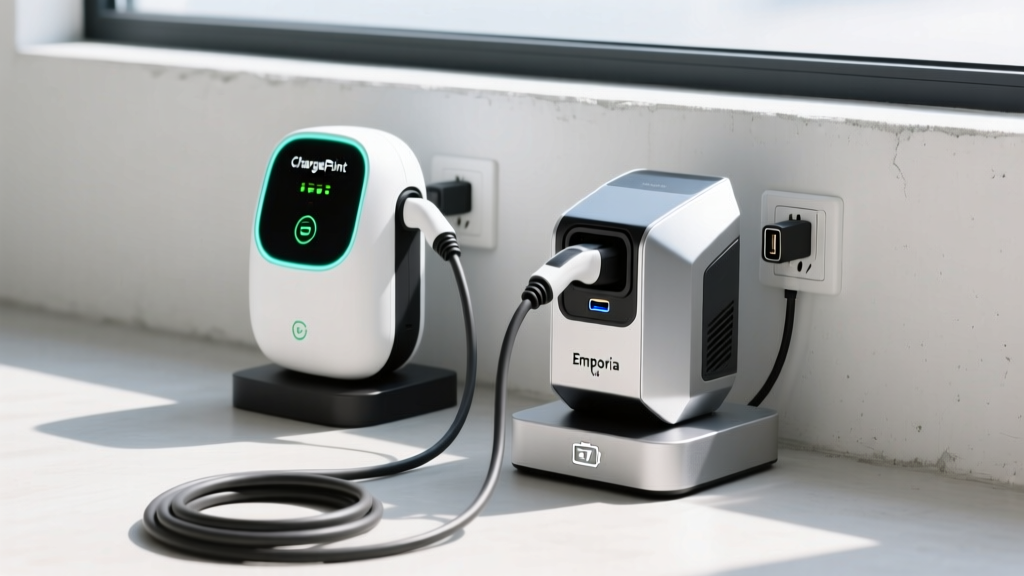
Emporia Vue Level 2 EVSE
- Power output: 48A / 11.5 kW (max); adjustable down to 32A
- Connector: J1772 (CCS1-compatible AC)
- Cable length: 24 feet
- Smart features: Wi-Fi, app scheduling, energy monitoring, solar integration
- Price: ~$399
- Best for: Budget-conscious buyers who want smart scheduling and energy tracking
ChargePoint Home Flex
- Power output: Up to 50A / 12 kW (adjustable via dip switches)
- Connector: J1772
- Cable length: 23 feet
- Smart features: Wi-Fi, Alexa, app scheduling, usage reports
- Price: ~$549
- Best for: Brand reliability and broad smart-home integration
Wallbox Pulsar Plus
- Power output: 40A / 9.6 kW
- Connector: J1772
- Cable length: 25 feet
- Smart features: Wi-Fi + Bluetooth, app control, Power Sharing for dual installs
- Price: ~$499
- Best for: Compact form factor, outdoor-rated (NEMA 4), clean aesthetic
Any of these chargers will replenish the Range Rover Sport PHEV's 31.8 kWh battery from empty to full in approximately 4.5–5 hours — well within an overnight window. We recommend hardwiring over a NEMA 14-50 receptacle for outdoor installations, as it eliminates the GFCI breaker requirement (which can nuisance-trip on some EVSEs) and provides a cleaner, more weather-resistant connection.
Safety, Code Compliance, and Installation Best Practices
EV charging involves sustained high-current draw over many hours — a fundamentally different load profile than typical household appliances. Proper installation is non-negotiable for safety and insurance coverage.
- Dedicated circuit: Your EVSE must be on its own dedicated breaker — never shared with other appliances. NEC Article 625 requires this for all EV charging equipment.
- GFCI protection: NEC 2020 and later requires GFCI protection for outdoor 240V receptacles. Hardwired EVSEs with built-in ground-fault detection can avoid the need for a GFCI breaker, reducing nuisance trips.
- Outdoor rating: If your charger is mounted outside or in an unconditioned garage, ensure it carries a NEMA 4 (or IP65+) weather rating. All three chargers recommended above meet this standard.
- Permit and inspection: Most jurisdictions require an electrical permit and post-installation inspection for new 240V circuits. Skipping this can void homeowner's insurance coverage in the event of an electrical fire. Budget $50–$200 for the permit fee.
- Cable management: For garage installs, use a cable organizer or holster to keep the charging cable off the floor and away from vehicle tires. Tripping hazards and cable damage are the most common installation complaints.
Charging Times for the Range Rover Sport PHEV's 31.8 kWh Battery
Battery size determines charge time more than any other factor. Here's how the Range Rover Sport PHEV's 31.8 kWh usable pack performs across common scenarios:
- Level 1 (1.4 kW, 120V): 0–100% in approximately 22–24 hours. Practical only for overnight top-ups of 15–20 miles.
- Level 2 (7.2 kW, 240V): 0–100% in approximately 4.5 hours. A typical 20–80% session (the daily use range) takes about 2.5–3 hours.
- DC Fast (~50 kW): 10–80% in approximately 35–45 minutes. Charge curve tapers significantly above 80% SoC to protect battery longevity. A 10–100% session would take closer to 60–70 minutes.
Preconditioning note: The Range Rover Sport PHEV does not feature the aggressive battery preconditioning found in some full BEVs (like the Porsche Taycan or Tesla Model Y). In cold weather (below 40°F), expect DC fast charging speeds to be reduced during the first 10–15 minutes of a session as the battery management system warms the cells. Level 2 charging is less affected because the slower rate generates less thermal stress. Plan for 10–15% longer charge times in freezing conditions.
Real-world range reconciliation: The EPA rates the Range Rover Sport PHEV at 48–51 miles of electric range (depending on trim and wheel size). In real-world driving, expect 38–45 miles in mixed conditions, 30–35 miles at sustained highway speeds (70+ mph), and as low as 25–30 miles in cold weather with cabin heating active. These reductions are normal for all PHEVs and BEVs — the EPA test cycle does not fully replicate aggressive highway or extreme-temperature driving.
Frequently Asked Questions
How much does it cost to install a home charger for my Range Rover Sport PHEV?
Expect $900–$2,450 for a standard Level 2 installation (equipment, electrician labor, and permit) if your electrical panel has sufficient capacity. If your home has an older 100A panel that needs upgrading to 200A, add $1,500–$3,500 for the panel upgrade, bringing the total to $2,400–$5,950. Get at least two quotes from licensed electricians and verify they hold a permit for the work.
How fast will each charging level add range to the PHEV?
Level 1 (120V) adds roughly 4–5 miles of electric range per hour. Level 2 (240V at 7.2 kW) adds approximately 20–24 miles per hour — enough for a full overnight charge. DC fast charging at ~50 kW adds 120–150 miles per hour but is capped by the PHEV's relatively small 31.8 kWh battery, limiting practical DC sessions to 35–45 minutes (10–80%).
Which charger connector is compatible with the Range Rover Sport PHEV?
The Range Rover Sport PHEV uses a CCS1 inlet, which natively accepts J1772 for AC charging (Level 1 and Level 2) and CCS1 for DC fast charging. Tesla Supercharger access requires a CCS-to-NACS adapter (~$150–$300) or use of a Tesla station equipped with the Magic Dock CCS adapter. CHAdeMO connectors are not compatible.
How much does charging cost per mile vs premium gas?
At home off-peak rates (~$0.13/kWh), electric driving costs approximately $0.04/mile. Premium gasoline at $4.50/gallon with 21 MPG combined costs approximately $0.21/mile — roughly 5× more. Even public DC fast charging at $0.48/kWh ($0.15/mile) undercuts premium gas by about 30%. Maximize savings by charging at home overnight on a time-of-use rate plan.
What electrical upgrades might I need for a home charger?
At minimum, you need a dedicated 40A, 240V circuit with two adjacent breaker slots in your service panel. Homes with 100A main panels often lack the spare capacity and require a panel upgrade to 200A service ($1,500–$3,500). Your electrician will perform a load calculation per NEC Article 220 to determine if your current panel can support the additional circuit. Older homes with knob-and-tube wiring or Federal Pacific/Zinsco panels may also require partial rewiring or panel replacement for safety reasons.
Sources: EPA fuel economy data via fueleconomy.gov; Land Rover official specifications; NEC Article 625 (EV charging systems); IRS §30D clean vehicle credit guidelines. Electrical installation costs reflect 2025–2026 national averages; obtain local quotes for accurate pricing. Tax credit eligibility for PHEVs depends on battery capacity (≥7 kWh), MSRP caps, buyer income limits, and battery sourcing requirements — consult a tax professional.