If you're switching to an electric vehicle, one question quickly overtakes range anxiety: how do you pay for electric car charging, and what does it actually cost per mile? The answer depends on where you plug in. Home charging on a Level 2 circuit remains the cheapest method by a wide margin, while DC fast charging on a road trip can briefly rival gasoline on a cost-per-mile basis. This guide breaks down every payment scenario, the real $/kWh figures you'll encounter in 2026, and the electrical work required to set up home charging correctly.
Charging Levels Explained: Speed, Power, and What You'll Pay
Before comparing costs, you need to understand the three charging levels available to EV owners. A critical distinction: kW (kilowatts) measures the rate of power delivery — think of it as the speed of water flowing through a hose. kWh (kilowatt-hours) measures energy stored or consumed — the total volume of water in the bucket. You are billed in kWh, while chargers are rated by their peak kW output.
| Level | Voltage | Peak Power (kW) | Miles of Range Added Per Hour | Typical Use Case |
|---|---|---|---|---|
| Level 1 | 120V AC | 1.2–1.9 kW | 3–5 mi/hr | Overnight trickle, PHEV top-ups |
| Level 2 | 240V AC | 7.2–19.2 kW | 20–60 mi/hr | Daily home charging, workplace |
| DC Fast Charge | 400–800V DC | 50–350 kW | 150–1,200 mi/hr (peak) | Road trips, quick top-ups |
A few realities these numbers don't show: DC fast charging speeds are peak rates, sustained only at low states of charge. Most EVs taper significantly above 80% state of charge (SoC) to protect battery health. A vehicle advertising "250 kW peak" may only sustain that rate from 5–30% SoC before dropping to 100 kW or below. This is why manufacturers quote 10–80% charge times rather than 0–100%.
How Much Does It Cost to Install a Home EV Charger?
Home charging is where most EV owners do 80–90% of their charging, and it's also where the payment equation is simplest: you pay your utility's per-kWh rate on your monthly electric bill. But before that first charge, there's an installation cost to budget for.
Home Level 2 Charger Installation Cost Breakdown
| Cost Component | Typical Range | Notes |
|---|---|---|
| Level 2 Charger (Equipment) | $300–$750 | Smart Wi-Fi chargers, 32A–48A, NACS or J1772 |
| Electrician Labor | $500–$2,000 | Depends on run length from panel to garage/carport |
| Electrical Permit | $50–$250 | Required in most jurisdictions; varies by municipality |
| Panel Upgrade (if needed) | $1,500–$4,000 | Upgrading from 100A to 200A service for older homes |
| Total (no panel upgrade) | $850–$3,000 | Most homes with 200A service fall in this range |
| Total (with panel upgrade) | $2,350–$7,000 | Older homes, 100A service, or long wire runs |
Electrical Requirements for a Level 2 Home Charger
A typical Level 2 installation requires a 240-volt dedicated circuit with a breaker rated for 125% of the charger's continuous draw. For a 40-amp (9.6 kW) charger, you need a 50-amp breaker. For a 48-amp (11.5 kW) charger, a 60-amp breaker. The circuit must be dedicated — no sharing with other major appliances.
Your electrician will assess whether your existing electrical panel has sufficient spare capacity. A 200-amp panel with moderate existing loads can usually accommodate a 40A–50A EV circuit without issue. A 100-amp panel in an older home almost certainly cannot, which is where the panel upgrade cost comes in.
Safety and code considerations: The National Electrical Code (NEC) requires GFCI protection for outdoor receptacles. If your charger will be mounted outdoors, ensure the unit carries a NEMA 4 or IP65 weather-resistance rating. Hardwired installations (no plug) are generally preferred for 48A chargers, as NEMA 14-50 receptacles are rated for 50A maximum and some utilities have flagged them for thermal concerns under continuous EV loads. A licensed electrician should always pull a permit — unpermitted work can void home insurance and create resale complications.
What Does Charging Cost Per Mile? Home vs. Public vs. Gas
This is where the economics of EV ownership crystallize. Let's compare real 2026 pricing scenarios using a mid-size EV averaging 3.0 miles per kWh (typical for vehicles like the Tesla Model Y or Hyundai IONIQ 5) and a comparable gasoline vehicle averaging 28 MPG combined.
| Scenario | Rate ($/kWh or $/gal) | Cost Per Mile | Annual Cost (12,000 mi) |
|---|---|---|---|
| Home Level 2 (national avg electricity) | $0.17/kWh | $0.057 | $680 |
| Home off-peak / Time-of-Use rate | $0.09/kWh | $0.030 | $360 |
| Public Level 2 (network, e.g. ChargePoint) | $0.35/kWh | $0.117 | $1,400 |
| DC Fast Charging (Electrify America, EVgo) | $0.48/kWh | $0.160 | $1,920 |
| Tesla Supercharger (member pricing) | $0.30/kWh | $0.100 | $1,200 |
| Gasoline Vehicle (28 MPG avg) | $3.40/gal | $0.121 | $1,457 |
The takeaway: home charging at average utility rates costs roughly half what gasoline costs per mile. Even off-peak time-of-use (TOU) rates can drop your fueling cost to a quarter of gasoline. However, if you rely exclusively on public DC fast charging, your per-mile cost can exceed gasoline — a reality that catches some apartment-dwelling EV owners off guard.
Many utilities offer TOU plans specifically designed for EV owners, with super off-peak rates between midnight and 6 AM. If your utility offers this, programming your charger (or your car's built-in scheduler) to charge during those windows is the single most effective cost-saving measure available. According to the U.S. Department of Energy's fueleconomy.gov, EV owners who charge at home save an average of $600–$1,200 annually compared to gasoline.
How You Actually Pay: Home, Apps, and Network Accounts
The mechanics of payment differ sharply depending on where you plug in:
Home Charging
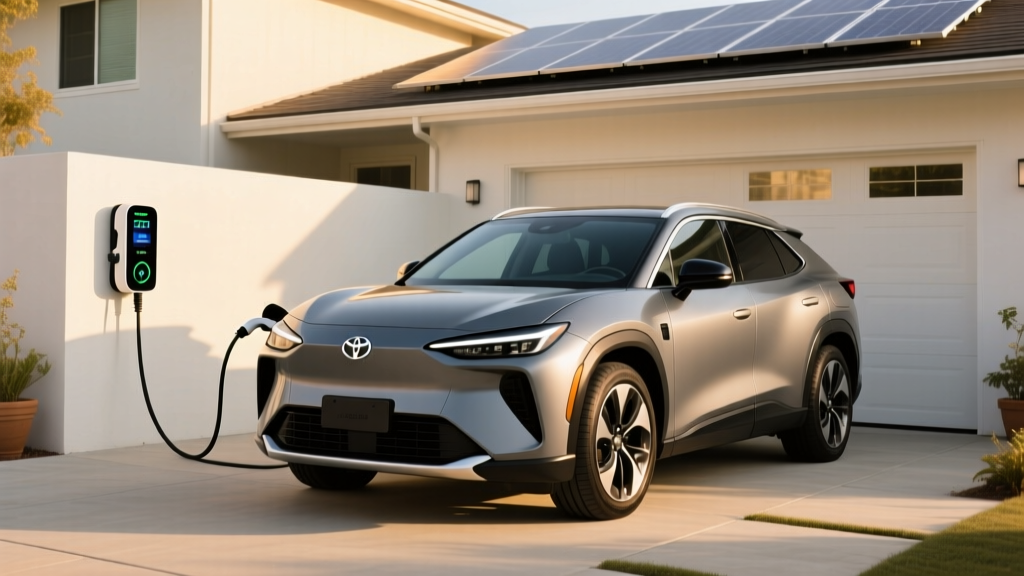
You don't "pay" at the charger — your Level 2 unit draws electricity from your home panel, and usage appears on your monthly utility bill alongside all other household electricity. Smart chargers with Wi-Fi connectivity can track your EV-specific kWh consumption separately, which is useful for tax credits, employer reimbursement programs, or understanding your true fueling cost.
Public Level 2 Charging
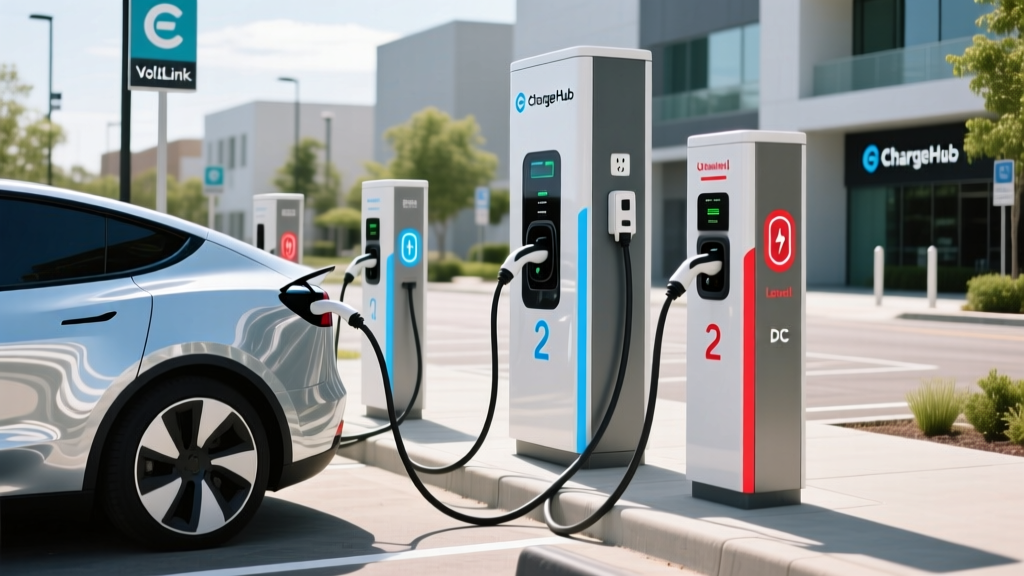
Public Level 2 chargers (at grocery stores, parking garages, workplaces) typically require a network account. Major networks in 2026 include ChargePoint, EVgo, and Blink. You download the network's app, add a payment method, and activate the session via the app or an RFID card. Some chargers offer contactless credit card tap-to-pay directly on the unit. Pricing is usually per-kWh, though some locations still charge by the hour or offer free charging as a customer amenity.
DC Fast Charging Networks
DC fast charging stations — Electrify America, EVgo, Tesla Superchargers — operate similarly via app or tap-to-pay. Tesla's NACS (North American Charging Standard) network, now open to non-Tesla EVs via the Magic Dock adapter or built-in NACS ports on 2025+ models from Ford, GM, Rivian, and others, uses the Tesla app for non-Tesla vehicles. Pricing varies by location, time of day, and whether you hold a network membership or subscription.
Charging Time Examples: How Long to Charge Common Battery Sizes
Charging time depends on your battery's usable capacity (in kWh) and the charger's sustained power output (in kW). Here are realistic 10–80% charge times for common battery sizes at each level:
| Battery Size (usable kWh) | Level 1 (1.4 kW) | Level 2 (11.5 kW / 48A) | DC Fast (150 kW peak) | DC Fast (350 kW peak) |
|---|---|---|---|---|
| 60 kWh (e.g. Chevy Equinox EV) | ~30 hours | ~3.6 hours | ~28 minutes | ~18 minutes |
| 77 kWh (e.g. Ford Mustang Mach-E ER) | ~38 hours | ~4.7 hours | ~35 minutes | ~22 minutes |
| 84 kWh (e.g. Hyundai IONIQ 5 Long Range) | ~42 hours | ~5.1 hours | ~38 minutes | ~18 minutes (800V) |
| 100 kWh (e.g. Tesla Model S, Rivian R1S) | ~50 hours | ~6.1 hours | ~45 minutes | ~30 minutes |
Real-world caveat: These DC fast times assume battery preconditioning is active (the car has warmed the battery to optimal temperature before arriving at the charger) and ambient temperatures are moderate (60–80°F). In cold weather below 32°F, expect 10–80% times to increase by 20–40% unless the vehicle has an active thermal preconditioning system. The Hyundai IONIQ 5's 800V architecture and heat pump give it a notable cold-weather charging advantage over 400V competitors.
Which Connector Does My EV Need? Compatibility Guide
The EV connector landscape has consolidated significantly since 2023, when Ford and GM announced adoption of Tesla's NACS standard. As of 2026, NACS is the dominant standard for new vehicles sold in North America, but CCS1 and CHAdeMO vehicles remain on the road and at many charging stations.
| Connector | Brands Using It (New Vehicles) | DC Fast Availability | Adapter Needed? |
|---|---|---|---|
| NACS (Tesla standard) | Tesla, Ford, GM, Rivian, Volvo, Polestar, Mercedes (2025+) | Tesla Superchargers + growing NACS stations | CCS→NACS adapter for older CCS stations |
| CCS1 (Combined Charging System) | Hyundai, Kia, BMW, VW, Stellantis, some others | Electrify America, EVgo, ChargePoint DC | NACS→CCS adapter if accessing Tesla Superchargers |
| CHAdeMO | Nissan Leaf (legacy, discontinued), Mitsubishi Outlander PHEV | Declining; some Electrify America stations | No adapters widely available |
If you own a CCS-equipped vehicle and want access to Tesla's Supercharger network (the largest and most reliable in the U.S.), you'll need a CCS-to-NACS adapter. Tesla sells an official adapter for approximately $250, and Ford and GM have offered them at reduced cost or free to early adopters. As more stations add NACS cables natively, adapter dependency will decrease through 2027–2028.
Best Level 2 Home Chargers for 2026: Equipment Picks
Not all Level 2 chargers are equal. Here are four widely recommended units based on reliability, smart features, and electrical specifications:
Grizzl-E Smart (40A / 9.6 kW)
- Power: 40A, 9.6 kW on a 50A circuit
- Connector: J1772 (NACS adapter available separately)
- Cable length: 24 ft
- Smart features: Wi-Fi scheduling, energy tracking via app
- Weather rating: NEMA 4 (indoor/outdoor)
- Price: ~$400
Best for: Budget-conscious buyers who want a rugged, Canadian-built unit with smart scheduling for TOU rates.
ChargePoint Home Flex (50A / 12 kW)
- Power: Adjustable 16A–50A, up to 12 kW
- Connector: J1772 (NACS version available for 2025+ models)
- Cable length: 23 ft
- Smart features: Alexa integration, detailed app analytics, ChargePoint network access
- Weather rating: NEMA 4
- Price: ~$550–$700
Best for: Owners who want flexible amperage adjustment to match their panel capacity and detailed energy reporting.
Tesla Wall Connector (48A / 11.5 kW)
- Power: 48A, 11.5 kW on a 60A circuit
- Connector: NACS native (J1772 adapter included for non-Tesla EVs)
- Cable length: 24 ft
- Smart features: Wi-Fi updates, load sharing between multiple units, vehicle-specific access control
- Weather rating: NEMA 3R (outdoor rated, less robust than NEMA 4)
- Price: ~$475
Best for: Tesla owners or households with NACS-equipped vehicles who want the cleanest integration and load-sharing for multi-EV garages.
Emporia Level 2 Smart Charger (48A / 11.5 kW)
- Power: 48A, 11.5 kW on a 60A circuit
- Connector: J1772 (NACS version available)
- Cable length: 24 ft
- Smart features: Real-time energy monitoring, solar integration with Emporia Vue home energy monitor, TOU scheduling
- Weather rating: NEMA 4
- Price: ~$400
Best for: Solar-panel owners who want to charge exclusively from excess solar production and track whole-home energy use.
Tax Credits and Incentives for Home Charging Installation
The federal Alternative Fuel Vehicle Refueling Property Credit (IRS Form 8911) covers 30% of home EV charger equipment and installation costs, up to a maximum of $1,000. However, this credit is subject to significant limitations: it applies only to equipment installed in a census tract that meets certain low-income or non-urban criteria, and the installation must comply with prevailing wage and apprenticeship requirements for the maximum benefit.
Check current eligibility rules at IRS.gov's refueling property credit page, as qualifying census tracts and requirements are updated periodically. Many states and utilities also offer their own rebates — often $200–$500 for the charger itself or free installation through a licensed partner. Contact your local utility before purchasing equipment.
Frequently Asked Questions
How much does it cost to install a home EV charger?
A standard Level 2 installation in a home with a 200-amp electrical panel typically costs $850–$3,000 total, including the charger unit ($300–$750), electrician labor ($500–$2,000), and permit ($50–$250). Homes with older 100-amp panels that require a service upgrade will see total costs of $2,350–$7,000. Always get a quote from a licensed electrician before purchasing equipment.
How fast will each charging level add range?
Level 1 (120V) adds roughly 3–5 miles of range per hour — adequate only for plug-in hybrids or overnight top-ups of small batteries. Level 2 (240V, 40A–48A) adds 20–40 miles per hour, fully replenishing most EV batteries overnight in 5–8 hours. DC fast charging can add 150–300+ miles in 15–30 minutes, but at significantly higher per-kWh cost and with speed tapering above 80% SoC.
Which connector is compatible with my EV?
Check your vehicle's charge port. If you drive a 2025+ Tesla, Ford, GM, Rivian, Volvo, or Polestar, you likely have NACS. Hyundai, Kia, BMW, VW, and Stellantis models typically use CCS1. The discontinued Nissan Leaf uses CHAdeMO. Adapters are available for cross-compatibility, but verify amperage ratings — not all adapters support full DC fast charge speeds.
How much does charging cost per mile vs. gas?
Home charging at the national average electricity rate ($0.17/kWh) costs about $0.05–$0.06 per mile for a typical EV — roughly half the $0.12/mile cost of a 28 MPG gasoline vehicle at $3.40/gallon. Off-peak TOU rates can drop home charging to $0.03/mile. However, exclusive reliance on public DC fast charging ($0.40–$0.55/kWh) can push EV costs to $0.13–$0.18/mile, potentially exceeding gasoline.
What electrical upgrades might I need?
If your home has a 200-amp electrical panel with available breaker slots, you likely need no upgrade — just a new 50A or 60A breaker and a dedicated wire run to your garage or carport. If your panel is 100-amp, fully loaded, or uses outdated fuse-based protection, a panel upgrade to 200A service ($1,500–$4,000) will be necessary. Some jurisdictions now allow smart panel load-management devices (like the Emporia VUE or Span drive) as an alternative to full panel upgrades, which can save thousands.
Can I deduct EV charging electricity on my taxes?
For personal use, no — home electricity costs for charging are not tax-deductible. However, if you use your EV for business purposes (rideshare, delivery, business travel), you can deduct the electricity attributable to business miles. The IRS standard mileage rate for 2026 includes an EV-specific calculation. Consult a tax professional for your specific situation.