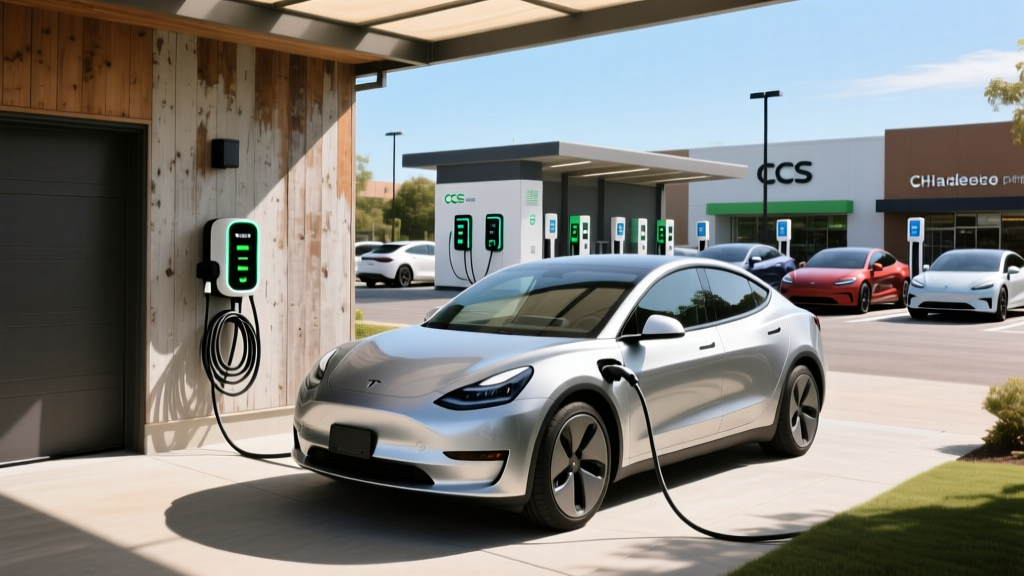
Why the "Oval Charger" Search Matters for EV Owners
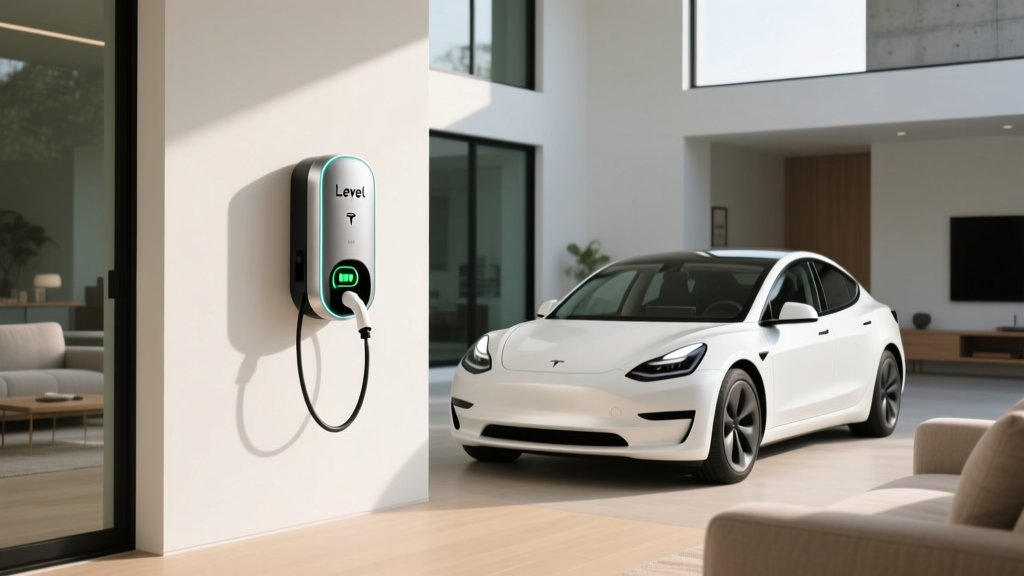
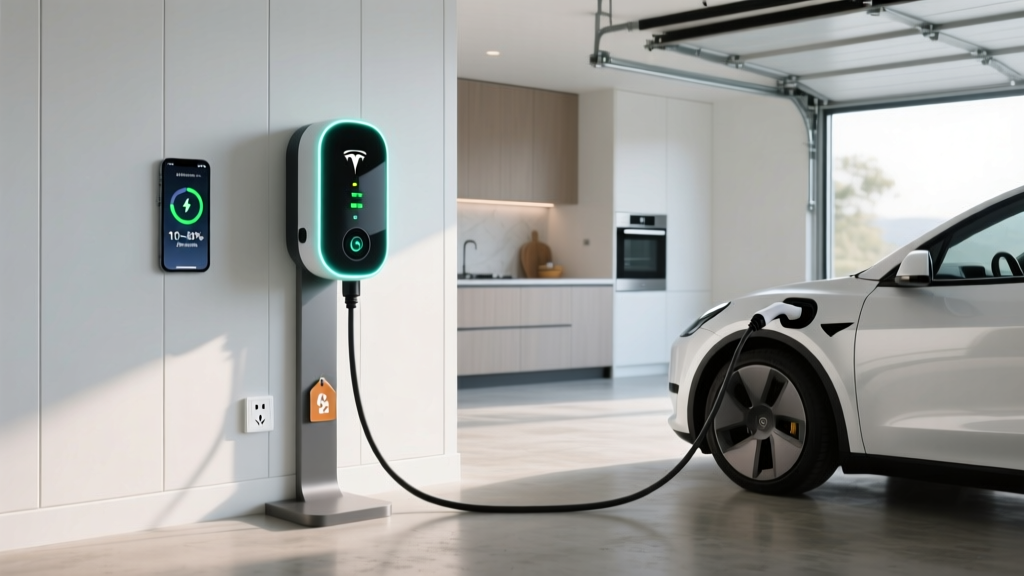
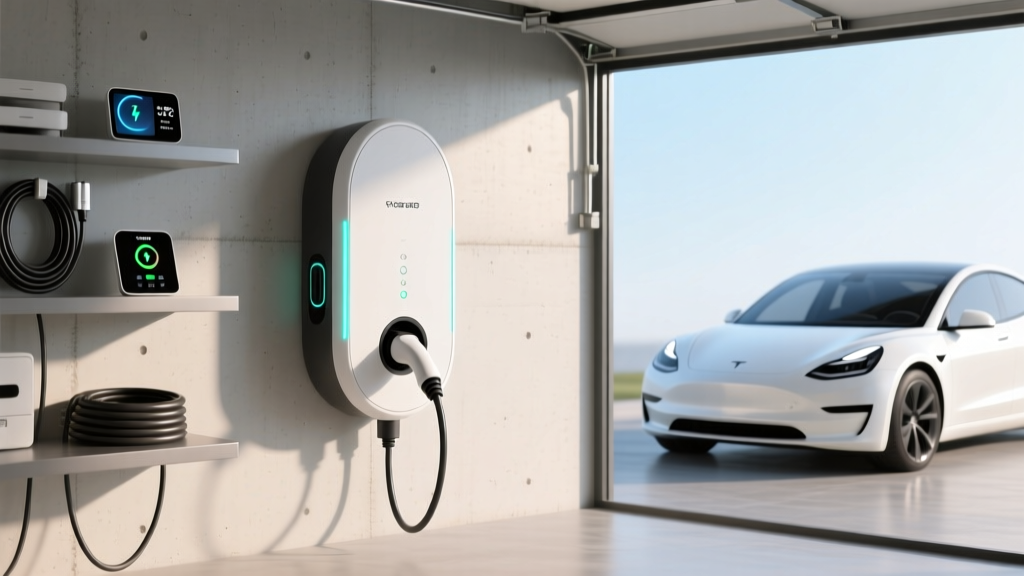
If you've been searching for an oval charger for your electric vehicle, you're not alone. The term has become shorthand among EV owners and shoppers for wall-mounted Level 2 home chargers with a rounded, minimalist, or pill-shaped enclosure — units that look less like industrial equipment and more like modern home hardware. Brands like ChargePoint, Wallbox, and Emporia have leaned into sleeker, curved designs that blend with garage aesthetics, and the "oval charger" label has stuck.
But aesthetics aside, choosing the right home EV charger is one of the most consequential decisions you'll make as an EV owner. It determines how quickly your car is ready each morning, whether your electrical panel needs an upgrade, and how much you'll pay per mile compared to gasoline. This guide breaks down every number you need — from kW charging speeds and kWh costs to install expenses and connector compatibility — so you can pick an oval-style charger (or any Level 2 unit) with confidence.
Charging Levels Explained: kW Speeds and Miles Per Hour
Before picking hardware, you need to understand the three charging tiers. The critical distinction: kW (kilowatts) measures power — the rate of charging, while kWh (kilowatt-hours) measures energy — the total capacity of your battery. Think of kW as the speed of water flowing from a hose and kWh as the size of the bucket.
| Level | Voltage | Power (kW) | Miles of Range Added Per Hour | Typical Use Case |
|---|---|---|---|---|
| Level 1 | 120V AC | 1.0–1.4 kW | 3–5 mi/hr | Overnight top-ups; PHEVs with small batteries |
| Level 2 | 240V AC | 3.3–19.2 kW | 12–75 mi/hr | Home daily charging; workplace; destination |
| DC Fast (Level 3) | 200–900V DC | 50–350+ kW | 150–1,000+ mi/hr (peak) | Road trips; highway corridors; 10–80% in 15–35 min |
Most modern BEVs with 75–100 kWh batteries add roughly 3–4 miles per kWh. A 48-amp Level 2 charger delivering 11.5 kW will replenish about 34–46 miles of range per hour — enough to fully recharge a Tesla Model Y Long Range (75 kWh usable) overnight in roughly 7–8 hours. For context, a DC fast charger peaking at 250 kW can push a Hyundai Ioniq 5 from 10% to 80% in approximately 18 minutes, though the charge curve tapers significantly above 80% SoC to protect battery health.
How Much Does It Cost to Install a Home EV Charger?
Installation costs vary enormously depending on your home's electrical infrastructure. Here's the realistic breakdown for a 240V / 48-amp Level 2 oval-style charger in 2026:
| Cost Component | Low End | Typical | High End (Panel Upgrade) |
|---|---|---|---|
| Charger equipment (Level 2, 40–48A, smart) | $300 | $500 | $700 |
| Electrician labor (run 6 AWG wire, mount, connect) | $400 | $800 | $1,500 |
| Electrical permit & inspection | $50 | $150 | $300 |
| Panel upgrade (100A → 200A service, if needed) | $1,500 | $2,500 | $4,000+ |
| Total installed | $750 | $1,450 | $6,500+ |
The panel-upgrade trap: Homes built before the 1990s often have 100-amp service. Adding a 48-amp continuous-load EV circuit (which the National Electrical Code requires be derated to 60 amps of breaker capacity) can consume over half of a 100A panel's capacity. An electrician will need to perform a load calculation. If you're running HVAC, an electric oven, and a dryer on a 100A panel, a 200A upgrade is likely mandatory — and that's the single biggest variable in your install quote.
Always get at least two quotes from licensed electricians and confirm they pull a permit. Unpermitted work can void your homeowner's insurance and create fire risk. Per the NFPA 70 National Electrical Code (NEC) Article 625, EV charging equipment requires a dedicated circuit with proper overcurrent protection.
Connector Compatibility: NACS, CCS1, and CHAdeMO
The connector landscape shifted dramatically between 2023 and 2026. Tesla's North American Charging Standard (NACS) has been adopted by Ford, GM, Rivian, Hyundai, Kia, BMW, and most major automakers for 2025–2026 model-year vehicles. Here's what you need to know:
| Connector | Brands Using It (2025–2026 MY) | Adapter Needed for Older Chargers? |
|---|---|---|
| NACS (Tesla-style) | Tesla, Ford, GM, Rivian, Hyundai, Kia, BMW, Volvo, Polestar, Mercedes-Benz | Yes — CCS-to-NACS adapter for older non-Tesla EVs; most new chargers now ship NACS-native |
| CCS1 (Combo) | Older VW ID.4, pre-2025 Hyundai/Kia models, Stellantis EVs, Honda Prologue (early) | NACS-to-CCS adapter available from Tesla and third parties (~$150–$250) |
| CHAdeMO | Nissan Leaf (legacy only — discontinued in US after 2025) | No adapter available to NACS; CHAdeMO infrastructure declining |
Practical advice: If you're buying a new Level 2 home charger in 2026, get one with a native NACS connector unless you own a pre-adoption CCS vehicle — in which case, choose a CCS1-terminated charger and use a NACS adapter for public Tesla Supercharger access. Most quality oval-style chargers now ship with NACS as the default pigtail.
Cost to Charge: Per-Mile Economics vs. Gasoline
One of the strongest ownership arguments for EVs is fuel-cost savings — but the math depends heavily on where and when you charge.
| Scenario | Cost per kWh | Efficiency (kWh/mi) | Cost per Mile | Gas Equivalent (30 MPG, $3.40/gal) |
|---|---|---|---|---|
| Home, off-peak utility rate | $0.09–$0.14 | 0.28 (e.g., Model Y) | $0.025–$0.039 | $0.113/mi |
| Home, standard residential rate | $0.16–$0.22 | 0.28 | $0.045–$0.062 | $0.113/mi |
| Public Level 2 (ChargePoint, EVgo L2) | $0.25–$0.49 | 0.28 | $0.070–$0.137 | $0.113/mi |
| DC Fast (Electrify America, Tesla Supercharger) | $0.32–$0.56 | 0.28 | $0.090–$0.157 | $0.113/mi |
Charging at home on an off-peak rate is roughly one-third to one-quarter the per-mile cost of gasoline. Even at standard residential rates, EVs win on fuel cost. However, exclusive reliance on DC fast charging at $0.45+/kWh can push per-mile costs above gas — which is why a Level 2 home charger is the economic backbone of EV ownership.
For a driver covering 12,000 miles/year with a home off-peak rate of $0.12/kWh and a vehicle averaging 3.5 mi/kWh, annual charging cost is approximately $411 — compared to $1,360 for a 30 MPG gas car at $3.40/gallon. That's roughly $950/year in fuel savings, or $4,750 over five years.
Charging Time Examples: What to Expect With Common Battery Sizes
Charge time depends on your battery's usable kWh, the charger's sustained kW output, and the vehicle's onboard charger limit. Most 2025–2026 EVs accept 11.5 kW on Level 2 (48A × 240V). Here are realistic 10–80% and 0–100% times:
- Tesla Model Y Long Range (75 kWh usable): 10–80% on a 48A / 11.5 kW Level 2 charger in approximately 4.5 hours; 0–100% in roughly 6.5 hours.
- Ford F-150 Lightning Extended Range (131 kWh usable): 10–80% on 11.5 kW in about 7.8 hours; best charged on an 80A / 19.2 kW unit if available (cuts time to ~4.7 hours).
- Hyundai Ioniq 5 (77.4 kWh usable): 10–80% on 11.5 kW in approximately 4.7 hours; on a 350 kW DC fast charger, 10–80% in roughly 18 minutes (peak 240 kW, tapering above 65% SoC).
- Chevrolet Equinox EV (85 kWh usable): 10–80% on 11.5 kW in about 5.1 hours; DC fast 10–80% in roughly 24 minutes at 150+ kW peak.
Charge curve reality check: No EV sustains its peak DC fast-charge rate for the full session. A vehicle rated for 250 kW peak may only hold that rate between 10–40% SoC before tapering to 150 kW, then dropping to 50 kW or below past 80%. That's why manufacturers quote 10–80% times rather than 0–100% — charging past 80% is painfully slow and unnecessary for daily driving.
Best Oval-Style Level 2 Home Chargers for 2026
These are the top wall-mounted Level 2 chargers with the rounded, minimalist, "oval" aesthetic that EV owners search for — each with real specs, not marketing fluff:
ChargePoint Home Flex (NACS)
- Power output: Up to 11.5 kW (48A at 240V); adjustable down to 16A for lower-capacity panels
- Connector: Native NACS (2025+ revision); CCS1 version still available
- Cable length: 23 feet
- Smart features: Wi-Fi, Alexa/Google Home integration, scheduled charging, energy tracking via app
- Price: ~$549 (frequently on sale for $449)
- UL listed: Yes; NEMA 4 outdoor rated
Wallbox Pulsar Max
- Power output: Up to 11.5 kW (48A at 240V)
- Connector: NACS (2025+ models); J1772/CCS available
- Cable length: 25 feet (longest in class)
- Smart features: Wi-Fi + Bluetooth, Power Sharing (daisy-chain two units on one circuit), myWallbox app with solar integration
- Price: ~$499
- UL listed: Yes; IP55 outdoor rated
Emporia Vue EV Charger
- Power output: Up to 11.5 kW (48A at 240V)
- Connector: NACS and J1772 versions available
- Cable length: 24 feet
- Smart features: Integrates with Emporia Vue home energy monitor for whole-home load management; automatic amperage adjustment to prevent panel overload
- Price: ~$399 (best value in class)
- UL listed: Yes; NEMA 4 outdoor rated
Grizzl-E Smart (United Chargers)
- Power output: Up to 9.6 kW (40A at 240V)
- Connector: NACS or J1772
- Cable length: 24 feet
- Smart features: Wi-Fi, OCPP-compatible (future utility demand-response ready), adjustable amperage 16–40A
- Price: ~$449
- UL listed: Yes; IP67 — the most weatherproof in this group, built for extreme cold
All four units are hardwired (no plug) for maximum reliability and code compliance on a 60A breaker. If your panel can't support 48A continuous load, each charger allows amperage reduction via DIP switches or app settings — critical for older homes with 100A service.
Safety, Electrical Code, and Installation Requirements
Home EV charging is safe when installed correctly, but cutting corners on electrical work is a fire hazard. Here's what the NEC requires and what your electrician should confirm:
- Dedicated circuit: Your Level 2 charger must be on its own dedicated breaker — not shared with outlets, lighting, or appliances. A 48A charger requires a 60A breaker (NEC requires 125% derating for continuous loads over 3 hours).
- GFCI protection: NEC 2023 and later editions require ground-fault circuit interrupter protection for all EV charging outlets. Hardwired chargers with integrated GFCI meet this requirement. If you're using a 14-50 or 6-50 receptacle instead of hardwiring, the breaker must be GFCI-type ($75–$120 extra).
- Wire gauge: 6 AWG copper for 48A circuits; 4 AWG for 64A circuits (if running an 80A charger on a 100A breaker). Aluminum wire is cheaper but requires a larger gauge.
- Outdoor rating: If mounting outside or in an unenclosed carport, the charger must carry a NEMA 4 (weatherproof) or IP55+ rating. All recommended units above meet this standard.
- Permit and inspection: Virtually all US jurisdictions require a permit for new 240V circuits. Your electrician should pull the permit and schedule a final inspection. Unpermitted installs can void insurance claims and create liability.
- Cable management: Use a holster or cable wrap to keep the cord off the garage floor. Tripping over a 240V live cable is a real safety risk, especially in wet conditions.
Frequently Asked Questions
How fast will a Level 2 oval charger add range to my EV?
A 48-amp, 11.5 kW Level 2 charger adds approximately 34–46 miles of range per hour for most 2025–2026 BEVs. Over an 8-hour overnight session, you'll replenish 270–370 miles — more than enough for any daily commute and sufficient to fully recharge most EV batteries from 20% to 100%.
Can I install an oval EV charger myself?
Not recommended and often illegal without a licensed electrician. A 240V / 48A circuit involves working inside your main electrical panel with lethal voltage. Most jurisdictions require a licensed professional to pull the permit. DIY installs also risk voiding the charger's warranty and your homeowner's insurance.
What if my home only has 100-amp electrical service?
You have three options: (1) install a lower-amperage charger (16A / 3.8 kW) that adds ~12 miles/hour — sufficient for PHEVs and short commutes; (2) use a smart load-management device like the Emporia Vue charger with automatic panel monitoring that throttles charging when other appliances draw power; or (3) upgrade to 200A service ($1,500–$4,000). An electrician's load calculation will determine which path is required.
Is it cheaper to charge at home or at public DC fast stations?
Home charging is dramatically cheaper. At a residential off-peak rate of $0.12/kWh, you'll pay roughly $0.035 per mile. At a DC fast charger averaging $0.45/kWh, you'll pay about $0.13 per mile — nearly 4× more. Public charging is best reserved for road trips, not daily use.
Do I need a NACS or CCS charger for my 2026 EV?
Check your vehicle's charge port. Most 2025–2026 model-year EVs from Ford, GM, Hyundai, Kia, Rivian, BMW, and Tesla use NACS. Pre-2025 models from VW, Stellantis, and early Honda Prologue use CCS1. If you own a CCS vehicle but want Supercharger access, a CCS-to-NACS adapter ($150–$250) solves the problem for DC fast charging. For home Level 2, the connector matters less since adapters work seamlessly at lower power levels.
Does the federal tax credit apply to home charger installation?
The IRS §30C Alternative Fuel Vehicle Refueling Property Credit covers up to 30% of home charger equipment and installation costs, capped at $1,000. However, eligibility depends on your census tract meeting specific low-income or non-urban criteria. Consult a tax professional and review the latest IRS guidance before claiming. This credit is separate from the §30D vehicle purchase credit.