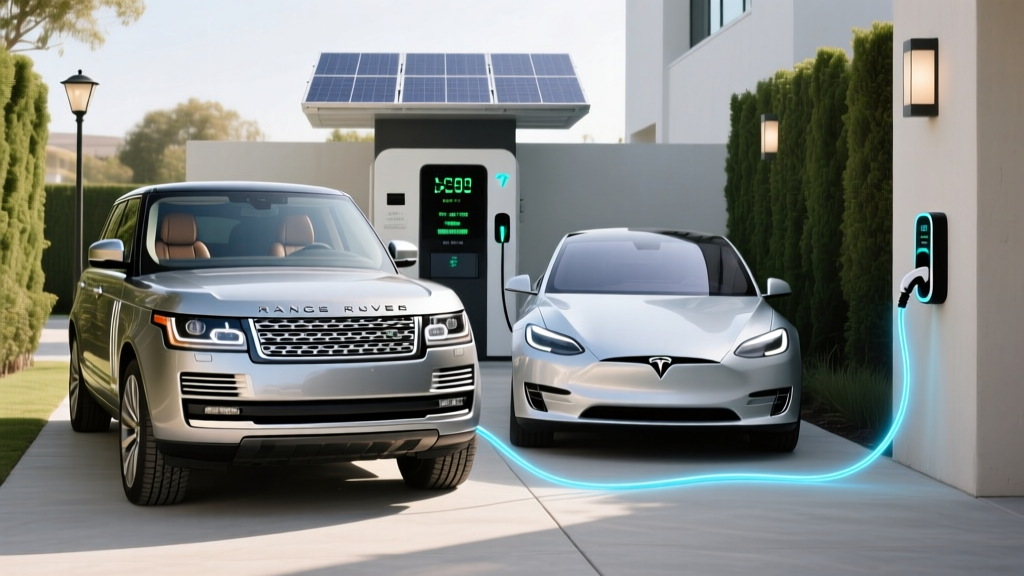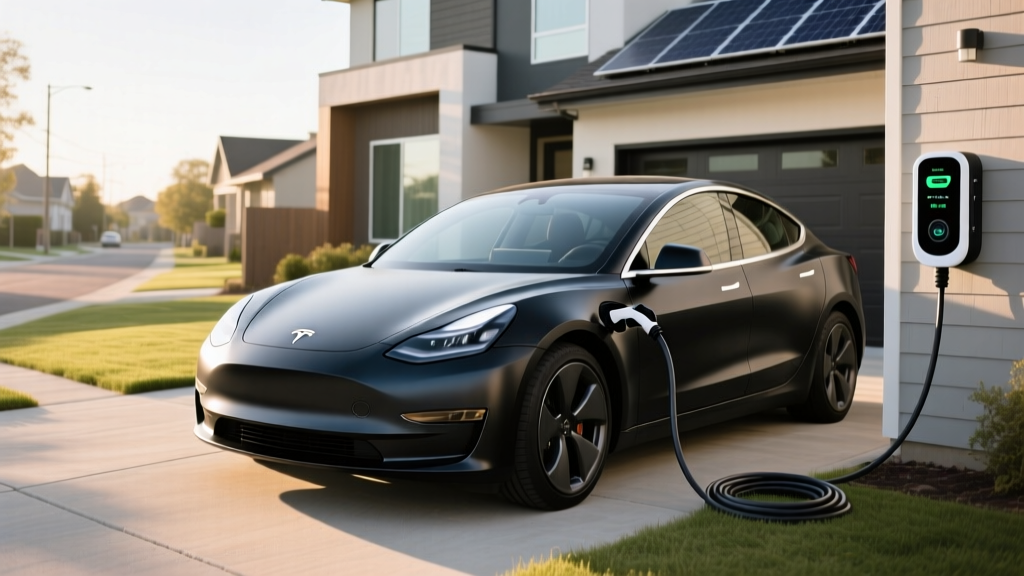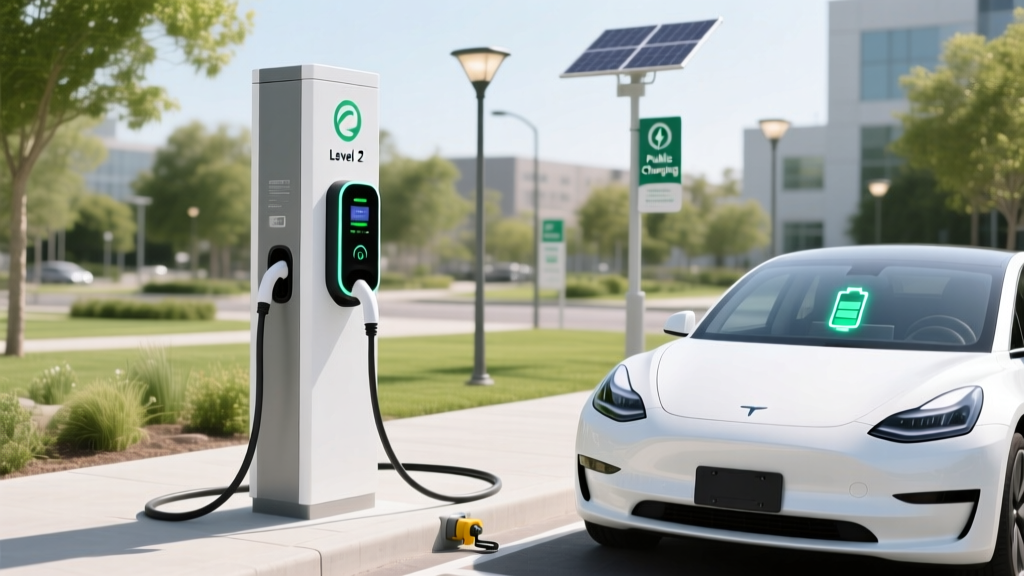
Mounting an outdoor EV charging station is the single most impactful upgrade you can make for daily EV ownership. Unlike relying on public networks with broken stalls, variable pricing, and detours, a dedicated Level 2 charger at home delivers a full overnight replenishment and keeps your battery in the optimal 20–80% state of charge. But outdoor installations introduce variables that indoor garage setups avoid: weather exposure, longer conduit runs, GFCI requirements, and connector choices that must match your vehicle's inlet.
This guide walks through the exact electrical requirements, realistic installation costs, connector compatibility, ongoing charging costs, and the best weatherproof hardware available in 2026.
Charging Levels Explained: Speeds in kW and Miles Per Hour
Before selecting hardware, you need to understand what each charging level delivers. The critical distinction: kW (kilowatts) measures power — the rate at which energy flows into your battery. kWh (kilowatt-hours) measures energy — the total capacity stored. A 10 kW charger running for one hour delivers 10 kWh of energy. Confusing these two is the most common mistake new EV owners make.
| Level | Voltage | Max Power (kW) | Miles of Range Added Per Hour | Typical Use Case |
|---|---|---|---|---|
| Level 1 | 120V AC | 1.4–1.9 kW | 3–5 mi/hr | Overnight trickle; PHEVs; emergency backup |
| Level 2 | 240V AC | 7.2–19.2 kW | 20–60+ mi/hr | Home daily charging; workplace; destination |
| DC Fast Charge | 400–800V DC | 50–350 kW | 150–1,000+ mi/hr (peak) | Road trips; highway corridors; commercial fleets |
For most outdoor home installations, Level 2 is the target. A 48-amp (11.5 kW) Level 2 station adds roughly 35–44 miles of range per hour of charging — enough to fully replenish a 75 kWh battery pack overnight. DC fast chargers are not available for residential installation due to utility infrastructure requirements and costs exceeding $50,000 per unit.
Electrical Requirements for Outdoor Level 2 Installation
An outdoor EV charging station typically requires a dedicated 240V circuit on a 40-amp to 60-amp breaker, depending on the charger's amperage. The National Electrical Code (NEC) requires that continuous loads — including EV chargers — operate at no more than 80% of the breaker's rated capacity. A 48-amp charger therefore needs a 60-amp breaker; a 40-amp charger needs a 50-amp breaker.
Key electrical specifications your licensed electrician will assess:
- Panel capacity: Most modern homes have 100A or 200A main service panels. A 48A EV charger draws 11.5 kW continuously — that's a significant load. Homes with 100A service may need a panel upgrade to 200A, costing $1,500–$3,000.
- Dedicated circuit: The charger must have its own breaker — it cannot share a circuit with other major appliances.
- GFCI protection: The 2023 NEC (and continuing into 2026 adoption) requires Ground Fault Circuit Interrupter protection for outdoor EV receptacles. Hardwired chargers often include built-in GFCI, while NEMA 14-50 receptacle installations may require a GFCI breaker ($50–$150 more than a standard breaker).
- Conduit and wiring: Outdoor runs require weather-rated conduit (typically PVC Schedule 80 or rigid metal). Wire gauge depends on run length and amperage — #6 AWG copper for 48A runs under 50 feet; #4 AWG for longer runs to prevent voltage drop.
- Permit requirements: Nearly all jurisdictions require an electrical permit for EV charger installation, typically $50–$200 depending on your municipality. Your electrician pulls this; inspections follow.
Will You Need a Panel Upgrade?
Run a quick load calculation: add up your home's major continuous loads (HVAC, electric range, water heater, dryer) plus the EV charger. If the total approaches or exceeds your main breaker rating, an upgrade is necessary. Homes with gas appliances and 200A panels rarely need upgrades. All-electric homes with 100A service almost always do.
How Much Does It Cost to Install an Outdoor EV Charging Station?
Installation costs vary dramatically based on panel-to-charger distance, whether your panel needs upgrading, and local labor rates. Here's a realistic breakdown based on 2026 market rates:
| Component | Simple Install (Same wall as panel) |
Moderate Install (20–40 ft run) |
Complex Install (50+ ft, conduit, panel work) |
|---|---|---|---|
| Level 2 Charger (hardware) | $350–$700 | $350–$700 | $350–$700 |
| Electrical permit | $50–$150 | $50–$200 | $100–$200 |
| Electrician labor + materials | $300–$600 | $600–$1,500 | $1,500–$3,500 |
| Panel upgrade (if needed) | — | $1,500–$3,000 | $1,500–$3,000 |
| Total range | $700–$1,450 | $1,000–$5,400 | $2,450–$7,400 |
The national average for a straightforward outdoor Level 2 installation (moderate run, no panel upgrade) falls between $1,200 and $2,500 all-in. Homes needing a 200A panel upgrade should budget toward the higher end.
Federal incentive note: The IRS §30D alternative fuel vehicle refueling property credit offers up to 30% of hardware and installation costs, capped at $1,000 for residential chargers. Eligibility depends on census tract requirements (the charger must be installed in a qualifying low-income or non-urban census tract). Check the IRS §30D page and consult a tax professional before claiming. This credit is separate from the vehicle purchase credit.
Connector Compatibility: NACS, CCS1, and CHAdeMO
The connector landscape has consolidated significantly by 2026, but your outdoor charger must match your vehicle's charge port. Here's the current state of play:
| Connector | Vehicles Using It | Notes |
|---|---|---|
| NACS (Tesla) | Tesla (all models), Ford (2025+), GM (2025+), Rivian (2025+), Hyundai/Kia (2026+), BMW, Volvo, Polestar, Mercedes | Now the dominant North American standard; smaller, lighter connector |
| CCS1 | VW ID.4 (pre-2026), older Hyundai/Kia, Honda Prologue (early), Stellantis | Legacy standard; many models transitioning to NACS by MY2026–2027 |
| CHAdeMO | Nissan Leaf (all years), Mitsubishi Outlander PHEV | Effectively discontinued for new models; Nissan moving to NACS |
Adapter strategy: If you drive a CCS1-equipped vehicle but want a NACS-connector charger (to future-proof or share with a Tesla in the household), CCS-to-NACS adapters are available from brands like Lectron and A2Z for $150–$300. Tesla provides a CCS adapter for Supercharger access. CHAdeMO adapters to NACS are rare and not broadly recommended due to protocol differences.
When choosing your outdoor charger, buy the connector that matches your current vehicle. If you plan to switch to a NACS-equipped car within 1–2 years, some chargers (like the Enel X Way JuiceBox) offer swappable connector cables.
Charging Time Examples: How Long to 80%?
Charging time depends on battery capacity (kWh), the charger's power output (kW), and your vehicle's onboard charger acceptance rate. Most EVs limit Level 2 AC charging to between 7.2 kW and 11.5 kW regardless of the charger's capability.
| Vehicle (Example) | Battery (kWh usable) | Onboard Charger Limit | At 48A / 11.5 kW | At 32A / 7.7 kW |
|---|---|---|---|---|
| Tesla Model Y Long Range | 75 kWh | 11.5 kW | ~4.5 hours | ~6.8 hours |
| Hyundai Ioniq 5 (LR) | 77.4 kWh | 10.9 kW | ~5.0 hours | ~7.1 hours |
| Ford F-150 Lightning (Ext.) | 131 kWh | 19.2 kW (w/ 80A charger) | ~5.5 hours (at 19.2 kW) ~8.0 hours (at 11.5 kW) |
~12.0 hours |
| Chevrolet Equinox EV | 85 kWh | 11.5 kW | ~5.1 hours | ~7.7 hours |
| Toyota bZ4X | 64 kWh | 7.2 kW | ~6.2 hours (limited by car) | ~6.2 hours (limited by car) |
Real-world note: These times assume a warm battery and consistent power delivery. In cold weather (below 32°F / 0°C), an unpreconditioned battery may accept significantly less power until it warms — adding 30–60 minutes to charge time. Chargers with integrated cable warming or vehicles with battery preconditioning mitigate this. Per fueleconomy.gov, Level 2 charging efficiency typically runs 85–90%, meaning some energy is lost as heat during the AC-to-DC conversion inside the vehicle.
Cost to Charge: Per-Mile Economics vs. Gasoline
Electricity pricing varies by utility, time of day, and region. Here's how common scenarios break down on a cost-per-mile basis, using an EV averaging 3.0 miles per kWh (roughly 112 MPGe combined):
| Scenario | Price Per kWh | Cost Per Mile | Full Charge Cost (75 kWh) |
|---|---|---|---|
| Home off-peak (utility TOU rate) | $0.08–$0.12 | $0.027–$0.040 | $6.00–$9.00 |
| Home standard rate (no TOU) | $0.14–$0.20 | $0.047–$0.067 | $10.50–$15.00 |
| Public Level 2 (ChargePoint, etc.) | $0.25–$0.49 | $0.083–$0.163 | $18.75–$36.75 |
| DC Fast Charge (Electrify America, Tesla Supercharger) | $0.35–$0.56 | $0.117–$0.187 | $26.25–$42.00 |
| Gasoline baseline (25 MPG, $3.40/gal) | — | $0.136 | — |
The takeaway: Home off-peak charging delivers fuel costs roughly 70–80% lower than gasoline per mile. Even standard-rate home charging undercuts gas by 50–65%. Public DC fast charging, however, can approach or occasionally exceed gasoline costs — it's a convenience premium for road trips, not a daily strategy.
Most utilities now offer Time-of-Use (TOU) plans that provide discounted rates between 10 PM and 6 AM. Programming your outdoor charger (or your vehicle's scheduled charging feature) to start at midnight maximizes savings.
Top Outdoor-Rated EV Chargers for 2026
Every charger below carries a NEMA 4 or NEMA 4X outdoor rating, meaning it withstands rain, snow, dust, and hose-directed water. All support hardwired installation (preferred for outdoor use) and most offer NEMA 14-50 plug-in flexibility as well.
Tesla Wall Connector (Gen 4)
- Power output: 48A / 11.5 kW (hardwired, 60A breaker)
- Connector: NACS (native Tesla); CCS adapter available separately
- Cable length: 24 ft
- Outdoor rating: NEMA 4
- Smart features: Wi-Fi, OTA updates, load sharing with multiple units, Power-Share (solar integration)
- Price: ~$475
- Best for: Tesla owners and NACS-adopting households; best value per kW
ChargePoint Home Flex (2nd Gen)
- Power output: Up to 50A / 12 kW (adjustable, 50A breaker)
- Connector: NACS or CCS1 (configurable at purchase)
- Cable length: 23 ft
- Outdoor rating: NEMA 4
- Smart features: Wi-Fi, app scheduling, Alexa/Google integration, utility demand-response compatible
- Price: ~$599
- Best for: Multi-EV households needing connector choice; excellent app ecosystem
Enel X Way JuiceBox Pro 48
- Power output: 48A / 11.5 kW (hardwired or NEMA 14-50)
- Connector: NACS or CCS1 (swappable cable available)
- Cable length: 25 ft
- Outdoor rating: NEMA 4X (superior corrosion resistance)
- Smart features: Wi-Fi, smart grid integration, energy tracking, utility rebate eligible
- Price: ~$549
- Best for: Coastal or harsh-climate installs (4X rating); longest cable option
Emporia Vue EV Charger
- Power output: 48A / 11.5 kW (hardwired) or 40A / 9.6 kW (14-50 plug)
- Connector: NACS or CCS1 (J1772 adapter included for CCS models)
- Cable length: 24 ft
- Outdoor rating: NEMA 4
- Smart features: Wi-Fi, integrates with Emporia Vue home energy monitor, solar-aware charging, TOU scheduling
- Price: ~$399
- Best for: Budget-conscious buyers; solar panel owners wanting integrated energy management
Hardware note: For outdoor installations, hardwired is strongly preferred over plug-in (NEMA 14-50). Hardwired connections eliminate the receptacle as a failure point, avoid GFCI breaker nuisance trips common with outdoor receptacles, and satisfy code in jurisdictions that restrict outdoor EV receptacle height and placement. Discuss this with your electrician during the site survey.
Safety, Code, and Weatherproofing Considerations
Outdoor EV charging stations face environmental stressors that indoor units don't. Proper installation addresses all of the following:
- NEMA rating: Minimum NEMA 4 (splash-resistant). Coastal or high-humidity areas benefit from NEMA 4X (corrosion-resistant stainless steel or engineered polymer enclosures).
- Operating temperature range: Quality outdoor chargers operate from -22°F to 122°F (-30°C to 50°C). Verify the spec sheet — some budget units derate or shut down below freezing.
- Cable management: A retractable cable holster or J-hook prevents the charging cable from lying on wet ground, where it can pick up debris and degrade the connector pins over time.
- Surge protection: Outdoor chargers are exposed to lightning-induced surges. A whole-panel surge protector ($200–$400 installed) or a dedicated EV circuit surge device adds a meaningful layer of protection for both the charger and your vehicle's onboard charger.
- Conduit type: PVC Schedule 80 for underground or physical-impact-exposed runs; rigid metal conduit for above-ground runs in areas prone to physical damage (e.g., near driveways).
- Mounting height: NEC does not specify a minimum height for hardwired outdoor chargers, but best practice is 42–48 inches from grade to the connector holster — accessible without bending, above typical snow accumulation lines.
Frequently Asked Questions
How much does it cost to install a home EV charger outdoors?
A typical outdoor Level 2 installation costs between $1,200 and $2,500 all-in (hardware, electrician, permit) for a moderate wiring run with no panel upgrade. Complex installations with long conduit runs or a 200A panel upgrade can reach $4,000–$7,400. The IRS §30D credit may offset up to $1,000 (30% of costs) if your census tract qualifies.
How fast will each charging level add range?
Level 1 (120V) adds 3–5 miles per hour — adequate for PHEVs but insufficient for BEVs with daily commutes. Level 2 (240V, 48A) adds 35–44 miles per hour, fully replenishing most EVs overnight. DC fast charging adds 150–1,000+ miles per hour at peak, but charge speed tapers significantly above 80% state of charge — a 10–80% session on a 250 kW charger takes 18–25 minutes for most modern EVs.
Which connector is compatible with my EV?
If you drive a Tesla, or a Ford, GM, Rivian, Hyundai, Kia, BMW, or Volvo model from 2025–2026 onward, your vehicle uses the NACS connector. Older non-Tesla EVs (VW ID.4 pre-2026, early Honda Prologue) use CCS1. The Nissan Leaf uses CHAdeMO. Check your vehicle's charge port or owner's manual to confirm before ordering a charger.
How much does EV charging cost per mile vs. gas?
Home off-peak charging costs $0.03–$0.04 per mile — roughly 70–80% less than gasoline at $3.40/gallon in a 25 MPG vehicle ($0.136/mile). Standard-rate home charging runs $0.05–$0.07/mile. Public DC fast charging ($0.12–$0.19/mile) can approach gasoline costs, making it a road-trip tool rather than a daily strategy.
What electrical upgrades might I need for an outdoor charger?
The most common upgrade is a 100A-to-200A panel replacement ($1,500–$3,000), needed when your existing panel lacks capacity for a 48A continuous load. Other potential upgrades include GFCI breaker installation ($50–$150), conduit for long outdoor runs ($5–$15 per foot), and a dedicated 60A breaker. Smart load management devices offer an alternative to panel upgrades by dynamically adjusting charger draw based on real-time household consumption.
Can I install an outdoor EV charger myself?
No. A 240V, 48A circuit carries lethal current and must comply with NEC Article 625 (Electric Vehicle Charging System Equipment). Unpermitted work can void homeowner's insurance claims in the event of a fire. Always hire a licensed electrician familiar with EV charger installations — many now specialize in this work and can advise on optimal placement, load calculations, and local utility rebate programs.