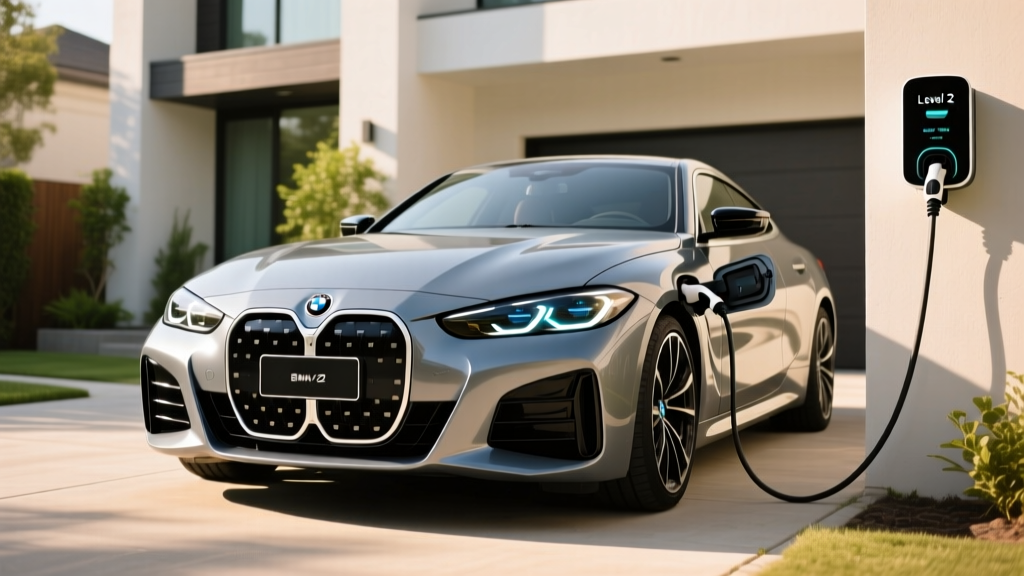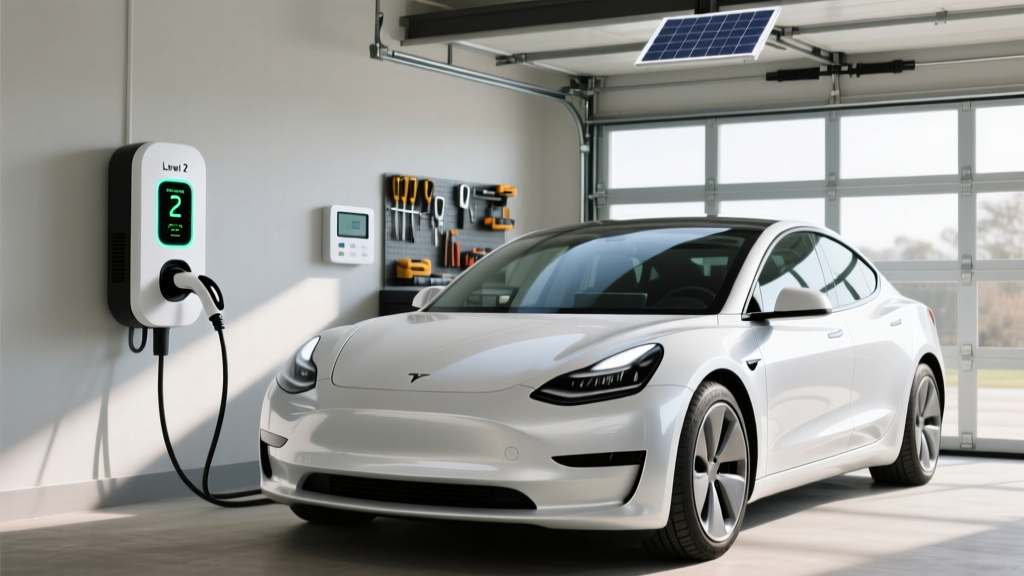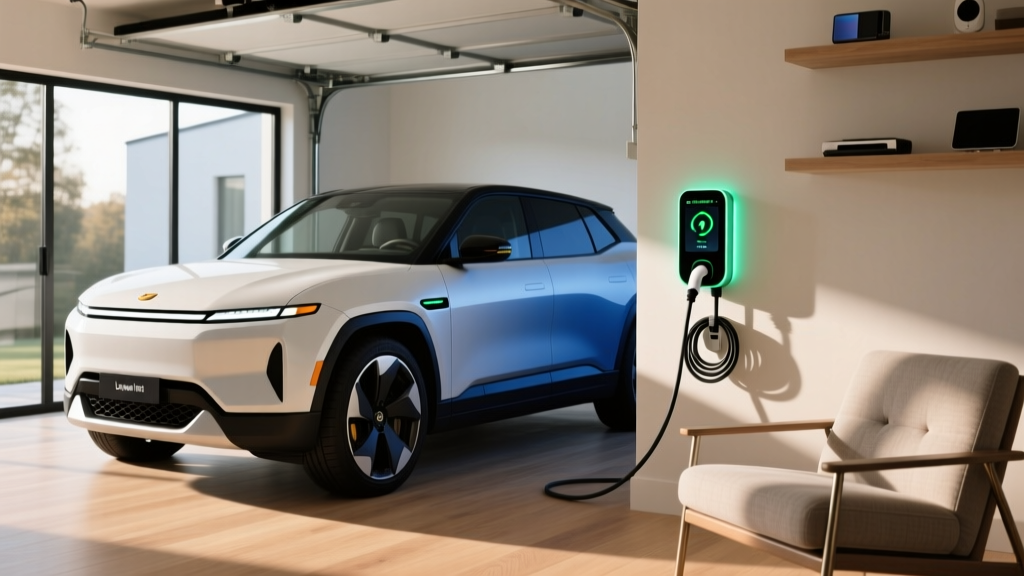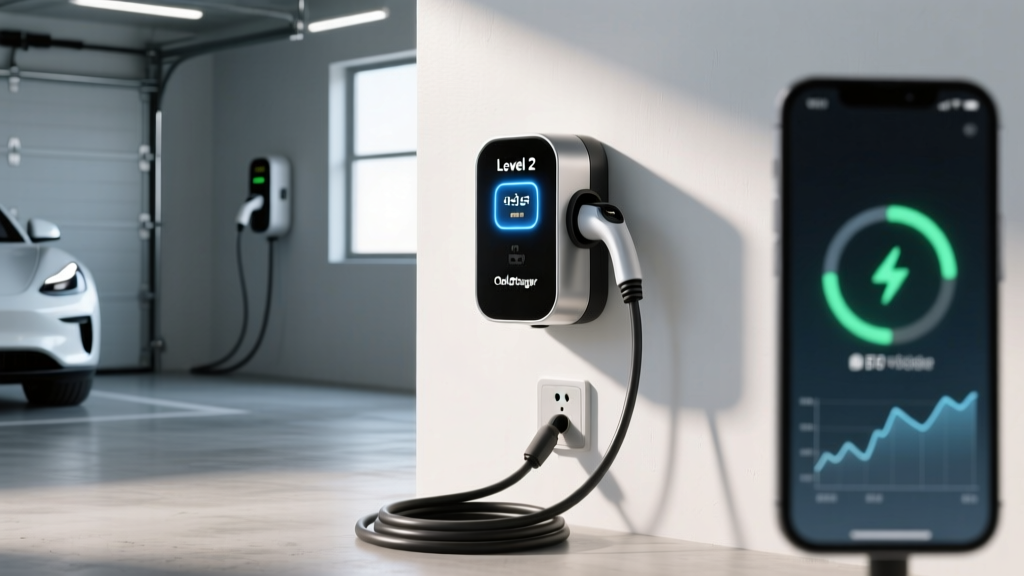
The Oddge Charger at a Glance: What You're Getting
The Oddge charger has been surfacing in EV owner forums and marketplace listings as a low-cost Level 2 home charging option, typically priced between $180 and $250 depending on the retailer and configuration. For context, comparable name-brand Level 2 units from ChargePoint, Emporia, and Grizzl-E run $350 to $700 before installation. That price gap is significant enough to warrant a closer look at what the Oddge charger actually delivers — and where it may fall short.
Based on available specifications and user reports, the Oddge charger is a 240-volt, 40-amp (9.6 kW peak output) Level 2 EV charger with a J1772 connector (or NACS on newer variants). It's designed for indoor or outdoor wall mounting and connects via a NEMA 14-50 plug or hardwired installation. Let's break down whether it fits your home charging setup and how it compares to established alternatives.
Oddge Charger Spec Snapshot
| Max Power Output | 9.6 kW (40A at 240V) |
| Connector | J1772 (standard) or NACS (select listings) |
| Cable Length | ~20–25 ft (varies by listing) |
| Connection Type | NEMA 14-50 plug or hardwired |
| Smart Features | Limited — no native Wi-Fi/app on most models |
| Outdoor Rating | IP55 or IP65 (confirm per listing) |
| Approximate Price | $180–$250 |
Understanding EV Charging Levels: Where the Oddge Fits
Before evaluating any specific charger, it's essential to understand the three charging levels and how they translate to real-world range recovery. The single most common confusion among new EV owners is mixing up kW (kilowatts — the rate of power delivery, like water pressure) with kWh (kilowatt-hours — the amount of energy stored, like the size of the tank). A 9.6 kW charger delivers 9.6 kWh of energy per hour at peak output.
| Level | Voltage / Amps | Power (kW) | Miles of Range Per Hour | Best For |
|---|---|---|---|---|
| Level 1 | 120V / 12A | 1.4 kW | 3–5 mi/hr | Overnight top-ups, PHEVs, low-mileage drivers |
| Level 2 (Oddge class) | 240V / 40A | 9.6 kW | 28–36 mi/hr | Daily home charging, most EV owners |
| Level 2 (48A high-output) | 240V / 48A | 11.5 kW | 34–44 mi/hr | Large batteries (F-150 Lightning, Hummer EV) |
| DC Fast Charge | 400–800V DC | 50–350 kW | 150–1,200+ mi/hr | Road trips, rapid top-ups (10–80% in 18–45 min) |
At 9.6 kW, the Oddge charger adds roughly 30–36 miles of range per hour for a typical mid-size EV like a Tesla Model Y or Hyundai Ioniq 5 (both averaging around 3.0–3.5 mi/kWh). For a 75 kWh battery (usable) going from 10% to 80% — that's roughly 52.5 kWh to replenish — you're looking at approximately 5.5 to 6 hours on a 9.6 kW Level 2 unit. That's well-suited for overnight charging but won't help mid-day if you need a quick turnaround.
Home Installation: What It Really Costs
The charger itself is only part of the equation. Most EV owners spend more on the electrical work than on the hardware. Here's what you need to know about installing the Oddge charger — or any 40A Level 2 unit — at home.
Electrical Requirements
A 40-amp charger requires a dedicated 50-amp circuit (National Electrical Code requires circuits to be rated at 125% of continuous load, so 40A × 1.25 = 50A breaker). This circuit runs from your main electrical panel to the charger location using 6 AWG copper wire (or 4 AWG aluminum).
If your home's electrical panel has spare capacity — typically two adjacent slots and at least 50 amps of unused headroom on a 200A service — the installation is straightforward. If your panel is older (100A service), already near capacity, or uses a brand with known issues (certain Federal Pacific or Zinsco panels), you may need a panel upgrade to 200A, which is the single biggest cost variable.
| Item | Simple Install (panel has capacity) | Complex Install (panel upgrade needed) |
|---|---|---|
| Oddge charger unit | $180–$250 | $180–$250 |
| Electrician labor (2–6 hrs) | $400–$1,200 | $1,500–$3,500 |
| Materials (wire, conduit, breaker) | $100–$300 | $200–$600 |
| Permit & inspection | $50–$200 | $100–$300 |
| Panel upgrade (if needed) | N/A | $1,500–$4,000 |
| Total Estimated Cost | $730–$1,950 | $3,480–$8,650 |
Always hire a licensed electrician and pull a permit. A Level 2 charger draws continuous high current for hours — improper installation is a fire risk, and unpermitted work can void your homeowner's insurance. The National Electrical Contractors Association can help you find qualified installers.
What Electrical Upgrades Might I Need?
Beyond the dedicated circuit, consider these potential needs:
- Panel capacity: A 200A panel is standard for modern homes with EV charging. If you have 100A service, plan for an upgrade.
- GFCI protection: NEC 2020 and later require GFCI protection for EV chargers on receptacle-based (plug-in) installations. Hardwired units may not require a GFCI breaker depending on local code, but confirm with your electrician and AHJ (Authority Having Jurisdiction).
- Outdoor rating: If mounting outside, verify the charger's IP rating (IP55 minimum for weather exposure; IP65 preferred). The Oddge charger's IP rating varies by listing — confirm before purchasing for outdoor use.
- Wi-Fi / smart features: If you want scheduled charging (to exploit off-peak electricity rates), the Oddge charger's limited smart features mean you may need to rely on your EV's built-in scheduling or a smart electrical panel integration.
Connector Compatibility: Will the Oddge Charger Work With Your EV?
As of 2026, the connector landscape has consolidated significantly around NACS (North American Charging Standard, originally Tesla's design), but millions of CCS1-equipped vehicles remain on the road. Here's how to determine compatibility.
| Connector | Brands Using It | Adapter Needed for Oddge (J1772)? |
|---|---|---|
| NACS (Tesla) | Tesla (all models), Ford (2025+), GM (2025+), Rivian (2025+), Volvo, Polestar, Hyundai/Kia (2026+ select models) | Yes — J1772-to-NACS adapter (~$50–$100) |
| CCS1 | Hyundai, Kia, BMW, VW, Stellantis, Honda, Subaru (most 2024–2025 models) | No — J1772 plugs directly into the AC portion of CCS1 |
| CHAdeMO | Nissan Leaf (legacy), Mitsubishi Outlander PHEV (older) | No — J1772 plugs into the separate AC inlet |
| J1772 (native) | Most 2024 and earlier non-Tesla EVs and all PHEVs | No — direct plug |
Key takeaway: If you drive a CCS1-equipped EV or any older non-Tesla, the Oddge charger's J1772 connector plugs in directly. If you drive a Tesla or a 2025+ Ford/GM/Rivian with NACS, you'll need a J1772-to-NACS adapter for Level 2 home charging. Tesla sells an official adapter, and third-party options are available — but always verify UL/ETL certification on any adapter.
Charging Cost: Oddge at Home vs. Public vs. Gas
One of the strongest arguments for home Level 2 charging — whether via the Oddge charger or any other unit — is cost. Here's a realistic breakdown based on 2026 electricity rates.
| Scenario | Rate | Cost per kWh | Cost per Mile |
|---|---|---|---|
| Home off-peak (utility TOU plan) | $0.09–$0.14/kWh | $0.12 avg | $0.04/mi |
| Home standard rate | $0.14–$0.20/kWh | $0.17 avg | $0.057/mi |
| Public Level 2 (ChargePoint, etc.) | $0.25–$0.49/kWh | $0.35 avg | $0.12/mi |
| DC Fast Charge (Electrify America, etc.) | $0.35–$0.60/kWh | $0.48 avg | $0.16/mi |
| Gas vehicle (25 MPG, $3.40/gal) | $3.40/gal | — | $0.136/mi |
At off-peak home rates, charging with the Oddge charger costs roughly one-quarter to one-third what you'd spend on gas per mile. Even at standard residential rates, you're saving 50–70% per mile versus a comparable gas SUV. The charger pays for itself in fuel savings within the first 3,000–5,000 miles of driving for most owners.
You can check your local utility's time-of-use rates and see whether off-peak scheduling is available through your EV's onboard settings. The U.S. Department of Energy maintains a fueling infrastructure database that includes public charging pricing by region.
Charging Time Examples: How Long Does the Oddge Take?
Here's what a 9.6 kW Level 2 charge looks like for some popular 2026 EVs, measured from 10% to 80% state of charge (SoC) — the practical range most owners use for daily charging.
| Vehicle | Usable Battery (kWh) | Energy Needed (10–80%) | Time at 9.6 kW (Oddge) |
|---|---|---|---|
| Tesla Model Y Long Range | 75 kWh | 52.5 kWh | ~5.5 hours |
| Hyundai Ioniq 5 (Std Range) | 58 kWh | 40.6 kWh | ~4.2 hours |
| Ford Mustang Mach-E (Ext Range) | 88 kWh | 61.6 kWh | ~6.4 hours |
| Chevrolet Equinox EV | 85 kWh | 59.5 kWh | ~6.2 hours |
| Toyota bZ4X | 64 kWh | 44.8 kWh | ~4.7 hours |
| BMW iX xDrive50 | 105 kWh | 73.5 kWh | ~7.7 hours |
For the vast majority of EV owners who charge overnight (8–10 hours available), a 9.6 kW charger like the Oddge fully replenishes any mainstream EV battery from 10% to 80% within a single sleep cycle. Only the largest batteries (100+ kWh, like the BMW iX or GMC Hummer EV) approach the edge of that window.
Important nuance: Level 2 charging is relatively linear — unlike DC fast charging, there's no significant taper above 80% SoC at these power levels. The onboard charger in your EV converts AC to DC and manages the charge curve. Most EVs accept the full 9.6 kW throughout the session, though some (like older Nissan Leafs with 6.6 kW onboard chargers) will cap the draw below what the Oddge can supply.
Equipment Comparison: Oddge vs. Established Alternatives
How does the Oddge charger stack up against proven Level 2 units? Here's a side-by-side look at the most common competitors in the 32A–48A range.
Oddge Charger
Power: 9.6 kW (40A)
Connector: J1772 or NACS
Cable: ~20–25 ft
Smart features: Minimal (no app/Wi-Fi on most models)
Price: $180–$250
Certification: Varies — confirm UL/ETL listing per unit
Emporia Vue / Emporia Level 2
Power: 11.5 kW (48A)
Connector: J1772 or NACS
Cable: 24 ft
Smart features: Wi-Fi, app, energy monitoring, scheduling
Price: $350–$400
Certification: UL listed
Grizzl-E Smart
Power: 9.6 kW (40A)
Connector: J1772 or NACS
Cable: 24 ft
Smart features: Wi-Fi, app, OCPP compatible
Price: $400–$500
Certification: UL listed
ChargePoint Home Flex
Power: Up to 11.5 kW (48A, adjustable)
Connector: J1772 or NACS
Cable: 23 ft
Smart features: Wi-Fi, app, Alexa, scheduling
Price: $550–$700
Certification: UL listed
What You Trade for the Lower Price
The Oddge charger's cost advantage is real — roughly $150–$450 less than name-brand alternatives. But the trade-offs are worth understanding:
- Safety certification: The most critical concern. Established chargers carry UL or ETL certification, meaning they've been independently tested to meet electrical safety standards. Some Oddge charger listings do not clearly document UL/ETL certification. Do not install an uncertified charger — it's a fire risk and will likely fail inspection.
- Smart features: No native app or Wi-Fi means no remote monitoring, no off-peak scheduling via the charger (use your EV's timer instead), and no energy-use tracking.
- Warranty and support: Budget chargers often carry 1-year warranties versus 3-year coverage from ChargePoint, Emporia, and Grizzl-E. Customer support availability varies.
- Build quality: Cable stiffness in cold weather, connector latch durability, and housing UV resistance are areas where budget units may show wear sooner.
Safety and Code: Non-Negotiable Requirements
Regardless of which charger you buy, these safety and code requirements apply to every Level 2 installation:
- Dedicated circuit: Your EV charger must be on its own breaker — no sharing with other appliances or outlets.
- Correct wire gauge: 6 AWG copper for a 50A breaker (required for a 40A continuous load). Undersized wire creates a fire hazard.
- GFCI protection: Required for plug-in (NEMA 14-50) installations per NEC 625. Hardwired installations may not require it, but check local code.
- Permit and inspection: Most jurisdictions require an electrical permit and a post-installation inspection. This protects you legally and ensures the work meets code.
- Outdoor rating: If installed outside, the charger must carry at minimum an IP55 rating (protected against water jets). IP65 (dust-tight, water-jet resistant) is preferred.
- Load management: If your panel is close to capacity, consider an EV charger with built-in load management or a smart panel monitor (like the Emporia Vue system) that throttles charging when household demand spikes.
The National Fire Protection Association publishes the full National Electrical Code (NEC), and Article 625 specifically covers EV charging installations. Your electrician should be familiar with these requirements.
Is the Oddge Charger Right for You? A Decision Framework
Choose the Oddge charger if:
- You want the lowest-cost entry into Level 2 home charging
- The specific unit you're buying has verifiable UL or ETL certification
- You don't need app-based scheduling (your EV has built-in timers)
- You're comfortable with a shorter warranty and limited support
- You're installing in a garage or covered location where weather exposure is minimal
Choose an established brand (Emporia, Grizzl-E, ChargePoint) if:
- You want verified UL/ETL certification with full documentation
- You need Wi-Fi scheduling, energy monitoring, or utility demand-response integration
- You're installing outdoors in an exposed location
- You want a 3-year warranty and accessible customer support
- Your jurisdiction's inspector is strict about equipment certification (common in California, New York, Massachusetts)
Frequently Asked Questions
How much does it cost to install a home EV charger?
For a straightforward installation with an existing 200A panel and spare capacity, expect $730–$1,950 total (charger + electrician + materials + permit). If your home needs a panel upgrade from 100A to 200A, total costs can reach $3,500–$8,650. Get at least two quotes from licensed electricians, and always pull a permit.
How fast will each charging level add range?
Level 1 (120V) adds 3–5 miles per hour — adequate only for PHEVs or very low daily mileage. Level 2 at 9.6 kW (like the Oddge charger) adds 28–36 miles per hour, fully replenishing most EV batteries overnight. DC fast charging at 150–350 kW adds 150–1,200+ miles per hour, enabling 10–80% charges in 18–45 minutes depending on the vehicle and charger.
Which connector/charger is compatible with my EV?
If your EV has a CCS1 port (most 2024 and earlier non-Tesla models), any J1772 charger plugs directly into the AC portion. If your EV has a NACS port (all Teslas, plus 2025+ Ford, GM, Rivian, and select others), you need a J1772-to-NACS adapter for Level 2 charging with a J1772-equipped unit like the standard Oddge charger. CHAdeMO vehicles (Nissan Leaf) also accept J1772 on their separate AC inlet.
How much does charging cost per mile vs gas?
At off-peak home rates (~$0.12/kWh), EV charging costs about $0.04 per mile — roughly one-quarter the cost of gas at $3.40/gallon and 25 MPG ($0.136/mile). Even public DC fast charging at $0.48/kWh ($0.16/mile) is comparable to gas. The real savings come from consistent home charging.
What electrical upgrades might I need?
The most common upgrade is moving from a 100A to a 200A electrical panel ($1,500–$4,000). You'll also need a dedicated 50A breaker with 6 AWG copper wire. For plug-in installations, a GFCI breaker is required by code. In some cases, if the run from panel to charger is long (100+ feet), wire gauge may need to increase to prevent voltage drop, adding to material costs.
Is the Oddge charger safe?
Safety depends entirely on whether the specific unit carries a recognized safety certification (UL or ETL). A certified charger installed by a licensed electrician with a permit is safe. An uncertified charger — regardless of brand — is a fire and insurance risk. Before purchasing, ask the seller for the UL/ETL file number and verify it on the certifier's website.
Can I use the Oddge charger outdoors?
Only if the unit carries an IP55 or higher rating for water and dust resistance. Confirm the IP rating with the seller before purchasing for outdoor use. Even with a rated unit, mounting under an eave or in a weatherproof enclosure extends the charger's lifespan.